
NETWORK OPERATING DIVISION Operating Effectiveness Transmission Lines Protection

- Slides: 58
NETWORK OPERATING DIVISION Operating Effectiveness Transmission Lines Protection Overview
Operating Effectiveness Training & Development Transmission Lines LH 1 Protection Overview Hydro One Networks Inc 49 Sarjeant Drive Barrie, Ontario Canada, L 4 N 4 V 9 Phone (705) 719 -3528 Revised: November 4, 2008 The information in this document is for reference and is to be used as a guide only. The OE Training Section makes no representation or warranty, expressed or implied, that the information contained within is current. The information included is subject to change. It is solely your responsibility to ensure that you are using up-to-date documents, prints and information. Please notify the HONOC Operating Effectiveness Training Section of required updates and/or modifications.
Transmission Lines Protection Objectives Through the use of this presentation participants will learn and understand Transmission Lines Protection. Emphasis is on: – Functionality – Limitations – Instructions and Procedures – Support Services. Cont…
Transmission Lines Protection Overview. This presentation will cover: What transmission line protection is, Why the need for line protection Principles of Operation ( Impedance), Different Operational zones Various types or schemes Exceptions and Anomalies Transfer Trip Channels Permissive Echo
Transmission Lines Protection Overview. This presentation will cover: LH 1 configuration Micro-wave communications Power Line Carrier communications Fibre-Optic Digital communications Various types or schemes
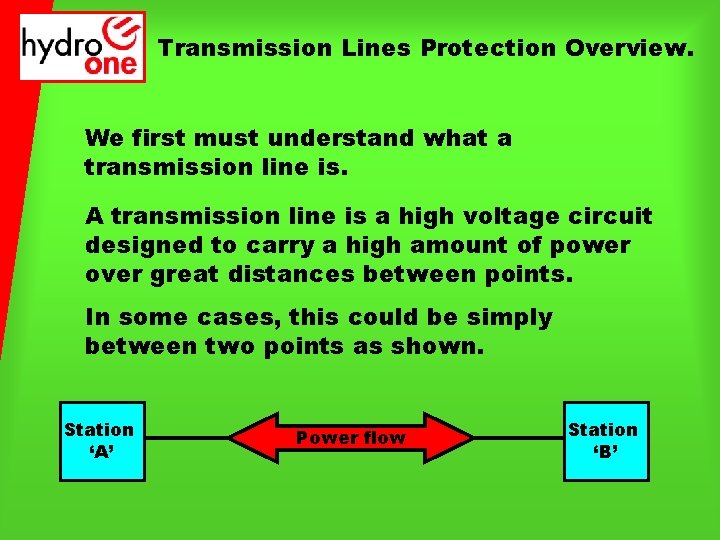
Transmission Lines Protection Overview. We first must understand what a transmission line is. A transmission line is a high voltage circuit designed to carry a high amount of power over great distances between points. In some cases, this could be simply between two points as shown. Station ‘A’ Power flow Station ‘B’
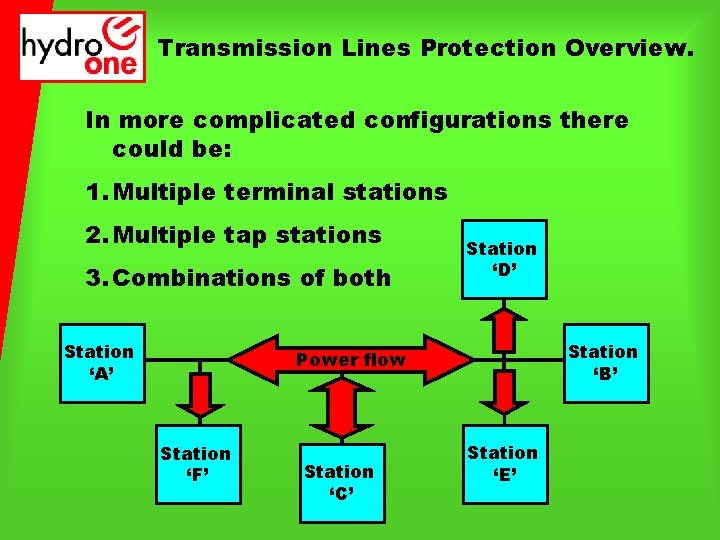
Transmission Lines Protection Overview. In more complicated configurations there could be: 1. Multiple terminal stations 2. Multiple tap stations 3. Combinations of both Station ‘A’ Station ‘D’ Station ‘B’ Power flow Station ‘F’ Station ‘C’ Station ‘E’
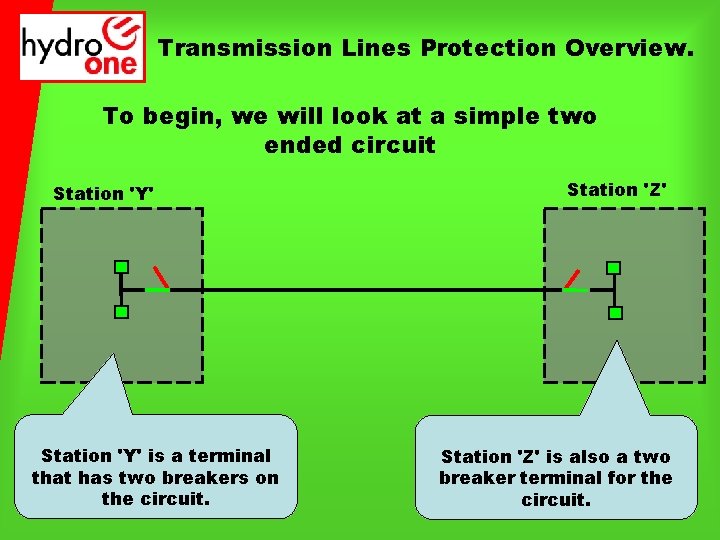
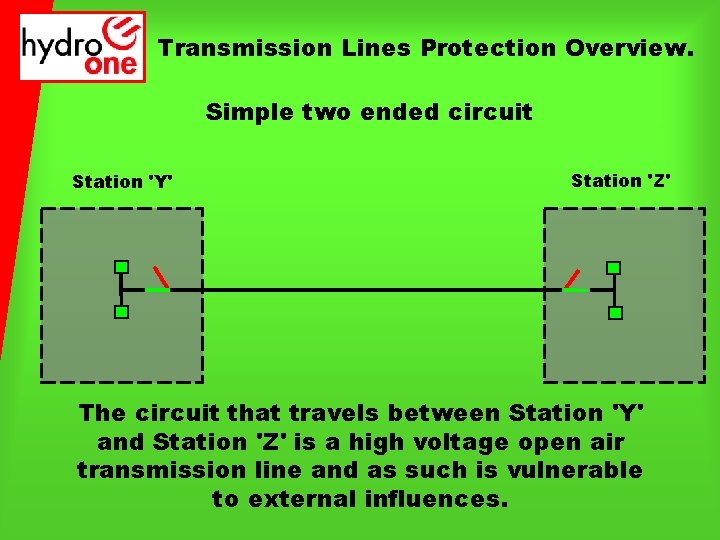
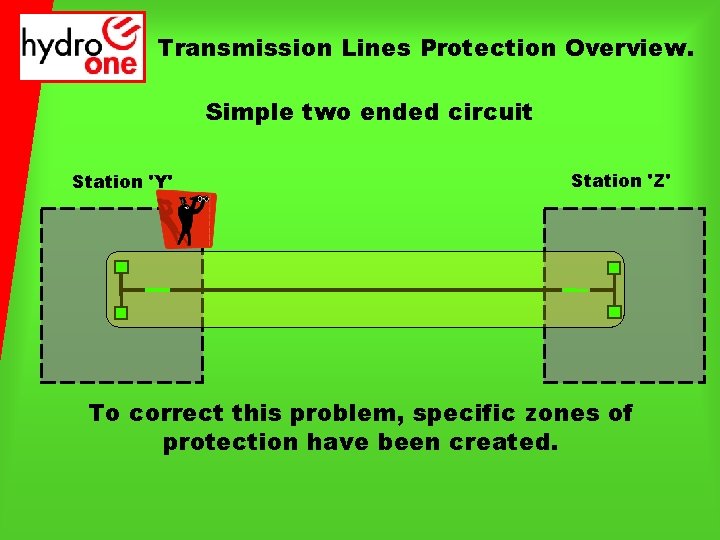
Transmission Lines Protection Overview. To begin, we will look at a simple two ended circuit Station 'Y' is a terminal that has two breakers on the circuit. Station 'Z' is also a two breaker terminal for the circuit.
Transmission Lines Protection Overview. Simple two ended circuit Station 'Y' Station 'Z' The circuit that travels between Station 'Y' and Station 'Z' is a high voltage open air transmission line and as such is vulnerable to external influences.
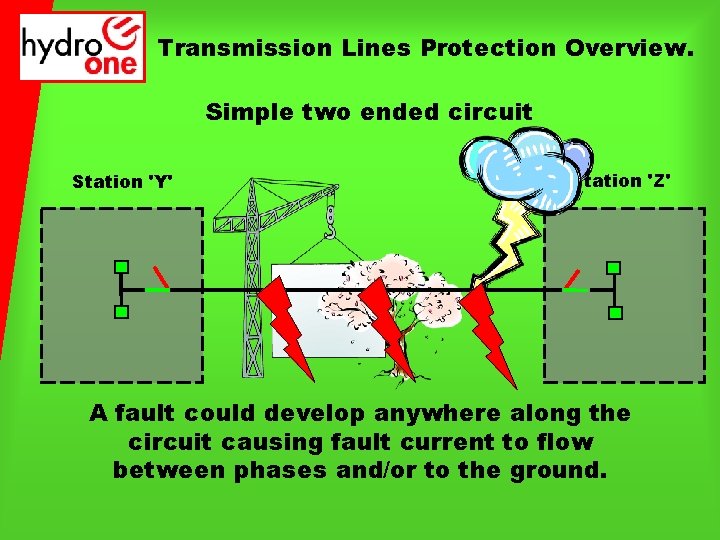
Transmission Lines Protection Overview. Simple two ended circuit Station 'Y' Station 'Z' A fault could develop anywhere along the circuit causing fault current to flow between phases and/or to the ground.
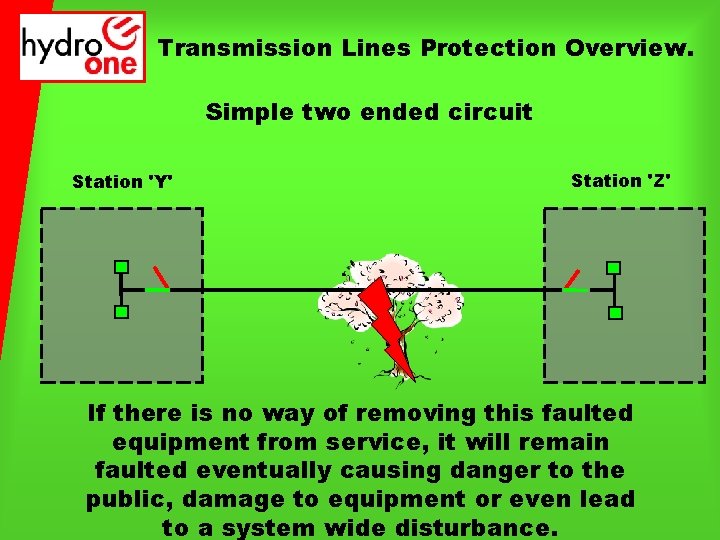
Transmission Lines Protection Overview. Simple two ended circuit Station 'Y' Station 'Z' If there is no way of removing this faulted equipment from service, it will remain faulted eventually causing danger to the public, damage to equipment or even lead to a system wide disturbance.
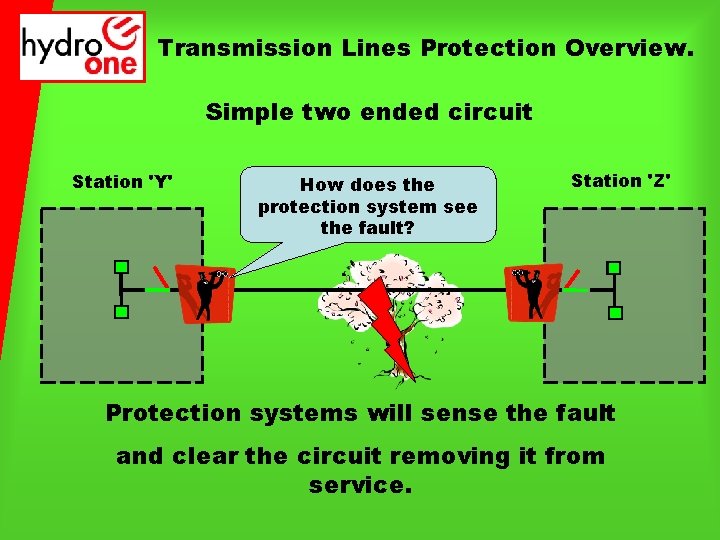
Transmission Lines Protection Overview. Simple two ended circuit Station 'Y' How does the protection system see the fault? Station 'Z' Protection systems will sense the fault and clear the circuit removing it from service.
Transmission Lines Protection Overview. Simple two ended circuit There are many ways in which faults can be detected. For transmission circuits the most common method is by using impedance.
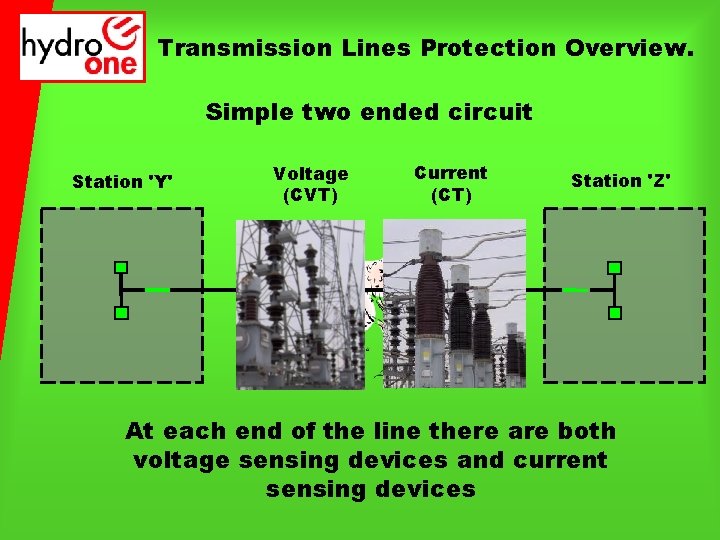
Transmission Lines Protection Overview. Simple two ended circuit Station 'Y' Voltage (CVT) Current (CT) Station 'Z' At each end of the line there are both voltage sensing devices and current sensing devices
Transmission Lines Protection Overview. Simple two ended circuit These sensing devices monitor line voltage and line current on a continuous basis. Under normal circumstances, the current will be at expected normal values and the voltage will be at the system normal.
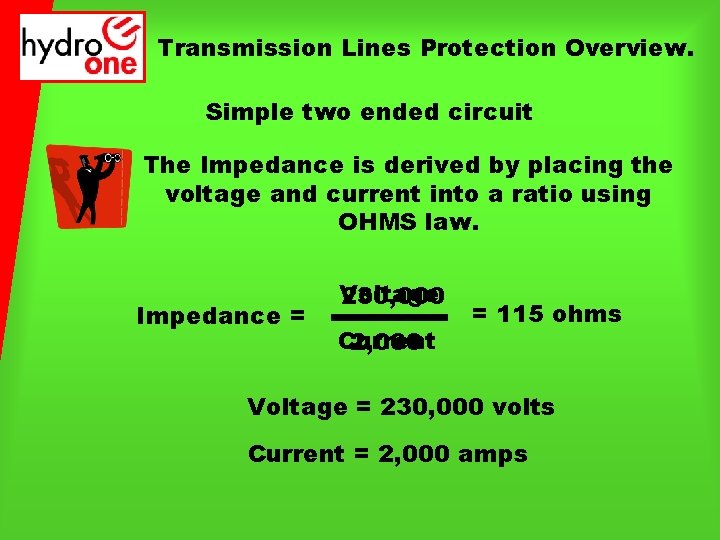
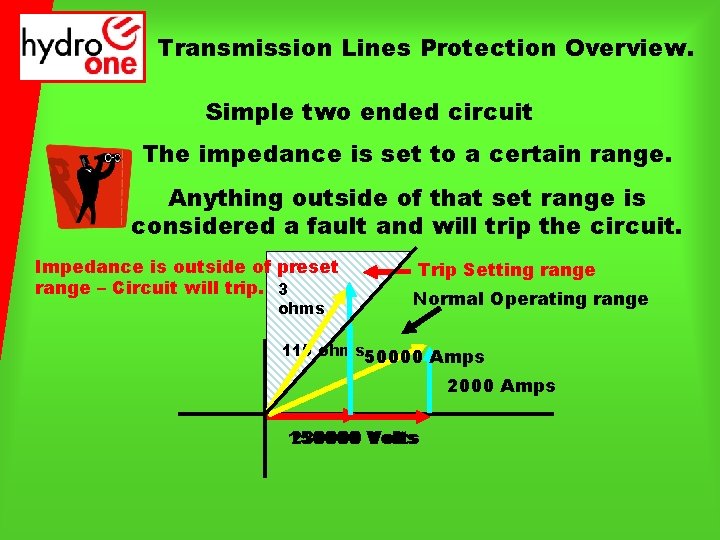
Transmission Lines Protection Overview. Simple two ended circuit The Impedance is derived by placing the voltage and current into a ratio using OHMS law. Impedance = Voltage 230, 000 Current 2, 000 = 115 ohms Voltage = 230, 000 volts Current = 2, 000 amps
Transmission Lines Protection Overview. Simple two ended circuit If a fault occurs then these quantities will be disrupted causing the ratio to greatly change. Impedance = 150000 230, 000 50000 2, 000 115 ohms =3 ohms Voltage = 230, 000 150, 000 volts Current = 2, 000 50, 000 amps
Transmission Lines Protection Overview. Simple two ended circuit The impedance is set to a certain range. Anything outside of that set range is considered a fault and will trip the circuit. Impedance is outside of preset range – Circuit will trip. 3 ohms Trip Setting range Normal Operating range 115 ohms 50000 Amps 2000 Amps 150000 230000 Volts
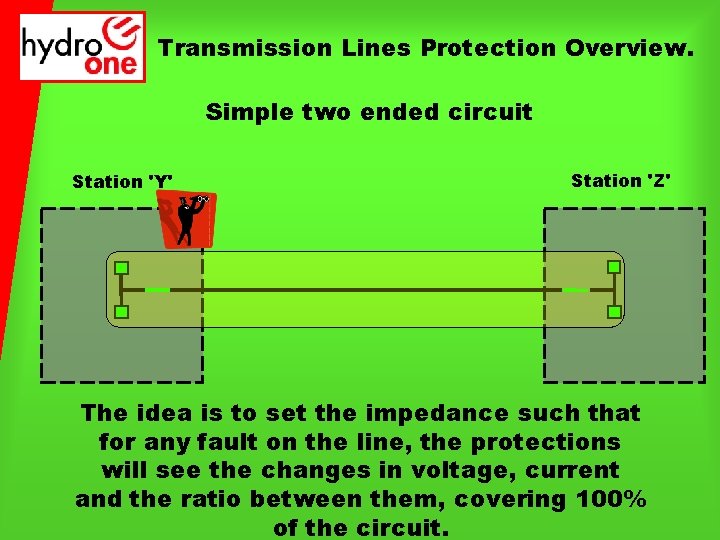
Transmission Lines Protection Overview. Simple two ended circuit Station 'Y' Station 'Z' The idea is to set the impedance such that for any fault on the line, the protections will see the changes in voltage, current and the ratio between them, covering 100% of the circuit.
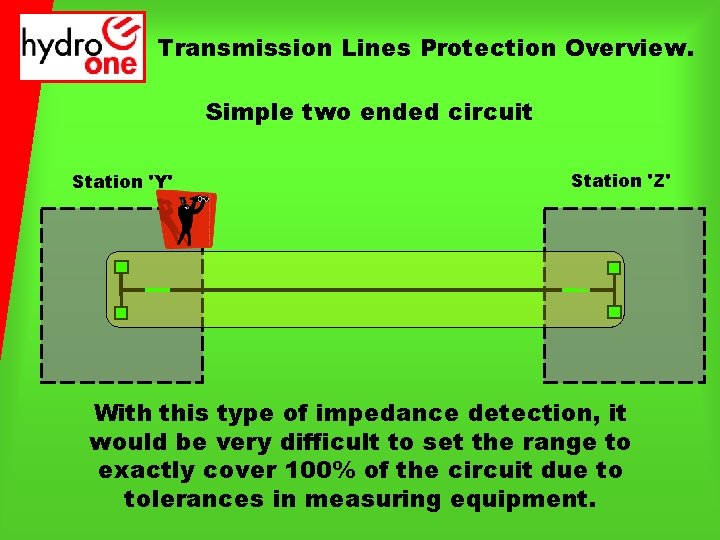
Transmission Lines Protection Overview. Simple two ended circuit Station 'Y' Station 'Z' With this type of impedance detection, it would be very difficult to set the range to exactly cover 100% of the circuit due to tolerances in measuring equipment.
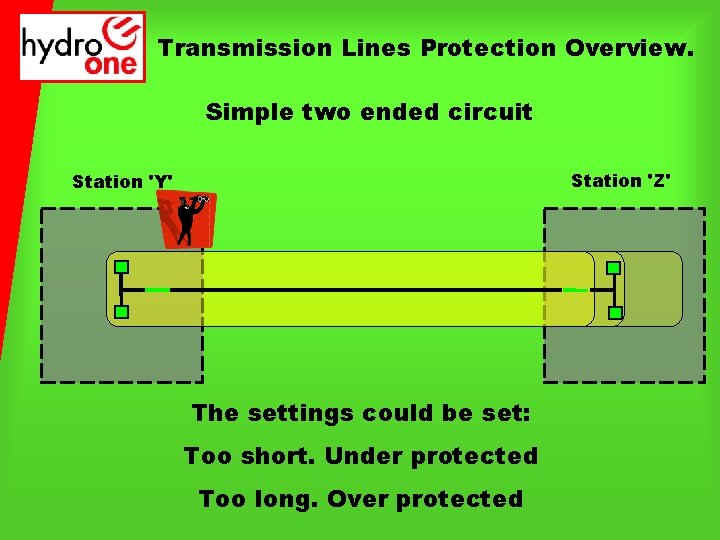
Transmission Lines Protection Overview. Simple two ended circuit Station 'Z' Station 'Y' The settings could be set: Too short. Under protected Too long. Over protected
Transmission Lines Protection Overview. Simple two ended circuit Station 'Y' Station 'Z' To correct this problem, specific zones of protection have been created.
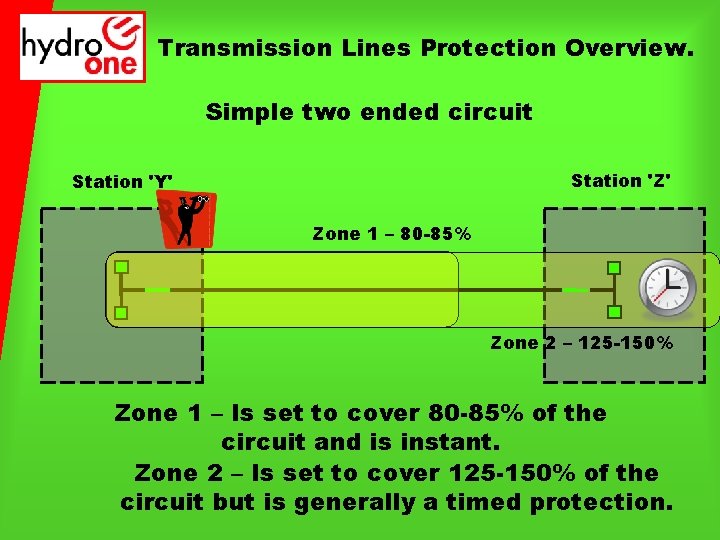
Transmission Lines Protection Overview. Simple two ended circuit Station 'Z' Station 'Y' Zone 1 – 80 -85% Zone 2 – 125 -150% Zone 1 – Is set to cover 80 -85% of the circuit and is instant. Zone 2 – Is set to cover 125 -150% of the circuit but is generally a timed protection.
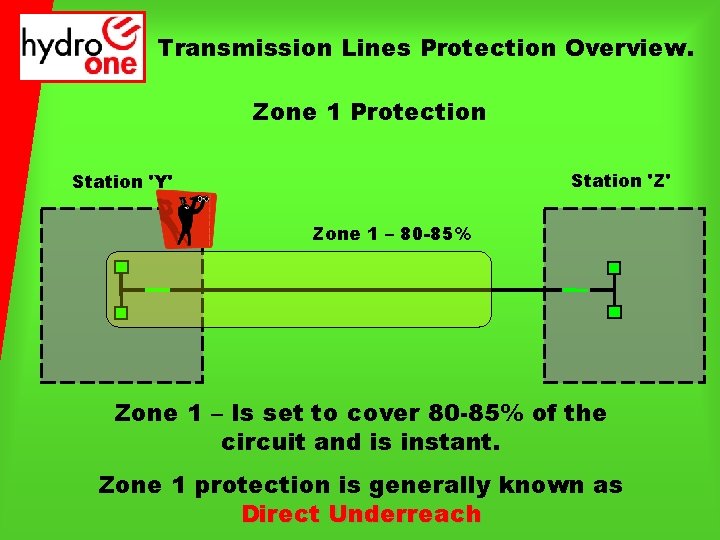
Transmission Lines Protection Overview. Zone 1 Protection Station 'Z' Station 'Y' Zone 1 – 80 -85% Zone 1 – Is set to cover 80 -85% of the circuit and is instant. Zone 1 protection is generally known as Direct Underreach
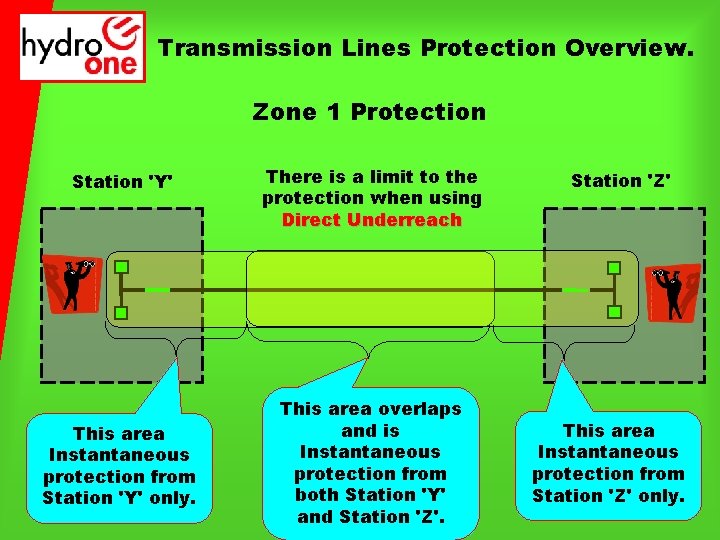
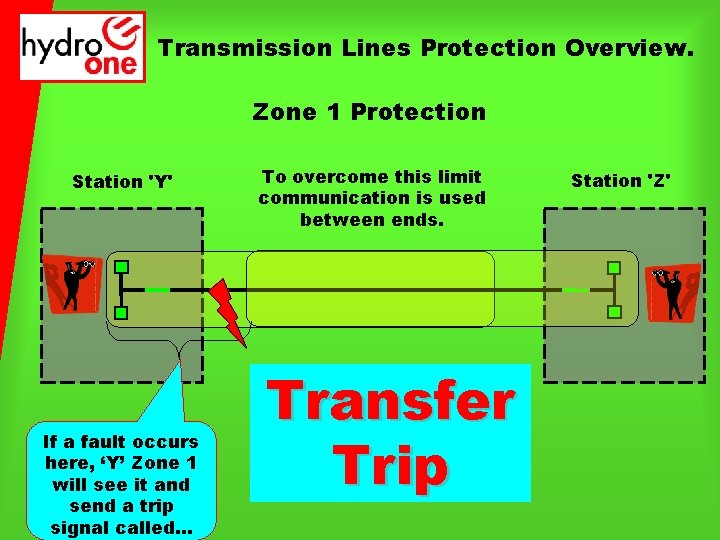
Transmission Lines Protection Overview. Zone 1 Protection Station 'Y' This area Instantaneous protection from Station 'Y' only. There is a limit to the protection when using Direct Underreach This area overlaps and is Instantaneous protection from both Station 'Y' and Station 'Z' This area Instantaneous protection from Station 'Z' only.
Transmission Lines Protection Overview. Zone 1 Protection Station 'Y' If a fault occurs here, ‘Y’ Zone 1 will see it and send a trip signal called… To overcome this limit communication is used between ends. Transfer Trip Station 'Z'
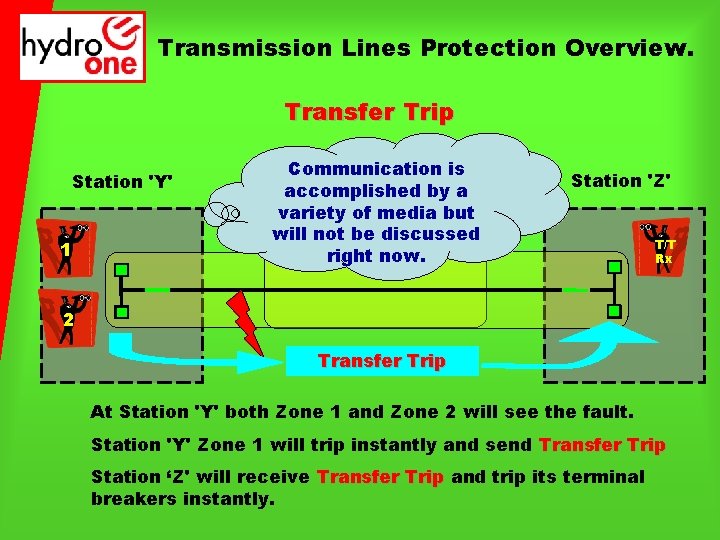
Transmission Lines Protection Overview. Transfer Trip Station 'Y' 1 Communication is accomplished by a variety of media but will not be discussed right now. Station 'Z' T/T Rx 2 Transfer Trip At Station 'Y' both Zone 1 and Zone 2 will see the fault. Station 'Y' Zone 1 will trip instantly and send Transfer Trip Station ‘Z' will receive Transfer Trip and trip its terminal breakers instantly.
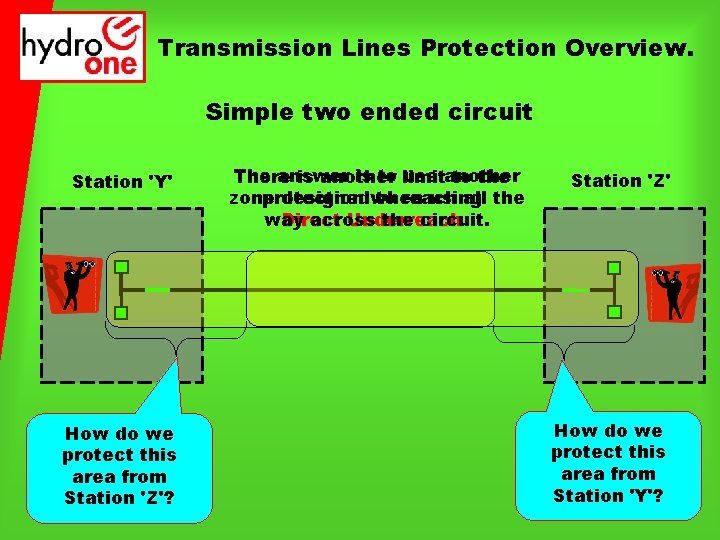
Transmission Lines Protection Overview. Simple two ended circuit Station 'Y' How do we protect this area from Station 'Z'? The answer is to limit use another There is another to the zone designedwhen to reach all the protection using way across the circuit. Direct Underreach Station 'Z' How do we protect this area from Station 'Y'?
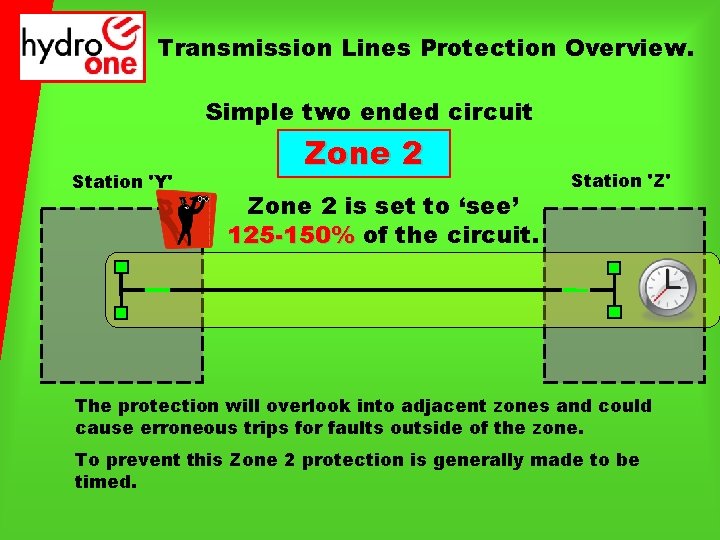
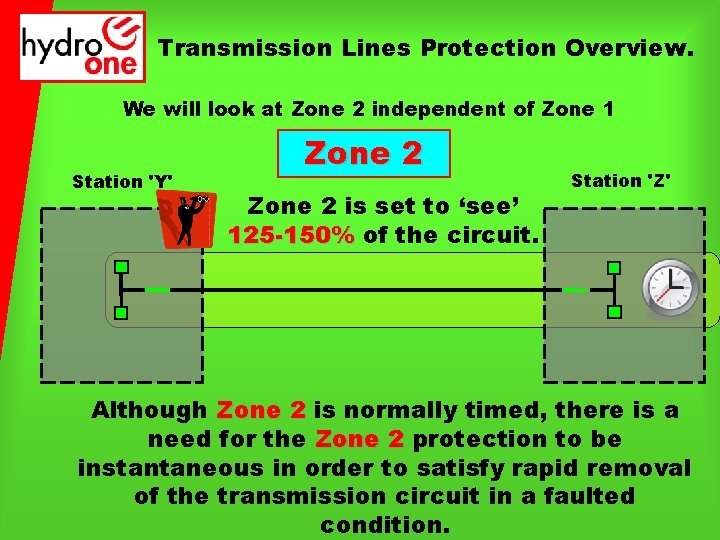
Transmission Lines Protection Overview. Simple two ended circuit Station 'Y' Zone 2 is set to ‘see’ 125 -150% of the circuit. Station 'Z' The protection will overlook into adjacent zones and could cause erroneous trips for faults outside of the zone. To prevent this Zone 2 protection is generally made to be timed.
Transmission Lines Protection Overview. We will look at Zone 2 independent of Zone 1 Station 'Y' Zone 2 is set to ‘see’ 125 -150% of the circuit. Station 'Z' Although Zone 2 is normally timed, there is a need for the Zone 2 protection to be instantaneous in order to satisfy rapid removal of the transmission circuit in a faulted condition.
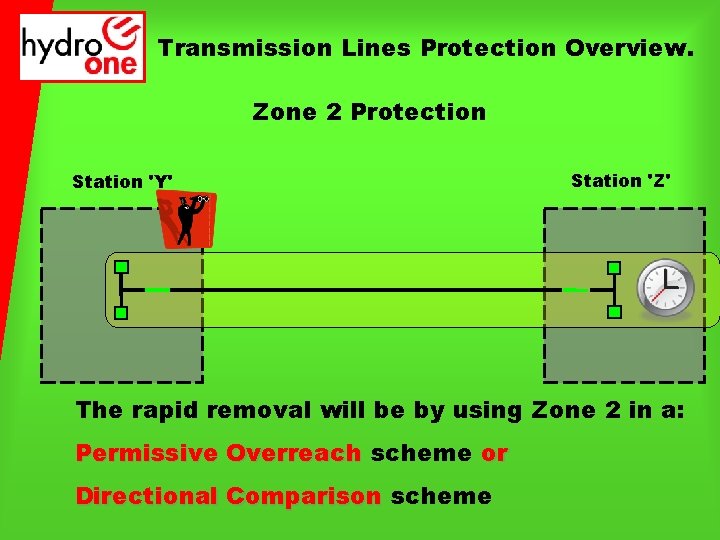
Transmission Lines Protection Overview. Zone 2 Protection Station 'Y' Station 'Z' The rapid removal will be by using Zone 2 in a: Permissive Overreach scheme or Directional Comparison scheme
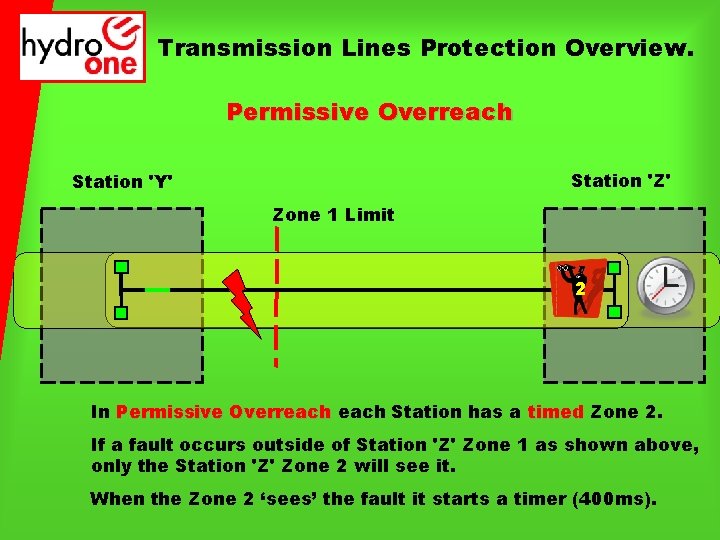
Transmission Lines Protection Overview. Permissive Overreach Station 'Z' Station 'Y' Zone 1 Limit 2 In Permissive Overreach Station has a timed Zone 2. If a fault occurs outside of Station 'Z' Zone 1 as shown above, only the Station 'Z' Zone 2 will see it. When the Zone 2 ‘sees’ the fault it starts a timer (400 ms).
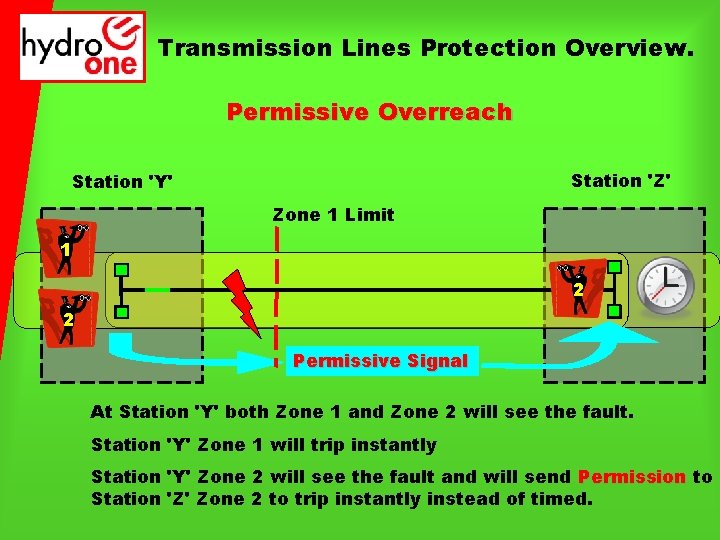
Transmission Lines Protection Overview. Permissive Overreach Station 'Z' Station 'Y' Zone 1 Limit 1 2 2 Permissive Signal At Station 'Y' both Zone 1 and Zone 2 will see the fault. Station 'Y' Zone 1 will trip instantly Station 'Y' Zone 2 will see the fault and will send Permission to Station 'Z' Zone 2 to trip instantly instead of timed.
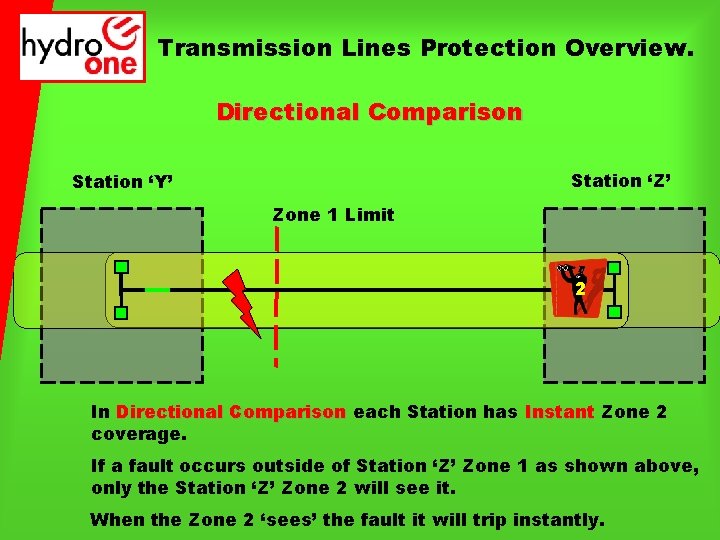
Transmission Lines Protection Overview. Directional Comparison Station ‘Z’ Station ‘Y’ Zone 1 Limit 2 In Directional Comparison each Station has Instant Zone 2 coverage. If a fault occurs outside of Station ‘Z’ Zone 1 as shown above, only the Station ‘Z’ Zone 2 will see it. When the Zone 2 ‘sees’ the fault it will trip instantly.
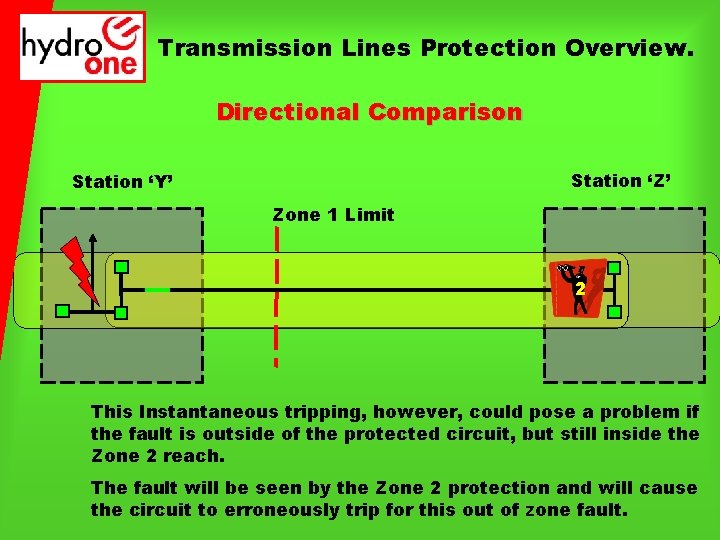
Transmission Lines Protection Overview. Directional Comparison Station ‘Z’ Station ‘Y’ Zone 1 Limit 2 This Instantaneous tripping, however, could pose a problem if the fault is outside of the protected circuit, but still inside the Zone 2 reach. The fault will be seen by the Zone 2 protection and will cause the circuit to erroneously trip for this out of zone fault.
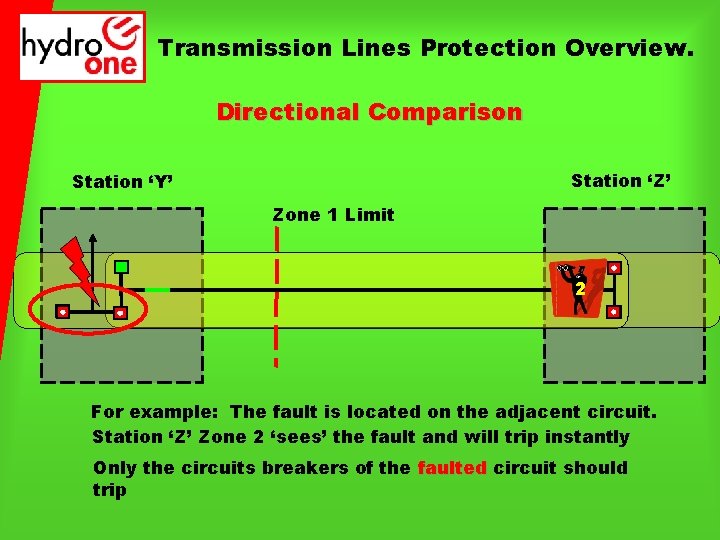
Transmission Lines Protection Overview. Directional Comparison Station ‘Z’ Station ‘Y’ Zone 1 Limit 2 For example: The fault is located on the adjacent circuit. Station ‘Z’ Zone 2 ‘sees’ the fault and will trip instantly Only the circuits breakers of the faulted circuit should trip
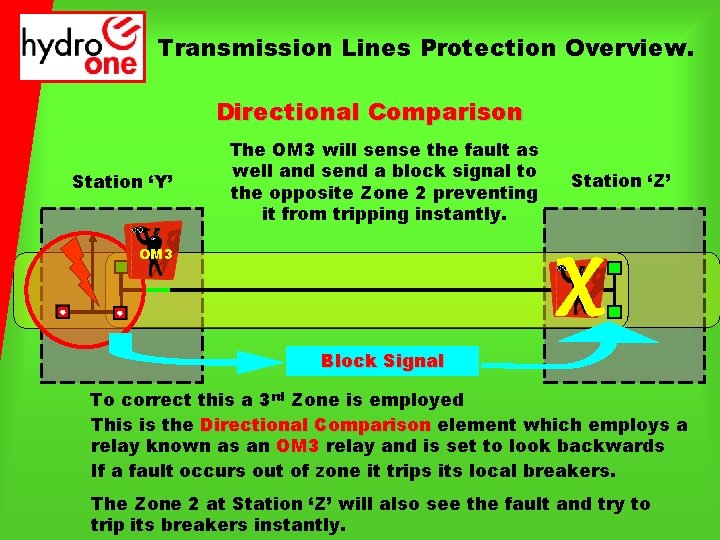
Transmission Lines Protection Overview. Directional Comparison Station ‘Y’ The OM 3 will sense the fault as well and send a block signal to the opposite Zone 2 preventing it from tripping instantly. OM 3 Station ‘Z’ X 2 Block Signal To correct this a 3 rd Zone is employed This is the Directional Comparison element which employs a relay known as an OM 3 relay and is set to look backwards If a fault occurs out of zone it trips its local breakers. The Zone 2 at Station ‘Z’ will also see the fault and try to trip its breakers instantly.
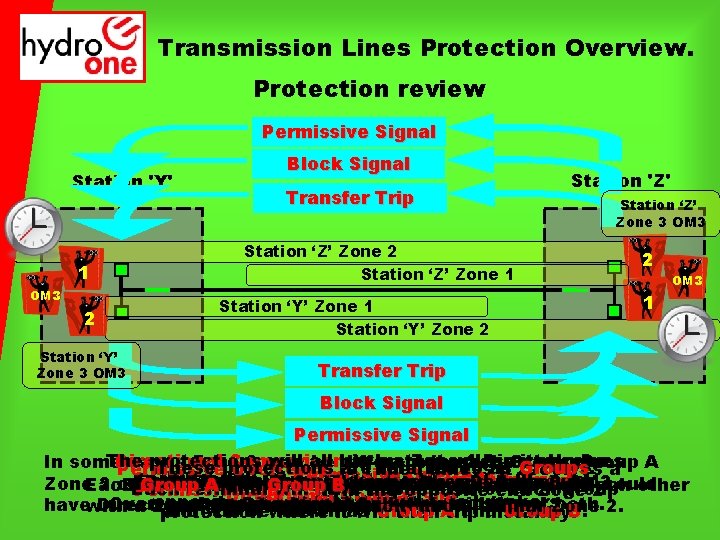
Transmission Lines Protection Overview. Protection review Permissive Signal Station 'Y' 1 OM 3 2 Station ‘Y’ Zone 3 OM 3 Block Signal Transfer Trip Station ‘Z’ Zone 2 Station ‘Z’ Zone 1 Station ‘Y’ Zone 2 Station 'Z' Station ‘Z’ Zone 3 OM 3 2 OM 3 1 Transfer Trip Block Signal Permissive Signal The Directional protections Comparison will all is. Timed Instant a Zone 1 Direct it receives Under In some cases Zone 2 may be have different in unless each Group, Group A These protections are referred to as Groups Permissive Overreach is unless it receives a Zone 2 Signal can be Permissive Overreach or Each Station Zone 1 the will send Transfer Trip to Each Station has a Zone 1 Direct Underreach a. Each reach Block and Zone from 2 will have opposite either end Permissive Zone 3 of OM 3 Zone. Each 2 could have Permissive Overreach where Group B 2 could Each Group Station A and has Group Zone B 2 are covering generally 125 -150% clones of each other terminal will have duplication of each group Permissive Signal from the opposite end Zone Directional Comparison opposite endwhere station tripping its breakers. covering 80 -85% ofthen the circuit. Overreach element or Directional itas Comparison will then trip but timed. not Zone both. havewith Directional Comparison a Zone 1 Direct Underreach the circuit. and a similar and will bewhere known Group A and Group B. B 2. protection it will trip instantly.
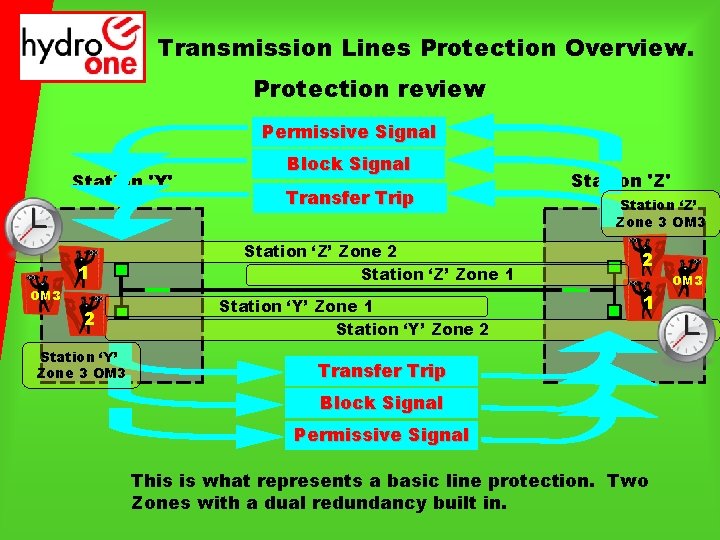
Transmission Lines Protection Overview. Protection review Permissive Signal Station 'Y' 1 OM 3 2 Station ‘Y’ Zone 3 OM 3 Block Signal Transfer Trip Station ‘Z’ Zone 2 Station ‘Z’ Zone 1 Station ‘Y’ Zone 2 Station 'Z' Station ‘Z’ Zone 3 OM 3 2 1 Transfer Trip Block Signal Permissive Signal This is what represents a basic line protection. Two Zones with a dual redundancy built in. OM 3
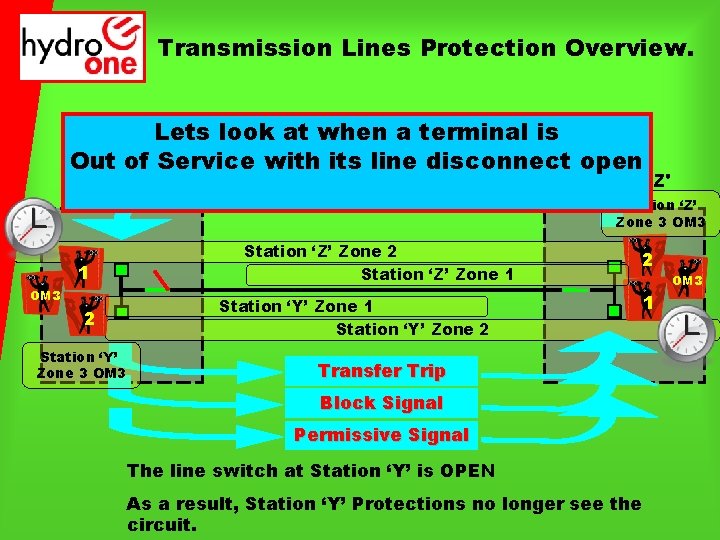
Transmission Lines Protection Overview. Permissive Signal Lets look at when a terminal is Out of Service with its line disconnect open Block Signal Station 'Y' 1 OM 3 2 Station ‘Y’ Zone 3 OM 3 Transfer Trip Station ‘Z’ Zone 2 Station ‘Z’ Zone 1 Station 'Z' Station ‘Z’ Zone 3 OM 3 2 Station ‘Y’ Zone 1 Station ‘Y’ Zone 2 Transfer Trip Block Signal Permissive Signal The line switch at Station ‘Y’ is OPEN As a result, Station ‘Y’ Protections no longer see the circuit. 1 OM 3
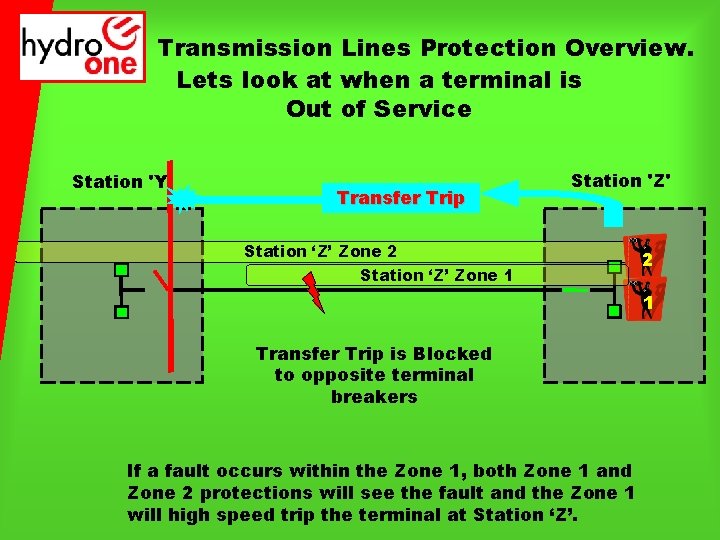
Transmission Lines Protection Overview. Lets look at when a terminal is Out of Service Station 'Y' Transfer Trip Station 'Z' Station ‘Z’ Zone 2 Station ‘Z’ Zone 1 2 1 Transfer Trip is Blocked to opposite terminal breakers If a fault occurs within the Zone 1, both Zone 1 and Zone 2 protections will see the fault and the Zone 1 will high speed trip the terminal at Station ‘Z’.
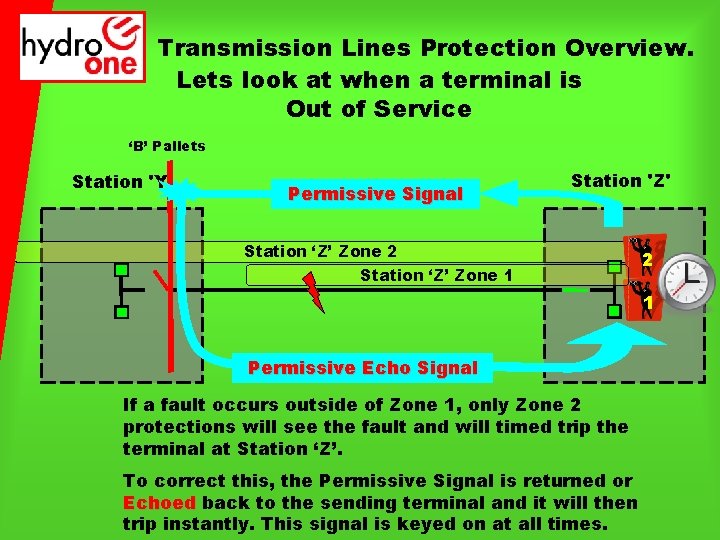
Transmission Lines Protection Overview. Lets look at when a terminal is Out of Service ‘B’ Pallets Station 'Y' Permissive Signal Station 'Z' Station ‘Z’ Zone 2 Station ‘Z’ Zone 1 2 1 Permissive Echo Signal If a fault occurs outside of Zone 1, only Zone 2 protections will see the fault and will timed trip the terminal at Station ‘Z’. To correct this, the Permissive Signal is returned or Echoed back to the sending terminal and it will then trip instantly. This signal is keyed on at all times.
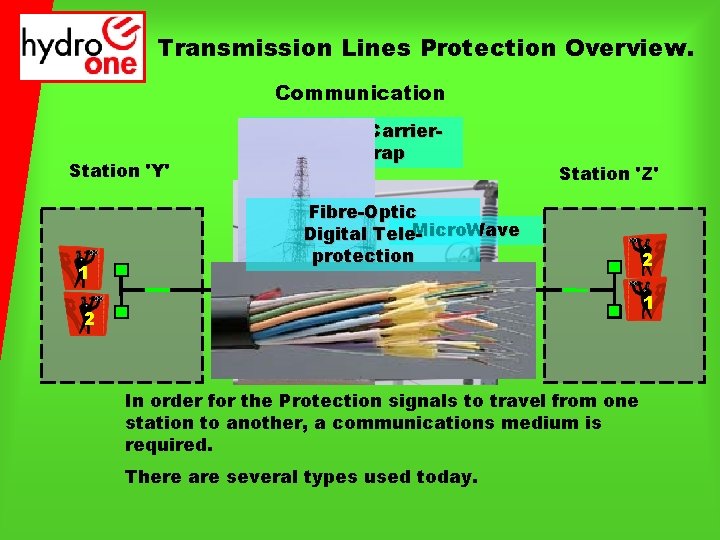
Transmission Lines Protection Overview. Communication Station 'Y' 1 Powerline Carrier. Wave Trap Station 'Z' Fibre-Optic Micro. Wave Digital Teleprotection 2 1 2 In order for the Protection signals to travel from one station to another, a communications medium is required. There are several types used today.
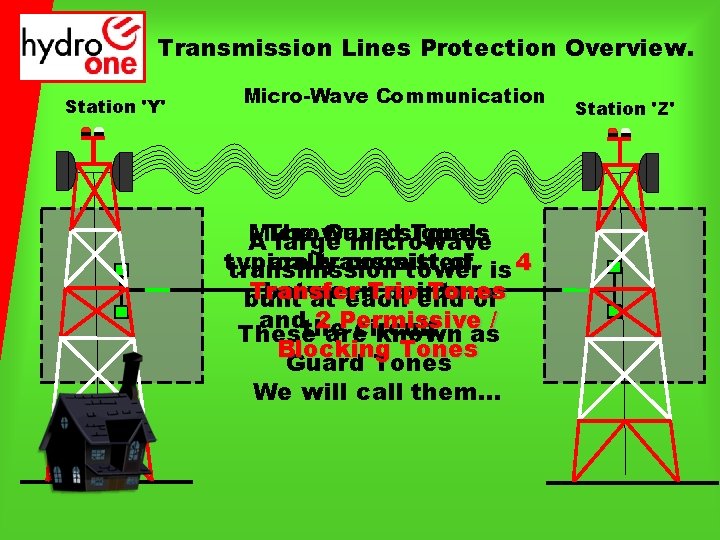
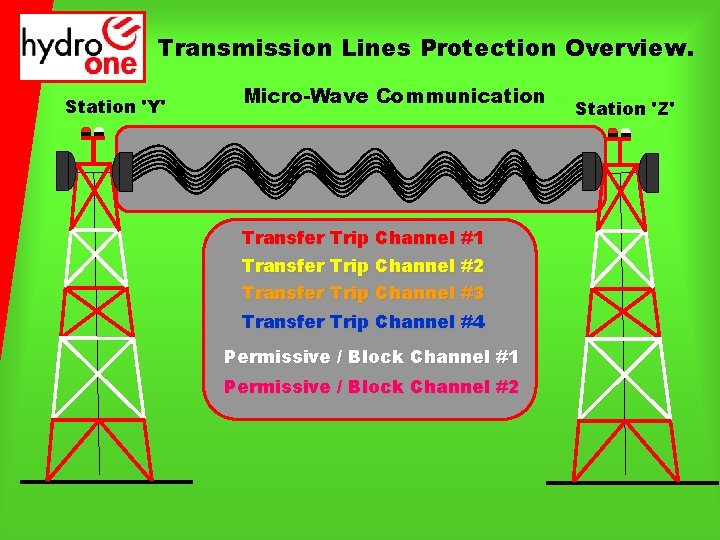
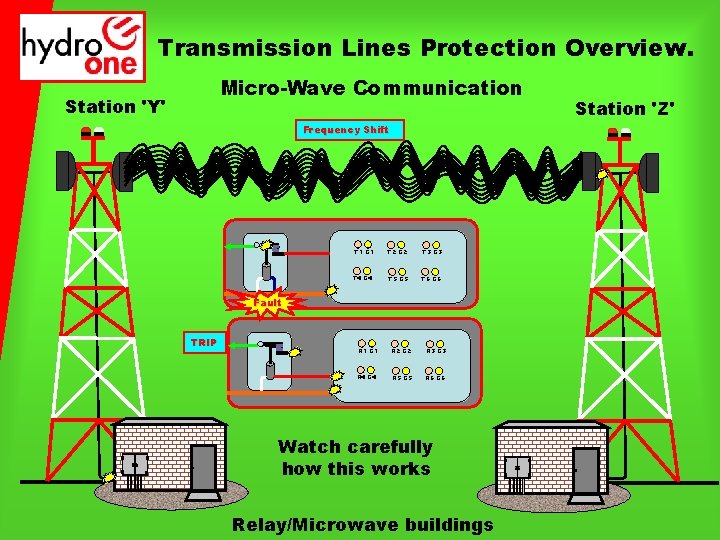
Transmission Lines Protection Overview. Station 'Y' Micro-Wave Communication Microwave signals Guard Tones AThe large microwave are transmitted typically consist of is 4 transmission tower between points. Transfer Trip Tones built at each end of andthe 2 Permissive / circuit These are known as Blocking Tones Guard Tones We will call them… Station 'Z'
Transmission Lines Protection Overview. Station 'Y' Micro-Wave Communication Transfer Trip Channel #1 Transfer Trip Channel #2 Transfer Trip Channel #3 Transfer Trip Channel #4 Permissive / Block Channel #1 Permissive / Block Channel #2 Station 'Z'
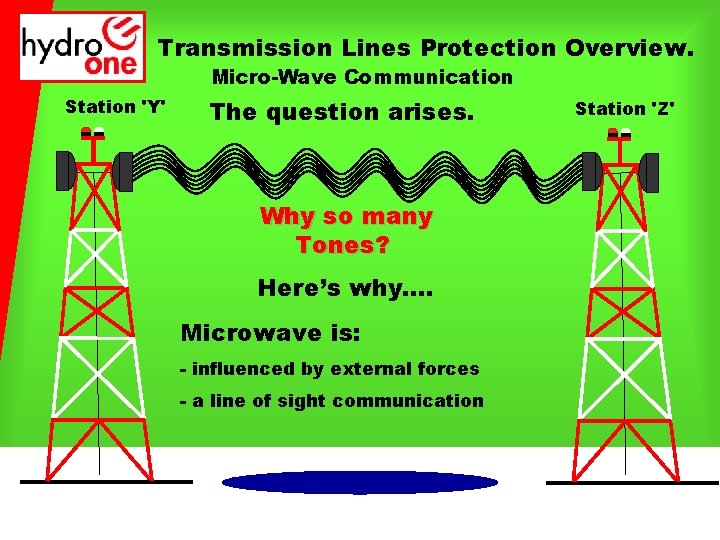
Transmission Lines Protection Overview. Micro-Wave Communication Station 'Y' The question arises. Why so many Tones? Here’s why…. Microwave is: - influenced by external forces - a line of sight communication Station 'Z'
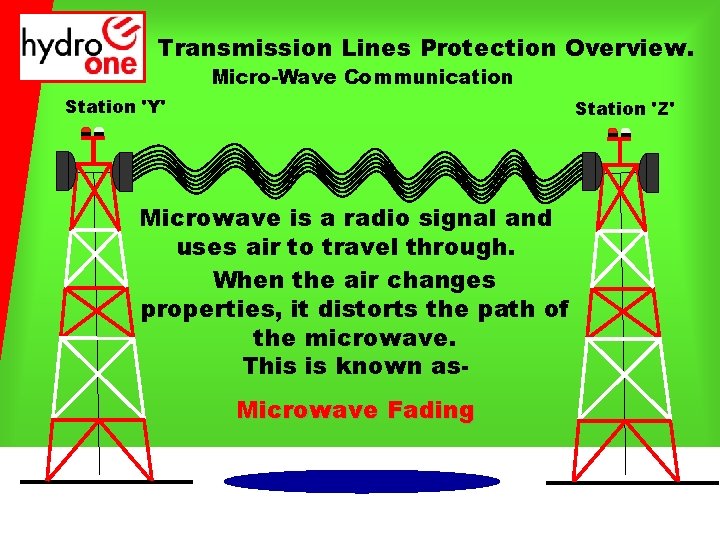
Transmission Lines Protection Overview. Micro-Wave Communication Station 'Y' Station 'Z' Microwave is a radio signal and uses air to travel through. When the air changes properties, it distorts the path of the microwave. This is known as. Microwave Fading
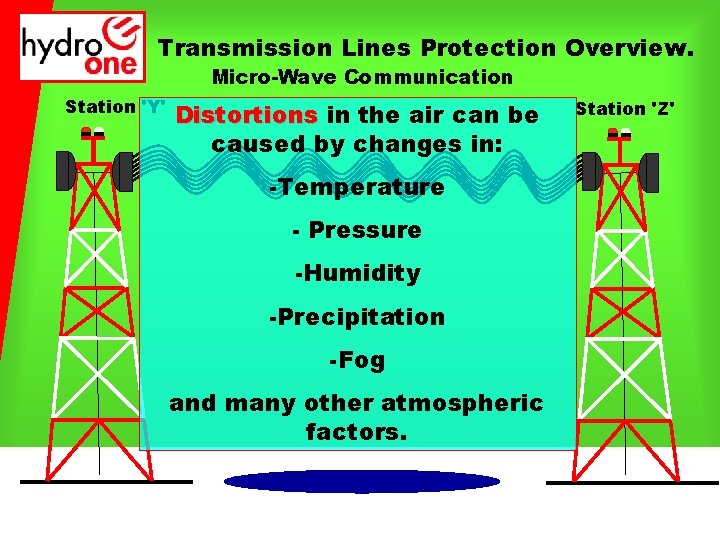
Transmission Lines Protection Overview. Micro-Wave Communication Station 'Y' Distortions in the air can be caused by changes in: -Temperature - Pressure -Humidity -Precipitation -Fog and many other atmospheric factors. Station 'Z'
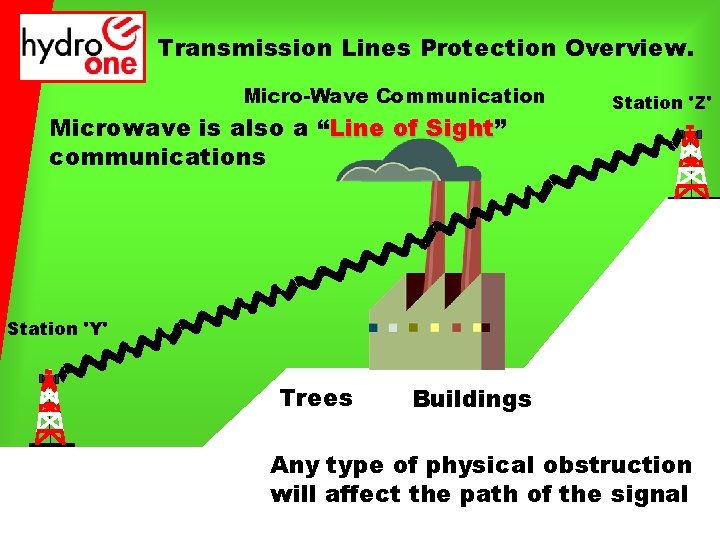
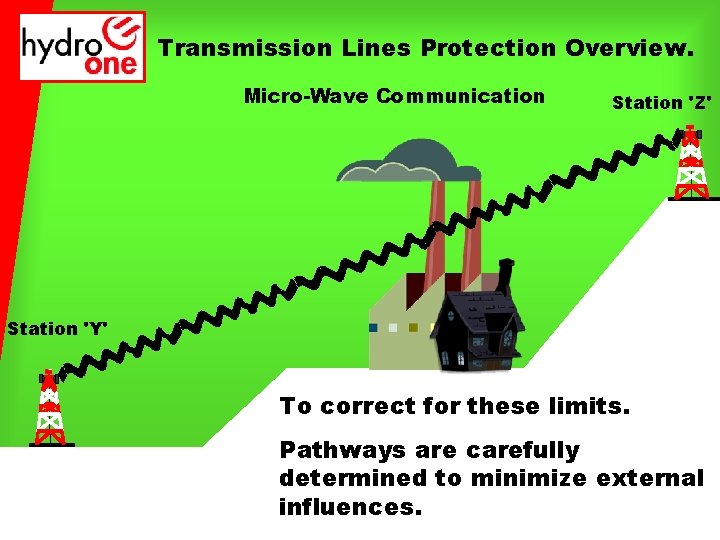
Transmission Lines Protection Overview. Micro-Wave Communication Microwave is also a “Line of Sight” Sight communications Station 'Z' Station 'Y' Trees Buildings Any type of physical obstruction will affect the path of the signal
Transmission Lines Protection Overview. Micro-Wave Communication Station 'Z' Station 'Y' To correct for these limits. Pathways are carefully determined to minimize external influences.
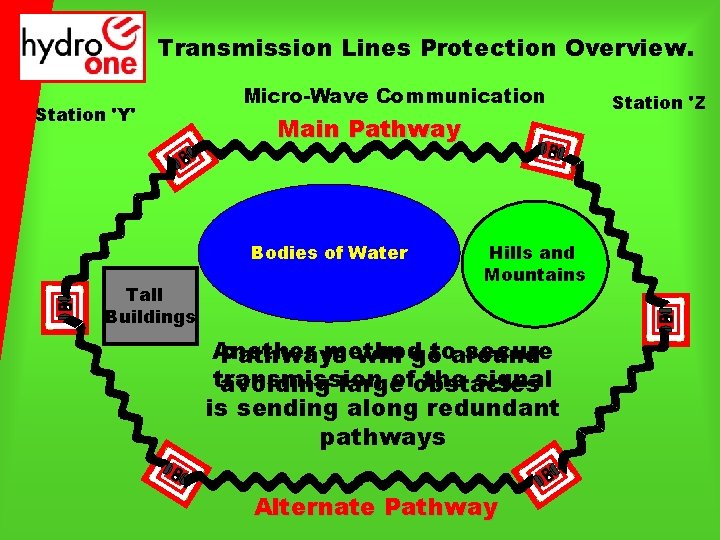
Transmission Lines Protection Overview. Station 'Y' Micro-Wave Communication Main Pathway Bodies of Water Tall Buildings Hills and Mountains Another method secure Pathways will gotoaround transmission ofobstacles the signal avoiding large is sending along redundant pathways Alternate Pathway Station 'Z
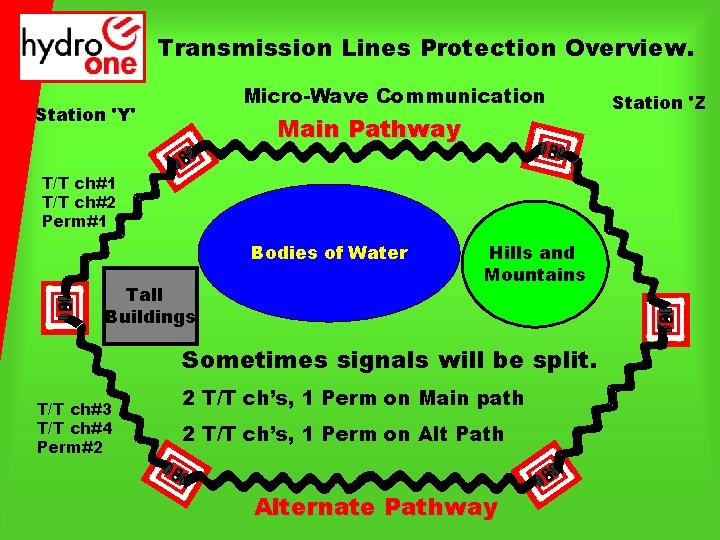
Transmission Lines Protection Overview. Micro-Wave Communication Station 'Y' Main Pathway T/T ch#1 T/T ch#2 Perm#1 Bodies of Water Tall Buildings Hills and Mountains Sometimes signals will be split. T/T ch#3 T/T ch#4 Perm#2 2 T/T ch’s, 1 Perm on Main path 2 T/T ch’s, 1 Perm on Alt Path Alternate Pathway Station 'Z
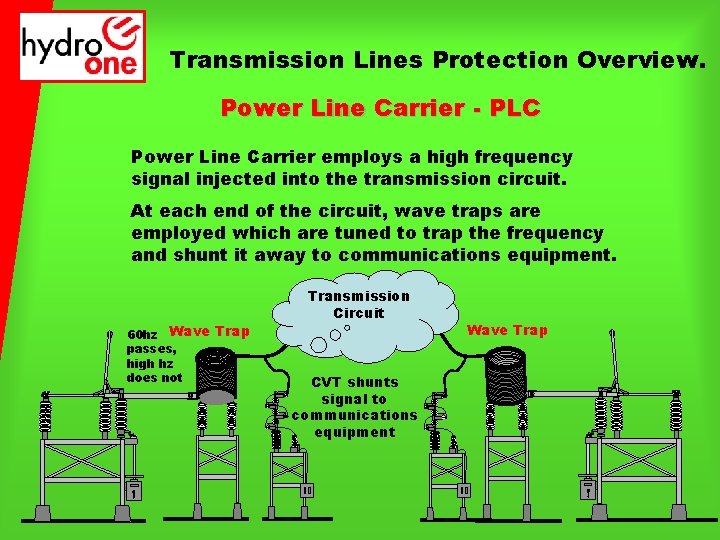
Transmission Lines Protection Overview. Power Line Carrier - PLC Power Line Carrier employs a high frequency signal injected into the transmission circuit. At each end of the circuit, wave traps are employed which are tuned to trap the frequency and shunt it away to communications equipment. 60 hz Wave Trap passes, high hz does not Transmission Circuit CVT shunts signal to communications equipment Wave Trap
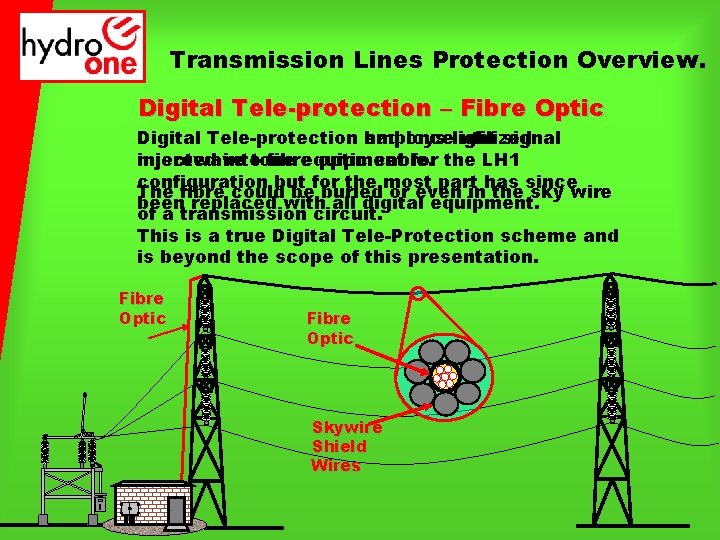
Transmission Lines Protection Overview. Digital Tele-protection – Fibre Optic Digital Tele-protection had employs oncelight utilized signal injected into microwave tone fibre equipment optic cable. for the LH 1 configuration but for the most part has since The fibre could be buried or even in the sky wire been replaced with all digital equipment. of a transmission circuit. This is a true Digital Tele-Protection scheme and is beyond the scope of this presentation. Fibre Optic Skywire Shield Wires
Transmission Lines Protection Overview. Micro-Wave Communication Station 'Y' Frequency Shift T 1 G 1 T 2 G 2 T 3 G 3 T 4 G 4 T 5 G 5 T 6 G 6 Fault TRIP R 1 G 1 R 2 G 2 R 3 G 3 R 4 G 4 R 5 G 5 R 6 G 6 Watch carefully how this works Relay/Microwave buildings Station 'Z'
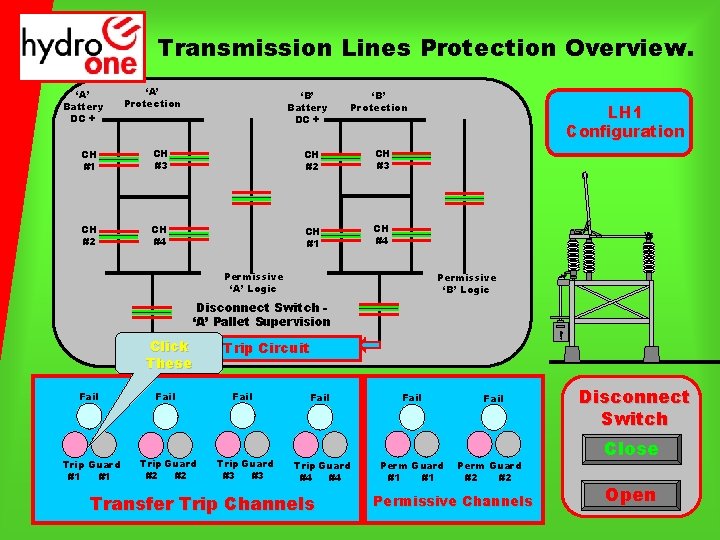
Transmission Lines Protection Overview. ‘A’ Battery DC + ‘A’ Protection ‘B’ Battery DC + ‘B’ Protection CH #1 CH #3 CH #2 CH #4 CH #1 CH #4 Permissive ‘A’ Logic LH 1 Configuration Permissive ‘B’ Logic Disconnect Switch ‘A’ Pallet Supervision Click These Fail Trip Guard #1 #1 Fail Trip Guard #2 #2 Trip Circuit Fail Trip Guard #3 #3 Fail Trip Guard #4 #4 Transfer Trip Channels Fail Perm Guard #1 #1 Fail Perm Guard #2 #2 Permissive Channels Disconnect Switch Close Open
Transmission Lines Protection Overview. To conclude you learned: • • • What a circuit is What circuit protections are and why they are needed The different zones of protection and how they work Transfer Trip, Permissive & Block signals Microwave, Power Line Carriers and Fibre-Optic Digital Tele-Protections communications • LH 1 configuration for protection tripping
Transmission Lines Protection Overview. The End