
Network Management and SNMP What is Network Management

- Slides: 27
Network Management and SNMP Ø What is Network Management? Ø ISO Network Management Model (FCAPS) Ø Network Management Architecture Ø SNMPv 1 and SNMPv 2 Ø SNMPv 3 – what’s new? 1
Network Management Ø Any complex system with many interacting components must be monitored, managed and controlled Ø In the early 1980 networks expansion prompted the need for automated network management 2
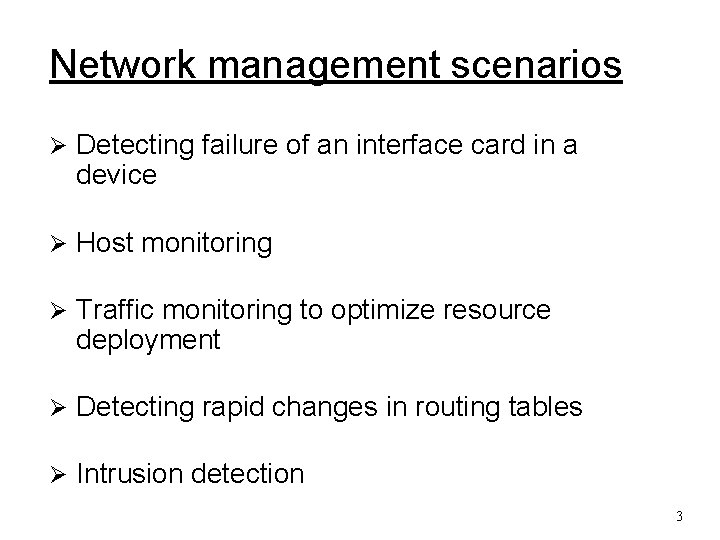
Network management scenarios Ø Detecting failure of an interface card in a device Ø Host monitoring Ø Traffic monitoring to optimize resource deployment Ø Detecting rapid changes in routing tables Ø Intrusion detection 3
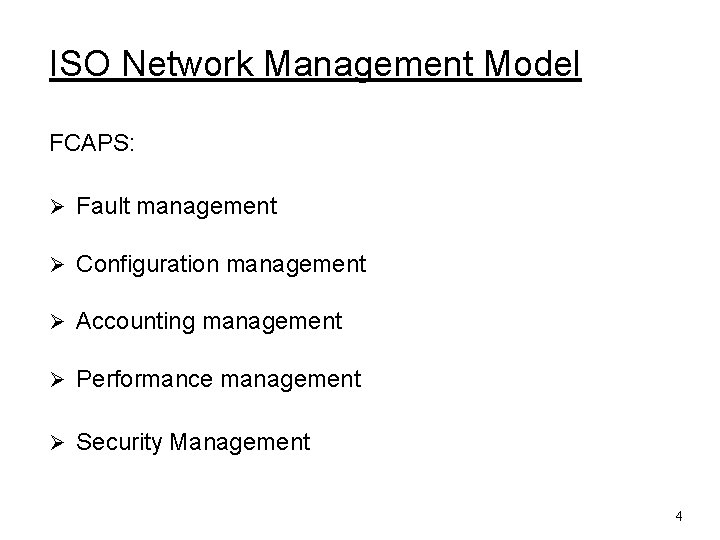
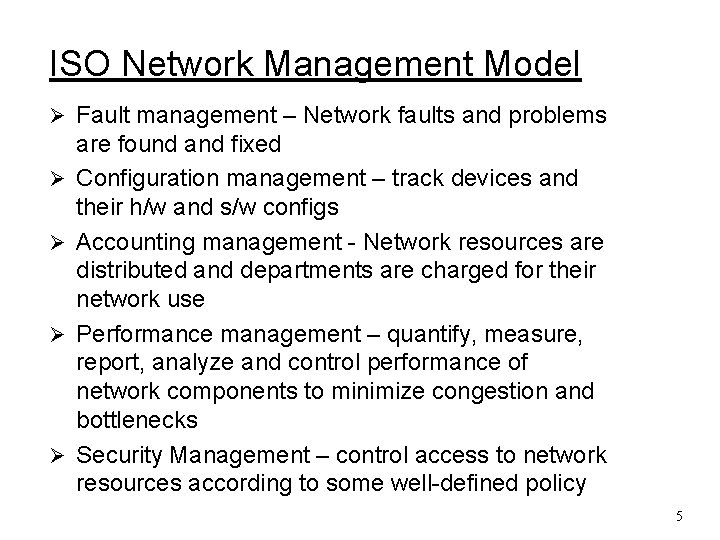
ISO Network Management Model FCAPS: Ø Fault management Ø Configuration management Ø Accounting management Ø Performance management Ø Security Management 4
ISO Network Management Model Ø Fault management – Network faults and problems Ø Ø are found and fixed Configuration management – track devices and their h/w and s/w configs Accounting management - Network resources are distributed and departments are charged for their network use Performance management – quantify, measure, report, analyze and control performance of network components to minimize congestion and bottlenecks Security Management – control access to network resources according to some well-defined policy 5
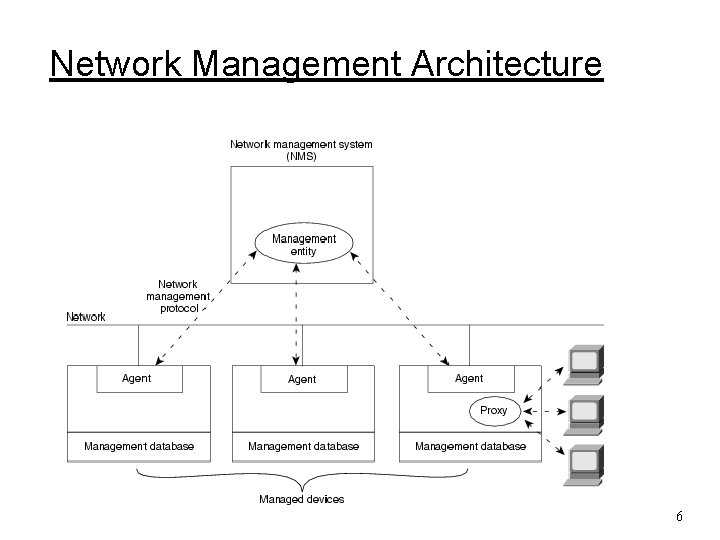
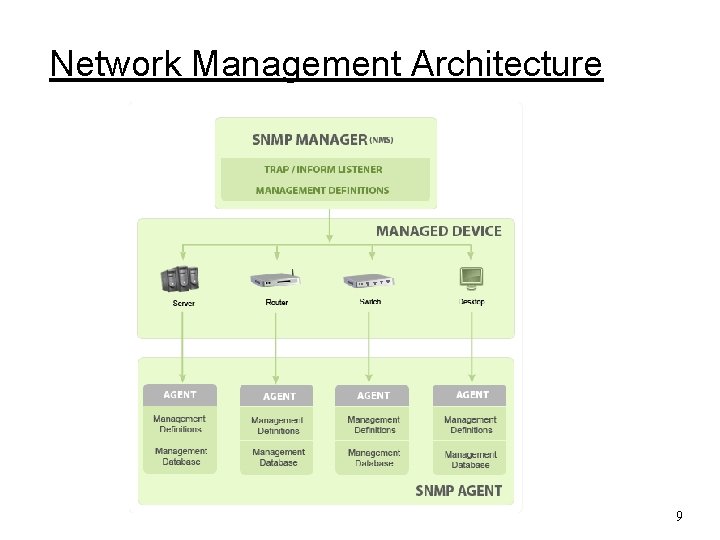
Network Management Architecture 6
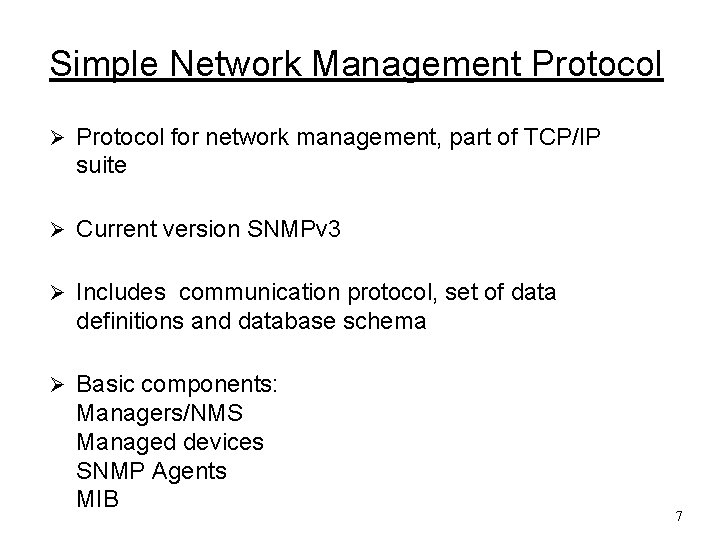
Simple Network Management Protocol Ø Protocol for network management, part of TCP/IP suite Ø Current version SNMPv 3 Ø Includes communication protocol, set of data definitions and database schema Ø Basic components: Managers/NMS Managed devices SNMP Agents MIB 7
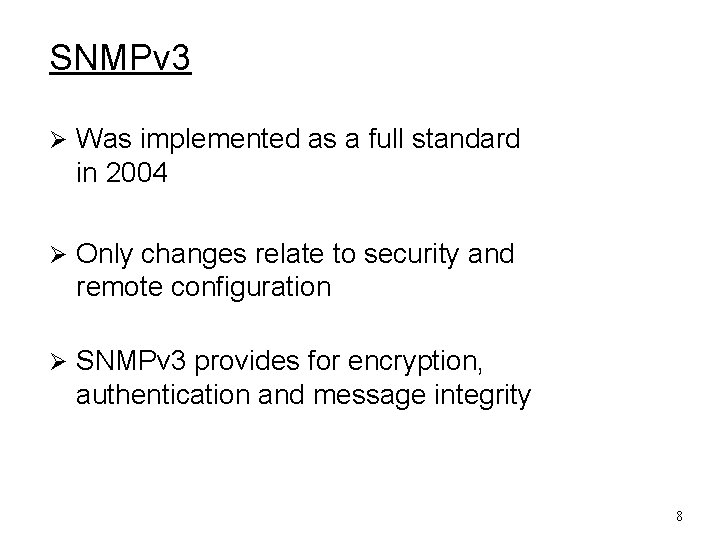
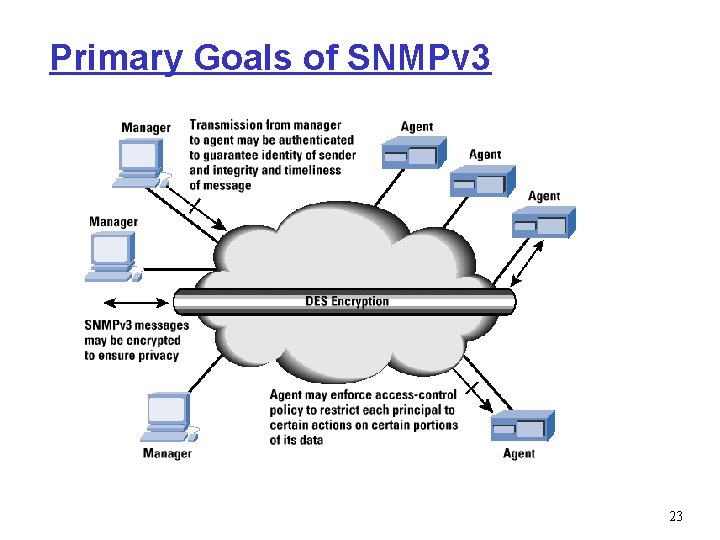
SNMPv 3 Ø Was implemented as a full standard in 2004 Ø Only changes relate to security and remote configuration Ø SNMPv 3 provides for encryption, authentication and message integrity 8
Network Management Architecture 9
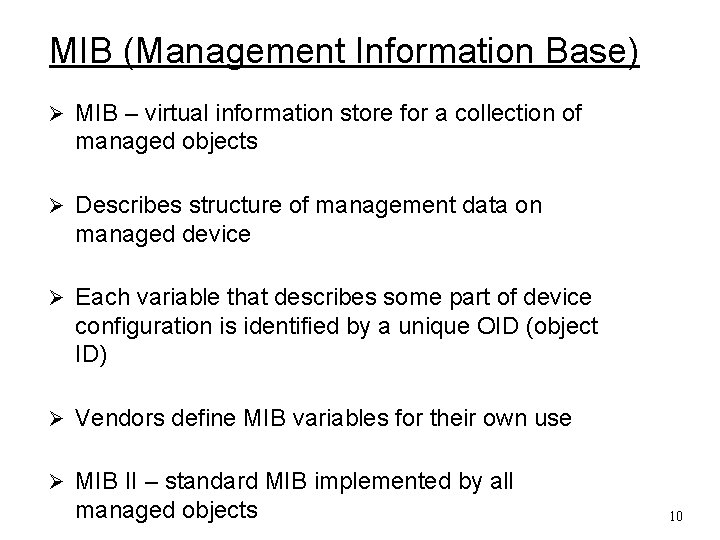
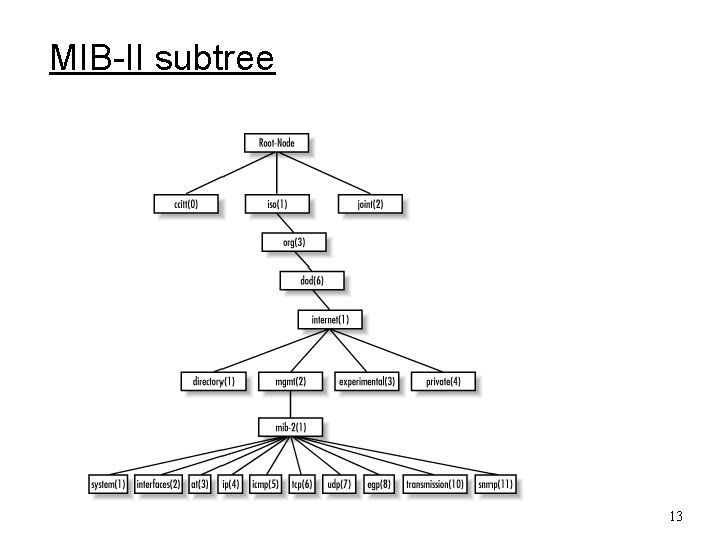
MIB (Management Information Base) Ø MIB – virtual information store for a collection of managed objects Ø Describes structure of management data on managed device Ø Each variable that describes some part of device configuration is identified by a unique OID (object ID) Ø Vendors define MIB variables for their own use Ø MIB II – standard MIB implemented by all managed objects 10
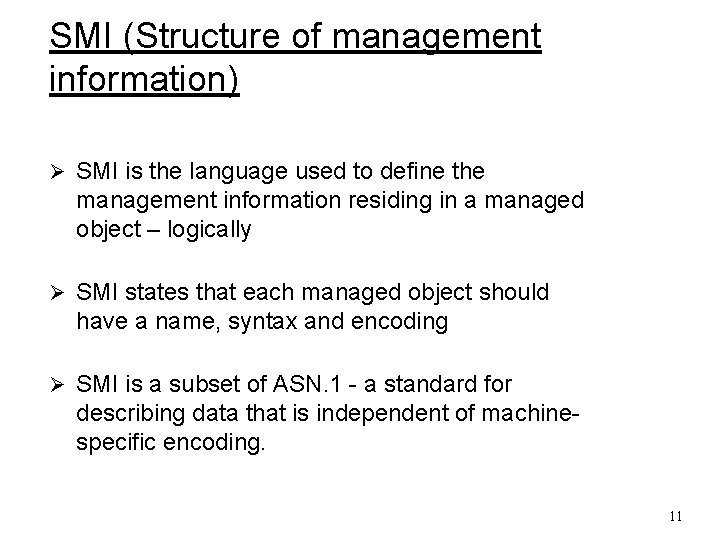
SMI (Structure of management information) Ø SMI is the language used to define the management information residing in a managed object – logically Ø SMI states that each managed object should have a name, syntax and encoding Ø SMI is a subset of ASN. 1 - a standard for describing data that is independent of machinespecific encoding. 11
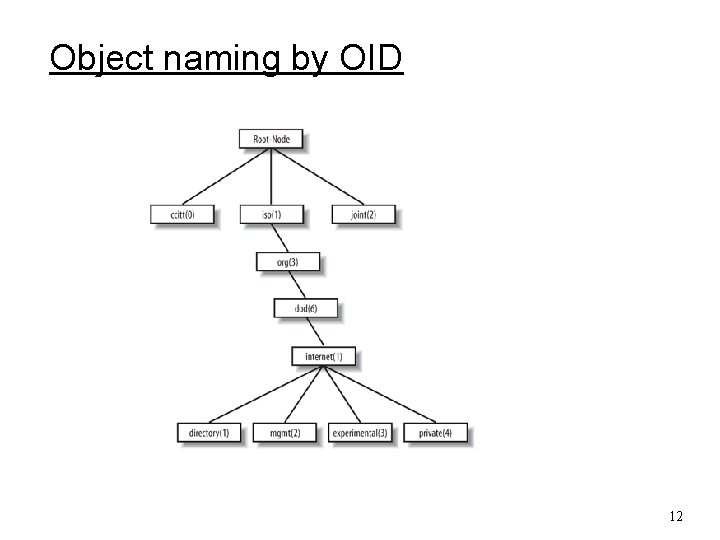
Object naming by OID 12
MIB-II subtree 13
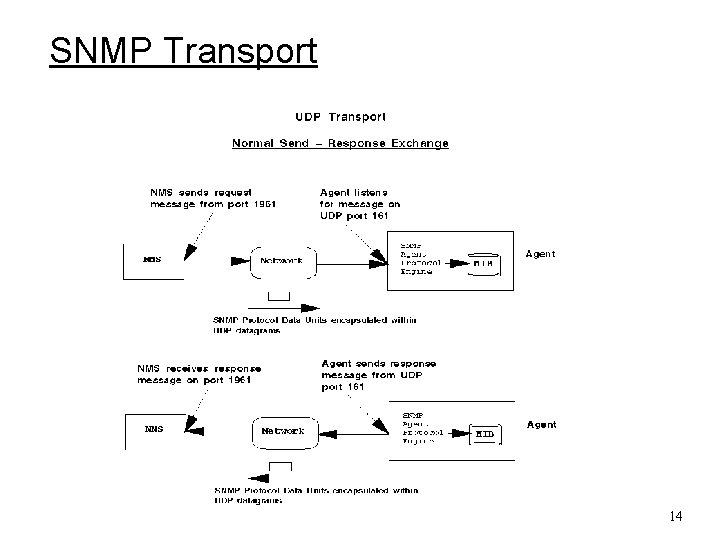
SNMP Transport 14
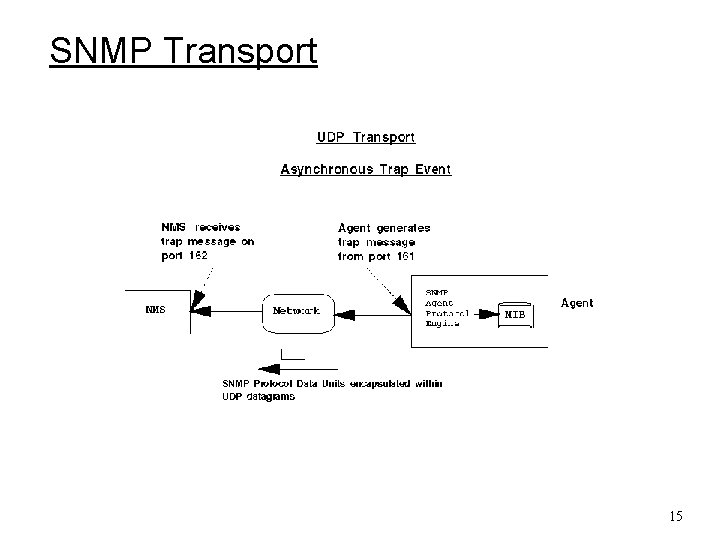
SNMP Transport 15
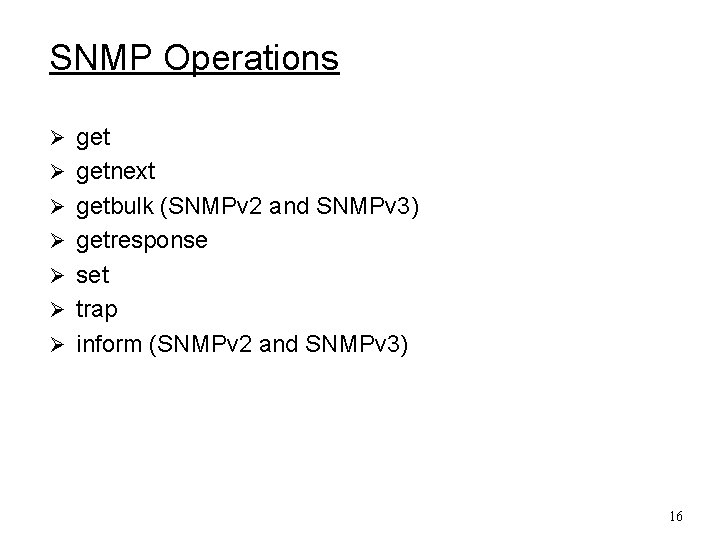
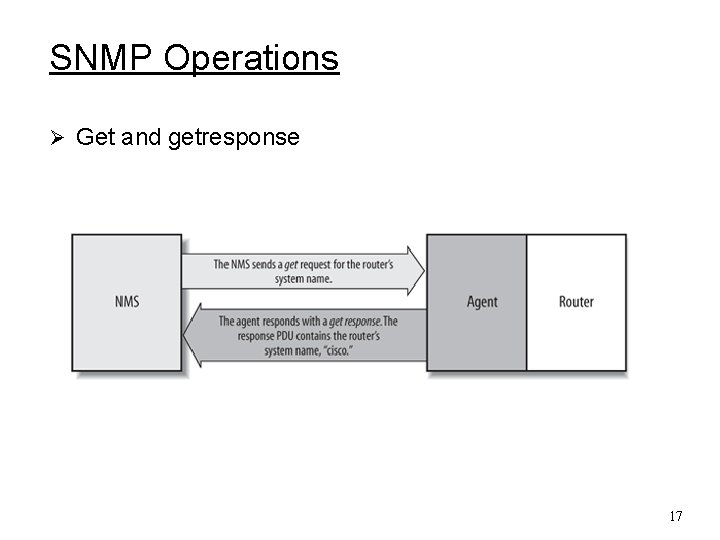
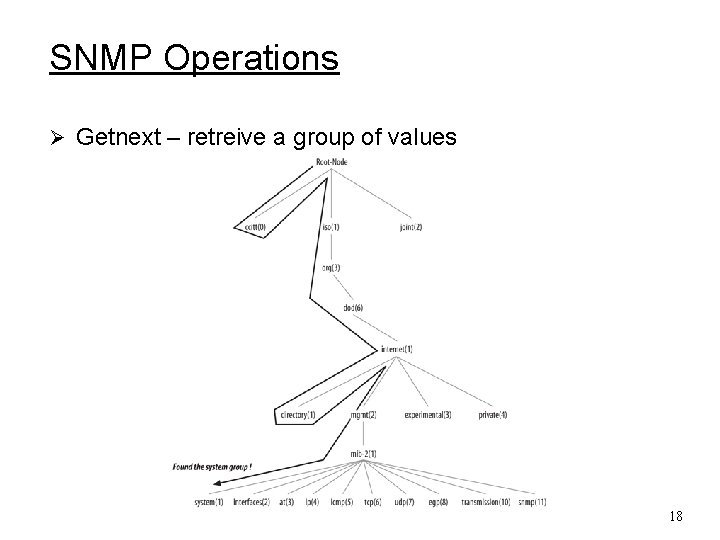
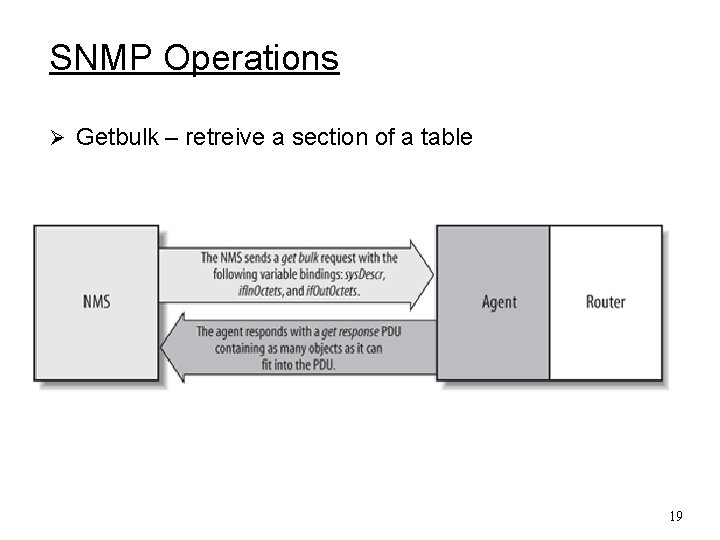
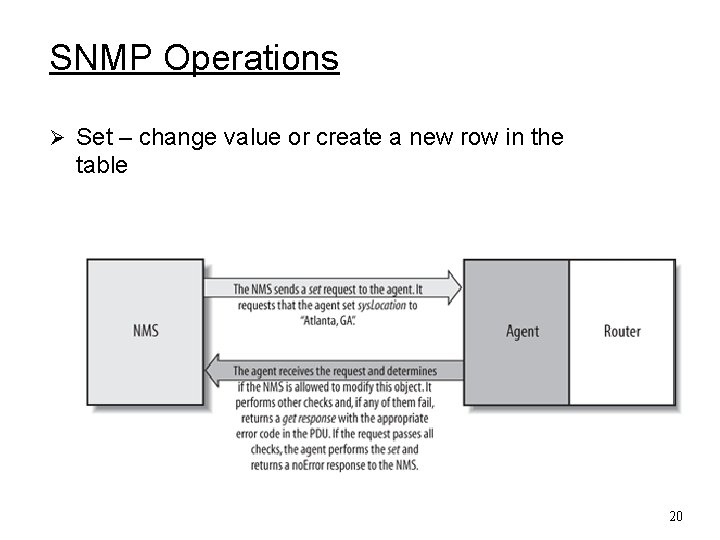
SNMP Operations Ø getnext Ø getbulk (SNMPv 2 and SNMPv 3) Ø getresponse Ø set Ø trap Ø inform (SNMPv 2 and SNMPv 3) 16
SNMP Operations Ø Get and getresponse 17
SNMP Operations Ø Getnext – retreive a group of values 18
SNMP Operations Ø Getbulk – retreive a section of a table 19
SNMP Operations Ø Set – change value or create a new row in the table 20
SNMP Operations Ø Trap – asynchronous operation 21
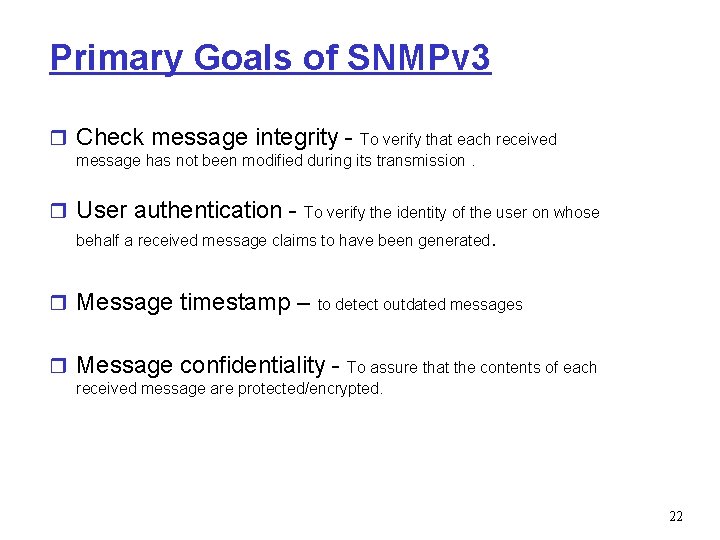
Primary Goals of SNMPv 3 r Check message integrity - To verify that each received message has not been modified during its transmission. r User authentication - To verify the identity of the user on whose behalf a received message claims to have been generated. r Message timestamp – to detect outdated messages r Message confidentiality - To assure that the contents of each received message are protected/encrypted. 22
Primary Goals of SNMPv 3 23
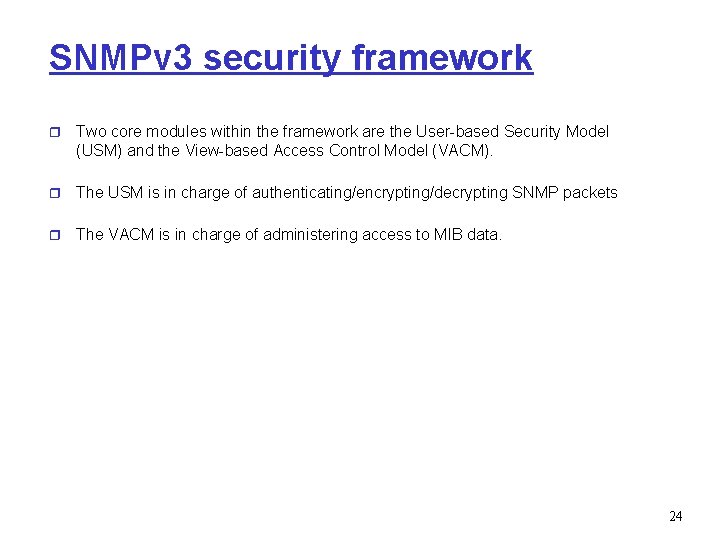
SNMPv 3 security framework r Two core modules within the framework are the User-based Security Model (USM) and the View-based Access Control Model (VACM). r The USM is in charge of authenticating/encrypting/decrypting SNMP packets r The VACM is in charge of administering access to MIB data. 24
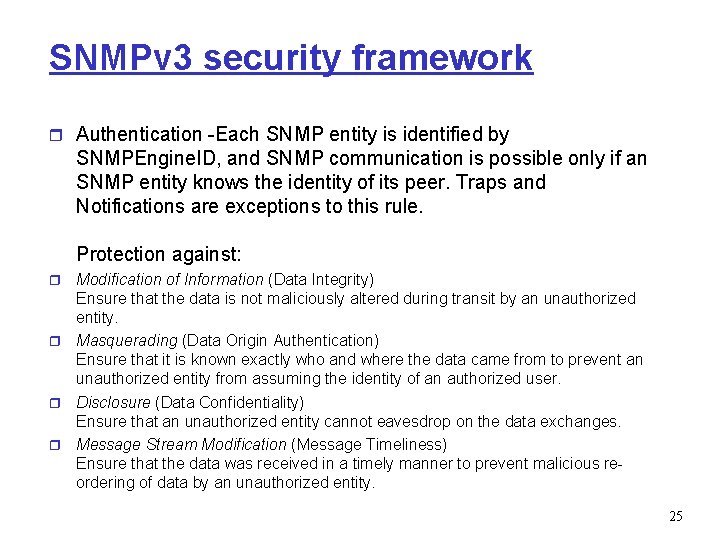
SNMPv 3 security framework r Authentication -Each SNMP entity is identified by SNMPEngine. ID, and SNMP communication is possible only if an SNMP entity knows the identity of its peer. Traps and Notifications are exceptions to this rule. Protection against: Modification of Information (Data Integrity) Ensure that the data is not maliciously altered during transit by an unauthorized entity. r Masquerading (Data Origin Authentication) Ensure that it is known exactly who and where the data came from to prevent an unauthorized entity from assuming the identity of an authorized user. r Disclosure (Data Confidentiality) Ensure that an unauthorized entity cannot eavesdrop on the data exchanges. r Message Stream Modification (Message Timeliness) Ensure that the data was received in a timely manner to prevent malicious reordering of data by an unauthorized entity. r 25
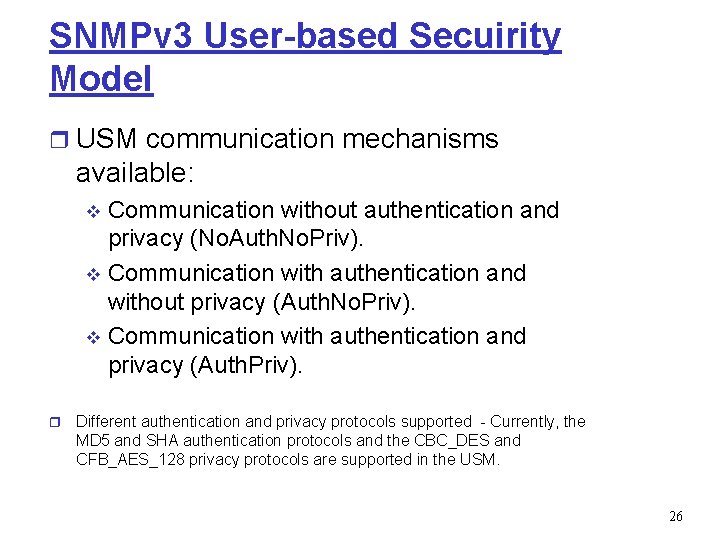
SNMPv 3 User-based Secuirity Model r USM communication mechanisms available: Communication without authentication and privacy (No. Auth. No. Priv). v Communication with authentication and without privacy (Auth. No. Priv). v Communication with authentication and privacy (Auth. Priv). v r Different authentication and privacy protocols supported - Currently, the MD 5 and SHA authentication protocols and the CBC_DES and CFB_AES_128 privacy protocols are supported in the USM. 26
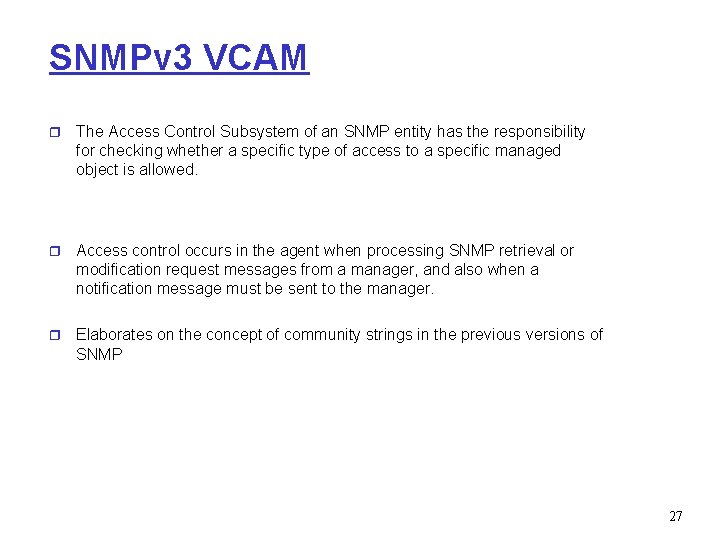
SNMPv 3 VCAM r The Access Control Subsystem of an SNMP entity has the responsibility for checking whether a specific type of access to a specific managed object is allowed. r Access control occurs in the agent when processing SNMP retrieval or modification request messages from a manager, and also when a notification message must be sent to the manager. r Elaborates on the concept of community strings in the previous versions of SNMP 27