
Network Layer We have discussed data link architectures
- Slides: 48
Network Layer • We have discussed data link architectures § CSMA/CD § Point-to-Point § Wireless LANs • These architectures deliver frames to next station • They implement network segments, possibly connected through bridges • One might build a private medium size private network this way • Could not build a universal or public network this way
Network Layer • We would like to interconnect such networks into a consistent larger network • We could consider this larger network an internet, an interconnection of networks • Logical ‘gluing’ of heterogeneous layer 2 networks to appear as a single network • A number of issues must be addressed § Universal addressing § Routing § Packetizing data
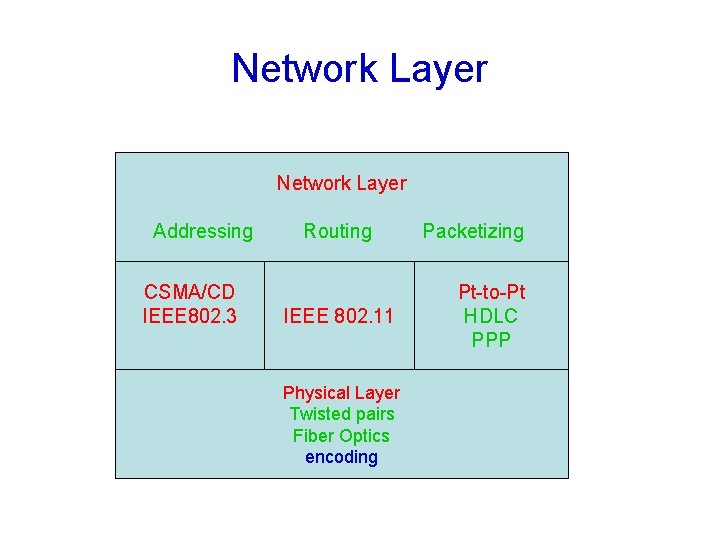
Network Layer Addressing CSMA/CD IEEE 802. 3 Routing IEEE 802. 11 Physical Layer Twisted pairs Fiber Optics encoding Packetizing Pt-to-Pt HDLC PPP
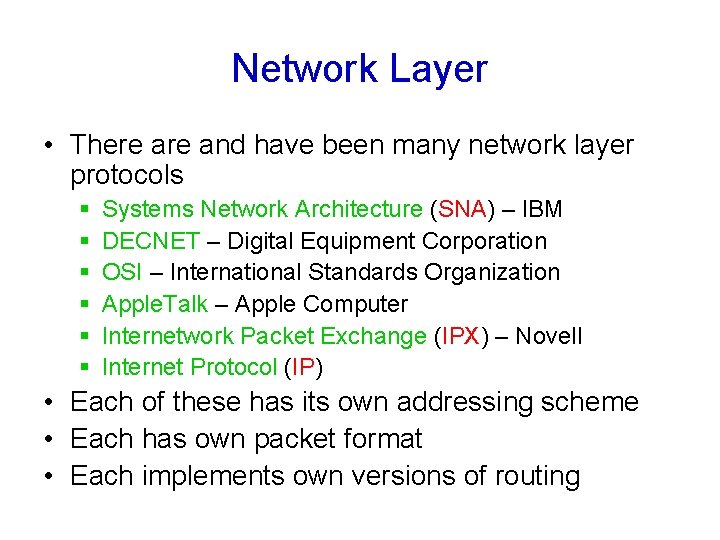
Network Layer • There and have been many network layer protocols § § § Systems Network Architecture (SNA) – IBM DECNET – Digital Equipment Corporation OSI – International Standards Organization Apple. Talk – Apple Computer Internetwork Packet Exchange (IPX) – Novell Internet Protocol (IP) • Each of these has its own addressing scheme • Each has own packet format • Each implements own versions of routing
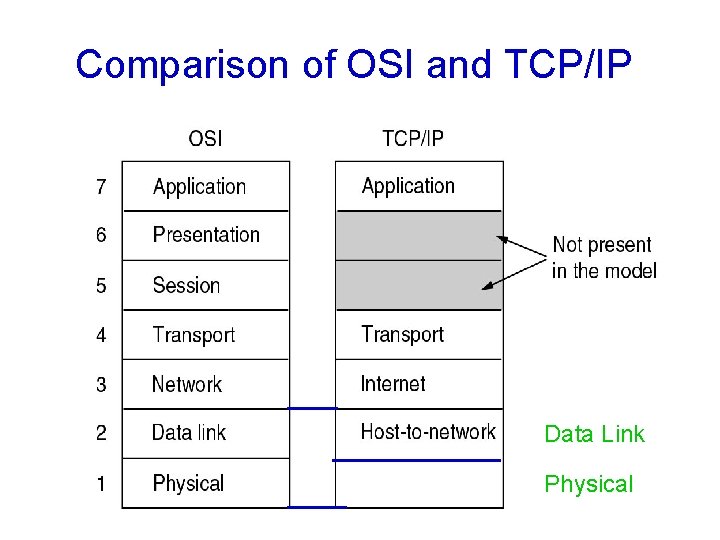
Network Layer • We will discuss the Internet Protocol • Recall, this is layered protocol, much like the OSI model • Internet Protocol does not have its own physical or data link layers • Uses existing lower layer protocols as discussed • The Internet Protocol is often called TCP/IP which represents its two underlying protocols
Comparison of OSI and TCP/IP Data Link Physical
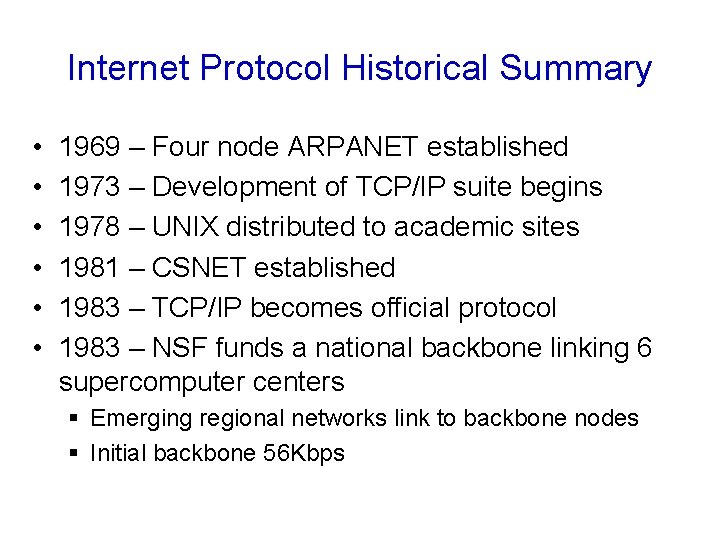
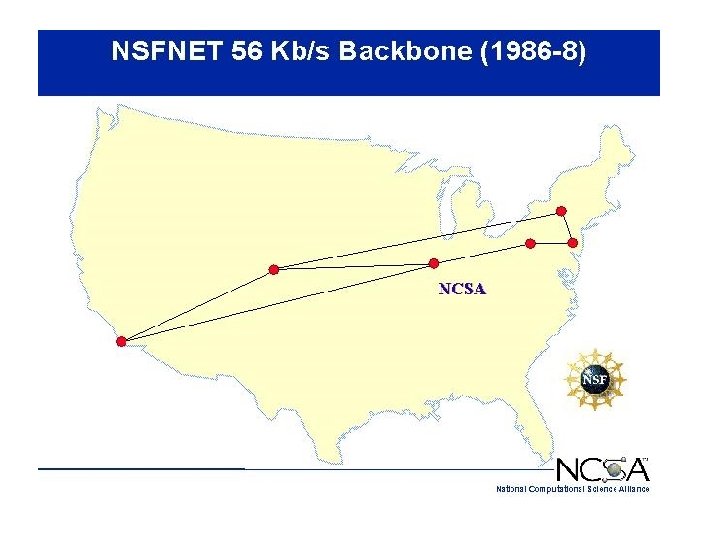
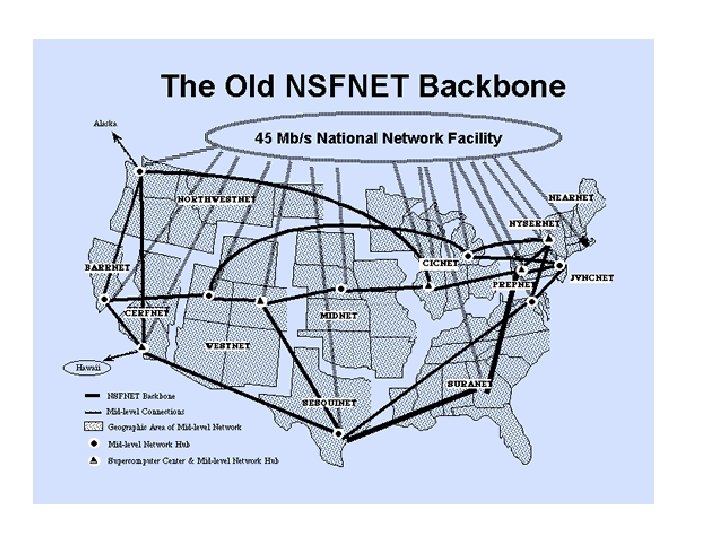
Internet Protocol Historical Summary • • • 1969 – Four node ARPANET established 1973 – Development of TCP/IP suite begins 1978 – UNIX distributed to academic sites 1981 – CSNET established 1983 – TCP/IP becomes official protocol 1983 – NSF funds a national backbone linking 6 supercomputer centers § Emerging regional networks link to backbone nodes § Initial backbone 56 Kbps
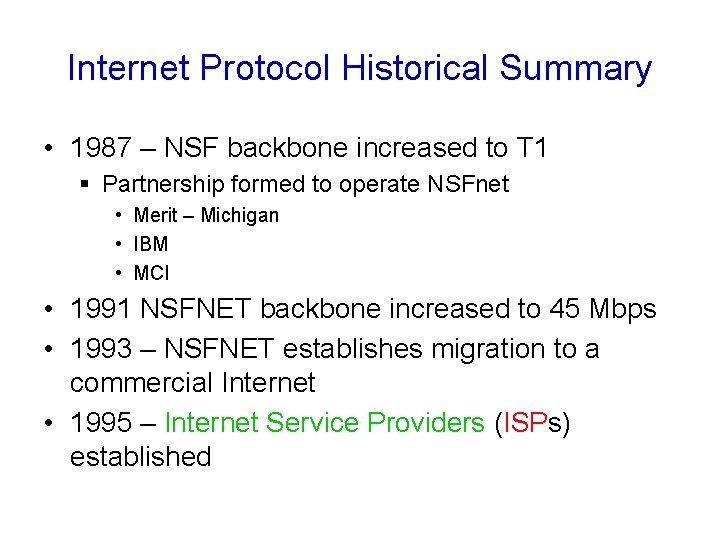
Internet Protocol Historical Summary • 1987 – NSF backbone increased to T 1 § Partnership formed to operate NSFnet • Merit – Michigan • IBM • MCI • 1991 NSFNET backbone increased to 45 Mbps • 1993 – NSFNET establishes migration to a commercial Internet • 1995 – Internet Service Providers (ISPs) established
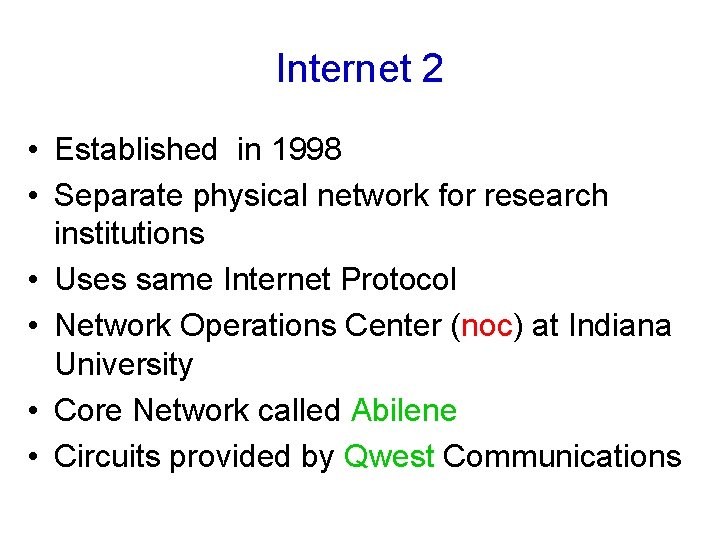
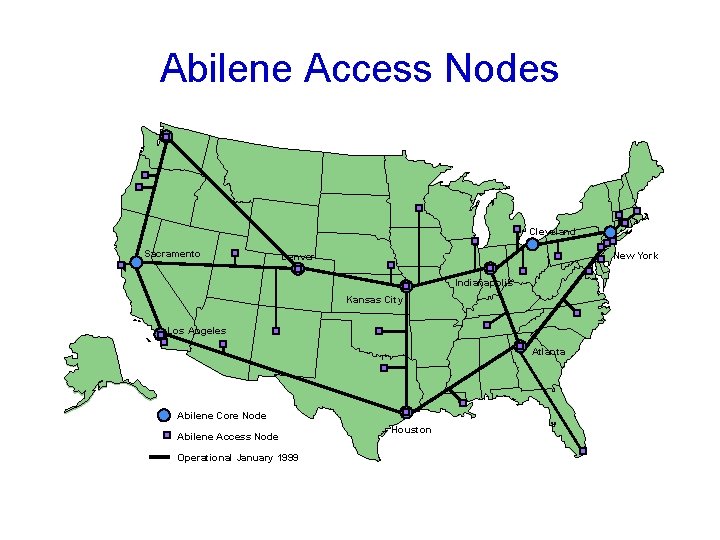
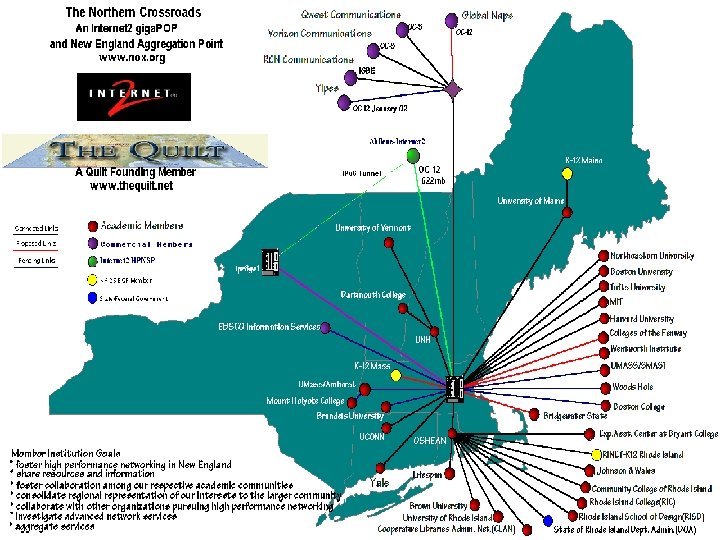
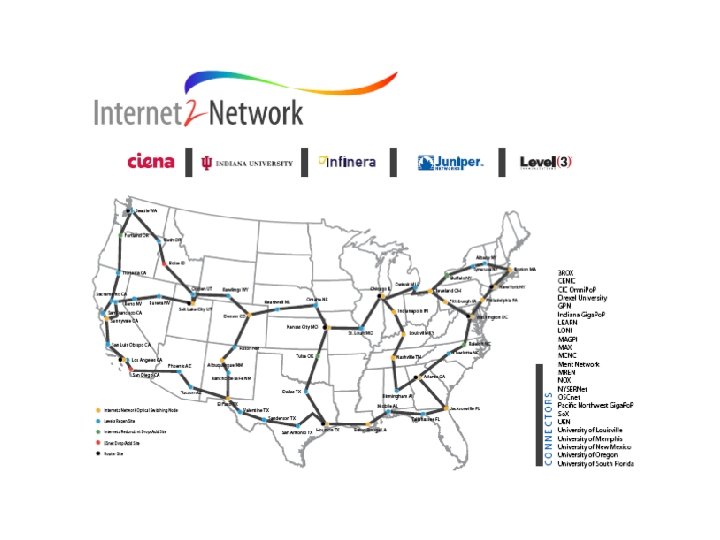
Internet 2 • Established in 1998 • Separate physical network for research institutions • Uses same Internet Protocol • Network Operations Center (noc) at Indiana University • Core Network called Abilene • Circuits provided by Qwest Communications
Abilene Access Nodes Seattle Cleveland Sacramento New York Denver Indianapolis Kansas City Los Angeles Atlanta Abilene Core Node Abilene Access Node Operational January 1999 Houston
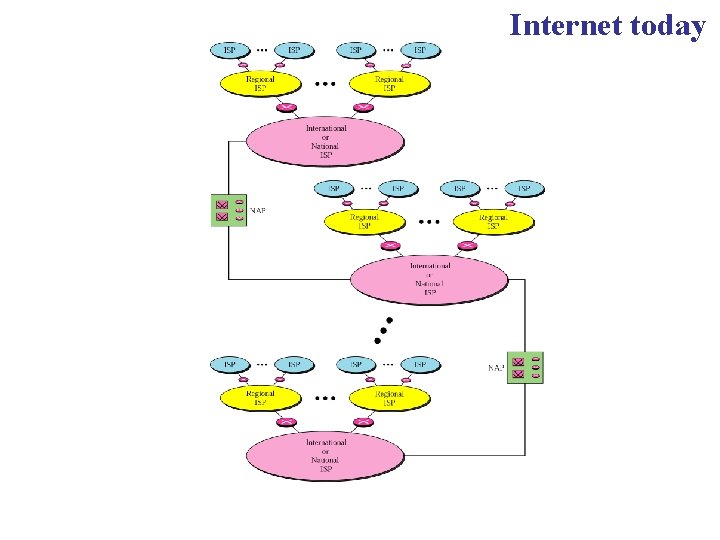
Internet today
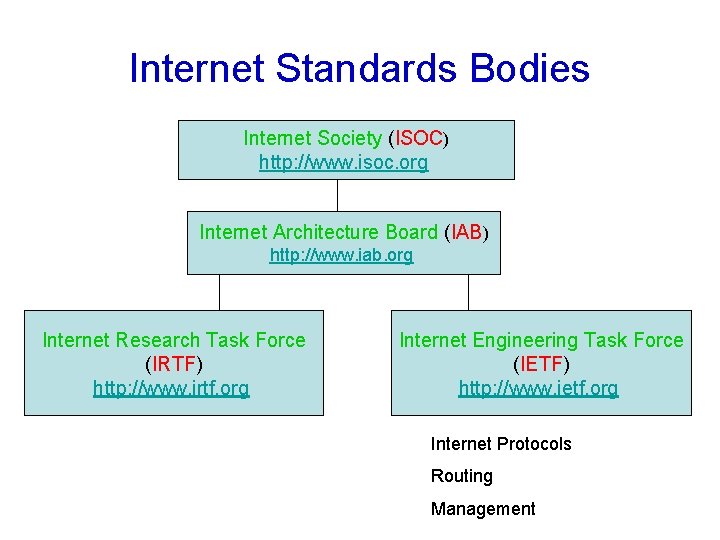
Internet Standards Bodies Internet Society (ISOC) http: //www. isoc. org Internet Architecture Board (IAB) http: //www. iab. org Internet Research Task Force (IRTF) http: //www. irtf. org Internet Engineering Task Force (IETF) http: //www. ietf. org Internet Protocols Routing Management
Internet Standards Documentation • Official standards published in documents called Request for Comments (RFCs) • RFCs go through various stages § Internet Draft • Experimental • Informational • Proposed standard – Draft Standard – Internet Standard • RFCs are stored in a public repository http: //www. ietf. org
Internet Addressing • For an Internet, we need universal identification of nodes • Must apply to different types of networks • Must be independent of vendor, hardware, physical network • In TCP/IP we deal with various addresses § Physical addresses – MAC addresses § IP addresses – universal address § Port – specifies service
Internet Addressing • Administration of Internet addresses § Internet Corporation for Assigned Names and Numbers (ICANN) http: //www. icann. org § Internet Assigned Numbers Authority (IANA) http: //www. iana. org Authorizes and oversees 5 registries • • APNIC (Asia Pacific Network Information Centre) ARIN (American Registry for Internet Numbers) RIPE NCC (Réseaux IP Européens) LACNIC (Regional Latin-American and Caribbean IP Address Registry) • Afri. NIC (African Network Information Centre)
Internet Address • An IP address is 32 bit word • Maximum of 232 or 4, 294, 967, 296 addresses • Address are assigned in ranges to accommodate § Large networks § Medium size networks § Small networks • Convenient to break address into two parts § Range number – network § Individual numbers within the range - host
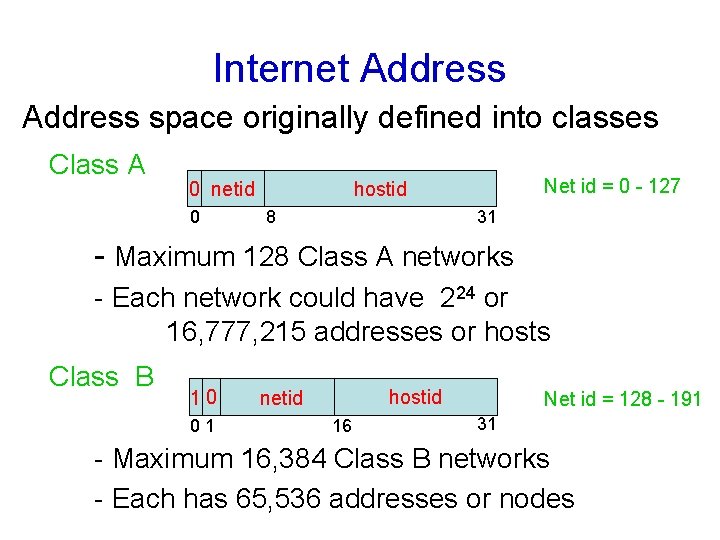
Internet Address space originally defined into classes Class A 0 netid 0 Net id = 0 - 127 hostid 8 31 - Maximum 128 Class A networks - Each network could have 224 or 16, 777, 215 addresses or hosts Class B 10 01 hostid netid 16 Net id = 128 - 191 31 - Maximum 16, 384 Class B networks - Each has 65, 536 addresses or nodes
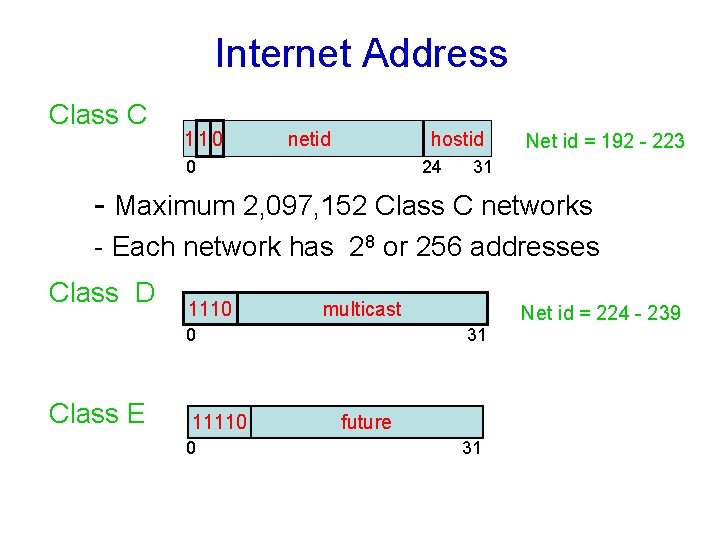
Internet Address Class C 110 netid hostid 0 24 Net id = 192 - 223 31 - Maximum 2, 097, 152 Class C networks - Each network has 28 or 256 addresses Class D 1110 multicast 0 Class E 11110 0 Net id = 224 - 239 31 future 31
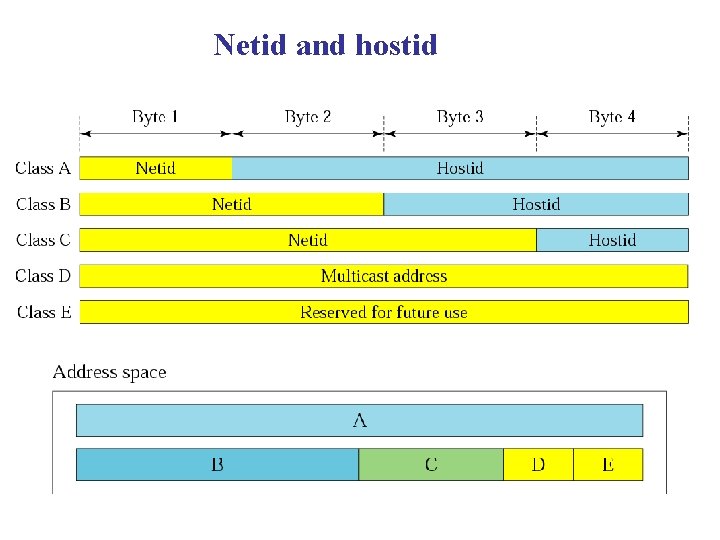
Netid and hostid
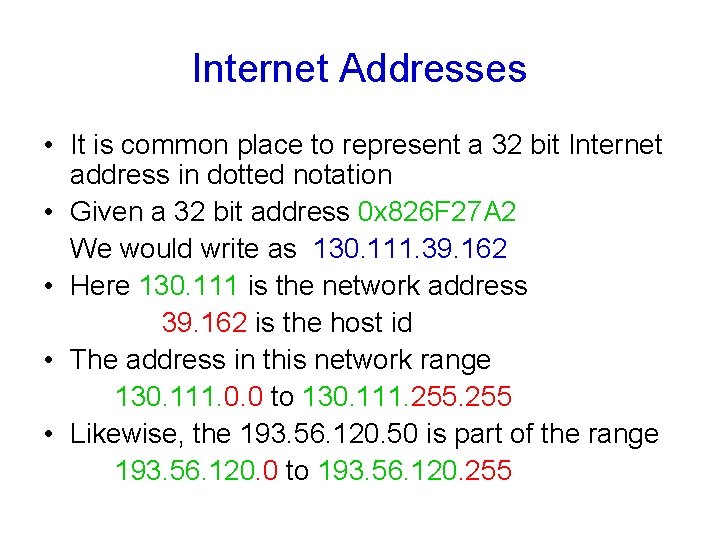
Internet Addresses • It is common place to represent a 32 bit Internet address in dotted notation • Given a 32 bit address 0 x 826 F 27 A 2 We would write as 130. 111. 39. 162 • Here 130. 111 is the network address 39. 162 is the host id • The address in this network range 130. 111. 0. 0 to 130. 111. 255 • Likewise, the 193. 56. 120. 50 is part of the range 193. 56. 120. 0 to 193. 56. 120. 255
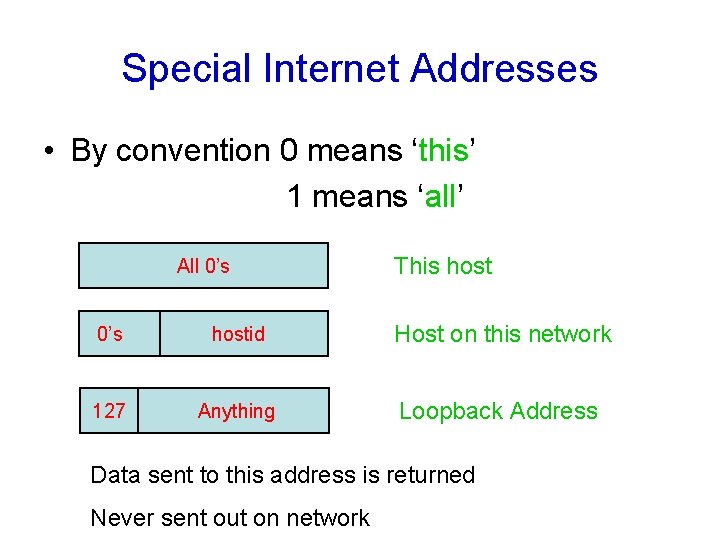
Special Internet Addresses • By convention 0 means ‘this’ 1 means ‘all’ All 0’s This host 0’s hostid Host on this network 127 Anything Loopback Address Data sent to this address is returned Never sent out on network
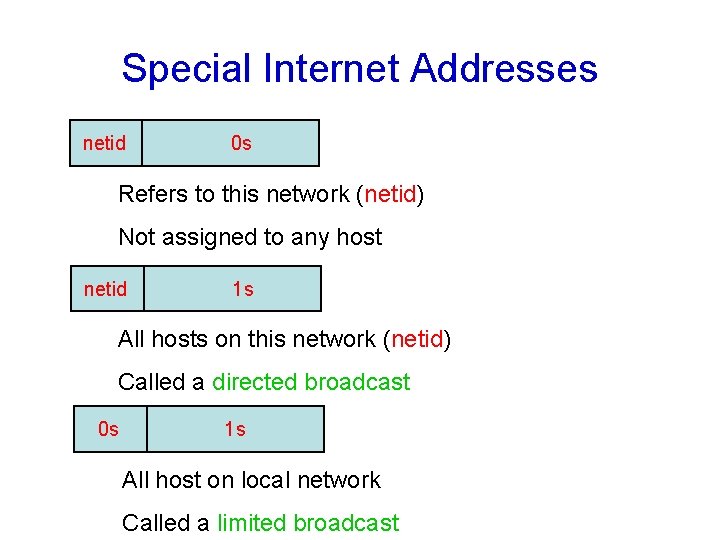
Special Internet Addresses netid 0 s Refers to this network (netid) Not assigned to any host netid 1 s All hosts on this network (netid) Called a directed broadcast 0 s 1 s All host on local network Called a limited broadcast
Addresses and Routing • Devices that determine paths or routing need only know about network addresses • Only the destination network need be concerned about the host address • Devices that determine paths or routes are usually called routers • Routers must have tables entries, called a routing table, for every network in order to determine paths
Subnetting • Some networks (Class A & B) are large enough to warrant breakdown into smaller groups, subnets • An organization may be assigned a large range (Class B) and may wish to allocate to departments in smaller subnets • To make internal routers treat these subnets internally as separate networks requires additional information • Must specify which bits in the address represents the network id
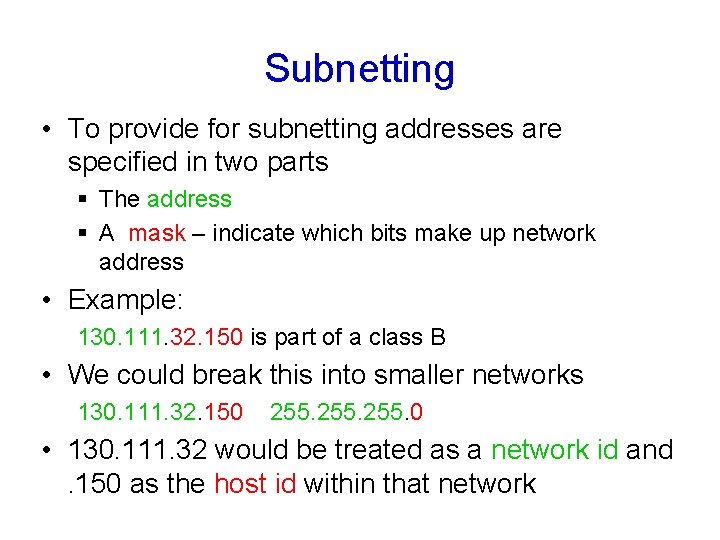
Subnetting • To provide for subnetting addresses are specified in two parts § The address § A mask – indicate which bits make up network address • Example: 130. 111. 32. 150 is part of a class B • We could break this into smaller networks 130. 111. 32. 150 255. 0 • 130. 111. 32 would be treated as a network id and. 150 as the host id within that network
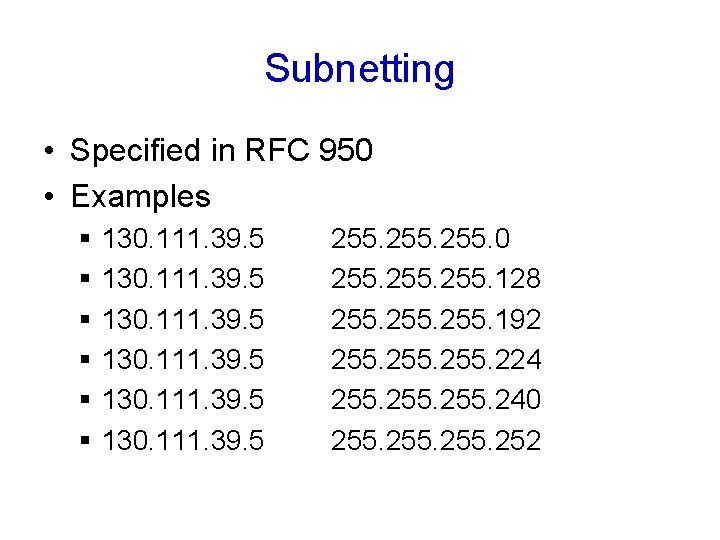
Subnetting • Specified in RFC 950 • Examples § § § 130. 111. 39. 5 255. 0 255. 128 255. 192 255. 224 255. 240 255. 252
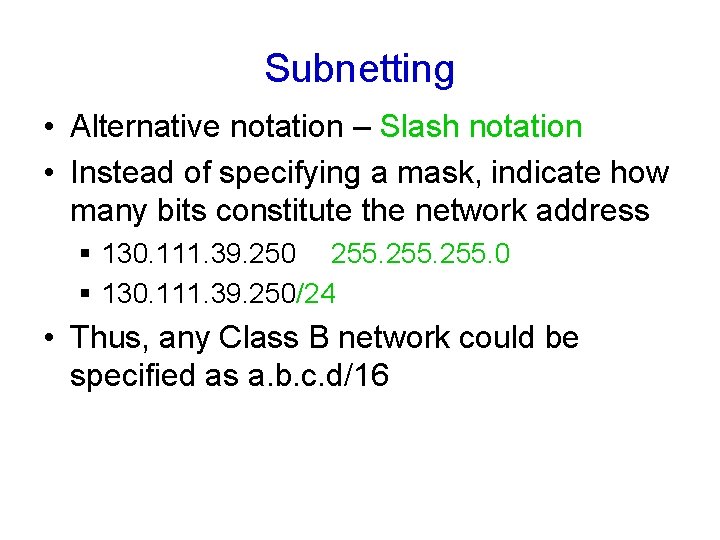
Subnetting • Alternative notation – Slash notation • Instead of specifying a mask, indicate how many bits constitute the network address § 130. 111. 39. 250 255. 0 § 130. 111. 39. 250/24 • Thus, any Class B network could be specified as a. b. c. d/16
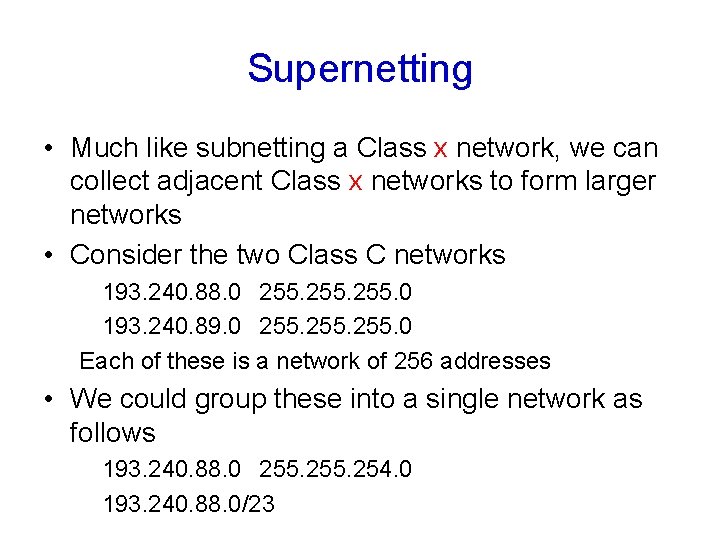
Supernetting • Much like subnetting a Class x network, we can collect adjacent Class x networks to form larger networks • Consider the two Class C networks 193. 240. 88. 0 255. 0 193. 240. 89. 0 255. 0 Each of these is a network of 256 addresses • We could group these into a single network as follows 193. 240. 88. 0 255. 254. 0 193. 240. 88. 0/23
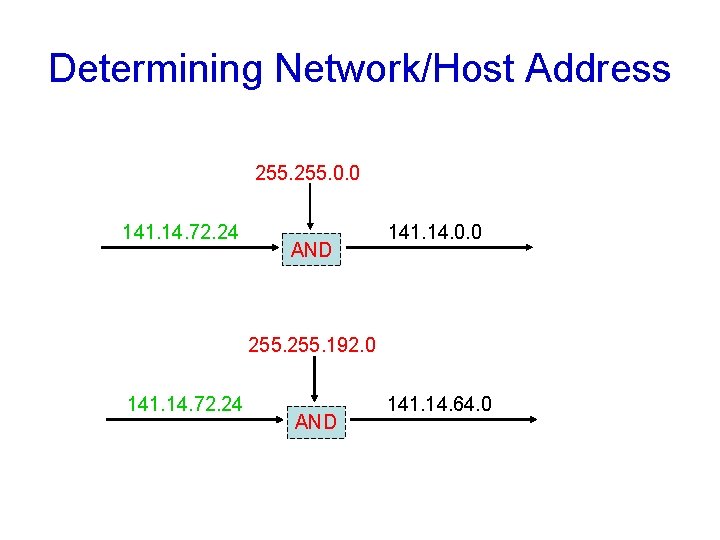
Determining Network/Host Address 255. 0. 0 141. 14. 72. 24 AND 141. 14. 0. 0 255. 192. 0 141. 14. 72. 24 AND 141. 14. 64. 0
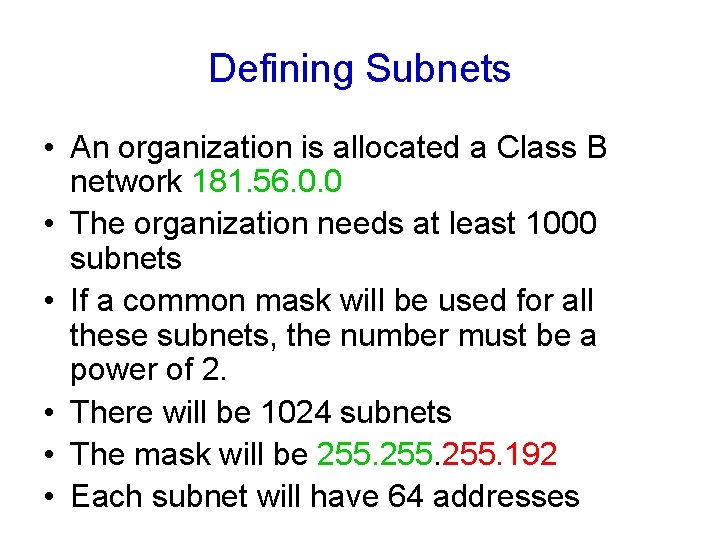
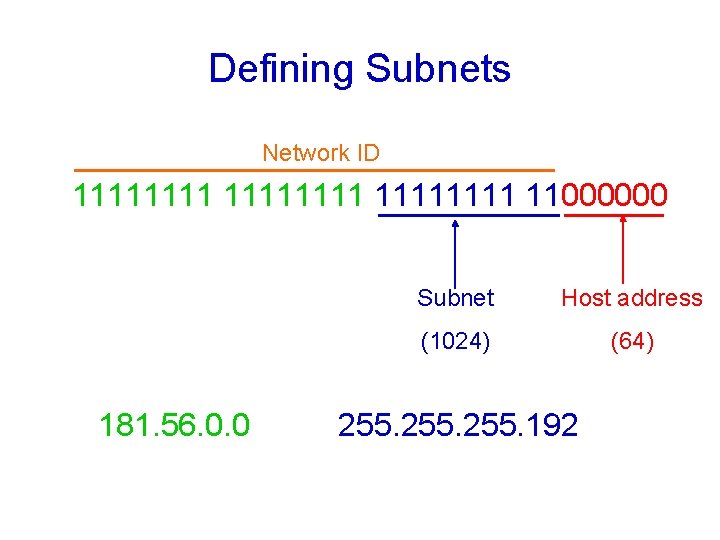
Defining Subnets • An organization is allocated a Class B network 181. 56. 0. 0 • The organization needs at least 1000 subnets • If a common mask will be used for all these subnets, the number must be a power of 2. • There will be 1024 subnets • The mask will be 255. 192 • Each subnet will have 64 addresses
Defining Subnets Network ID 11111111 11000000 181. 56. 0. 0 Subnet Host address (1024) (64) 255. 192
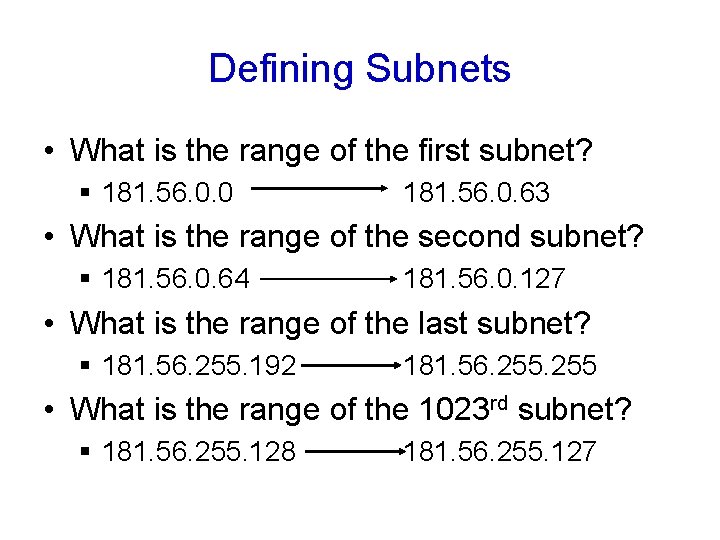
Defining Subnets • What is the range of the first subnet? § 181. 56. 0. 0 181. 56. 0. 63 • What is the range of the second subnet? § 181. 56. 0. 64 181. 56. 0. 127 • What is the range of the last subnet? § 181. 56. 255. 192 181. 56. 255 • What is the range of the 1023 rd subnet? § 181. 56. 255. 128 181. 56. 255. 127
Classfull Addressing • Class A networks are too large which results into wasted address space • Class B are also too large for many organizations • Class C networks are too small, requiring multiple allocations to the same organization • In the early 90 s, it became clear that this method of address space allocation would lead to early depletion of addresses
Classless Interdomain Routing (CIDR) • To preserve address space, a new method of assigning space was developed in 1993 • Groups of unassigned address were allocated regionally (RFC 1466) • New allocation scheme provided for allocation of variable length blocks of addresses • Going forward, allocations would no longer be done by Class • Allocation scheme defined in RFC 1518
Classless Interdomain Routing • Address blocks are sized by powers of 2 • Blocks of size 2, 4, 8, …. , 256, 512, 1024… can be assigned • Stating address must be divisible by the number of addresses in the block • The allocation is specified the same fashion as subnets using slash notation • Original allocations are maintained and folded into this scheme • Routers modified to accept and maintain their routing tables in this way
Managing Address Space • • Blocks of addresses assigned to ISPs assign subnets to customers Assigned subnets can be of variable sizes When customers change Service Provider, they usually have to change address space • Usually, the ISP will assign large subnets first, followed by smaller subnets
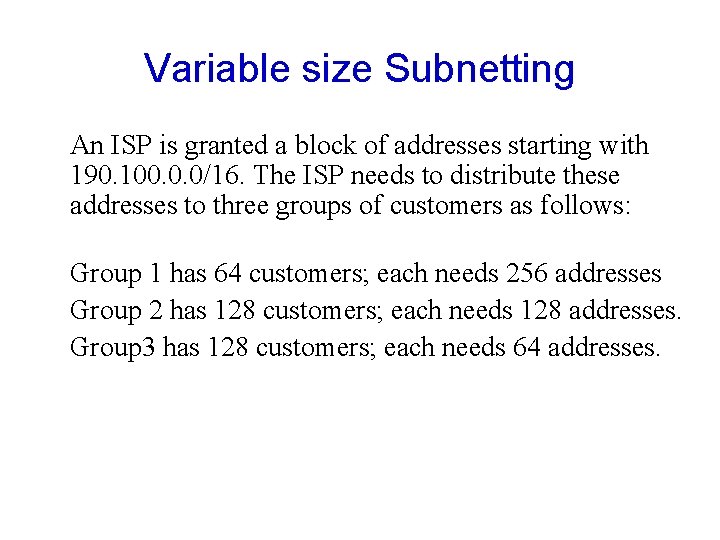
Variable size Subnetting An ISP is granted a block of addresses starting with 190. 100. 0. 0/16. The ISP needs to distribute these addresses to three groups of customers as follows: Group 1 has 64 customers; each needs 256 addresses Group 2 has 128 customers; each needs 128 addresses. Group 3 has 128 customers; each needs 64 addresses.
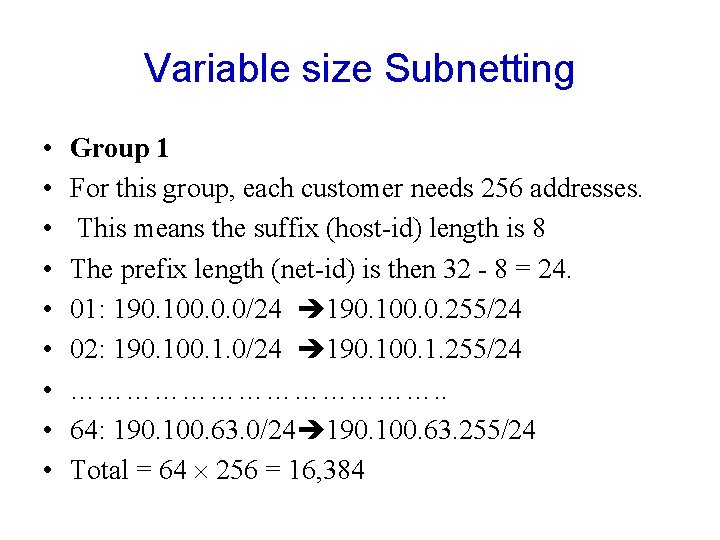
Variable size Subnetting • • • Group 1 For this group, each customer needs 256 addresses. This means the suffix (host-id) length is 8 The prefix length (net-id) is then 32 - 8 = 24. 01: 190. 100. 0. 0/24 190. 100. 0. 255/24 02: 190. 100. 1. 0/24 190. 100. 1. 255/24 …………………. . 64: 190. 100. 63. 0/24 190. 100. 63. 255/24 Total = 64 256 = 16, 384
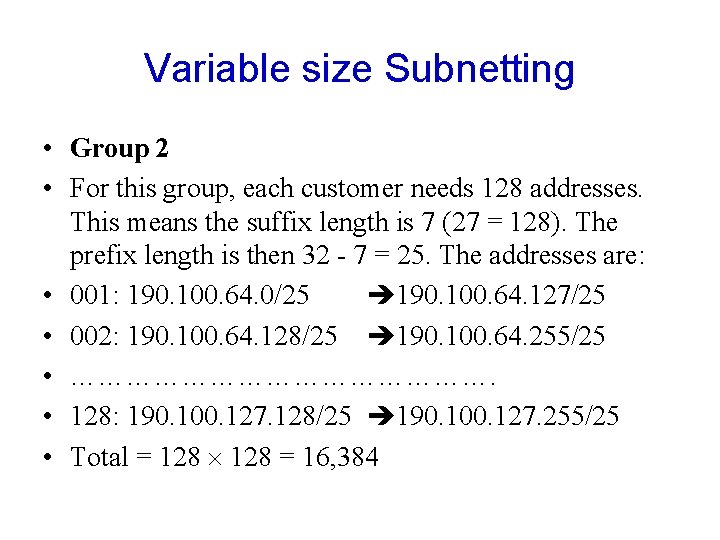
Variable size Subnetting • Group 2 • For this group, each customer needs 128 addresses. This means the suffix length is 7 (27 = 128). The prefix length is then 32 - 7 = 25. The addresses are: • 001: 190. 100. 64. 0/25 190. 100. 64. 127/25 • 002: 190. 100. 64. 128/25 190. 100. 64. 255/25 • ……………………. • 128: 190. 100. 127. 128/25 190. 100. 127. 255/25 • Total = 128 = 16, 384
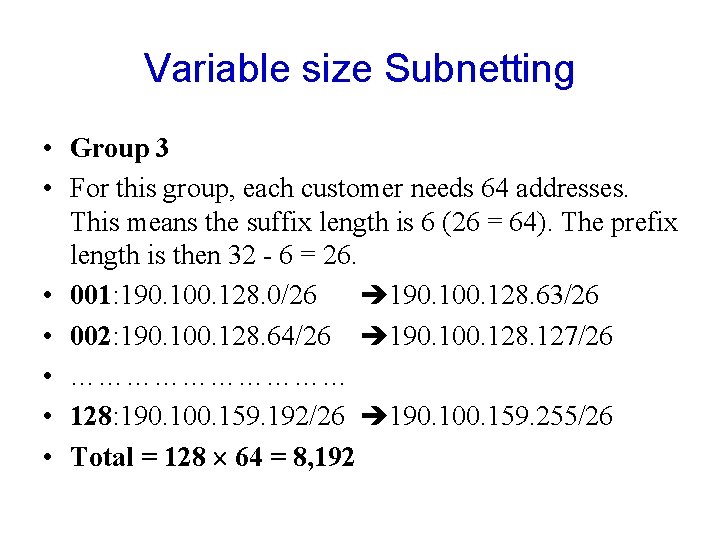
Variable size Subnetting • Group 3 • For this group, each customer needs 64 addresses. This means the suffix length is 6 (26 = 64). The prefix length is then 32 - 6 = 26. • 001: 190. 100. 128. 0/26 190. 100. 128. 63/26 • 002: 190. 100. 128. 64/26 190. 100. 128. 127/26 • …………… • 128: 190. 100. 159. 192/26 190. 100. 159. 255/26 • Total = 128 64 = 8, 192
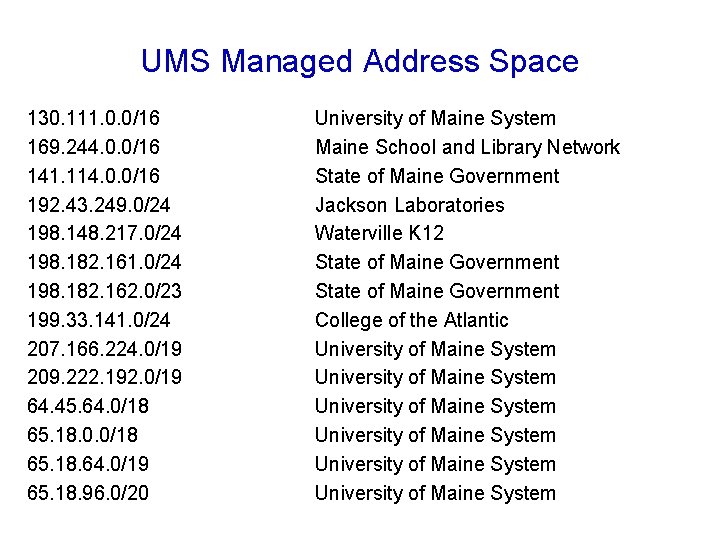
UMS Managed Address Space 130. 111. 0. 0/16 169. 244. 0. 0/16 141. 114. 0. 0/16 192. 43. 249. 0/24 198. 148. 217. 0/24 198. 182. 161. 0/24 198. 182. 162. 0/23 199. 33. 141. 0/24 207. 166. 224. 0/19 209. 222. 192. 0/19 64. 45. 64. 0/18 65. 18. 0. 0/18 65. 18. 64. 0/19 65. 18. 96. 0/20 University of Maine System Maine School and Library Network State of Maine Government Jackson Laboratories Waterville K 12 State of Maine Government College of the Atlantic University of Maine System University of Maine System
Private Addresses • Some organizations want to establish IP networks internally, but not outside the organization • By convention, some address space is allocated for this purpose • These addresses are not accepted (routed) on the Internet, but can be routed internally
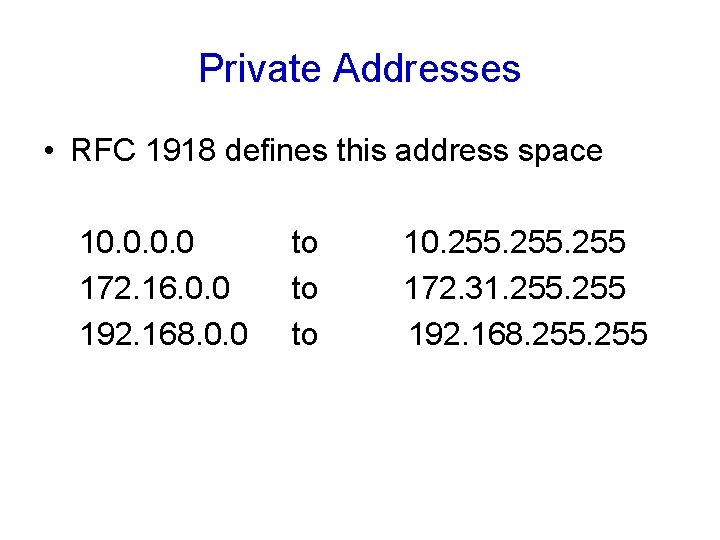
Private Addresses • RFC 1918 defines this address space 10. 0 172. 16. 0. 0 192. 168. 0. 0 to to to 10. 255 172. 31. 255 192. 168. 255
IP addressing tools Web tool for calculating subnet masks http: //library. mobrien. com/index. shtml Tool for calculating subnet masks ipcalc 321. exe on course web site (Wildpackets) Tool to look up ownership of IP address space cyberkit - cyber 30. zip on web site