
Network Communication and Remote Procedure Calls RPCs COS

- Slides: 50
Network Communication and Remote Procedure Calls (RPCs) COS 418 + 518: (Advanced) Distributed Systems Lecture 2 Mike Freedman & Wyatt Lloyd
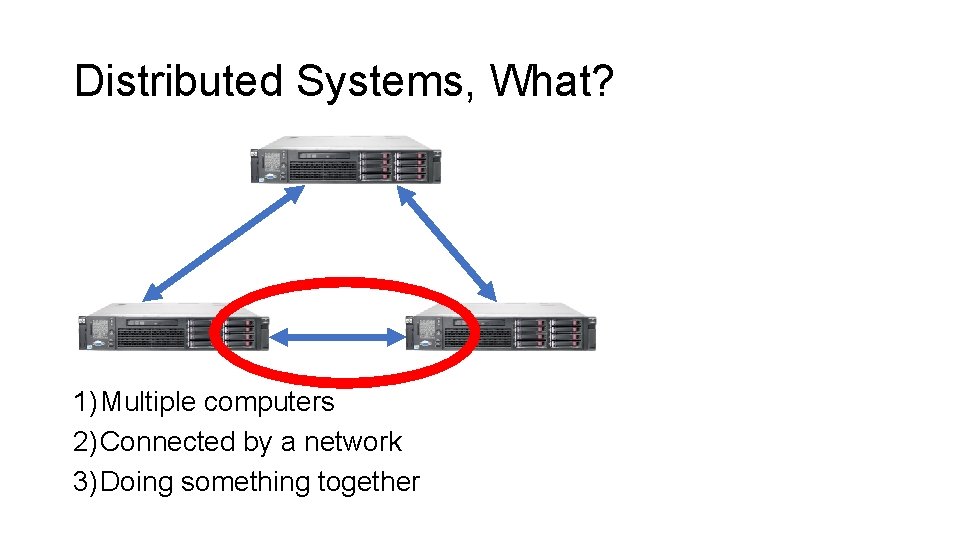
Distributed Systems, What? 1) Multiple computers 2) Connected by a network 3) Doing something together
Today’s outline • How can processes on different cooperating computers communicate with each other over the network? 1. Network Communication 2. Remote Procedure Call (RPC) 3
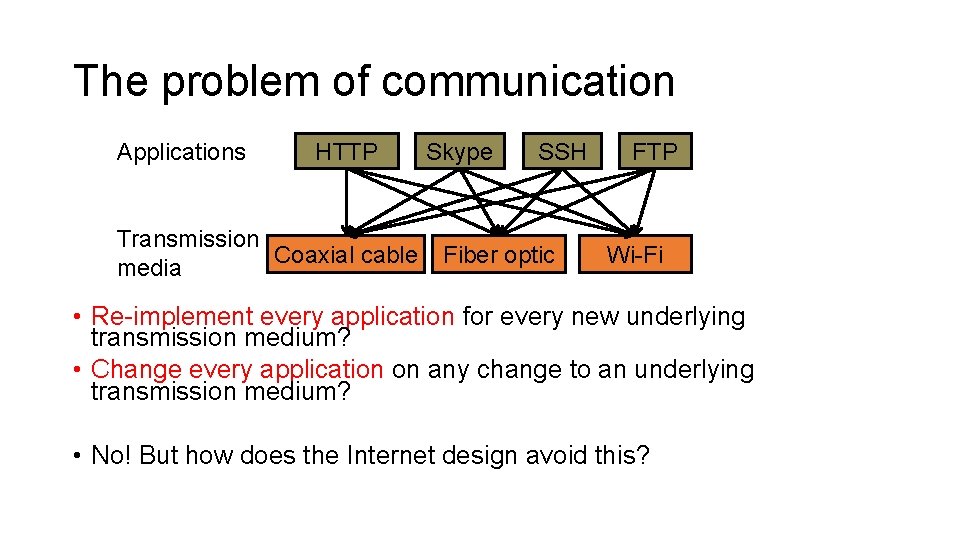
The problem of communication • Process on Host A wants to talk to process on Host B • A and B must agree on the meaning of the bits being sent and received at many different levels, including: • How many volts is a 0 bit, a 1 bit? • How does receiver know which is the last bit? • How many bits long is a number?
The problem of communication Applications HTTP Transmission Coaxial cable media Skype SSH Fiber optic FTP Wi-Fi • Re-implement every application for every new underlying transmission medium? • Change every application on any change to an underlying transmission medium? • No! But how does the Internet design avoid this?
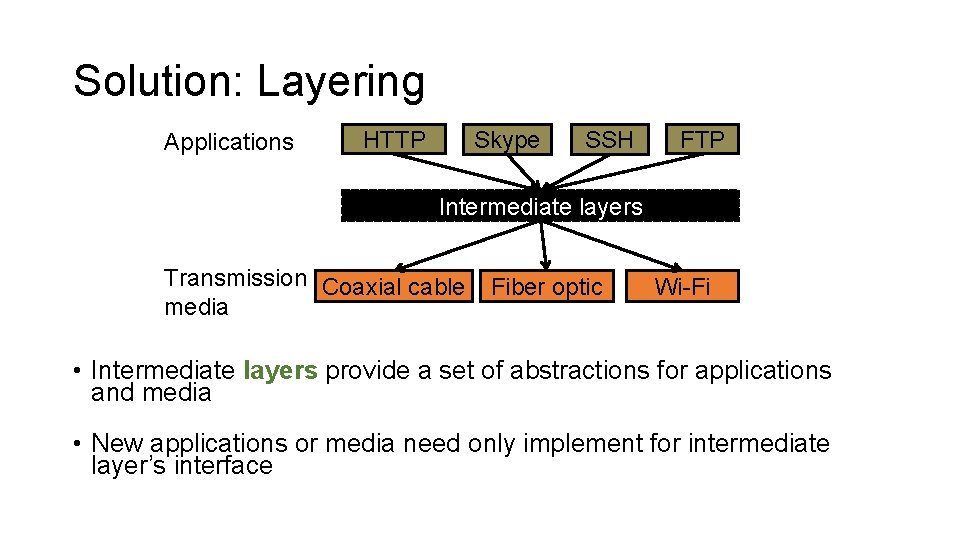
Solution: Layering Applications HTTP Skype SSH FTP Intermediate layers Transmission Coaxial cable media Fiber optic Wi-Fi • Intermediate layers provide a set of abstractions for applications and media • New applications or media need only implement for intermediate layer’s interface
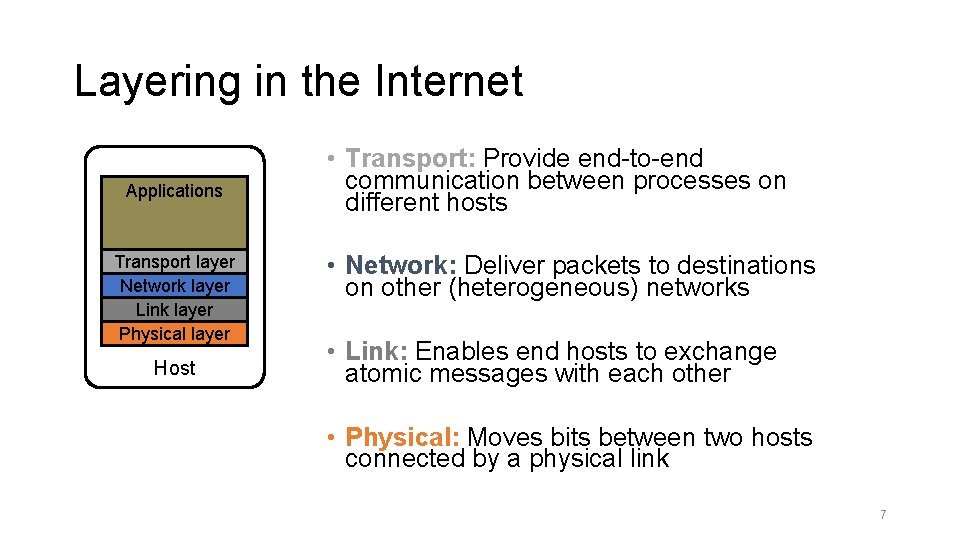
Layering in the Internet Applications Transport layer Network layer Link layer Physical layer Host • Transport: Provide end-to-end communication between processes on different hosts • Network: Deliver packets to destinations on other (heterogeneous) networks • Link: Enables end hosts to exchange atomic messages with each other • Physical: Moves bits between two hosts connected by a physical link 7
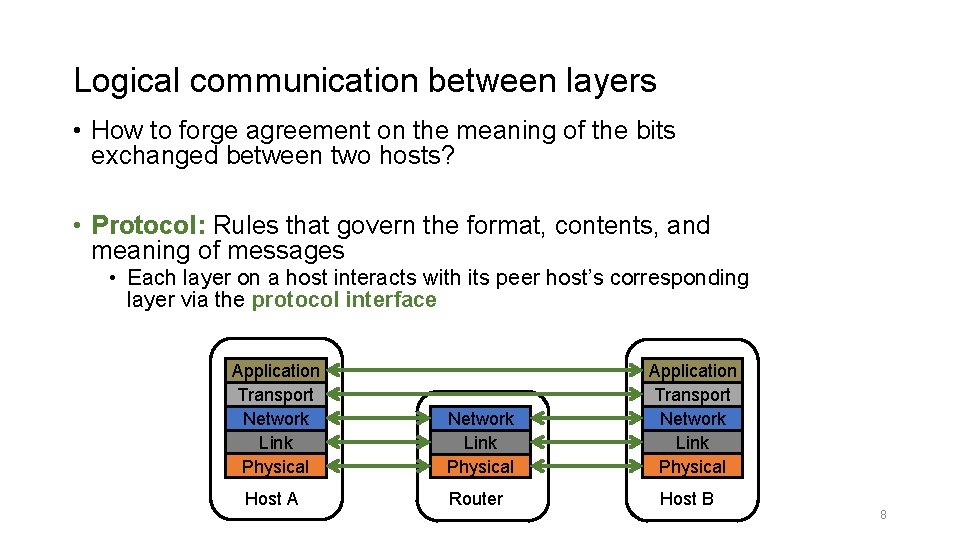
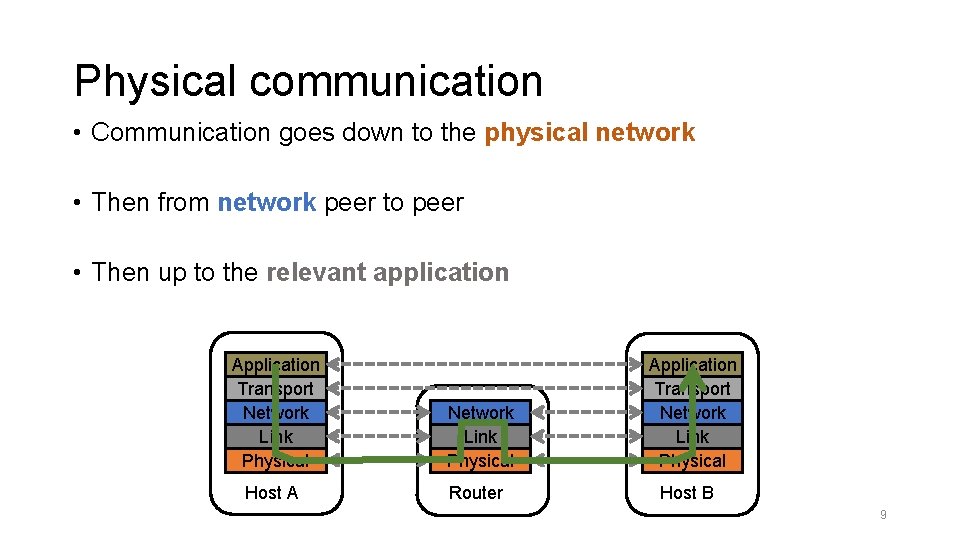
Logical communication between layers • How to forge agreement on the meaning of the bits exchanged between two hosts? • Protocol: Rules that govern the format, contents, and meaning of messages • Each layer on a host interacts with its peer host’s corresponding layer via the protocol interface Application Transport Network Link Physical Host A Router Application Transport Network Link Physical Host B 8
Physical communication • Communication goes down to the physical network • Then from network peer to peer • Then up to the relevant application Application Transport Network Link Physical Host A Router Application Transport Network Link Physical Host B 9
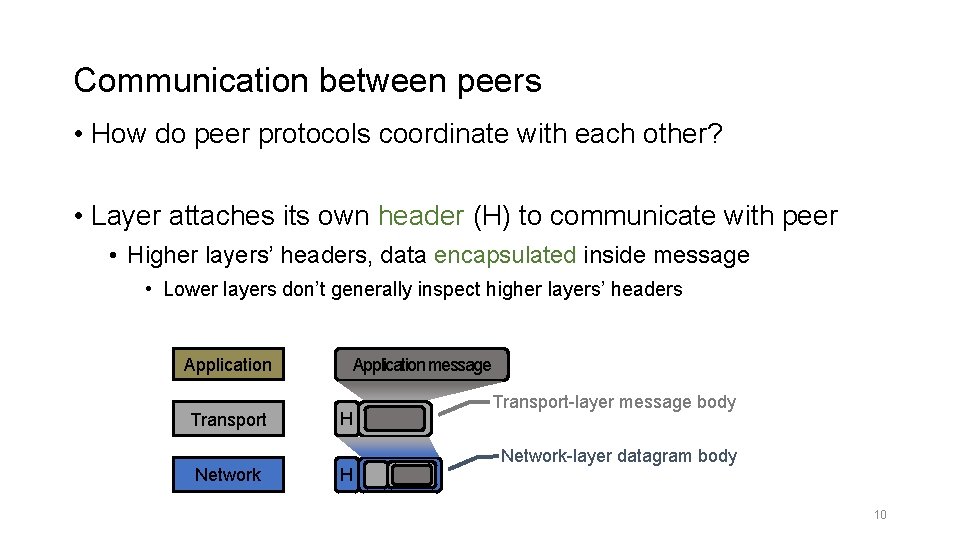
Communication between peers • How do peer protocols coordinate with each other? • Layer attaches its own header (H) to communicate with peer • Higher layers’ headers, data encapsulated inside message • Lower layers don’t generally inspect higher layers’ headers Application Transport Network Application message H H Transport-layer message body Network-layer datagram body 10
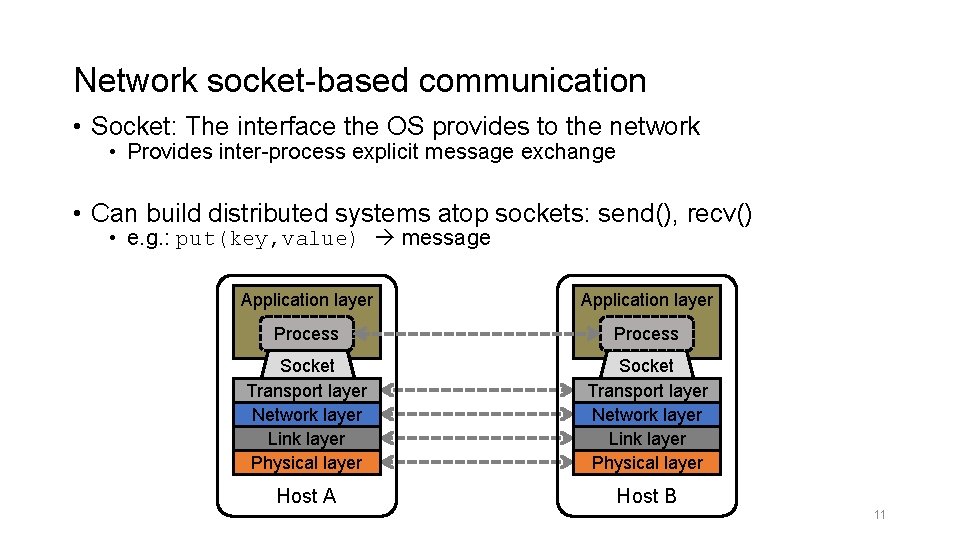
Network socket-based communication • Socket: The interface the OS provides to the network • Provides inter-process explicit message exchange • Can build distributed systems atop sockets: send(), recv() • e. g. : put(key, value) message Application layer Process Socket Transport layer Network layer Link layer Physical layer Host A Host B 11
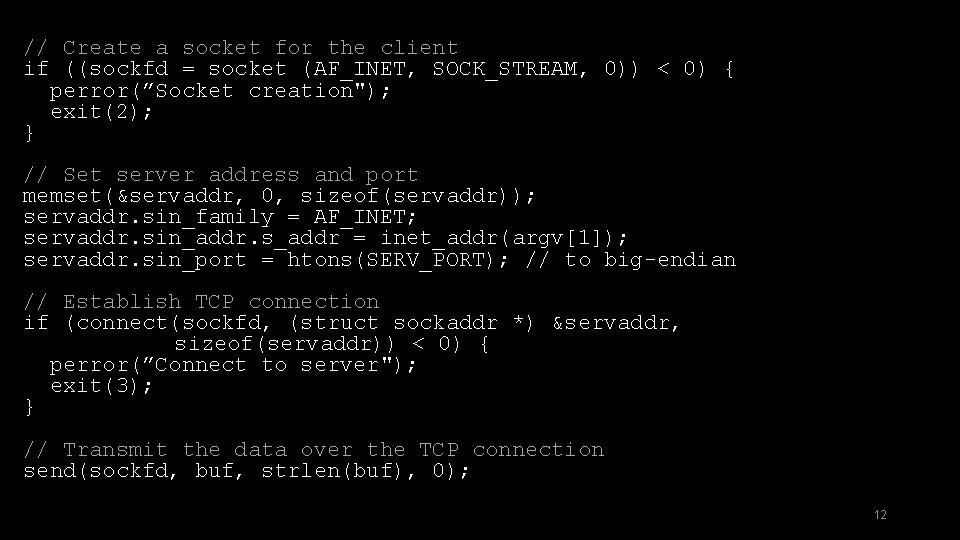
// Create a socket for the client if ((sockfd = socket (AF_INET, SOCK_STREAM, 0)) < 0) { perror(”Socket creation"); exit(2); } // Set server address and port memset(&servaddr, 0, sizeof(servaddr)); servaddr. sin_family = AF_INET; servaddr. sin_addr. s_addr = inet_addr(argv[1]); servaddr. sin_port = htons(SERV_PORT); // to big-endian // Establish TCP connection if (connect(sockfd, (struct sockaddr *) &servaddr, sizeof(servaddr)) < 0) { perror(”Connect to server"); exit(3); } // Transmit the data over the TCP connection send(sockfd, buf, strlen(buf), 0); 12
Socket programming: still not great • Lots for the programmer to deal with every time • How to separate different requests on the same connection? • How to write bytes to the network / read bytes from the network? • What if Host A’s process is written in Go and Host B’s process is in C++? • What to do with those bytes? • Still pretty painful… have to worry a lot about the network
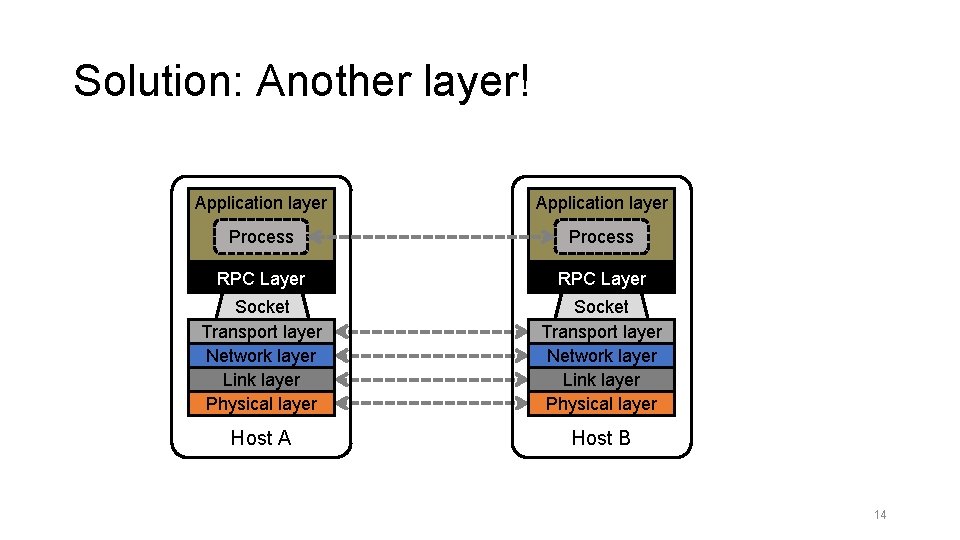
Solution: Another layer! Application layer Process RPC Layer Socket Transport layer Network layer Link layer Physical layer Host A Host B 14
Today’s outline 1. Network Communication 2. Remote Procedure Call 15
Why RPC? • The typical programmer is trained to write single-threaded code that runs in one place • Goal: Easy-to-program network communication that makes client-server communication transparent • Retains the “feel” of writing centralized code • Programmer needn’t think about the network 16
Everyone uses RPCs • COS 418 programming assignments use RPC • Google g. RPC • Facebook/Apache Thrift • Twitter Finagle • …
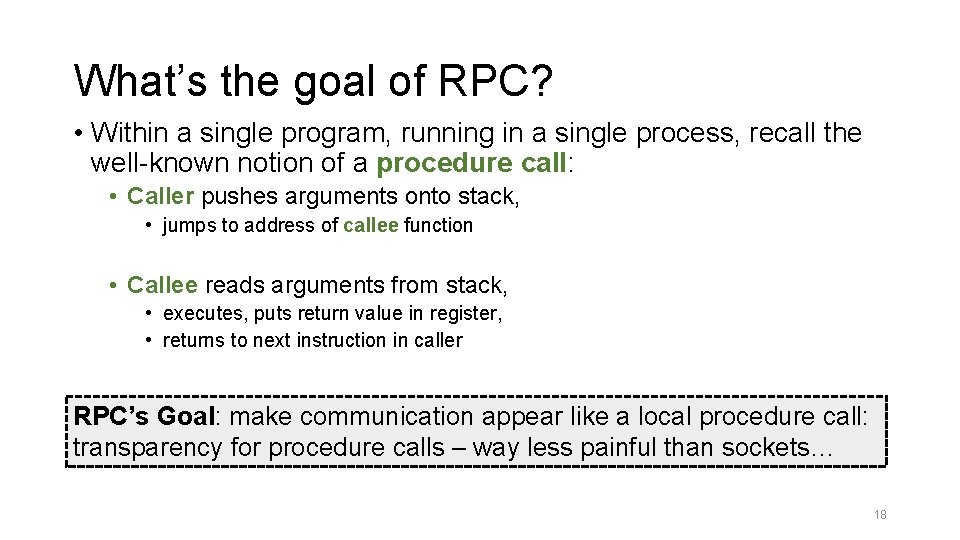
What’s the goal of RPC? • Within a single program, running in a single process, recall the well-known notion of a procedure call: • Caller pushes arguments onto stack, • jumps to address of callee function • Callee reads arguments from stack, • executes, puts return value in register, • returns to next instruction in caller RPC’s Goal: make communication appear like a local procedure call: transparency for procedure calls – way less painful than sockets… 18
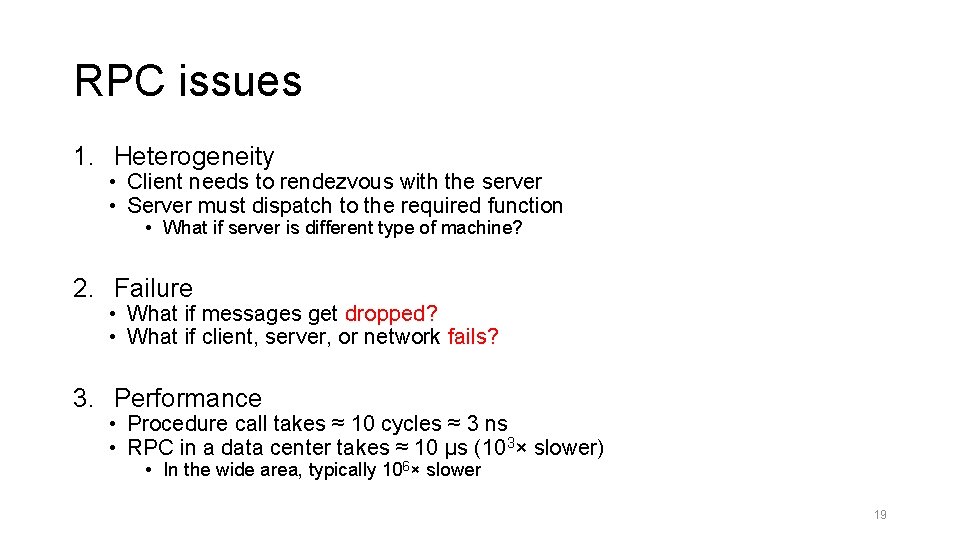
RPC issues 1. Heterogeneity • Client needs to rendezvous with the server • Server must dispatch to the required function • What if server is different type of machine? 2. Failure • What if messages get dropped? • What if client, server, or network fails? 3. Performance • Procedure call takes ≈ 10 cycles ≈ 3 ns • RPC in a data center takes ≈ 10 μs (103× slower) • In the wide area, typically 106× slower 19
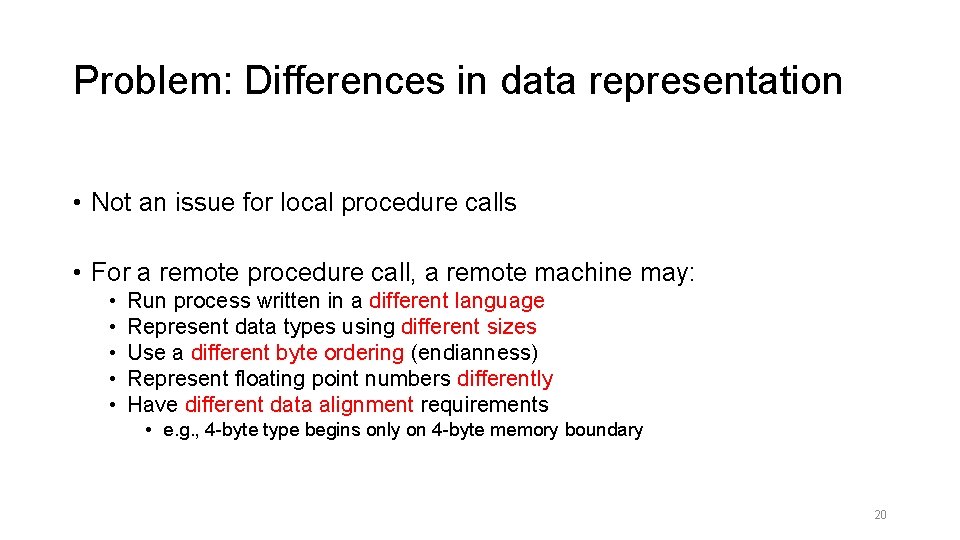
Problem: Differences in data representation • Not an issue for local procedure calls • For a remote procedure call, a remote machine may: • • • Run process written in a different language Represent data types using different sizes Use a different byte ordering (endianness) Represent floating point numbers differently Have different data alignment requirements • e. g. , 4 -byte type begins only on 4 -byte memory boundary 20
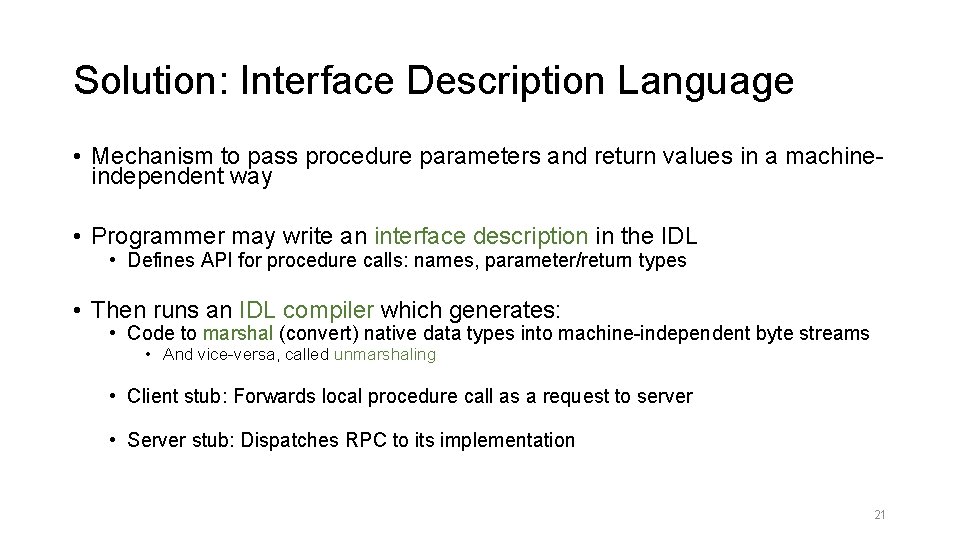
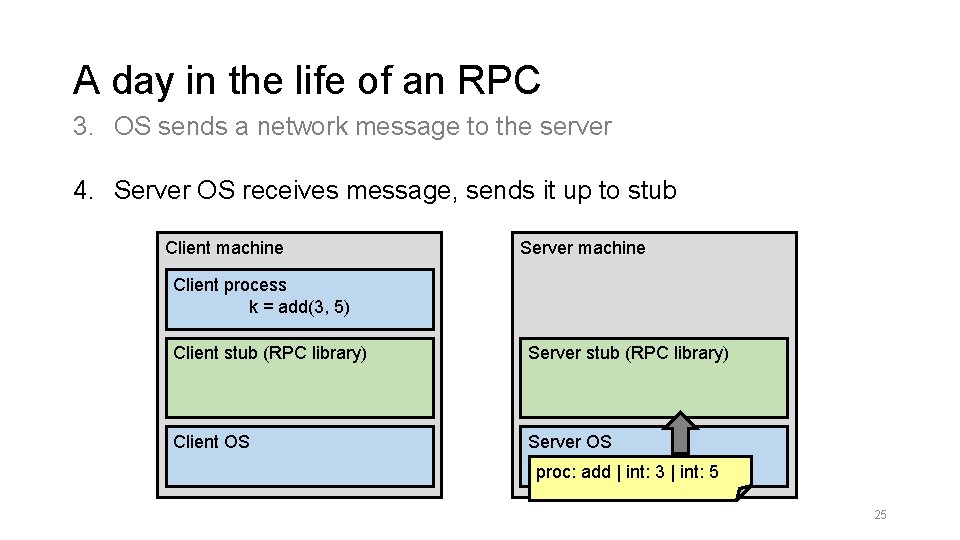
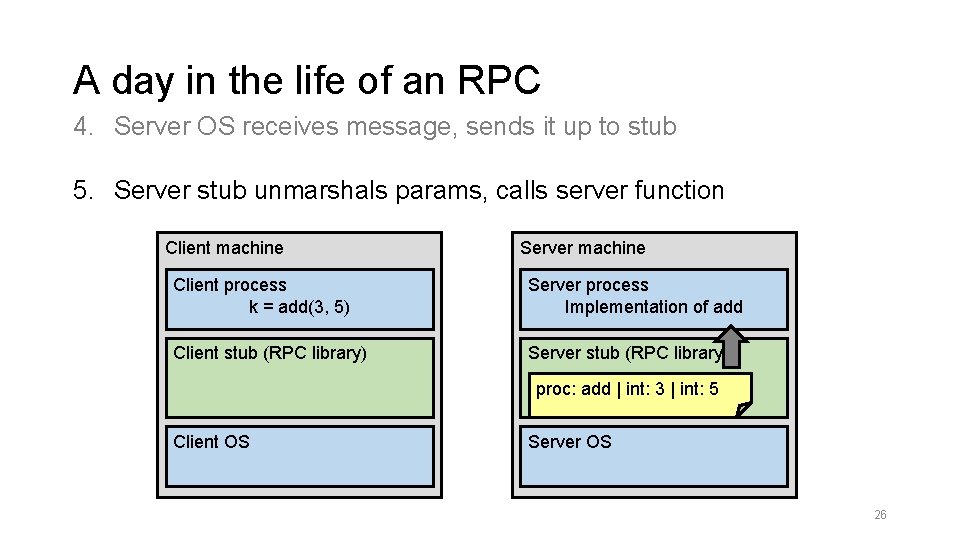
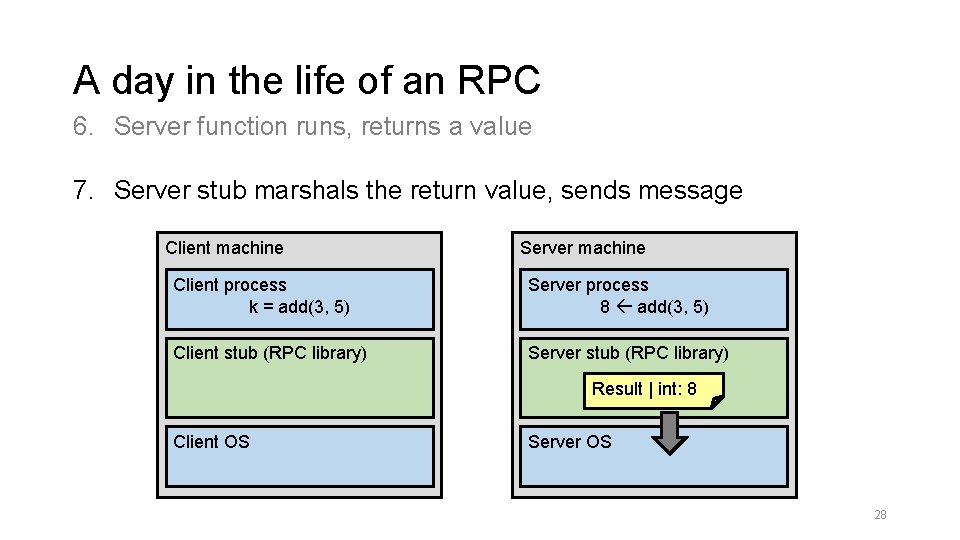
Solution: Interface Description Language • Mechanism to pass procedure parameters and return values in a machineindependent way • Programmer may write an interface description in the IDL • Defines API for procedure calls: names, parameter/return types • Then runs an IDL compiler which generates: • Code to marshal (convert) native data types into machine-independent byte streams • And vice-versa, called unmarshaling • Client stub: Forwards local procedure call as a request to server • Server stub: Dispatches RPC to its implementation 21
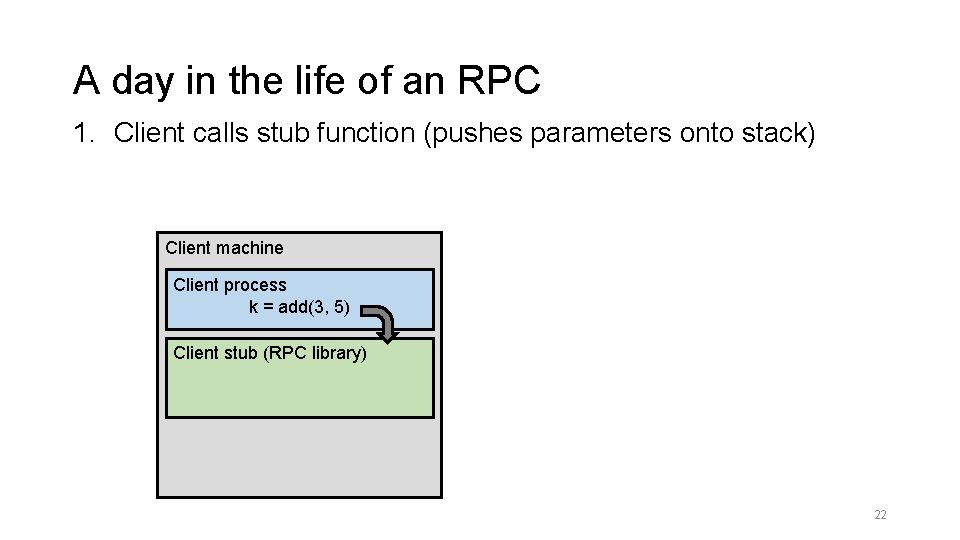
A day in the life of an RPC 1. Client calls stub function (pushes parameters onto stack) Client machine Client process k = add(3, 5) Client stub (RPC library) 22
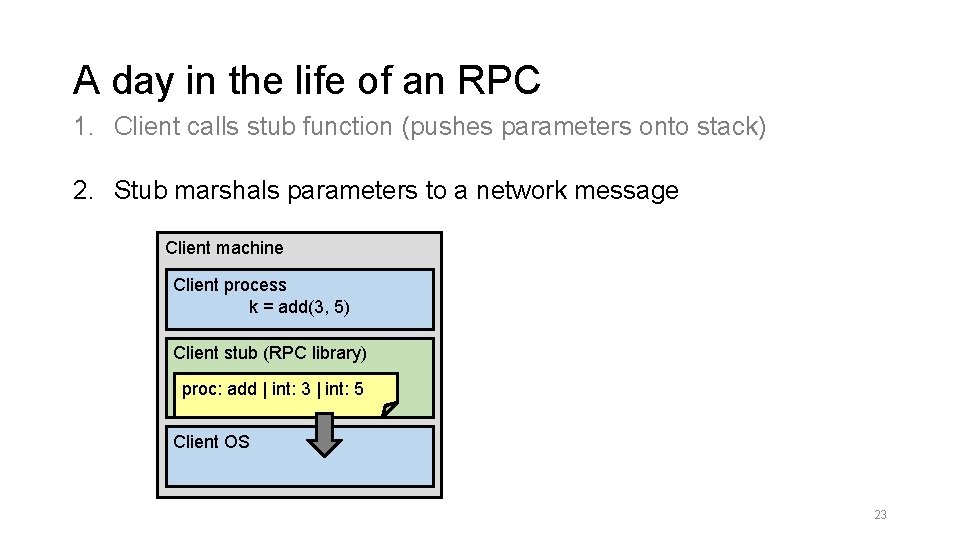
A day in the life of an RPC 1. Client calls stub function (pushes parameters onto stack) 2. Stub marshals parameters to a network message Client machine Client process k = add(3, 5) Client stub (RPC library) proc: add | int: 3 | int: 5 Client OS 23
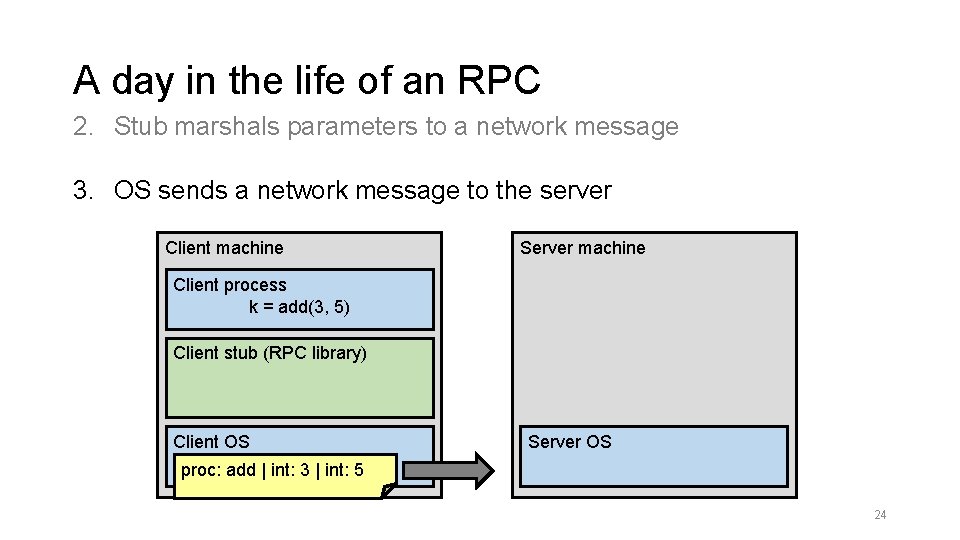
A day in the life of an RPC 2. Stub marshals parameters to a network message 3. OS sends a network message to the server Client machine Server machine Client process k = add(3, 5) Client stub (RPC library) Client OS Server OS proc: add | int: 3 | int: 5 24
A day in the life of an RPC 3. OS sends a network message to the server 4. Server OS receives message, sends it up to stub Client machine Server machine Client process k = add(3, 5) Client stub (RPC library) Server stub (RPC library) Client OS Server OS proc: add | int: 3 | int: 5 25
A day in the life of an RPC 4. Server OS receives message, sends it up to stub 5. Server stub unmarshals params, calls server function Client machine Server machine Client process k = add(3, 5) Server process Implementation of add Client stub (RPC library) Server stub (RPC library) proc: add | int: 3 | int: 5 Client OS Server OS 26
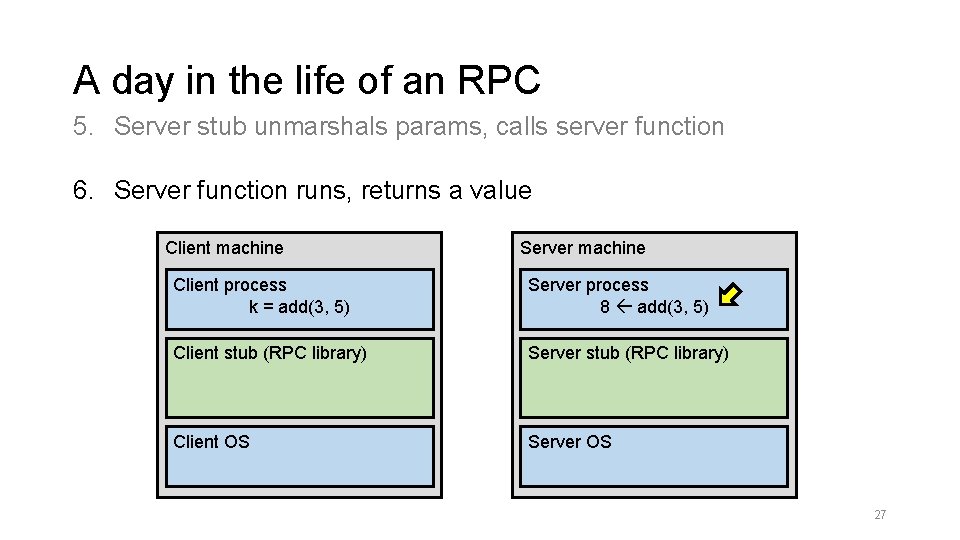
A day in the life of an RPC 5. Server stub unmarshals params, calls server function 6. Server function runs, returns a value Client machine Server machine Client process k = add(3, 5) Server process 8 add(3, 5) Client stub (RPC library) Server stub (RPC library) Client OS Server OS 27
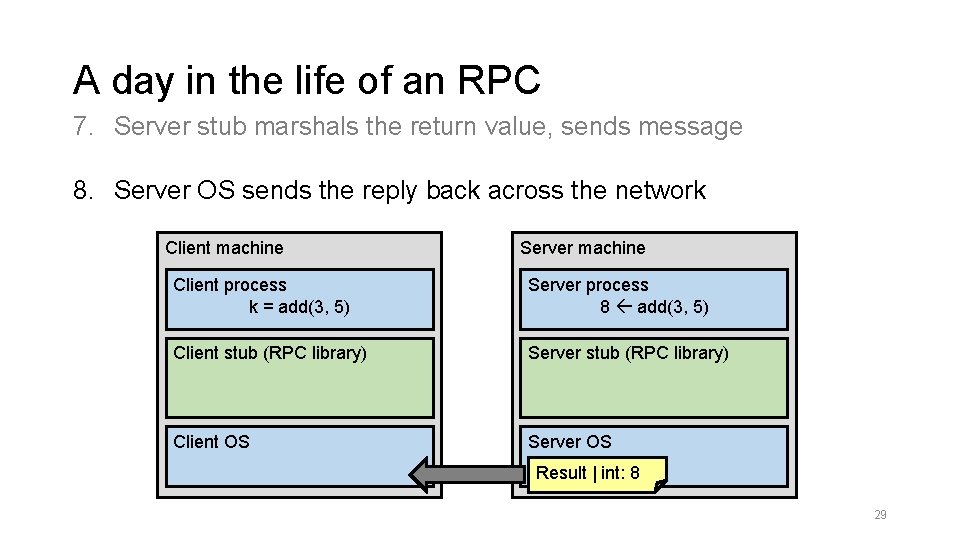
A day in the life of an RPC 6. Server function runs, returns a value 7. Server stub marshals the return value, sends message Client machine Server machine Client process k = add(3, 5) Server process 8 add(3, 5) Client stub (RPC library) Server stub (RPC library) Result | int: 8 Client OS Server OS 28
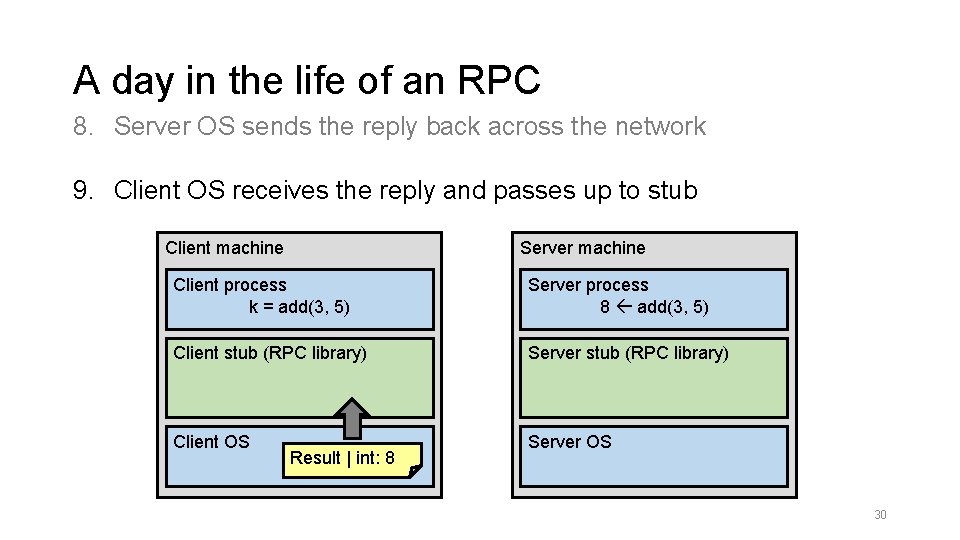
A day in the life of an RPC 7. Server stub marshals the return value, sends message 8. Server OS sends the reply back across the network Client machine Server machine Client process k = add(3, 5) Server process 8 add(3, 5) Client stub (RPC library) Server stub (RPC library) Client OS Server OS Result | int: 8 29
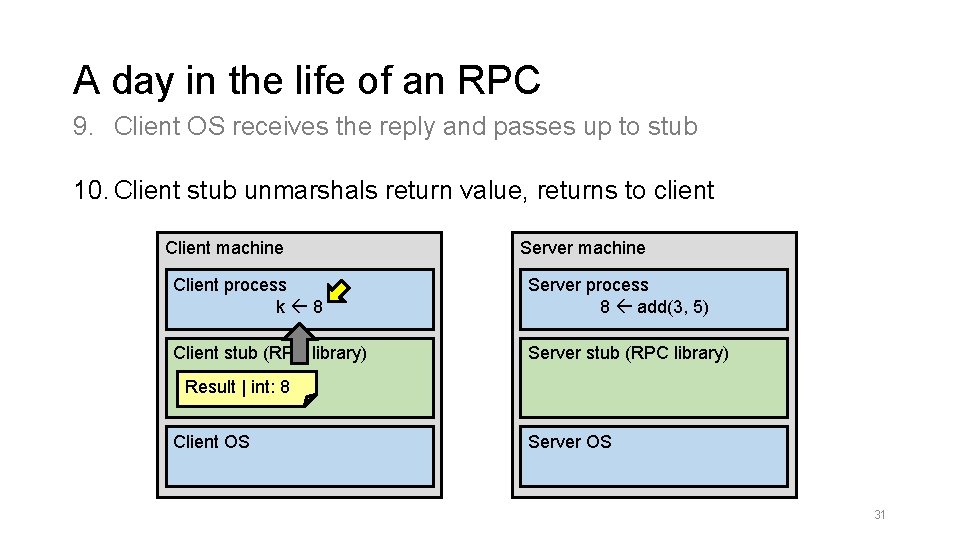
A day in the life of an RPC 8. Server OS sends the reply back across the network 9. Client OS receives the reply and passes up to stub Client machine Server machine Client process k = add(3, 5) Server process 8 add(3, 5) Client stub (RPC library) Server stub (RPC library) Client OS Server OS Result | int: 8 30
A day in the life of an RPC 9. Client OS receives the reply and passes up to stub 10. Client stub unmarshals return value, returns to client Client machine Server machine Client process k 8 Server process 8 add(3, 5) Client stub (RPC library) Server stub (RPC library) Result | int: 8 Client OS Server OS 31
Today’s outline 1. Network Communication 2. Remote Procedure Call • Heterogeneity – use IDL w/ compiler • Failure 33
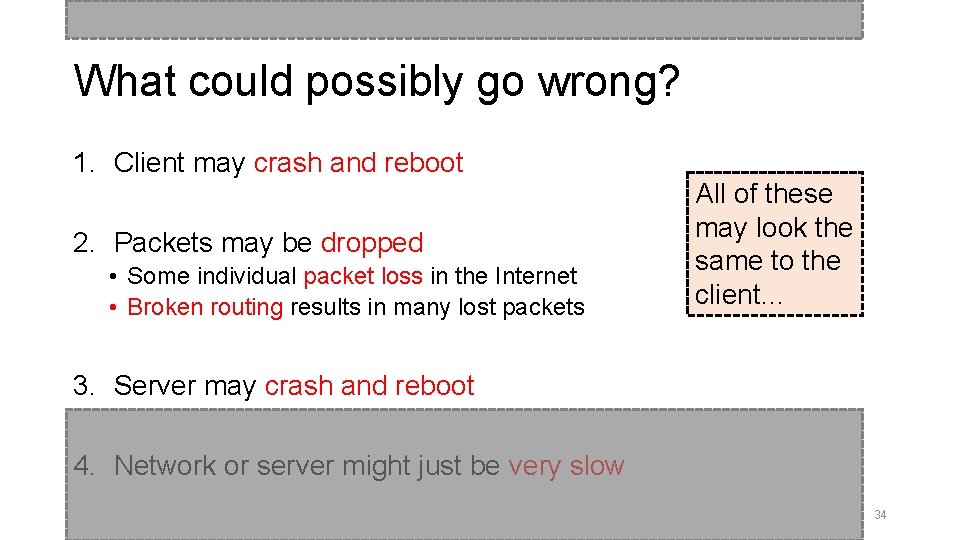
What could possibly go wrong? 1. Client may crash and reboot 2. Packets may be dropped • Some individual packet loss in the Internet • Broken routing results in many lost packets All of these may look the same to the client… 3. Server may crash and reboot 4. Network or server might just be very slow 34
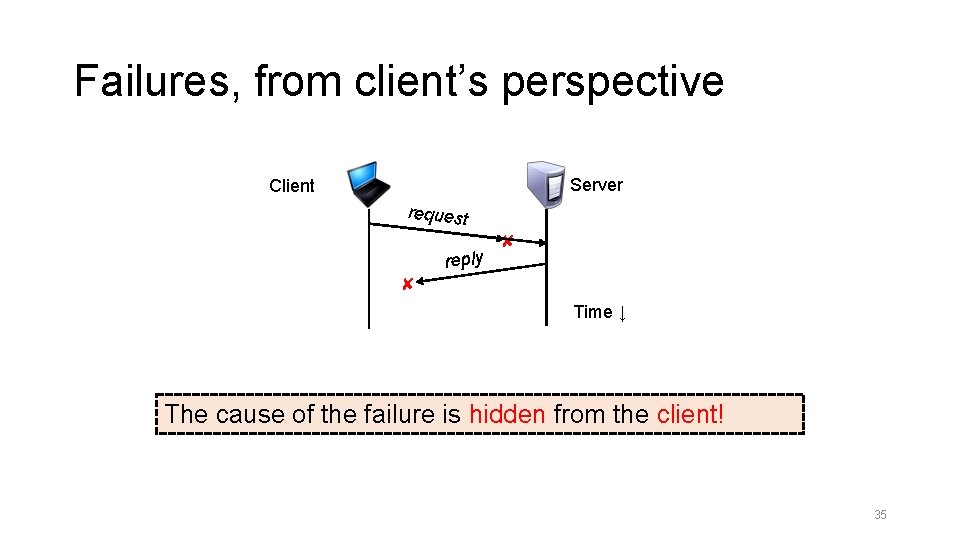
Failures, from client’s perspective Server Client request reply ✘ ✘ Time ↓ The cause of the failure is hidden from the client! 35
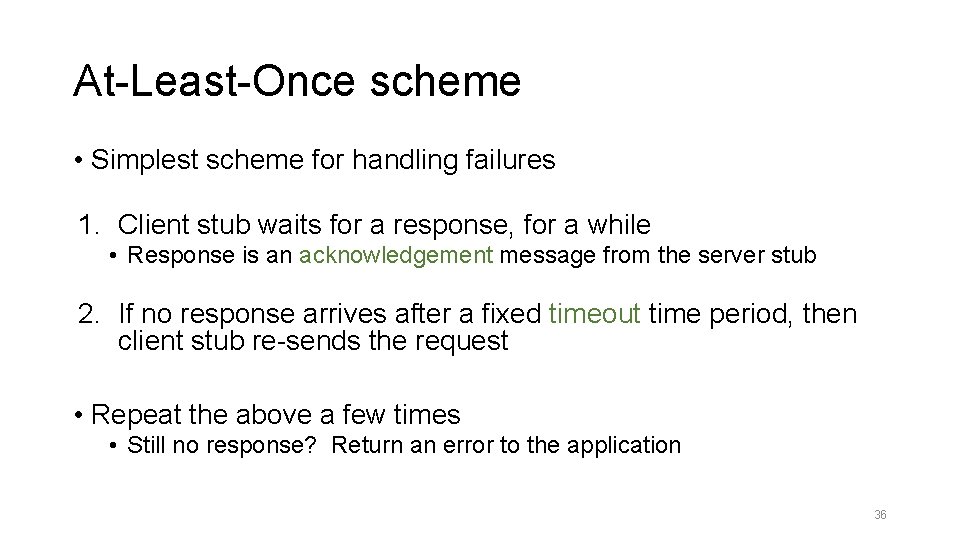
At-Least-Once scheme • Simplest scheme for handling failures 1. Client stub waits for a response, for a while • Response is an acknowledgement message from the server stub 2. If no response arrives after a fixed timeout time period, then client stub re-sends the request • Repeat the above a few times • Still no response? Return an error to the application 36
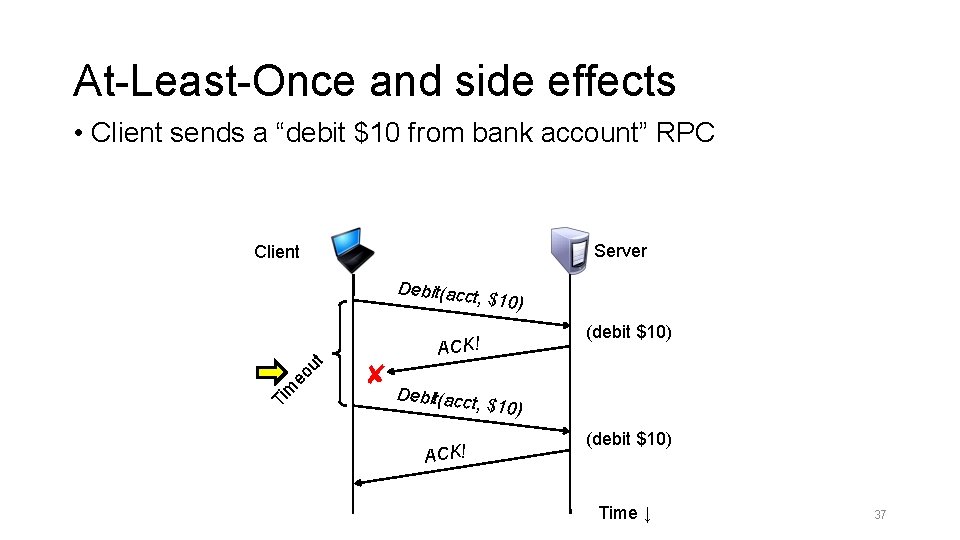
At-Least-Once and side effects • Client sends a “debit $10 from bank account” RPC Server Client Debit(acc t, $10) Ti m eo ut ACK! ✘ Debit(acc ACK! (debit $10) t, $10) (debit $10) Time ↓ 37
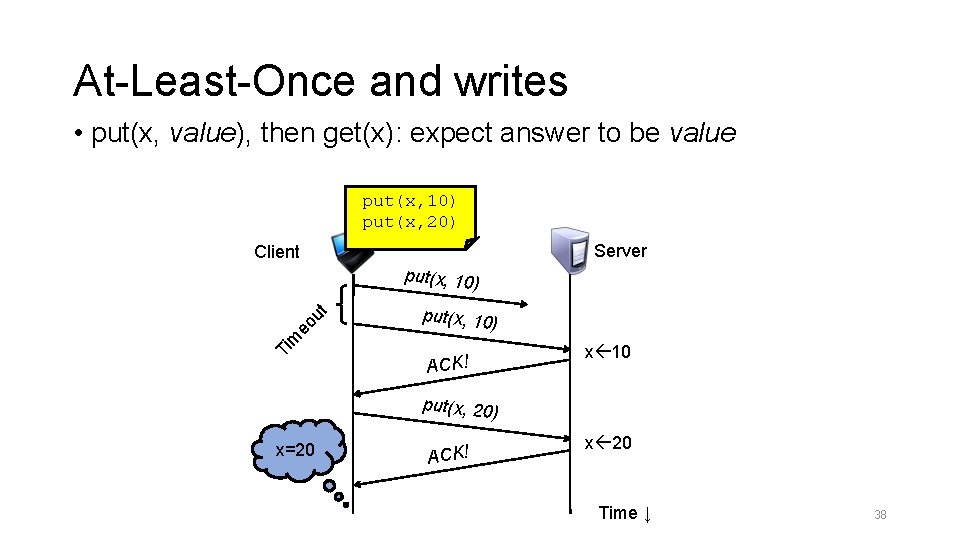
At-Least-Once and writes • put(x, value), then get(x): expect answer to be value put(x, 10) put(x, 20) Server Client put(x, 10) Ti m eo ut put(x, 10) ACK! x 10 put(x, 20) x=20 ACK! x 20 Time ↓ 38
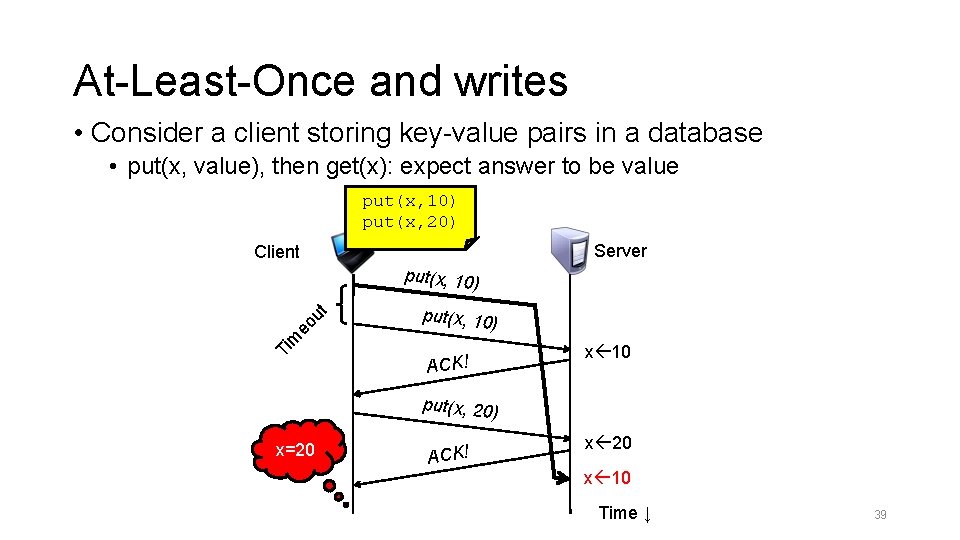
At-Least-Once and writes • Consider a client storing key-value pairs in a database • put(x, value), then get(x): expect answer to be value put(x, 10) put(x, 20) Server Client put(x, 10) Ti m eo ut put(x, 10) ACK! x 10 put(x, 20) x=20 ACK! x 20 x 10 Time ↓ 39
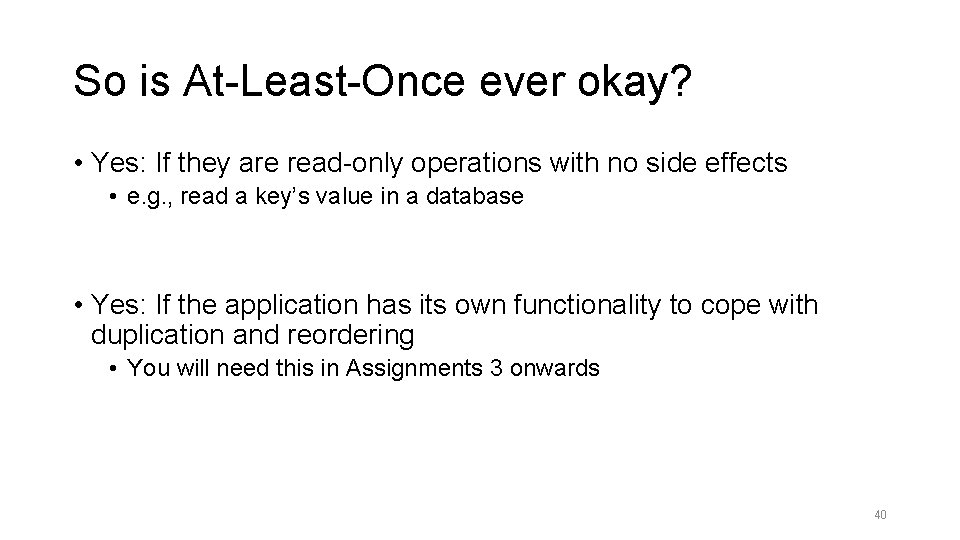
So is At-Least-Once ever okay? • Yes: If they are read-only operations with no side effects • e. g. , read a key’s value in a database • Yes: If the application has its own functionality to cope with duplication and reordering • You will need this in Assignments 3 onwards 40
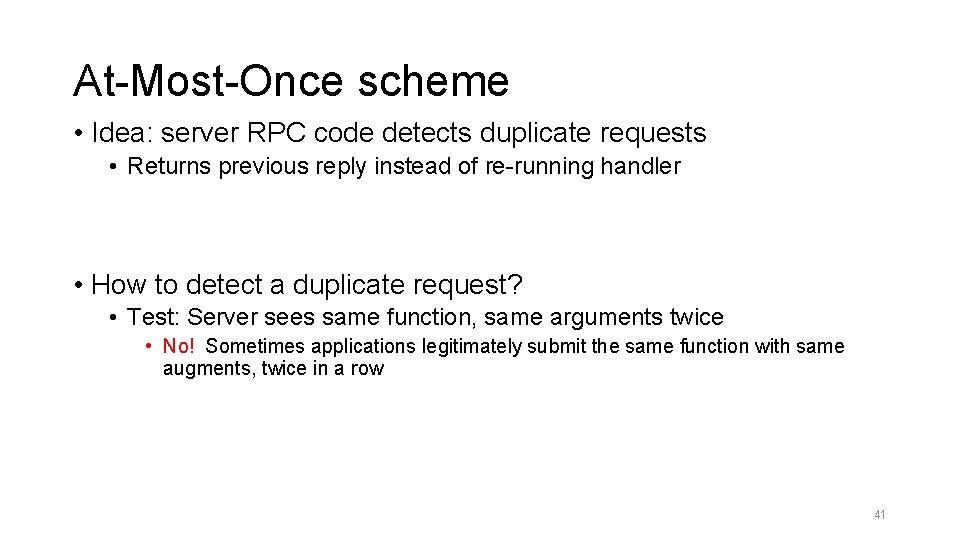
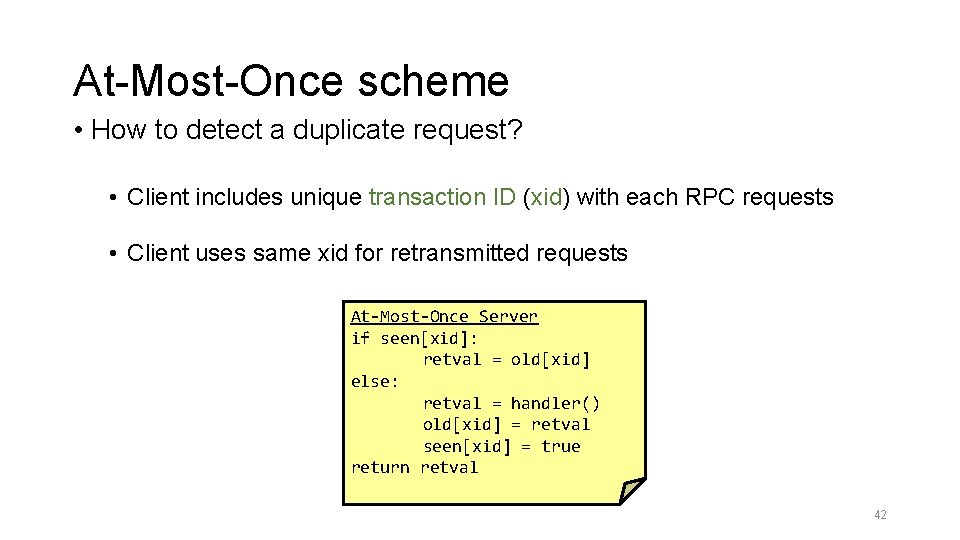
At-Most-Once scheme • Idea: server RPC code detects duplicate requests • Returns previous reply instead of re-running handler • How to detect a duplicate request? • Test: Server sees same function, same arguments twice • No! Sometimes applications legitimately submit the same function with same augments, twice in a row 41
At-Most-Once scheme • How to detect a duplicate request? • Client includes unique transaction ID (xid) with each RPC requests • Client uses same xid for retransmitted requests At-Most-Once Server if seen[xid]: retval = old[xid] else: retval = handler() old[xid] = retval seen[xid] = true return retval 42
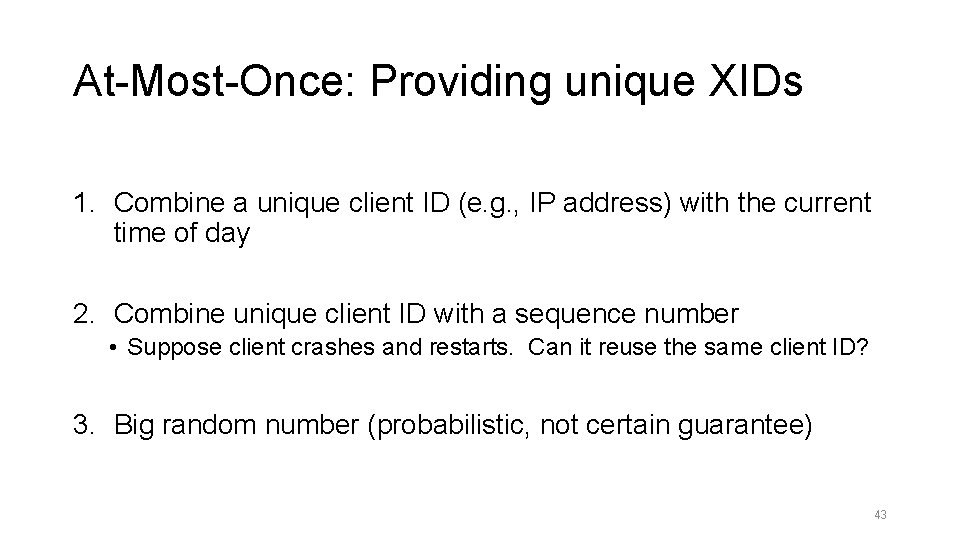
At-Most-Once: Providing unique XIDs 1. Combine a unique client ID (e. g. , IP address) with the current time of day 2. Combine unique client ID with a sequence number • Suppose client crashes and restarts. Can it reuse the same client ID? 3. Big random number (probabilistic, not certain guarantee) 43
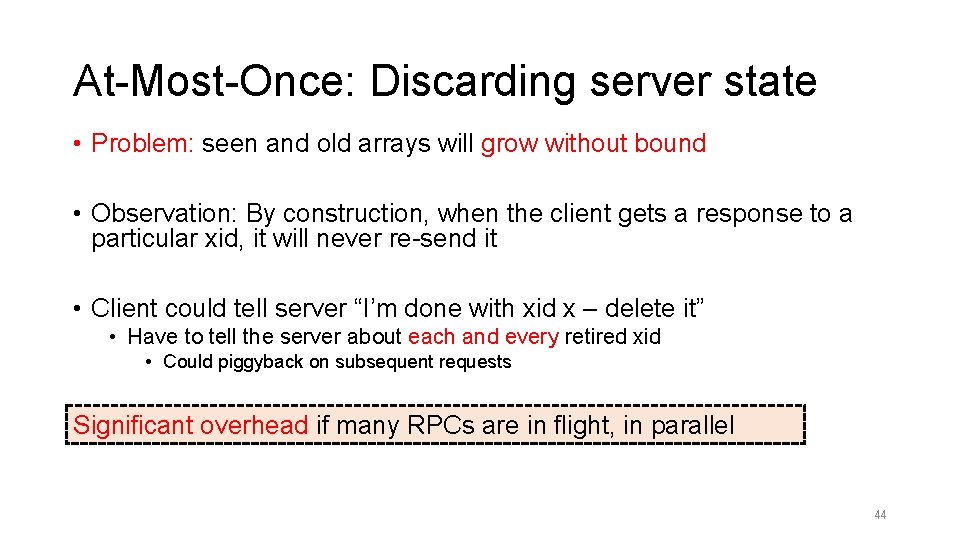
At-Most-Once: Discarding server state • Problem: seen and old arrays will grow without bound • Observation: By construction, when the client gets a response to a particular xid, it will never re-send it • Client could tell server “I’m done with xid x – delete it” • Have to tell the server about each and every retired xid • Could piggyback on subsequent requests Significant overhead if many RPCs are in flight, in parallel 44
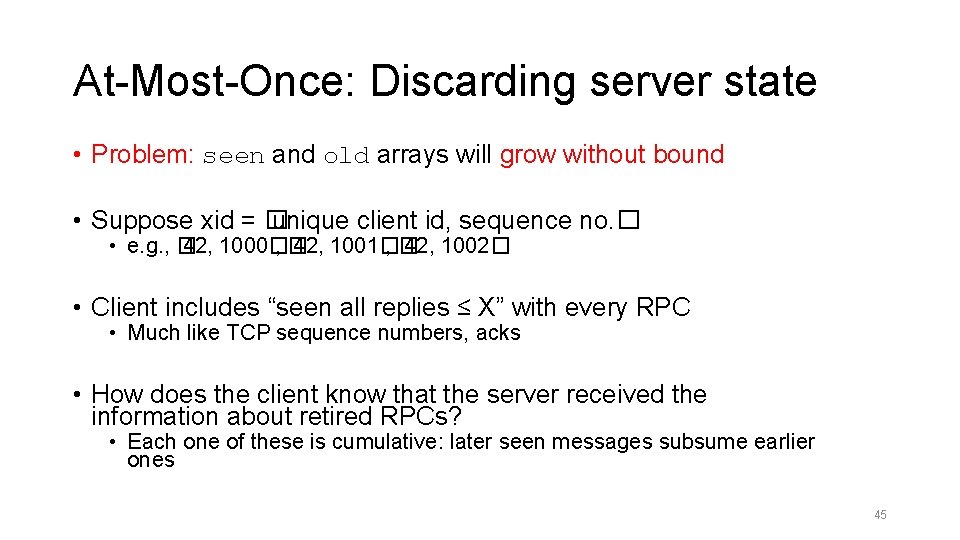
At-Most-Once: Discarding server state • Problem: seen and old arrays will grow without bound • Suppose xid = � unique client id, sequence no. � • e. g. , � 42, 1000� , � 42, 1001� , � 42, 1002� • Client includes “seen all replies ≤ X” with every RPC • Much like TCP sequence numbers, acks • How does the client know that the server received the information about retired RPCs? • Each one of these is cumulative: later seen messages subsume earlier ones 45
At-Most-Once: Concurrent requests • Problem: How to handle a duplicate request while the original is still executing? • Server doesn’t know reply yet. Also, we don’t want to run the procedure twice • Idea: Add a pending flag per executing RPC • Server waits for the procedure to finish, or ignores 46
At-Most-Once: Server crash and restart • Problem: Server may crash and restart • Does server need to write its tables to disk? • Yes! On server crash and restart: • If old[], seen[] tables are only in memory: • Server will forget, accept duplicate requests 47
Exactly-once? • Need retransmission of at least once scheme • Plus the duplicate filtering of at most once scheme • To survive client crashes, client needs to record pending RPCs on disk • So it can replay them with the same unique identifier • Plus story for making server reliable • Even if server fails, it needs to continue with full state • To survive server crashes, server should log to disk results of completed RPCs (to suppress duplicates) 50
Exactly-once for external actions? • Imagine that the remote operation triggers an external physical thing • e. g. , dispense $100 from an ATM • The ATM could crash immediately before or after dispensing and lose its state • Don’t know which one happened • Can, however, make this window very small • So can’t achieve exactly-once in general, in the presence of external actions
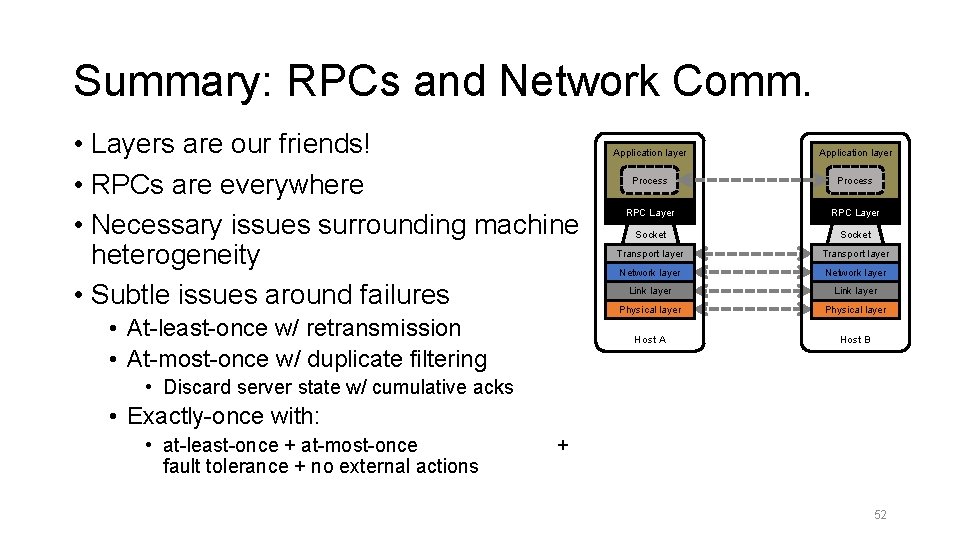
Summary: RPCs and Network Comm. • Layers are our friends! • RPCs are everywhere • Necessary issues surrounding machine heterogeneity • Subtle issues around failures • At-least-once w/ retransmission • At-most-once w/ duplicate filtering Application layer Process RPC Layer Socket Transport layer Network layer Link layer Physical layer Host A Host B • Discard server state w/ cumulative acks • Exactly-once with: • at-least-once + at-most-once fault tolerance + no external actions + 52