
Network Centric Planning Campaign of Experimentation Program of
- Slides: 25
Network Centric Planning ---Campaign of Experimentation Program of Research IAMWG Dr. David S. Alberts September 2005
Agenda • • Objectives Planning in the Context of Command C 2 Approach Space Initial Version of the Conceptual Model Campaign Phases Critical Path Items Research Priorities
Objectives • Propose a Campaign of Experimentation and an associated Program of Research to explore the nature of a planning approach that is suitable for Network Centric Operations • Provide an initial formulation to serve as a point of departure – Objectives – Initial version of a Conceptual Model – Critical Path items – Priority research topics
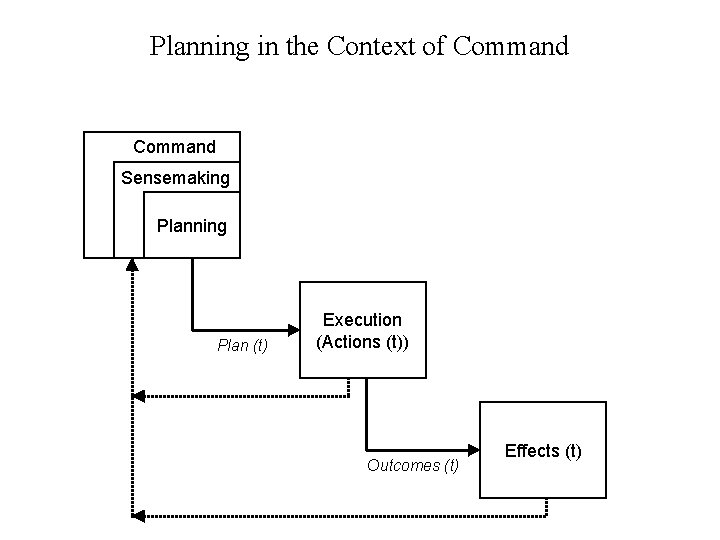
Planning in the Context of Command Sensemaking Planning Plan (t) Execution (Actions (t)) Outcomes (t) Effects (t)
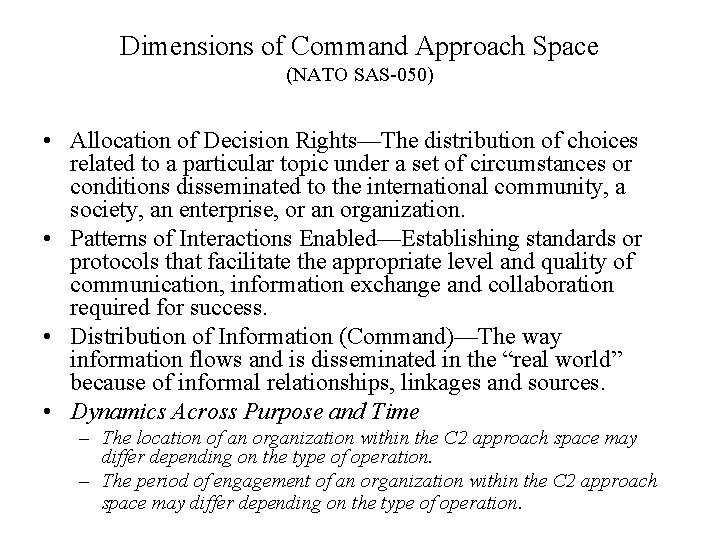
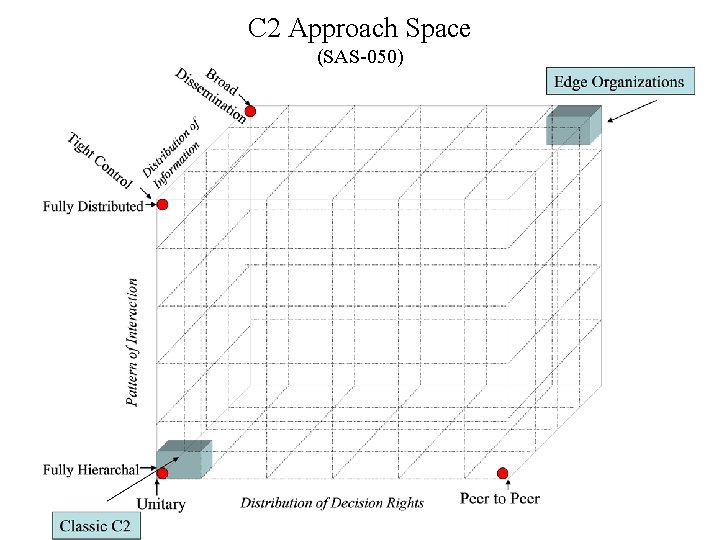
Dimensions of Command Approach Space (NATO SAS-050) • Allocation of Decision Rights—The distribution of choices related to a particular topic under a set of circumstances or conditions disseminated to the international community, a society, an enterprise, or an organization. • Patterns of Interactions Enabled—Establishing standards or protocols that facilitate the appropriate level and quality of communication, information exchange and collaboration required for success. • Distribution of Information (Command)—The way information flows and is disseminated in the “real world” because of informal relationships, linkages and sources. • Dynamics Across Purpose and Time – The location of an organization within the C 2 approach space may differ depending on the type of operation. – The period of engagement of an organization within the C 2 approach space may differ depending on the type of operation.
C 2 Approach Space (SAS-050)
Agenda • • Objectives Planning in the Context of Command C 2 Approach Space Initial Version of the Conceptual Model – Planning Approach Space – Value View (Overview) – Process View • Campaign Phases • Critical Path Items • Research Priorities
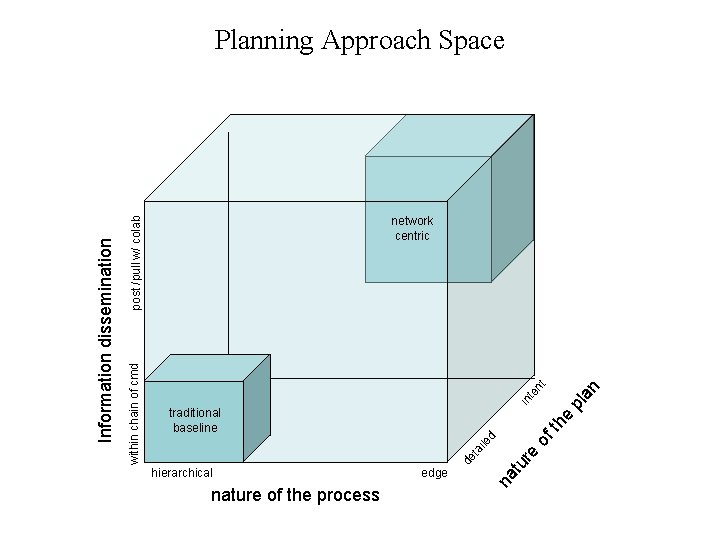
network centric nature of the process re tu edge na hierarchical de ta ile of d th e traditional baseline pl in an te nt post /pull w/ colab within chain of cmd Information dissemination Planning Approach Space
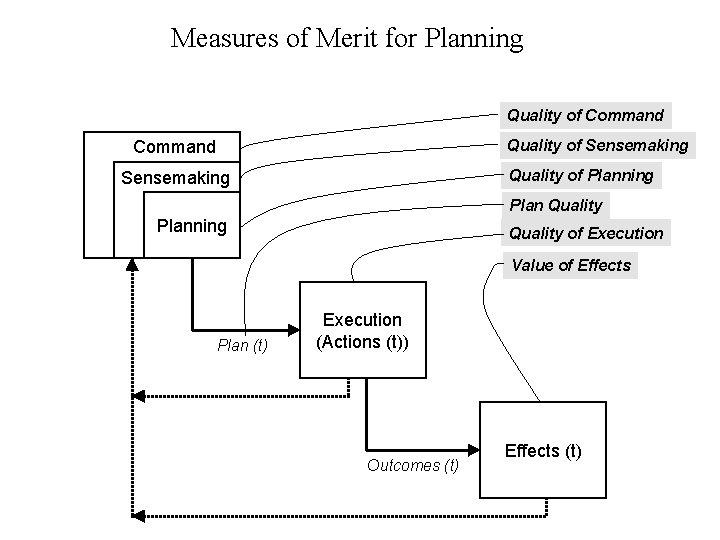
Measures of Merit for Planning Quality of Command Quality of Sensemaking Command Quality of Planning Sensemaking Plan Quality Planning Quality of Execution Value of Effects Plan (t) Execution (Actions (t)) Outcomes (t) Effects (t)
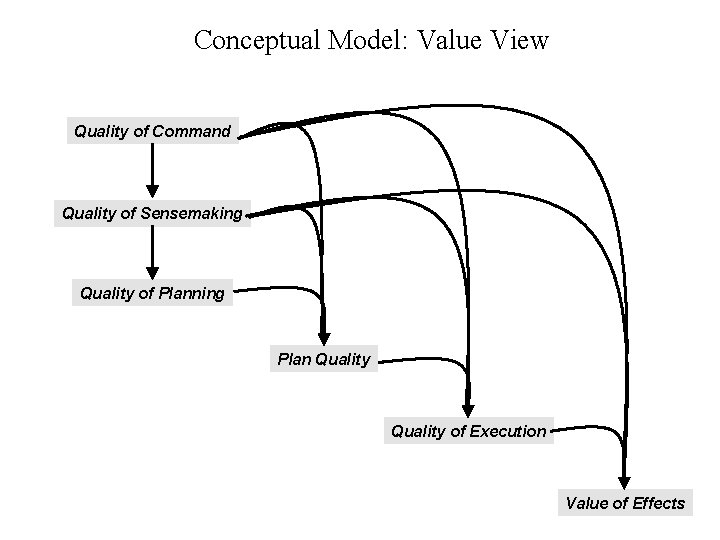
Conceptual Model: Value View Quality of Command Quality of Sensemaking Quality of Planning Plan Quality of Execution Value of Effects
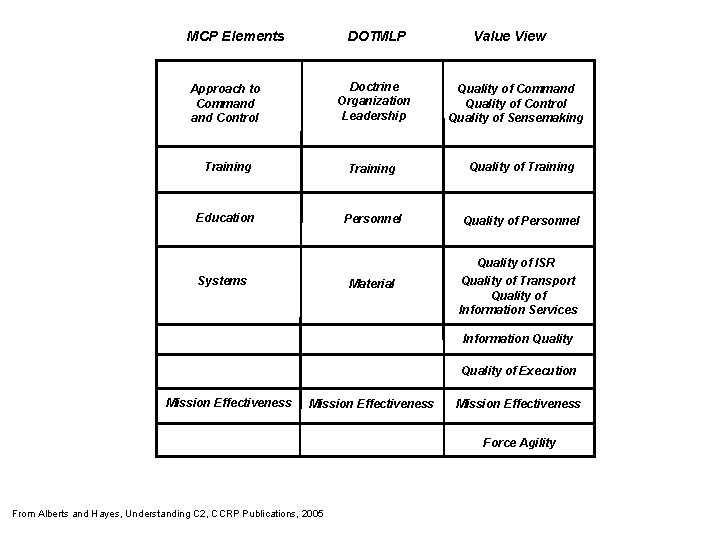
MCP Elements DOTMLP Value View Approach to Command Control Doctrine Organization Leadership Training Quality of Training Education Personnel Quality of Command Quality of Control Quality of Sensemaking Quality of ISR Systems Material Quality of Transport Quality of Information Services Information Quality of Execution Mission Effectiveness Force Agility From Alberts and Hayes, Understanding C 2, CCRP Publications, 2005
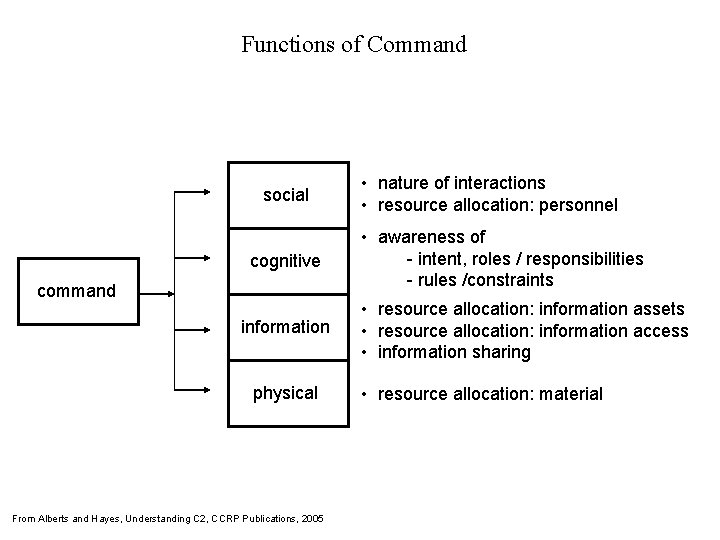
Functions of Command social cognitive command information physical From Alberts and Hayes, Understanding C 2, CCRP Publications, 2005 • nature of interactions • resource allocation: personnel • awareness of - intent, roles / responsibilities - rules /constraints • resource allocation: information assets • resource allocation: information access • information sharing • resource allocation: material
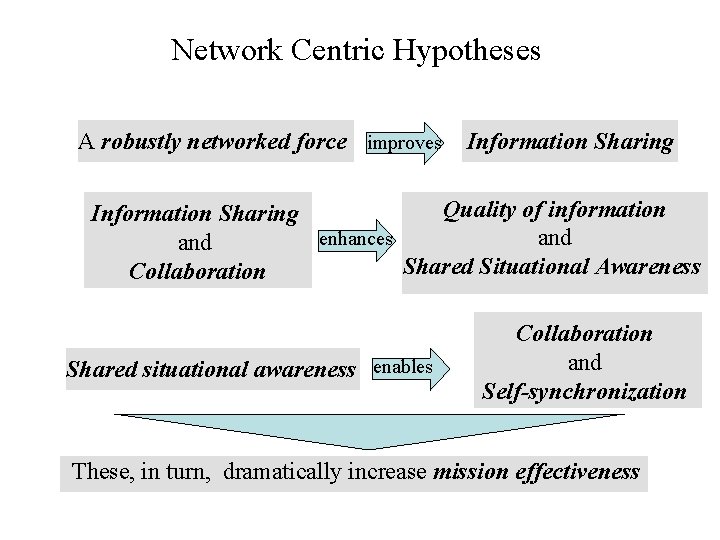
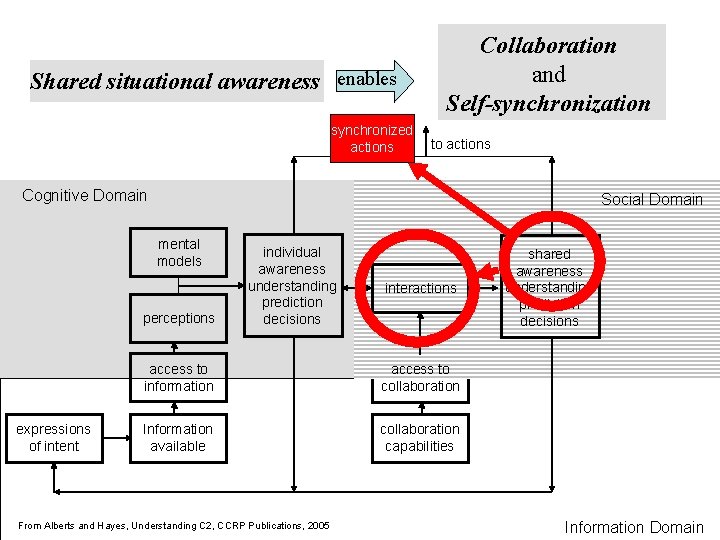
Network Centric Hypotheses A robustly networked force improves Information Sharing Quality of information Information Sharing enhances and Shared Situational Awareness Collaboration Shared situational awareness enables Collaboration and Self-synchronization These, in turn, dramatically increase mission effectiveness
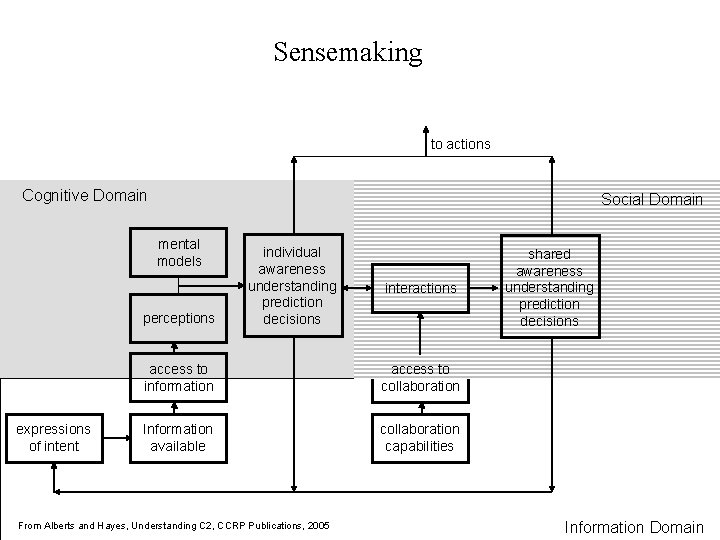
Sensemaking to actions Cognitive Domain Social Domain mental models perceptions expressions of intent individual awareness understanding prediction decisions interactions access to information access to collaboration Information available collaboration capabilities From Alberts and Hayes, Understanding C 2, CCRP Publications, 2005 shared awareness understanding prediction decisions Information Domain
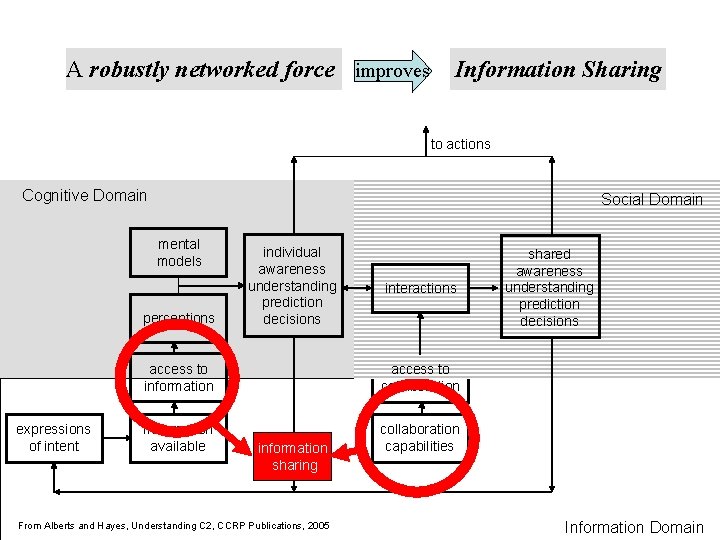
A robustly networked force improves Information Sharing to actions Cognitive Domain Social Domain mental models perceptions expressions of intent individual awareness understanding prediction decisions interactions access to information access to collaboration Information available collaboration capabilities information sharing From Alberts and Hayes, Understanding C 2, CCRP Publications, 2005 shared awareness understanding prediction decisions Information Domain
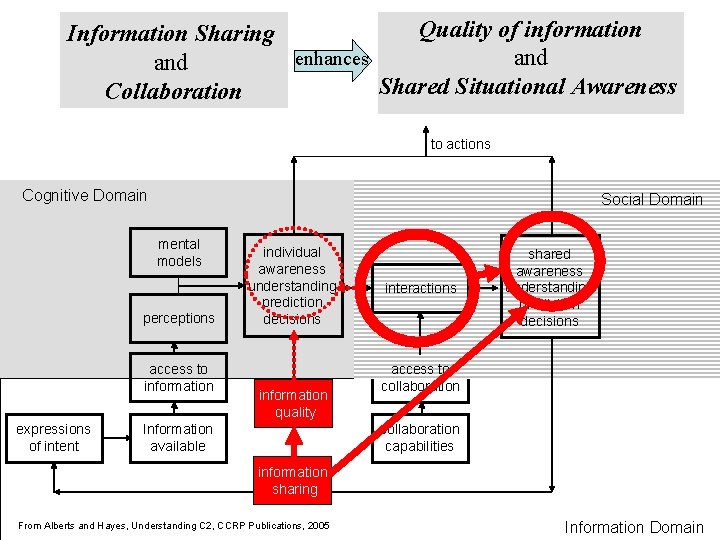
Quality of information Information Sharing enhances and Shared Situational Awareness Collaboration to actions Cognitive Domain Social Domain mental models perceptions access to information expressions of intent individual awareness understanding prediction decisions information quality interactions shared awareness understanding prediction decisions access to collaboration capabilities Information available information sharing From Alberts and Hayes, Understanding C 2, CCRP Publications, 2005 Information Domain
Shared situational awareness enables synchronized actions Collaboration and Self-synchronization to actions Cognitive Domain Social Domain mental models perceptions expressions of intent individual awareness understanding prediction decisions interactions access to information access to collaboration Information available collaboration capabilities From Alberts and Hayes, Understanding C 2, CCRP Publications, 2005 shared awareness understanding prediction decisions Information Domain
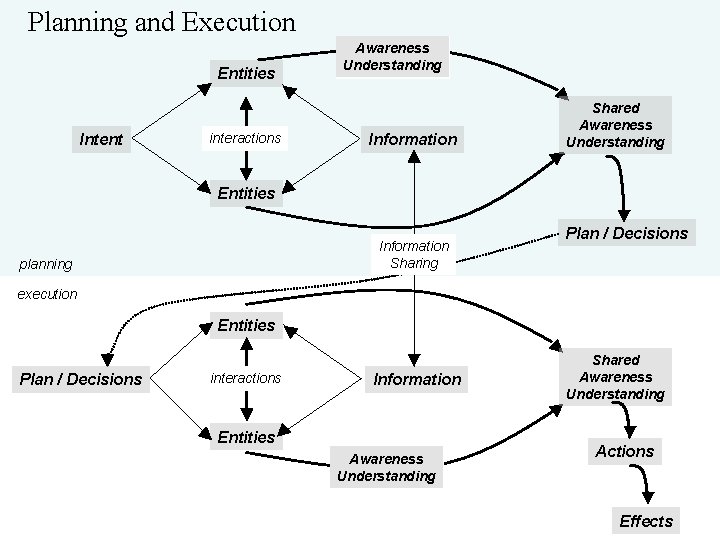
Planning and Execution Entities Intent interactions Awareness Understanding Information Shared Awareness Understanding Entities Information Sharing planning Plan / Decisions execution Entities Plan / Decisions interactions Information Entities Awareness Understanding Shared Awareness Understanding Actions Effects
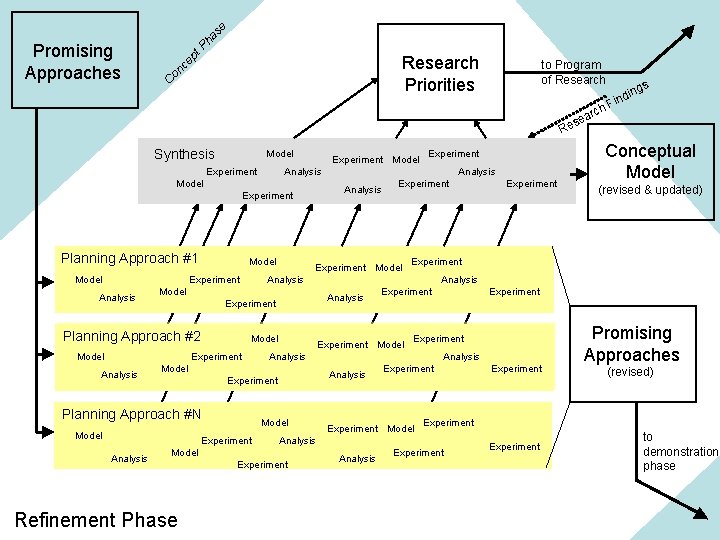
Agenda • • • Objectives Planning in the Context of Command C 2 Approach Space Initial Version of the Conceptual Model Campaign Phases – Concept Phase – Refinement Phase • Critical Path Items • Research Priorities
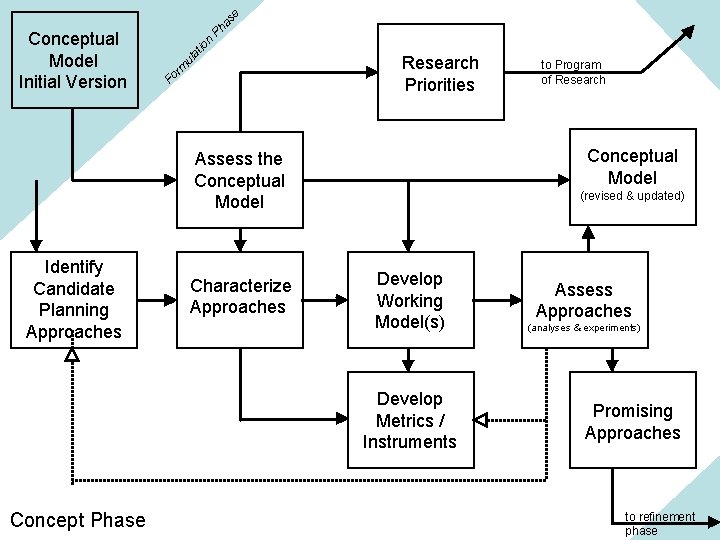
as e Ph n tio ul a rm Fo Conceptual Model Initial Version Research Priorities Conceptual Model Assess the Conceptual Model Identify Candidate Planning Approaches Characterize Approaches (revised & updated) Develop Working Model(s) Develop Metrics / Instruments Concept Phase to Program of Research Assess Approaches (analyses & experiments) Promising Approaches to refinement phase
e Ph as on ce pt Research Priorities C Promising Approaches to Program of Research h arc e s g din n i F R Synthesis Model Experiment Model Analysis Model Experiment Analysis Model Experiment Analysis Experiment Promising Approaches (revised) Experiment Analysis Model Refinement Phase Analysis Model Experiment Analysis Experiment Planning Approach #N Experiment Model (revised & updated) Analysis Model Experiment Conceptual Model Experiment Analysis Experiment Model Planning Approach #2 Analysis Experiment Planning Approach #1 Experiment to demonstration phase
Agenda • Objectives • Planning in the Context of Command • C 2 Approach Space • Initial Version of the Conceptual Model • Campaign Phases • Critical Path Items • Research Priorities
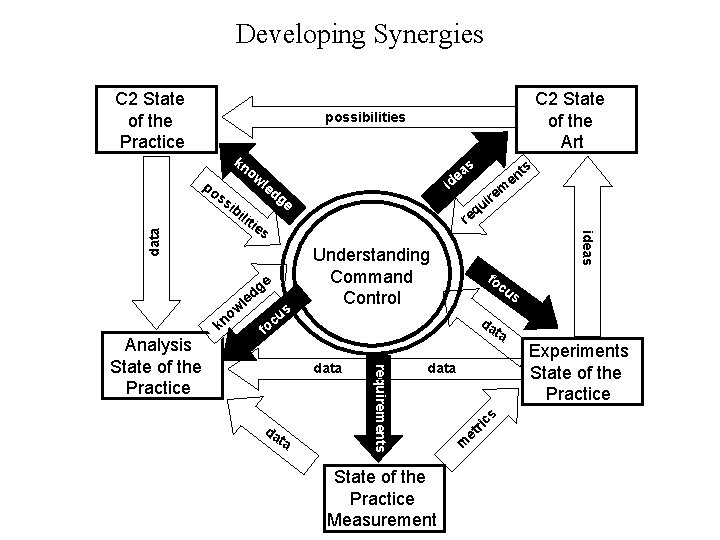
Developing Synergies C 2 State of the Practice possibilities kn ow m re i u eq e tie r e dg us c o ideas s le w o kn i Understanding Command Control fo cu a a requirements data da t s da t f data State of the Practice Measurement s ili le dg ts n e et ric ib as e d m ss data po Analysis State of the Practice C 2 State of the Art Experiments State of the Practice
Critical Path • Getting measurement right – Meta-data – Relevance of metrics – Appropriateness of instruments – Conditions under which data is collected • Initial Conceptual Model • Understand adopt Co. BPs • Establish portal for data, findings, and instrumentation
Research Priorities • Influenced by the Results of Experiments and Analyses • A Priori High Priority Topics – Taxonomy of Planning and Plans – Quality metrics for planning and plans – Factors that influence Planning Quality – Factors that influence Plan Quality – Impact of Planning and Plan Quality on Operations – Methods and Tools for Planning – Plan Visualization