
Network Algorithms Lecture 4 Longest Matching Prefix Lookups


- Slides: 24
Network Algorithms, Lecture 4: Longest Matching Prefix Lookups George Varghese
Plan for Rest of Lecture • • • Defining Problem, why its important Trie Based Algorithms Multibit trie algorithms Compressed Tries Binary Search on Hash Tables
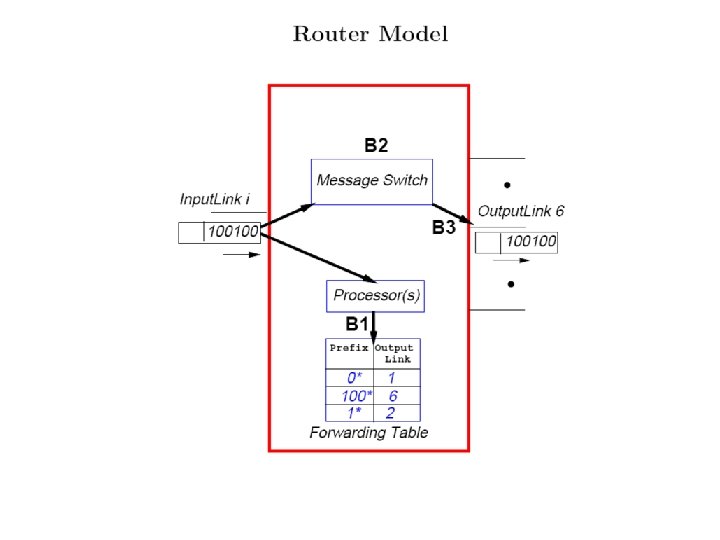
Longest Matching Prefix • Given N prefixes K_i of up to W bits, find the longest match with input K of W bits. • 3 prefix notations: slash, mask, and wildcard. 192. 255 /31 or 1* • N =1 M (ISPs) or as small as 5000 (Enterprise). W can be 32 (IPv 4), 64 (multicast), 128 (IPv 6). • For IPv 4, CIDR makes all prefix lengths from 8 to 28 common, density at 16 and 24
Why Longest Match • Much harder than exact match. Why is thus dumped on routers. • Form of compression: instead of a billion routes, around 500 K prefixes. • Core routers need only a few routes for all Stanford stations. • Really accelerated by the running out of Class B addresses and CIDR
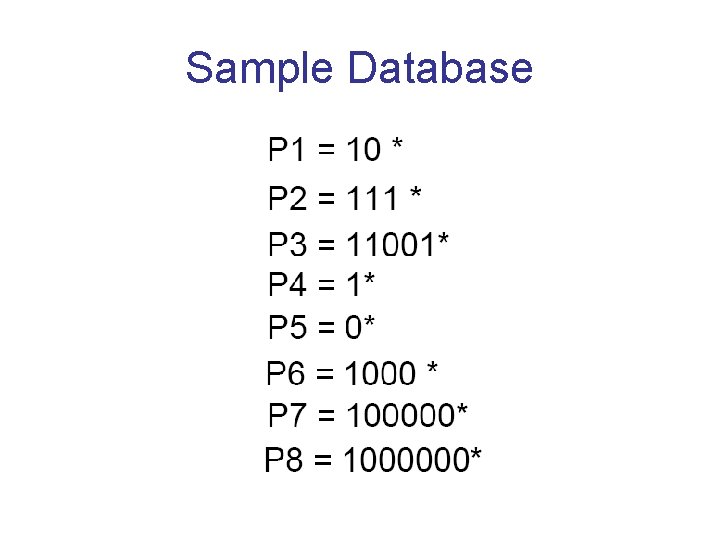
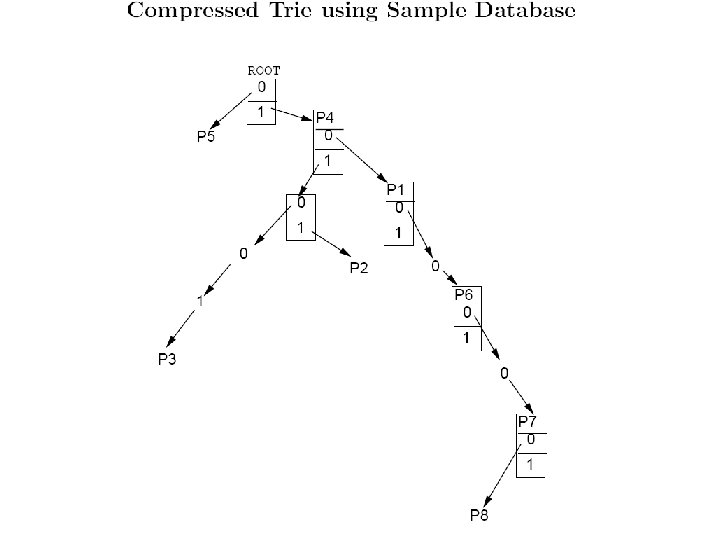
Sample Database
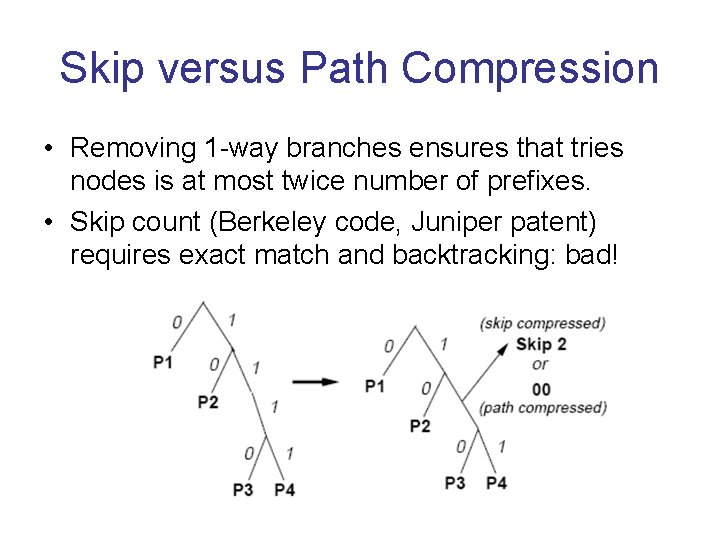
Skip versus Path Compression • Removing 1 -way branches ensures that tries nodes is at most twice number of prefixes. • Skip count (Berkeley code, Juniper patent) requires exact match and backtracking: bad!
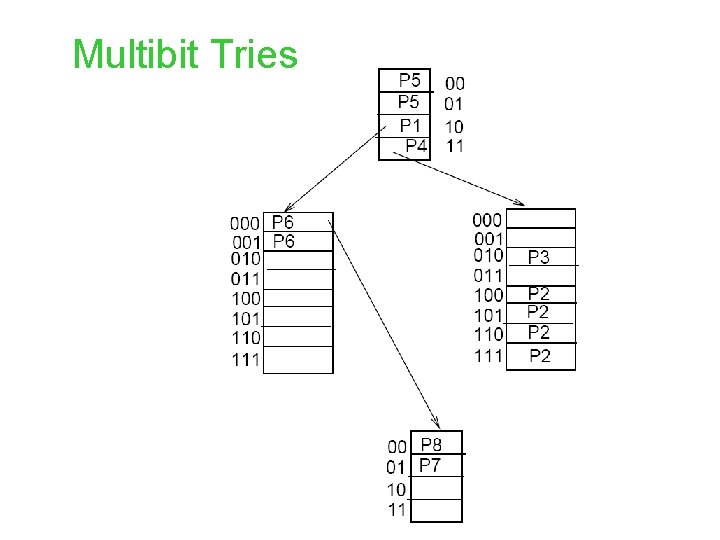
Multibit Tries
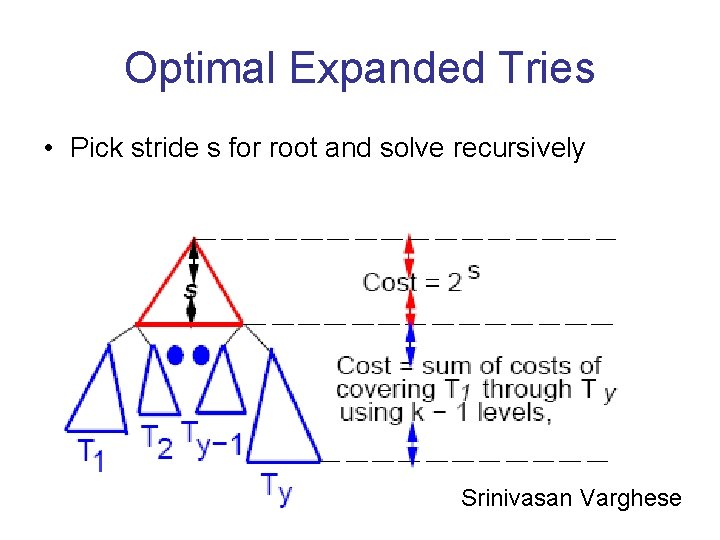
Optimal Expanded Tries • Pick stride s for root and solve recursively Srinivasan Varghese
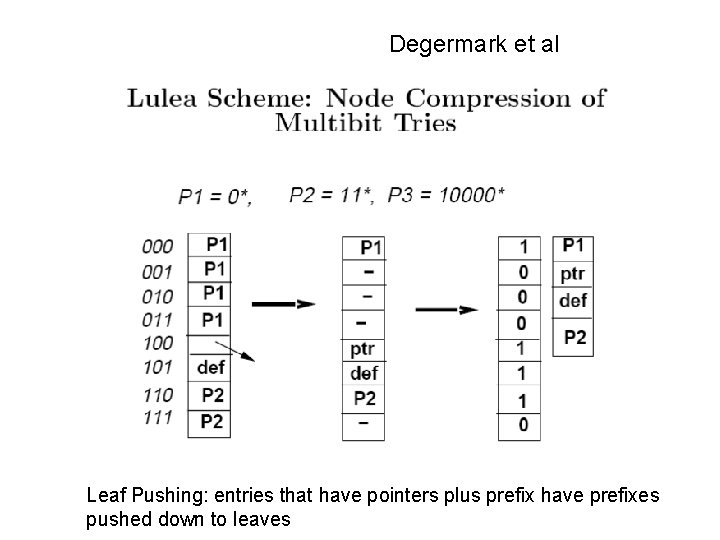
Degermark et al Leaf Pushing: entries that have pointers plus prefix have prefixes pushed down to leaves
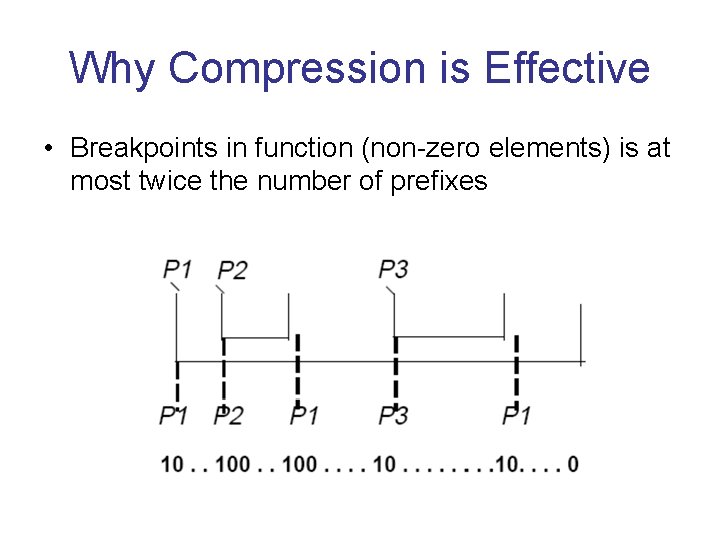
Why Compression is Effective • Breakpoints in function (non-zero elements) is at most twice the number of prefixes
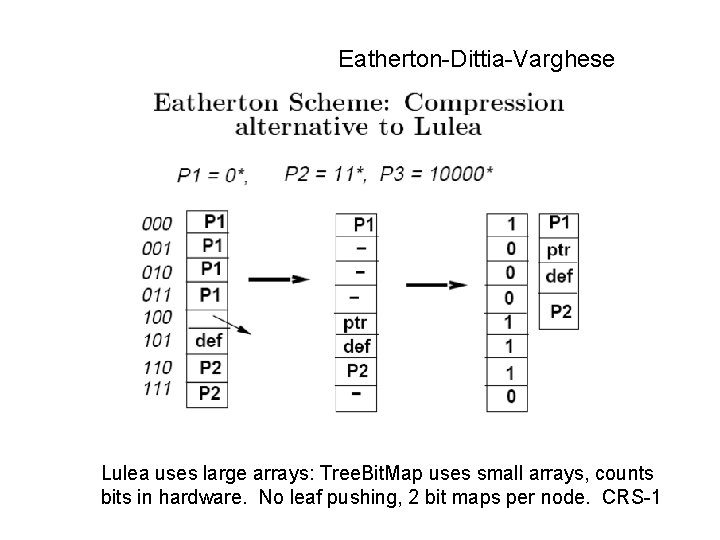
Eatherton-Dittia-Varghese Lulea uses large arrays: Tree. Bit. Map uses small arrays, counts bits in hardware. No leaf pushing, 2 bit maps per node. CRS-1
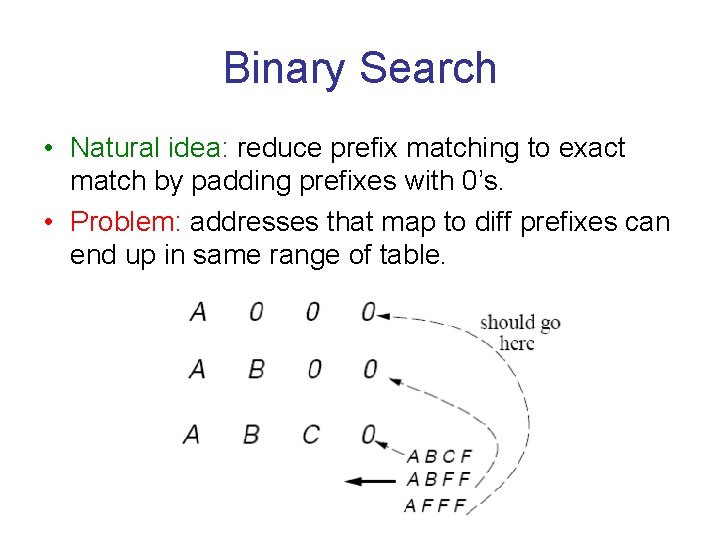
Binary Search • Natural idea: reduce prefix matching to exact match by padding prefixes with 0’s. • Problem: addresses that map to diff prefixes can end up in same range of table.
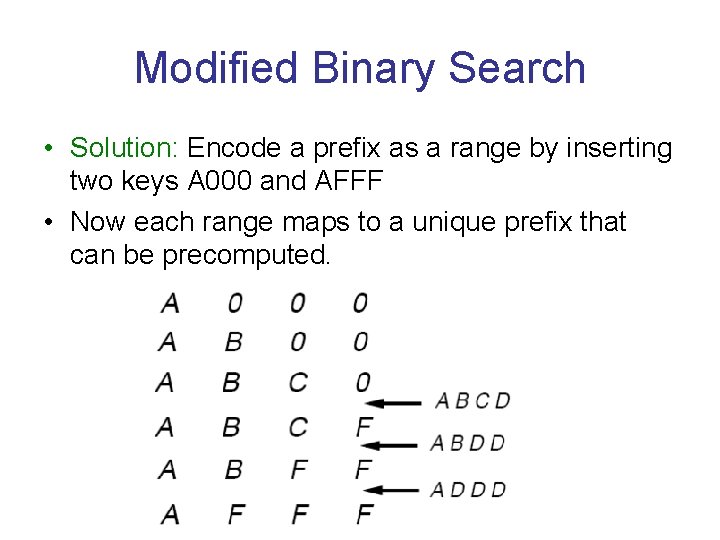
Modified Binary Search • Solution: Encode a prefix as a range by inserting two keys A 000 and AFFF • Now each range maps to a unique prefix that can be precomputed.
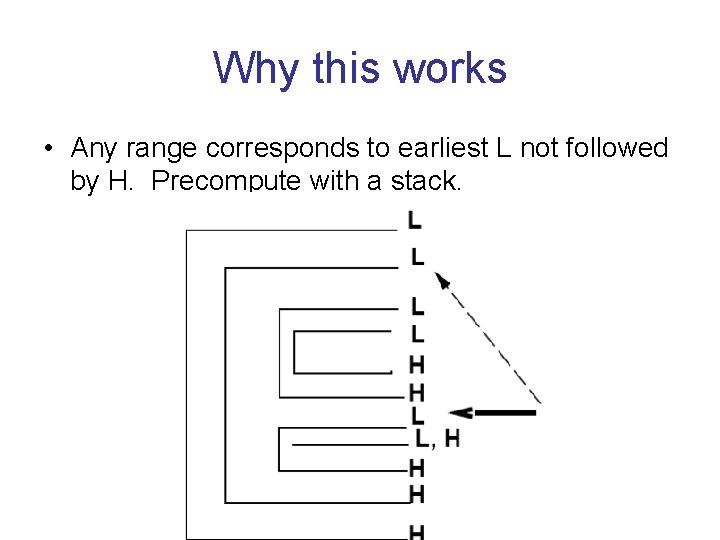
Why this works • Any range corresponds to earliest L not followed by H. Precompute with a stack.
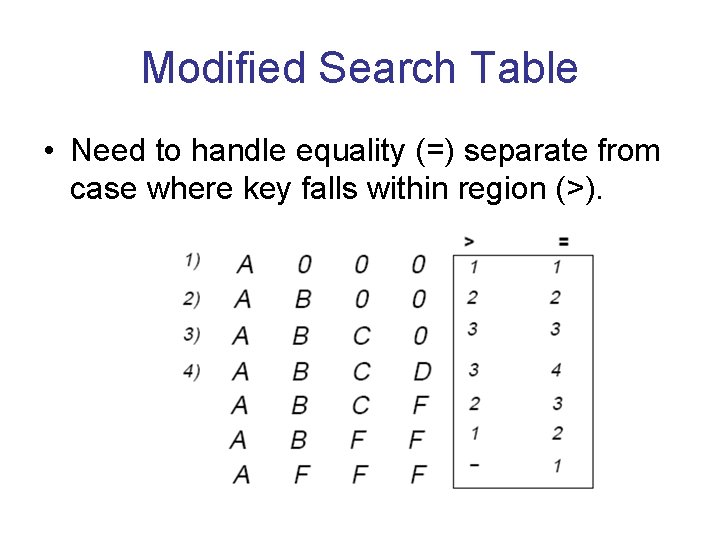
Modified Search Table • Need to handle equality (=) separate from case where key falls within region (>).
Transition to IPv 6 • So far: schemes with either log N or W/C memory references. IPv 6? • We describe a scheme that takes O(log W) references or log 128 = 7 references • Waldvogel-Varghese-Turner. Uses binary search on prefix lengths not on keys.
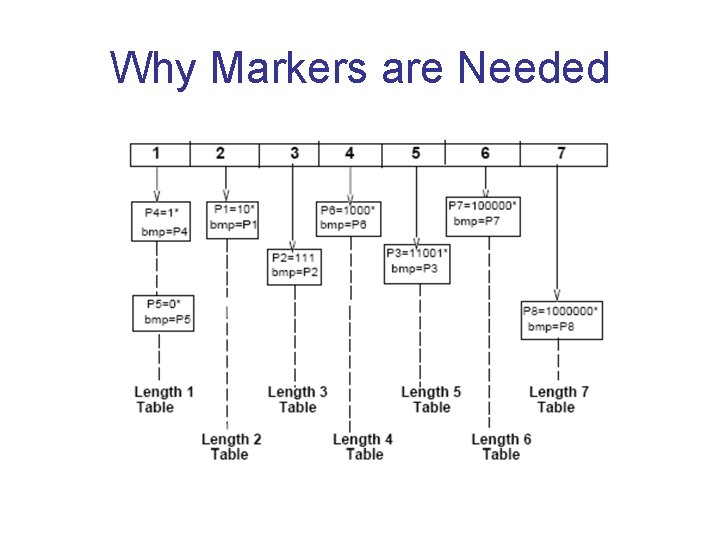
Why Markers are Needed
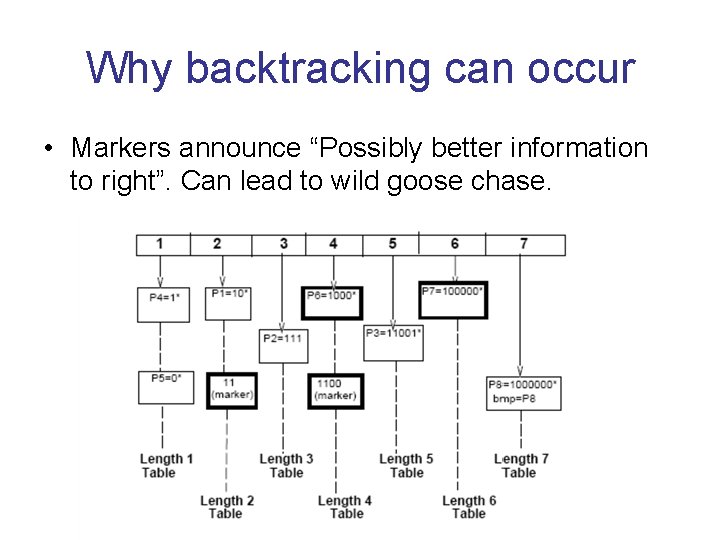
Why backtracking can occur • Markers announce “Possibly better information to right”. Can lead to wild goose chase.
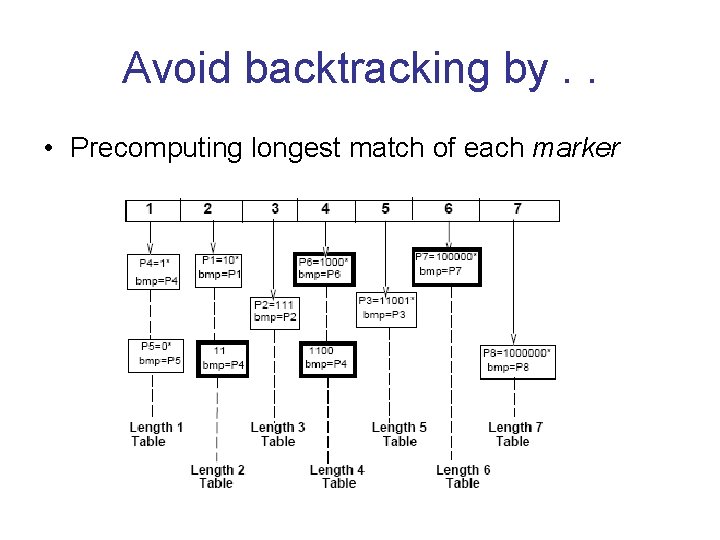
Avoid backtracking by. . • Precomputing longest match of each marker
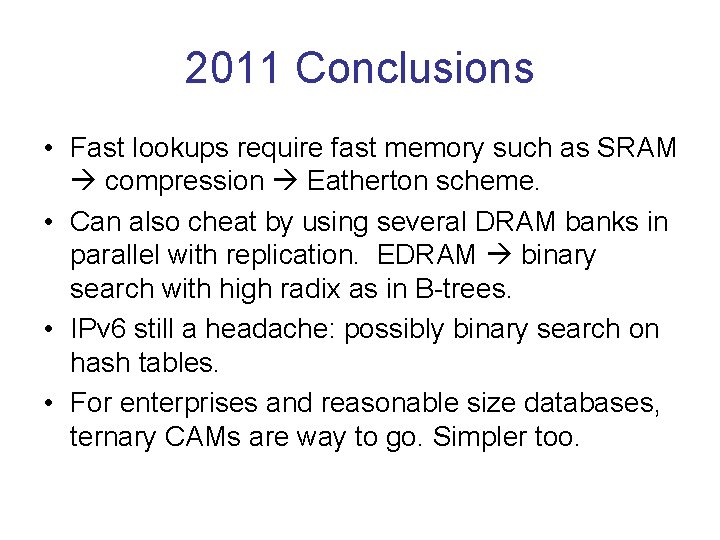
2011 Conclusions • Fast lookups require fast memory such as SRAM compression Eatherton scheme. • Can also cheat by using several DRAM banks in parallel with replication. EDRAM binary search with high radix as in B-trees. • IPv 6 still a headache: possibly binary search on hash tables. • For enterprises and reasonable size databases, ternary CAMs are way to go. Simpler too.
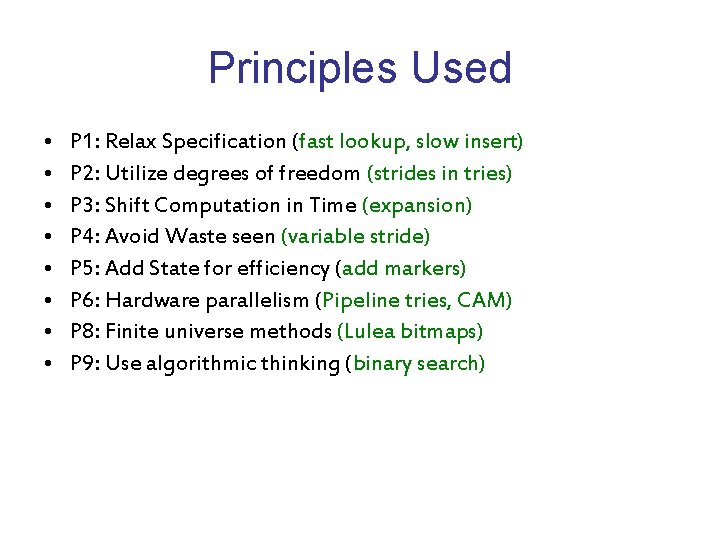
Principles Used • • P 1: Relax Specification (fast lookup, slow insert) P 2: Utilize degrees of freedom (strides in tries) P 3: Shift Computation in Time (expansion) P 4: Avoid Waste seen (variable stride) P 5: Add State for efficiency (add markers) P 6: Hardware parallelism (Pipeline tries, CAM) P 8: Finite universe methods (Lulea bitmaps) P 9: Use algorithmic thinking (binary search)