
Network Access for Remote Users Practical IPSec Dr

- Slides: 23
Network Access for Remote Users: Practical IPSec Dr John S. Graham ULCC johng@nosc. ja. net
Summary of Installations • Remote Site – Guildhall School of Music and Drama – Southgate and Capel Manor Colleges • Remote Users – Conservatoire of Dance and Drama
Crypto Route Map • Crypto map – Static or Dynamic • IKE Policy • Additional Optional Steps – User authentication – Peer configuration • Integrate with overall router config
IKE Policies • Algorithms to be offered • Authentication method – Pre-shared key – X. 509 certificates – RSA encrypted nonces • Diffie-Hellman Group
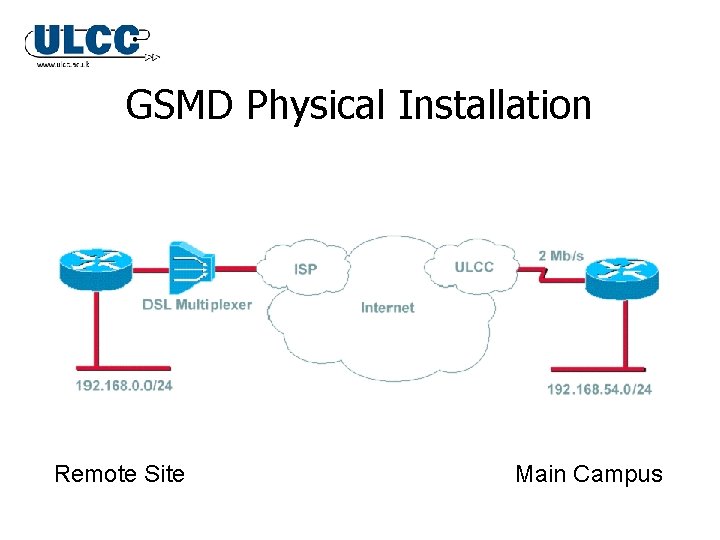
GSMD Physical Installation Remote Site Main Campus
GSMD: Equipment at Remote Site • ‘Wires Only’ ADSL Connection – One Static IP Address • Splitter • Cisco 827 H Router – Ethernet hub (4 ports) plus ATM port
Static Crypto Components • Create Crypto Map – Define trigger (ACL) – Peer Identity (IP address or FQDN) – Define transform • Mode (tunnel or transport) • List of algorithms that will be offered to peer – Lifetime of SA • Bind crypto map to external interface
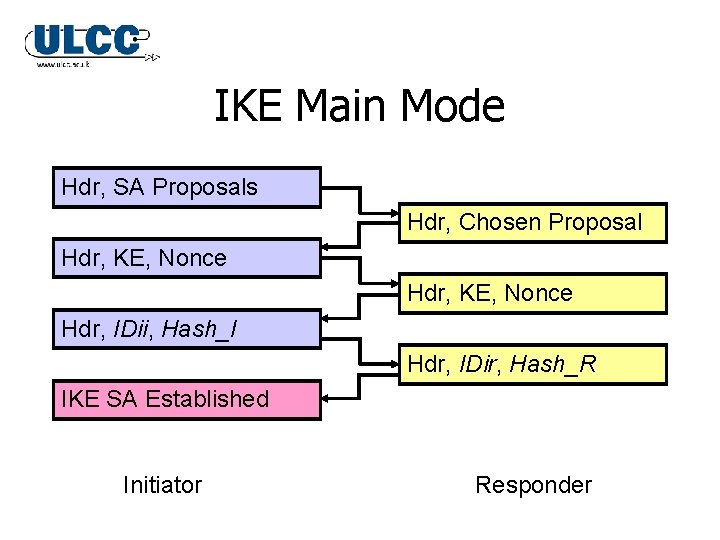
Authentication of Known Peers • One-to-one mappings between: – Peer IP addresses – Shared secret (unique to each peer) • IKE Phase I Main Mode exchanges: 1. Negotiate IKE SA and exchange cookies 2. Diffie-Hellman public values and pseudorandom nonces 3. Peers identify themselves and exchange authenticating hash
IKE Main Mode Hdr, SA Proposals Hdr, Chosen Proposal Hdr, KE, Nonce Hdr, IDii, Hash_I Hdr, IDir, Hash_R IKE SA Established Initiator Responder
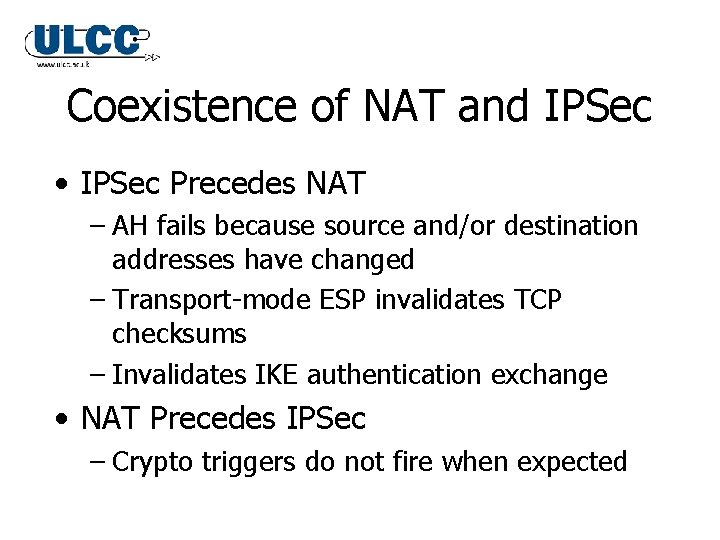
Coexistence of NAT and IPSec • IPSec Precedes NAT – AH fails because source and/or destination addresses have changed – Transport-mode ESP invalidates TCP checksums – Invalidates IKE authentication exchange • NAT Precedes IPSec – Crypto triggers do not fire when expected
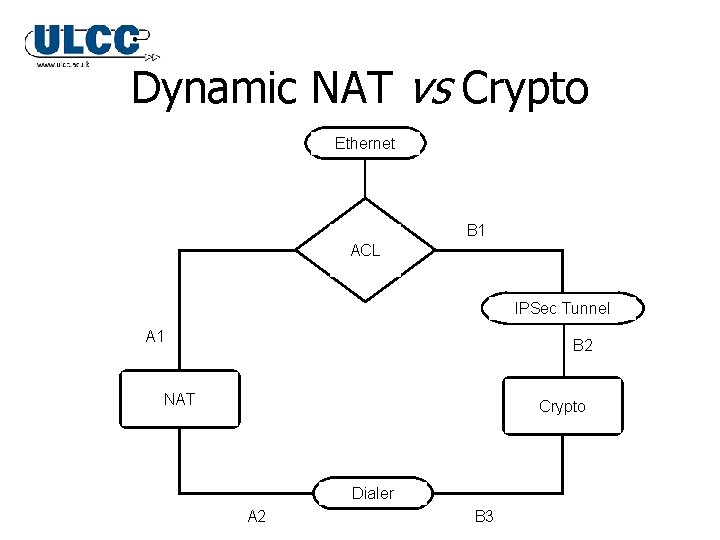
Dynamic NAT vs Crypto Ethernet B 1 ACL IPSec Tunnel A 1 B 2 NAT Crypto Dialer A 2 B 3
Southgate and Capel Manor • Shared student records database at Southgate • Database queries & updates over highspeed WAN with crypto. • Back-up interface using ISDN
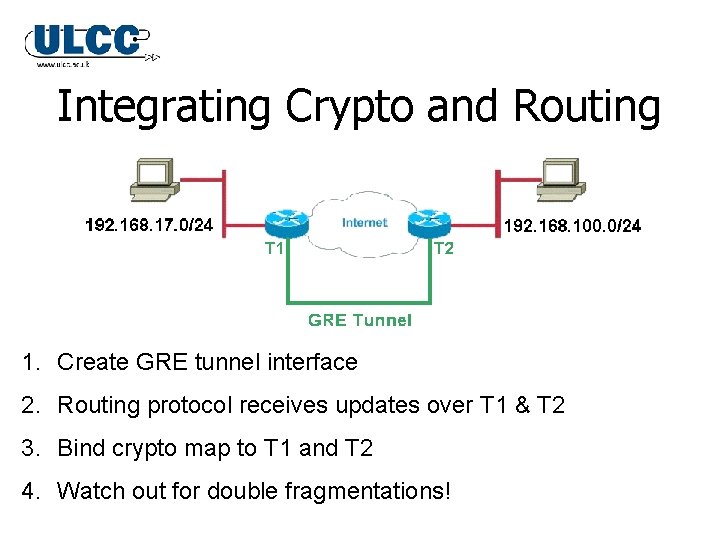
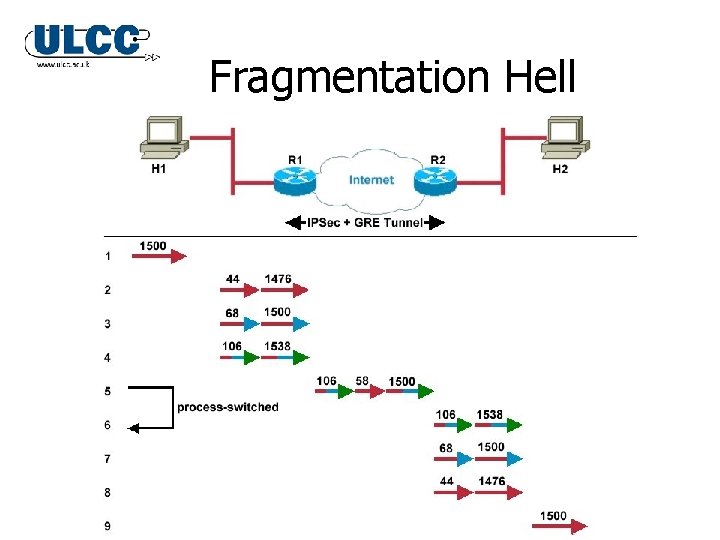
Integrating Crypto and Routing 1. Create GRE tunnel interface 2. Routing protocol receives updates over T 1 & T 2 3. Bind crypto map to T 1 and T 2 4. Watch out for double fragmentations!
Fragmentation Hell
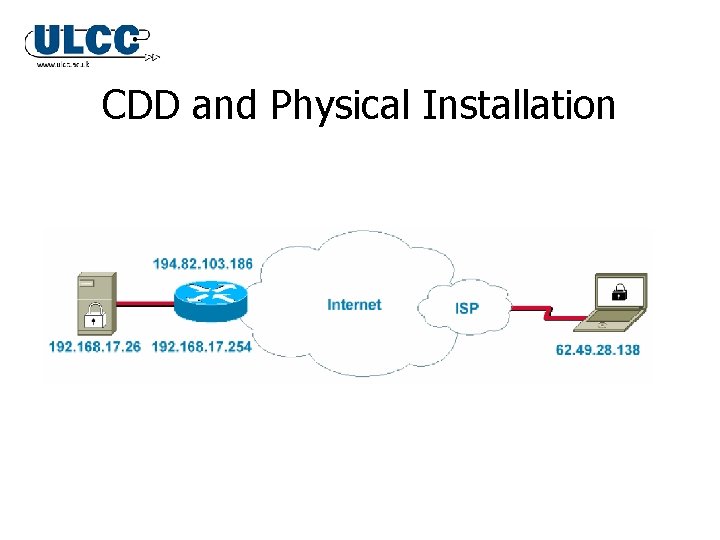
CDD and Physical Installation
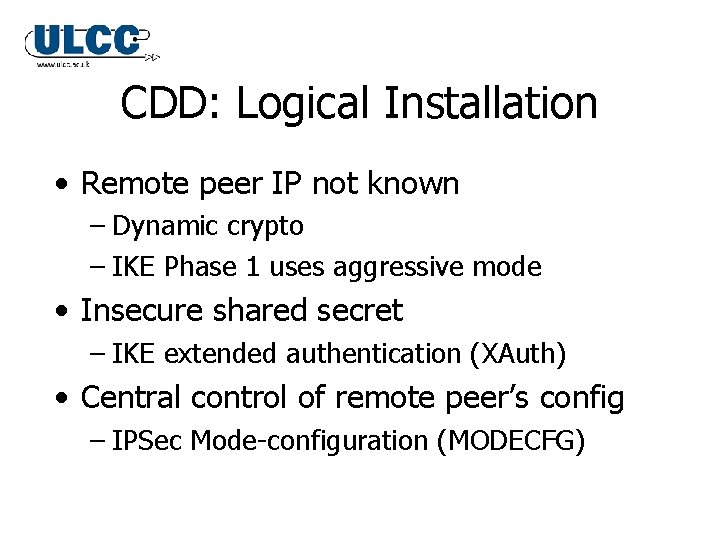
CDD: Logical Installation • Remote peer IP not known – Dynamic crypto – IKE Phase 1 uses aggressive mode • Insecure shared secret – IKE extended authentication (XAuth) • Central control of remote peer’s config – IPSec Mode-configuration (MODECFG)
Authentication of Unknown Peers • Pre-shared secret not indexed by IP address • IKE Phase I Aggressive Mode Exchange • Supplementary authentication of user credentials
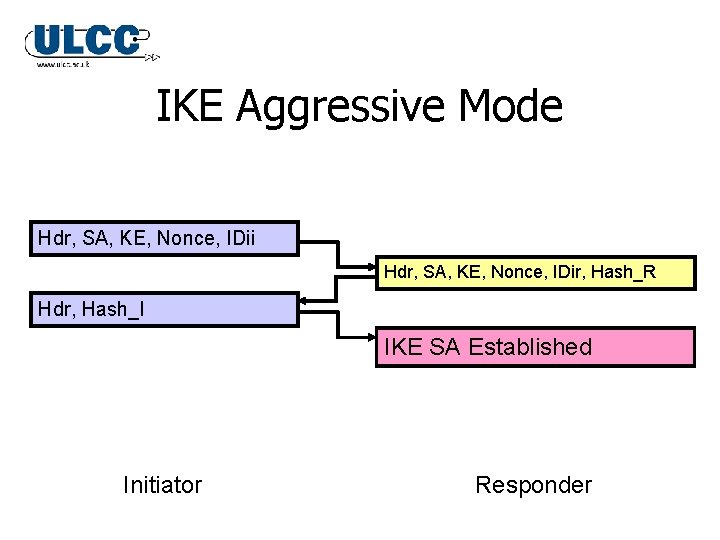
IKE Aggressive Mode Hdr, SA, KE, Nonce, IDii Hdr, SA, KE, Nonce, IDir, Hash_R Hdr, Hash_I IKE SA Established Initiator Responder
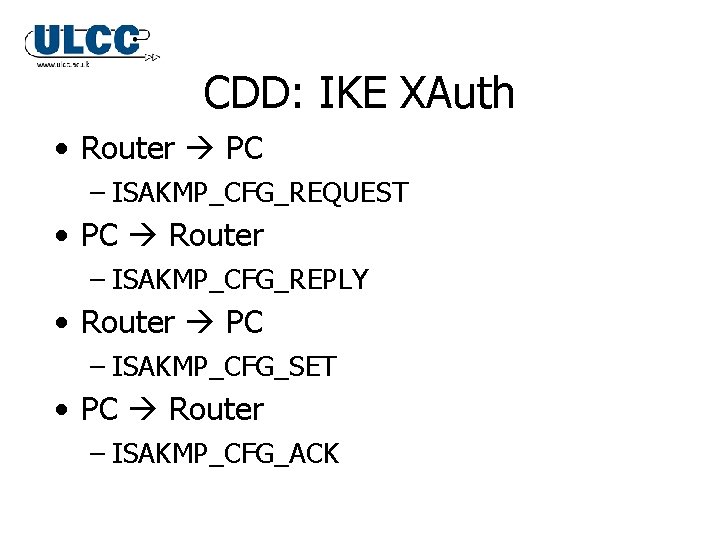
CDD: IKE XAuth • Router PC – ISAKMP_CFG_REQUEST • PC Router – ISAKMP_CFG_REPLY • Router PC – ISAKMP_CFG_SET • PC Router – ISAKMP_CFG_ACK
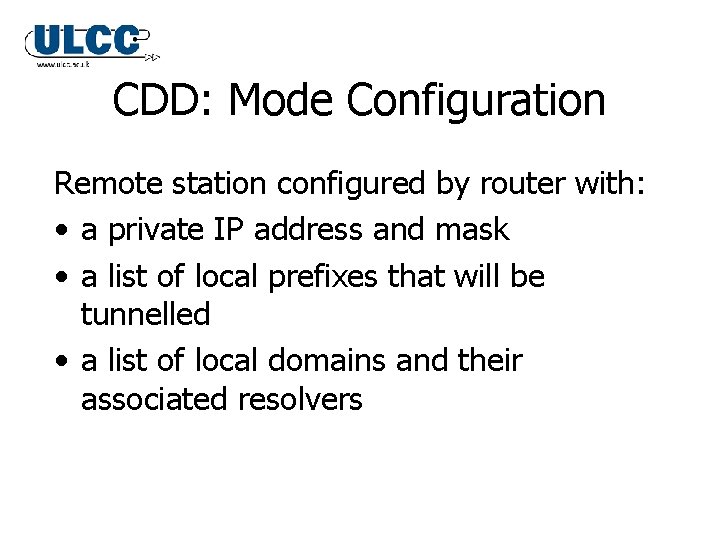
CDD: Mode Configuration Remote station configured by router with: • a private IP address and mask • a list of local prefixes that will be tunnelled • a list of local domains and their associated resolvers
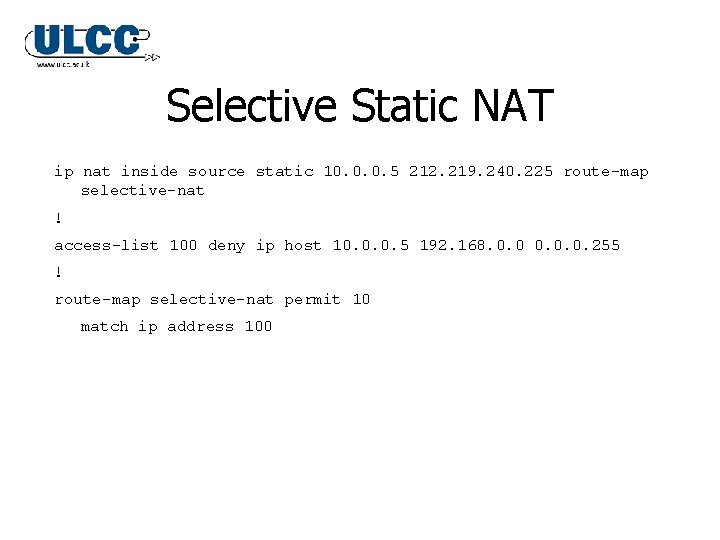
Selective Static NAT ip nat inside source static 10. 0. 0. 5 212. 219. 240. 225 route-map selective-nat ! access-list 100 deny ip host 10. 0. 0. 5 192. 168. 0. 0. 0. 255 ! route-map selective-nat permit 10 match ip address 100
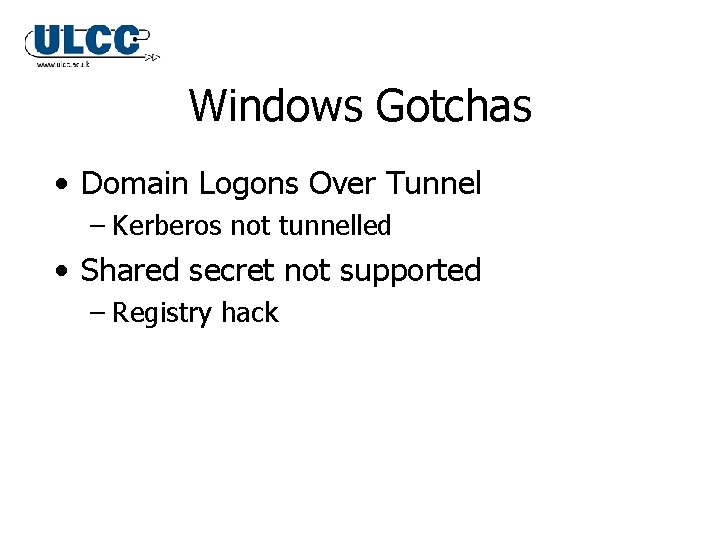
Windows Gotchas • Domain Logons Over Tunnel – Kerberos not tunnelled • Shared secret not supported – Registry hack