
NETW 1010 IOT Technologies Radio Frequency Identification RFID
- Slides: 17
NETW 1010 IOT Technologies: Radio Frequency Identification (RFID) Dr. Eng. Tallal Elshabrawy Spring 2019
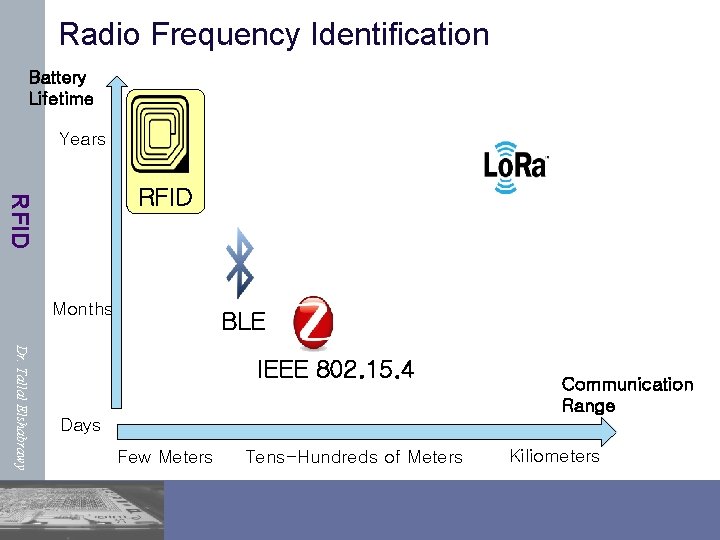
Radio Frequency Identification Battery Lifetime Years RFID Months BLE Dr. Tallal Elshabrawy IEEE 802. 15. 4 Communication Range Days Few Meters Tens-Hundreds of Meters Kiliometers
Outline Ø Introduction Ø Physical Layer RFID Ø Medium Access Dr. Tallal Elshabrawy
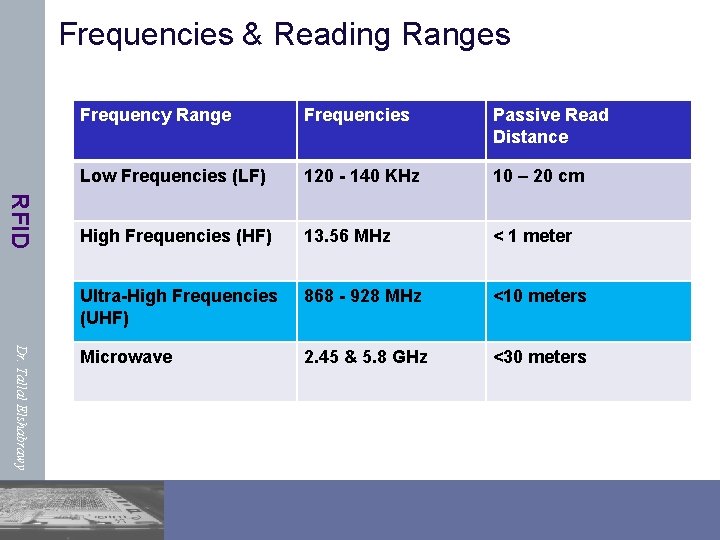
Frequencies & Reading Ranges RFID Dr. Tallal Elshabrawy Frequency Range Frequencies Passive Read Distance Low Frequencies (LF) 120 - 140 KHz 10 – 20 cm High Frequencies (HF) 13. 56 MHz < 1 meter Ultra-High Frequencies (UHF) 868 - 928 MHz <10 meters Microwave 2. 45 & 5. 8 GHz <30 meters
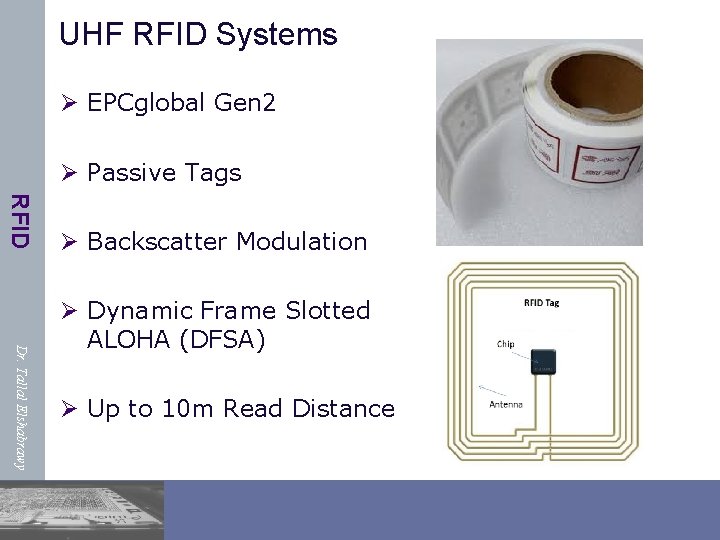
UHF RFID Systems Ø EPCglobal Gen 2 Ø Passive Tags RFID Ø Backscatter Modulation Dr. Tallal Elshabrawy Ø Dynamic Frame Slotted ALOHA (DFSA) Ø Up to 10 m Read Distance
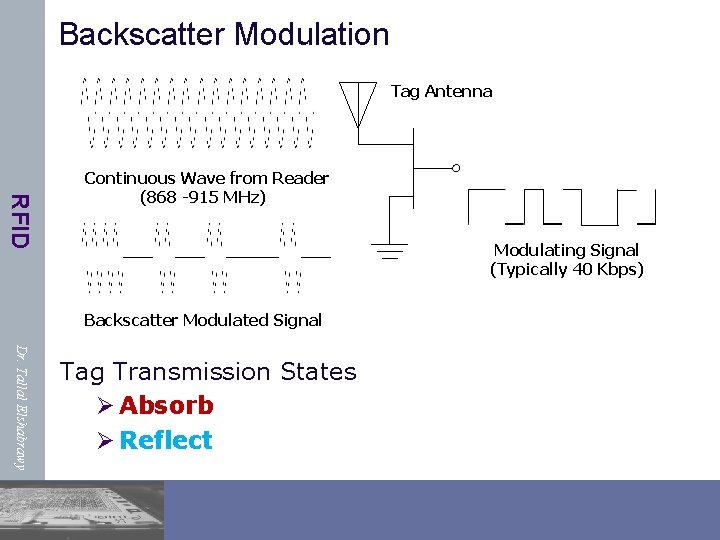
Backscatter Modulation Tag Antenna RFID Continuous Wave from Reader (868 -915 MHz) Modulating Signal (Typically 40 Kbps) Backscatter Modulated Signal Dr. Tallal Elshabrawy Tag Transmission States Ø Absorb Ø Reflect
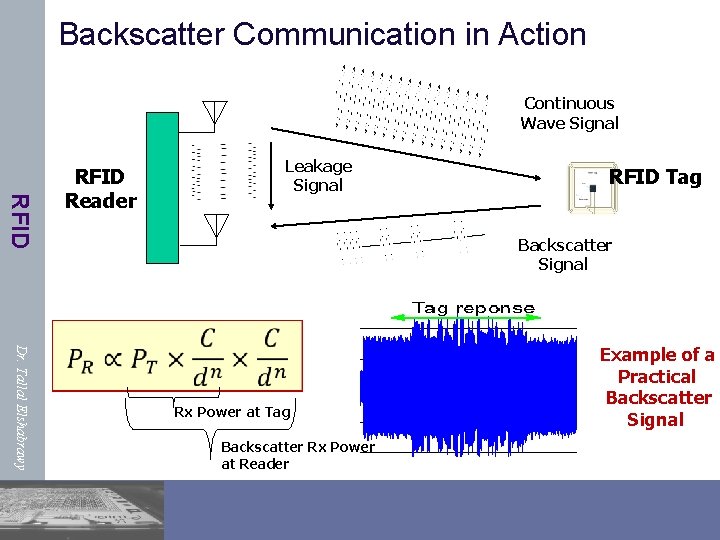
Backscatter Communication in Action Continuous Wave Signal RFID Reader Leakage Signal RFID Tag Backscatter Signal Dr. Tallal Elshabrawy Rx Power at Tag Backscatter Rx Power at Reader Example of a Practical Backscatter Signal
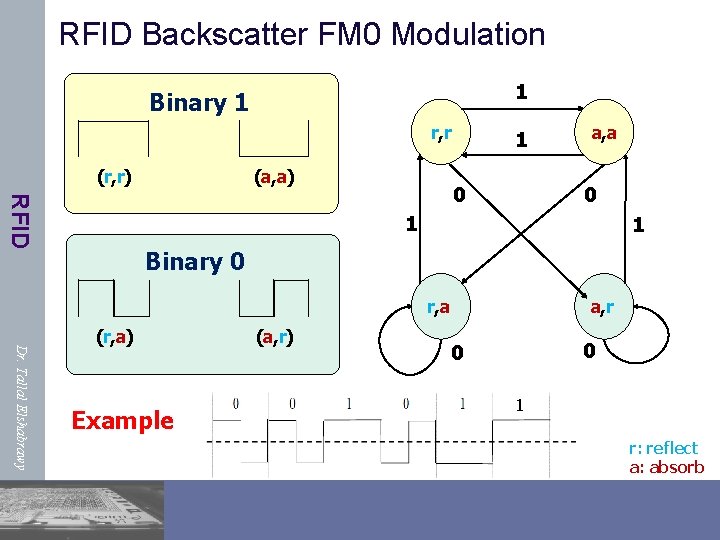
RFID Backscatter FM 0 Modulation 1 Binary 1 r, r (r, r) (a, a) 1 RFID 0 a, a 0 1 1 Binary 0 r, a Dr. Tallal Elshabrawy (r, a) Example (a, r) a, r 0 0 1 r: reflect a: absorb
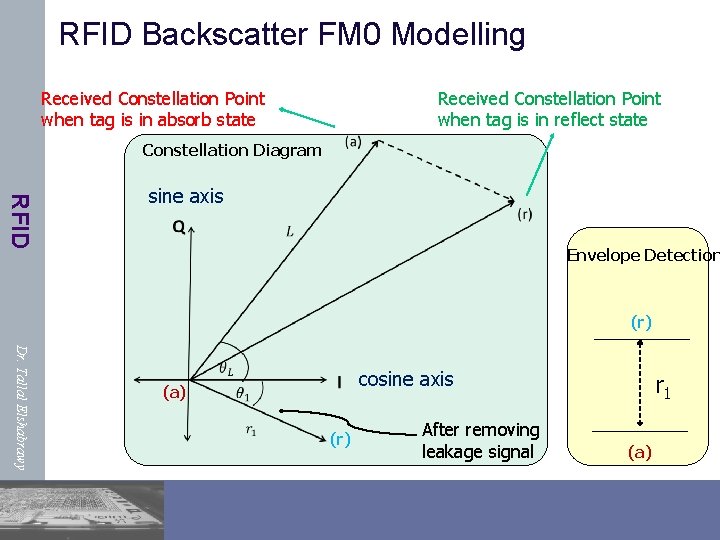
RFID Backscatter FM 0 Modelling Received Constellation Point when tag is in absorb state Received Constellation Point when tag is in reflect state Constellation Diagram RFID sine axis Envelope Detection (r) Dr. Tallal Elshabrawy cosine axis (a) (r) After removing leakage signal r 1 (a)
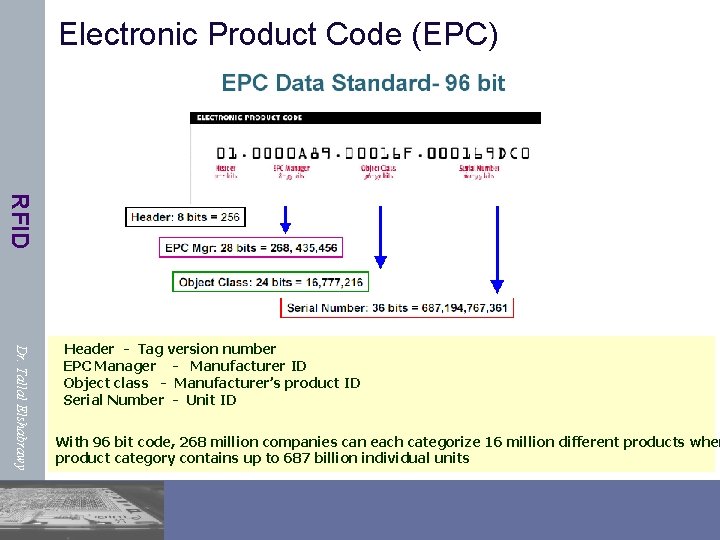
Electronic Product Code (EPC) RFID Dr. Tallal Elshabrawy Header - Tag version number EPC Manager - Manufacturer ID Object class - Manufacturer’s product ID Serial Number - Unit ID With 96 bit code, 268 million companies can each categorize 16 million different products wher product category contains up to 687 billion individual units
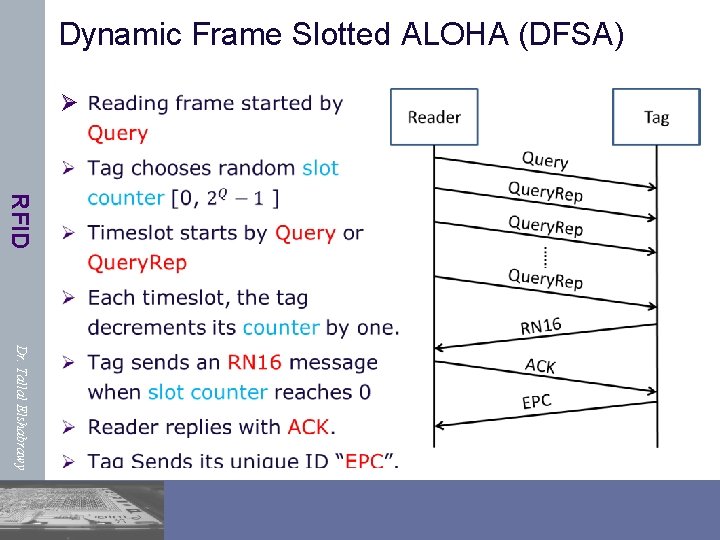
Dynamic Frame Slotted ALOHA (DFSA) Ø RFID Dr. Tallal Elshabrawy
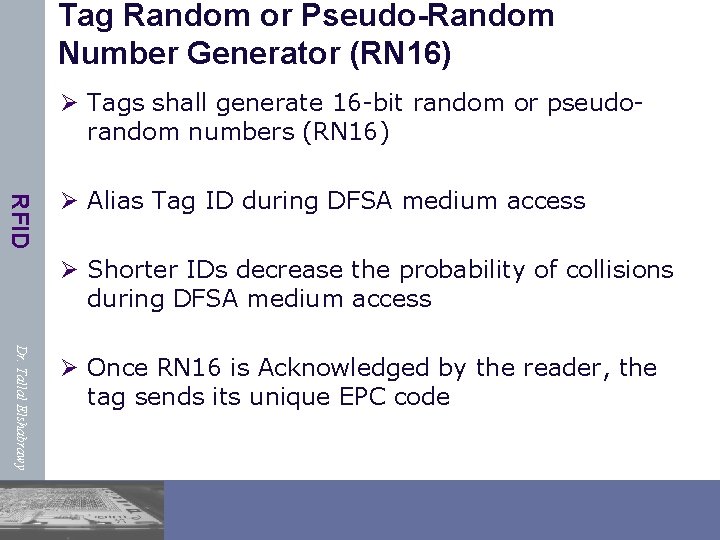
Tag Random or Pseudo-Random Number Generator (RN 16) Ø Tags shall generate 16 -bit random or pseudorandom numbers (RN 16) RFID Ø Alias Tag ID during DFSA medium access Ø Shorter IDs decrease the probability of collisions during DFSA medium access Dr. Tallal Elshabrawy Ø Once RN 16 is Acknowledged by the reader, the tag sends its unique EPC code
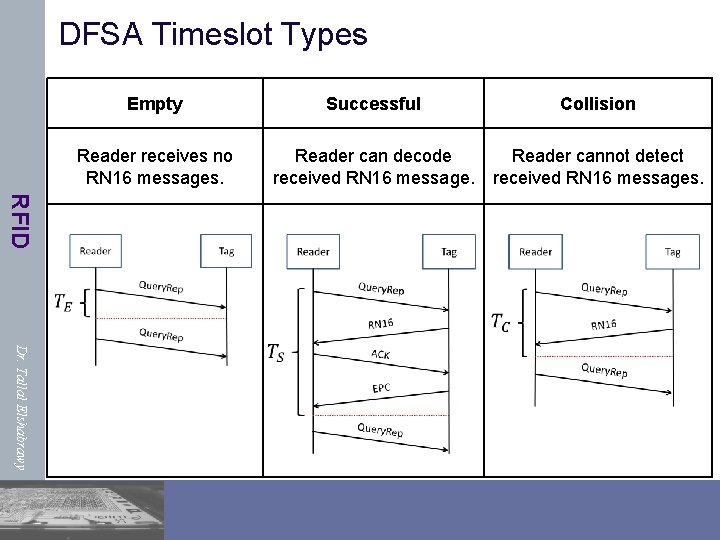
DFSA Timeslot Types Empty Successful Collision Reader receives no RN 16 messages. Reader can decode received RN 16 message. Reader cannot detect received RN 16 messages. RFID Dr. Tallal Elshabrawy
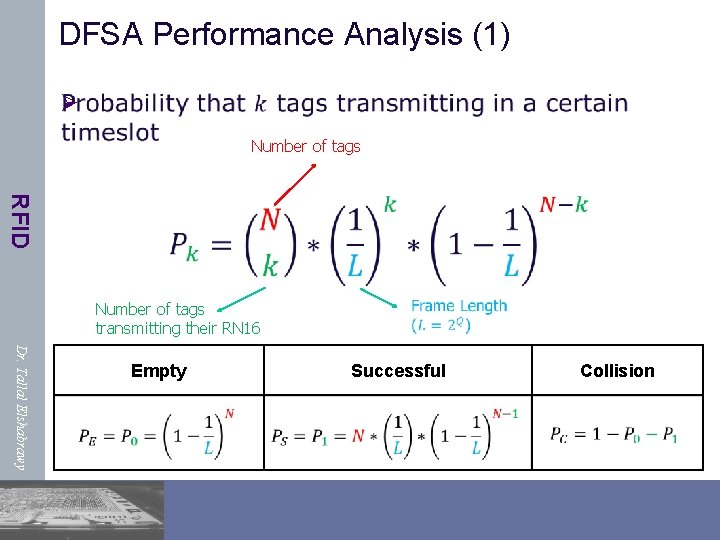
DFSA Performance Analysis (1) Ø Number of tags RFID Number of tags transmitting their RN 16 Dr. Tallal Elshabrawy Empty Successful Collision
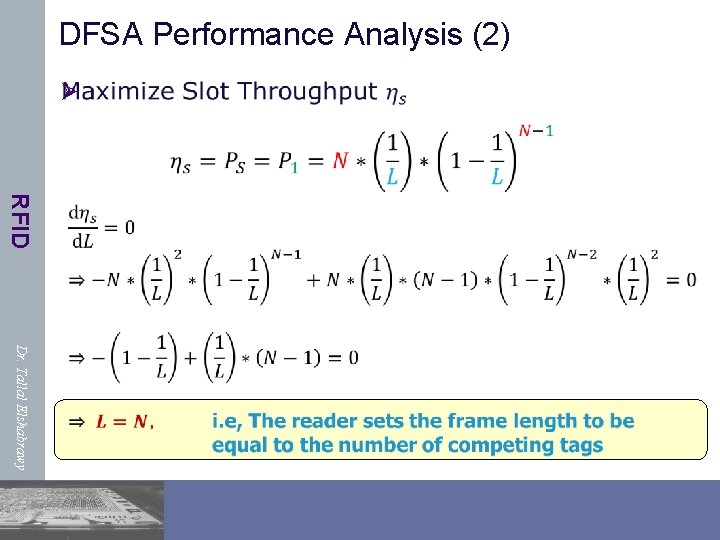
DFSA Performance Analysis (2) Ø RFID Dr. Tallal Elshabrawy
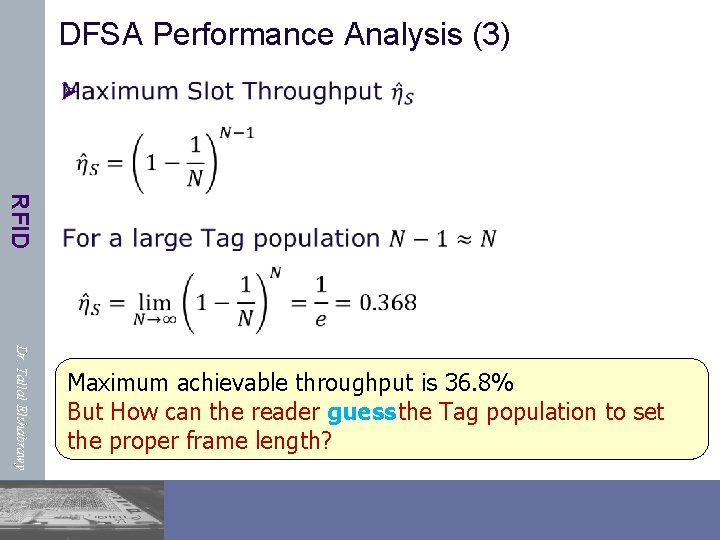
DFSA Performance Analysis (3) Ø RFID Dr. Tallal Elshabrawy Maximum achievable throughput is 36. 8% But How can the reader guess the Tag population to set the proper frame length?
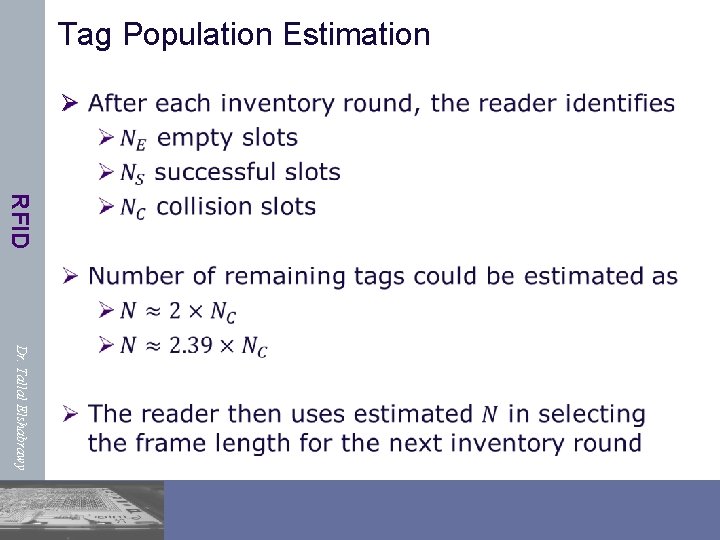
Tag Population Estimation Ø RFID Dr. Tallal Elshabrawy