
Netnography An Overview of online ethnographic research Tony
- Slides: 22
Netnography - An Overview of online ethnographic research Tony Dong Yu http: //k 9 drift. tumblr. com/
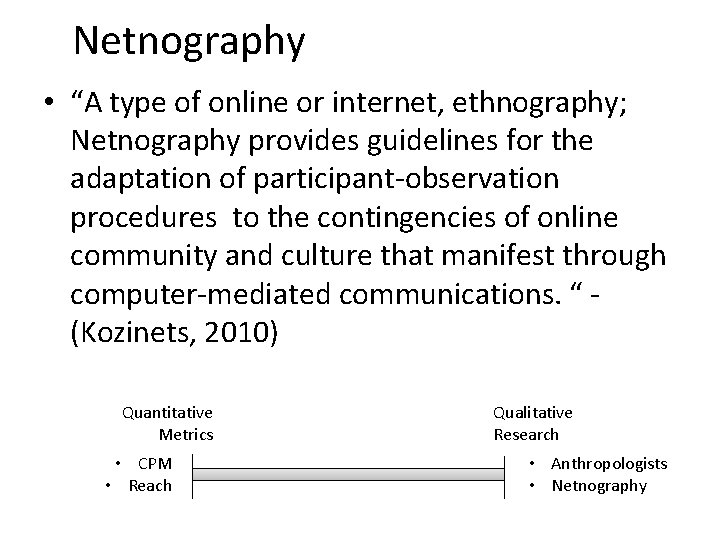
Netnography • “A type of online or internet, ethnography; Netnography provides guidelines for the adaptation of participant-observation procedures to the contingencies of online community and culture that manifest through computer-mediated communications. “ (Kozinets, 2010) Quantitative Metrics • CPM • Reach Qualitative Research • Anthropologists • Netnography
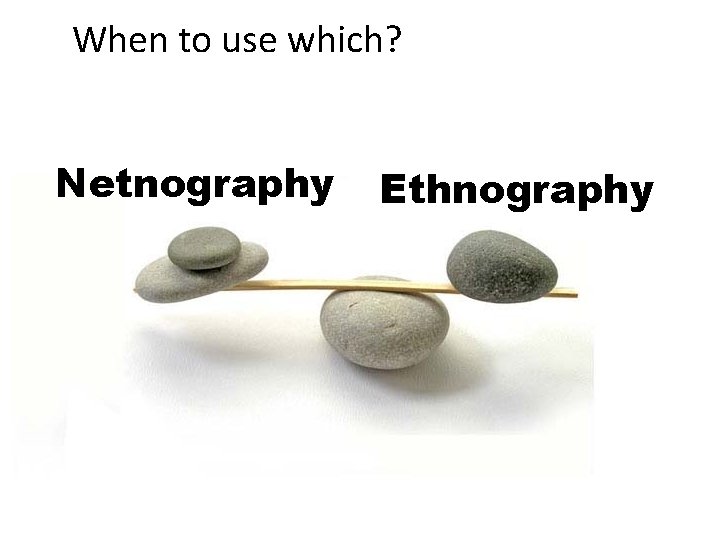
When to use which? Netnography Ethnography
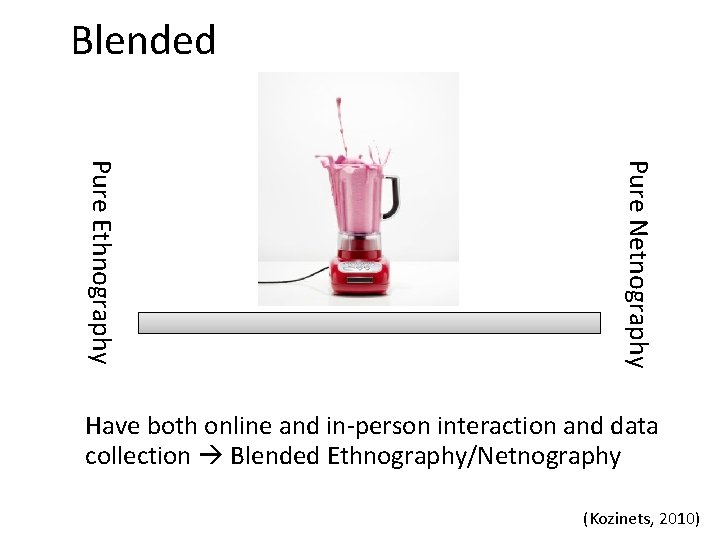
Blended Pure Netnography Pure Ethnography Have both online and in-person interaction and data collection Blended Ethnography/Netnography (Kozinets, 2010)
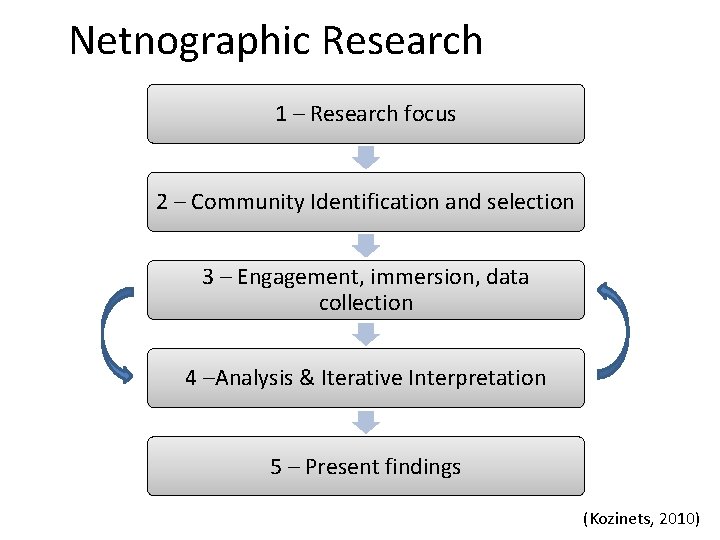
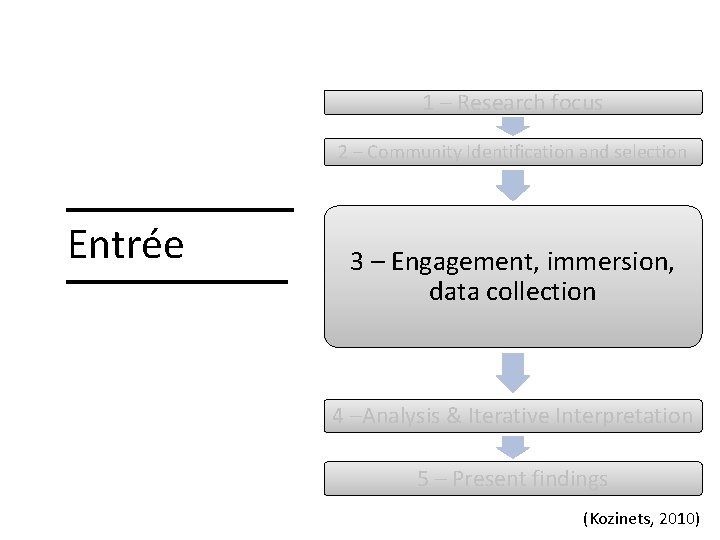
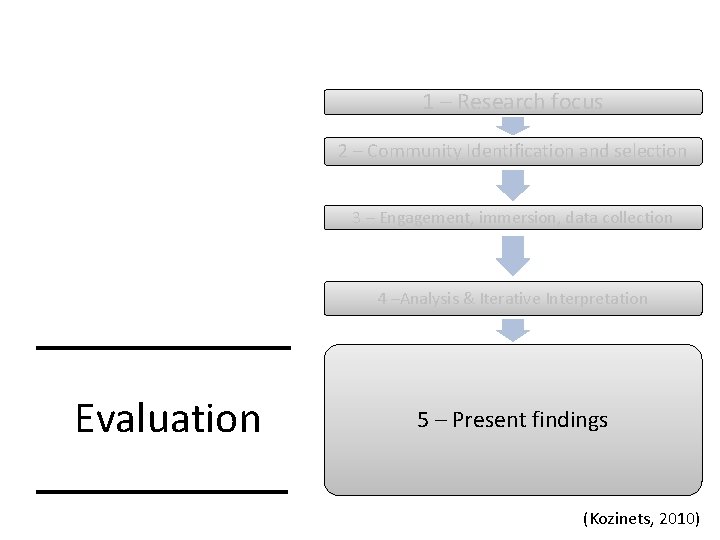
Netnographic Research 1 – Research focus 2 – Community Identification and selection 3 – Engagement, immersion, data collection 4 –Analysis & Iterative Interpretation 5 – Present findings (Kozinets, 2010)
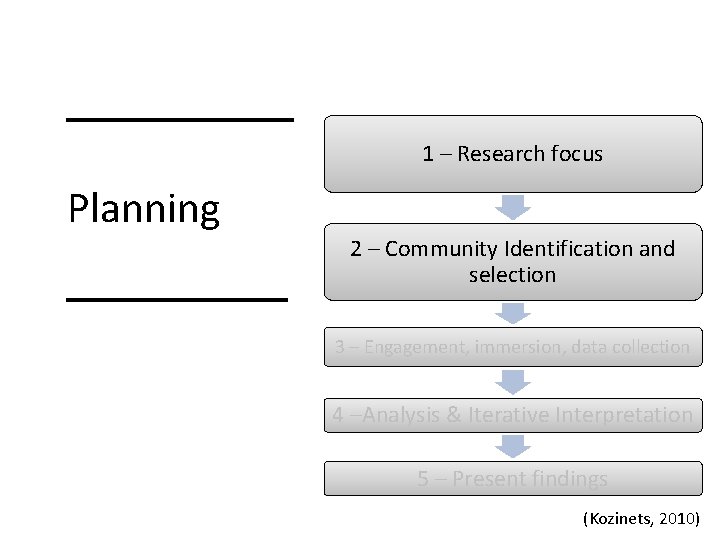
1 – Research focus Planning 2 – Community Identification and selection 3 – Engagement, immersion, data collection 4 –Analysis & Iterative Interpretation 5 – Present findings (Kozinets, 2010)
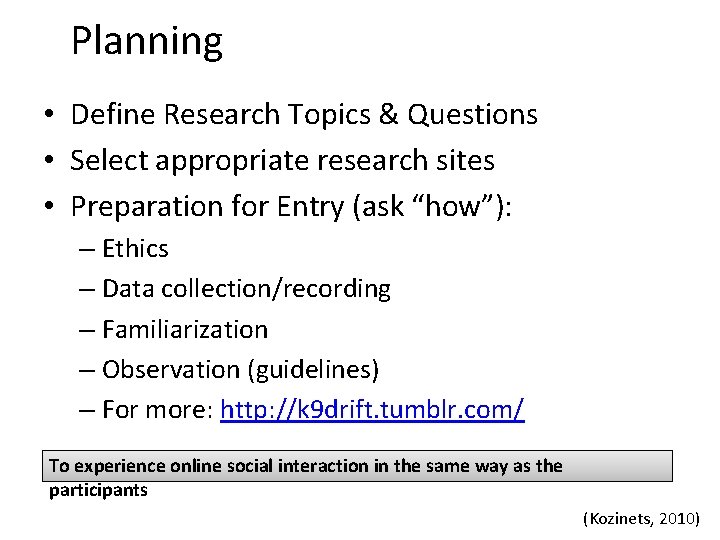
Planning • Define Research Topics & Questions • Select appropriate research sites • Preparation for Entry (ask “how”): – Ethics – Data collection/recording – Familiarization – Observation (guidelines) – For more: http: //k 9 drift. tumblr. com/ To experience online social interaction in the same way as the participants (Kozinets, 2010)
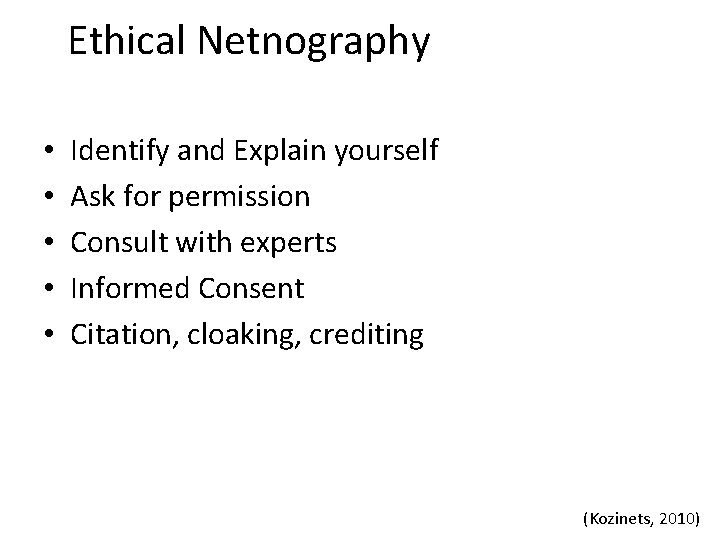
Ethical Netnography • • • Identify and Explain yourself Ask for permission Consult with experts Informed Consent Citation, cloaking, crediting (Kozinets, 2010)
1 – Research focus 2 – Community Identification and selection Entrée 3 – Engagement, immersion, data collection 4 –Analysis & Iterative Interpretation 5 – Present findings (Kozinets, 2010)
Entrée • Act like a new MEMBER • (not a researcher) • Start contributing • Be creative and interesting (Kozinets, 2010)
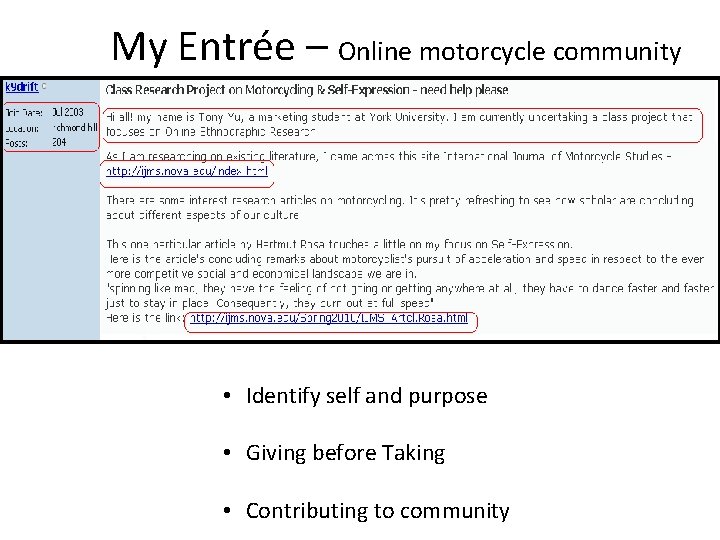
My Entrée – Online motorcycle community • Identify self and purpose • Giving before Taking • Contributing to community
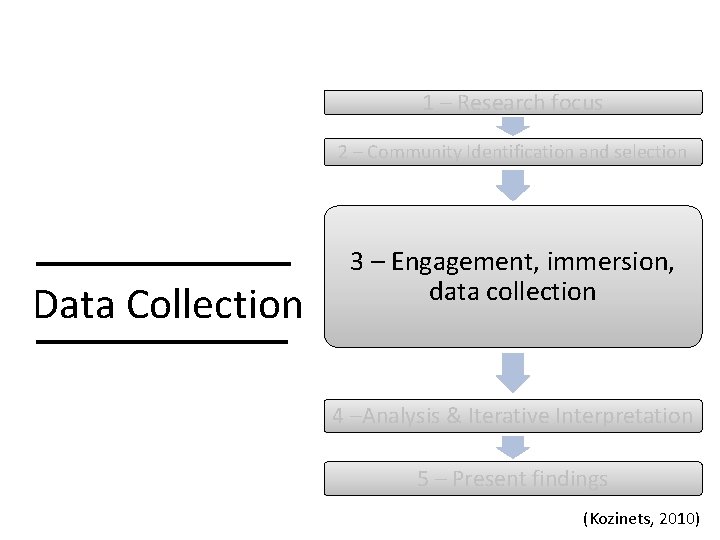
1 – Research focus 2 – Community Identification and selection Data Collection 3 – Engagement, immersion, data collection 4 –Analysis & Iterative Interpretation 5 – Present findings (Kozinets, 2010)
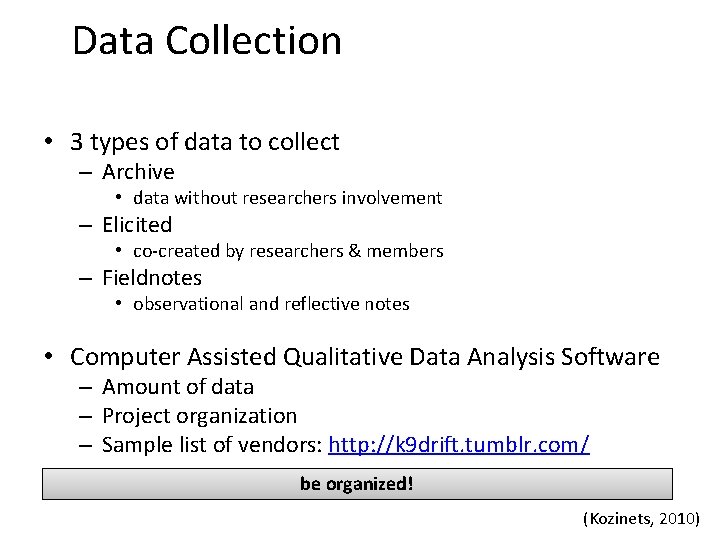
Data Collection • 3 types of data to collect – Archive • data without researchers involvement – Elicited • co-created by researchers & members – Fieldnotes • observational and reflective notes • Computer Assisted Qualitative Data Analysis Software – Amount of data – Project organization – Sample list of vendors: http: //k 9 drift. tumblr. com/ be organized! (Kozinets, 2010)
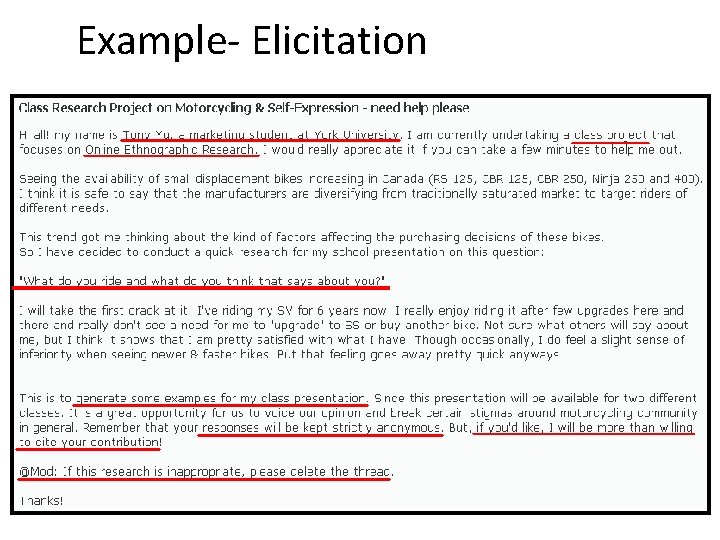
Example- Elicitation
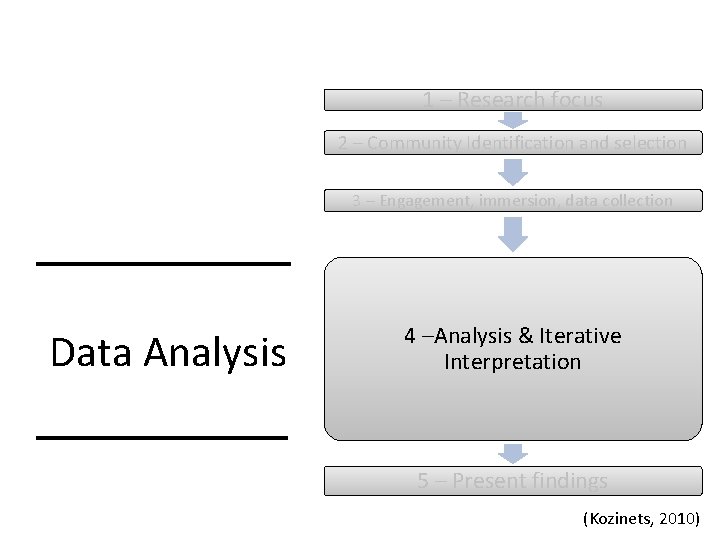
1 – Research focus 2 – Community Identification and selection 3 – Engagement, immersion, data collection Data Analysis 4 –Analysis & Iterative Interpretation 5 – Present findings (Kozinets, 2010)
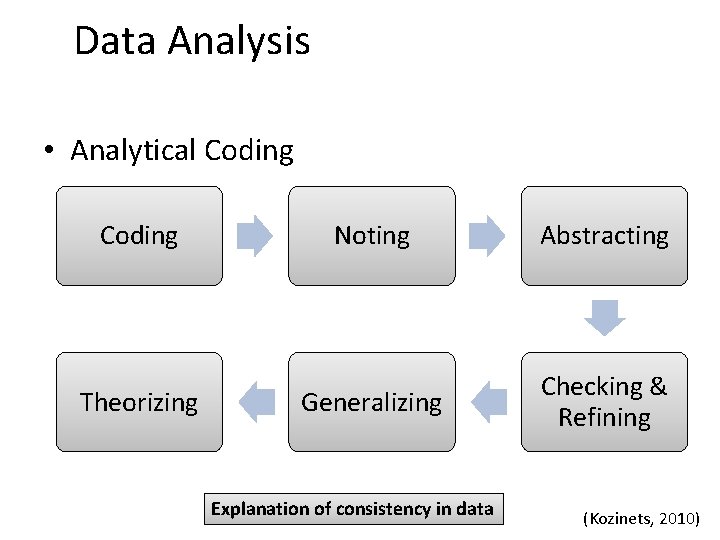
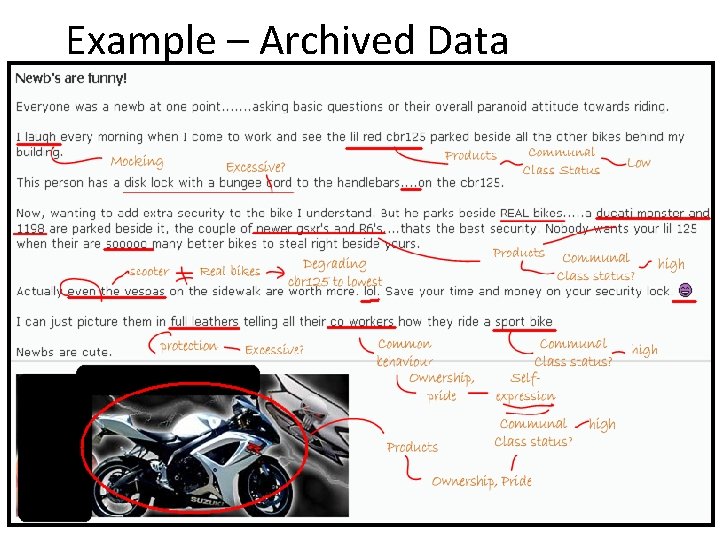
Data Analysis • Analytical Coding Theorizing Noting Abstracting Generalizing Checking & Refining Explanation of consistency in data (Kozinets, 2010)
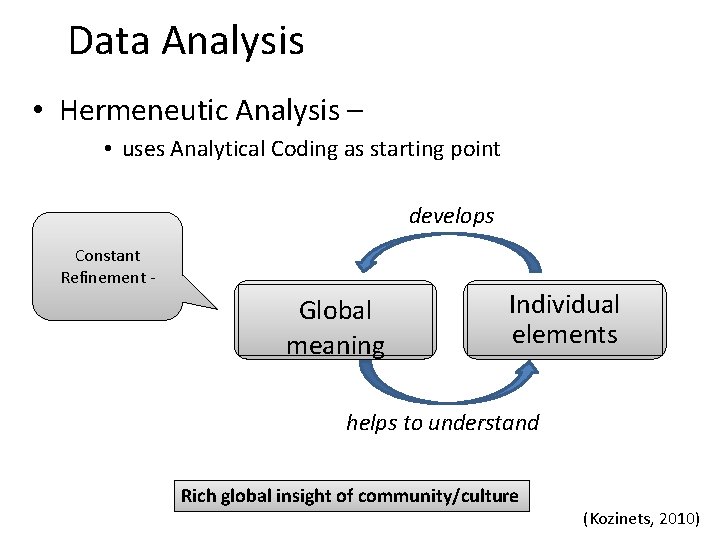
Data Analysis • Hermeneutic Analysis – • uses Analytical Coding as starting point develops Constant Refinement - Global meaning Individual elements helps to understand Rich global insight of community/culture (Kozinets, 2010)
Example – Archived Data
1 – Research focus 2 – Community Identification and selection 3 – Engagement, immersion, data collection 4 –Analysis & Iterative Interpretation Evaluation 5 – Present findings (Kozinets, 2010)
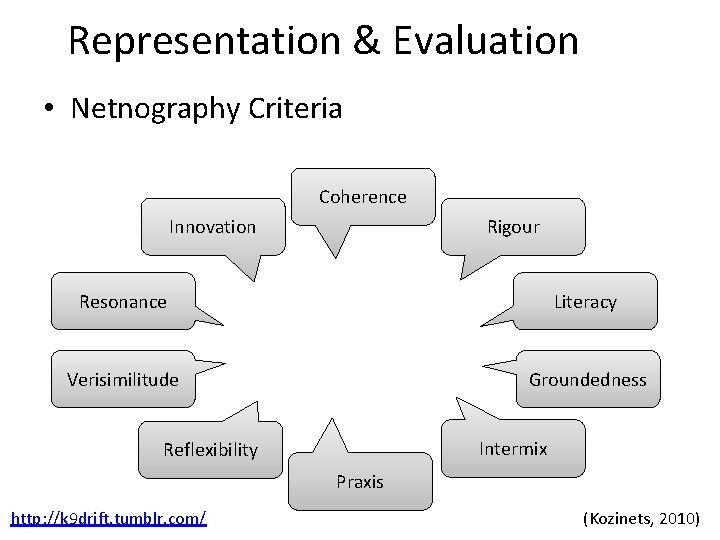
Representation & Evaluation • Netnography Criteria Coherence Innovation Rigour Resonance Literacy Verisimilitude Groundedness Intermix Reflexibility Praxis http: //k 9 drift. tumblr. com/ (Kozinets, 2010)
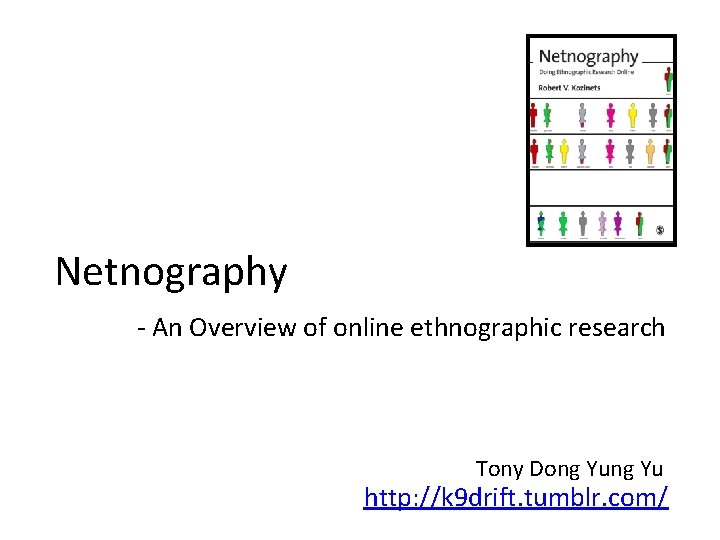
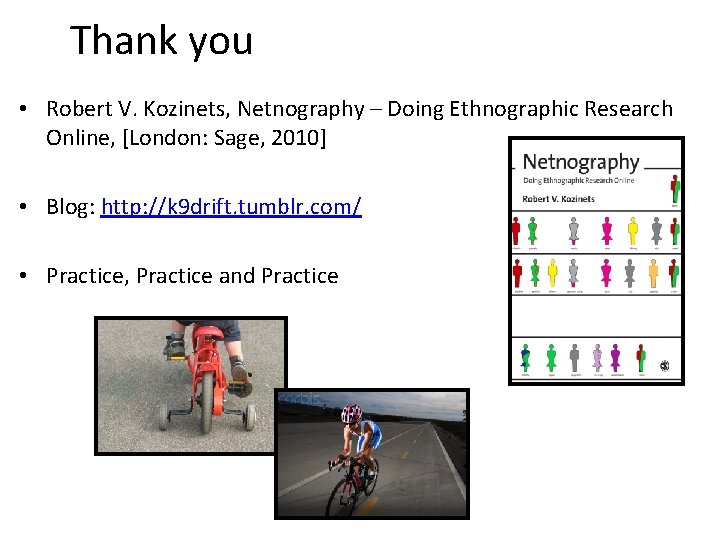
Thank you • Robert V. Kozinets, Netnography – Doing Ethnographic Research Online, [London: Sage, 2010] • Blog: http: //k 9 drift. tumblr. com/ • Practice, Practice and Practice
Questions • Ethical concerns? • False Identity concerns? • My netnography experiment?