
NET Remoting www msdn microsoft com NET Remoting
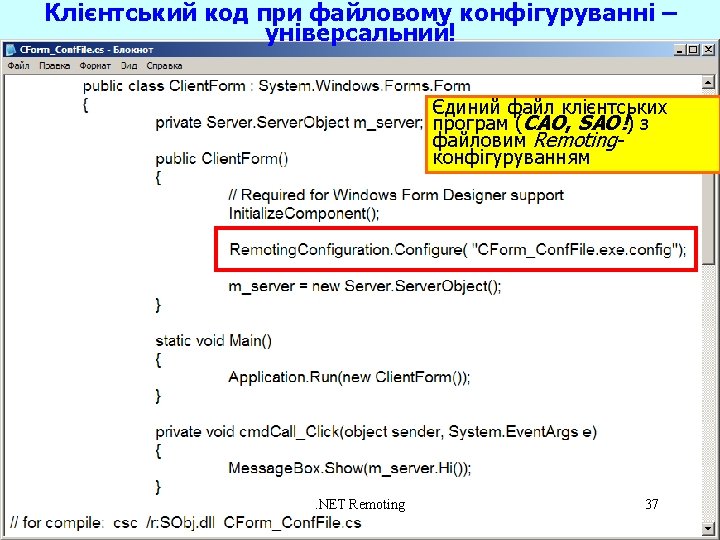
![Створення проксі з використанням класу Activator (основа “динамічних викликів”) Варіант клієнтської активізації (СAO) object[]](https://slidetodoc.com/presentation_image_h/0e980297411198413f0b739bae576fc8/image-42.jpg "Створення проксі з використанням класу Activator (основа “динамічних викликів”) Варіант клієнтської активізації (СAO) object[]")
- Slides: 69
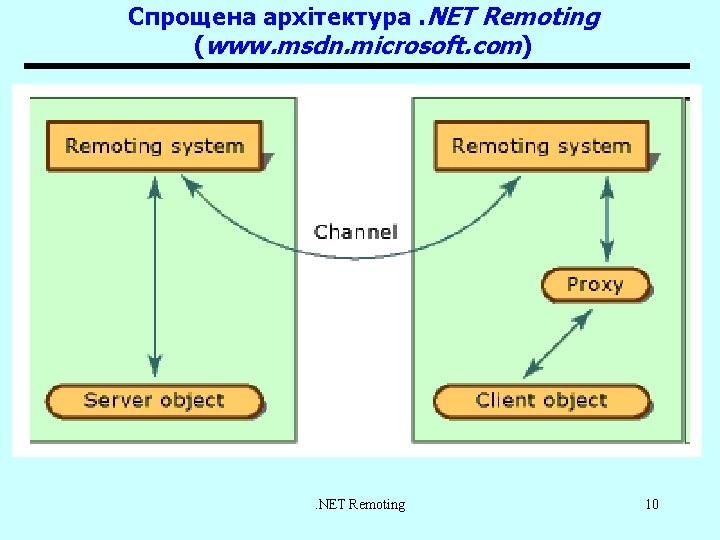
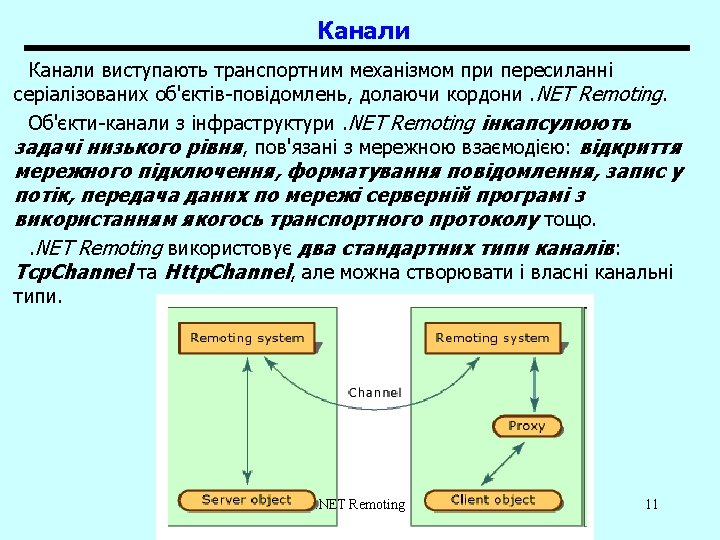
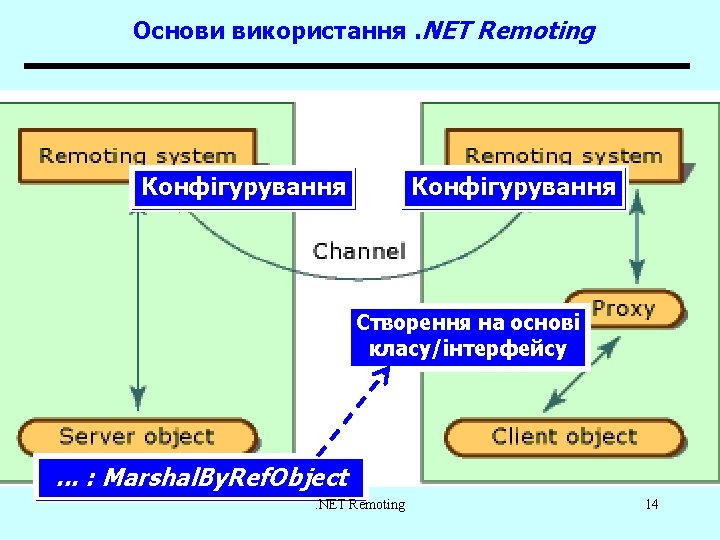
Спрощена архітектура. NET Remoting (www. msdn. microsoft. com) . NET Remoting 10
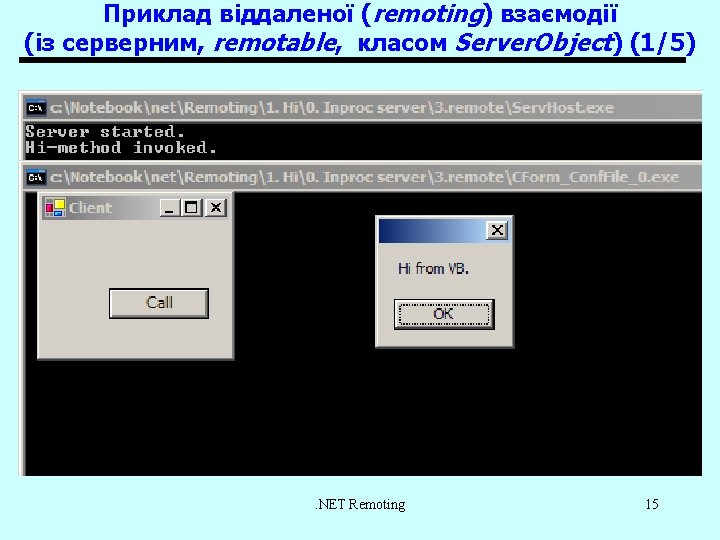
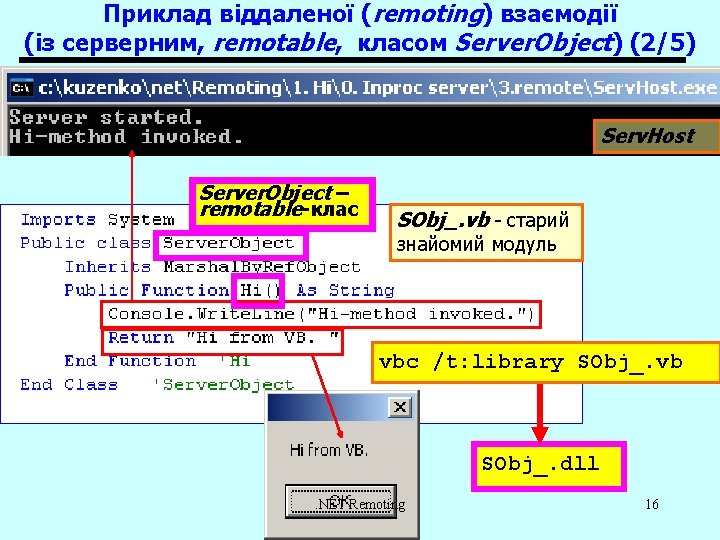
Приклад віддаленої (remoting) взаємодії (із серверним, remotable, класом Server. Object) (2/5) Serv. Host Server. Object – remotable-клас SObj_. vb - старий знайомий модуль vbc /t: library SObj_. vb SObj_. dll. NET Remoting 16
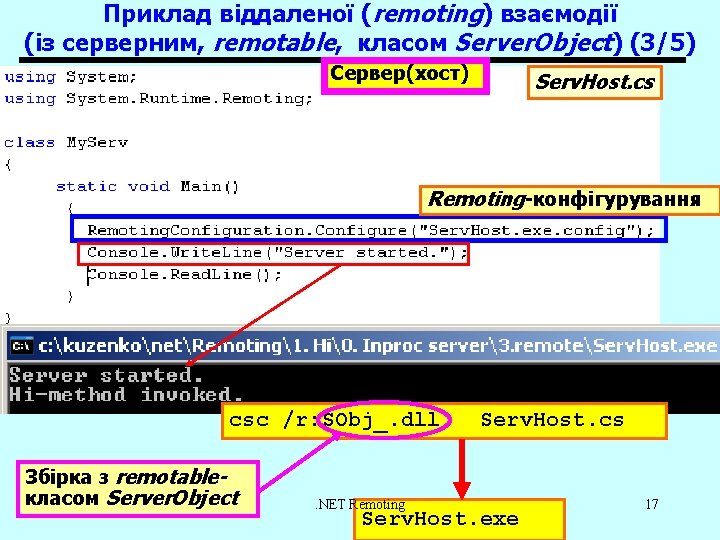
Приклад віддаленої (remoting) взаємодії (із серверним, remotable, класом Server. Object) (3/5) Сервер(хост) Serv. Host. cs Remoting-конфігурування csc /r: SObj_. dll Збірка з remotableкласом Server. Object . NET Remoting Serv. Host. cs Serv. Host. exe 17
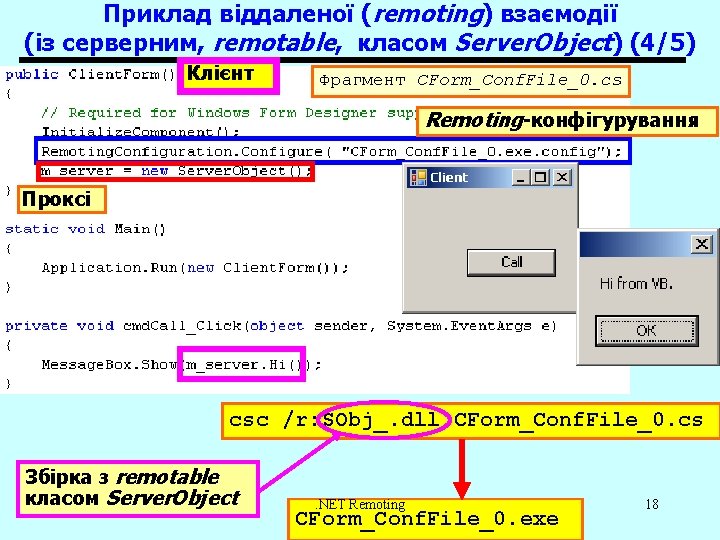
Приклад віддаленої (remoting) взаємодії (із серверним, remotable, класом Server. Object) (4/5) Клієнт Фрагмент CForm_Conf. File_0. cs Remoting-конфігурування Проксі csc /r: SObj_. dll CForm_Сonf. File_0. cs Збірка з remotable класом Server. Object . NET Remoting CForm_Сonf. File_0. exe 18
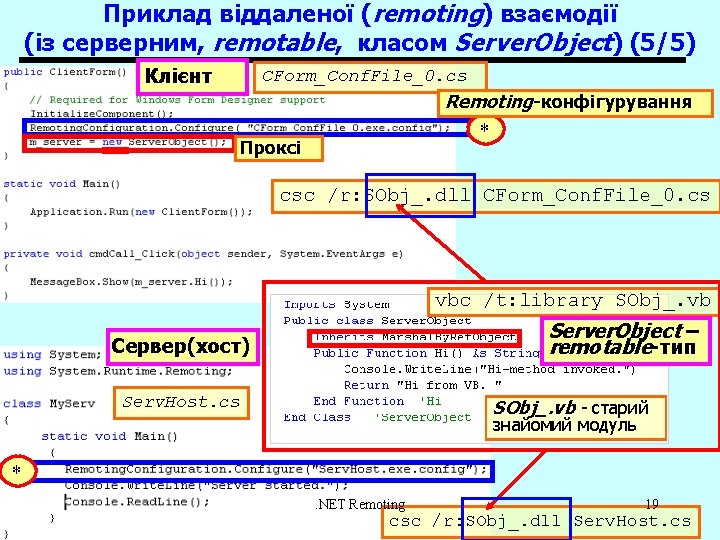
Приклад віддаленої (remoting) взаємодії (із серверним, remotable, класом Server. Object) (5/5) Клієнт CForm_Conf. File_0. cs Remoting-конфігурування * Проксі csc /r: SObj_. dll CForm_Сonf. File_0. cs vbc /t: library SObj_. vb Server. Object – remotable-тип Сервер(хост) Serv. Host. cs SObj_. vb - старий знайомий модуль *. NET Remoting 19 csc /r: SObj_. dll Serv. Host. cs
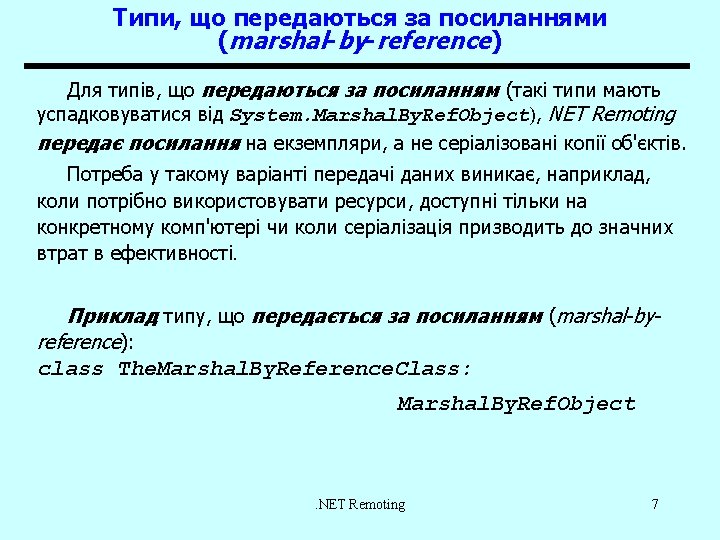
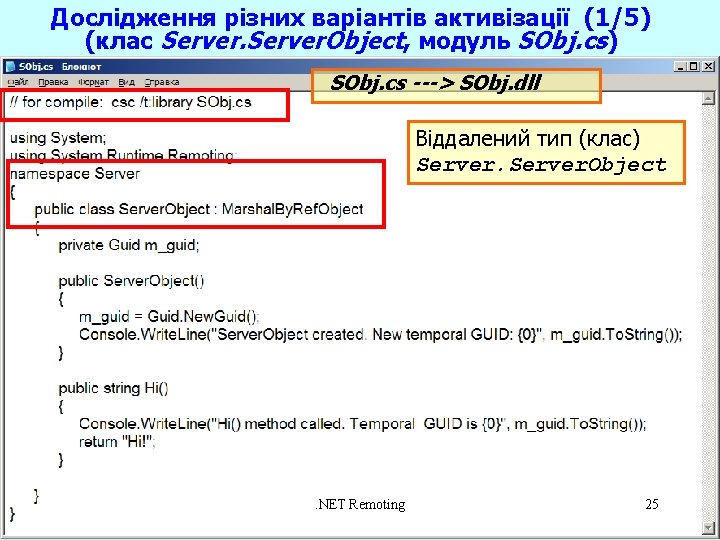
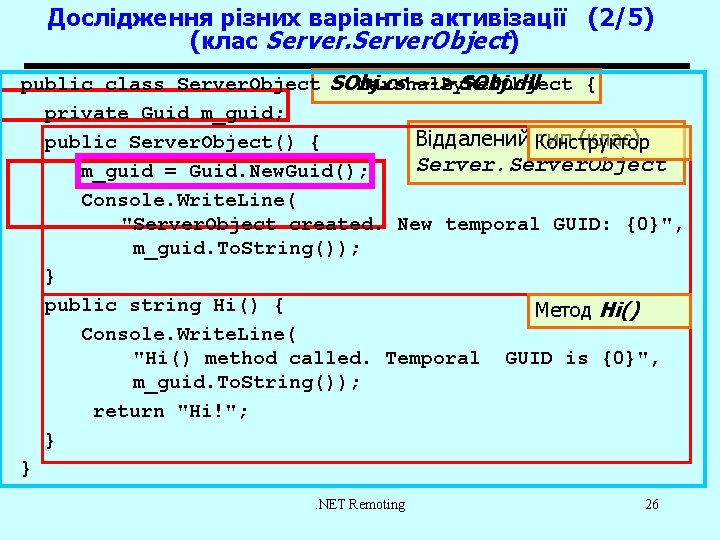
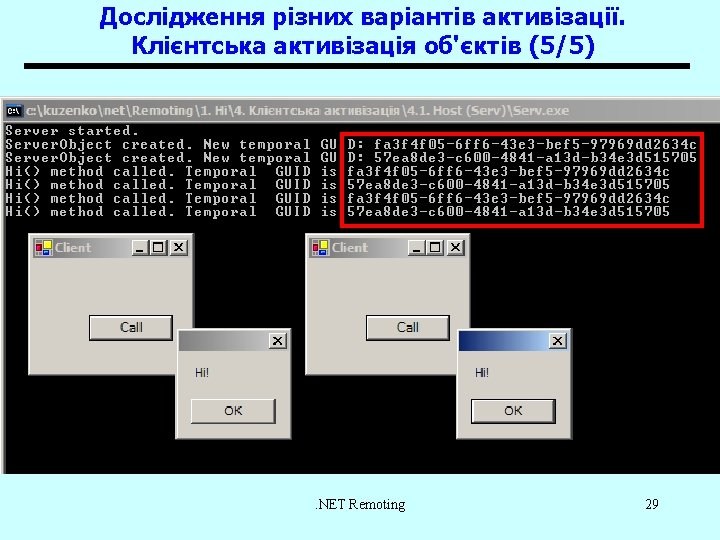
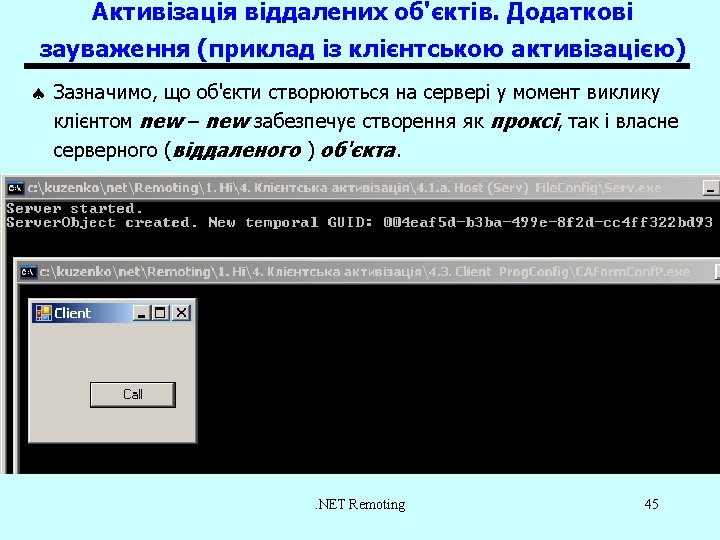
Дослідження різних варіантів активізації (2/5) (клас Server. Object) ---> SObj. dll public class Server. Object SObj. cs : Marshal. By. Ref. Object { private Guid m_guid; Віддалений Конструктор тип (клас) public Server. Object() { Server. Object m_guid = Guid. New. Guid(); Console. Write. Line( "Server. Object created. New temporal GUID: {0}", m_guid. To. String()); } public string Hi() { Метод Hi() Console. Write. Line( "Hi() method called. Temporal GUID is {0}", m_guid. To. String()); return "Hi!"; } }. NET Remoting 26
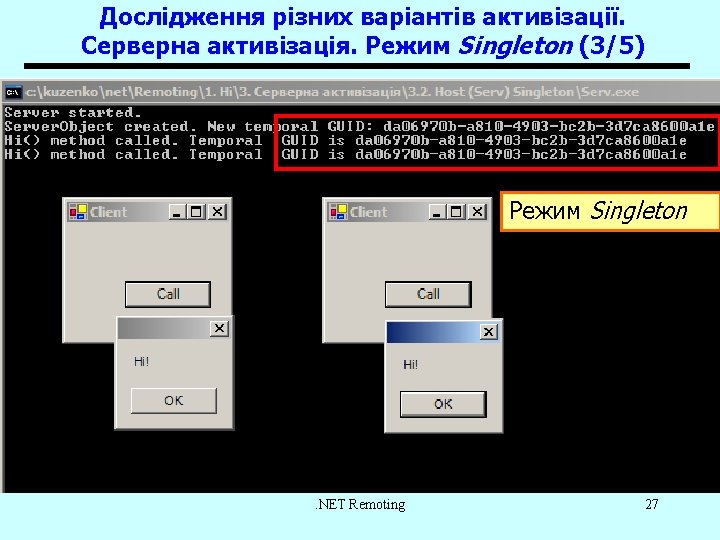
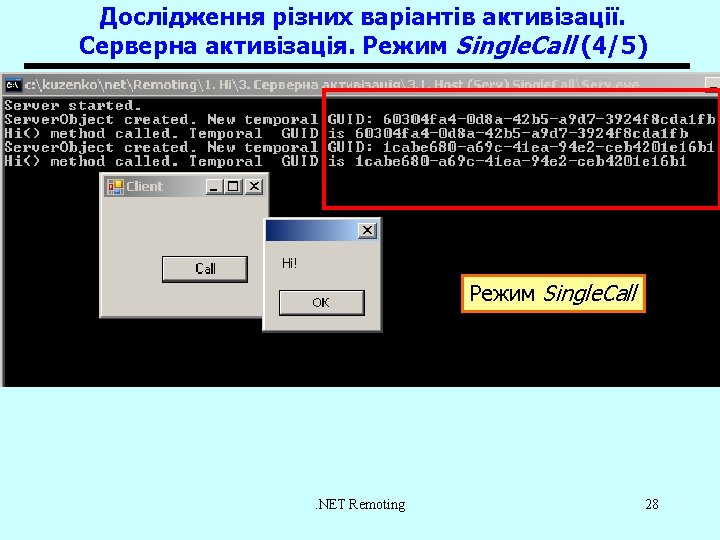
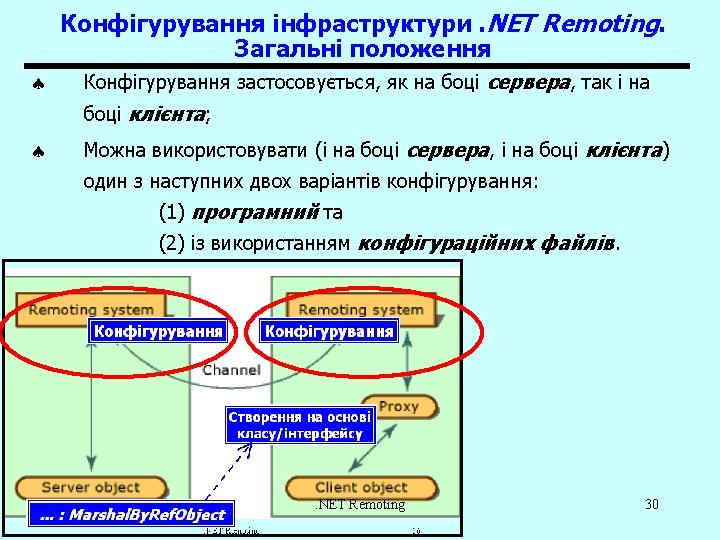
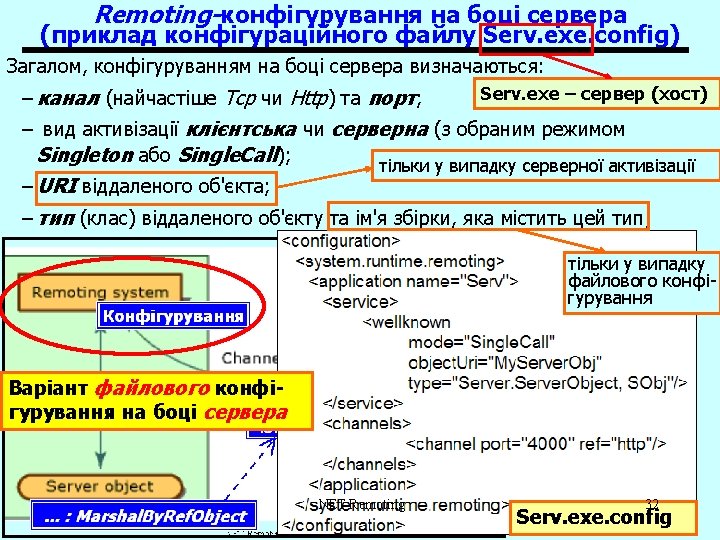
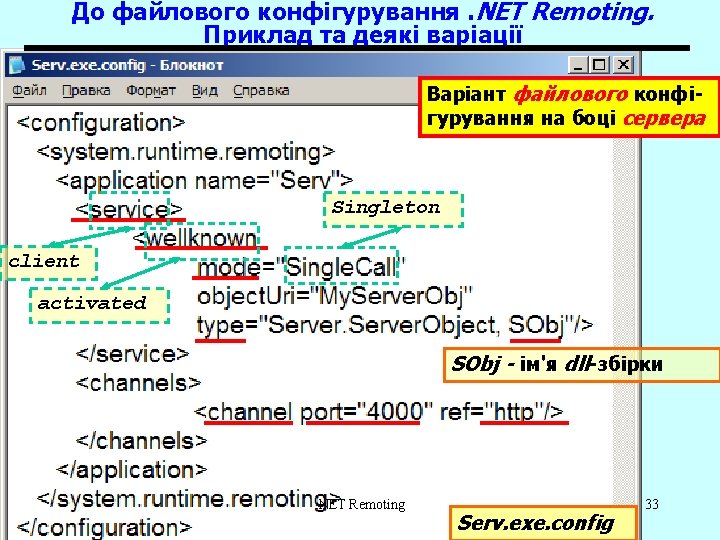
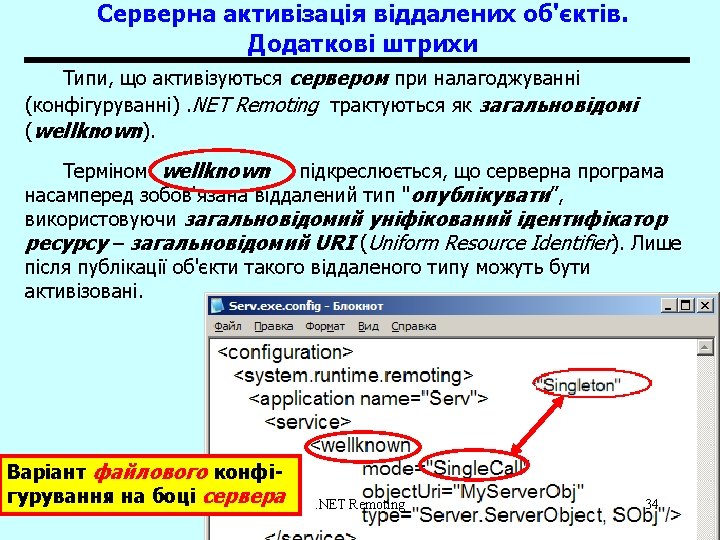
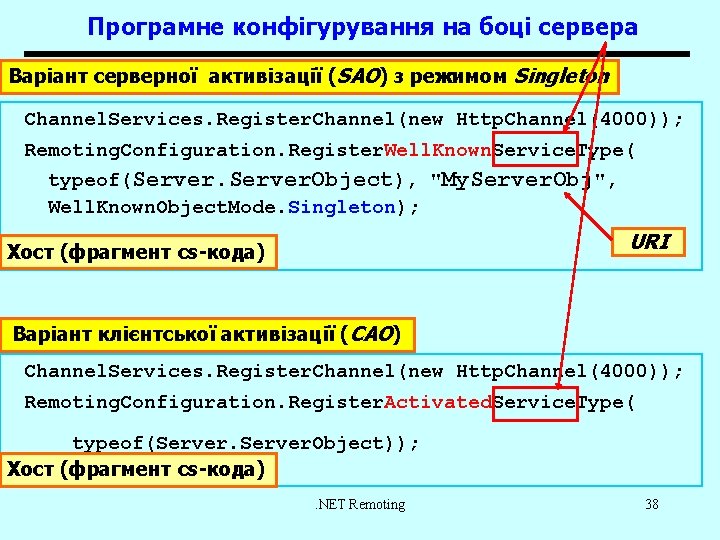
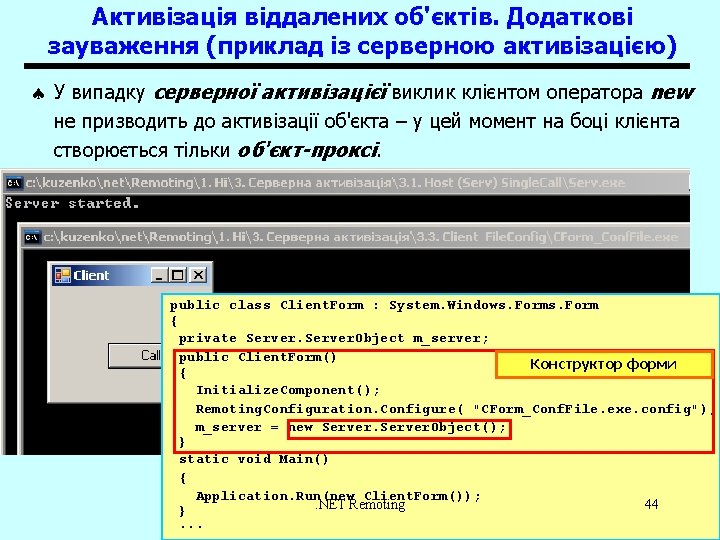
Програмне конфігурування на боці сервера Варіант серверної активізації (SAO) з режимом Singleton Channel. Services. Register. Channel(new Http. Channel(4000)); Remoting. Configuration. Register. Well. Known. Service. Type( typeof(Server. Object), "My. Server. Obj", Well. Known. Object. Mode. Singleton); URI Хост (фрагмент cs-кода) Варіант клієнтської активізації (СAO) Channel. Services. Register. Channel(new Http. Channel(4000)); Remoting. Configuration. Register. Activated. Service. Type( typeof(Server. Object)); Хост (фрагмент cs-кода). NET Remoting 38
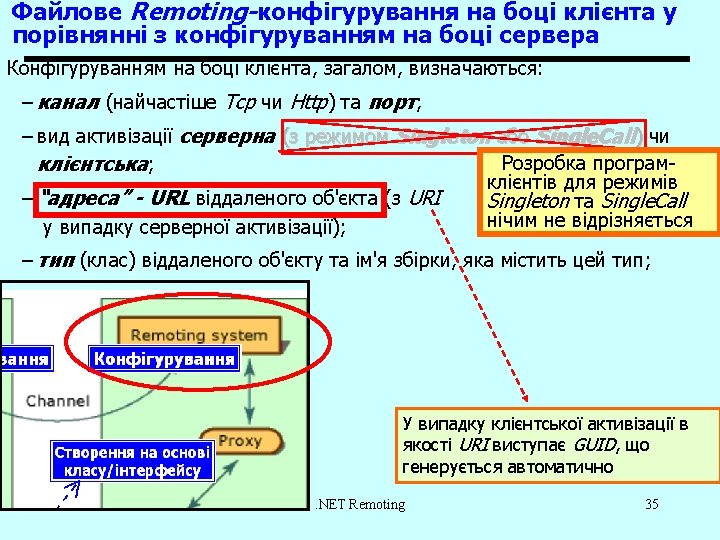
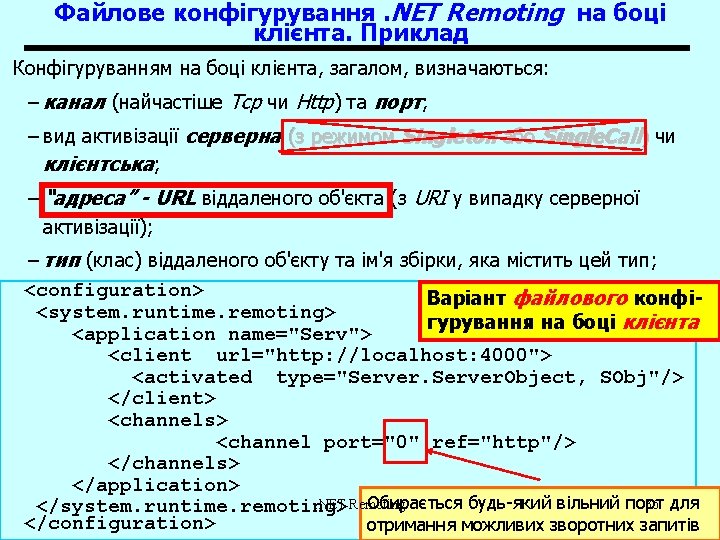
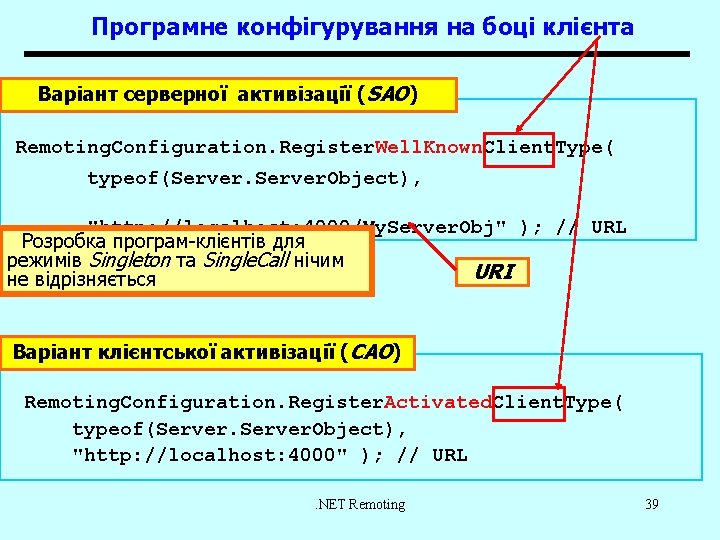
Програмне конфігурування на боці клієнта Варіант серверної активізації (SAO) Remoting. Configuration. Register. Well. Known. Client. Type( typeof(Server. Object), "http: //localhost: 4000/My. Server. Obj" ); // URL Розробка програм-клієнтів для режимів Singleton та Single. Call нічим URI не відрізняється Варіант клієнтської активізації (СAO) Remoting. Configuration. Register. Activated. Client. Type( typeof(Server. Object), "http: //localhost: 4000" ); // URL. NET Remoting 39
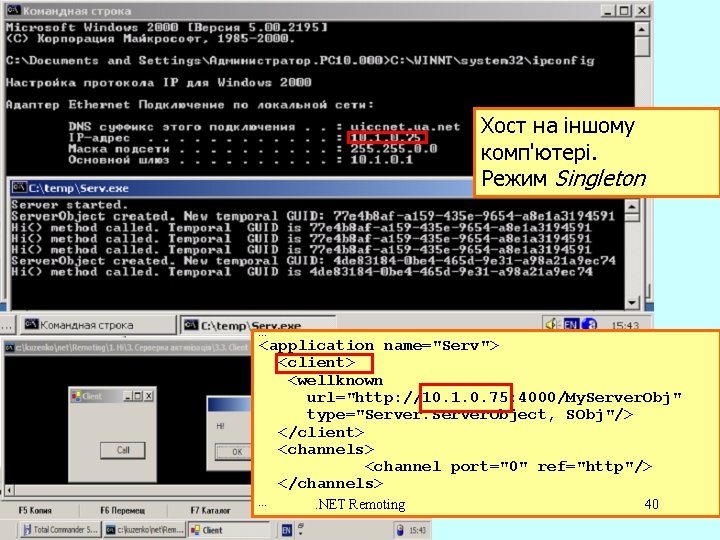
Хост на іншому комп'ютері. Режим Singleton … <application name="Serv"> <client> <wellknown url="http: //10. 1. 0. 75: 4000/My. Server. Obj" type="Server. Object, SObj"/> </client> <channels> <channel port="0" ref="http"/> </channels> …. NET Remoting 40
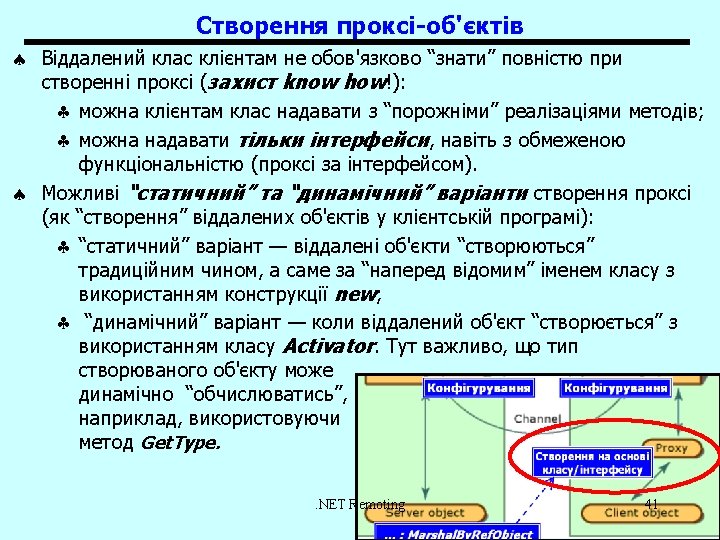
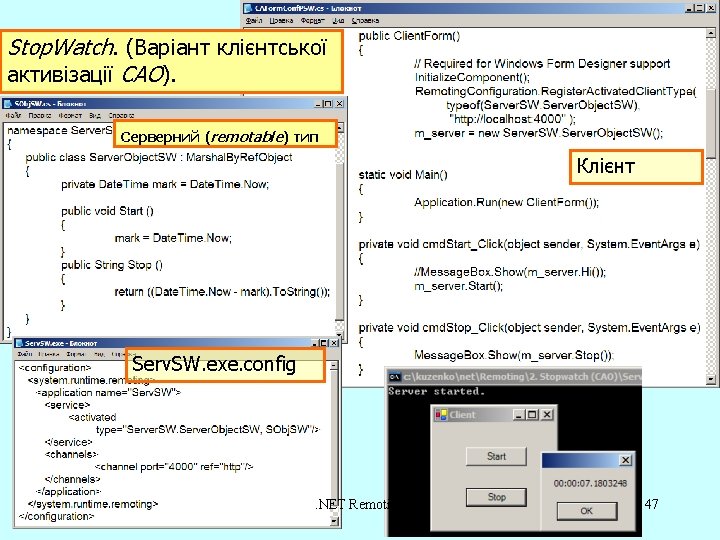
Створення проксі з використанням класу Activator (основа “динамічних викликів”) Варіант клієнтської активізації (СAO) object[] url = {new Url. Attribute("http: //localhost: 4000/Serv")}; m_server = (Server. Object)Activator. Create. Instance( typeof(Server. Object), null, url); // Note that the second parameter (null) specifies // that no arguments are being passed m_server = (Server. Object)Activator. Get. Object( typeof(Server. Object), "http: //localhost: 4000/My. Server. Obj"); Варіант серверної активізації (SAO) . NET Remoting 42
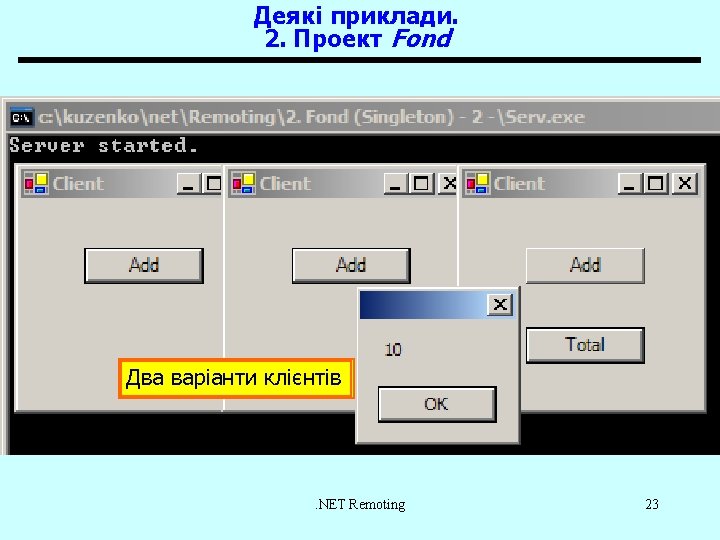
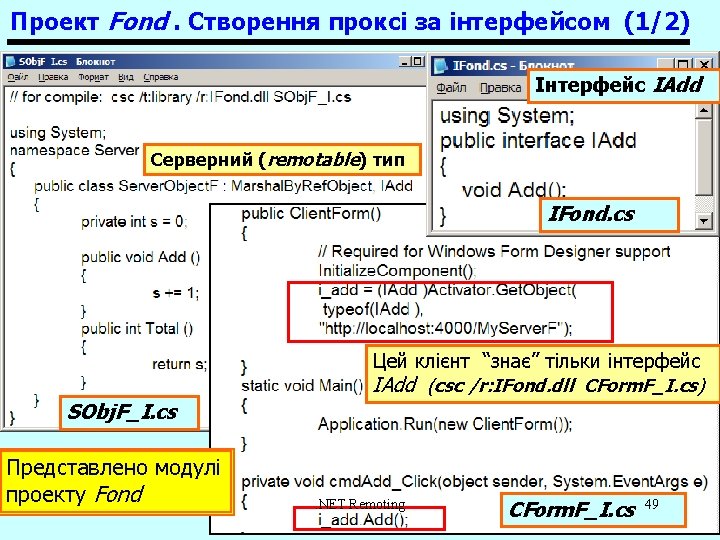
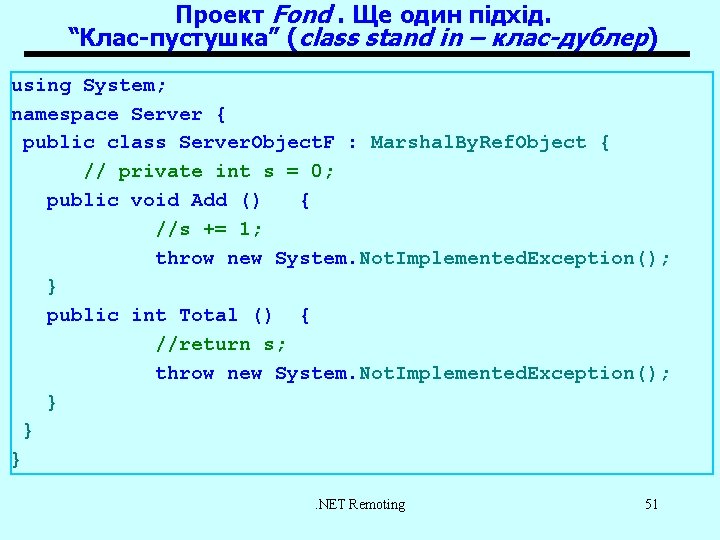
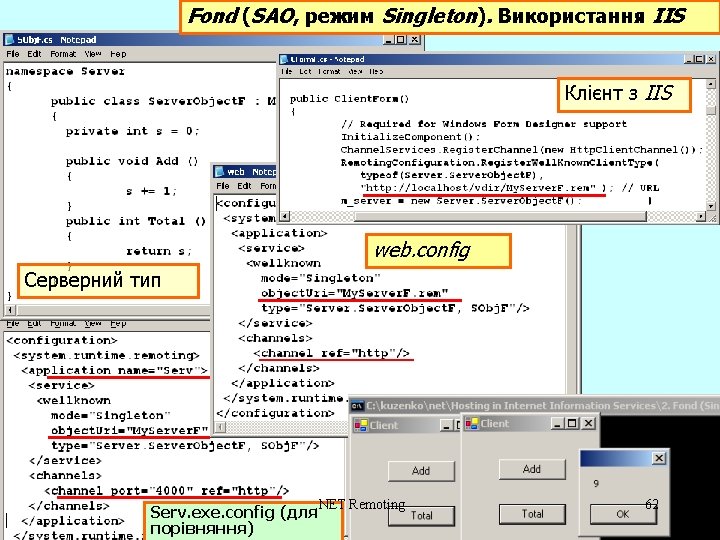
Проект Fond. Ще один підхід. “Клас-пустушка” (class stand in – клас-дублер) using System; namespace Server { public class Server. Object. F : Marshal. By. Ref. Object { // private int s = 0; public void Add () { //s += 1; throw new System. Not. Implemented. Exception(); } public int Total () { //return s; throw new System. Not. Implemented. Exception(); } } }. NET Remoting 51
Додаток . NET Remoting 57
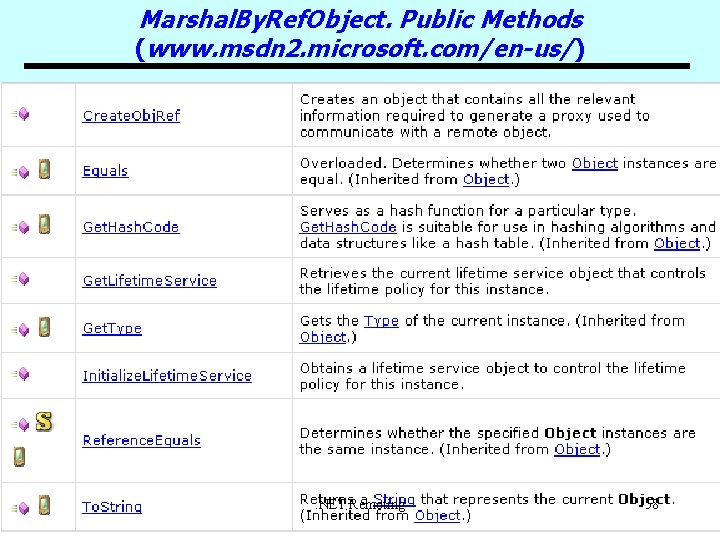
Marshal. By. Ref. Object. Public Methods (www. msdn 2. microsoft. com/en-us/) . NET Remoting 58
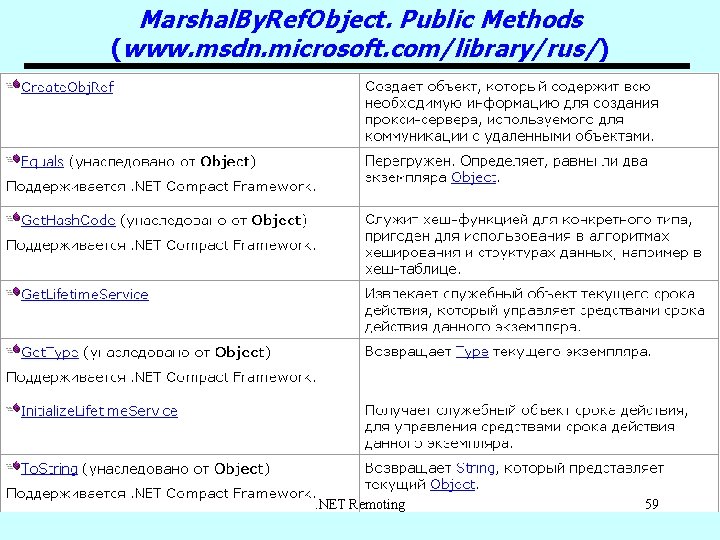
Marshal. By. Ref. Object. Public Methods (www. msdn. microsoft. com/library/rus/) . NET Remoting 59
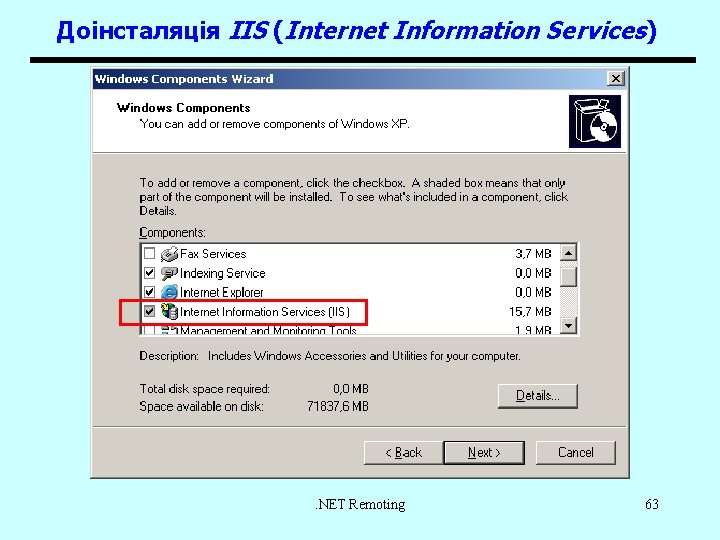
Доінсталяція IIS (Internet Information Services) . NET Remoting 63
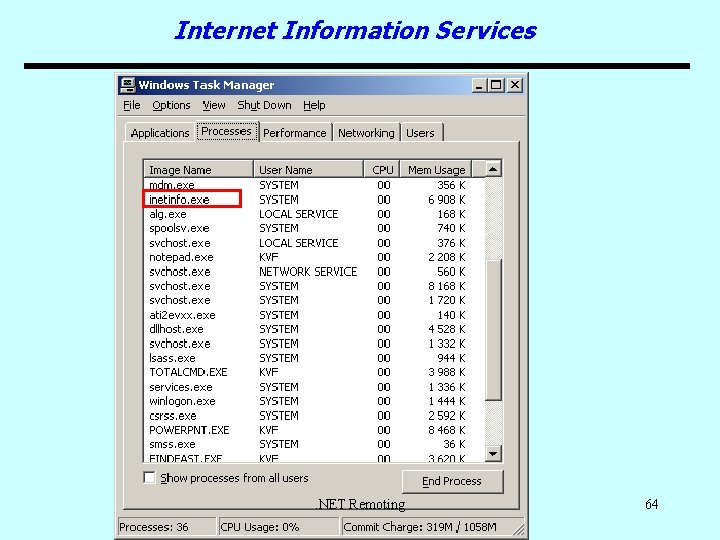
Internet Information Services . NET Remoting 64
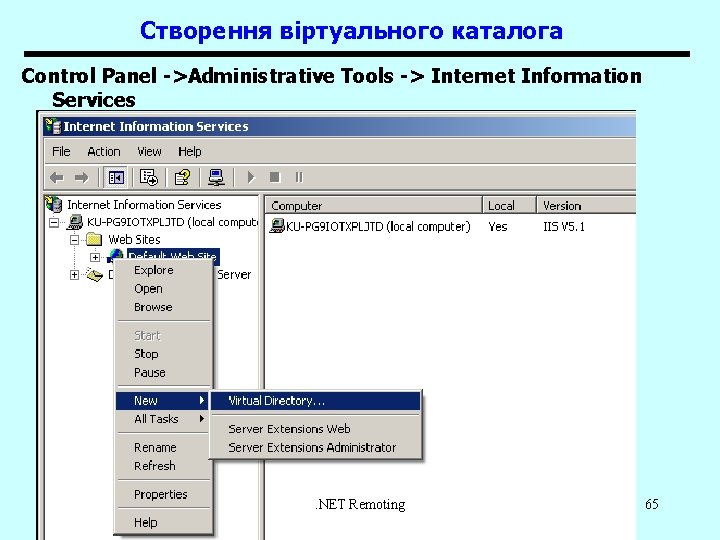
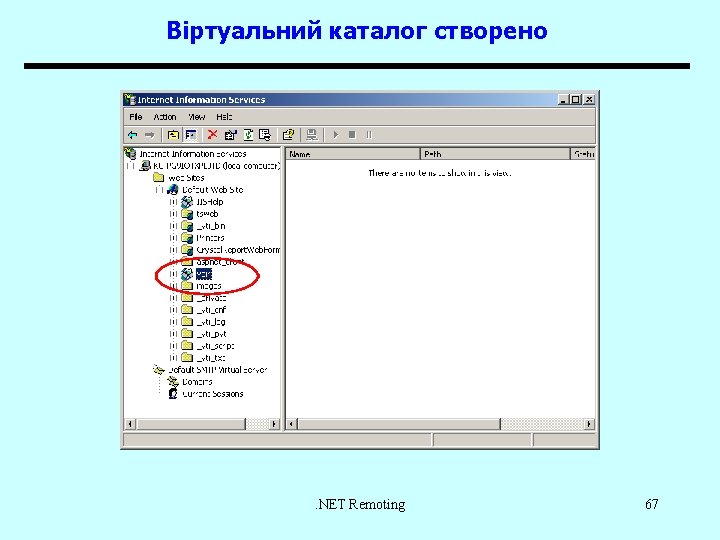
Створення віртуального каталога Control Panel ->Administrative Tools -> Internet Information Services . NET Remoting 65
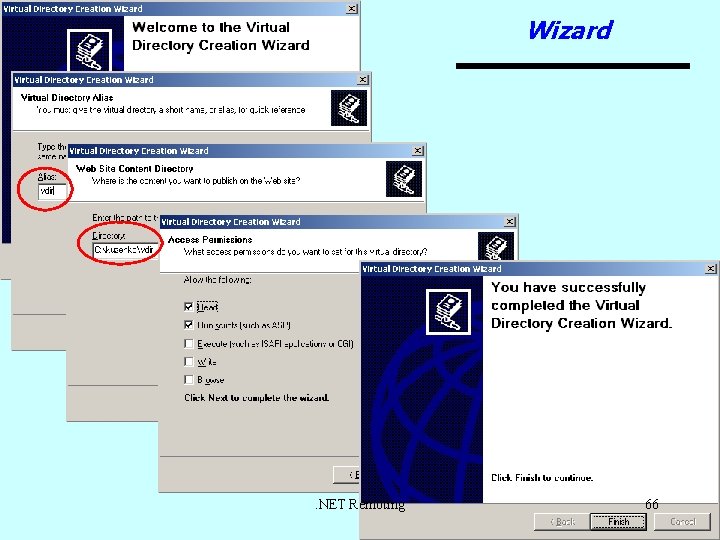
Wizard . NET Remoting 66
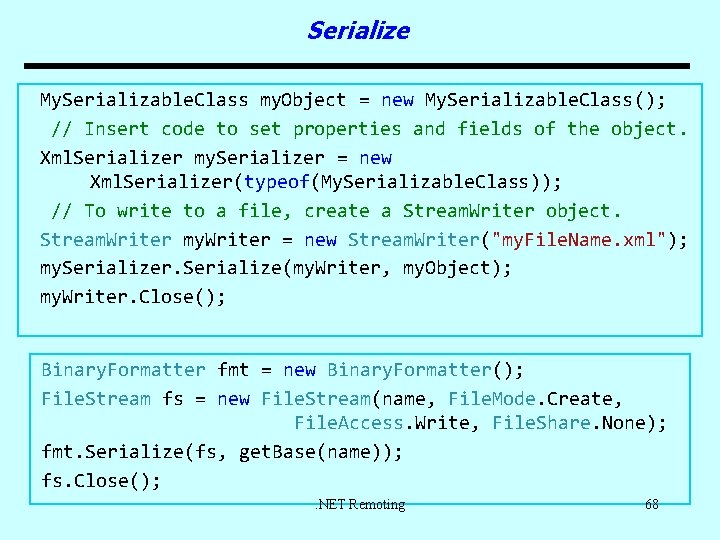
Serialize My. Serializable. Class my. Object = new My. Serializable. Class(); // Insert code to set properties and fields of the object. Xml. Serializer my. Serializer = new Xml. Serializer(typeof(My. Serializable. Class)); // To write to a file, create a Stream. Writer object. Stream. Writer my. Writer = new Stream. Writer("my. File. Name. xml"); my. Serializer. Serialize(my. Writer, my. Object); my. Writer. Close(); Binary. Formatter fmt = new Binary. Formatter(); File. Stream fs = new File. Stream(name, File. Mode. Create, File. Access. Write, File. Share. None); fmt. Serialize(fs, get. Base(name)); fs. Close(); . NET Remoting 68
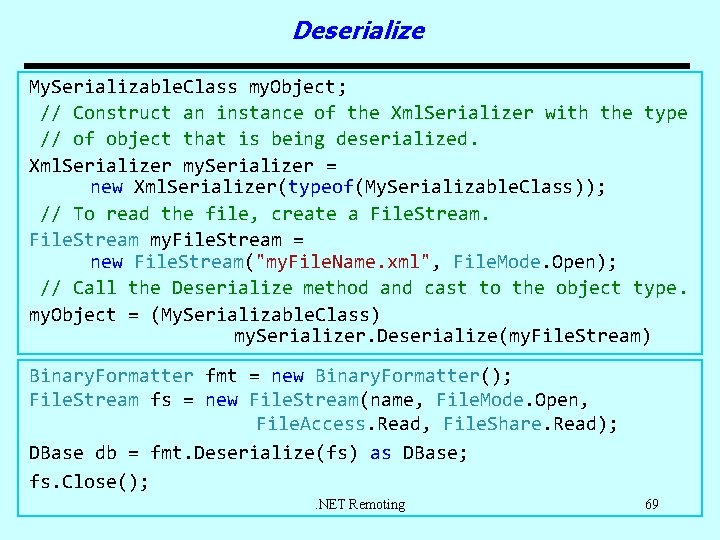
Deserialize My. Serializable. Class my. Object; // Construct an instance of the Xml. Serializer with the type // of object that is being deserialized. Xml. Serializer my. Serializer = new Xml. Serializer(typeof(My. Serializable. Class)); // To read the file, create a File. Stream my. File. Stream = new File. Stream("my. File. Name. xml", File. Mode. Open); // Call the Deserialize method and cast to the object type. my. Object = (My. Serializable. Class) my. Serializer. Deserialize(my. File. Stream) Binary. Formatter fmt = new Binary. Formatter(); File. Stream fs = new File. Stream(name, File. Mode. Open, File. Access. Read, File. Share. Read); DBase db = fmt. Deserialize(fs) as DBase; fs. Close(); . NET Remoting 69