
Nervous Tissue Neurons and Support Cells glial cells
- Slides: 17
Nervous Tissue: Neurons and Support Cells (glial cells) Pages 227 -234
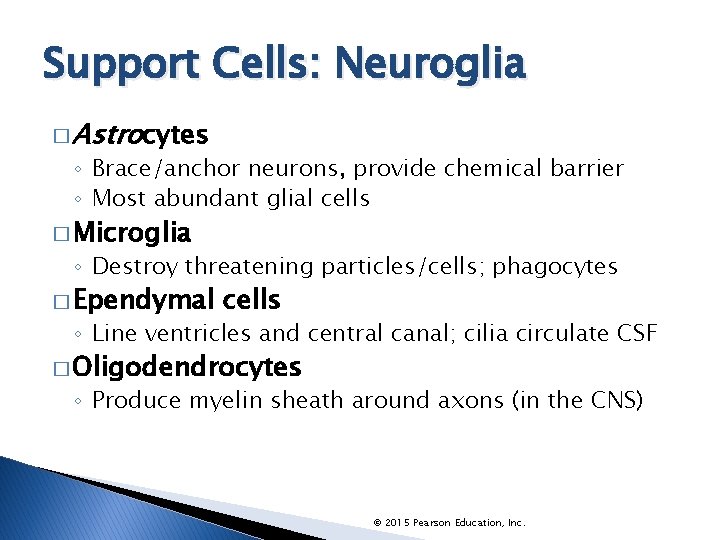
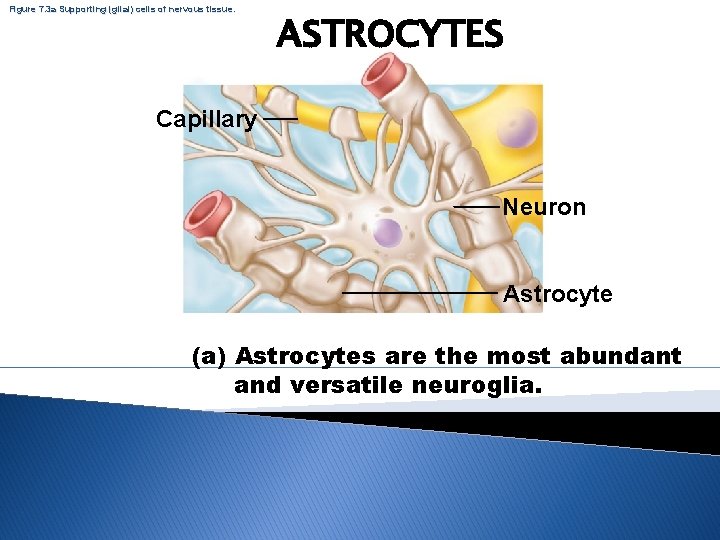
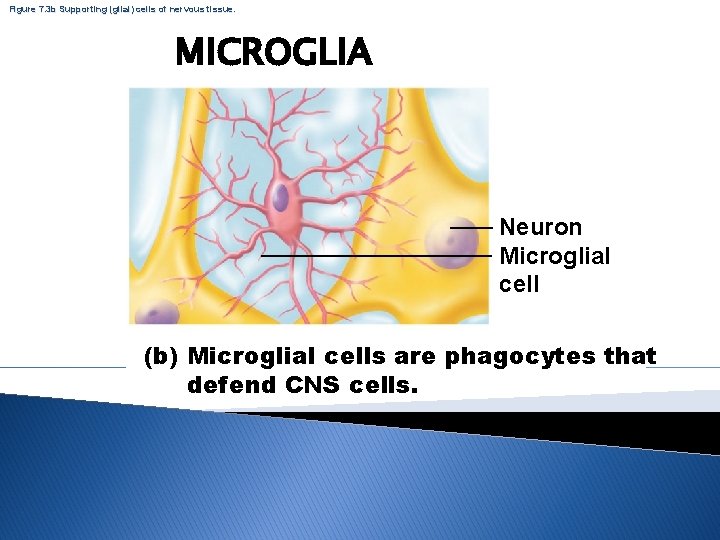
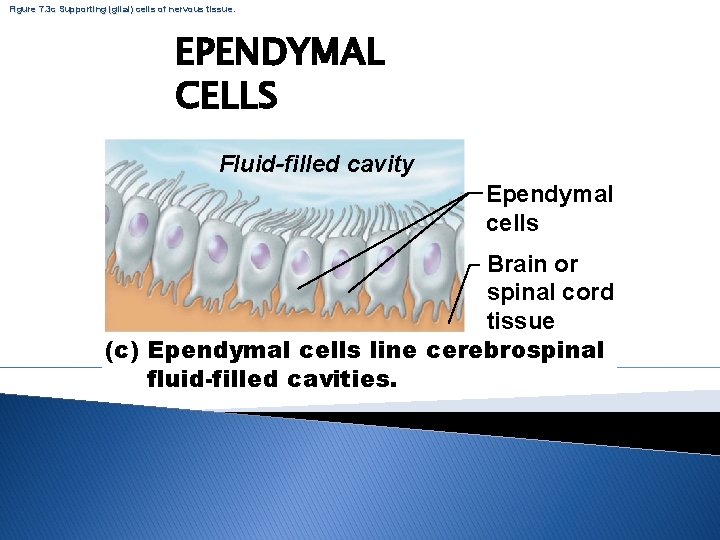
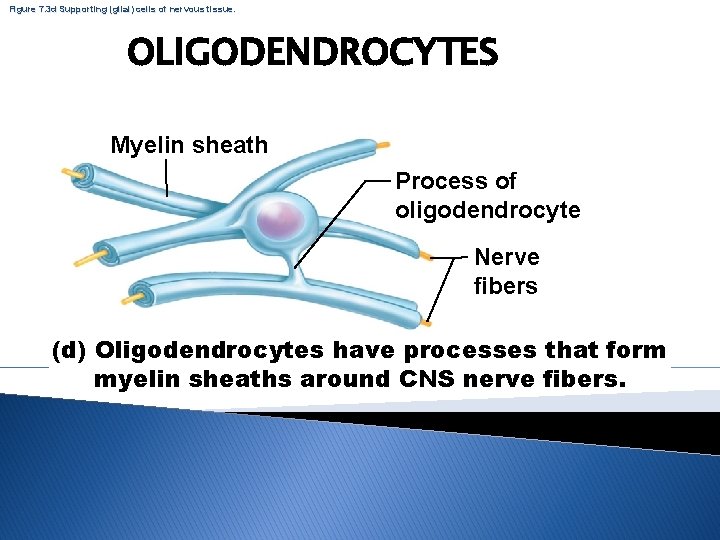
Support Cells: Neuroglia � Astrocytes ◦ Brace/anchor neurons, provide chemical barrier ◦ Most abundant glial cells � Microglia ◦ Destroy threatening particles/cells; phagocytes � Ependymal cells ◦ Line ventricles and central canal; cilia circulate CSF � Oligodendrocytes ◦ Produce myelin sheath around axons (in the CNS) © 2015 Pearson Education, Inc.
Figure 7. 3 a Supporting (glial) cells of nervous tissue. ASTROCYTES Capillary Neuron Astrocyte (a) Astrocytes are the most abundant and versatile neuroglia.
Figure 7. 3 b Supporting (glial) cells of nervous tissue. MICROGLIA Neuron Microglial cell (b) Microglial cells are phagocytes that defend CNS cells.
Figure 7. 3 c Supporting (glial) cells of nervous tissue. EPENDYMAL CELLS Fluid-filled cavity Ependymal cells Brain or spinal cord tissue (c) Ependymal cells line cerebrospinal fluid-filled cavities.
Figure 7. 3 d Supporting (glial) cells of nervous tissue. OLIGODENDROCYTES Myelin sheath Process of oligodendrocyte Nerve fibers (d) Oligodendrocytes have processes that form myelin sheaths around CNS nerve fibers.
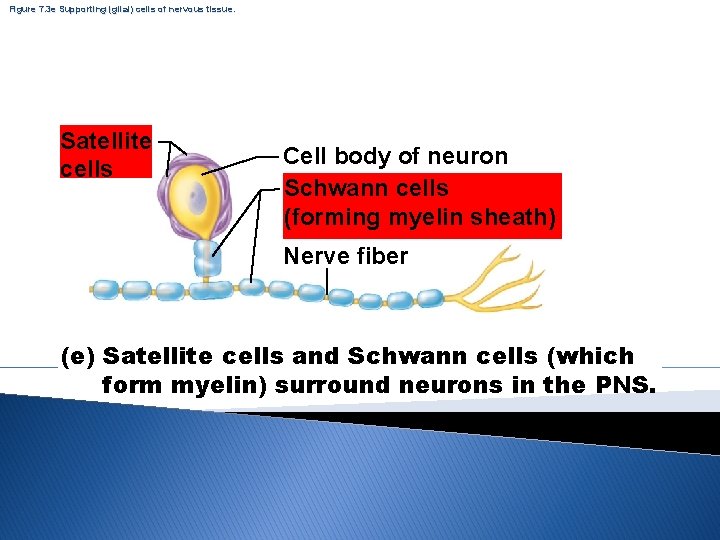
Support Cells: PNS glial cells � Satellite cells ◦ Protect neuron cell bodies � Schwann cells ◦ Form myelin sheath around axons (in the PNS) © 2015 Pearson Education, Inc.
Figure 7. 3 e Supporting (glial) cells of nervous tissue. Satellite cells Cell body of neuron Schwann cells (forming myelin sheath) Nerve fiber (e) Satellite cells and Schwann cells (which form myelin) surround neurons in the PNS.
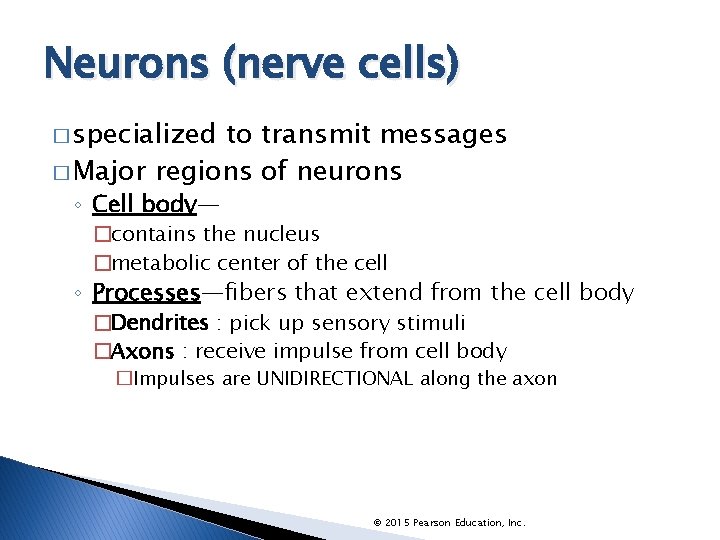
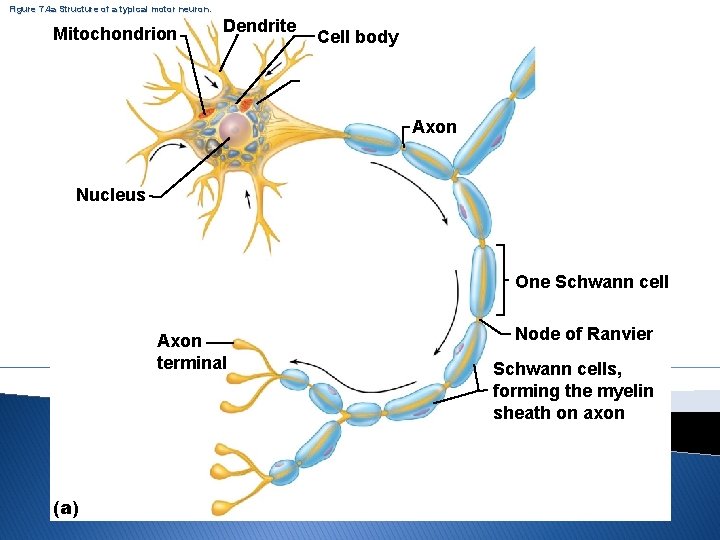
Neurons (nerve cells) � specialized to transmit messages � Major regions of neurons ◦ Cell body— �contains the nucleus �metabolic center of the cell ◦ Processes—fibers that extend from the cell body �Dendrites : pick up sensory stimuli �Axons : receive impulse from cell body �Impulses are UNIDIRECTIONAL along the axon © 2015 Pearson Education, Inc.
Figure 7. 4 a Structure of a typical motor neuron. Mitochondrion Dendrite Cell body Axon Nucleus One Schwann cell Axon terminal (a) Node of Ranvier Schwann cells, forming the myelin sheath on axon
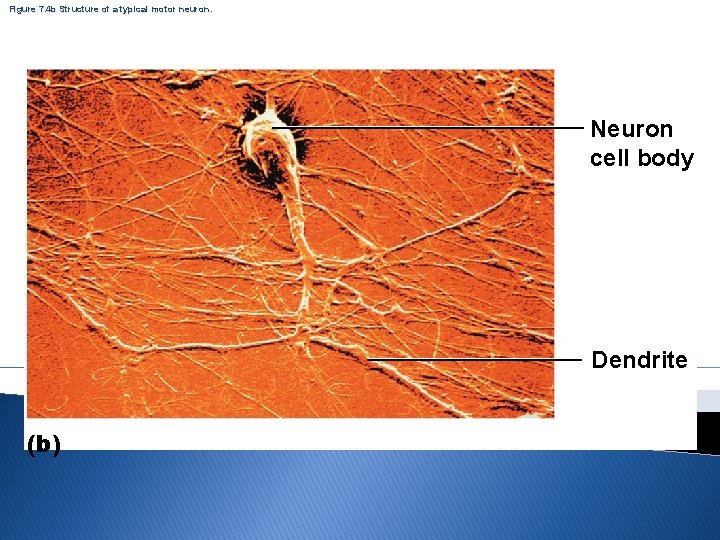
Figure 7. 4 b Structure of a typical motor neuron. Neuron cell body Dendrite (b)
Axons and the Synaptic Cleft � End in axon terminals ◦ Terminals contain vesicles filled with neurotransmitters ◦ Neurons are separated from other cells by a gap called the synaptic cleft: �Synapse—junction between nerves �Neurons NEVER touch each other © 2015 Pearson Education, Inc.
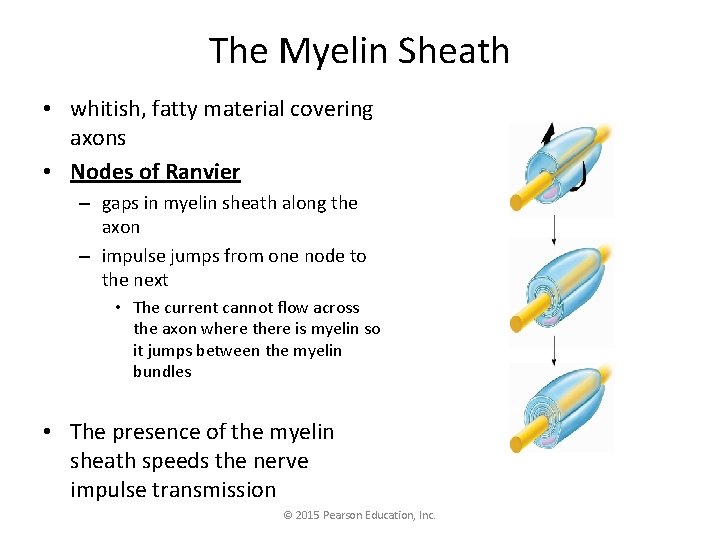
The Myelin Sheath • whitish, fatty material covering axons • Nodes of Ranvier – gaps in myelin sheath along the axon – impulse jumps from one node to the next • The current cannot flow across the axon where there is myelin so it jumps between the myelin bundles • The presence of the myelin sheath speeds the nerve impulse transmission © 2015 Pearson Education, Inc.
Multiple Sclerosis � Myelin sheath becomes destroyed � Replaced with hardened scleroses ◦ Sclerosis: hardening of body tissue � Incomplete/staggered transmission of impulse � Autoimmune disease- potientially caused by: ◦ ◦ Genes Smoking Viral infections Vitamin D deficiency
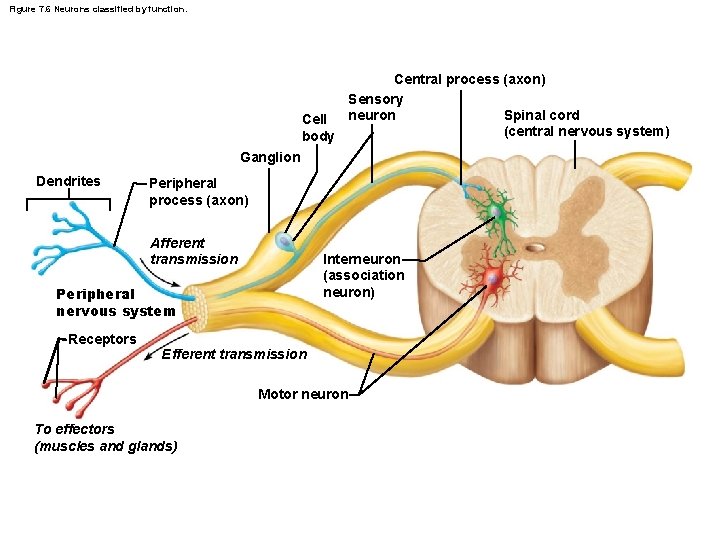
Classification of Neurons � Sensory (afferent) neurons ◦ Carry impulses from sensory receptors to the CNS �Cutaneous (skin) sense organs �Pain receptors �Temperature receptors �Touch/pressure receptors �Proprioceptors—detect stretch or tension �Muscle spindle in muscles �Golgi tendon organ in tendonw © 2015 Pearson Education, Inc.
Functional Classification of Neurons � Motor (efferent) neurons ◦ Carry impulses from the central nervous system to viscera, muscles, or glands � Interneurons (association neurons) ◦ Located in the spinal cord (CNS) ◦ Connect sensory and motor neurons ◦ Play role in reflex arc – allow quicker response without involving the brain © 2015 Pearson Education, Inc.
Figure 7. 6 Neurons classified by function. Central process (axon) Sensory Spinal cord neuron Cell (central nervous system) body Ganglion Dendrites Peripheral process (axon) Afferent transmission Interneuron (association neuron) Peripheral nervous system Receptors Efferent transmission Motor neuron To effectors (muscles and glands)