
Nervous tissue Neurons and Glial Cells Anna L
- Slides: 31
Nervous tissue Neurons and Glial Cells Anna L. Kiss Department of Anatom, Histology and Embryology Semmelweis University 2018
Nervous tissue • Function: stimulus transmission • Origin: ectoderm • Structure: neurons + glial cells
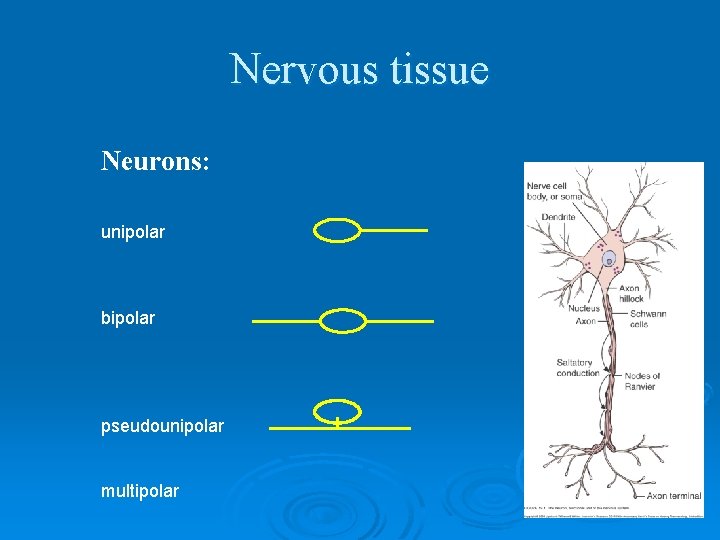
Nervous tissue Neurons: unipolar bipolar pseudounipolar multipolar
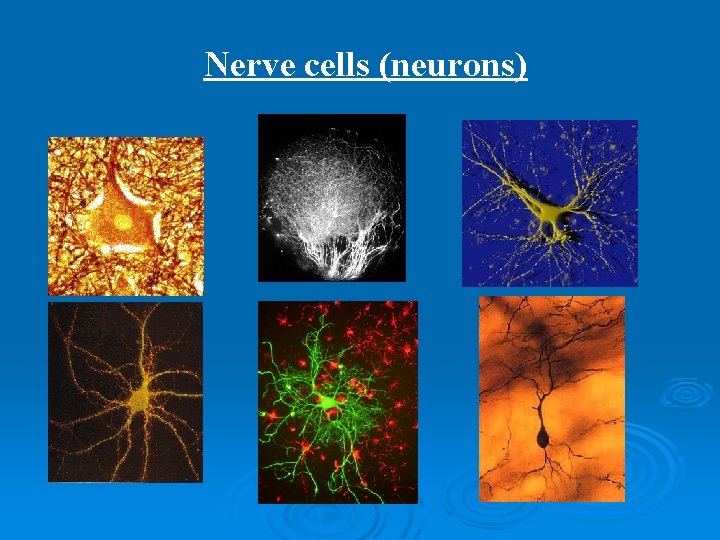
Nerve cells (neurons)
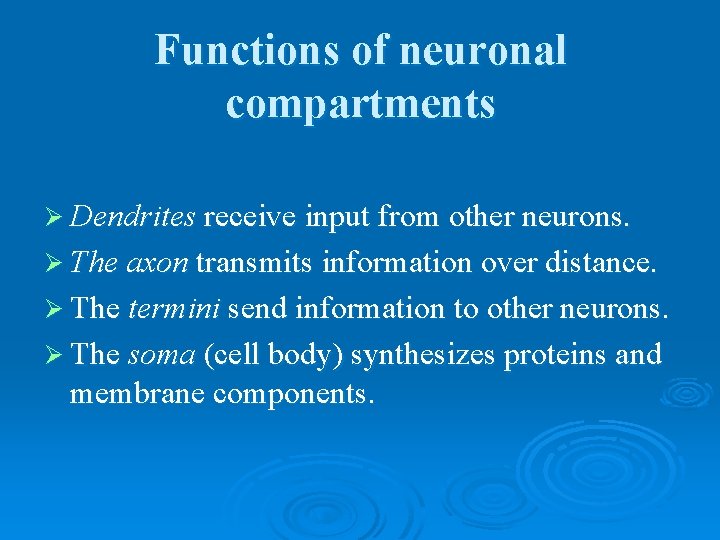
Functions of neuronal compartments Ø Dendrites receive input from other neurons. Ø The axon transmits information over distance. Ø The termini send information to other neurons. Ø The soma (cell body) synthesizes proteins and membrane components.
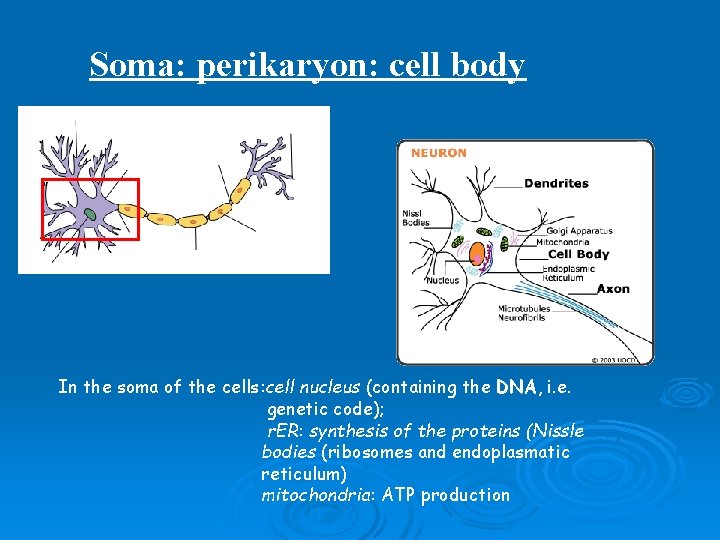
Soma: perikaryon: cell body In the soma of the cells: cell nucleus (containing the DNA, i. e. genetic code); r. ER: synthesis of the proteins (Nissle bodies (ribosomes and endoplasmatic reticulum) mitochondria: ATP production
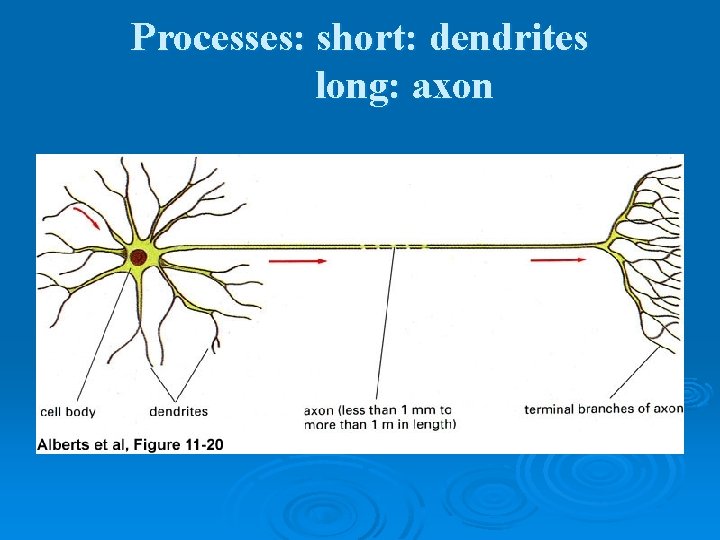
Processes: short: dendrites long: axon
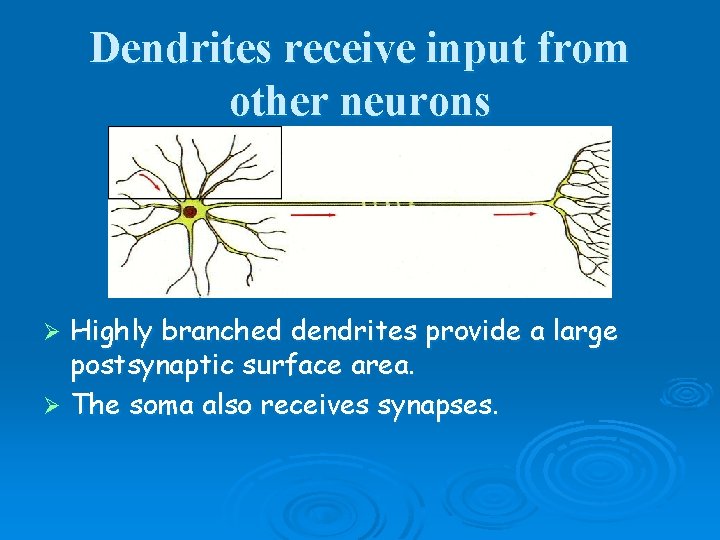
Dendrites receive input from other neurons Highly branched dendrites provide a large postsynaptic surface area. Ø The soma also receives synapses. Ø
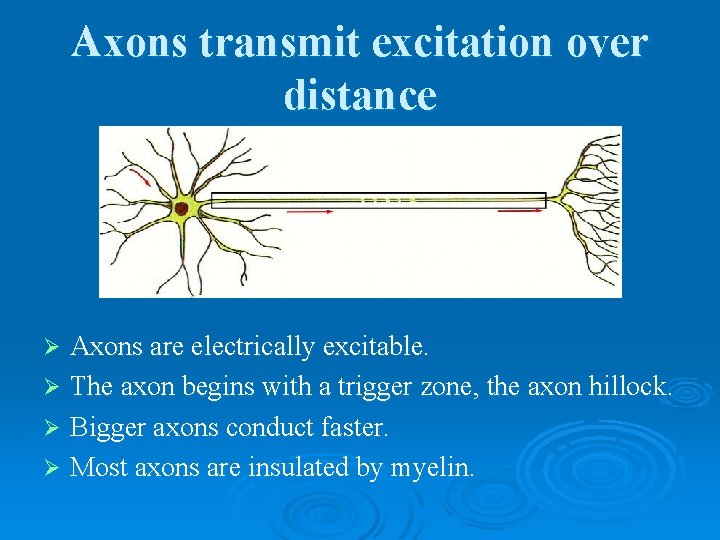
Axons transmit excitation over distance Axons are electrically excitable. Ø The axon begins with a trigger zone, the axon hillock. Ø Bigger axons conduct faster. Ø Most axons are insulated by myelin. Ø
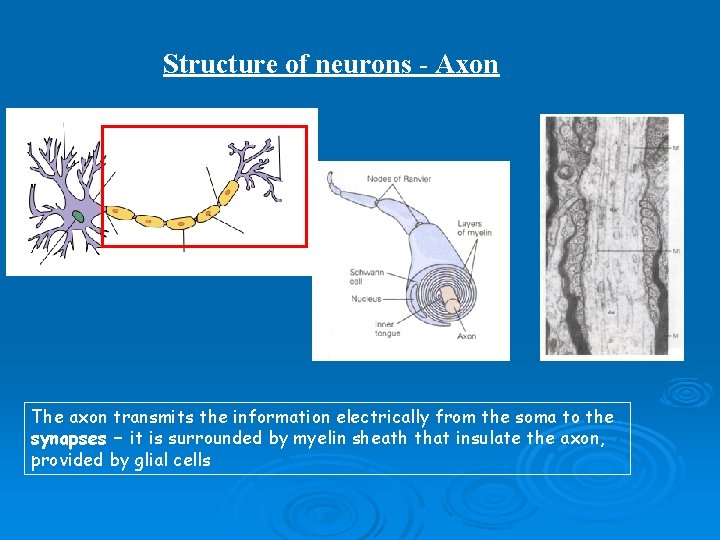
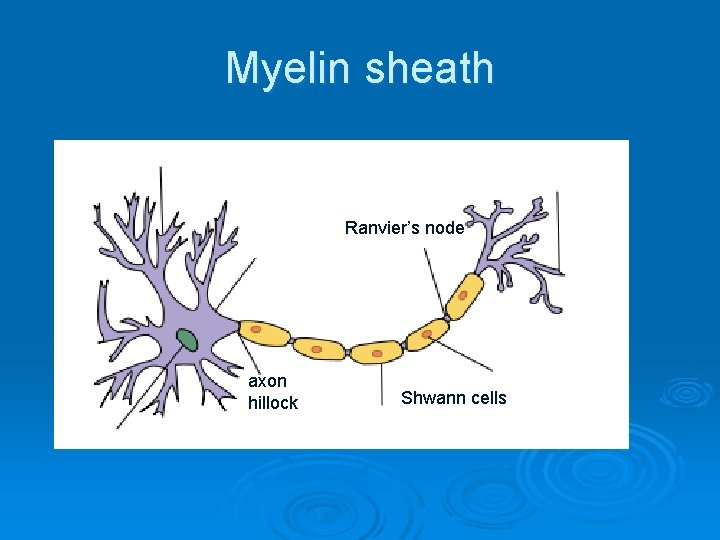
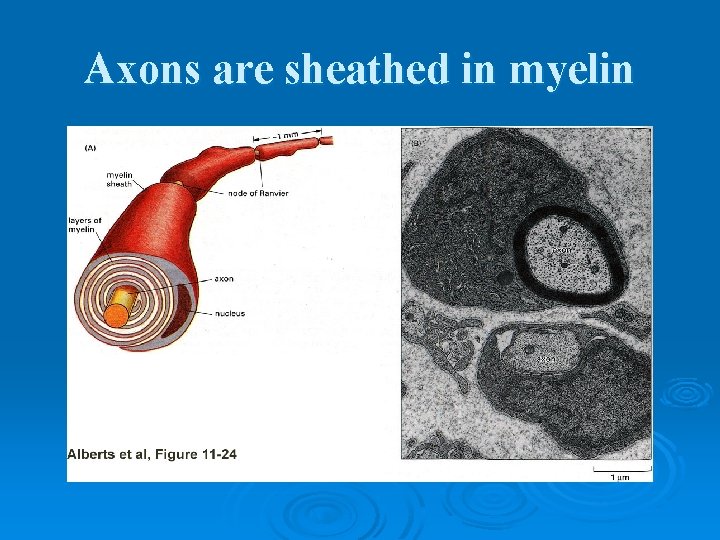
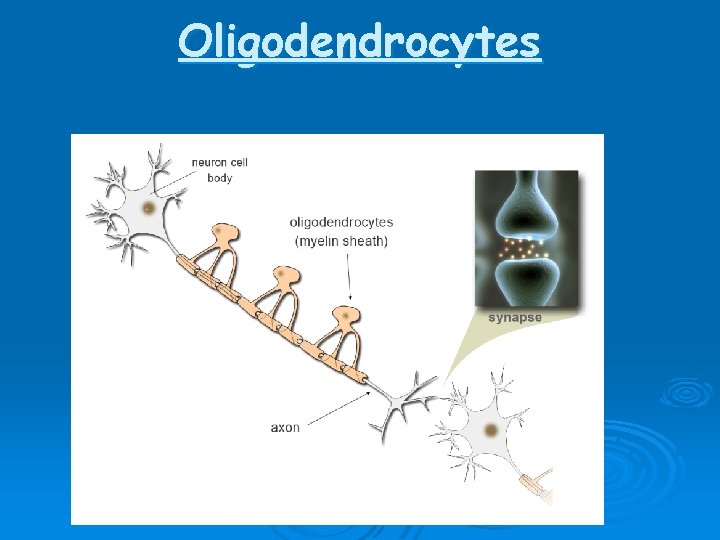
Structure of neurons - Axon The axon transmits the information electrically from the soma to the synapses – it is surrounded by myelin sheath that insulate the axon, provided by glial cells
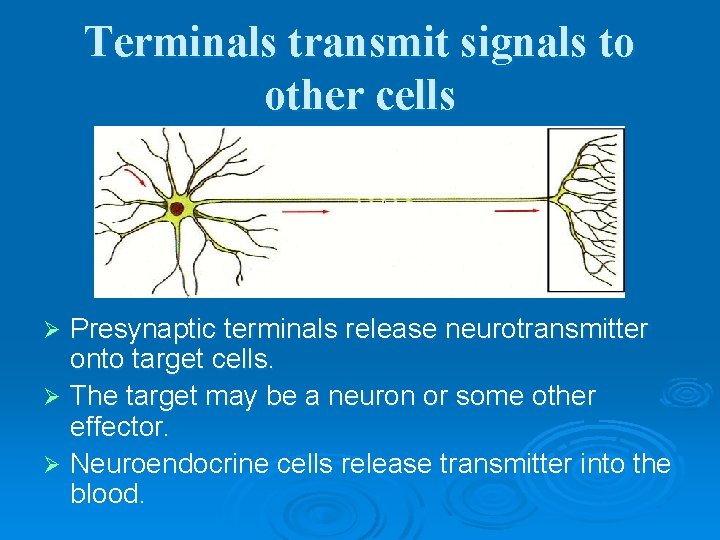
Terminals transmit signals to other cells Presynaptic terminals release neurotransmitter onto target cells. Ø The target may be a neuron or some other effector. Ø Neuroendocrine cells release transmitter into the blood. Ø
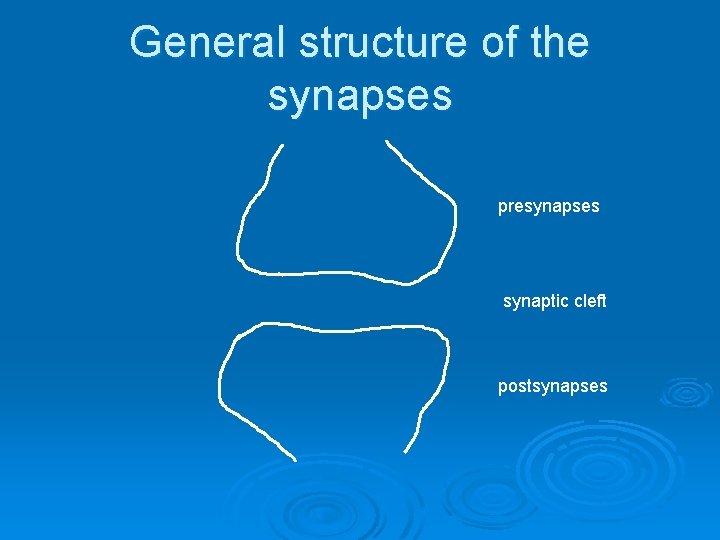
General structure of the synapses presynapses synaptic cleft postsynapses
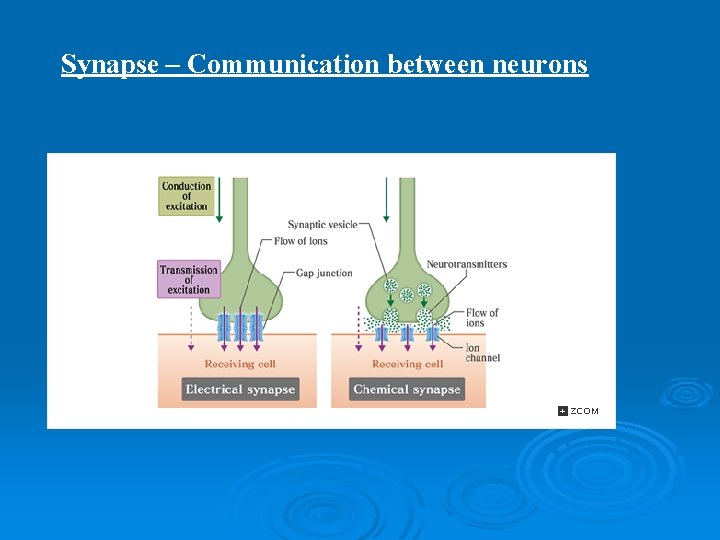
Synapse – Communication between neurons
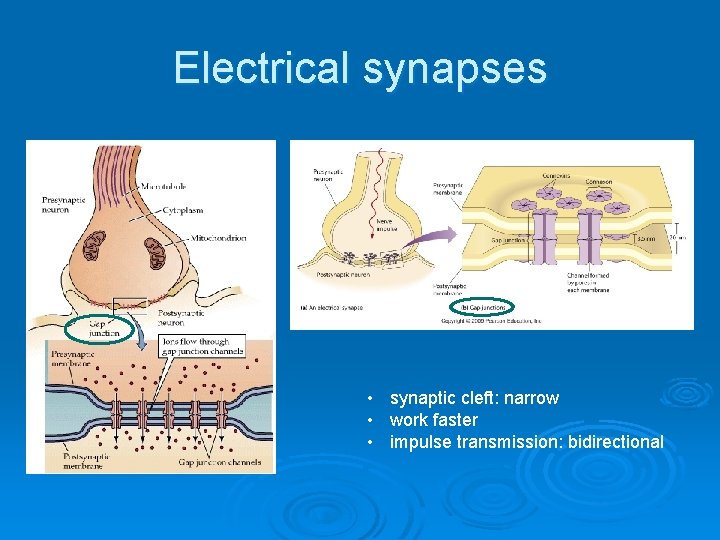
Electrical synapses • synaptic cleft: narrow • work faster • impulse transmission: bidirectional
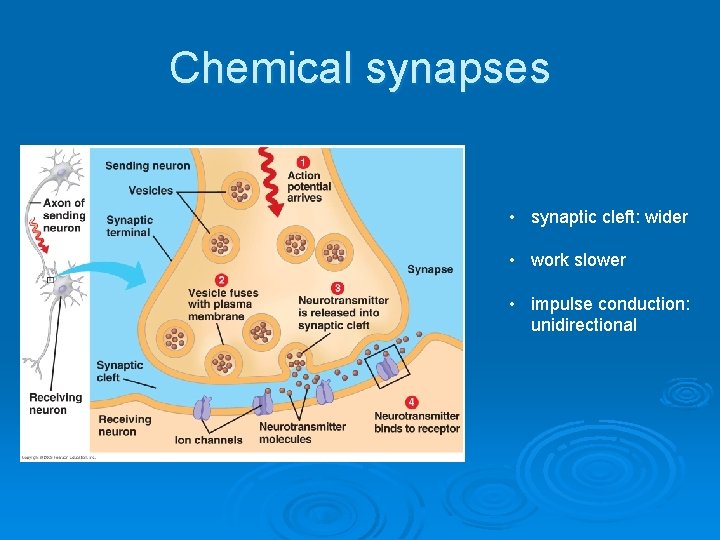
Chemical synapses • synaptic cleft: wider • work slower • impulse conduction: unidirectional
Synapses Axo-dendritic Axo-somatic Axo-axonic Dendro-dendritic the most ommon
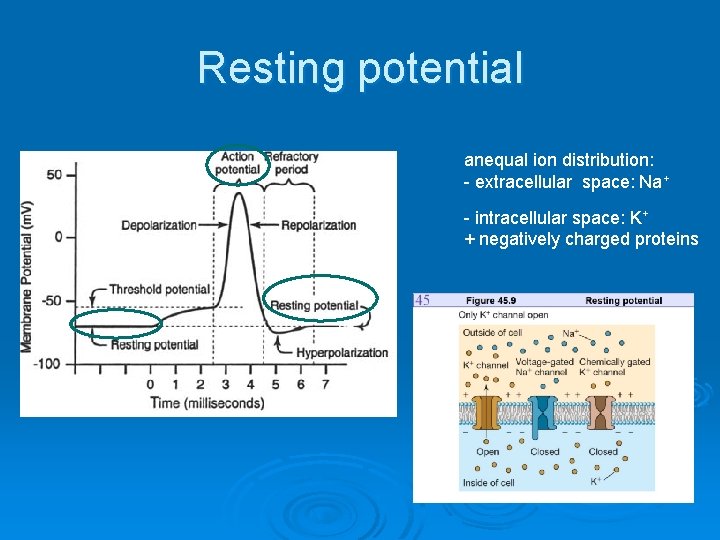
Resting potential anequal ion distribution: - extracellular space: Na+ - intracellular space: K+ + negatively charged proteins
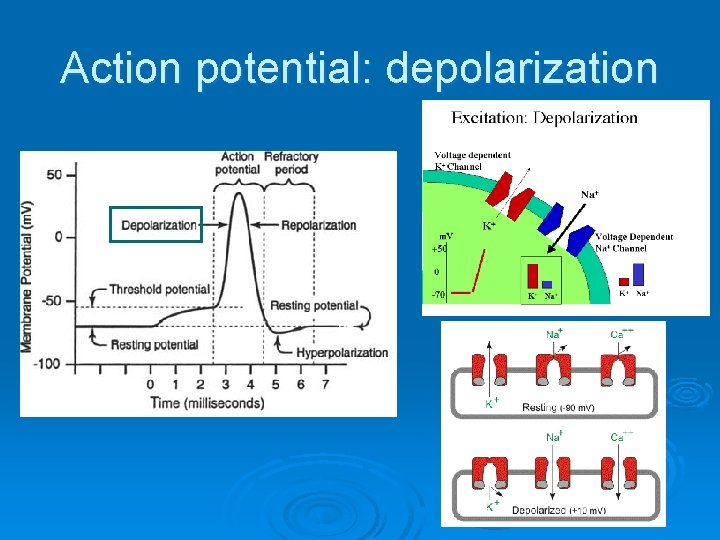
Action potential: depolarization
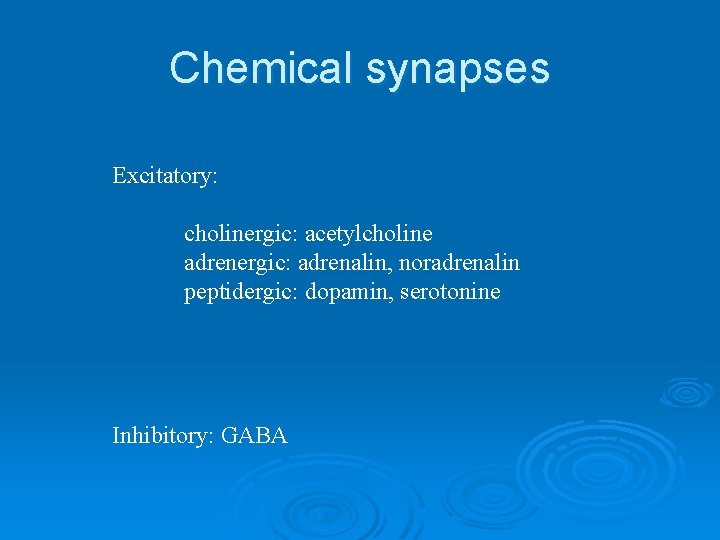
Chemical synapses Excitatory: cholinergic: acetylcholine adrenergic: adrenalin, noradrenalin peptidergic: dopamin, serotonine Inhibitory: GABA
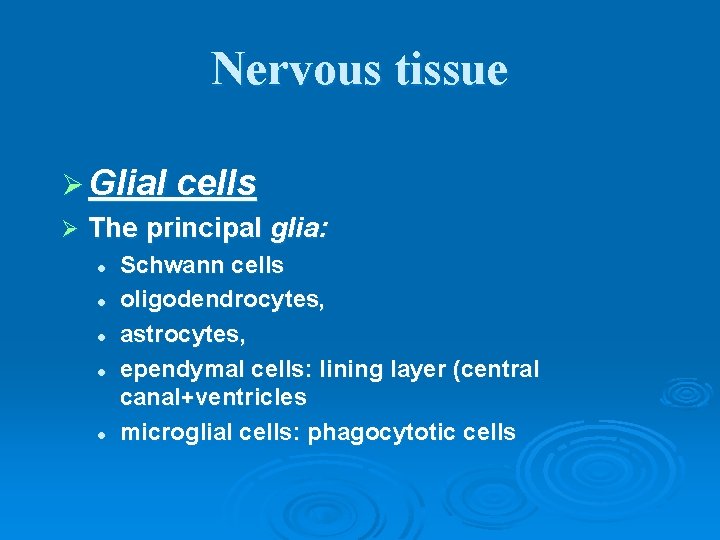
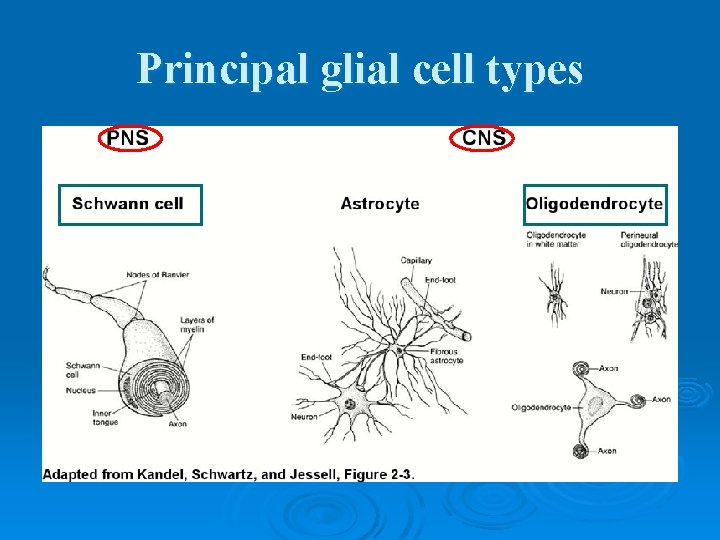
Nervous tissue Ø Glial cells Ø The principal glia: l l l Schwann cells oligodendrocytes, astrocytes, ependymal cells: lining layer (central canal+ventricles microglial cells: phagocytotic cells
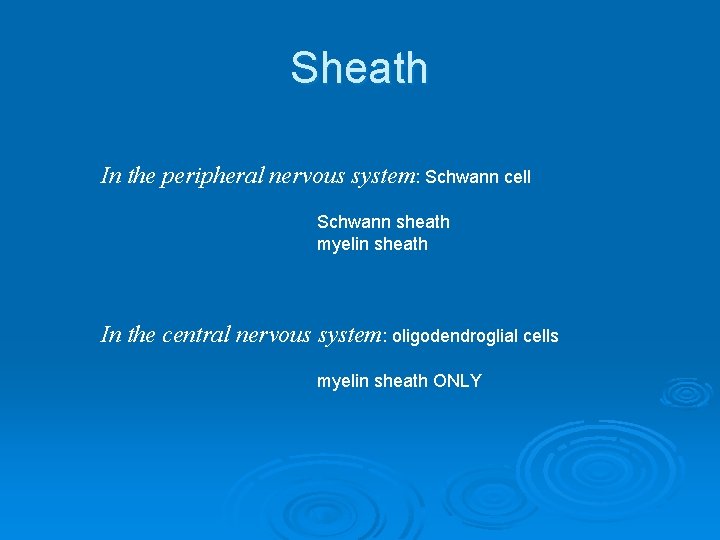
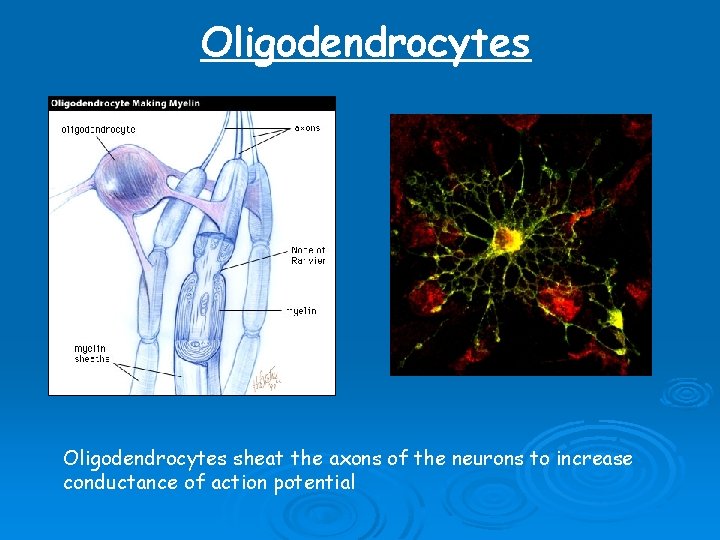
Sheath In the peripheral nervous system: Schwann cell Schwann sheath myelin sheath In the central nervous system: oligodendroglial cells myelin sheath ONLY
Principal glial cell types
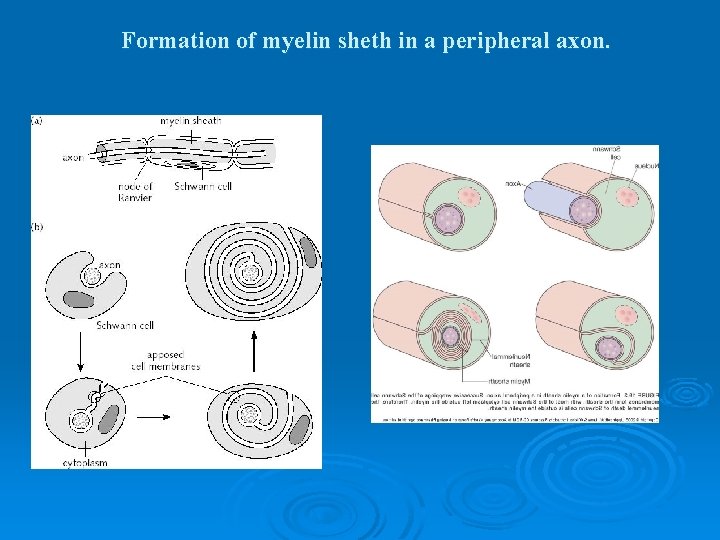
Formation of myelin sheth in a peripheral axon.
Myelin sheath Ranvier’s node axon hillock Shwann cells
Axons are sheathed in myelin
Oligodendrocytes sheat the axons of the neurons to increase conductance of action potential
Oligodendrocytes
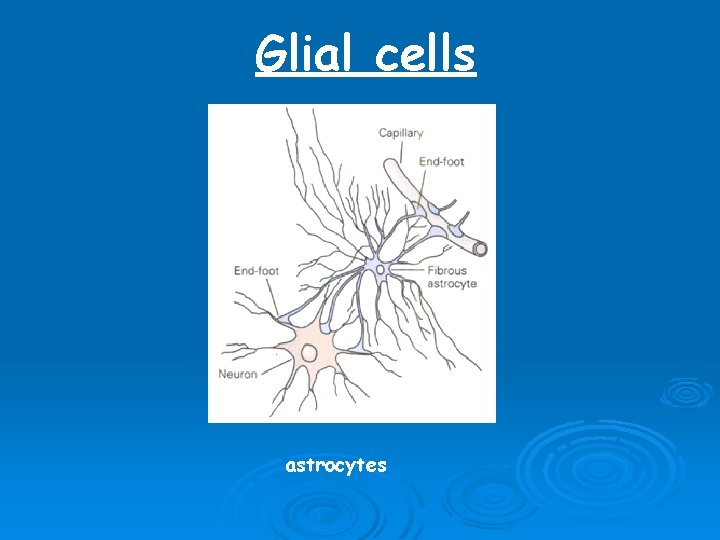
Glial cells astrocytes
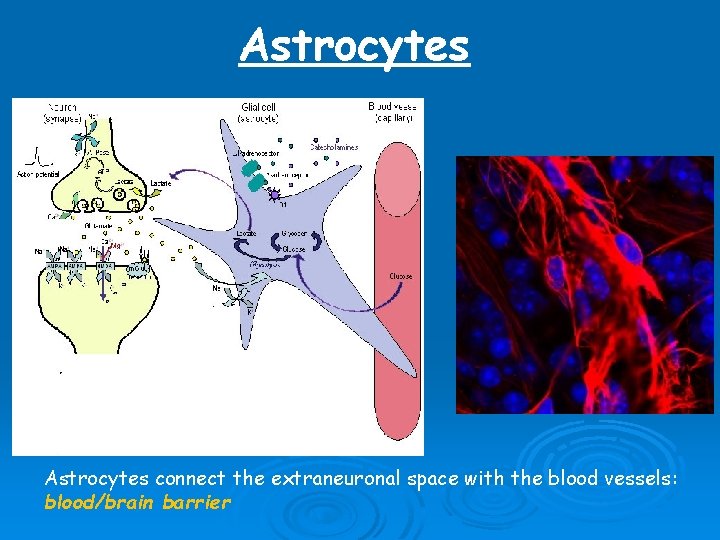
Astrocytes connect the extraneuronal space with the blood vessels: blood/brain barrier
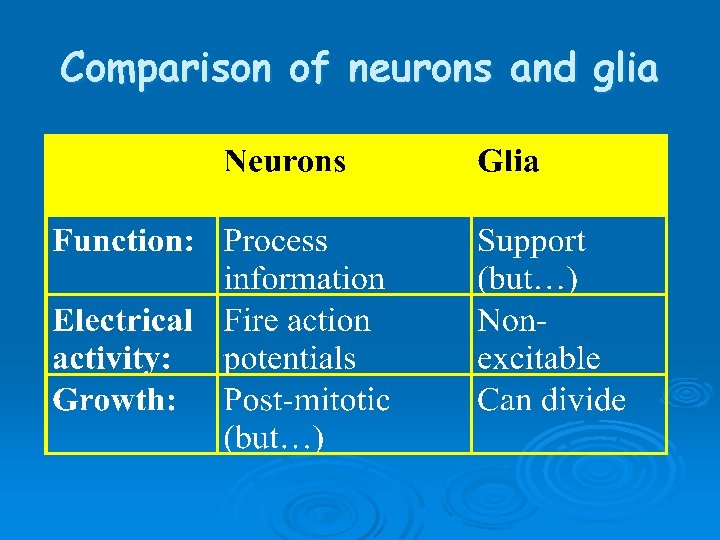
Comparison of neurons and glia
References Wikipaedia