
Nervous Systems Overview and Reflexes Brain Development AP
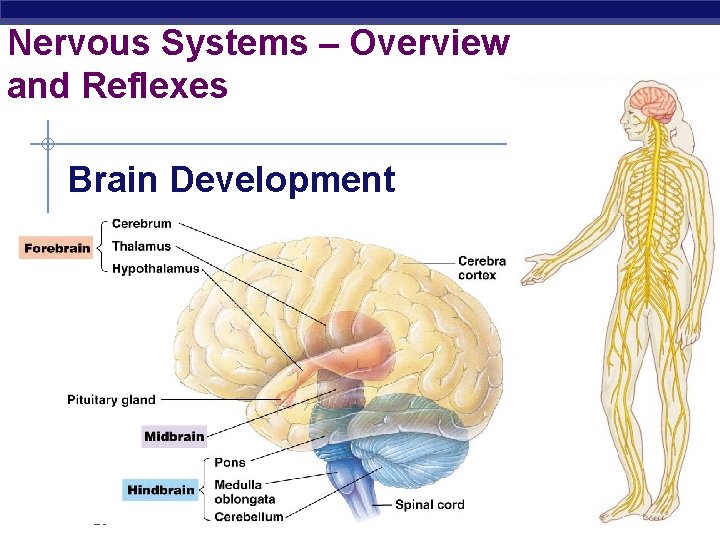
Nervous Systems – Overview and Reflexes Brain Development AP Biology 2007 -2008
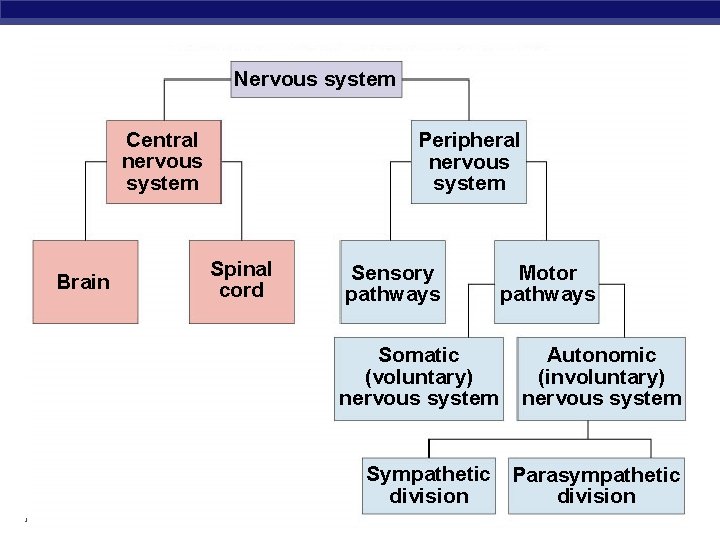
Nervous system Central nervous system Brain Peripheral nervous system Spinal cord Sensory pathways Somatic (voluntary) nervous system Sympathetic division AP Biology Motor pathways Autonomic (involuntary) nervous system Parasympathetic division
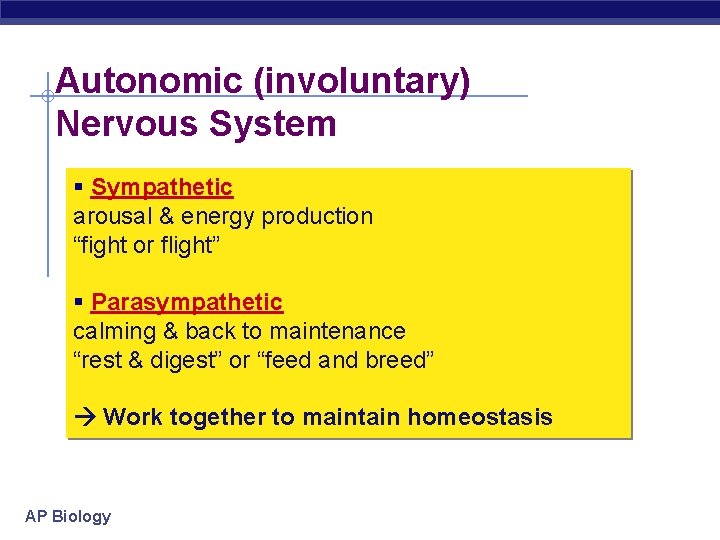
Autonomic (involuntary) Nervous System § Sympathetic arousal & energy production “fight or flight” § Parasympathetic calming & back to maintenance “rest & digest” or “feed and breed” Work together to maintain homeostasis AP Biology
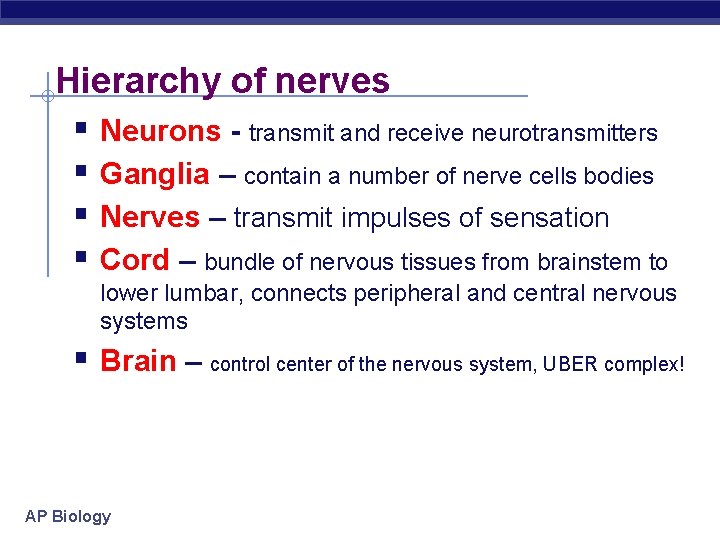
Hierarchy of nerves § Neurons - transmit and receive neurotransmitters § Ganglia – contain a number of nerve cells bodies § Nerves – transmit impulses of sensation § Cord – bundle of nervous tissues from brainstem to lower lumbar, connects peripheral and central nervous systems § Brain – control center of the nervous system, UBER complex! AP Biology
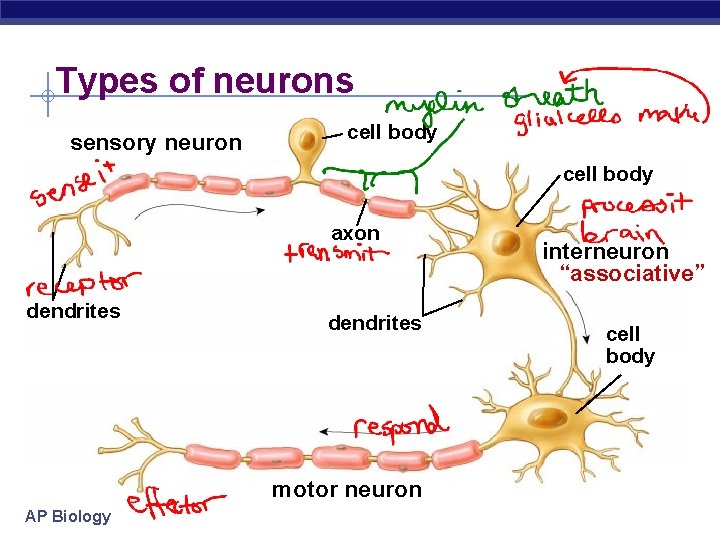
Types of neurons sensory neuron cell body axon dendrites motor neuron AP Biology interneuron “associative” cell body
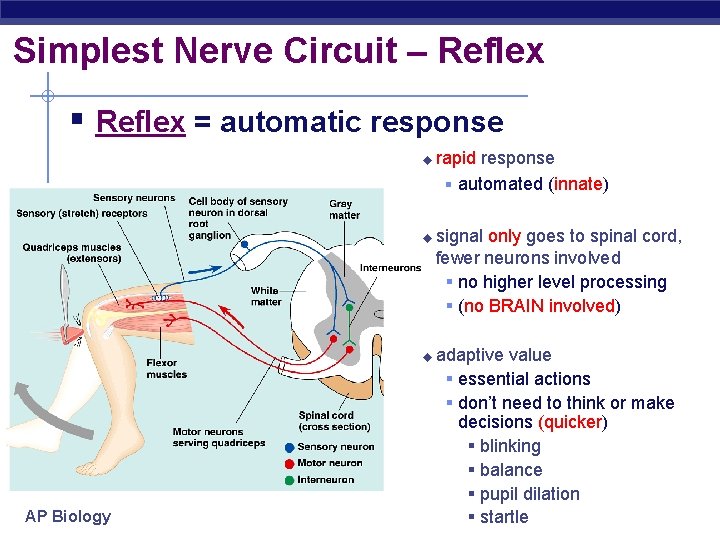
Simplest Nerve Circuit – Reflex § Reflex = automatic response u rapid response § automated (innate) u signal only goes to spinal cord, fewer neurons involved § no higher level processing § (no BRAIN involved) u adaptive AP Biology value § essential actions § don’t need to think or make decisions (quicker) § blinking § balance § pupil dilation § startle
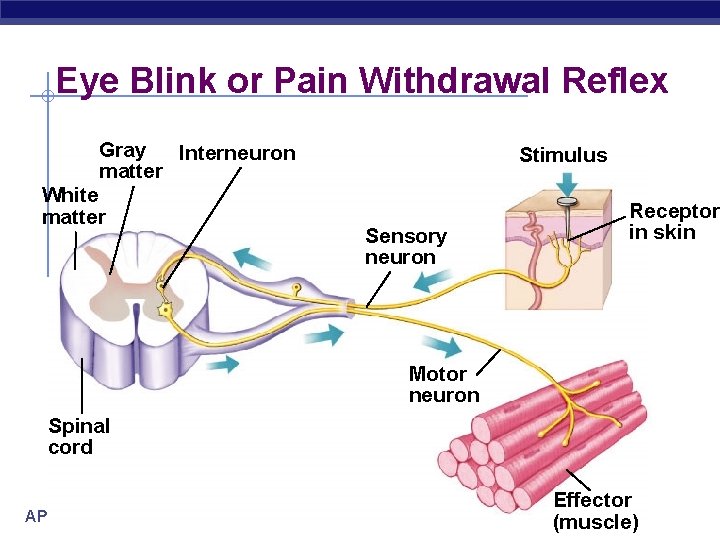
Eye Blink or Pain Withdrawal Reflex Gray Interneuron matter White matter Stimulus Sensory neuron Receptor in skin Motor neuron Spinal cord AP Biology Effector (muscle)
The Reflex Arc How a Stimulus Elicits an Automatic Response AP Biology 2007 -2008
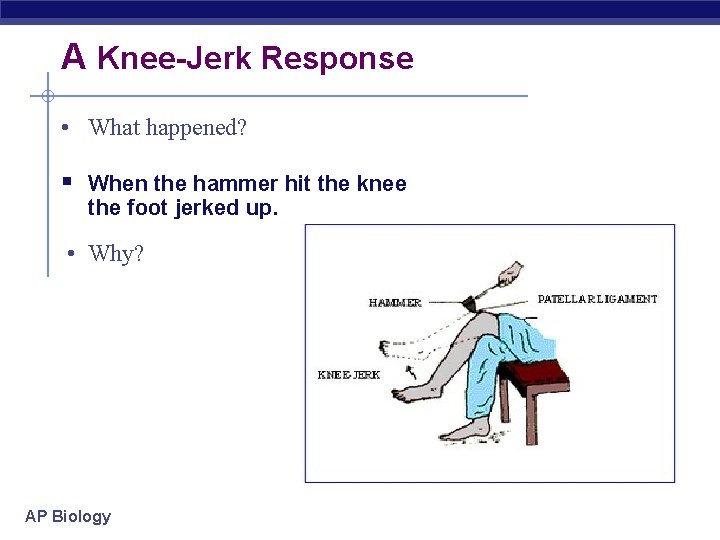
A Knee-Jerk Response • What happened? § When the hammer hit the knee the foot jerked up. • Why? AP Biology
Reacting to Changes § Maintain homeostasis. u Small changes inside your body can cause its cells to be damaged or destroyed. § Detect a change in the environment (a stimulus) and react to the change (a response) u When you do this without thinking, it is called a reflex. AP Biology
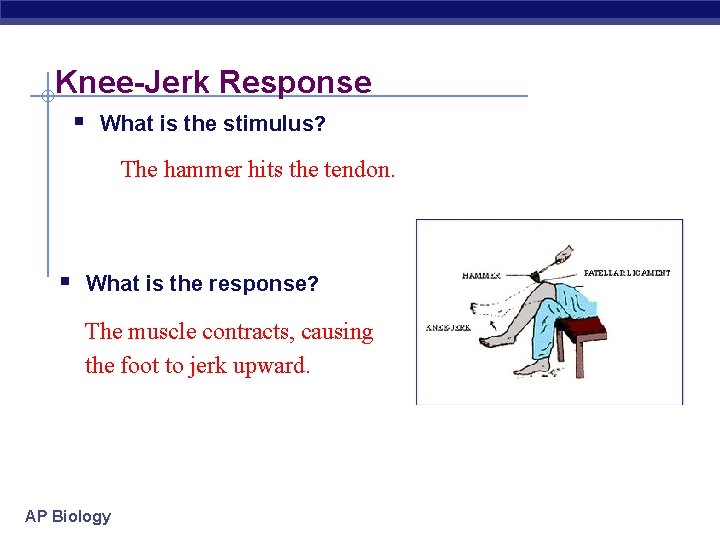
Knee-Jerk Response § What is the stimulus? The hammer hits the tendon. § What is the response? The muscle contracts, causing the foot to jerk upward. AP Biology
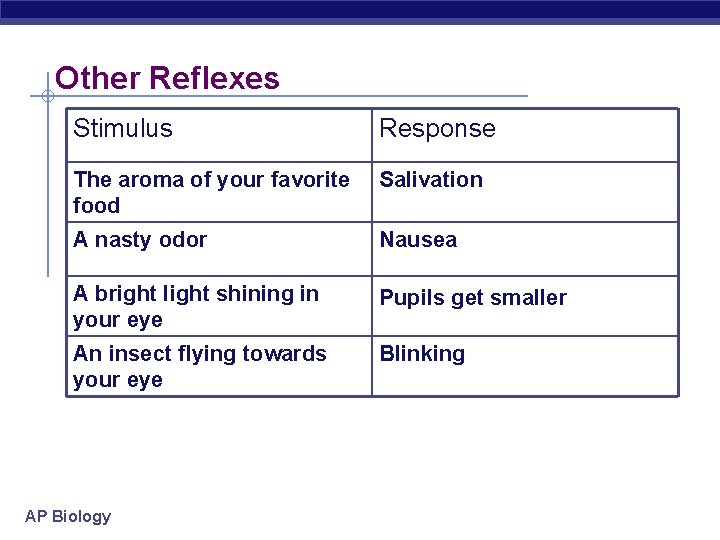
Other Reflexes Stimulus Response The aroma of your favorite food Salivation A nasty odor Nausea A bright light shining in your eye Pupils get smaller An insect flying towards your eye Blinking AP Biology
How is a Stimulus Detected? § specialized cells react to a specific stimulus. u called receptors (they receive a stimulus). § Ex) The receptor cells of your eyes are stimulated by light. AP Biology
The Response § When the receptor is stimulated, it sends a message to a part of your body that effects the correct response. This is called the effector. AP Biology
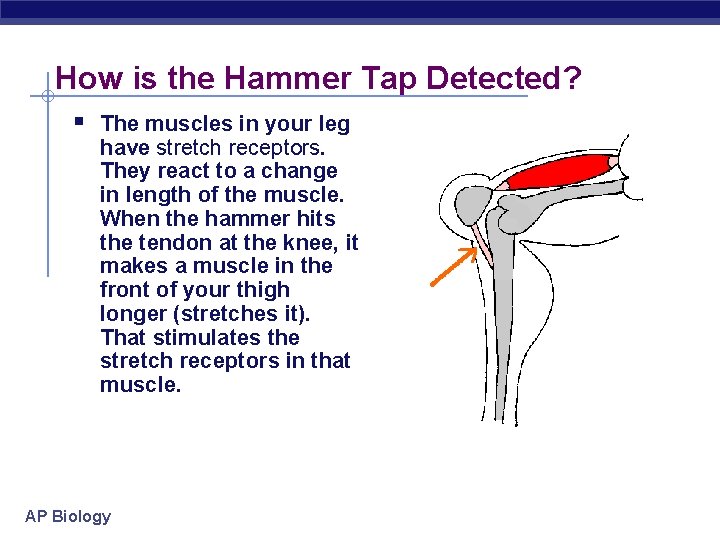
How is the Hammer Tap Detected? § The muscles in your leg have stretch receptors. They react to a change in length of the muscle. When the hammer hits the tendon at the knee, it makes a muscle in the front of your thigh longer (stretches it). That stimulates the stretch receptors in that muscle. AP Biology
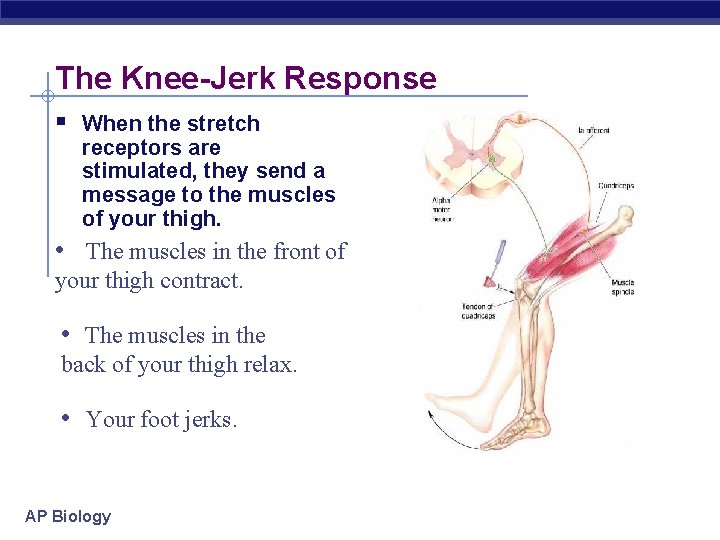
The Knee-Jerk Response § When the stretch receptors are stimulated, they send a message to the muscles of your thigh. • The muscles in the front of your thigh contract. • The muscles in the back of your thigh relax. • Your foot jerks. AP Biology
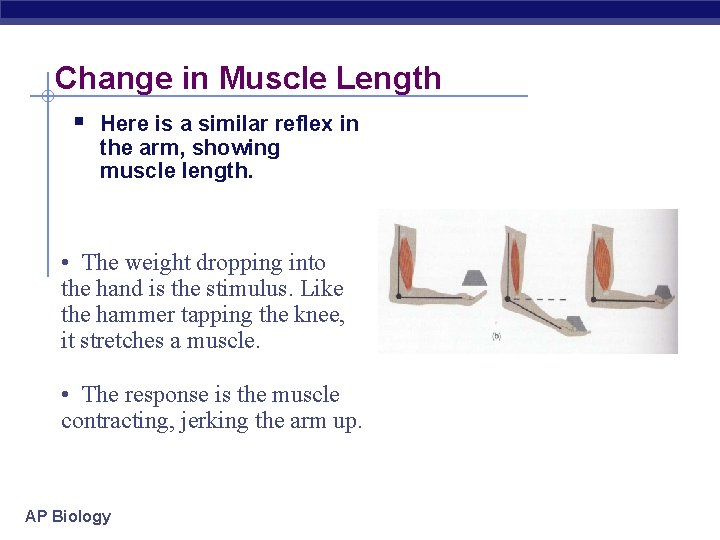
Change in Muscle Length § Here is a similar reflex in the arm, showing muscle length. • The weight dropping into the hand is the stimulus. Like the hammer tapping the knee, it stretches a muscle. • The response is the muscle contracting, jerking the arm up. AP Biology
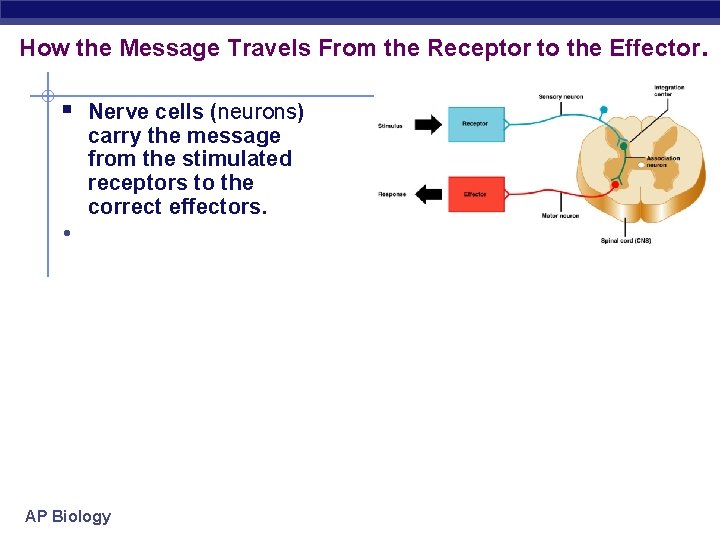
How the Message Travels From the Receptor to the Effector. § Nerve cells (neurons) carry the message from the stimulated receptors to the correct effectors. • AP Biology
• A sensory neuron carries the message from the receptor to the central nervous system (the spinal cord). • A motor neuron carries the message from the central nervous system to the effector. • This is a reflex AP Biology arc.
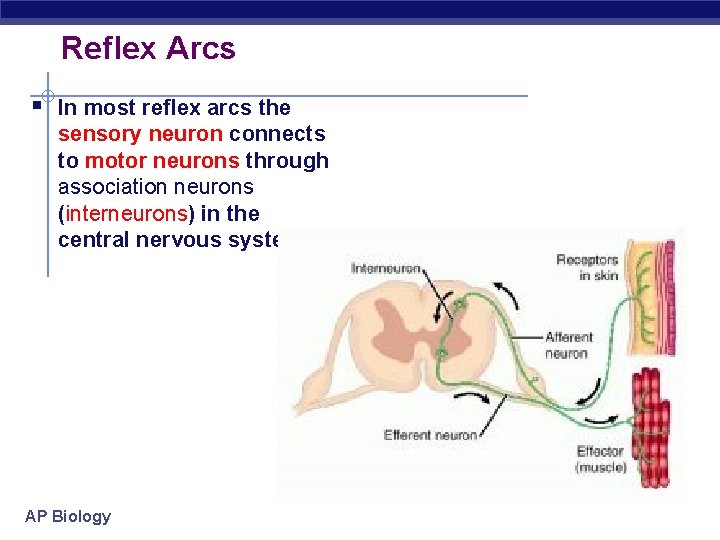
Reflex Arcs § In most reflex arcs the sensory neuron connects to motor neurons through association neurons (interneurons) in the central nervous system. AP Biology
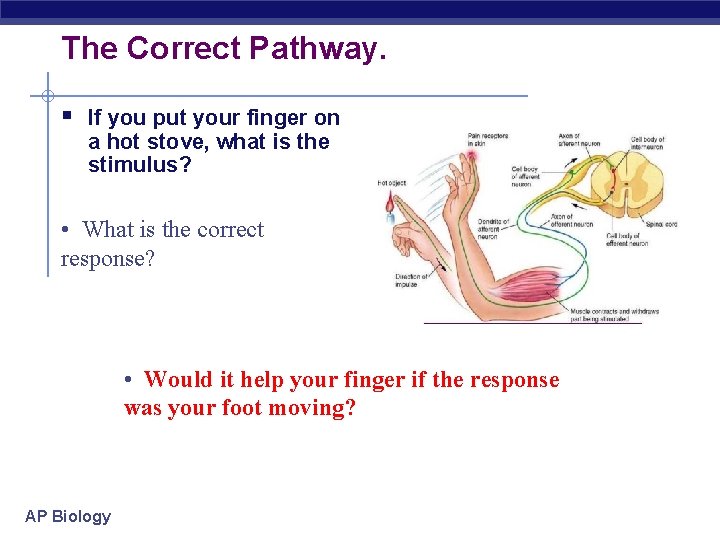
The Correct Pathway. § If you put your finger on a hot stove, what is the stimulus? • What is the correct response? • Would it help your finger if the response was your foot moving? AP Biology
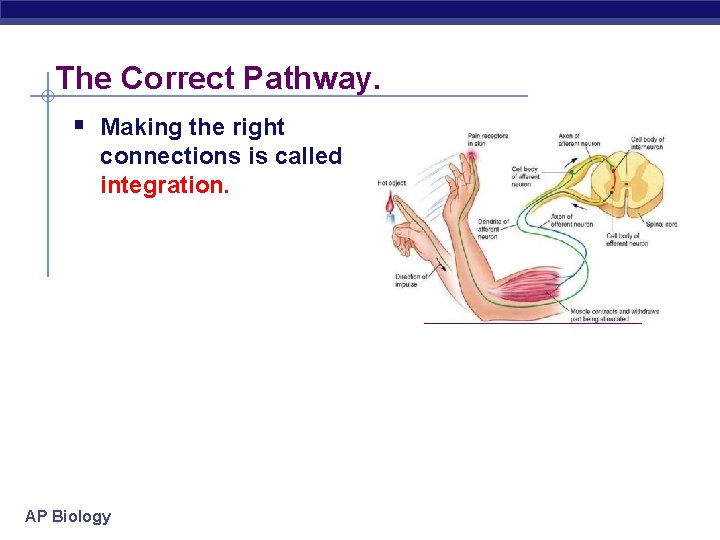
The Correct Pathway. § Making the right connections is called integration. AP Biology
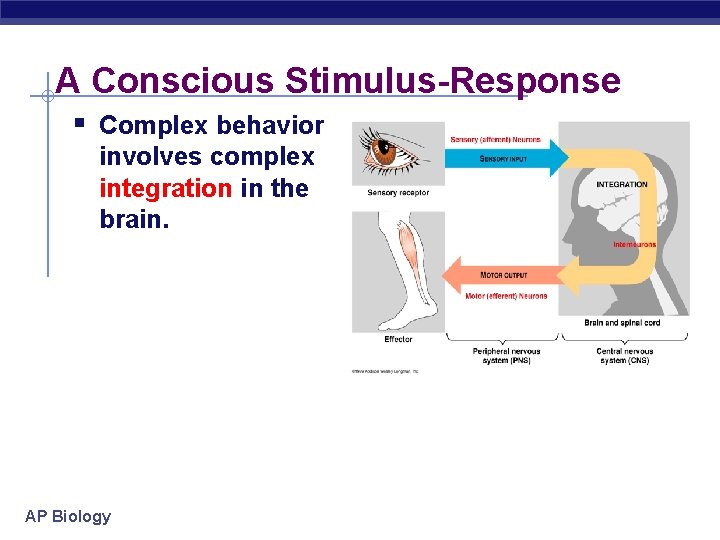
A Conscious Stimulus-Response § Complex behavior involves complex integration in the brain. AP Biology
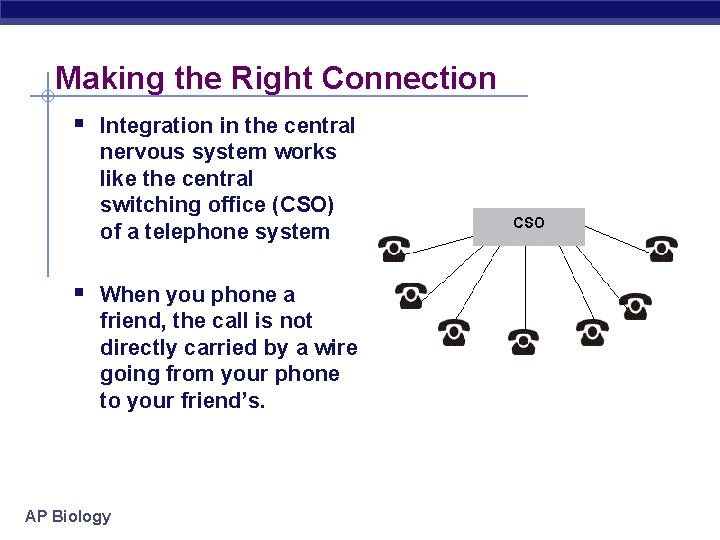
Making the Right Connection § Integration in the central nervous system works like the central switching office (CSO) of a telephone system § When you phone a friend, the call is not directly carried by a wire going from your phone to your friend’s. AP Biology
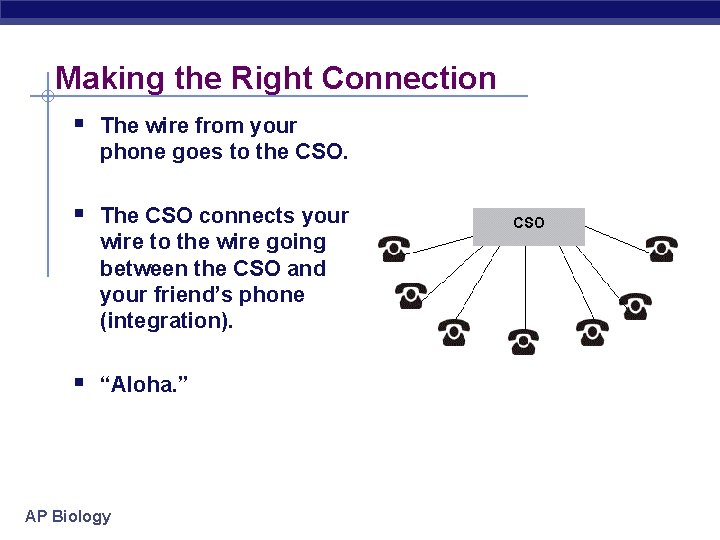
Making the Right Connection § The wire from your phone goes to the CSO. § The CSO connects your wire to the wire going between the CSO and your friend’s phone (integration). § “Aloha. ” AP Biology
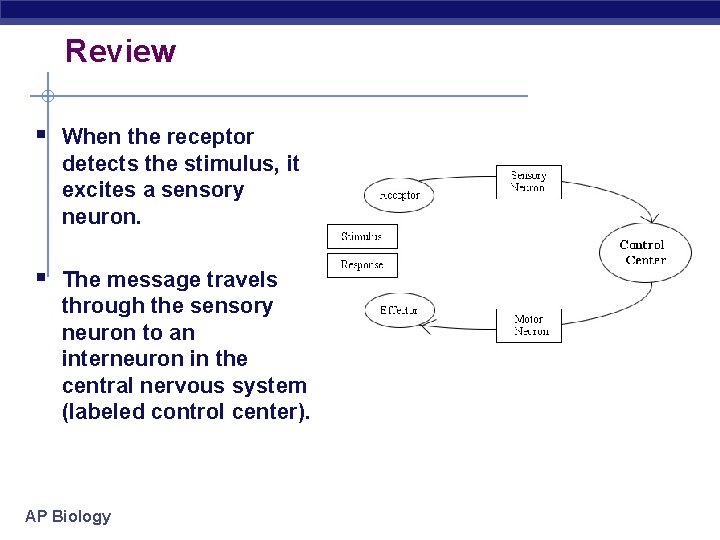
Review § When the receptor detects the stimulus, it excites a sensory neuron. § The message travels through the sensory neuron to an interneuron in the central nervous system (labeled control center). AP Biology
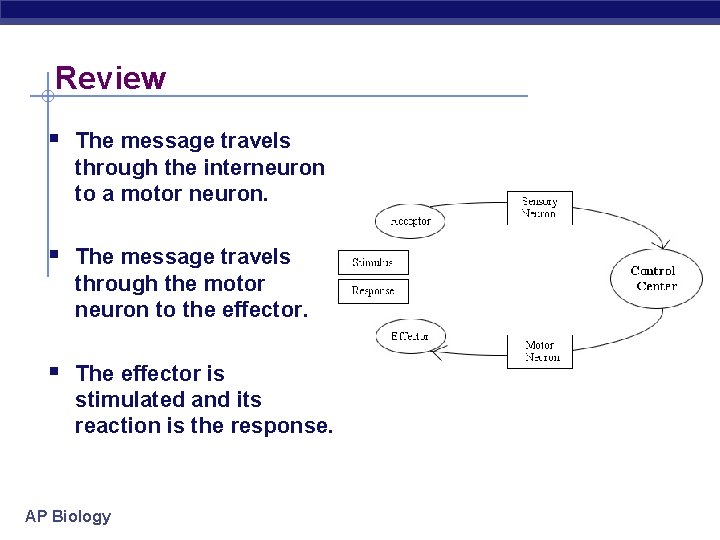
Review § The message travels through the interneuron to a motor neuron. § The message travels through the motor neuron to the effector. § The effector is stimulated and its reaction is the response. AP Biology
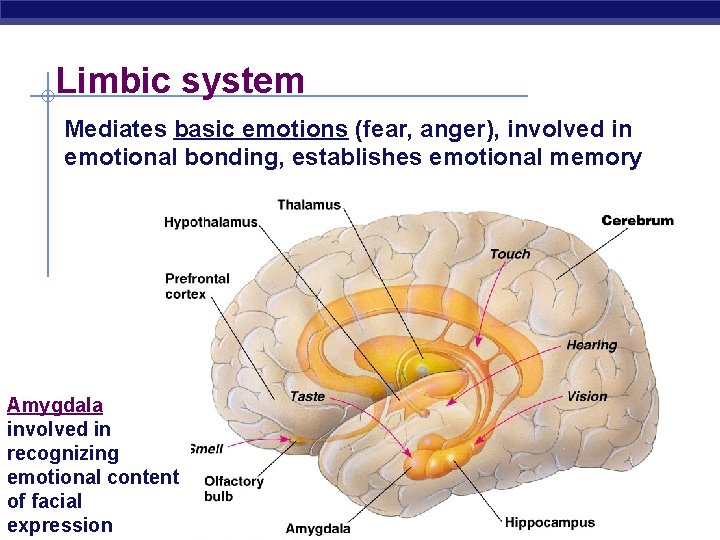
Limbic system Mediates basic emotions (fear, anger), involved in emotional bonding, establishes emotional memory Amygdala involved in recognizing emotional content of facial AP Biology expression
Limbic System § self preservation and species preservation § Reward circuit and behavior reinforcement § Memory § Closely connected to the olfactory system (smells) AP Biology
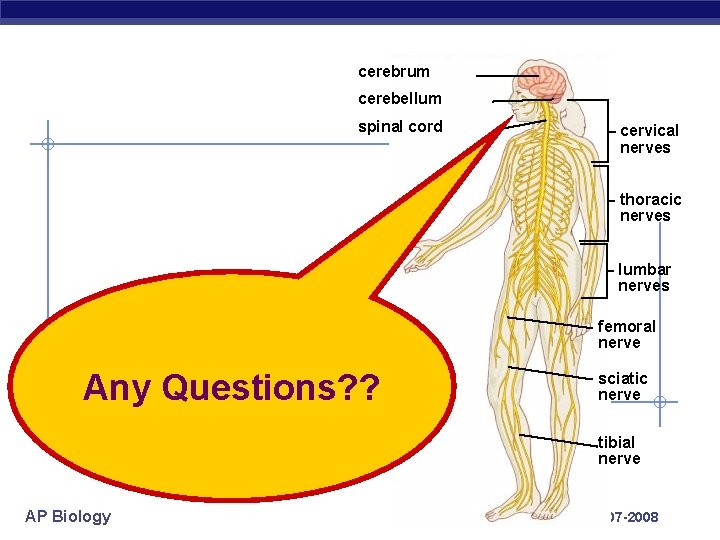
cerebrum cerebellum spinal cord cervical nerves thoracic nerves lumbar nerves femoral nerve Any Questions? ? sciatic nerve tibial nerve AP Biology 2007 -2008
- Slides: 30