
Nervous System Why do animals need a nervous

- Slides: 48
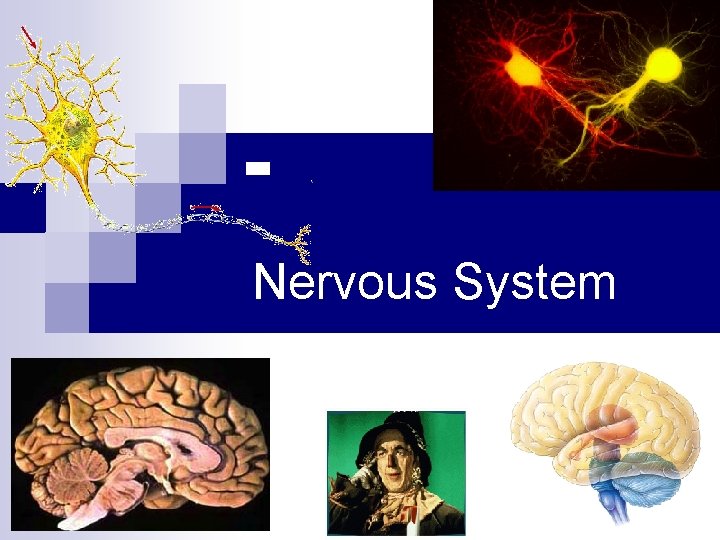
Nervous System
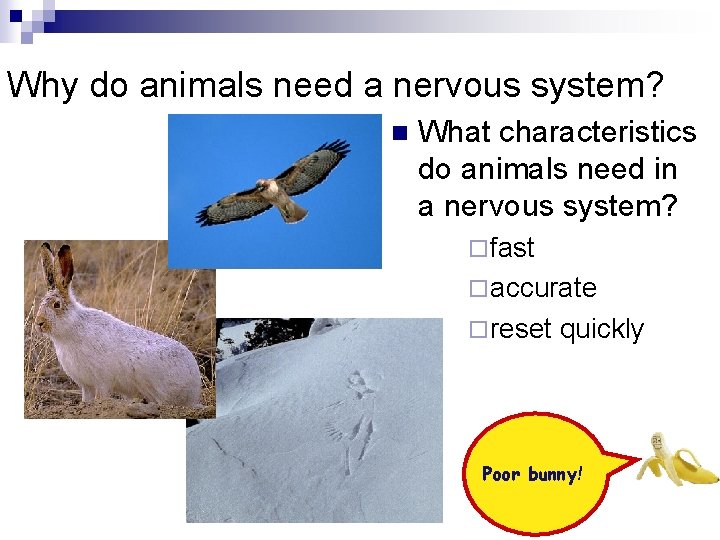
Why do animals need a nervous system? n What characteristics do animals need in a nervous system? ¨ fast ¨ accurate ¨ reset quickly Remember… thinkbunny! about Poor the bunny…
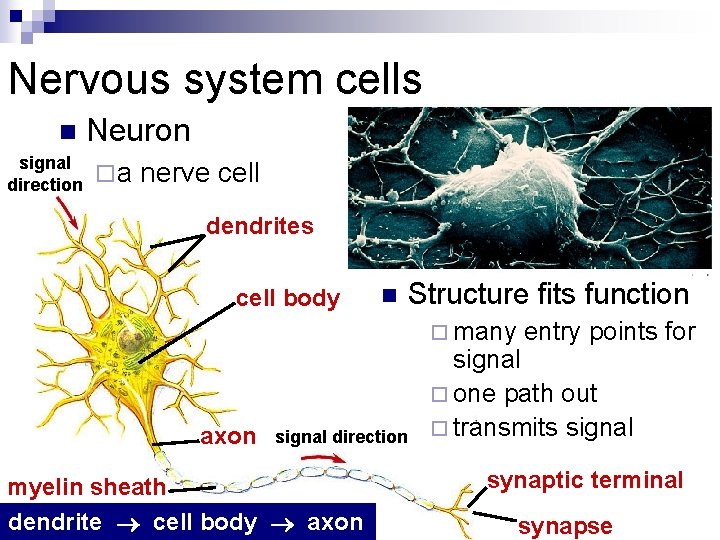
Nervous system cells n signal direction Neuron ¨a nerve cell dendrites cell body n Structure fits function ¨ many axon signal direction myelin sheath dendrite cell body axon entry points for signal ¨ one path out ¨ transmits signal synaptic terminal synapse
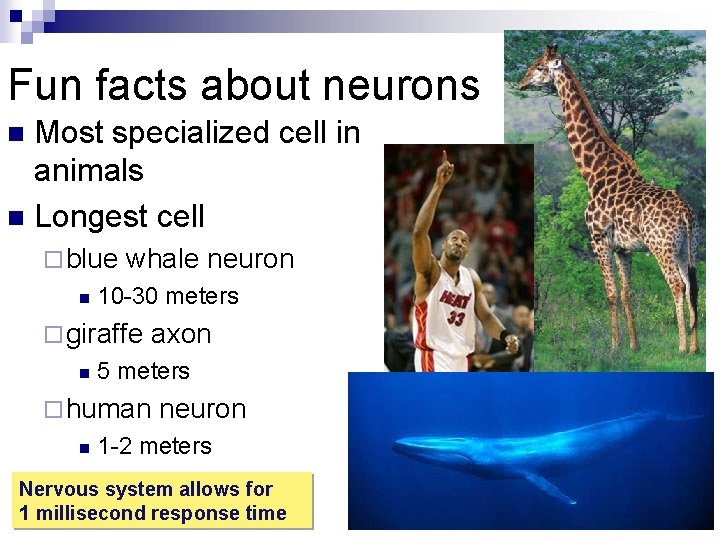
Fun facts about neurons Most specialized cell in animals n Longest cell n ¨ blue n whale neuron 10 -30 meters ¨ giraffe n axon 5 meters ¨ human n neuron 1 -2 meters Nervous system allows for 1 millisecond response time
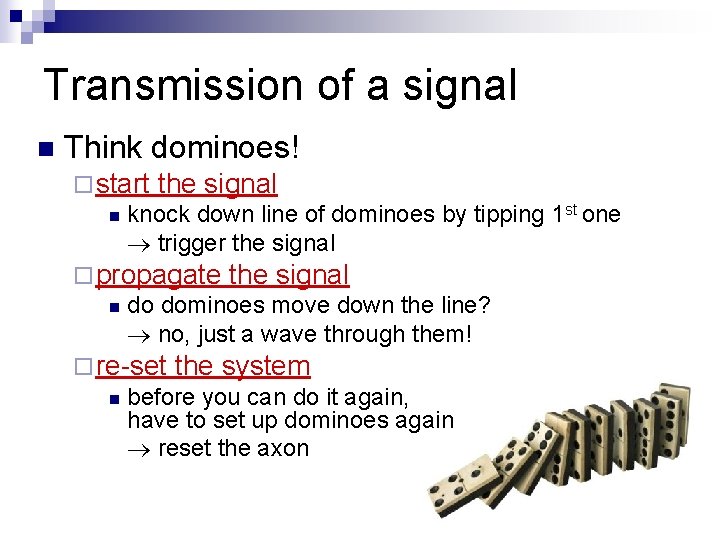
Transmission of a signal n Think dominoes! ¨ start the signal n knock down line of dominoes by tipping 1 st one trigger the signal ¨ propagate the signal n do dominoes move down the line? no, just a wave through them! ¨ re-set the system n before you can do it again, have to set up dominoes again reset the axon
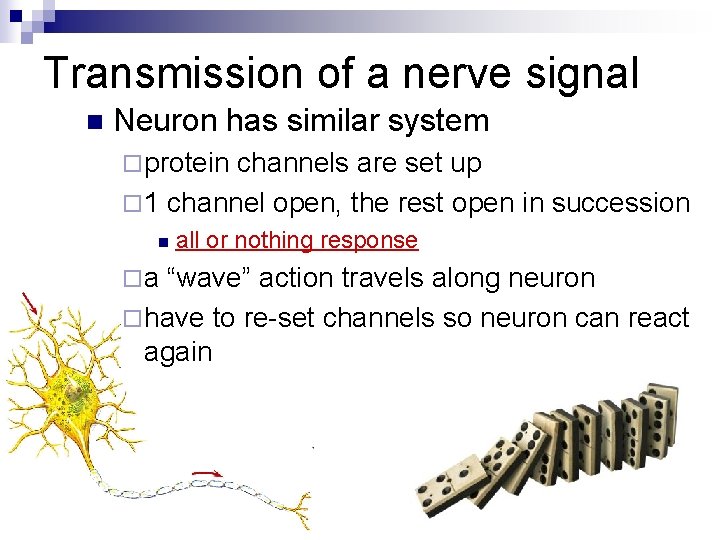
Transmission of a nerve signal n Neuron has similar system ¨ protein channels are set up ¨ 1 channel open, the rest open in succession n ¨a all or nothing response “wave” action travels along neuron ¨ have to re-set channels so neuron can react again
Simile time! (or do I mean analogy? ) n Think of an analogy for a firing neurone. What can you think of that happens in the same way every time, and needs to be reset after it has operated?
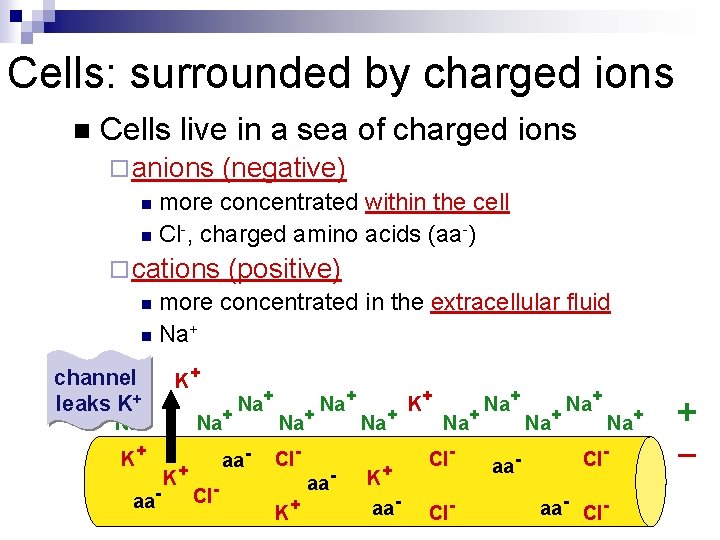
Cells: surrounded by charged ions n Cells live in a sea of charged ions ¨ anions (negative) n more concentrated within the cell n Cl-, charged amino acids (aa-) ¨ cations (positive) n more concentrated in the extracellular fluid n Na+ Na K+ aa- K+ Na+ aa. Cl- Na+ Cl. K+ Na+ aa- Na+ K+ aa- K+ Na+ Cl. Cl- Na+ aa- Na+ Na+ Claa- Cl- – K+ + channel leaks K++
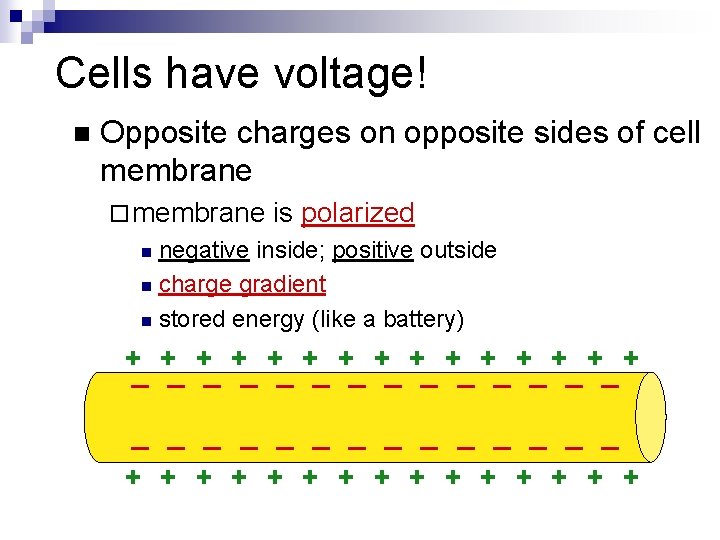
Cells have voltage! n Opposite charges on opposite sides of cell membrane ¨ membrane is polarized negative inside; positive outside n charge gradient n stored energy (like a battery) n + + + + – – – – – – – + + + +
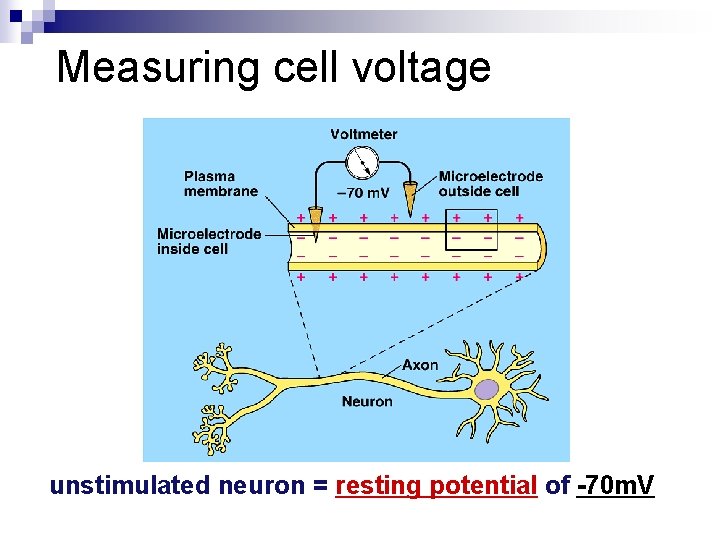
Measuring cell voltage unstimulated neuron = resting potential of -70 m. V
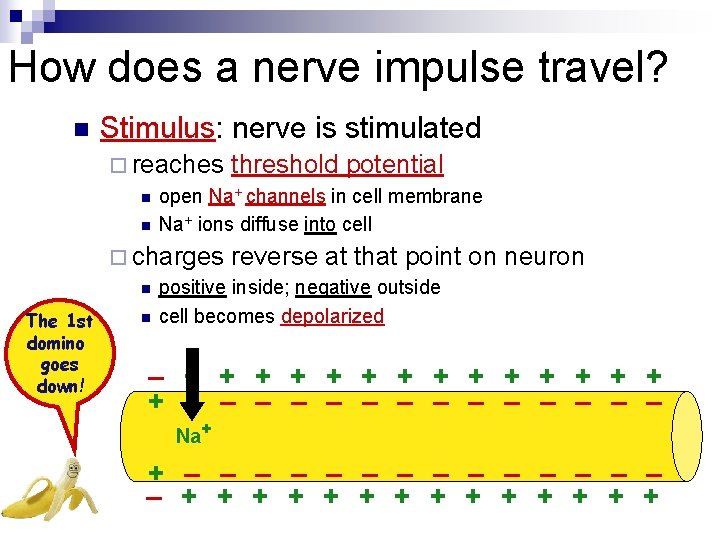
How does a nerve impulse travel? n Stimulus: nerve is stimulated ¨ reaches n n open Na+ channels in cell membrane Na+ ions diffuse into cell ¨ charges n The 1 st domino goes down! n threshold potential reverse at that point on neuron positive inside; negative outside cell becomes depolarized – + + + + – – – – Na+ + – – – – + + + +
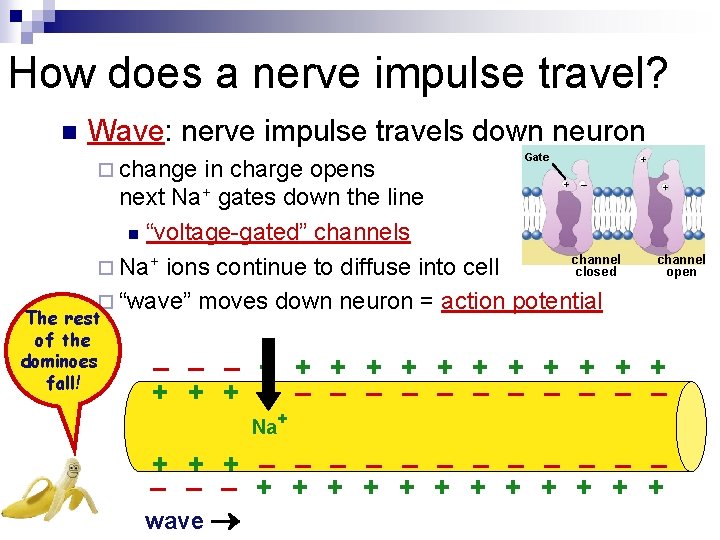
How does a nerve impulse travel? n Wave: nerve impulse travels down neuron Gate ¨ change in charge opens + – + next Na gates down the line n “voltage-gated” channels channel ¨ Na+ ions continue to diffuse into cell closed ¨ “wave” moves down neuron = action potential The rest of the dominoes fall! + + channel open – – – + + + + – – – Na+ + – – – – + + + wave
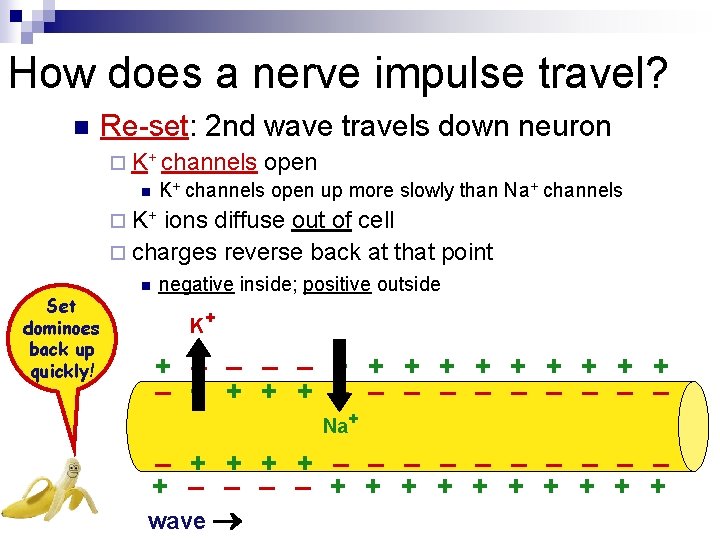
How does a nerve impulse travel? n Re-set: 2 nd wave travels down neuron ¨ K+ channels open n K+ channels open up more slowly than Na+ channels ¨ K+ ions diffuse out of cell ¨ charges reverse back at that point Set dominoes back up quickly! n negative inside; positive outside K+ + – – + + + + + – – – – – Na+ – + + – – – – – + + + + + wave
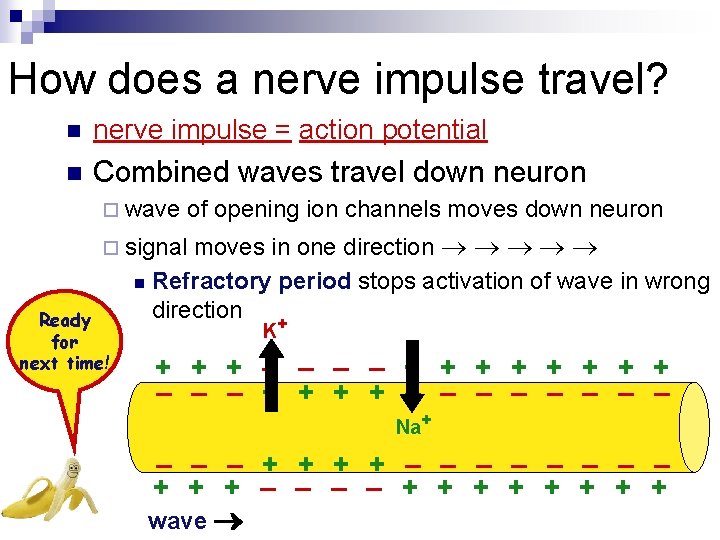
How does a nerve impulse travel? n nerve impulse = action potential n Combined waves travel down neuron ¨ wave of opening ion channels moves down neuron moves in one direction n Refractory period stops activation of wave in wrong direction + ¨ signal Ready for next time! K + + + – – + + + + – – – – Na+ – – – + + – – – – + + + + wave
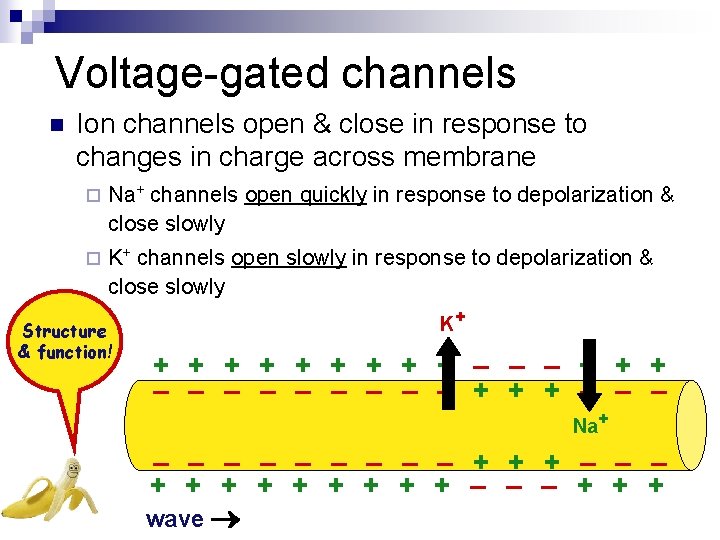
Voltage-gated channels n Ion channels open & close in response to changes in charge across membrane ¨ Na+ channels open quickly in response to depolarization & close slowly ¨ K+ channels open slowly in response to depolarization & close slowly Structure & function! K+ + + + + – – – – – + + + – – – Na+ – – – – – + + + + + – – – + + + wave
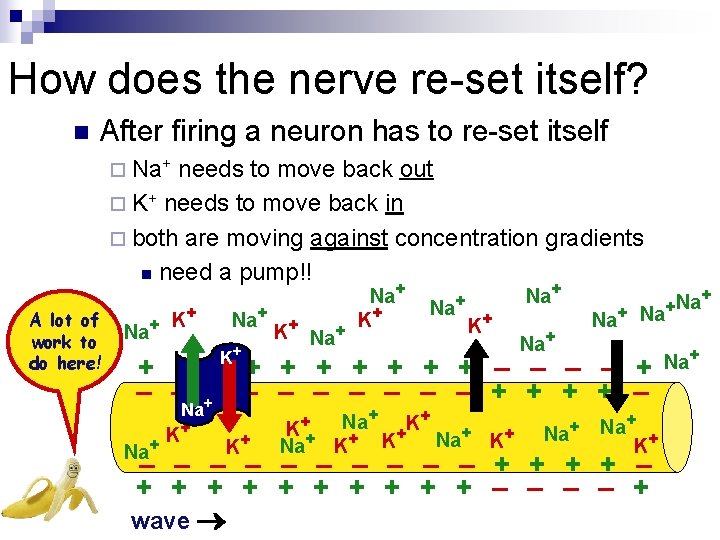
How does the nerve re-set itself? n After firing a neuron has to re-set itself ¨ Na+ needs to move back out ¨ K+ needs to move back in ¨ both are moving against concentration gradients n need a pump!! A lot of work to do here! K+ + Na Na+ + K K Na+ Na+ K+ K+ Na+ +Na + Na Na + + + + + – – +– – – – + + – Na+ Na K+ K+ + Na K K+ + + Na K K Na+ Na+ K+ – – – – – + + + + + – – + wave Na+ +
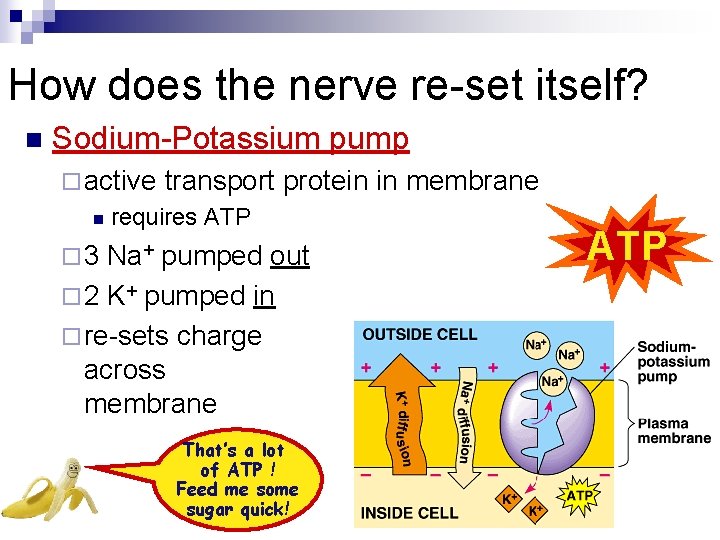
How does the nerve re-set itself? n Sodium-Potassium pump ¨ active n transport protein in membrane requires ATP ¨ 3 Na+ pumped out ¨ 2 K+ pumped in ¨ re-sets charge across membrane That’s a lot of ATP ! Feed me some sugar quick! ATP
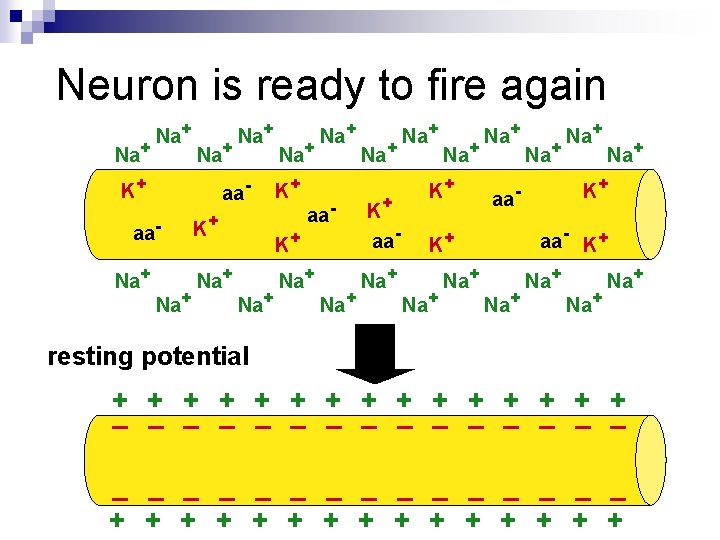
Neuron is ready to fire again Na+ Na+ K+ aa- aa. Na+ Na+ K+ Na+ aa- K+ Na+ Na+ K+ aa. Na+ Na+ Na+ K+ aa- K+ K+ Na+ Na+ resting potential + + + + – – – – – – – – + + + +
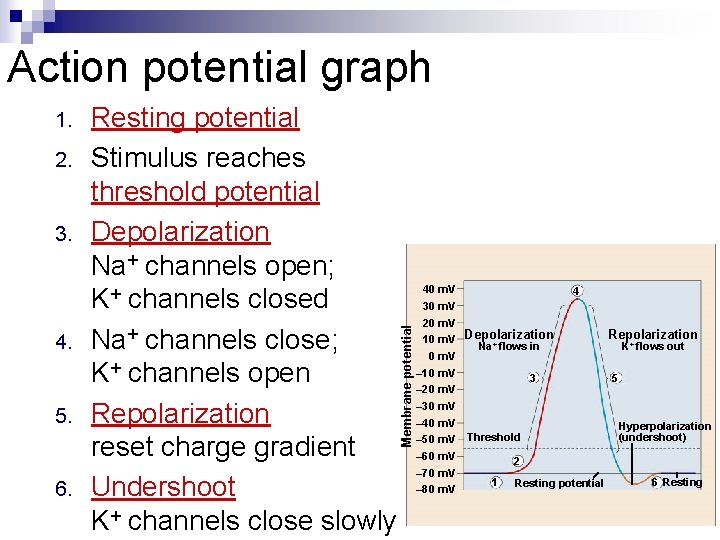
Action potential graph 2. 3. 4. 5. 6. Resting potential Stimulus reaches threshold potential Depolarization Na+ channels open; K+ channels closed Na+ channels close; K+ channels open Repolarization reset charge gradient Undershoot K+ channels close slowly 40 m. V 4 30 m. V Membrane potential 1. 20 m. V 10 m. V Depolarization Na+ flows in 0 m. V – 10 m. V 3 – 20 m. V Repolarization K+ flows out 5 – 30 m. V – 40 m. V – 50 m. V Threshold – 60 m. V 2 – 70 m. V – 80 m. V 1 Resting potential Hyperpolarization (undershoot) 6 Resting
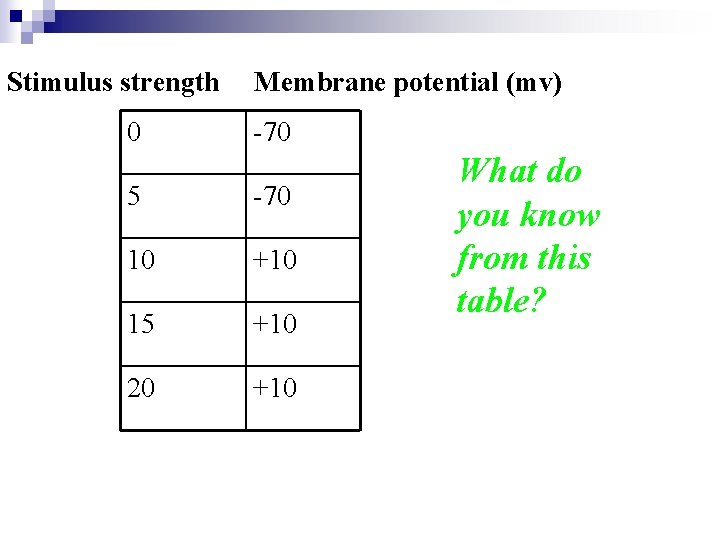
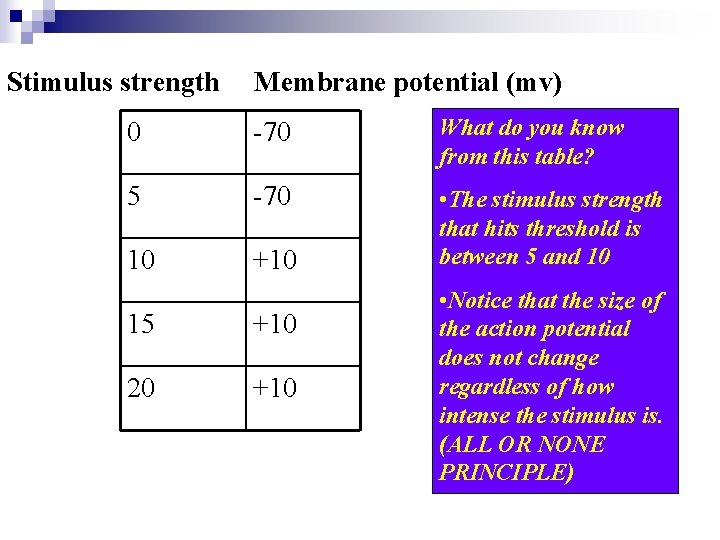
Stimulus strength 0 Membrane potential (mv) -70 5 -70 10 +10 15 +10 20 +10 What do you know from this table?
Stimulus strength Membrane potential (mv) 0 -70 What do you know from this table? 5 -70 10 +10 • The stimulus strength that hits threshold is between 5 and 10 15 +10 20 +10 • Notice that the size of the action potential does not change regardless of how intense the stimulus is. (ALL OR NONE PRINCIPLE)
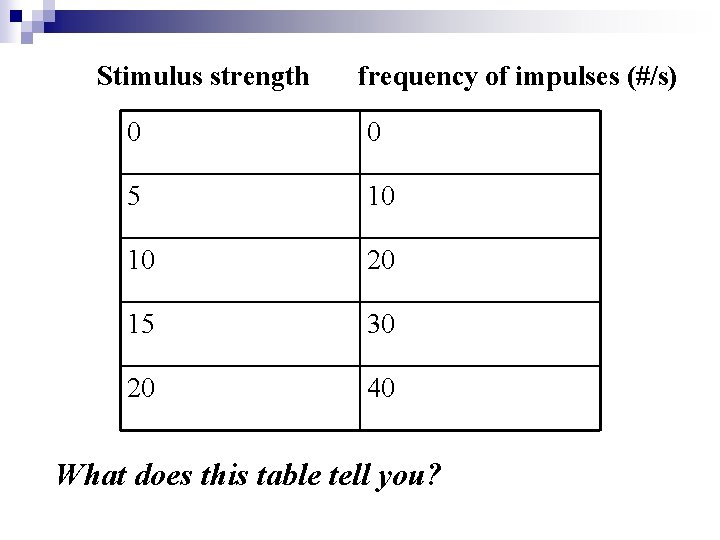
Stimulus strength frequency of impulses (#/s) 0 0 5 10 10 20 15 30 20 40 What does this table tell you?
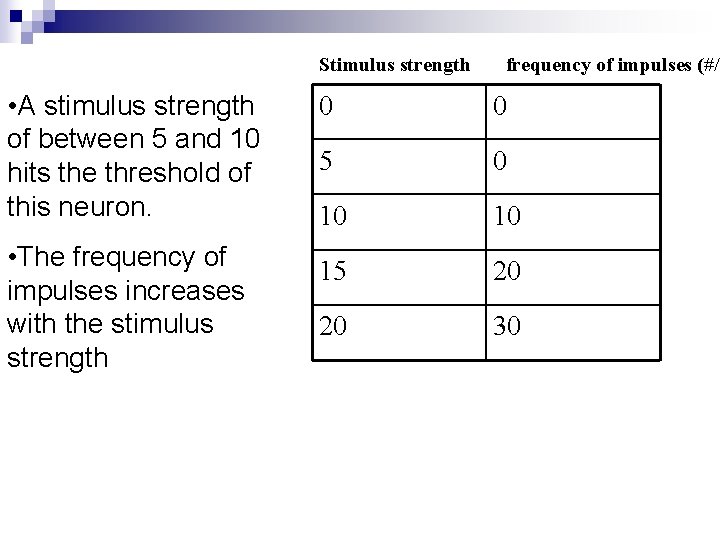
Stimulus strength • A stimulus strength of between 5 and 10 hits the threshold of this neuron. • The frequency of impulses increases with the stimulus strength frequency of impulses (#/s 0 0 5 0 10 10 15 20 20 30
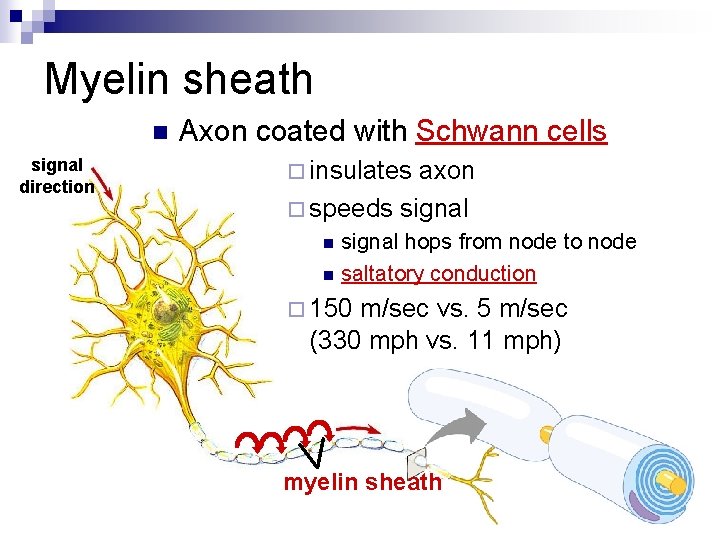
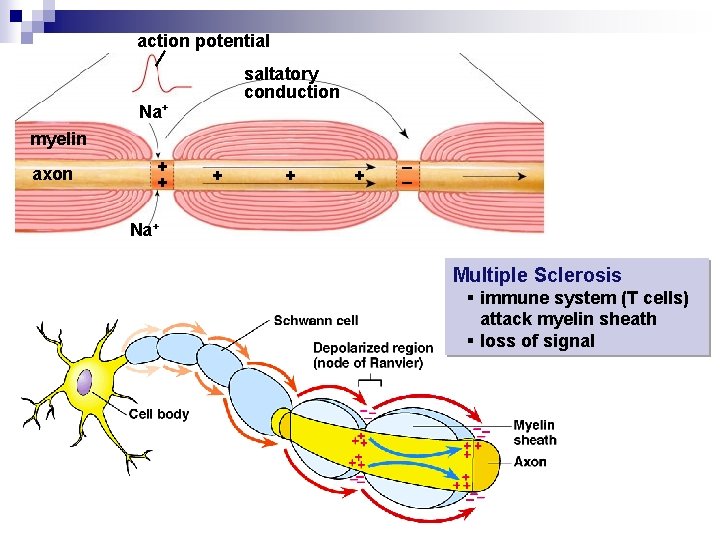
Myelin sheath n signal direction Axon coated with Schwann cells ¨ insulates axon ¨ speeds signal n n signal hops from node to node saltatory conduction ¨ 150 m/sec vs. 5 m/sec (330 mph vs. 11 mph) myelin sheath
action potential saltatory conduction Na+ myelin axon + + + – – Na+ Multiple Sclerosis § immune system (T cells) attack myelin sheath § loss of signal
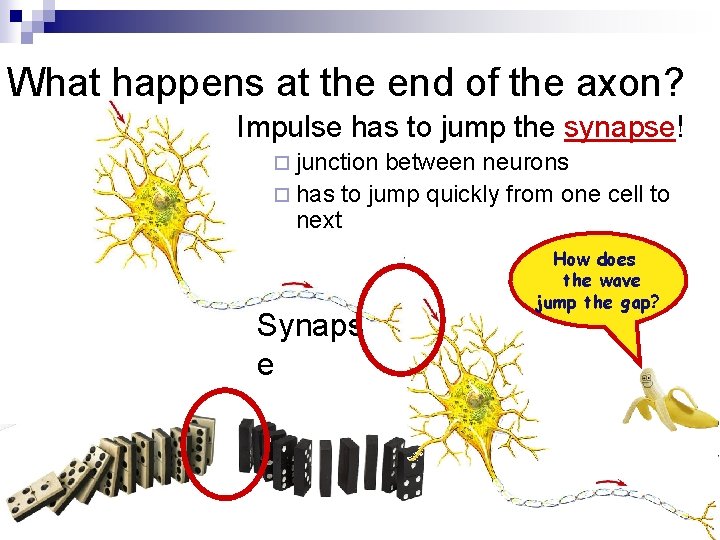
What happens at the end of the axon? Impulse has to jump the synapse! ¨ junction between neurons ¨ has to jump quickly from one cell to next Synaps e How does the wave jump the gap?
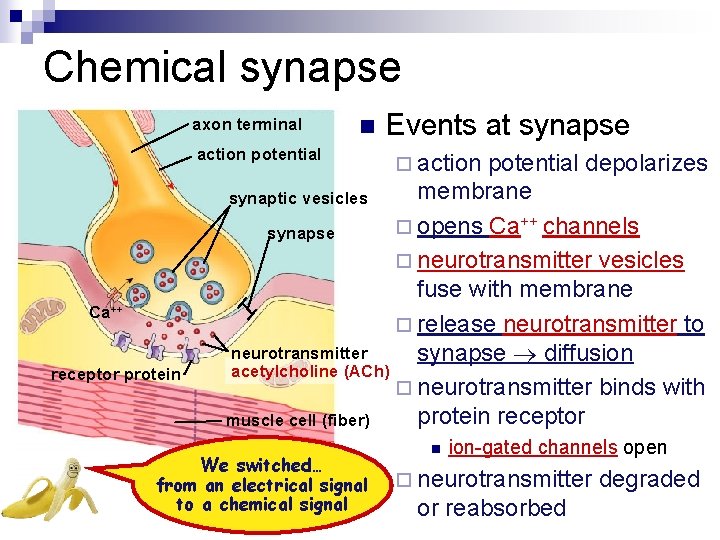
Chemical synapse axon terminal n action potential Ca++ receptor protein Events at synapse potential depolarizes membrane synaptic vesicles ¨ opens Ca++ channels synapse ¨ neurotransmitter vesicles fuse with membrane ¨ release neurotransmitter to neurotransmitter synapse diffusion acetylcholine (ACh) ¨ neurotransmitter binds with protein receptor muscle cell (fiber) We switched… from an electrical signal to a chemical signal ¨ action n ion-gated channels open ¨ neurotransmitter or reabsorbed degraded
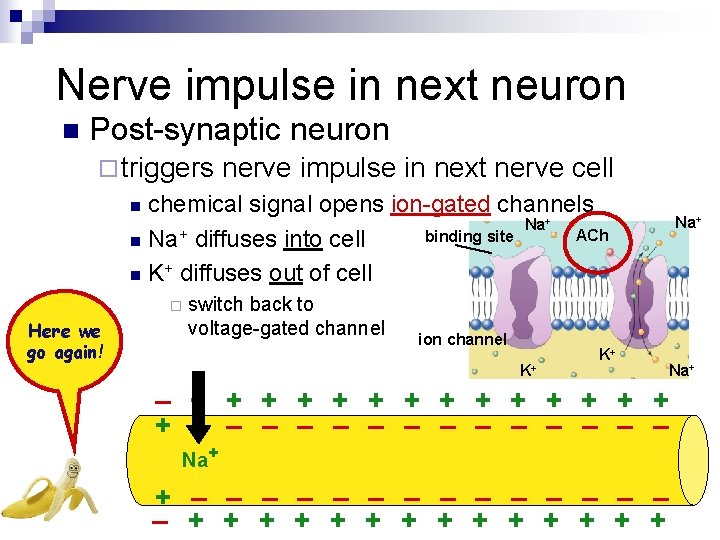
Nerve impulse in next neuron n Post-synaptic neuron ¨ triggers nerve impulse in next nerve cell chemical signal opens ion-gated channels Na+ + ACh binding site n Na diffuses into cell n K+ diffuses out of cell n ¨ Here we go again! switch back to voltage-gated channel ion channel K+ K+ K+ Na+ – + + + + – – – – Na+ + – – – – + + + +
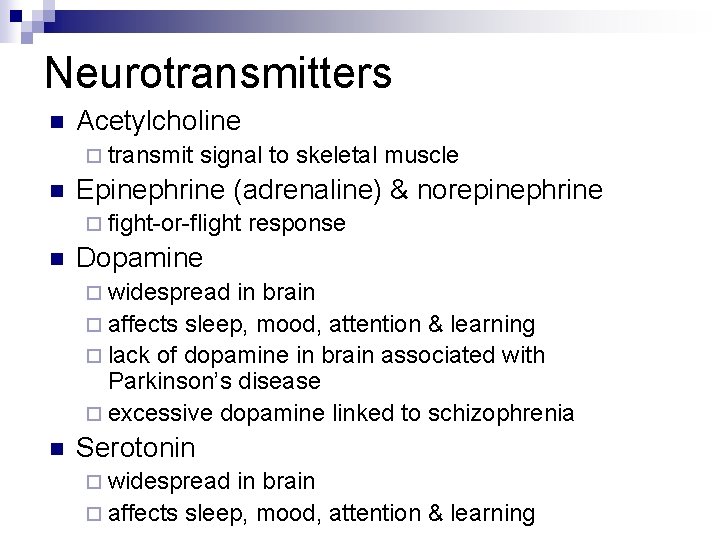
Neurotransmitters n Acetylcholine ¨ transmit n signal to skeletal muscle Epinephrine (adrenaline) & norepinephrine ¨ fight-or-flight n response Dopamine ¨ widespread in brain ¨ affects sleep, mood, attention & learning ¨ lack of dopamine in brain associated with Parkinson’s disease ¨ excessive dopamine linked to schizophrenia n Serotonin ¨ widespread in brain ¨ affects sleep, mood, attention & learning
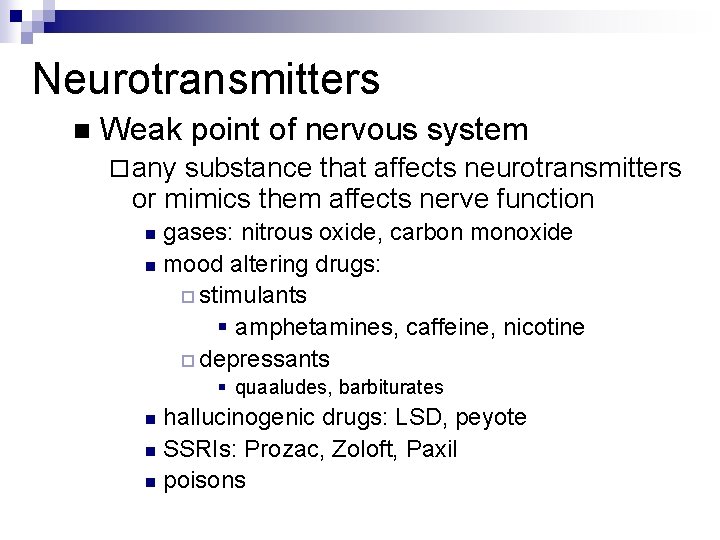
Neurotransmitters n Weak point of nervous system ¨ any substance that affects neurotransmitters or mimics them affects nerve function gases: nitrous oxide, carbon monoxide n mood altering drugs: ¨ stimulants § amphetamines, caffeine, nicotine ¨ depressants n § quaaludes, barbiturates hallucinogenic drugs: LSD, peyote n SSRIs: Prozac, Zoloft, Paxil n poisons n
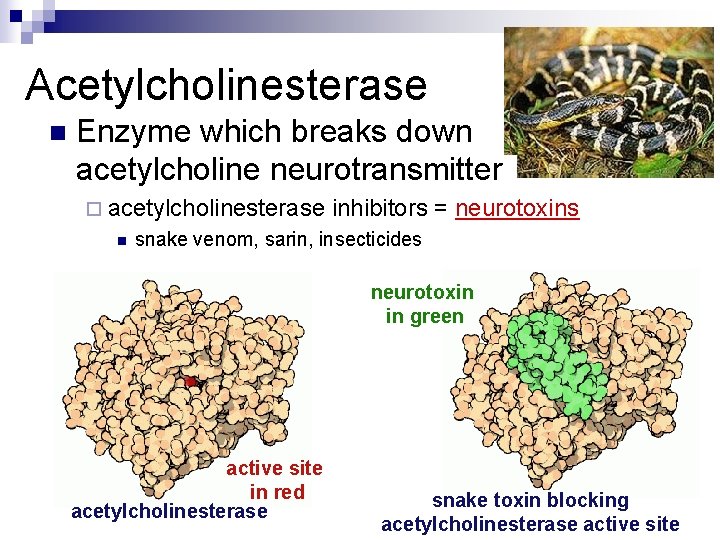
Acetylcholinesterase n Enzyme which breaks down acetylcholine neurotransmitter ¨ acetylcholinesterase n inhibitors = neurotoxins snake venom, sarin, insecticides neurotoxin in green active site in red acetylcholinesterase snake toxin blocking acetylcholinesterase active site
Ponder this… Any Questions? ?
Remember as many of the following words as possible…. n read, pages, letters, school, study, reading, stories, sheets, cover, pencil, magazine, paper, words
How many of these words were on the first list? n house, pencil, apple, shoe, book, flag, rock, train, ocean, hill, music, water, glass, school
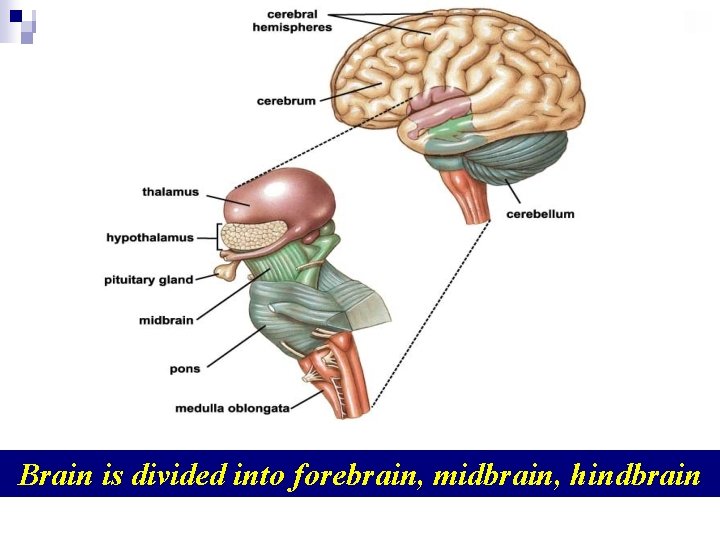
Brain is divided into forebrain, midbrain, hindbrain
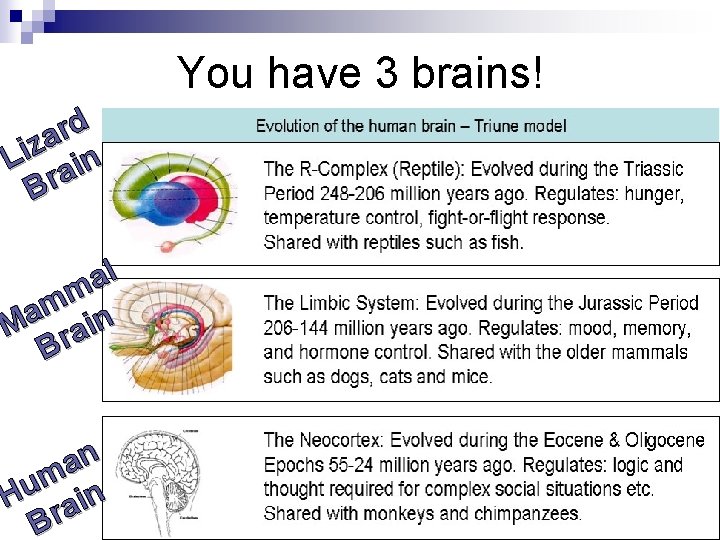
You have 3 brains! d r a z i L ain Br l a m m n a M rai B n a m u H ain Br
Midbrain and Hindbrain (Pons, medulla oblongota, cerebullum) Body’s housekeeping…. homeostasis n Breathing, heart rate, sleeping, waking, etc. n
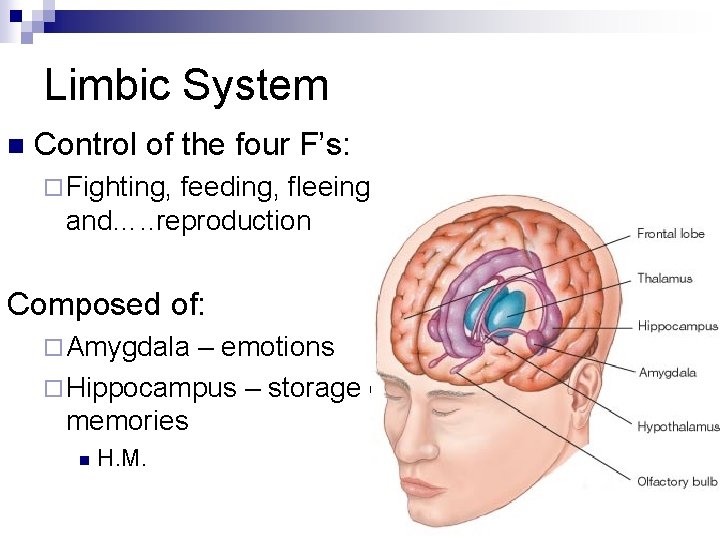
Limbic System n Control of the four F’s: ¨ Fighting, feeding, fleeing and…. . reproduction Composed of: ¨ Amygdala – emotions ¨ Hippocampus – storage of memories n H. M.
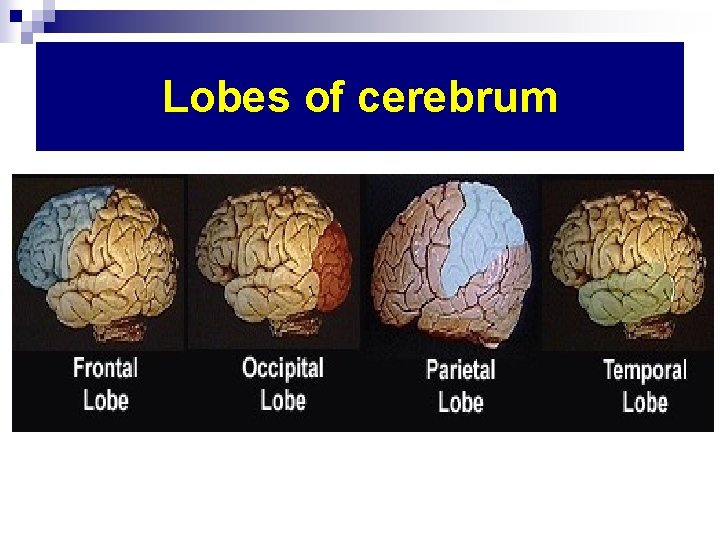
Lobes of cerebrum
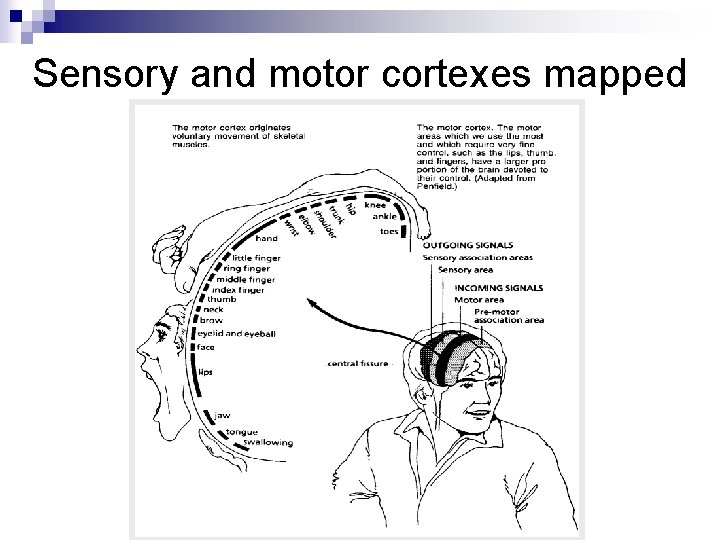
Sensory and motor cortexes mapped
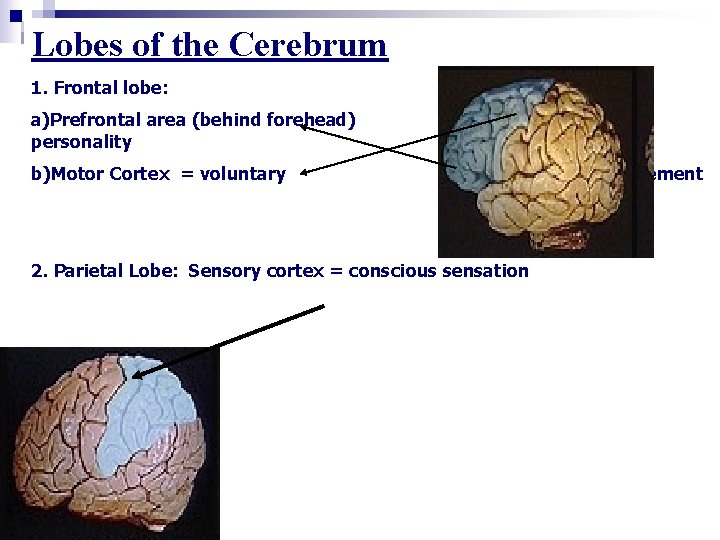
Lobes of the Cerebrum 1. Frontal lobe: a)Prefrontal area (behind forehead) personality = b)Motor Cortex = voluntary movement 2. Parietal Lobe: Sensory cortex = conscious sensation
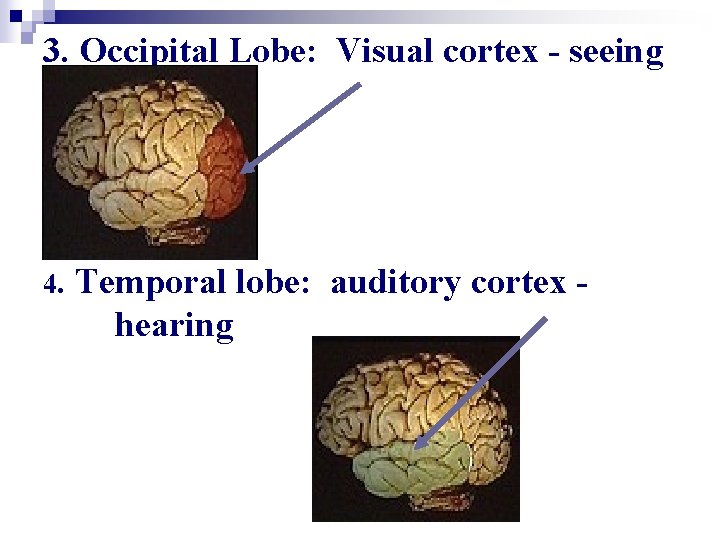
3. Occipital Lobe: Visual cortex - seeing 4. Temporal lobe: auditory cortex hearing
Song time… n http: //www. youtube. com/watch? v=Li 5 n. Ms Xg 1 Lk
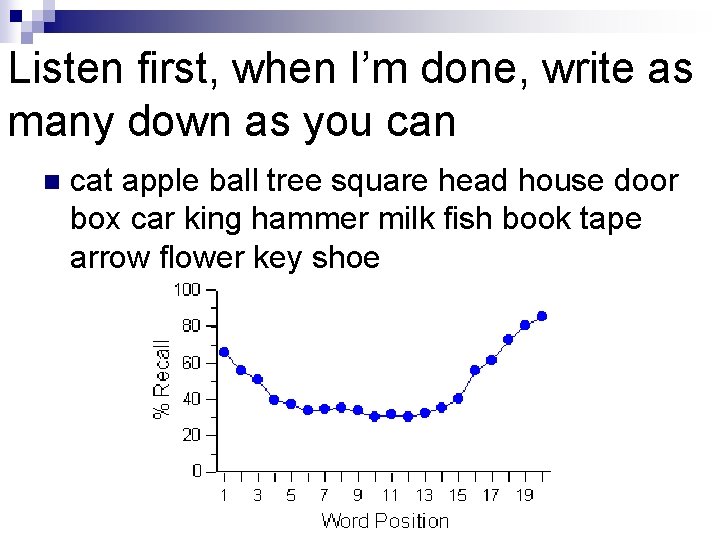
Listen first, when I’m done, write as many down as you can n cat apple ball tree square head house door box car king hammer milk fish book tape arrow flower key shoe
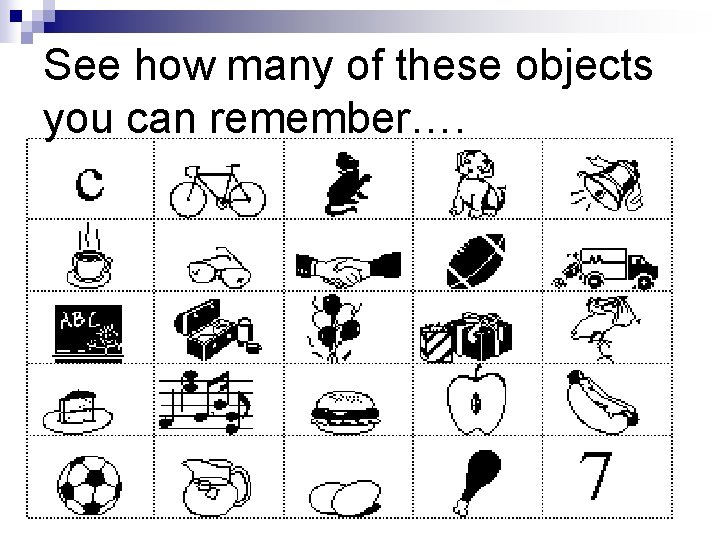
See how many of these objects you can remember….
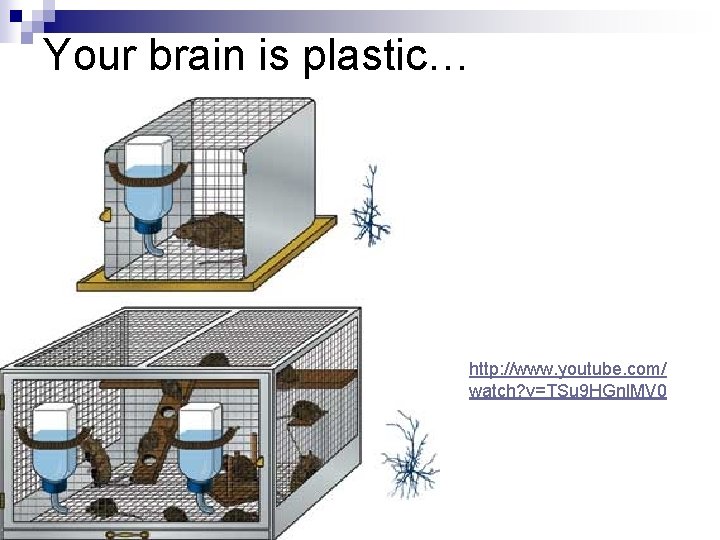
Your brain is plastic… http: //www. youtube. com/ watch? v=TSu 9 HGnl. MV 0