
Nervous System The Nerve Cell What is the
- Slides: 21
Nervous System The Nerve Cell
What is the nervous system? What are impulses? • The nervous system is a network of nerve cells that carry messages called impulses.
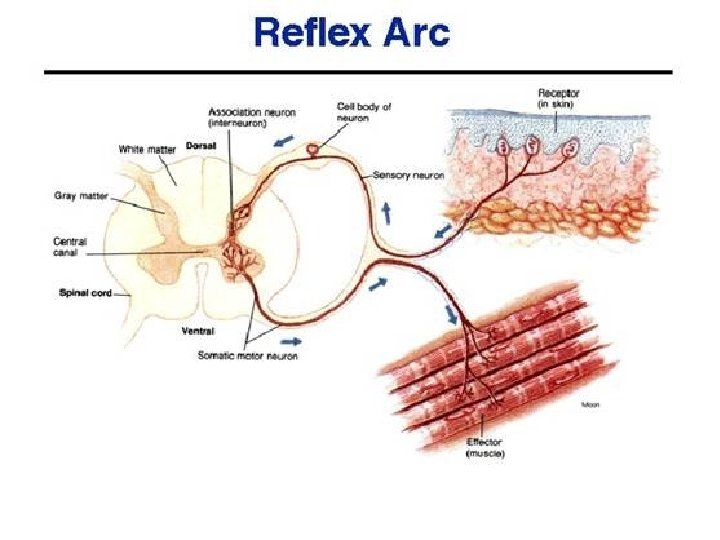
Receptor • Receptor – the specialized structures sensitive to certain types of stimuli • An example of a receptor is a sense organ
Effector • Effector – responds to a stimulus • An example of an effector is a muscle or a gland
Stimulus • Stimulus – is anything that causes a receptor to start impulses in a nerve pathway • Examples: • Heat • Cold • Pain • Pressure
What are nerves? • Nerves – are bundles of axons or dendrites bound together by connective tissue
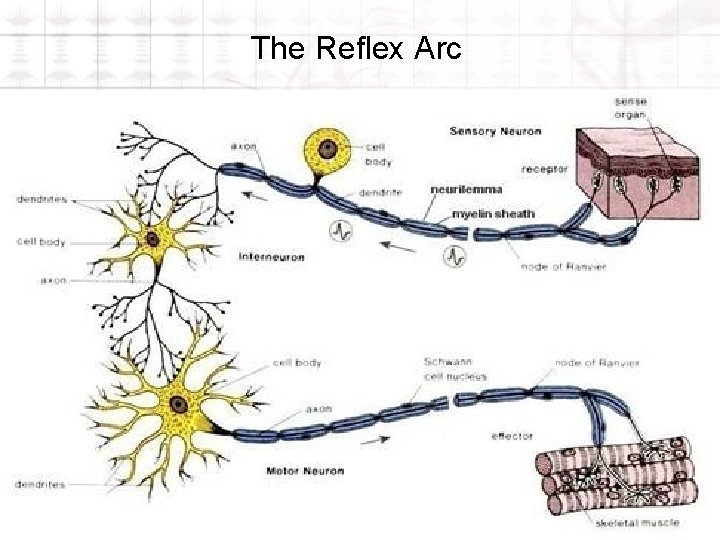
Sensory neurons • Sensory neurons – carry impulses from receptors to the spinal cord and brain
Motor neurons • Motor neurons – carry impulses from the brain and spinal cord to effectors
Interneurons • Interneurons – relay impulses from one neuron to another in the brain and spinal cord
The Reflex Arc • Receptor (sense organ) • Sensory neuron • Interneuron • Motor neuron • Effector (muscle)
The Reflex Arc
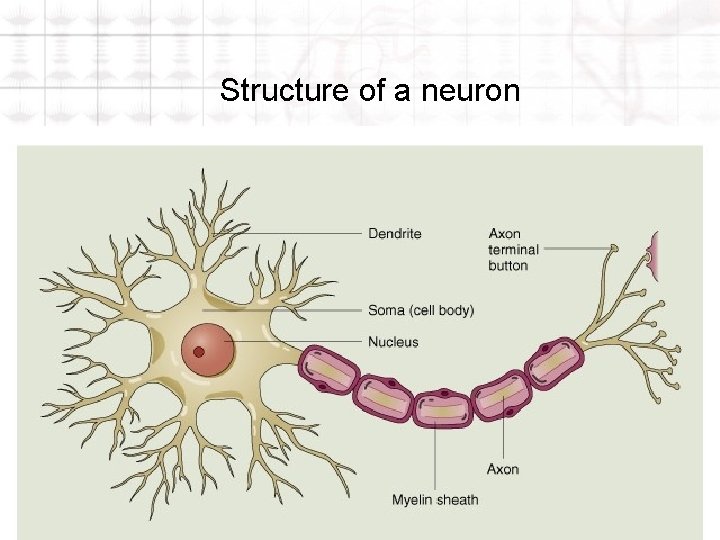
Structure of a neuron
Neuron • Neuron – is a nerve cell
Cell Body • Cell Body – contains the nucleus and cell organelles
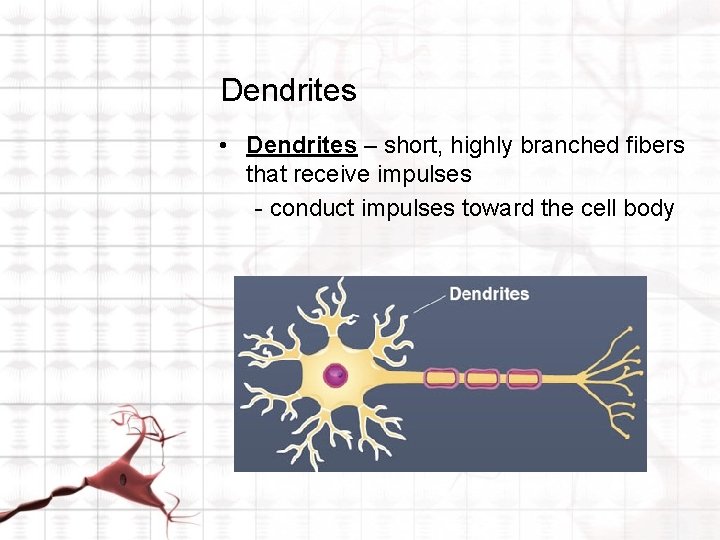
Dendrites • Dendrites – short, highly branched fibers that receive impulses - conduct impulses toward the cell body
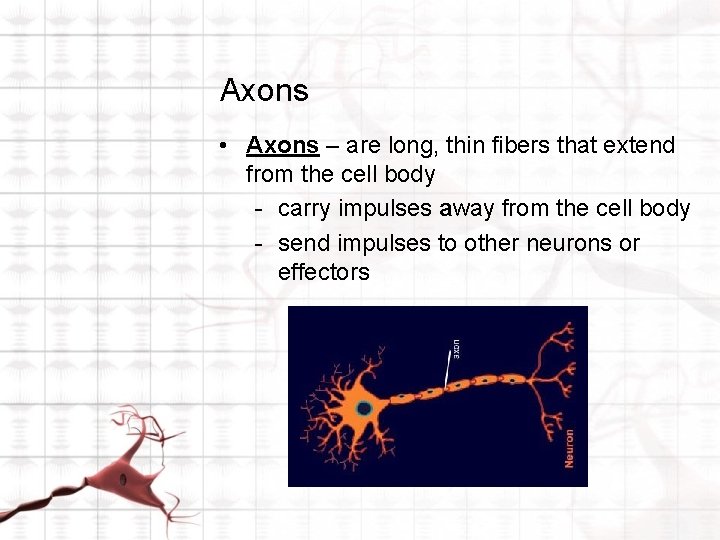
Axons • Axons – are long, thin fibers that extend from the cell body - carry impulses away from the cell body - send impulses to other neurons or effectors
Schwann cells • Schwann cells – surround the axon
Myelin • Myelin – is the fatty substance that covers the axon
Nodes of Ranvier • Nodes of Ranvier – are the gaps between Schwann cells where there is no myelin
Synapse • Synapse – is the region where nerve impulses pass from one neuron to another