
Nervous System The master controlling and communicating system
- Slides: 21
Nervous System § The master controlling and communicating system of the body § Functions § Sensory input – monitoring stimuli occurring inside and outside the body § Integration – interpretation of sensory input § Motor output – response to stimuli by activating effector organs Copyright © 2004 Pearson Education, Inc. , publishing as Benjamin Cummings
Histology of Nerve Tissue § The two principal cell types of the nervous system are: § Neurons – § excitable cells that transmit electrical signals § functional units of the nervous system § Neuroglia – supporting cells that surround and wrap neurons Copyright © 2004 Pearson Education, Inc. , publishing as Benjamin Cummings
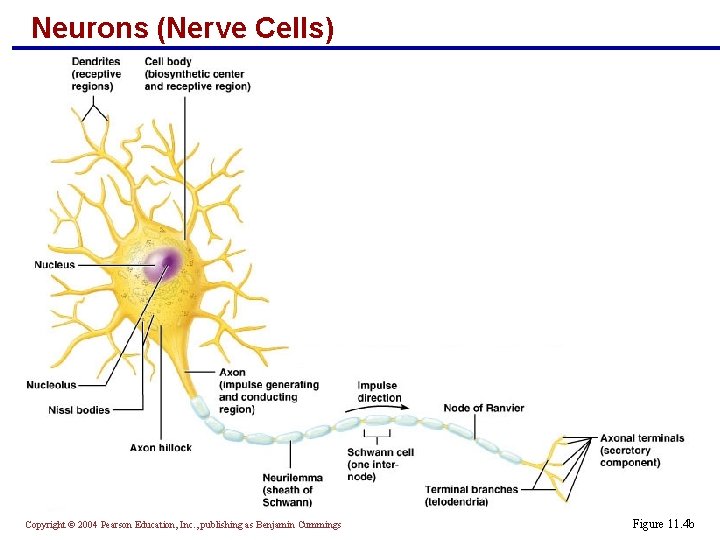
Neurons (Nerve Cells) § Composed of: § Cell body: Nucleus, Nissl bodies, Neurofibrils § Dendrites – receive signal § Axon – produce action potential & transmit signals § Axonal terminals contain neurotransmitter § Axon may have myelin sheath Copyright © 2004 Pearson Education, Inc. , publishing as Benjamin Cummings
Neurons (Nerve Cells) Copyright © 2004 Pearson Education, Inc. , publishing as Benjamin Cummings Figure 11. 4 b
Myelin Sheath § Whitish, fatty (protein-lipoid), segmented sheath around most long axons § It functions to: § Protect the axon § Electrically insulate fibers from one another § Increase the speed of nerve impulse transmission Copyright © 2004 Pearson Education, Inc. , publishing as Benjamin Cummings
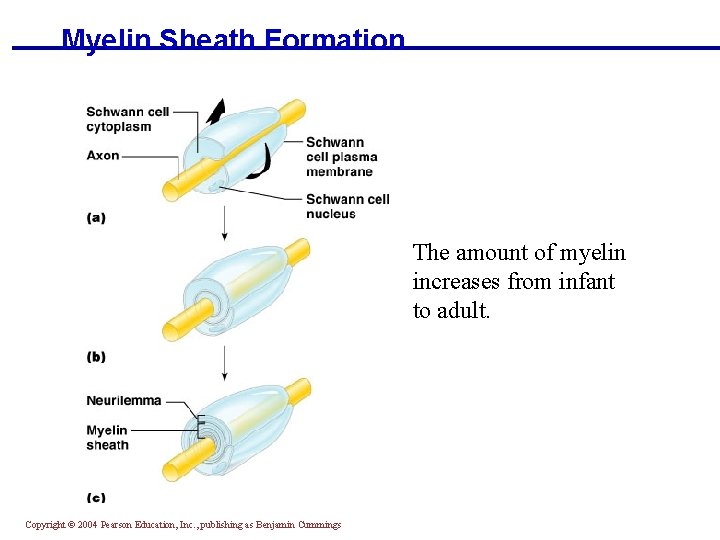
Myelin Sheath Formation The amount of myelin increases from infant to adult. Copyright © 2004 Pearson Education, Inc. , publishing as Benjamin Cummings
Neuron Classification: Functional Sensory (afferent) neuron — transmit impulses toward the CNS Motor (efferent) neuron — carry impulses away from the CNS Interneurons (association neurons) — shuttle signals through CNS pathways Copyright © 2004 Pearson Education, Inc. , publishing as Benjamin Cummings
Organization of the Nervous System § Central nervous system (CNS) § Integration and command center § Peripheral nervous system (PNS) § Sensory: carries messages to CNS § Motor: carries messages from CNS § If to skeletal muscles: Somatic N. S. § If to smooth muscles, cardiac muscle, or glands: Autonomic N. S. Copyright © 2004 Pearson Education, Inc. , publishing as Benjamin Cummings
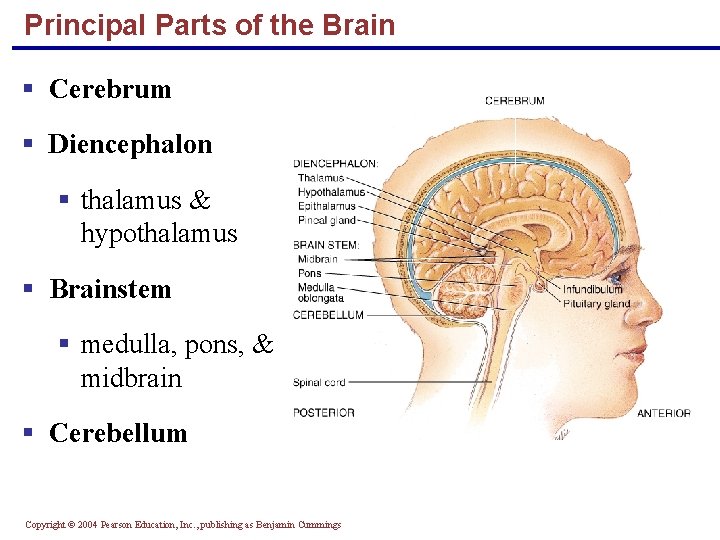
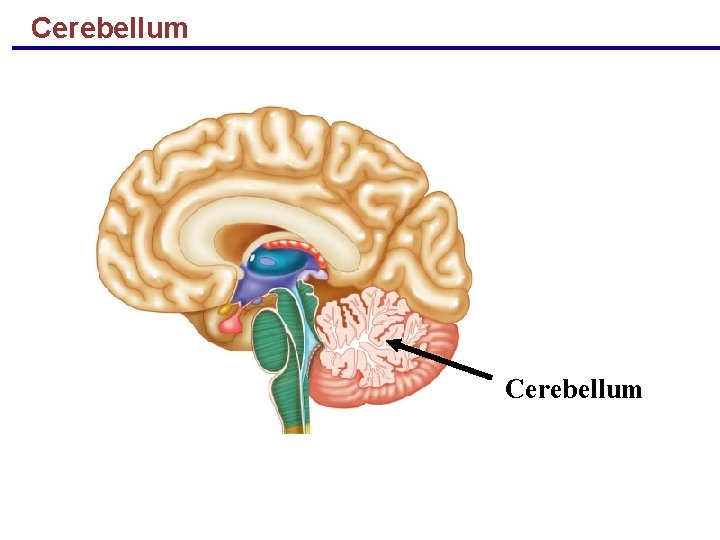
Principal Parts of the Brain § Cerebrum § Diencephalon § thalamus & hypothalamus § Brainstem § medulla, pons, & midbrain § Cerebellum Copyright © 2004 Pearson Education, Inc. , publishing as Benjamin Cummings
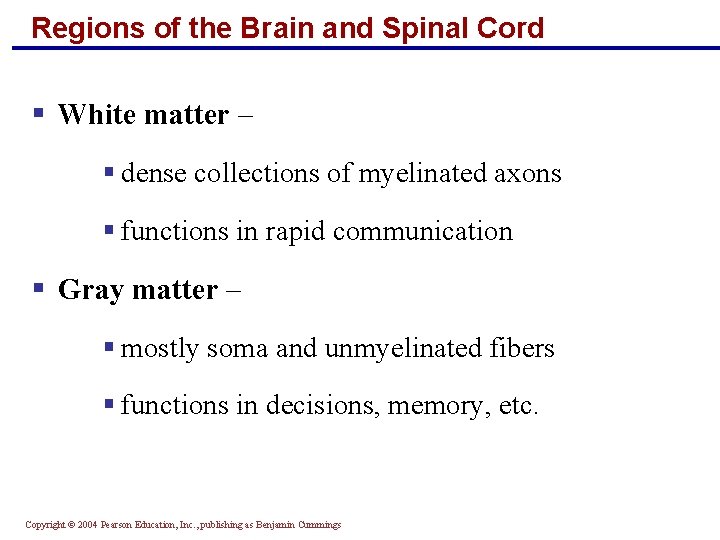
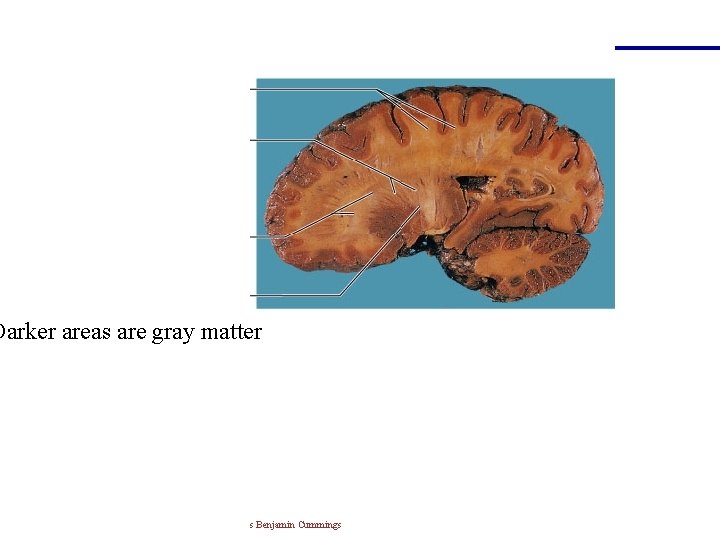
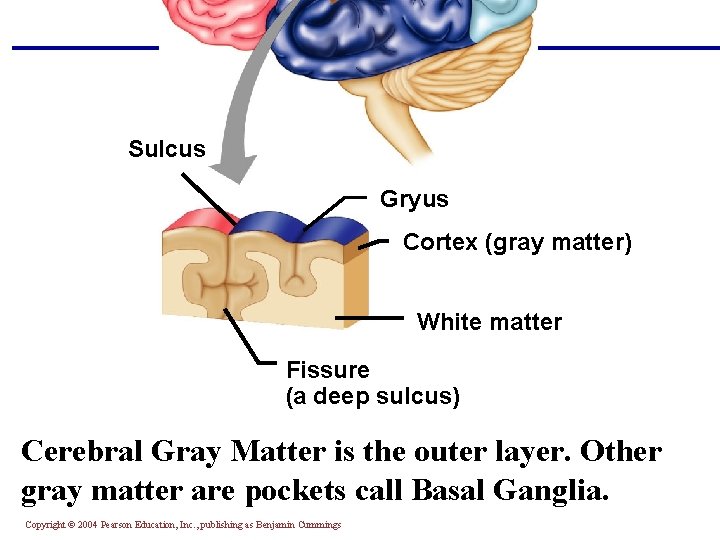
Regions of the Brain and Spinal Cord § White matter – § dense collections of myelinated axons § functions in rapid communication § Gray matter – § mostly soma and unmyelinated fibers § functions in decisions, memory, etc. Copyright © 2004 Pearson Education, Inc. , publishing as Benjamin Cummings
Darker areas are gray matter Copyright © 2004 Pearson Education, Inc. , publishing as Benjamin Cummings
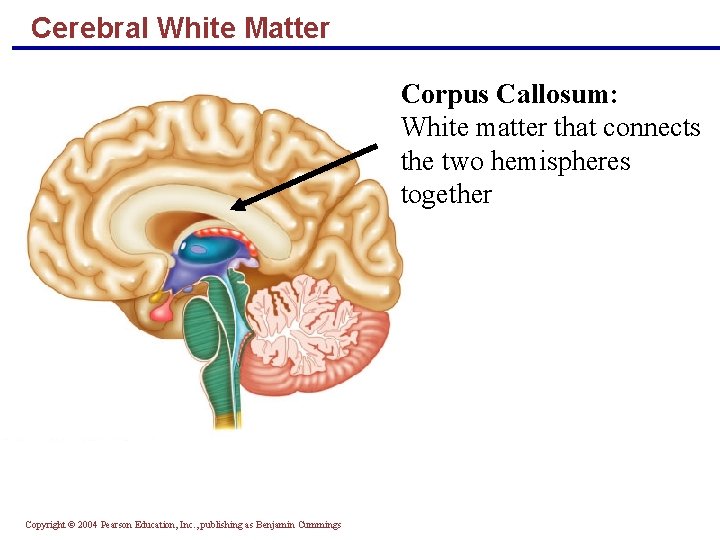
Cerebral White Matter Corpus Callosum: White matter that connects the two hemispheres together Copyright © 2004 Pearson Education, Inc. , publishing as Benjamin Cummings
Sulcus Gryus Cortex (gray matter) White matter Fissure (a deep sulcus) Cerebral Gray Matter is the outer layer. Other gray matter are pockets call Basal Ganglia. Copyright © 2004 Pearson Education, Inc. , publishing as Benjamin Cummings
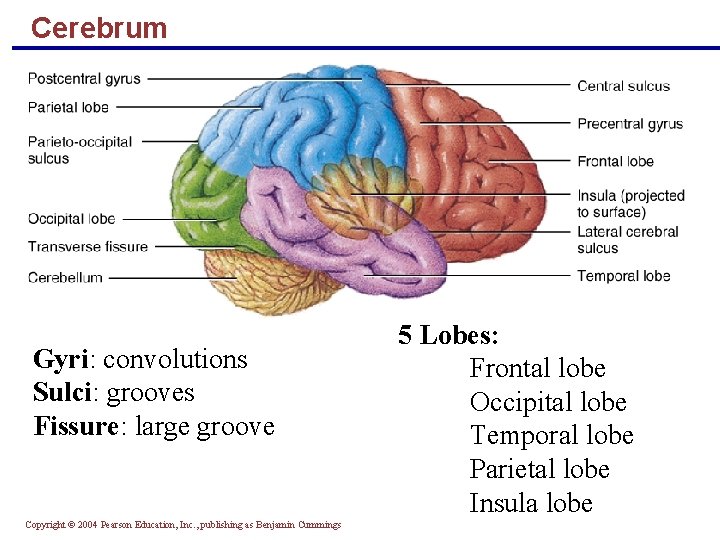
Cerebrum Gyri: convolutions Sulci: grooves Fissure: large groove Copyright © 2004 Pearson Education, Inc. , publishing as Benjamin Cummings 5 Lobes: Frontal lobe Occipital lobe Temporal lobe Parietal lobe Insula lobe
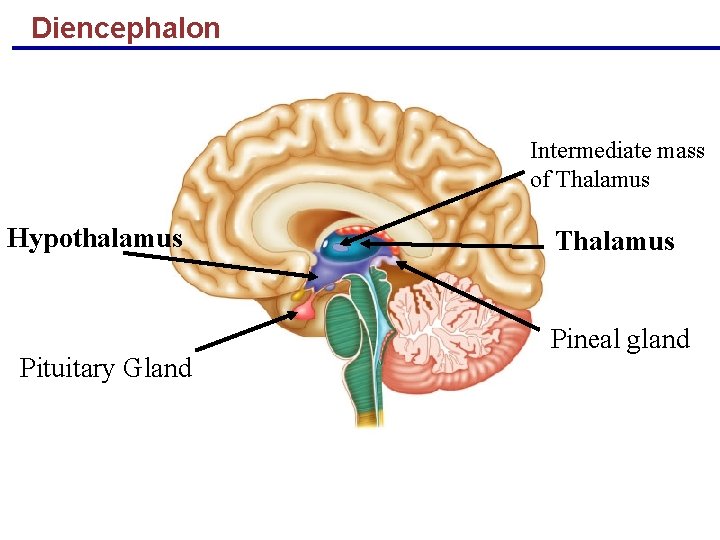
Diencephalon Intermediate mass of Thalamus Hypothalamus Pituitary Gland Copyright © 2004 Pearson Education, Inc. , publishing as Benjamin Cummings Thalamus Pineal gland
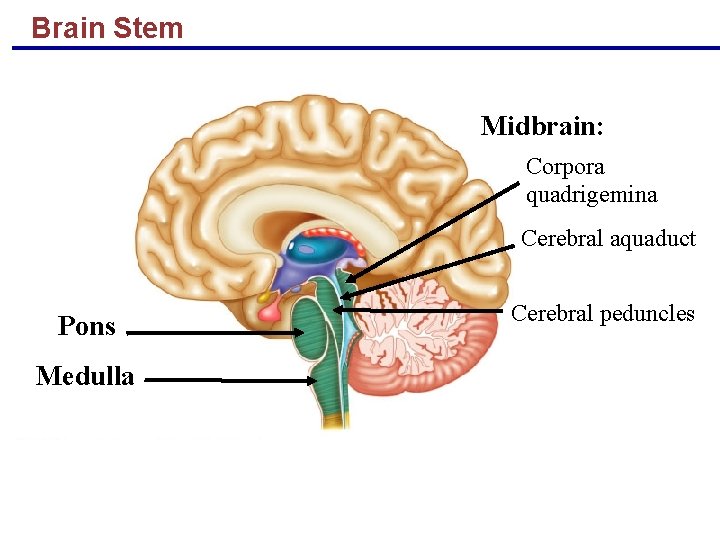
Brain Stem Midbrain: Corpora quadrigemina Cerebral aquaduct Pons Medulla Copyright © 2004 Pearson Education, Inc. , publishing as Benjamin Cummings Cerebral peduncles
Cerebellum Copyright © 2004 Pearson Education, Inc. , publishing as Benjamin Cummings
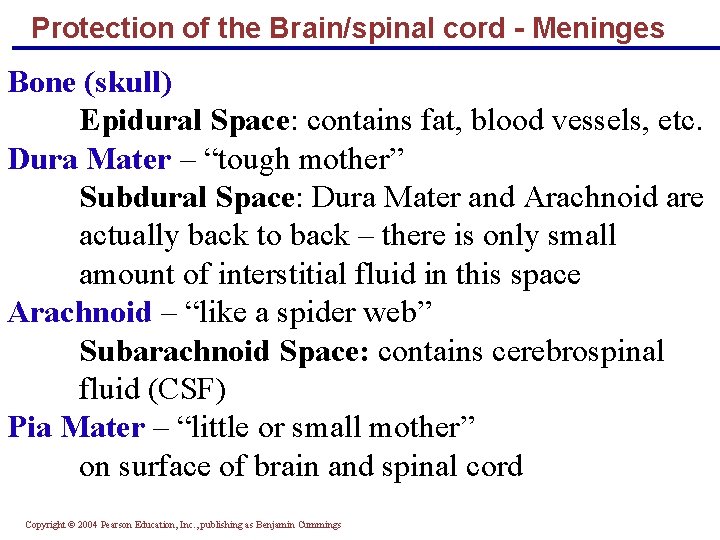
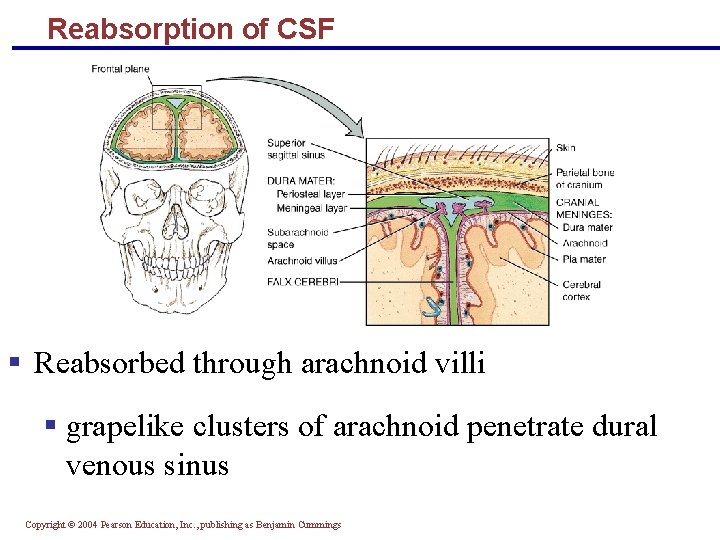
Protection of the Brain/spinal cord - Meninges Bone (skull) Epidural Space: contains fat, blood vessels, etc. Dura Mater – “tough mother” Subdural Space: Dura Mater and Arachnoid are actually back to back – there is only small amount of interstitial fluid in this space Arachnoid – “like a spider web” Subarachnoid Space: contains cerebrospinal fluid (CSF) Pia Mater – “little or small mother” on surface of brain and spinal cord Copyright © 2004 Pearson Education, Inc. , publishing as Benjamin Cummings
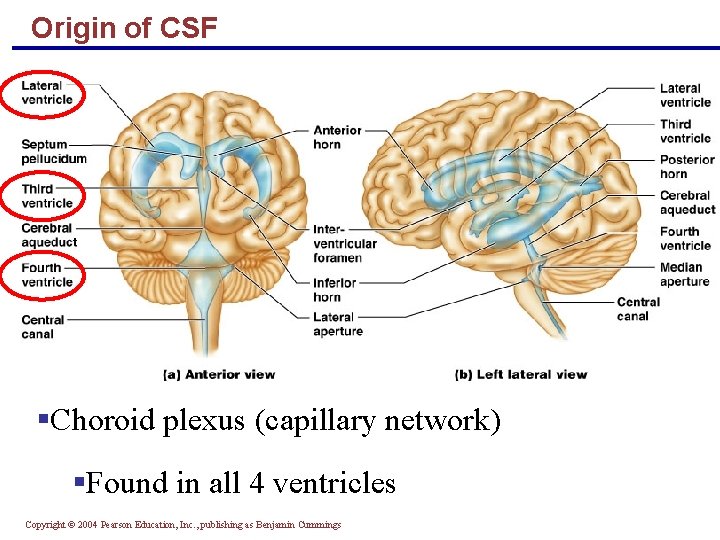
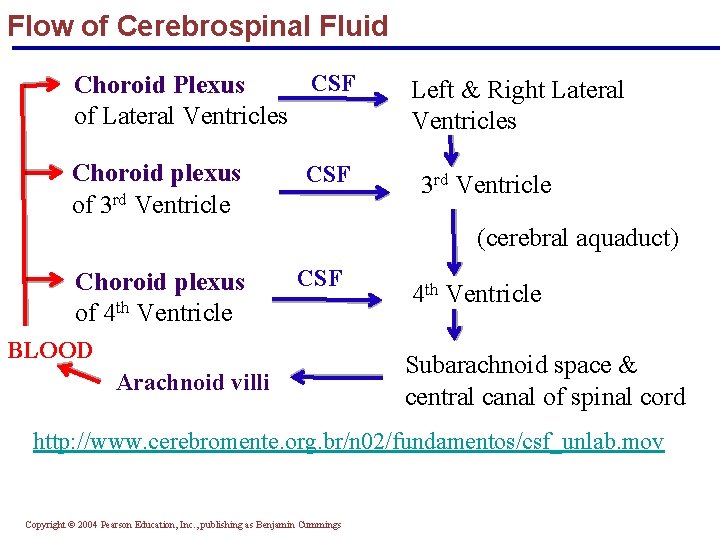
Origin of CSF §Choroid plexus (capillary network) §Found in all 4 ventricles Copyright © 2004 Pearson Education, Inc. , publishing as Benjamin Cummings
Reabsorption of CSF § Reabsorbed through arachnoid villi § grapelike clusters of arachnoid penetrate dural venous sinus Copyright © 2004 Pearson Education, Inc. , publishing as Benjamin Cummings
Flow of Cerebrospinal Fluid CSF Choroid Plexus of Lateral Ventricles Choroid plexus of 3 rd Ventricle CSF Left & Right Lateral Ventricles 3 rd Ventricle (cerebral aquaduct) Choroid plexus of 4 th Ventricle CSF BLOOD Arachnoid villi 4 th Ventricle Subarachnoid space & central canal of spinal cord http: //www. cerebromente. org. br/n 02/fundamentos/csf_unlab. mov Copyright © 2004 Pearson Education, Inc. , publishing as Benjamin Cummings