
Nervous System THE BRAIN Reading Chapter 9 1
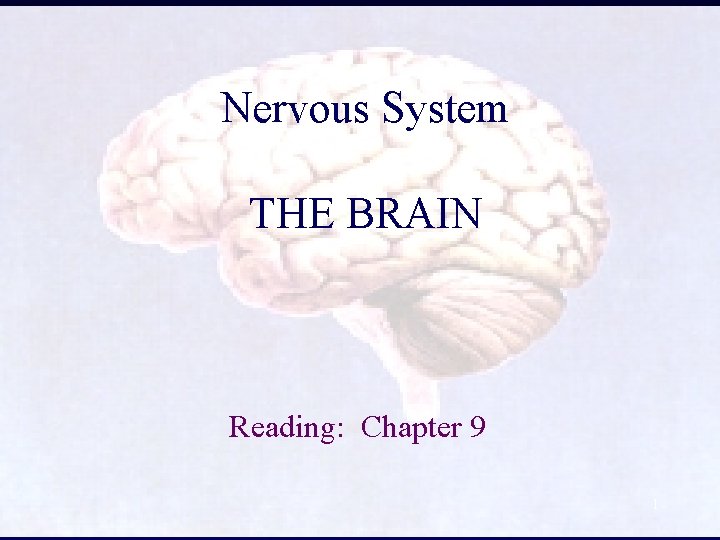
Nervous System THE BRAIN Reading: Chapter 9 1
1. Basic Structure Gray matter = nerve cell bodies White matter = myelinated axons Ganglion = -a bundle of cell bodies (usually out of CNS) Ex: -dorsal root ganglion -autonomic ganglia -basal ganglia (in the brain) 2
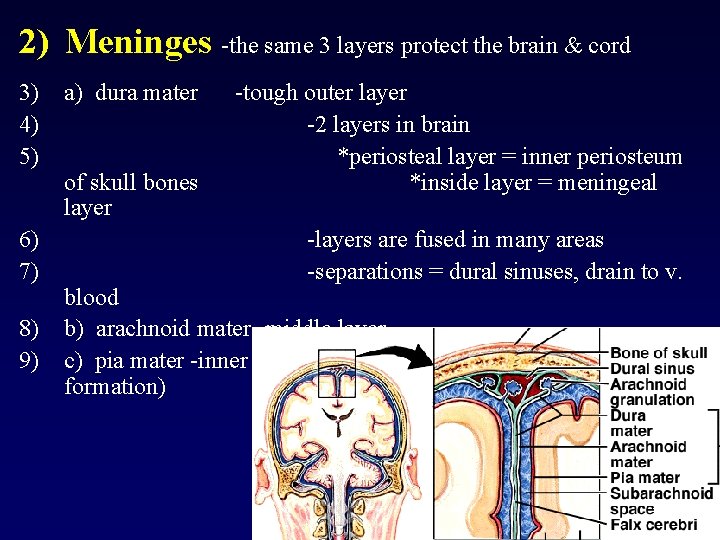
2) Meninges -the same 3 layers protect the brain & cord 3) a) dura mater -tough outer layer 4) -2 layers in brain 5) *periosteal layer = inner periosteum of skull bones *inside layer = meningeal layer 6) -layers are fused in many areas 7) -separations = dural sinuses, drain to v. blood 8) b) arachnoid mater -middle layer 9) c) pia mater -inner layer, forms choroid plexuses (CSF formation) 3
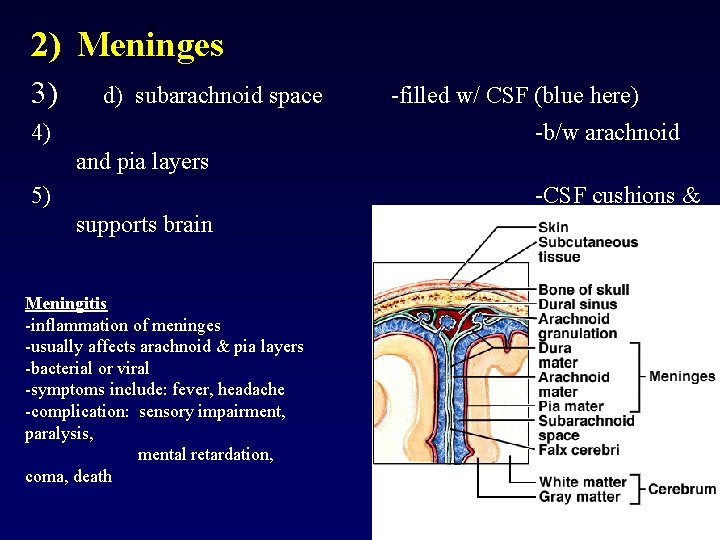
2) Meninges 3) d) subarachnoid space 4) -filled w/ CSF (blue here) -b/w arachnoid and pia layers 5) -CSF cushions & supports brain Meningitis -inflammation of meninges -usually affects arachnoid & pia layers -bacterial or viral -symptoms include: fever, headache -complication: sensory impairment, paralysis, mental retardation, coma, death 4
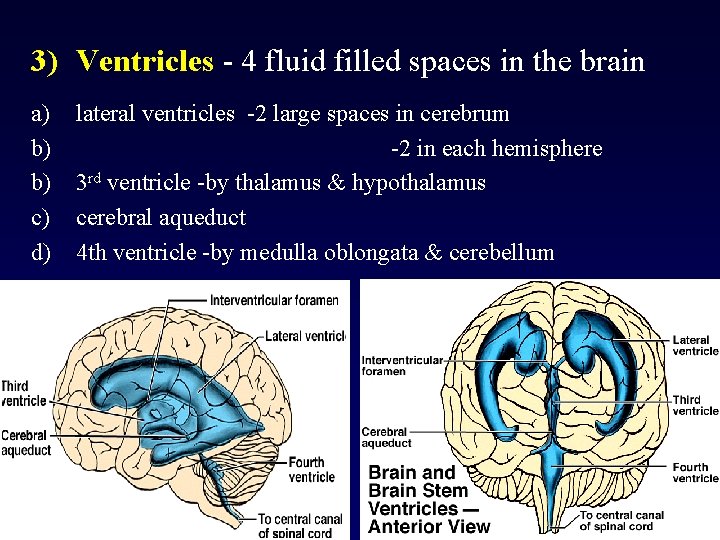
3) Ventricles - 4 fluid filled spaces in the brain a) b) b) c) d) lateral ventricles -2 large spaces in cerebrum -2 in each hemisphere 3 rd ventricle -by thalamus & hypothalamus cerebral aqueduct 4 th ventricle -by medulla oblongata & cerebellum 5
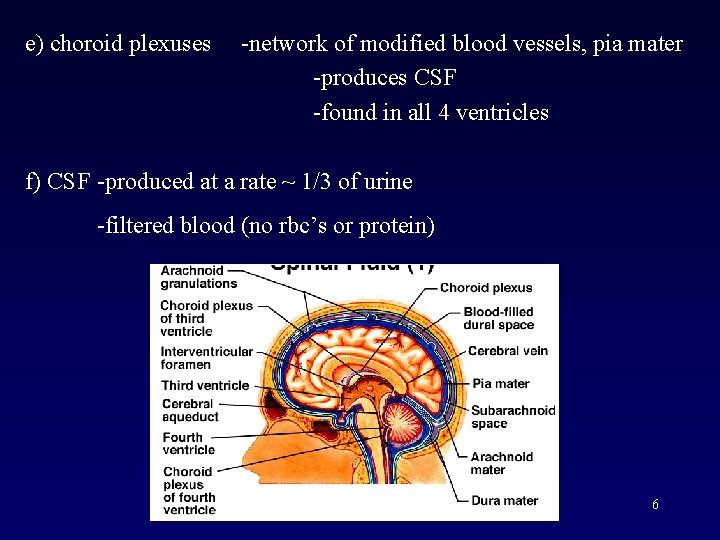
e) choroid plexuses -network of modified blood vessels, pia mater -produces CSF -found in all 4 ventricles f) CSF -produced at a rate ~ 1/3 of urine -filtered blood (no rbc’s or protein) 6
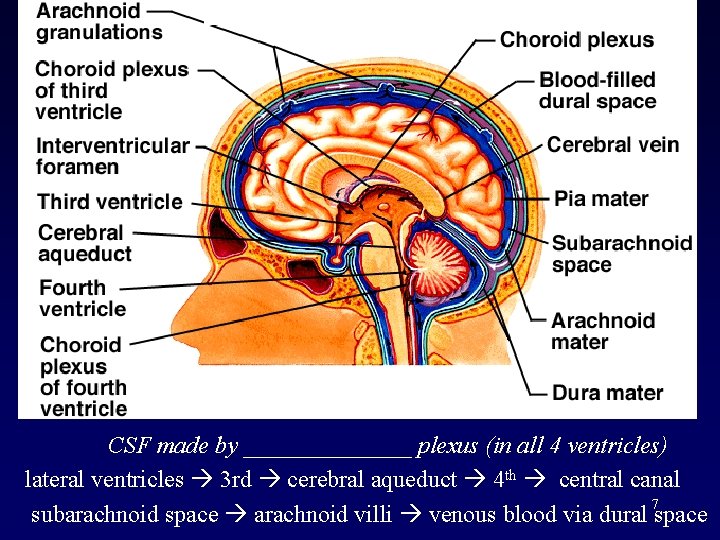
CSF made by _______ plexus (in all 4 ventricles) lateral ventricles 3 rd cerebral aqueduct 4 th central canal 7 subarachnoid space arachnoid villi venous blood via dural space
What are 3 reasons CSF is important? 8
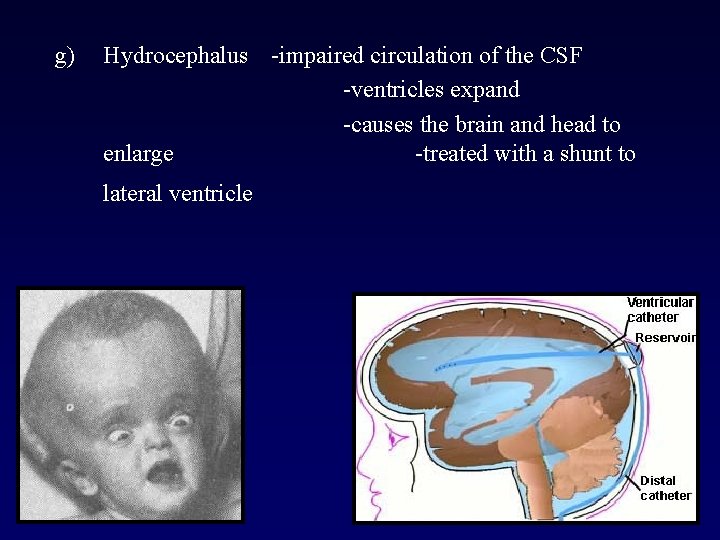
g) Hydrocephalus -impaired circulation of the CSF -ventricles expand -causes the brain and head to enlarge -treated with a shunt to lateral ventricle 9
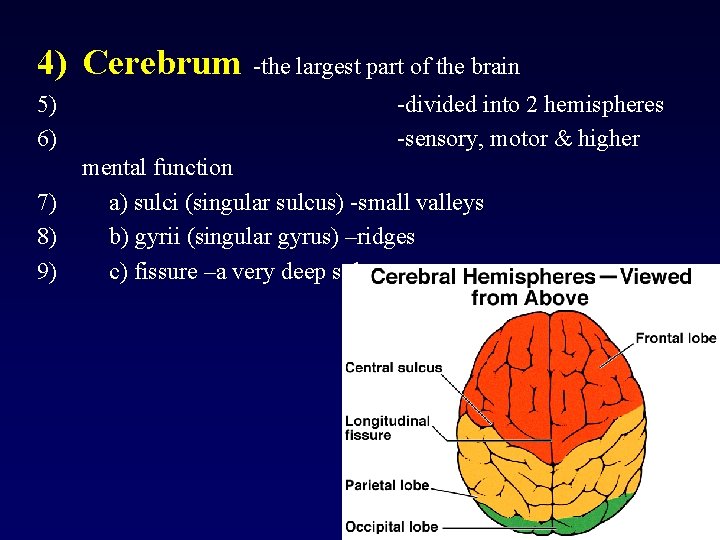
4) Cerebrum 5) 6) 7) 8) 9) -the largest part of the brain -divided into 2 hemispheres -sensory, motor & higher mental function a) sulci (singular sulcus) -small valleys b) gyrii (singular gyrus) –ridges c) fissure –a very deep sulcus 10
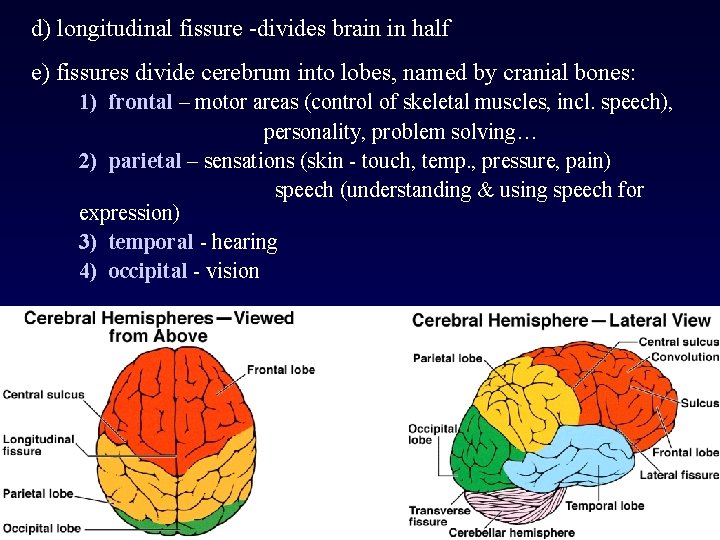
d) longitudinal fissure -divides brain in half e) fissures divide cerebrum into lobes, named by cranial bones: 1) frontal – motor areas (control of skeletal muscles, incl. speech), personality, problem solving… 2) parietal – sensations (skin - touch, temp. , pressure, pain) speech (understanding & using speech for expression) 3) temporal - hearing 4) occipital - vision 11
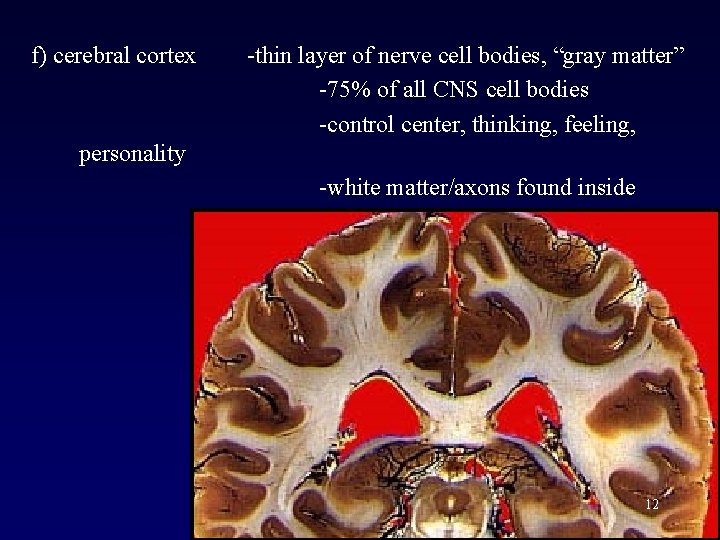
f) cerebral cortex -thin layer of nerve cell bodies, “gray matter” -75% of all CNS cell bodies -control center, thinking, feeling, personality -white matter/axons found inside 12
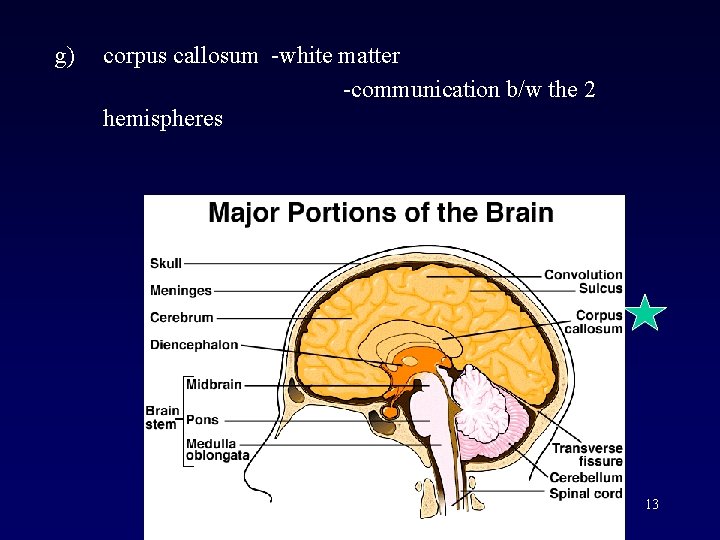
g) corpus callosum -white matter -communication b/w the 2 hemispheres 13
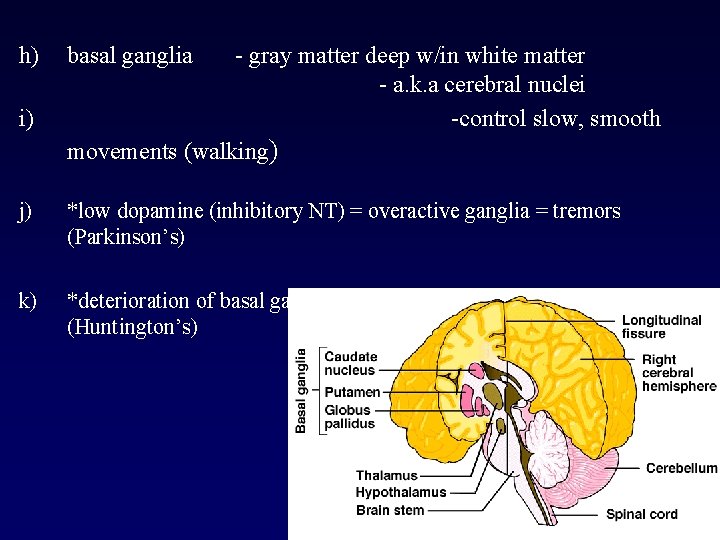
h) i) basal ganglia - gray matter deep w/in white matter - a. k. a cerebral nuclei -control slow, smooth movements (walking) j) *low dopamine (inhibitory NT) = overactive ganglia = tremors (Parkinson’s) k) *deterioration of basal ganglia = gradual loss of function (Huntington’s) 14
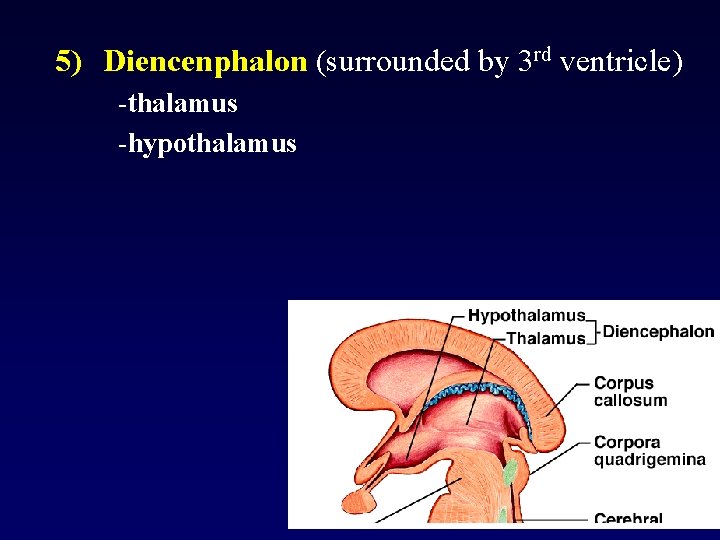
5) Diencenphalon (surrounded by 3 rd ventricle) -thalamus -hypothalamus 15
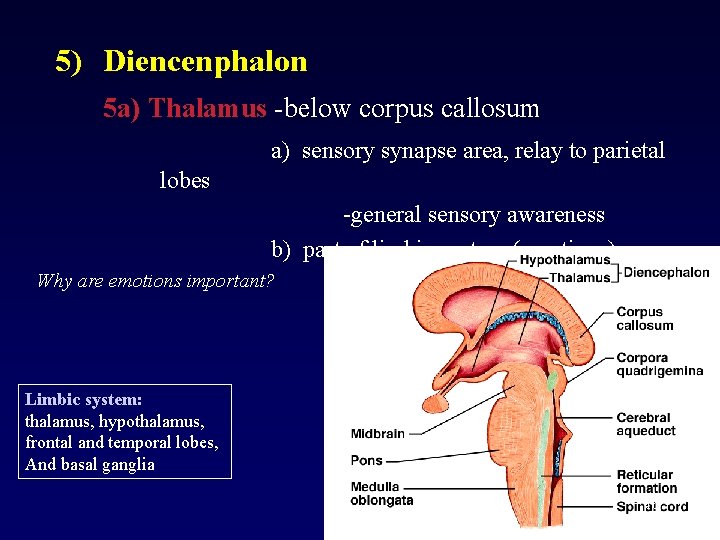
5) Diencenphalon 5 a) Thalamus -below corpus callosum a) sensory synapse area, relay to parietal lobes -general sensory awareness b) part of limbic system (emotions) Why are emotions important? Limbic system: thalamus, hypothalamus, frontal and temporal lobes, And basal ganglia 16
5 b) Hypothalamus -below thalamus “less than” limbic system homeostasis Important for: -part of the -center of a) appetite, body weight, movement/secretion of GI b) thirst, electrolyte balance c) body temperature d) heart rate & blood pressure e) sleep patterns (with pineal gland melatonin) 17
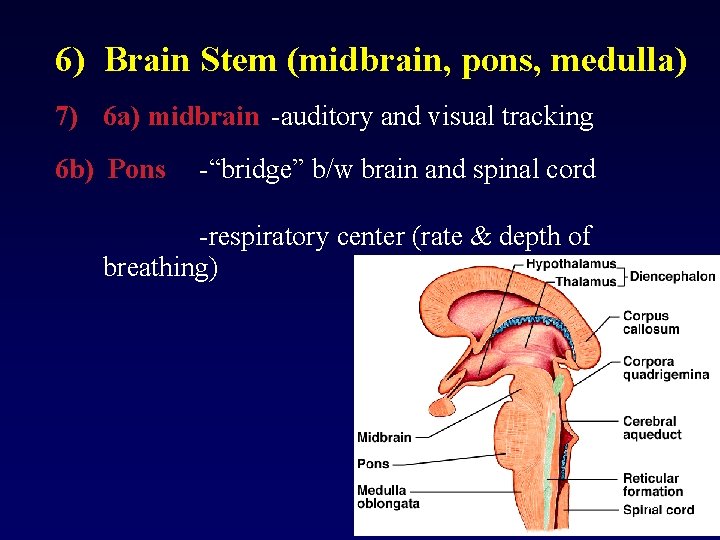
6) Brain Stem (midbrain, pons, medulla) 7) 6 a) midbrain -auditory and visual tracking 6 b) Pons -“bridge” b/w brain and spinal cord -respiratory center (rate & depth of breathing) 18
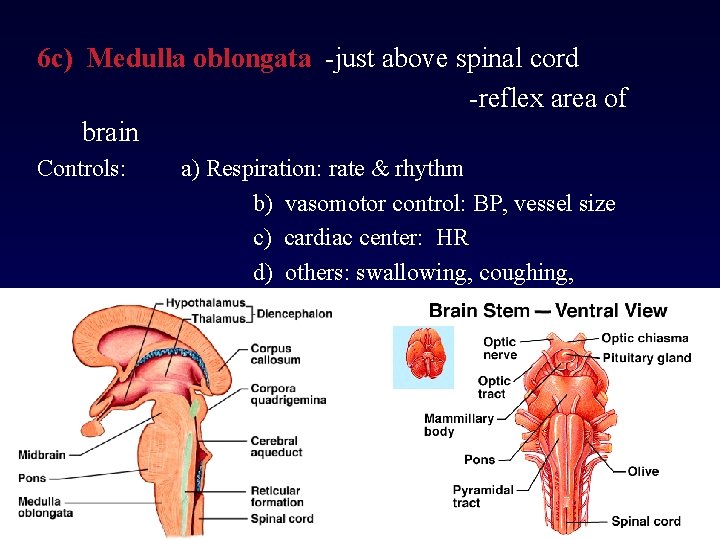
6 c) Medulla oblongata -just above spinal cord -reflex area of brain Controls: a) Respiration: rate & rhythm b) vasomotor control: BP, vessel size c) cardiac center: HR d) others: swallowing, coughing, sneezing… 19
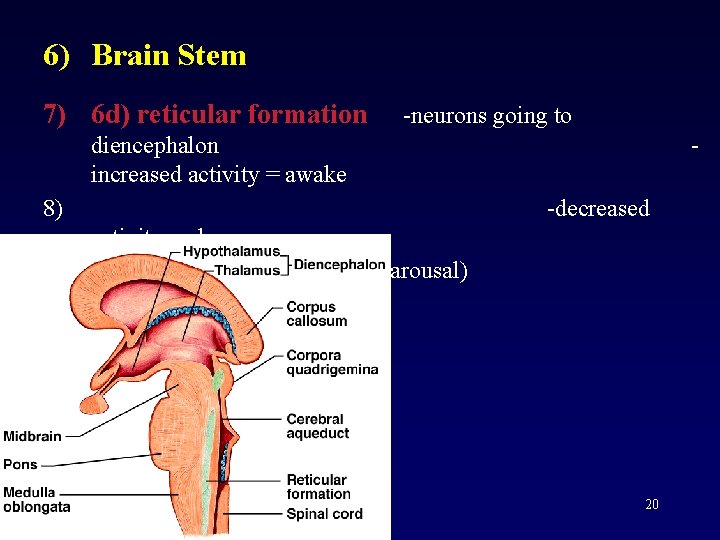
6) Brain Stem 7) 6 d) reticular formation -neurons going to diencephalon increased activity = awake 8) -decreased activity = sleep -injury = comatose state (no arousal) 20
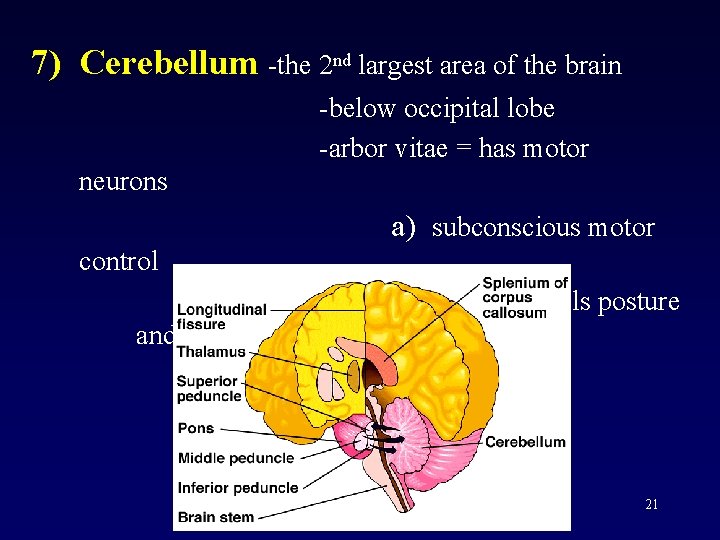
7) Cerebellum -the 2 nd largest area of the brain -below occipital lobe -arbor vitae = has motor neurons a) subconscious motor control b) controls posture and balance 21
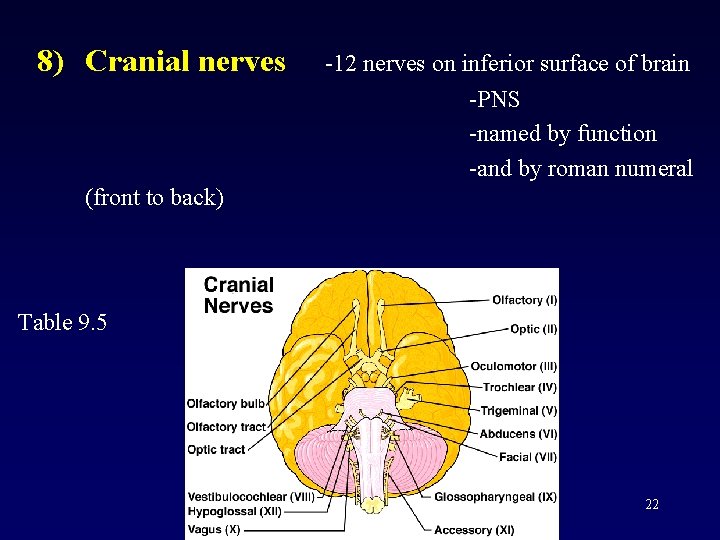
8) Cranial nerves -12 nerves on inferior surface of brain -PNS -named by function -and by roman numeral (front to back) Table 9. 5 22
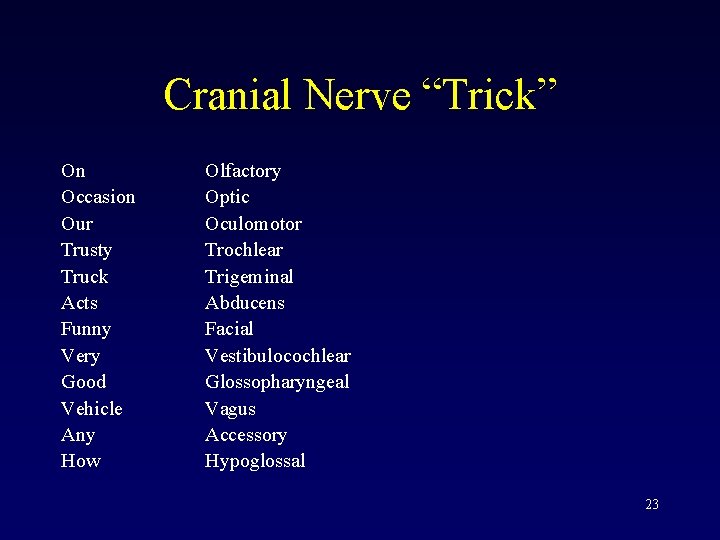
Cranial Nerve “Trick” On Occasion Our Trusty Truck Acts Funny Very Good Vehicle Any How Olfactory Optic Oculomotor Trochlear Trigeminal Abducens Facial Vestibulocochlear Glossopharyngeal Vagus Accessory Hypoglossal 23
- Slides: 23