
NERVOUS SYSTEM Response to stimuli Control and coordination


- Slides: 39
NERVOUS SYSTEM • Response to stimuli • Control and coordination of activities
Neuron = basic functional dendrites unit: nerve impulse axon Cell body
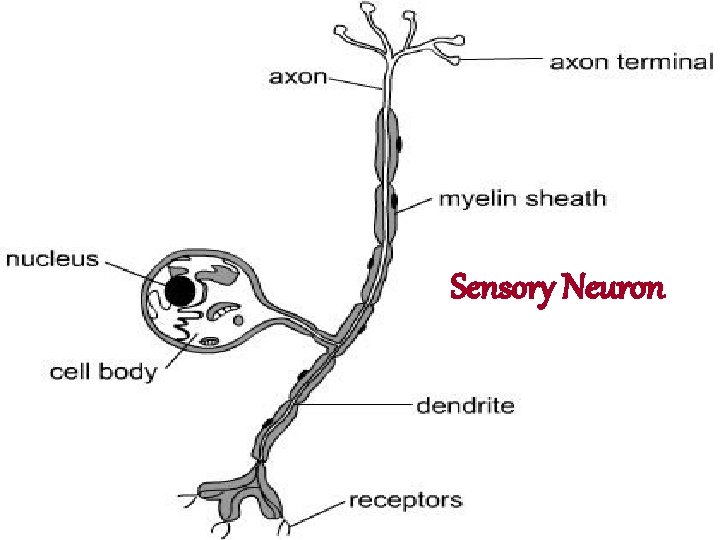
Types of Neurons: (Functions) a. ) Sensory neurons: sensory receptors CNS
Sensory Neuron
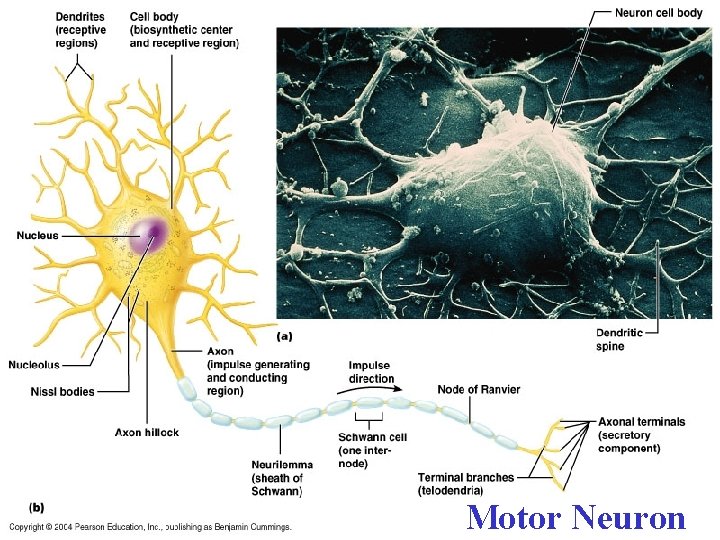
Types of Neurons: (Functions) b. motor neurons: CNS organs, muscles and glands
Motor Neuron
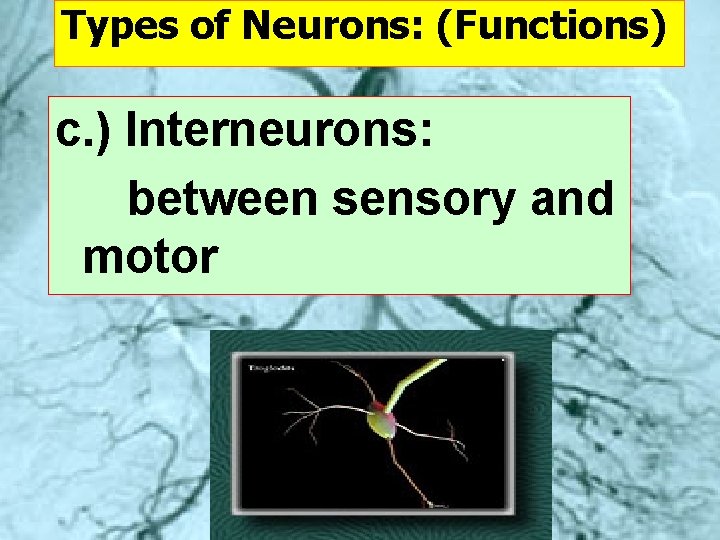
Types of Neurons: (Functions) c. ) Interneurons: between sensory and motor
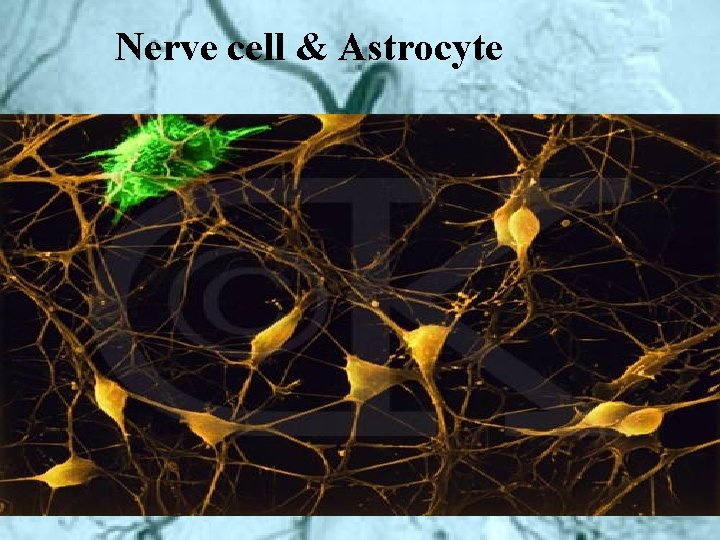
Cells that are not neurons: GLIAL CELLS Support, protect and assist neurons a. Schwann cells : hold nerve fibers together b. Astrocytes : stable chemical environment supply blood vessels
Nerve cell & Astrocyte
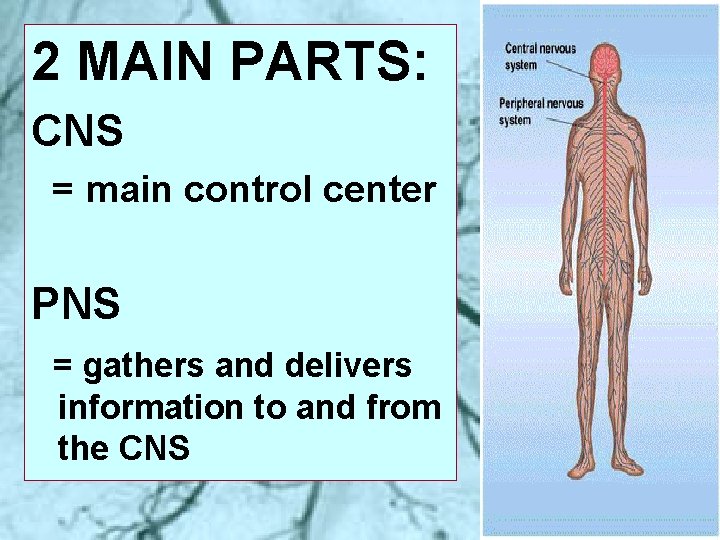
2 MAIN PARTS: CNS = main control center PNS = gathers and delivers information to and from the CNS
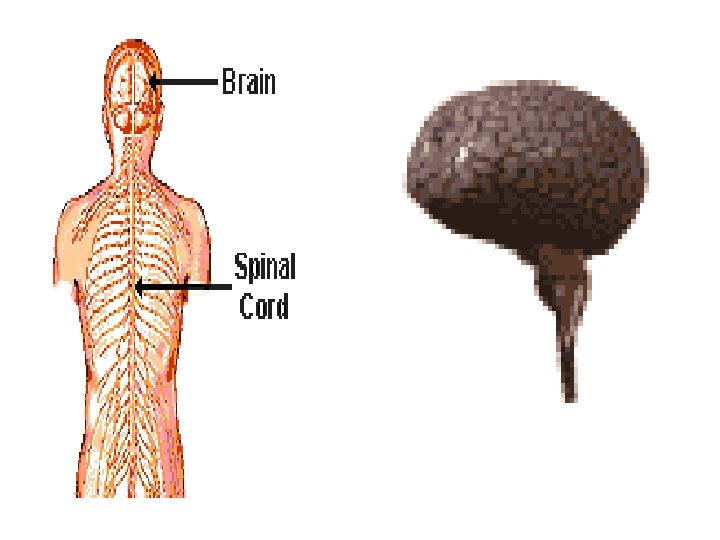
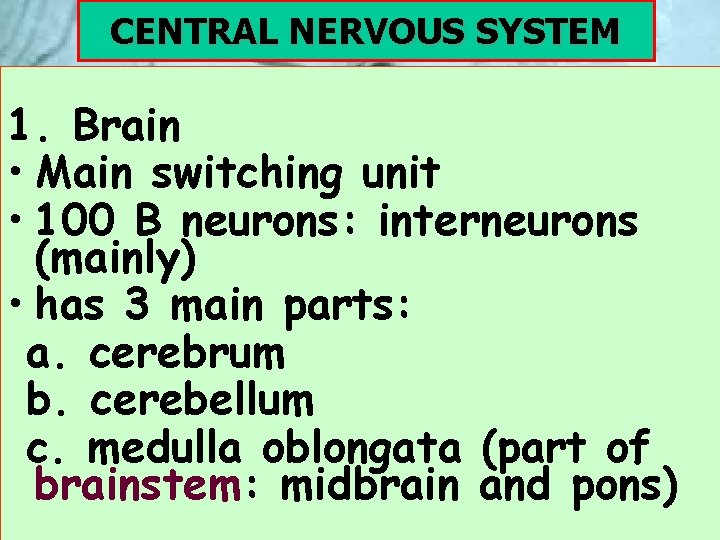
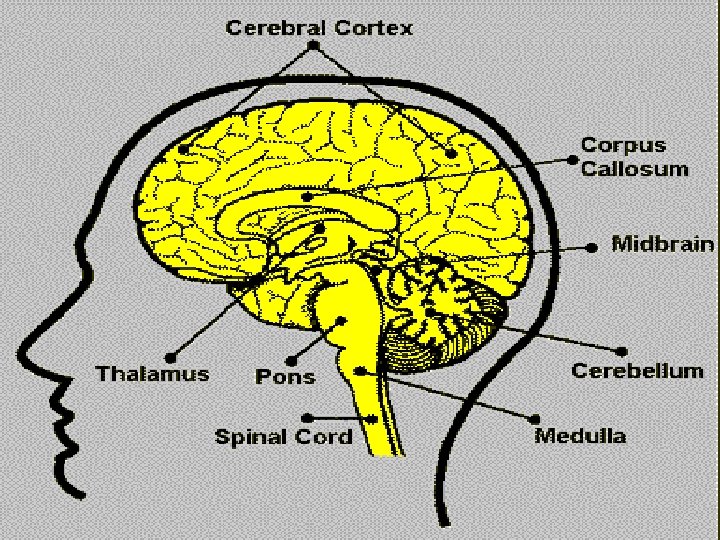
CENTRAL NERVOUS SYSTEM 1. Brain • Main switching unit • 100 B neurons: interneurons (mainly) • has 3 main parts: a. cerebrum b. cerebellum c. medulla oblongata (part of brainstem: midbrain and pons)
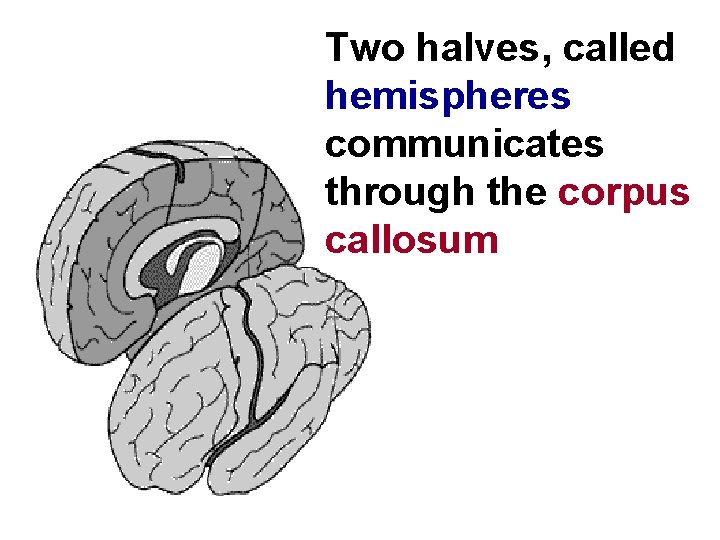
Two halves, called hemispheres communicates through the corpus callosum
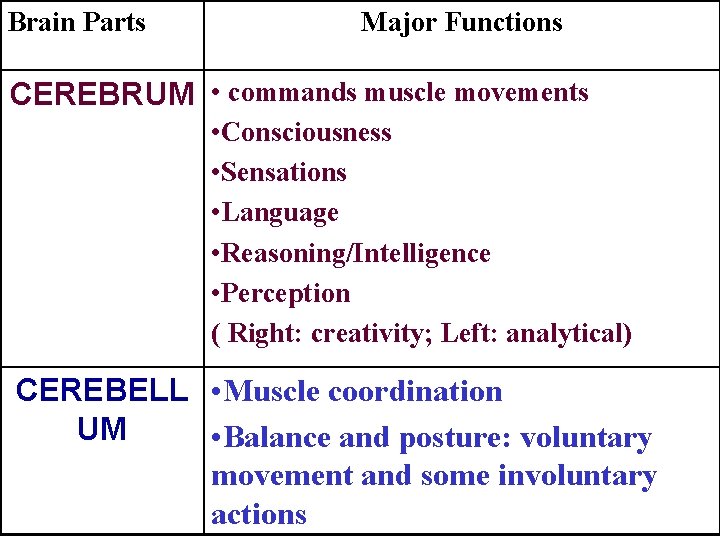
Brain Parts Major Functions CEREBRUM • commands muscle movements • Consciousness • Sensations • Language • Reasoning/Intelligence • Perception ( Right: creativity; Left: analytical) CEREBELL • Muscle coordination UM • Balance and posture: voluntary movement and some involuntary actions
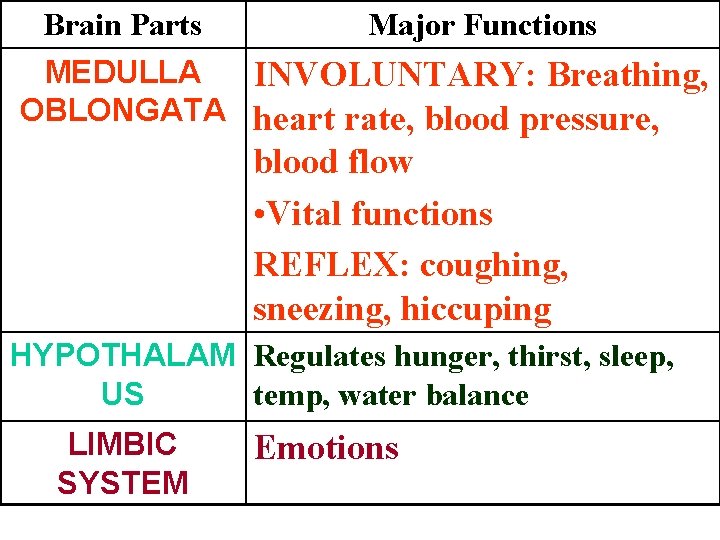
Brain Parts Major Functions MEDULLA INVOLUNTARY: Breathing, OBLONGATA heart rate, blood pressure, blood flow • Vital functions REFLEX: coughing, sneezing, hiccuping HYPOTHALAM Regulates hunger, thirst, sleep, temp, water balance US LIMBIC SYSTEM Emotions
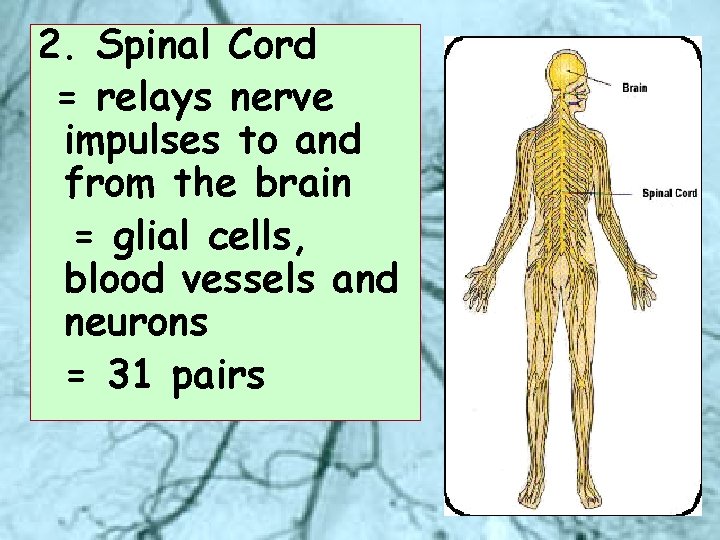
2. Spinal Cord = relays nerve impulses to and from the brain = glial cells, blood vessels and neurons = 31 pairs
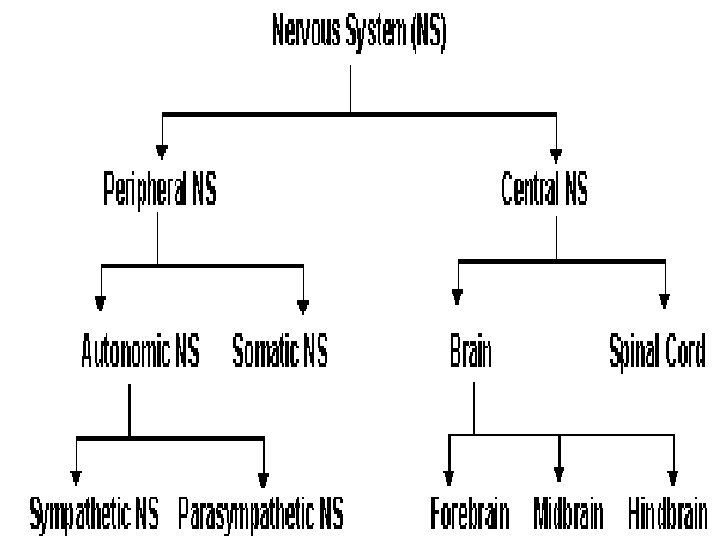
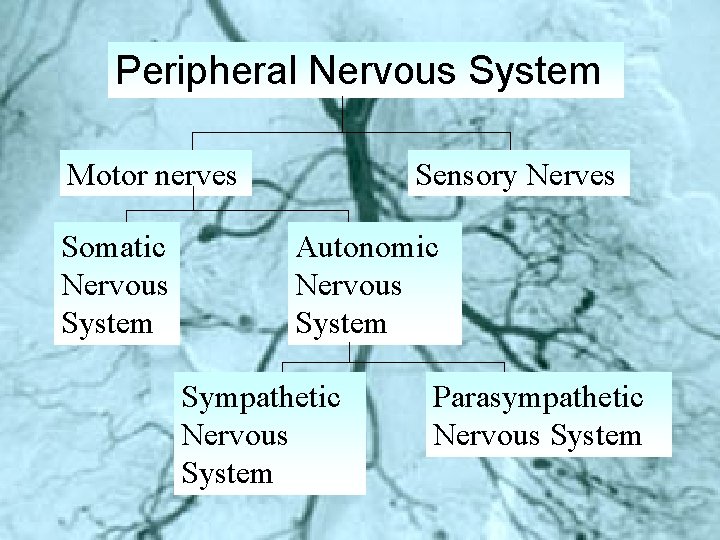
Peripheral Nervous System Motor nerves Somatic Nervous System Sensory Nerves Autonomic Nervous System Sympathetic Nervous System Parasympathetic Nervous System
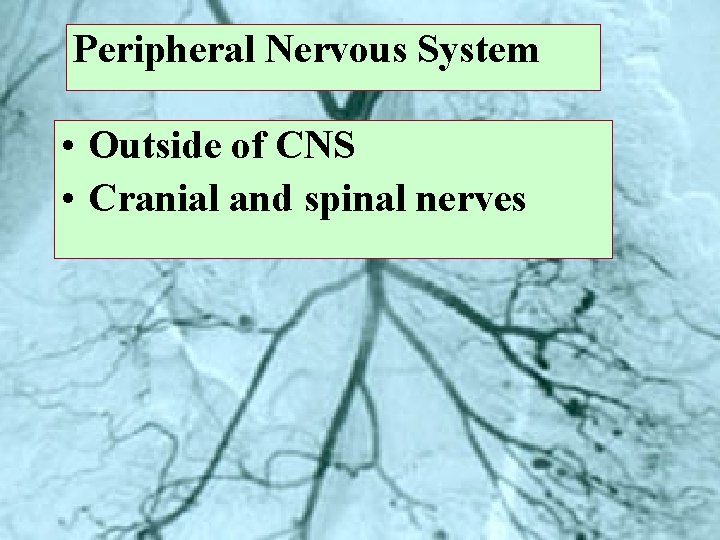
Peripheral Nervous System • Outside of CNS • Cranial and spinal nerves
Peripheral Nervous System Somatic Nervous System = coordinates skeletal muscles and sense organs (skin) Autonomic Nervous System = monitors and integrates function of internal organs and involuntary actions
Autonomic Nervous System a. ) Sympathetic System = motor nerves from the central section of the spine = controls responses to stress = “fight” or “flight” = ex. Increase heartbeat dilated pupil faster breathing rate
Autonomic Nervous System b. ) Parasympathetic System = motor nerves from the brain stem and in the base of the spine = controls body functions associated with rest and digestion
Disorders a. ) Seizure Disorder (epilepsy) = part of the brain receives a burst of abnormal electrical signals that temporarily interrupts normal electrical brain function. b. ) Brain Cancer =tumors that occur in the brain
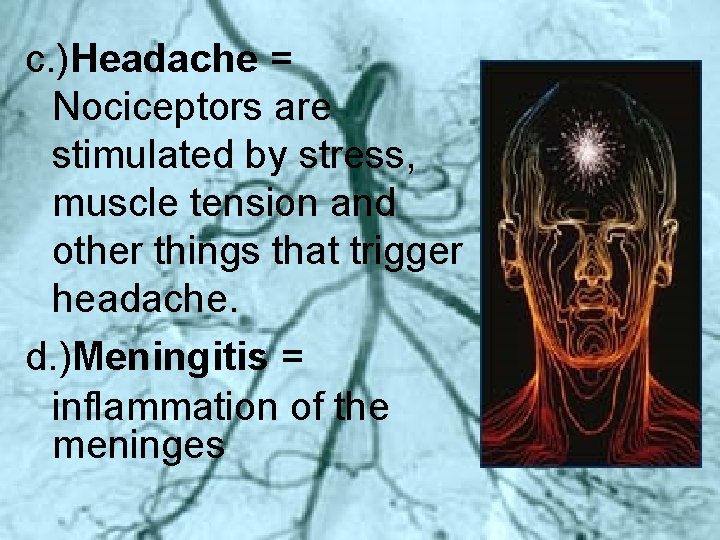
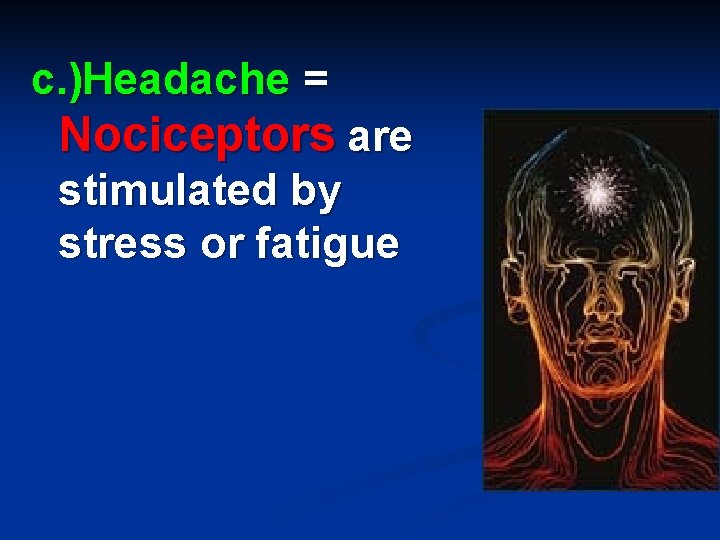
c. )Headache = Nociceptors are stimulated by stress, muscle tension and other things that trigger headache. d. )Meningitis = inflammation of the meninges
Nervous System Disorders
a. ) Epilepsy = recurrent seizures; sudden onset = burst of abnormal electrical signals b. ) Brain Cancer = tumors that occur in the brain
c. )Headache = Nociceptors are stimulated by stress or fatigue
Parkinson’s Disease tremor n rigidity n Slow movement n postural instability (shuffle) n *deficient in DOPAMINE
Alzheimer’s Disease progressive form of dementia n Middle age or later n Loss of short-term memory n Deterioration in behavior and intellectual performance n Confusion n Slowness of thought n Degeneration of brain; build up of protein plaques
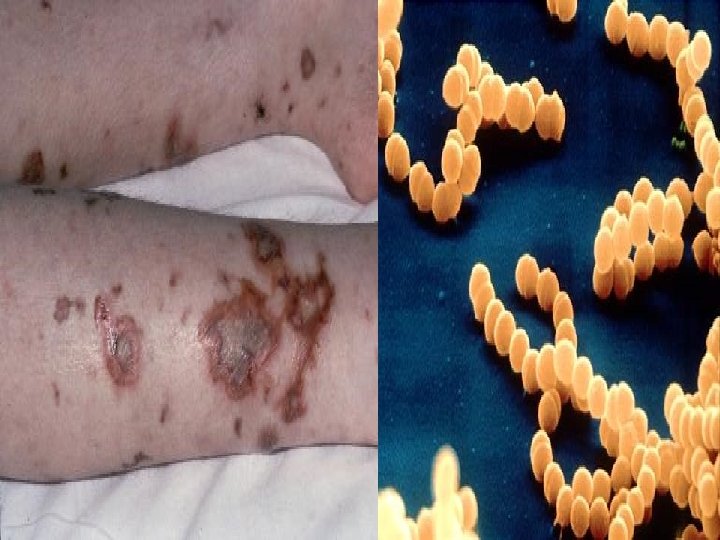
Meningitis n an inflammation of the meninges n cold and runny nose, diarrhea and vomiting, or other signs of a bacterial or viral infection. n fever lethargy, irritability VIRAL, BACTERIAL OR FUNGAL INFECTION