
Nervous System Regulates all body activities learning and
Nervous System Regulates all body activities, learning and memory.
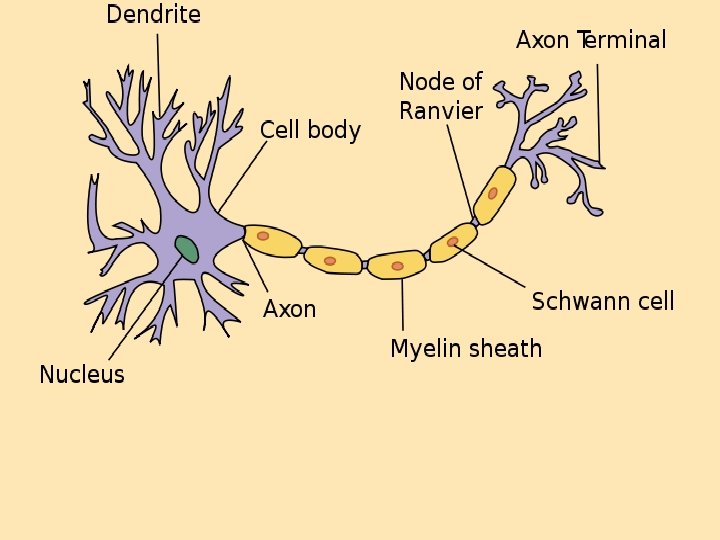
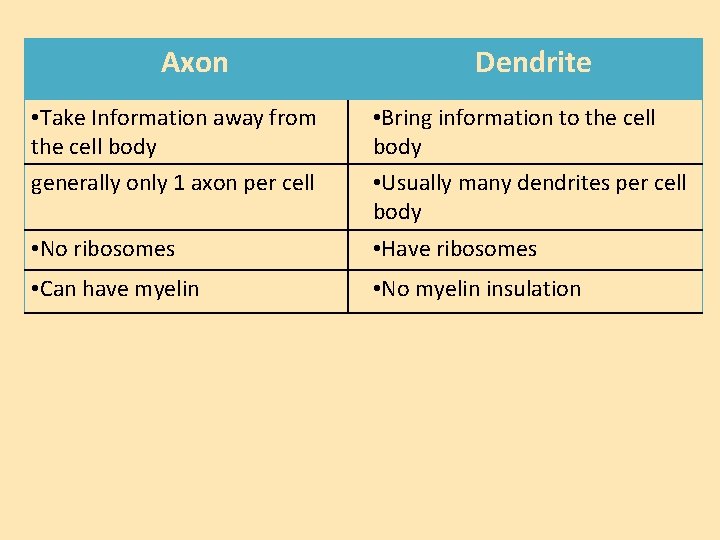
Axon Dendrite • Take Information away from the cell body generally only 1 axon per cell • Bring information to the cell body • Usually many dendrites per cell body • No ribosomes • Have ribosomes • Can have myelin • No myelin insulation
Nerve impulse Travels via electrical current. RESTING POTENTIAL no impulse being conducted
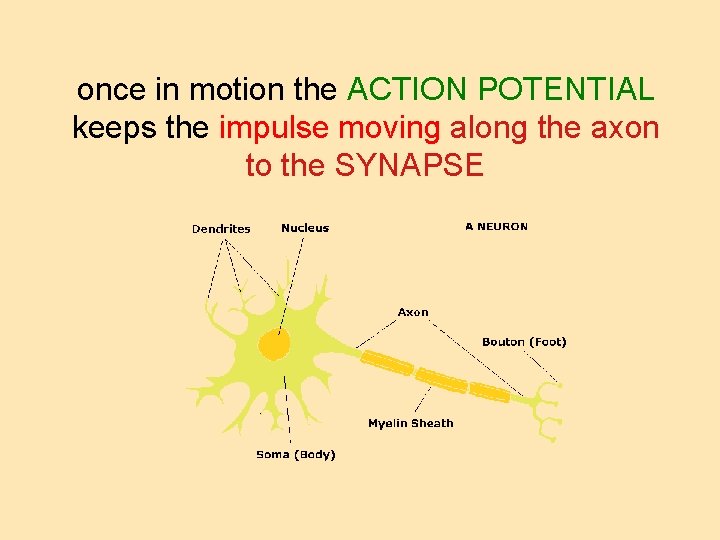
once in motion the ACTION POTENTIAL keeps the impulse moving along the axon to the SYNAPSE
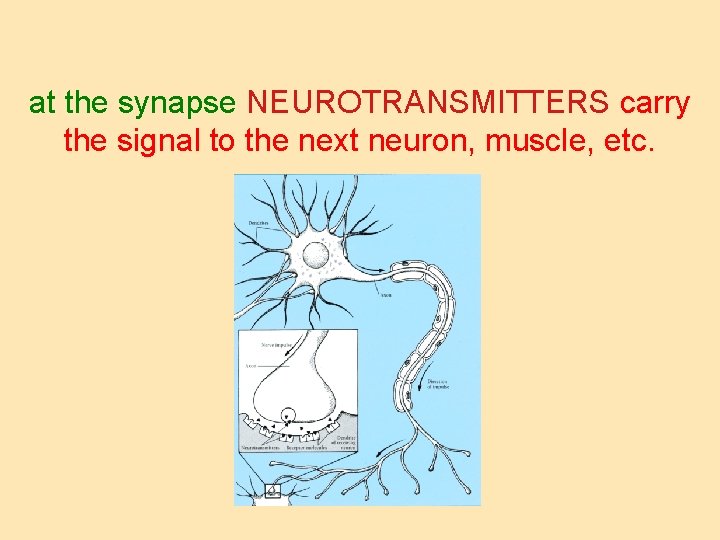
at the synapse NEUROTRANSMITTERS carry the signal to the next neuron, muscle, etc.
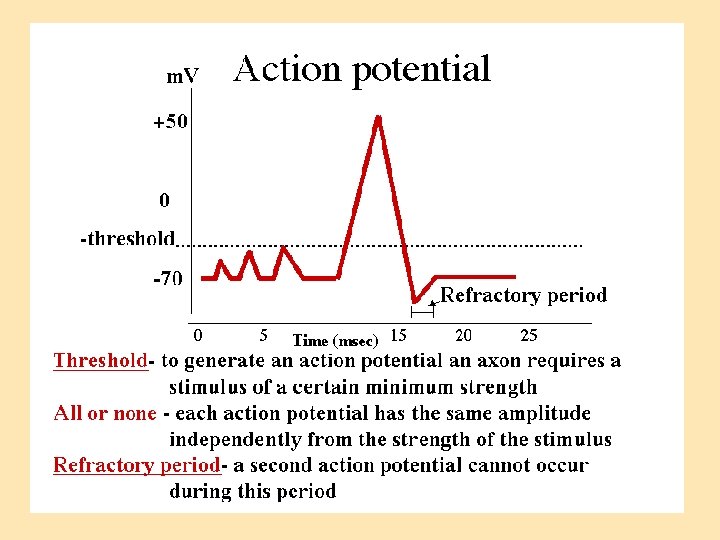
All or None • Depolarization and repolarization is known as action potential • once threshold is reached… action potentials are “all or nothing”. The intensity of an action potential does not diminish as depolarization spreads along the axon.
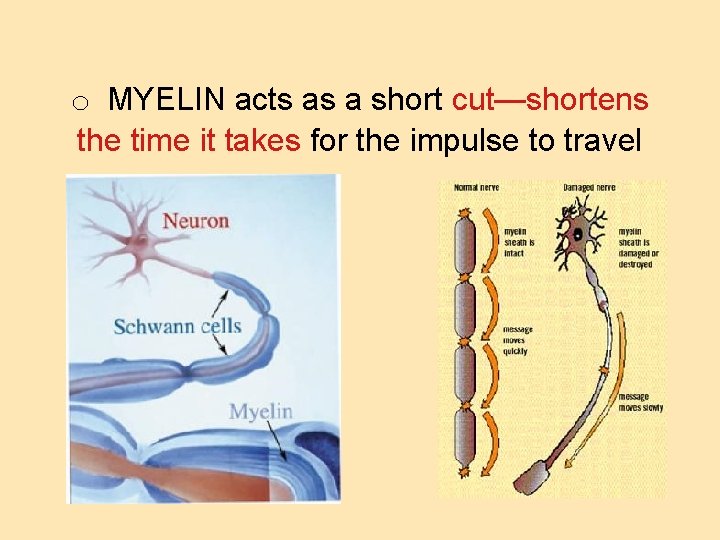
o MYELIN acts as a short cut—shortens the time it takes for the impulse to travel
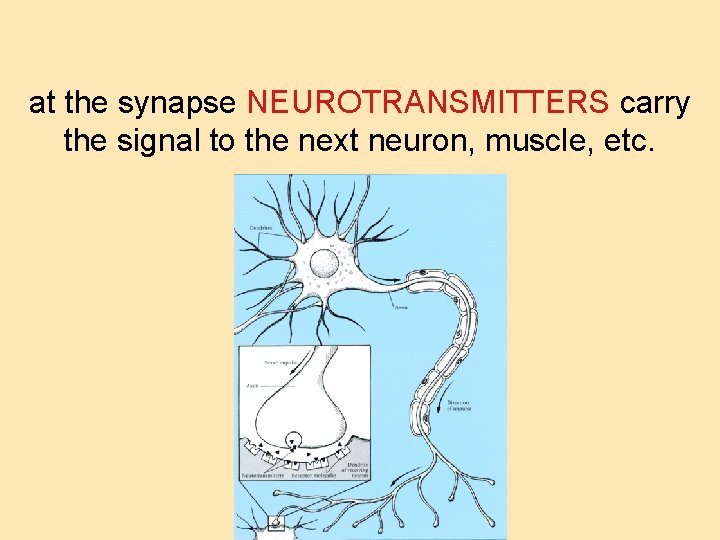
at the synapse NEUROTRANSMITTERS carry the signal to the next neuron, muscle, etc.
Interesting Facts • Neurons are the oldest and longest cells in the body! You have many of the same neurons for your whole life. Although other cells die and are replaced, most neurons are never replaced when they die. In fact, you have fewer neurons when you are old compared to when you are young. • Neurons can be quite large - in some neurons, such as corticospinal neurons (from motor cortex to spinal cord) or primary afferent neurons (neurons that extend from the skin into the spinal cord and up to the brain stem), can be several feet long!
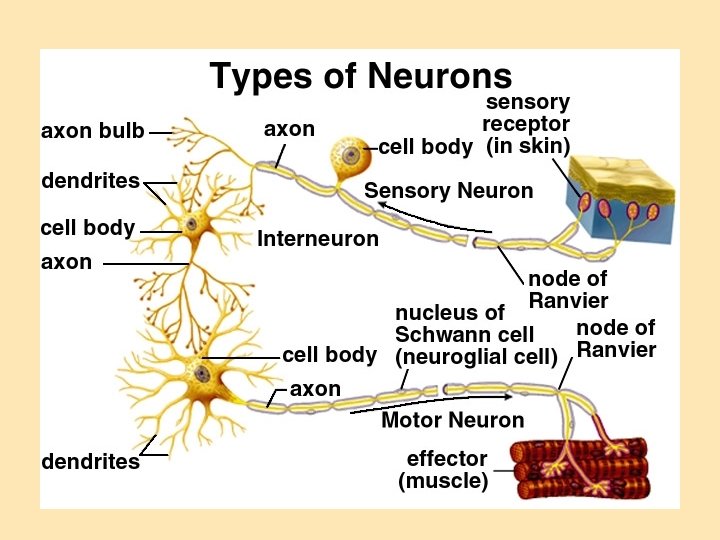
Types of Neurons • Sensory Neurons- in sense organs – Pick up sensory information from the sense organs and relay the information to the interneurons. ( brain and spinal cord) • Interneurons- Brain and spinal cord Process and relay information from sensory neurons to motor neurons. • Motor Neurons- muscles and glands – Stimulate muscles or glands in effect or organs to cause a response.
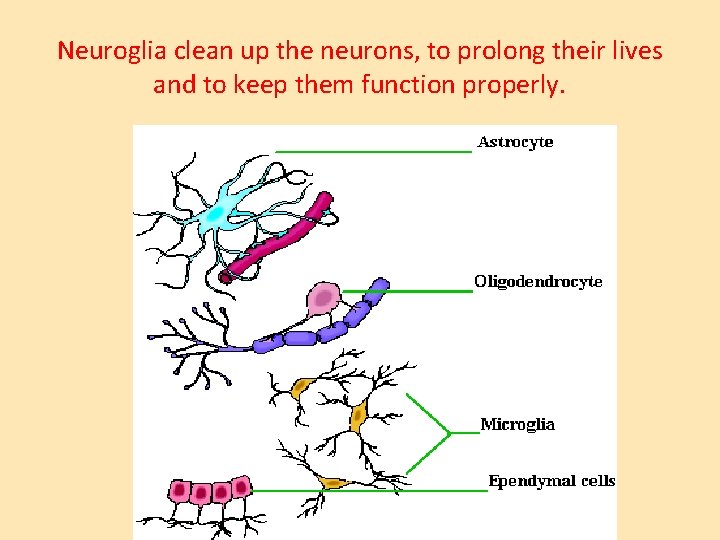
Neuroglia clean up the neurons, to prolong their lives and to keep them function properly.
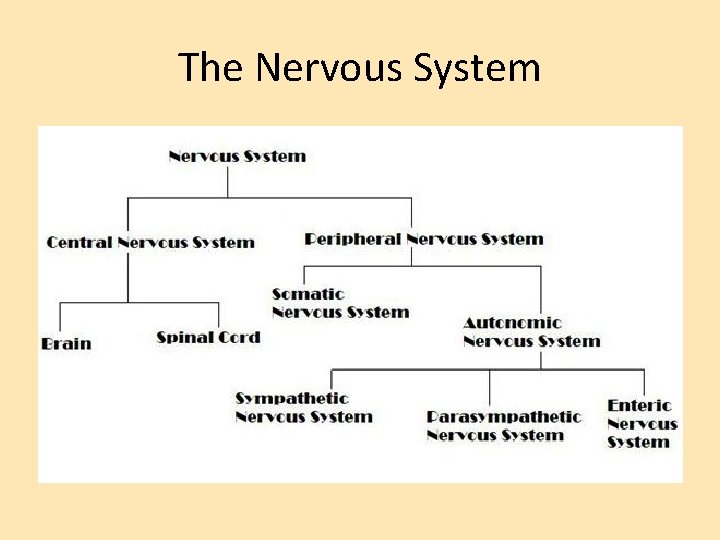
The Nervous System
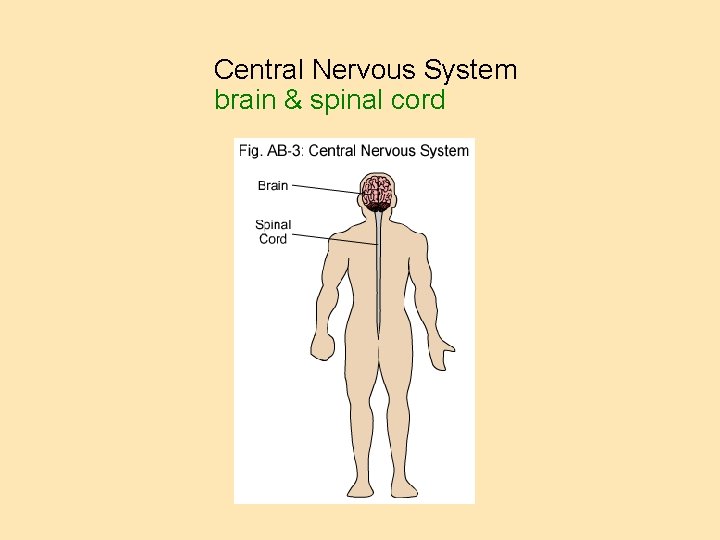
Central Nervous System brain & spinal cord
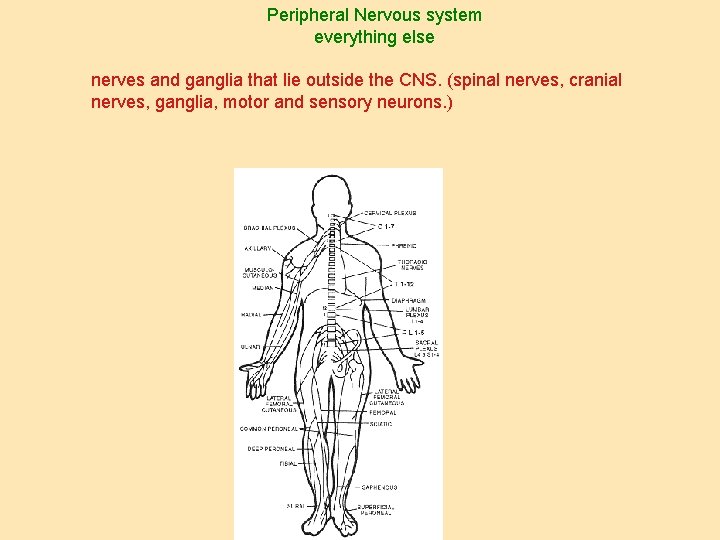
Peripheral Nervous system everything else nerves and ganglia that lie outside the CNS. (spinal nerves, cranial nerves, ganglia, motor and sensory neurons. )
Two Types of Motor Neurons Somatic nervous system - voluntary skeletal muscles Autonomic nervous system - involuntary smooth muscles, cardiac muscle, and glands
Autonomic Nervous System Sympathetic - Fight or flight (response to danger) Parasympathetic - sleep or snack (resting & digesting)
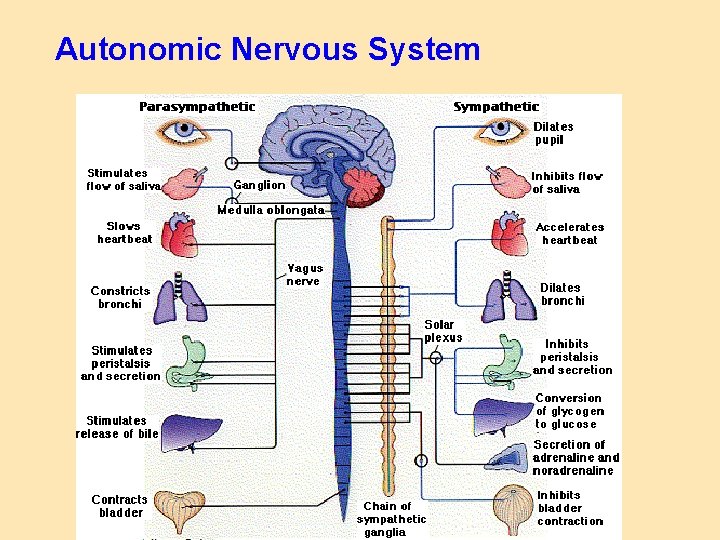
Autonomic Nervous System
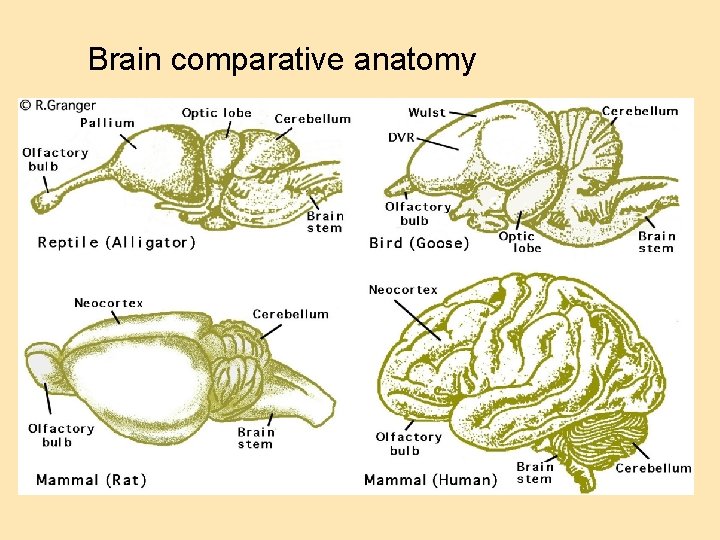
Brain comparative anatomy
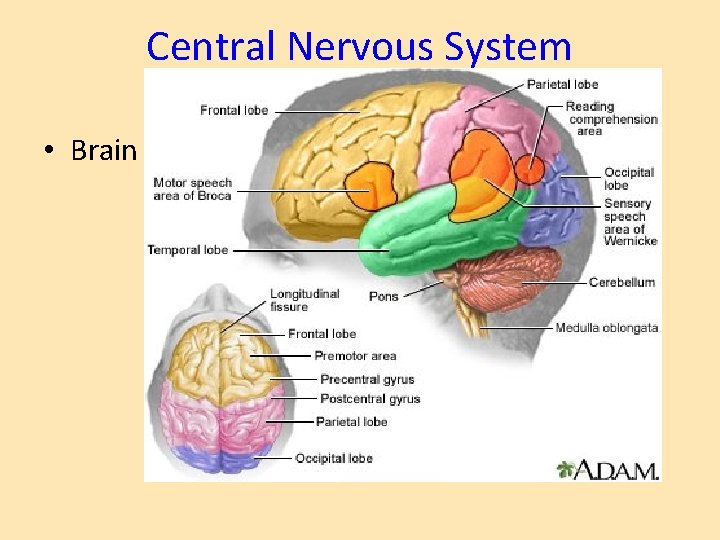
Central Nervous System • Brain
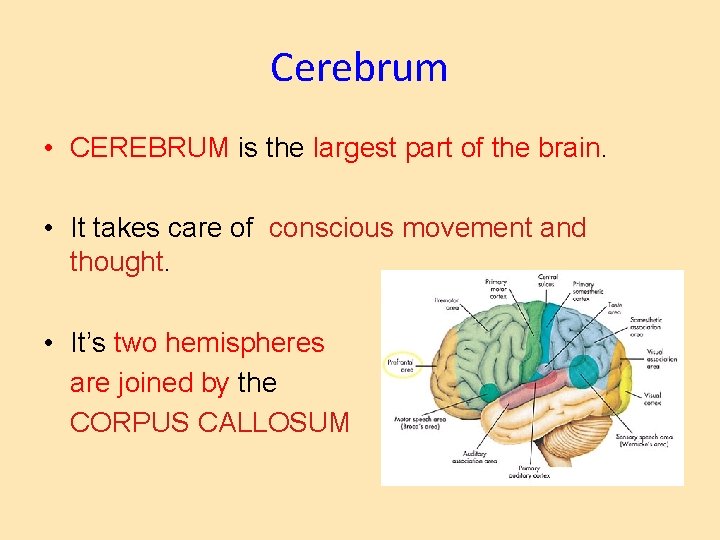
Cerebrum • CEREBRUM is the largest part of the brain. • It takes care of conscious movement and thought. • It’s two hemispheres are joined by the CORPUS CALLOSUM
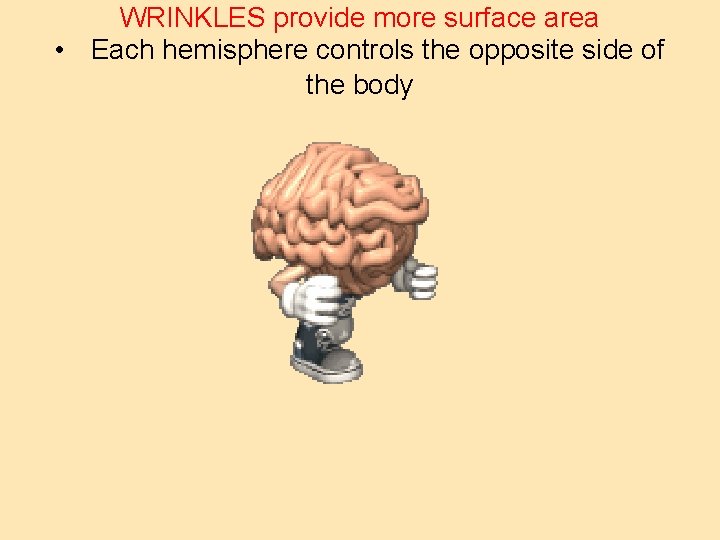
WRINKLES provide more surface area • Each hemisphere controls the opposite side of the body
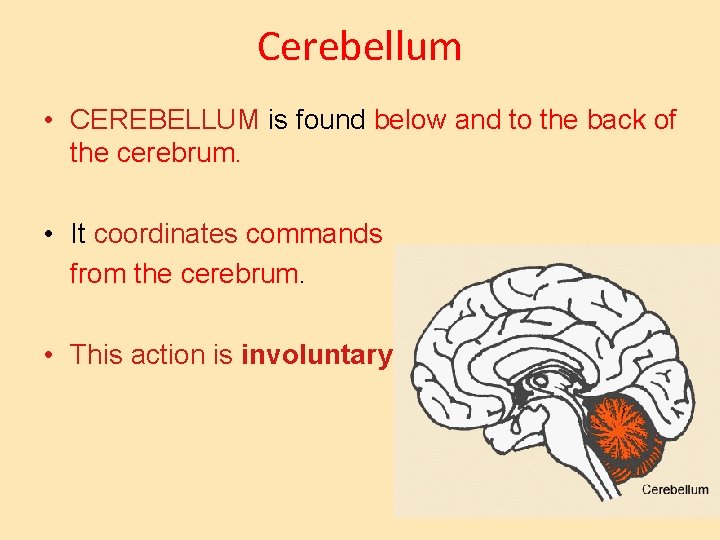
Cerebellum • CEREBELLUM is found below and to the back of the cerebrum. • It coordinates commands from the cerebrum. • This action is involuntary
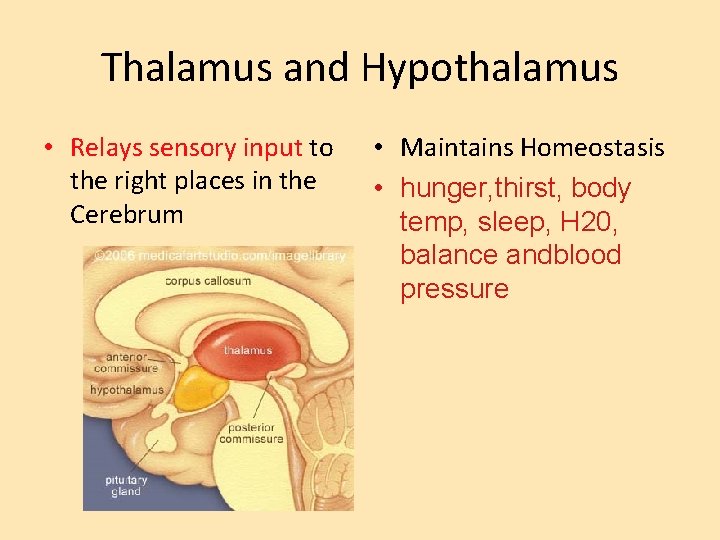
Thalamus and Hypothalamus • Relays sensory input to the right places in the Cerebrum • Maintains Homeostasis • hunger, thirst, body temp, sleep, H 20, balance andblood pressure
Brain Stem • Coordinates and serves as port for coming/going info • regulates heart rate and respiration Spinal Cord • links the brain and PNS • stimulates reflexes
SPEEDY REVIEW Structures of PNS • SENSORY NEURON ~ senses stimulus and alerts CNS Gets info from a RECEPTOR ORGAN • INTERNEURON ~ w/i CNS, tells brain what’s going on • MOTOR NEURON ~ takes info from CNS and initiates a reaction in the EFFECTOR ORGANS • GANGLIA ~ a group of neural cell bodies that is found outside of the CNS (w/i the PNS)
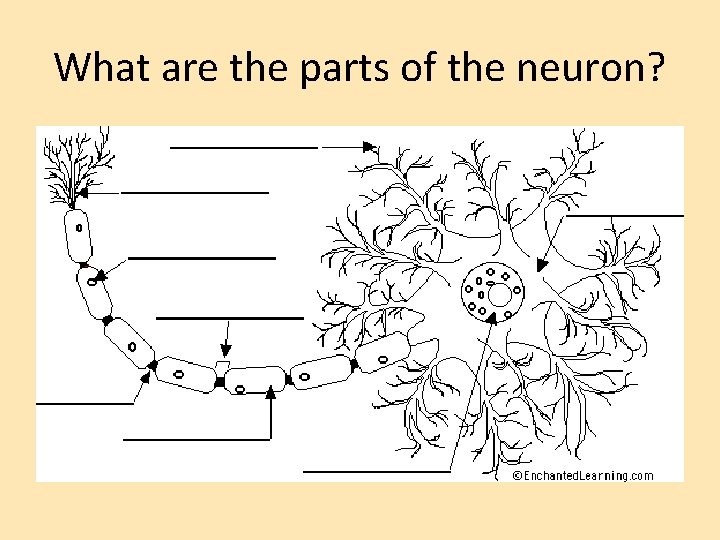
What are the parts of the neuron?
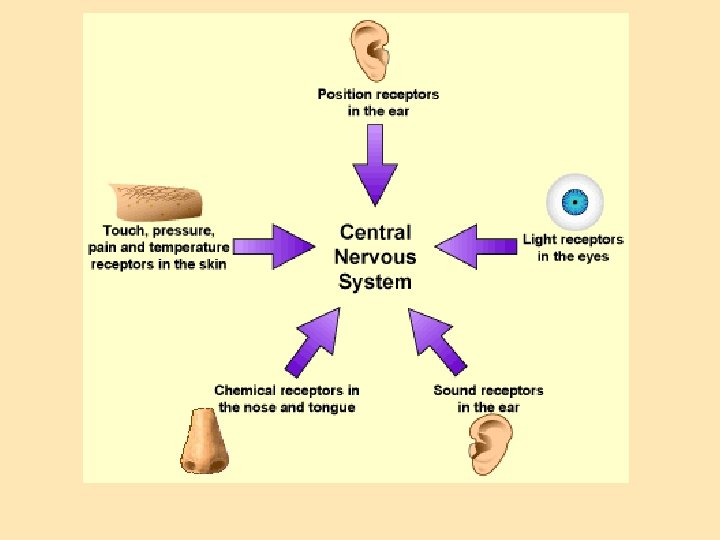
Receptor organs make up all our senses (excepting ESP) • Sight—eyes, rods and cones • Hearing & balance—ears, eardrums & bones & and semicircular canals • Smell—nose, olfactory nerves • Taste—tongue, taste buds • Touch (heat/cold, pressure, pain)— receptors in skin
- Slides: 31