
Nervous System Neurons AP Biology 2007 2008 Why
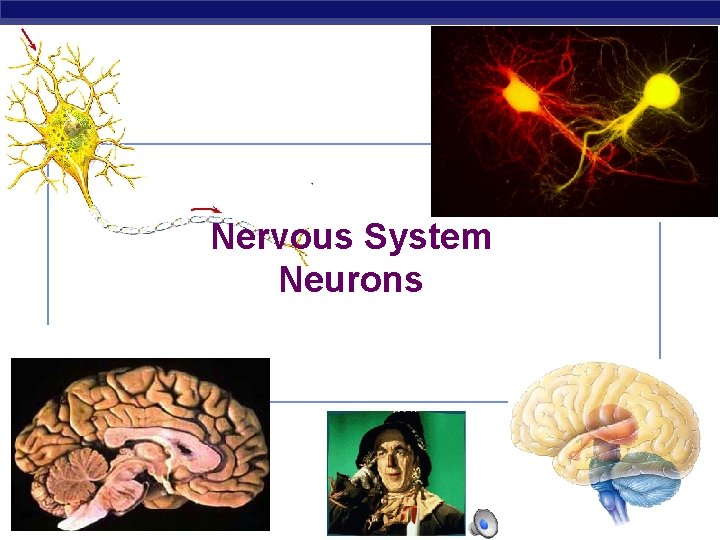
Nervous System Neurons AP Biology 2007 -2008
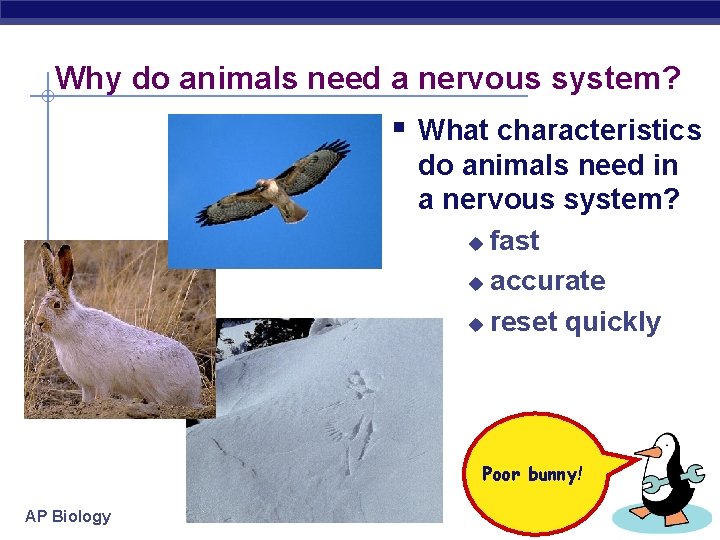
Why do animals need a nervous system? § What characteristics do animals need in a nervous system? u fast u accurate u reset quickly Remember… thinkbunny! about Poor the bunny… AP Biology
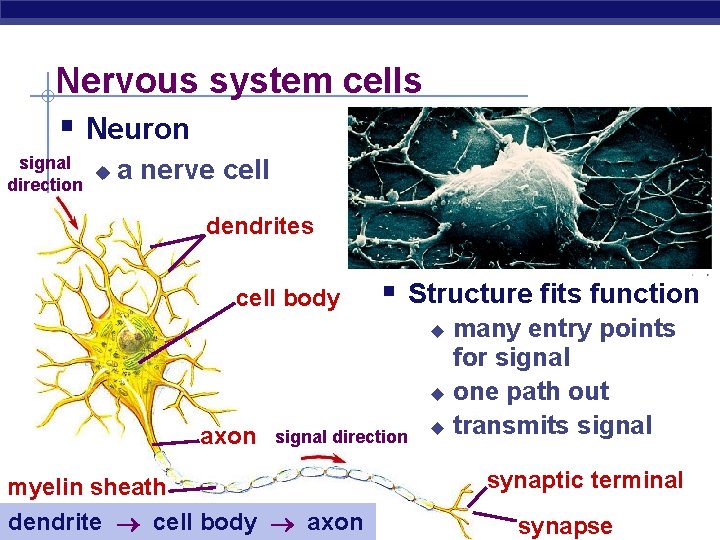
Nervous system cells § Neuron signal u direction a nerve cell dendrites cell body § Structure fits function many entry points for signal u one path out u transmits signal u axon signal direction myelin sheath AP Biology dendrite cell body axon synaptic terminal synapse
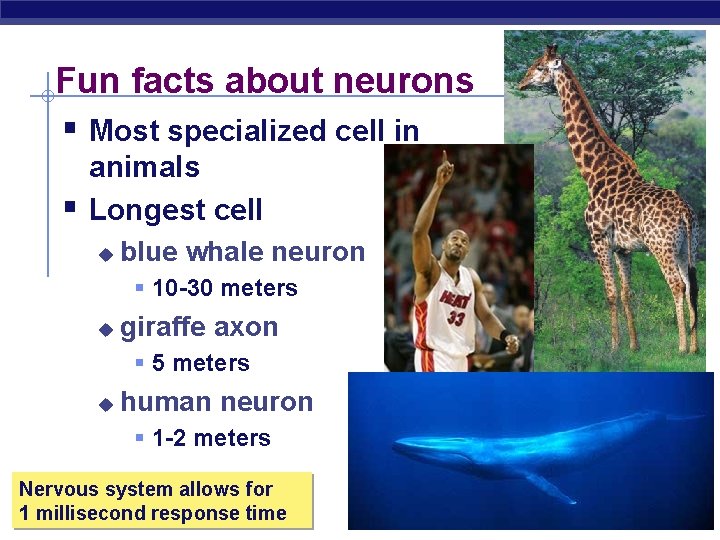
Fun facts about neurons § Most specialized cell in § animals Longest cell u blue whale neuron § 10 -30 meters u giraffe axon § 5 meters u human neuron § 1 -2 meters Nervous system allows for 1 AP millisecond response time Biology
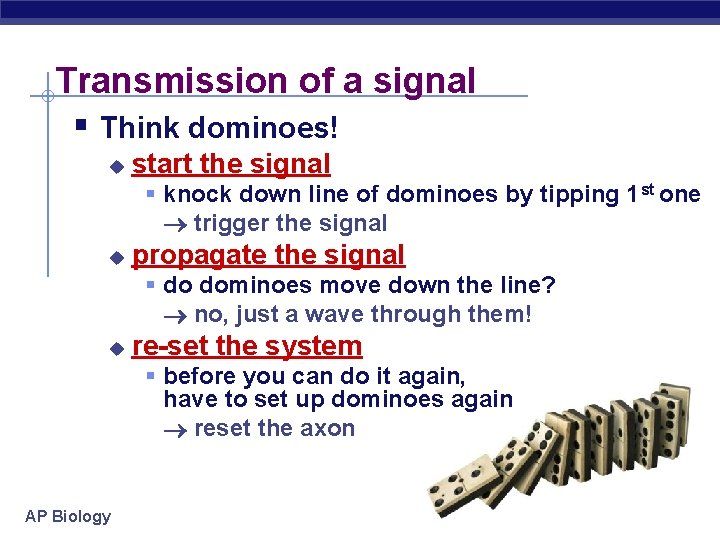
Transmission of a signal § Think dominoes! u start the signal § knock down line of dominoes by tipping 1 st one trigger the signal u propagate the signal § do dominoes move down the line? no, just a wave through them! u re-set the system § before you can do it again, have to set up dominoes again reset the axon AP Biology
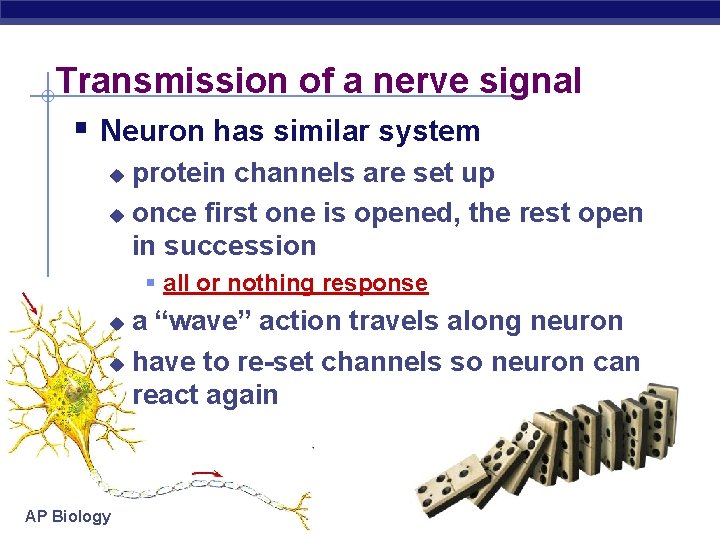
Transmission of a nerve signal § Neuron has similar system protein channels are set up u once first one is opened, the rest open in succession u § all or nothing response a “wave” action travels along neuron u have to re-set channels so neuron can react again u AP Biology
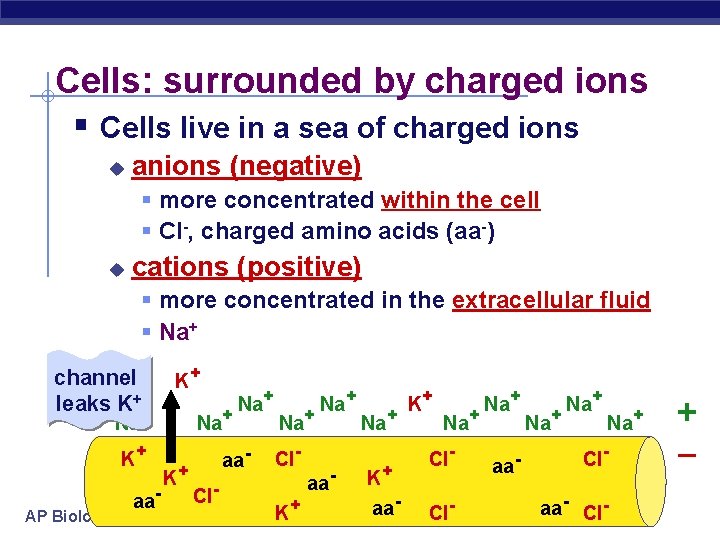
Cells: surrounded by charged ions § Cells live in a sea of charged ions u anions (negative) § more concentrated within the cell § Cl-, charged amino acids (aa-) u cations (positive) § more concentrated in the extracellular fluid § Na+ Na K+ AP Biology aa- K+ Na+ aa. Cl- Na+ Cl. K+ Na+ aa- Na+ K+ aa- K+ Na+ Cl. Cl- Na+ aa- Na+ Na+ Claa- Cl- – K+ + channel leaks K++
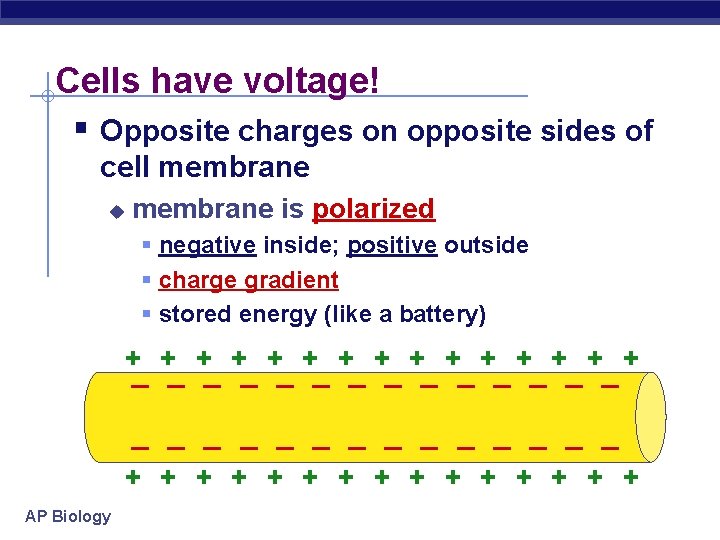
Cells have voltage! § Opposite charges on opposite sides of cell membrane u membrane is polarized § negative inside; positive outside § charge gradient § stored energy (like a battery) + + + + – – – – – – – + + + + AP Biology

Measuring cell voltage unstimulated neuron = resting potential of -70 m. V AP Biology
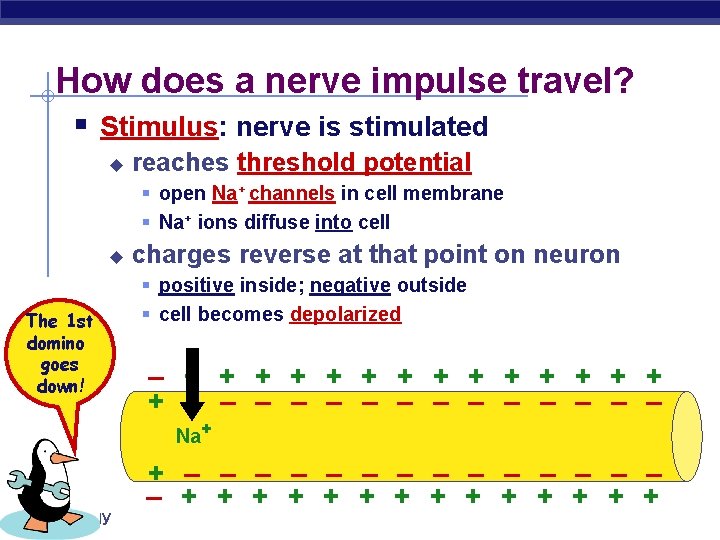
How does a nerve impulse travel? § Stimulus: nerve is stimulated u reaches threshold potential § open Na+ channels in cell membrane § Na+ ions diffuse into cell u The 1 st domino goes down! charges reverse at that point on neuron § positive inside; negative outside § cell becomes depolarized – + + + + – – – – Na+ AP Biology + – – – – + + + +
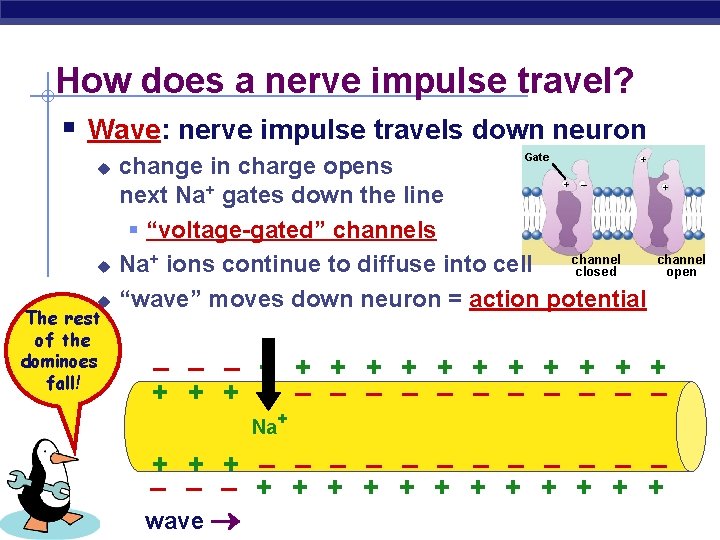
How does a nerve impulse travel? § Wave: nerve impulse travels down neuron u u u The rest of the dominoes fall! Gate + change in charge opens + – + next Na gates down the line § “voltage-gated” channels channel Na+ ions continue to diffuse into cell closed “wave” moves down neuron = action potential + channel open – – – + + + + – – – Na+ + – – – – + + + AP Biology wave
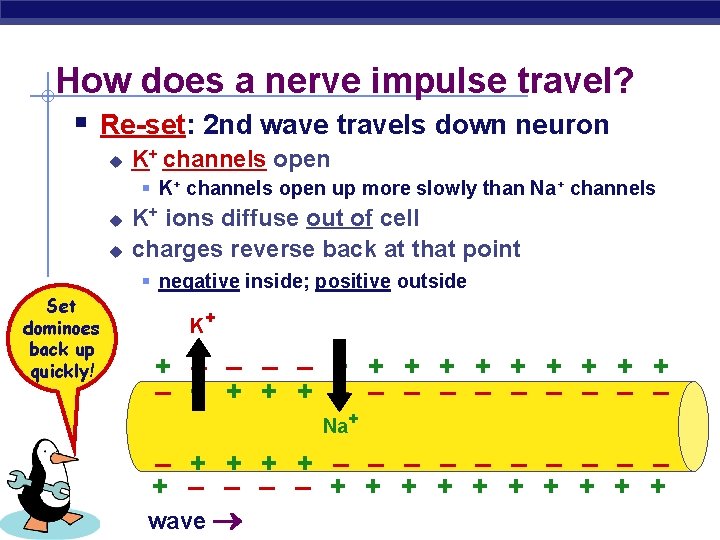
How does a nerve impulse travel? § Re-set: 2 nd wave travels down neuron u K+ channels open § K+ channels open up more slowly than Na+ channels u u Set dominoes back up quickly! K+ ions diffuse out of cell charges reverse back at that point § negative inside; positive outside K+ + – – + + + + + – – – – – Na+ – + + – – – – – + + + + + AP Biology wave
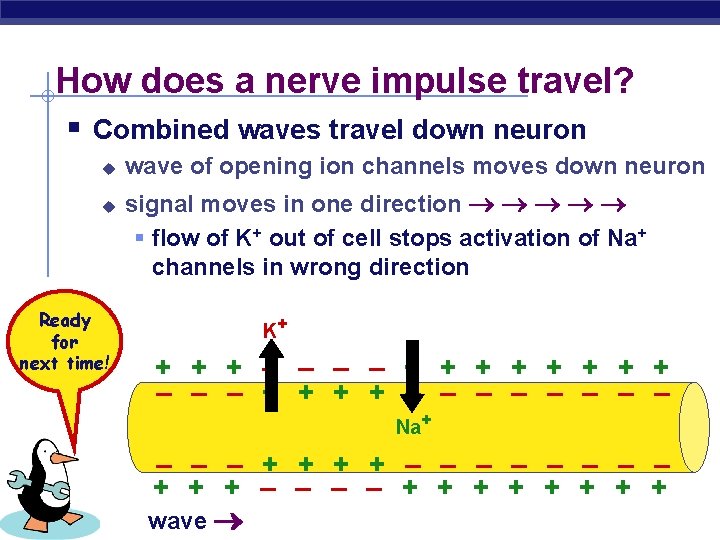
How does a nerve impulse travel? § Combined waves travel down neuron u u Ready for next time! wave of opening ion channels moves down neuron signal moves in one direction § flow of K+ out of cell stops activation of Na+ channels in wrong direction K+ + – – + + + + – – – – Na+ – – – + + – – – – + + + + AP Biology wave
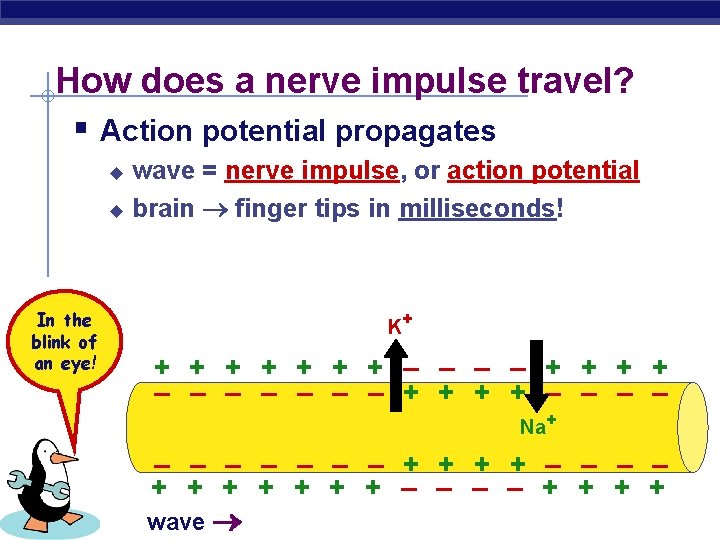
How does a nerve impulse travel? § Action potential propagates wave = nerve impulse, or action potential u brain finger tips in milliseconds! u In the blink of an eye! K+ + + + – – – – Na+ – – – – + + + + AP Biology wave
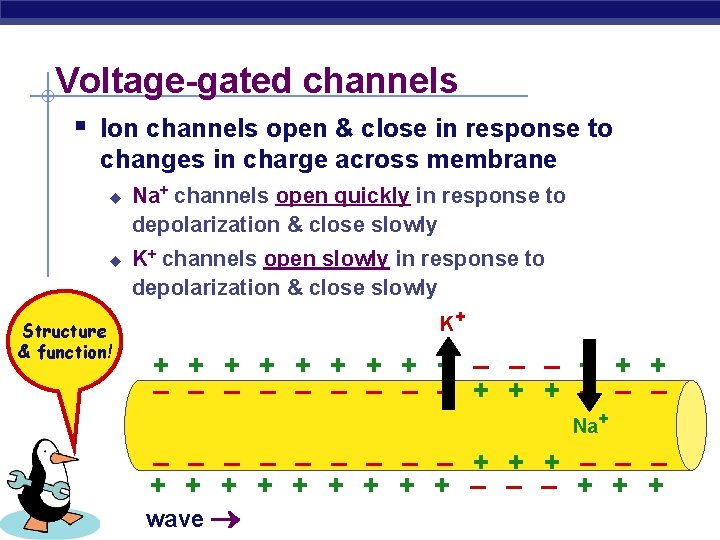
Voltage-gated channels § Ion channels open & close in response to changes in charge across membrane u u Structure & function! Na+ channels open quickly in response to depolarization & close slowly K+ channels open slowly in response to depolarization & close slowly K+ + + + + – – – – – + + + – – – Na+ – – – – – + + + + + – – – + + + AP Biology wave
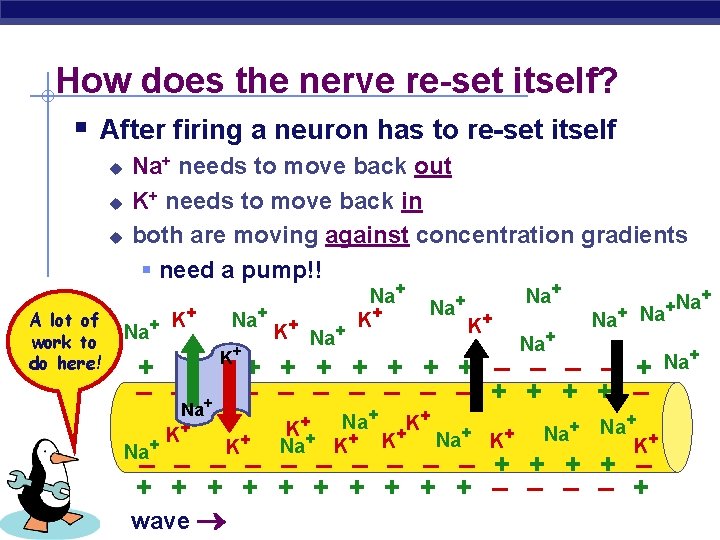
How does the nerve re-set itself? § After firing a neuron has to re-set itself u u u A lot of work to do here! Na+ needs to move back out K+ needs to move back in both are moving against concentration gradients § need a pump!! K+ + Na Na+ + K K Na+ Na+ K+ K+ Na+ +Na + Na Na + + + + + – – +– – – – + + – Na+ Na K+ K+ + Na K K+ + + Na K K Na+ Na+ K+ – – – – – + + + + + – – + AP Biology wave Na+ +
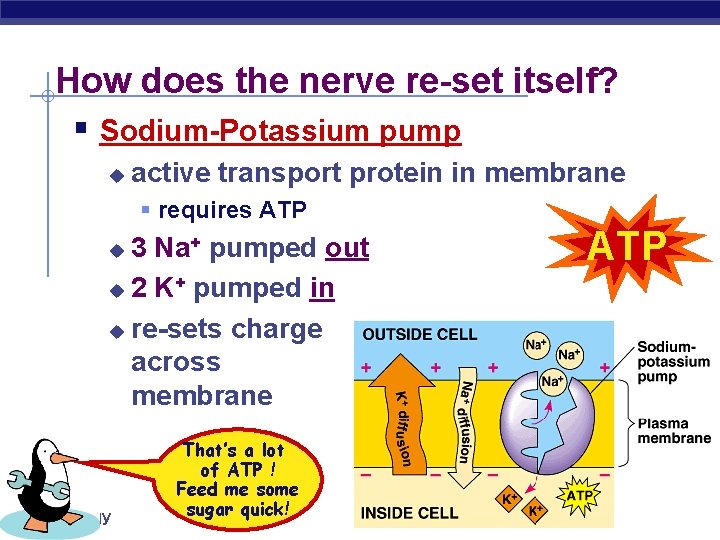
How does the nerve re-set itself? § Sodium-Potassium pump u active transport protein in membrane § requires ATP 3 Na+ pumped out u 2 K+ pumped in u re-sets charge across membrane u AP Biology That’s a lot of ATP ! Feed me some sugar quick! ATP
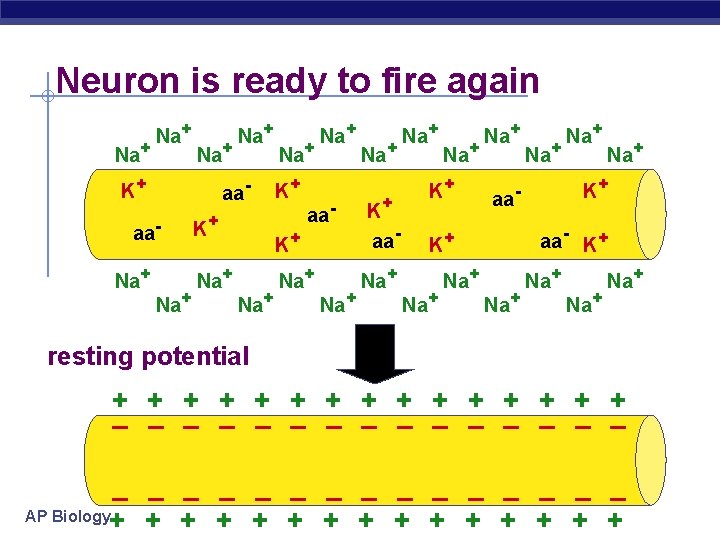
Neuron is ready to fire again Na+ Na+ K+ aa- aa. Na+ Na+ K+ Na+ aa- K+ Na+ Na+ K+ aa. Na+ Na+ Na+ K+ aa- K+ K+ Na+ Na+ resting potential + + + + – – – – – – – – AP Biology + + + +
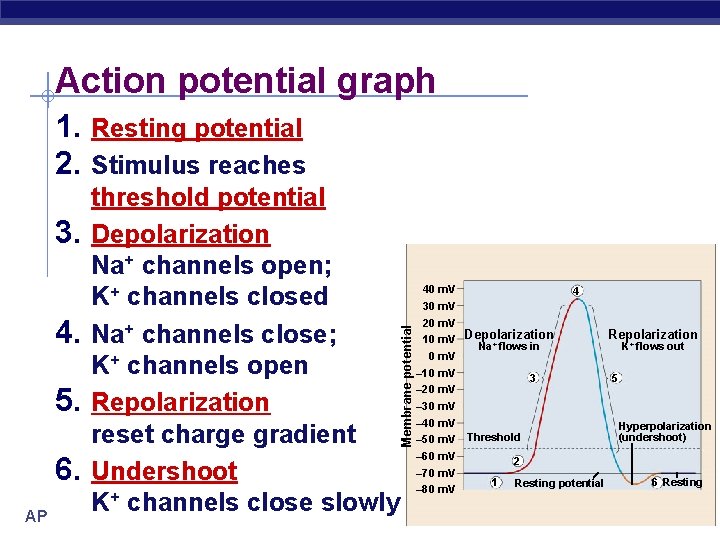
Action potential graph 1. Resting potential 2. Stimulus reaches Membrane potential threshold potential 3. Depolarization Na+ channels open; K+ channels closed 4. Na+ channels close; K+ channels open 5. Repolarization reset charge gradient 6. Undershoot + channels close slowly K AP Biology 40 m. V 4 30 m. V 20 m. V 10 m. V Depolarization Na+ flows in 0 m. V – 10 m. V 3 – 20 m. V Repolarization K+ flows out 5 – 30 m. V – 40 m. V – 50 m. V Threshold – 60 m. V 2 – 70 m. V – 80 m. V 1 Resting potential Hyperpolarization (undershoot) 6 Resting
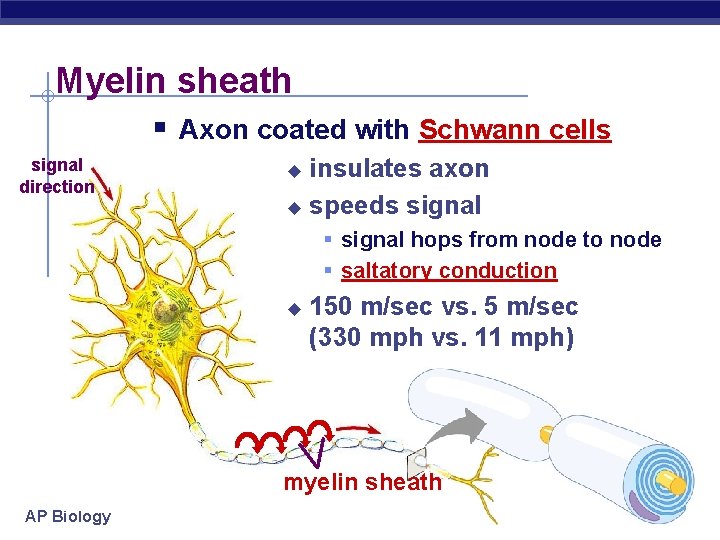
Myelin sheath § Axon coated with Schwann cells signal direction insulates axon u speeds signal u § signal hops from node to node § saltatory conduction u 150 m/sec vs. 5 m/sec (330 mph vs. 11 mph) myelin sheath AP Biology
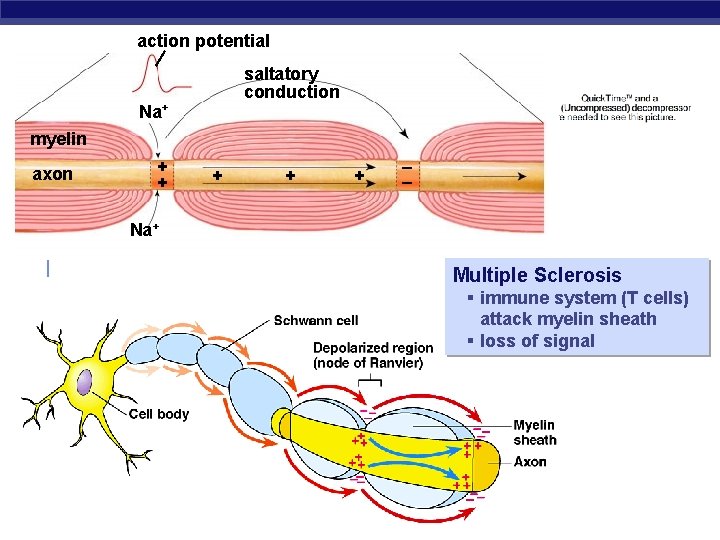
action potential saltatory conduction Na+ myelin axon + + + – – Na+ Multiple Sclerosis § immune system (T cells) attack myelin sheath § loss of signal AP Biology
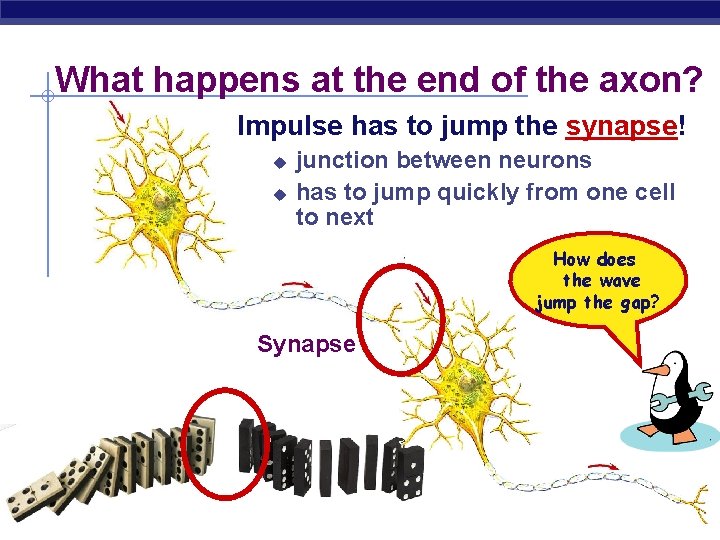
What happens at the end of the axon? Impulse has to jump the synapse! u u junction between neurons has to jump quickly from one cell to next How does the wave jump the gap? Synapse AP Biology
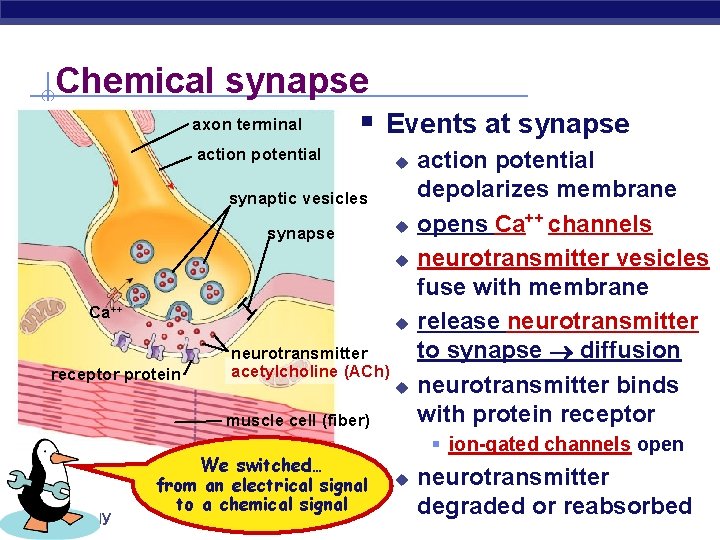
Chemical synapse axon terminal § Events at synapse action potential u synaptic vesicles synapse u u Ca++ u receptor protein neurotransmitter acetylcholine (ACh) u muscle cell (fiber) AP Biology We switched… from an electrical signal to a chemical signal action potential depolarizes membrane opens Ca++ channels neurotransmitter vesicles fuse with membrane release neurotransmitter to synapse diffusion neurotransmitter binds with protein receptor § ion-gated channels open u neurotransmitter degraded or reabsorbed
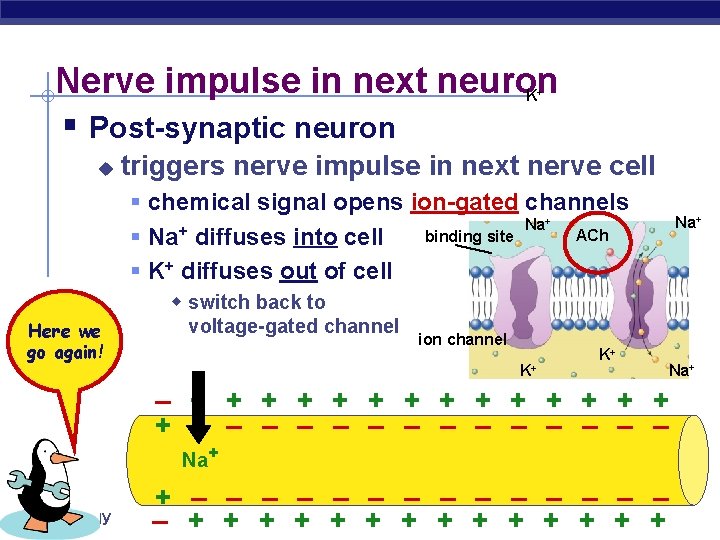
Nerve impulse in next neuron K § Post-synaptic neuron + u triggers nerve impulse in next nerve cell § chemical signal opens ion-gated channels Na+ + ACh binding site § Na diffuses into cell § K+ diffuses out of cell w switch back to Here we go again! voltage-gated channel ion channel K+ K+ Na+ – + + + + – – – – Na+ AP Biology + – – – – + + + +
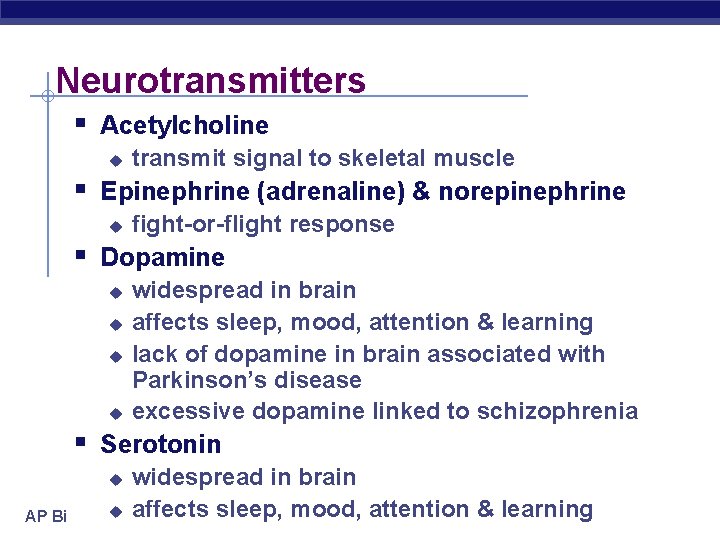
Neurotransmitters § Acetylcholine u transmit signal to skeletal muscle § Epinephrine (adrenaline) & norepinephrine u fight-or-flight response § Dopamine u u widespread in brain affects sleep, mood, attention & learning lack of dopamine in brain associated with Parkinson’s disease excessive dopamine linked to schizophrenia § Serotonin u AP Biologyu widespread in brain affects sleep, mood, attention & learning
Neurotransmitters § Weak point of nervous system u any substance that affects neurotransmitters or mimics them affects nerve function § gases: nitrous oxide, carbon monoxide § mood altering drugs: w stimulants n amphetamines, caffeine, nicotine w depressants n AP Biology quaaludes, barbiturates § hallucinogenic drugs: LSD, peyote § SSRIs: Prozac, Zoloft, Paxil § poisons
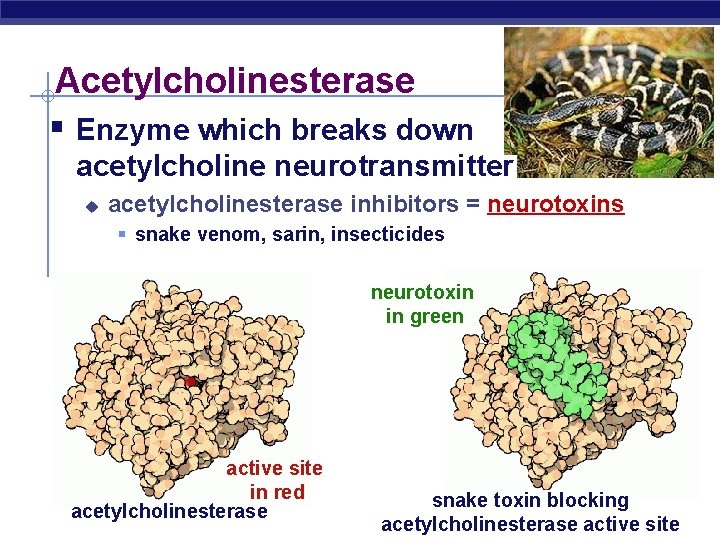
Acetylcholinesterase § Enzyme which breaks down acetylcholine neurotransmitter u acetylcholinesterase inhibitors = neurotoxins § snake venom, sarin, insecticides neurotoxin in green active site in red acetylcholinesterase AP Biology snake toxin blocking acetylcholinesterase active site
Questions to ponder… § Why are axons so long? § Why have synapses at all? § How do “mind altering drugs” work? u caffeine, alcohol, nicotine, marijuana… § Do plants have a nervous system? u AP Biology Do they need one?
Ponder this… Any Questions? ? AP Biology 2007 -2008
AP Biology
- Slides: 30