
NERVOUS SYSTEM Nervous System Master controlling and communicating
- Slides: 40
NERVOUS SYSTEM
Nervous System • Master controlling and communicating system
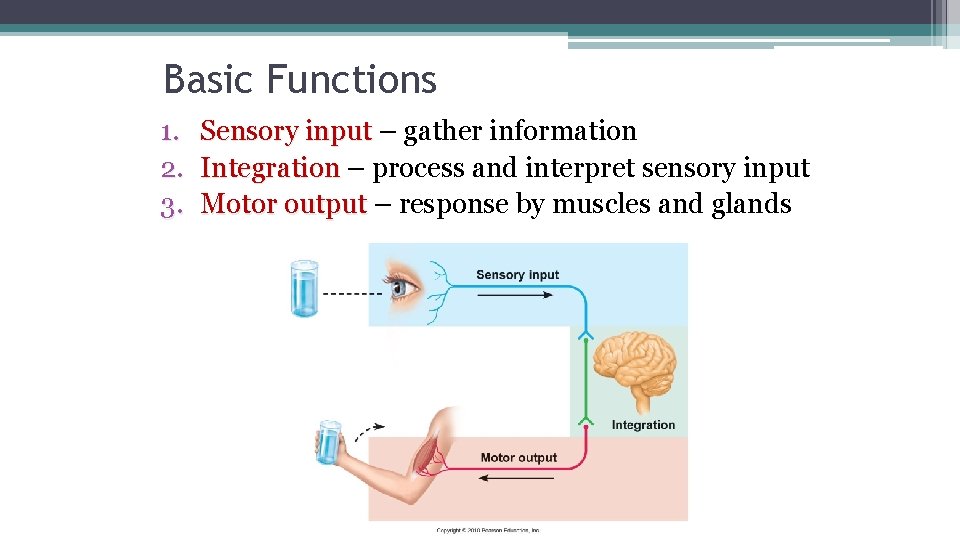
Basic Functions 1. Sensory input – gather information 2. Integration – process and interpret sensory input 3. Motor output – response by muscles and glands
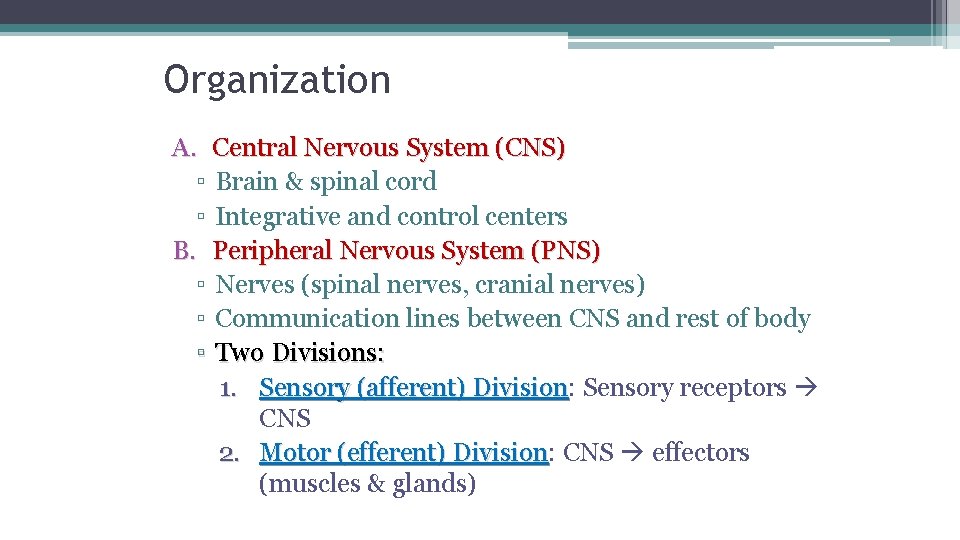
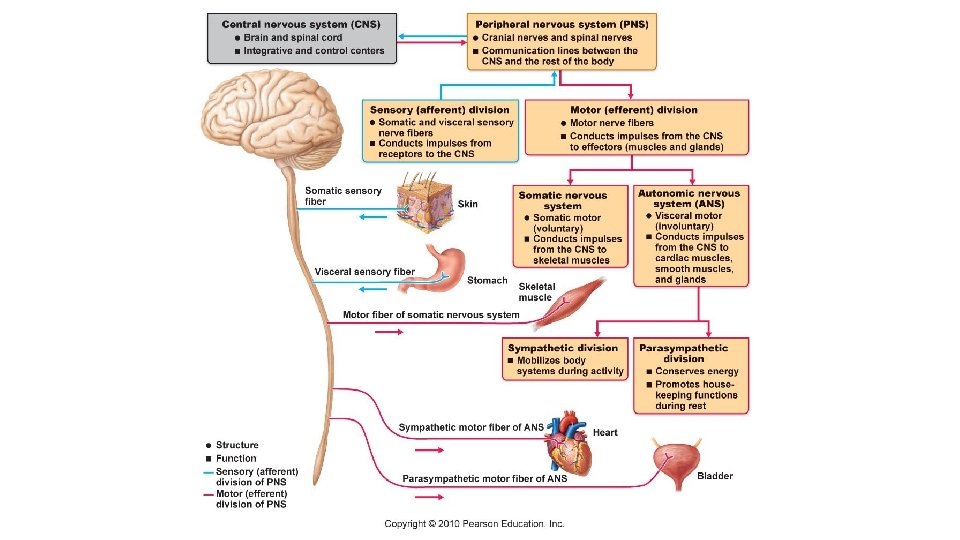
Organization A. Central Nervous System (CNS) ▫ Brain & spinal cord ▫ Integrative and control centers B. Peripheral Nervous System (PNS) ▫ Nerves (spinal nerves, cranial nerves) ▫ Communication lines between CNS and rest of body ▫ Two Divisions: 1. Sensory (afferent) Division: Division Sensory receptors CNS 2. Motor (efferent) Division: Division CNS effectors (muscles & glands)
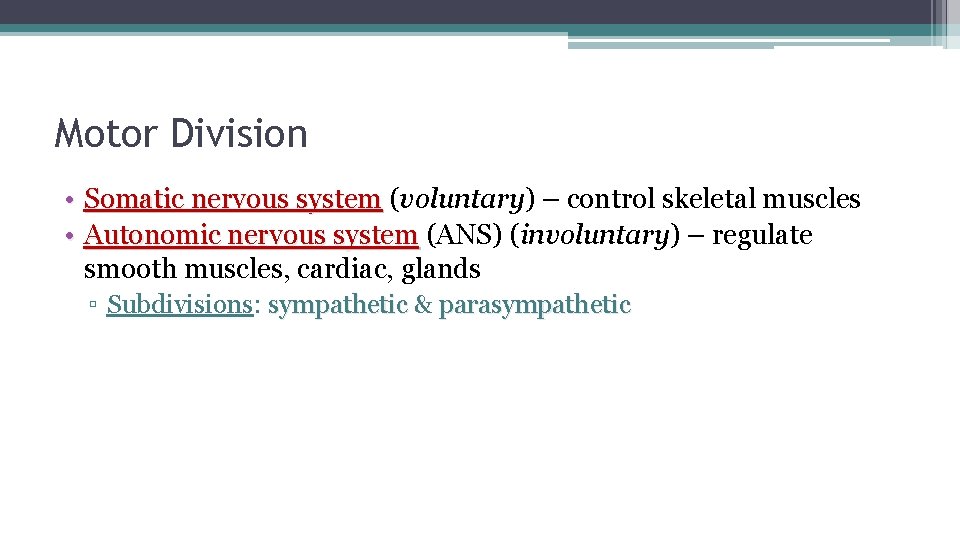
Motor Division • Somatic nervous system (voluntary) – control skeletal muscles • Autonomic nervous system (ANS) (involuntary) – regulate smooth muscles, cardiac, glands ▫ Subdivisions: sympathetic & parasympathetic
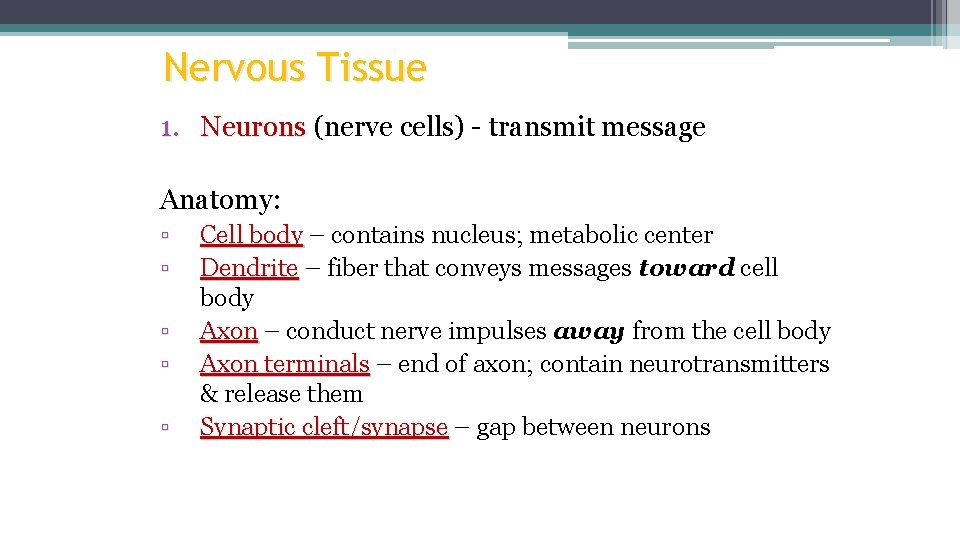
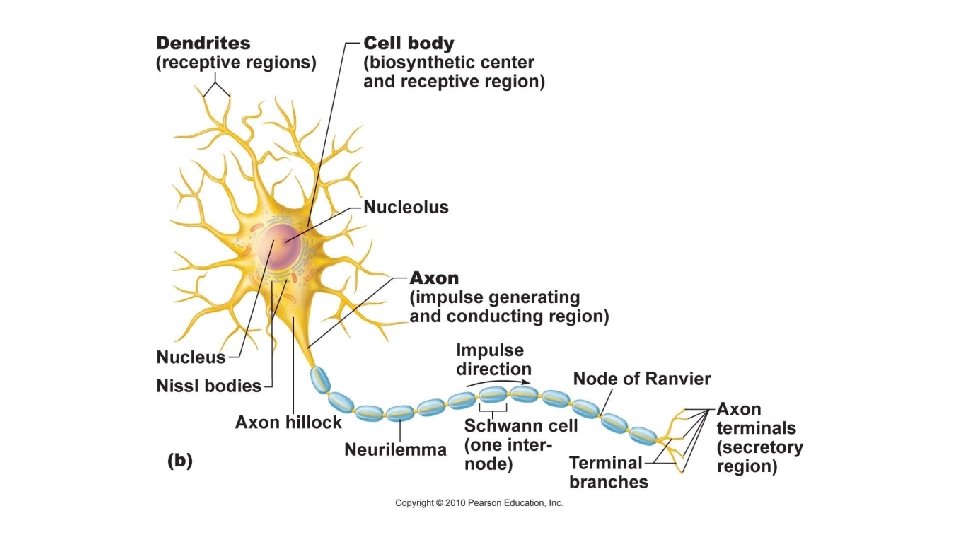
Nervous Tissue 1. Neurons (nerve cells) - transmit message Anatomy: ▫ ▫ ▫ Cell body – contains nucleus; metabolic center Dendrite – fiber that conveys messages toward cell body Axon – conduct nerve impulses away from the cell body Axon terminals – end of axon; contain neurotransmitters & release them Synaptic cleft/synapse – gap between neurons
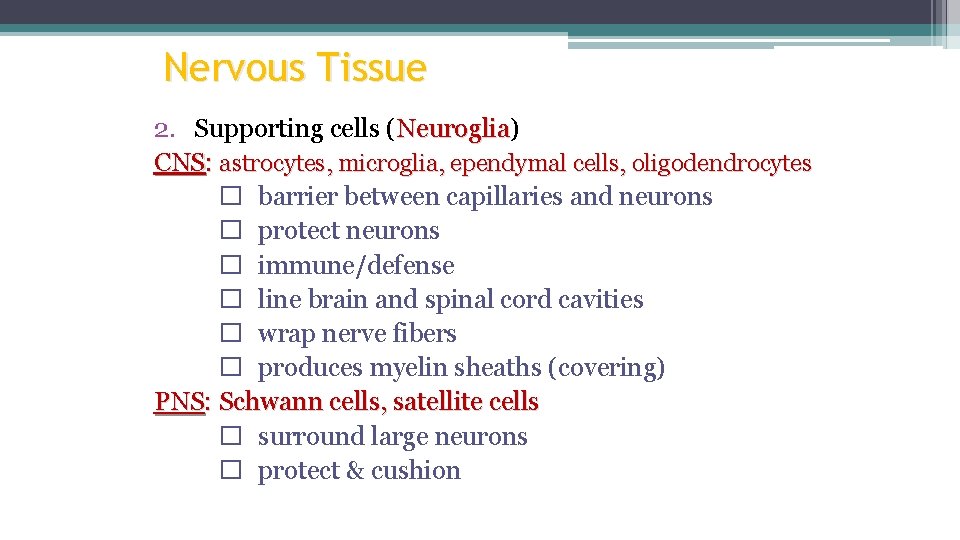
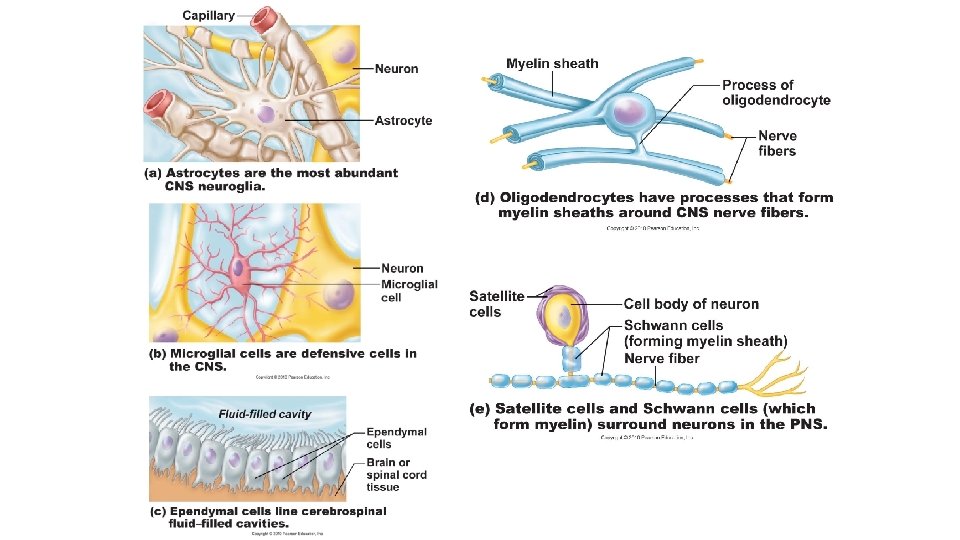
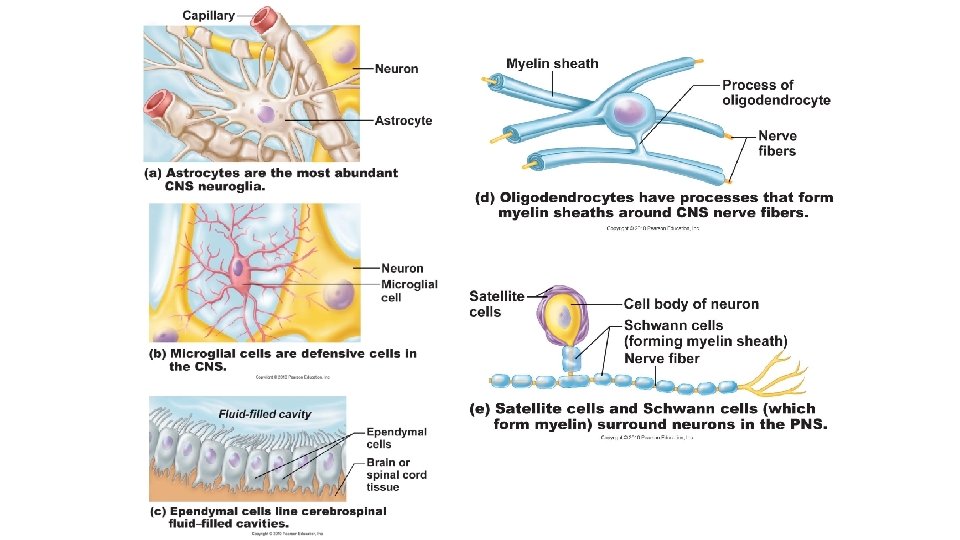
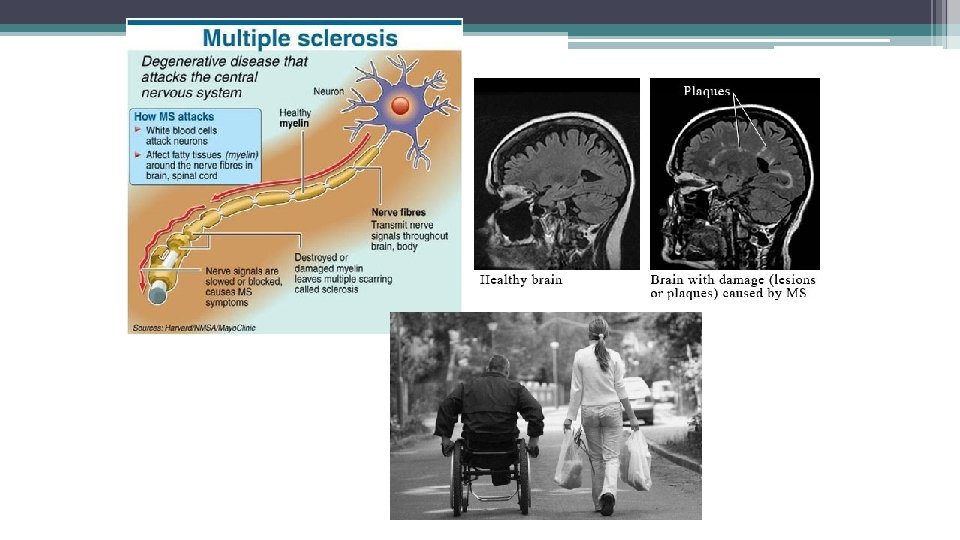
Nervous Tissue 2. Supporting cells (Neuroglia) Neuroglia CNS: astrocytes, microglia, ependymal cells, oligodendrocytes � barrier between capillaries and neurons � protect neurons � immune/defense � line brain and spinal cord cavities � wrap nerve fibers � produces myelin sheaths (covering) PNS: Schwann cells, satellite cells � surround large neurons � protect & cushion
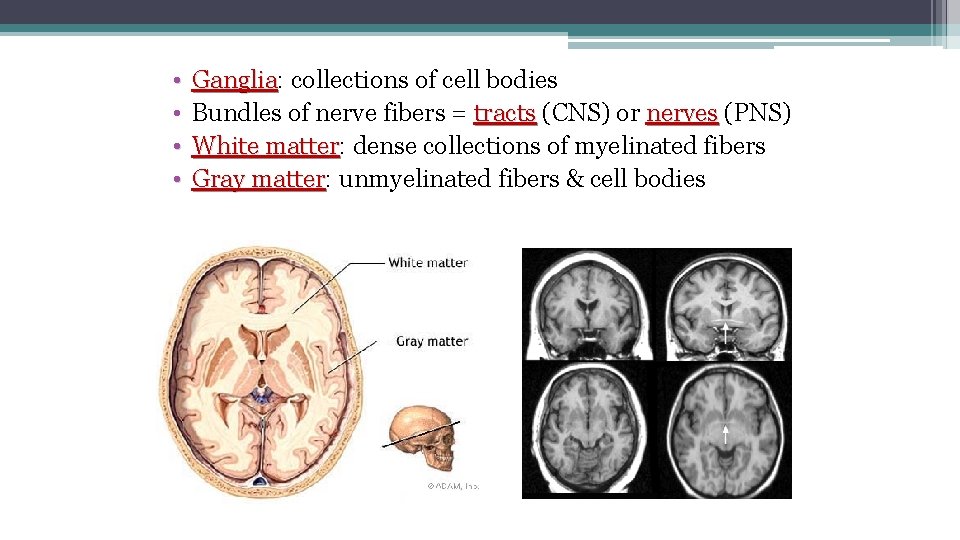
• • Ganglia: Ganglia collections of cell bodies Bundles of nerve fibers = tracts (CNS) or nerves (PNS) White matter: matter dense collections of myelinated fibers Gray matter: matter unmyelinated fibers & cell bodies
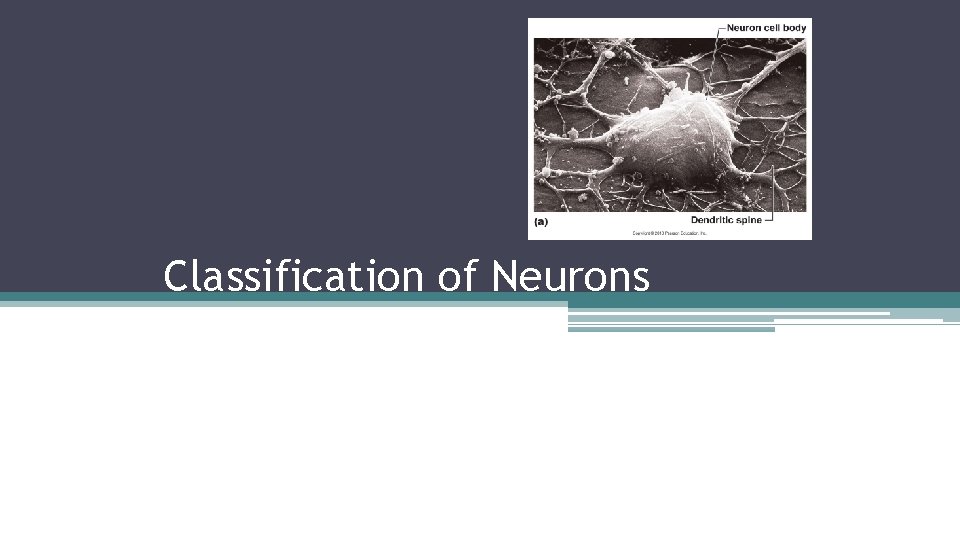
Classification of Neurons
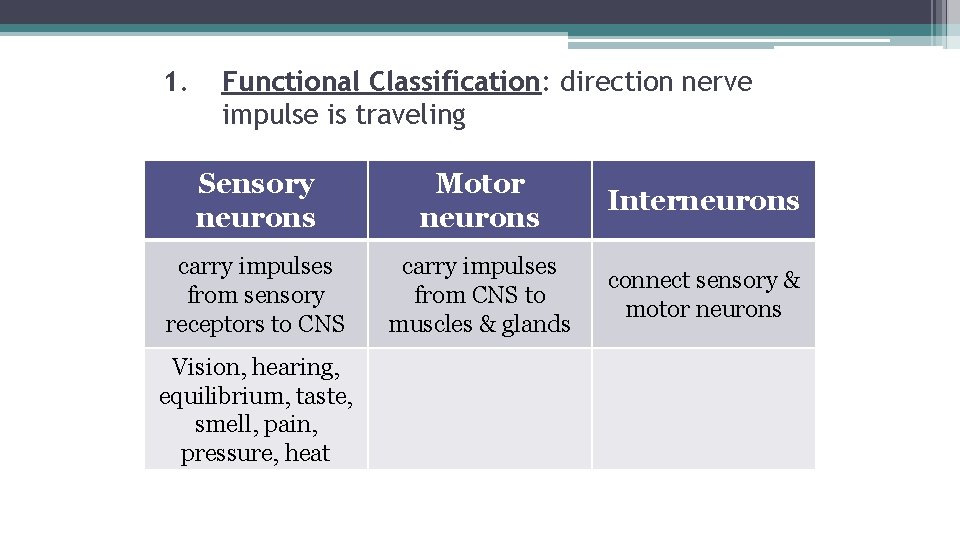
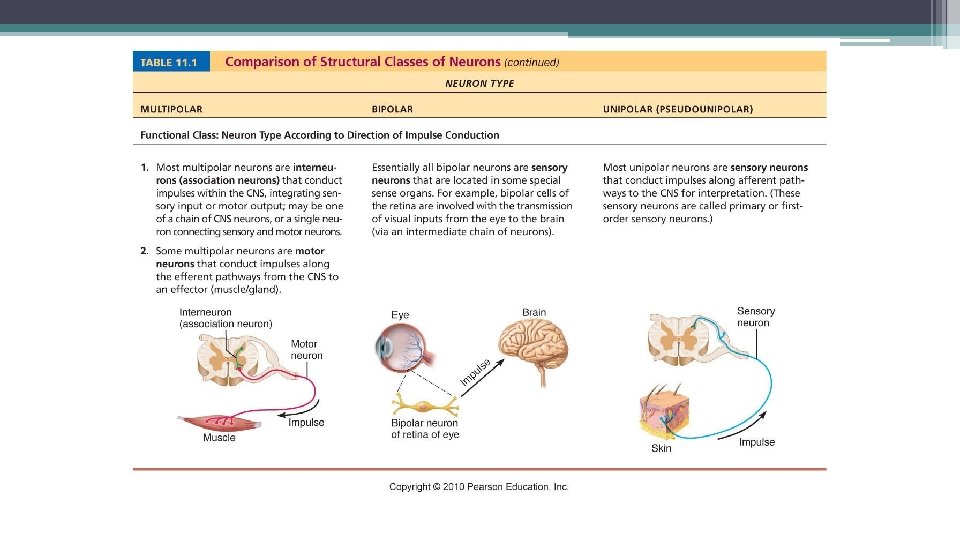
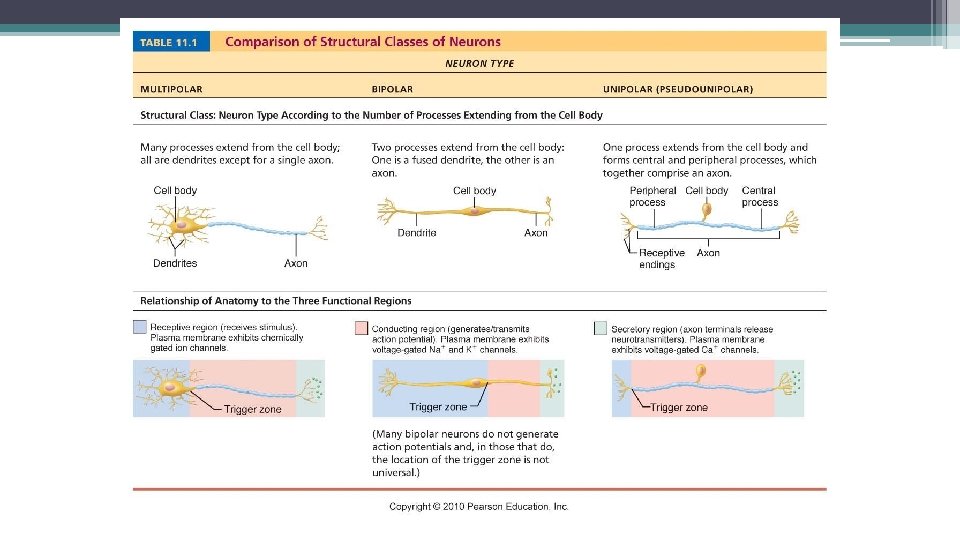
1. Functional Classification: direction nerve impulse is traveling Sensory neurons Motor neurons Interneurons carry impulses from sensory receptors to CNS carry impulses from CNS to muscles & glands connect sensory & motor neurons Vision, hearing, equilibrium, taste, smell, pain, pressure, heat
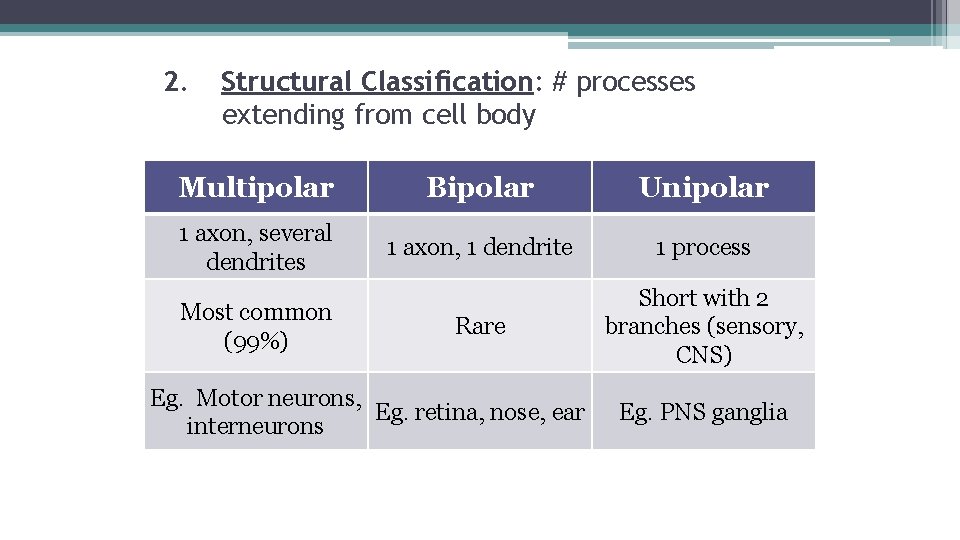
2. Structural Classification: # processes extending from cell body Multipolar Bipolar Unipolar 1 axon, several dendrites 1 axon, 1 dendrite 1 process Rare Short with 2 branches (sensory, CNS) Most common (99%) Eg. Motor neurons, Eg. retina, nose, ear interneurons Eg. PNS ganglia
Nerve Impulses
Neuron Function 1. Irritability: Irritability to respond to stimulus & convert to nerve impulse 2. Conductivity: Conductivity transmit impulse to other neurons, muscles, or glands
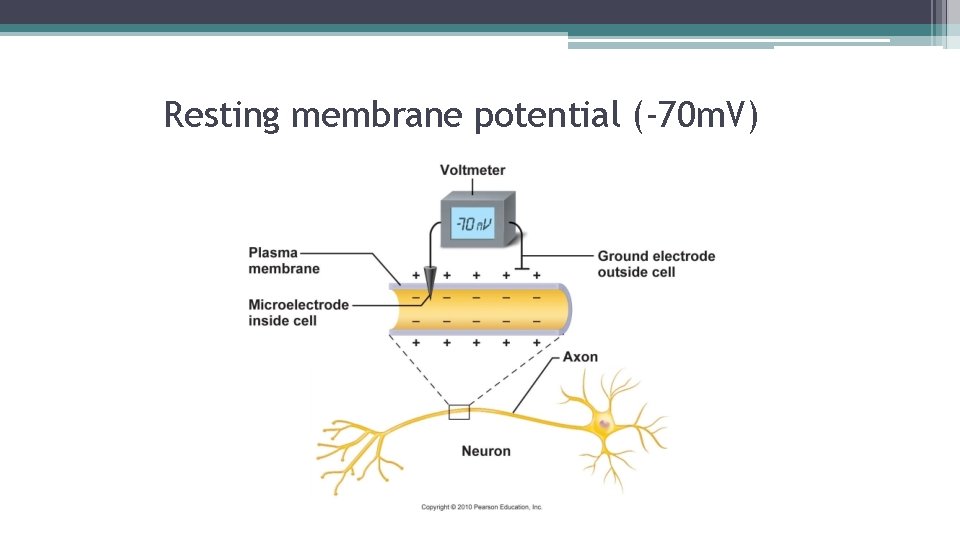
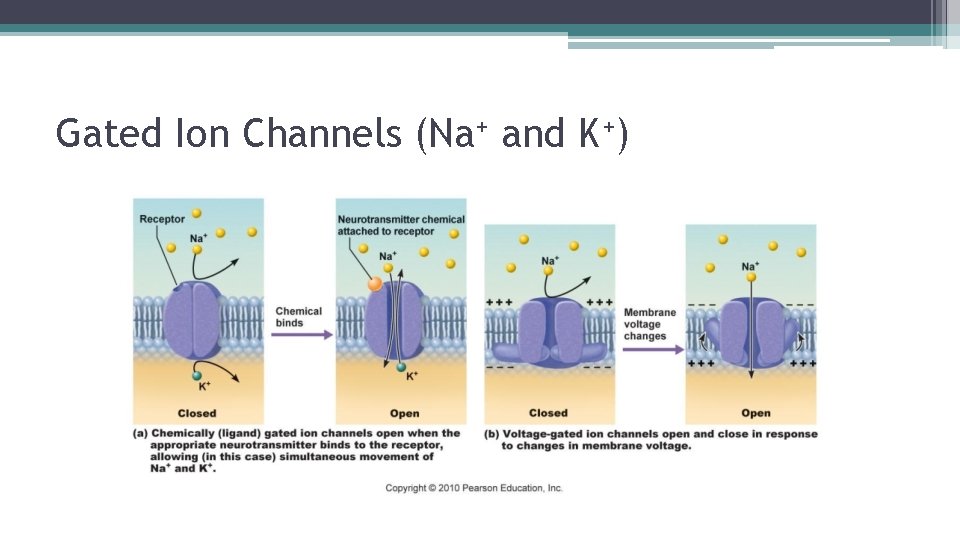
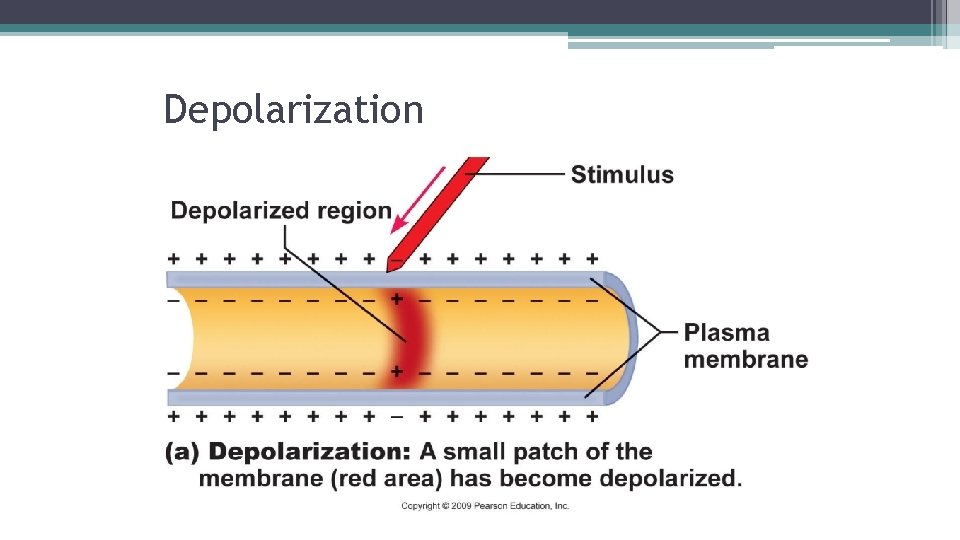
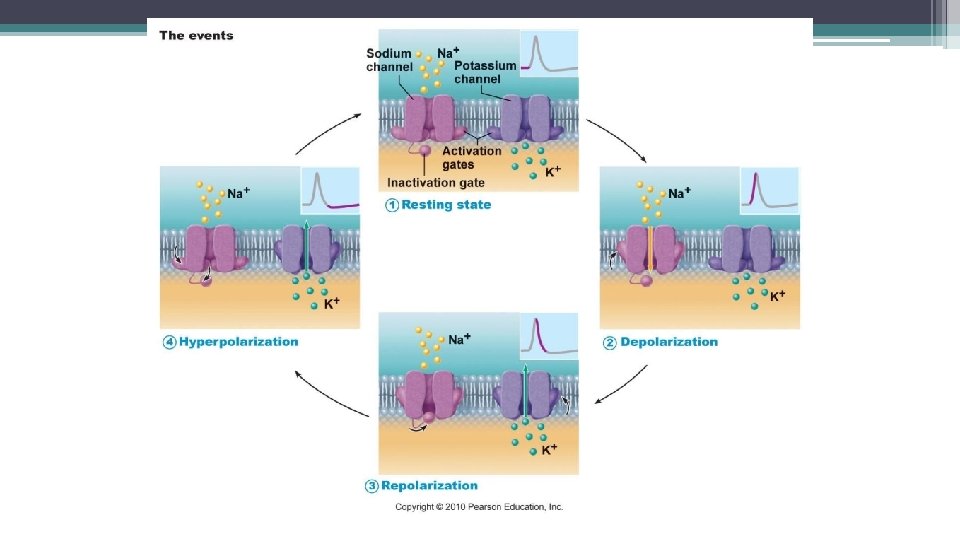
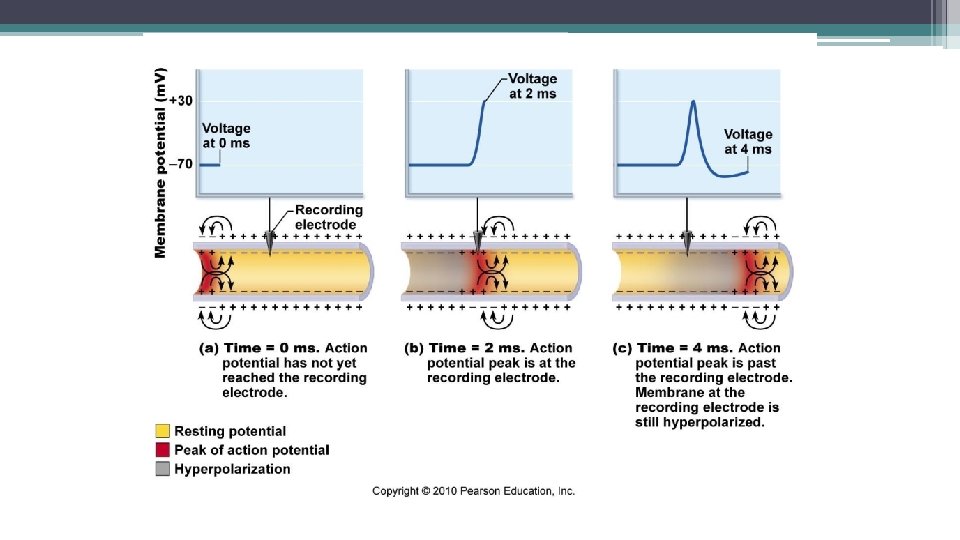
Exciting a Neuron: • Cell membrane at rest = polarized ▫ Na+ outside cell, K+ inside cell ▫ Inside is (-) compared to outside • Stimulus excited neuron (Na+ rushes in) becomes depolarized • Depolarization activates neuron to transmit an action potential (nerve impulse) ▫ All-or-none response ▫ Impulse conducts down entire axon • K+ diffuses out repolarization of membrane • Na+/K+ ion concentrations restored by sodiumpotassium pump (uses ATP)
Resting membrane potential (-70 m. V)
Gated Ion Channels (Na+ and K+)
Depolarization
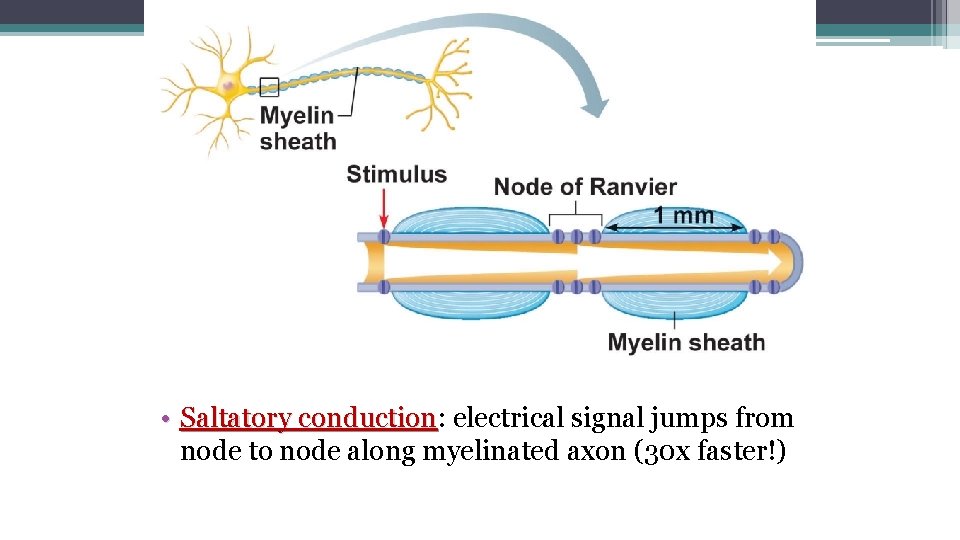
• Saltatory conduction: conduction electrical signal jumps from node to node along myelinated axon (30 x faster!)
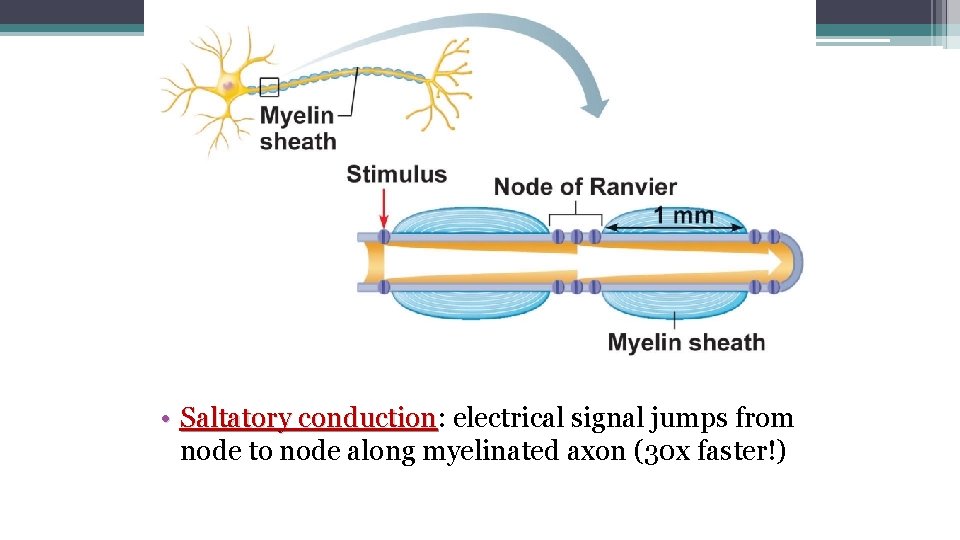
• Saltatory conduction: conduction electrical signal jumps from node to node along myelinated axon (30 x faster!)
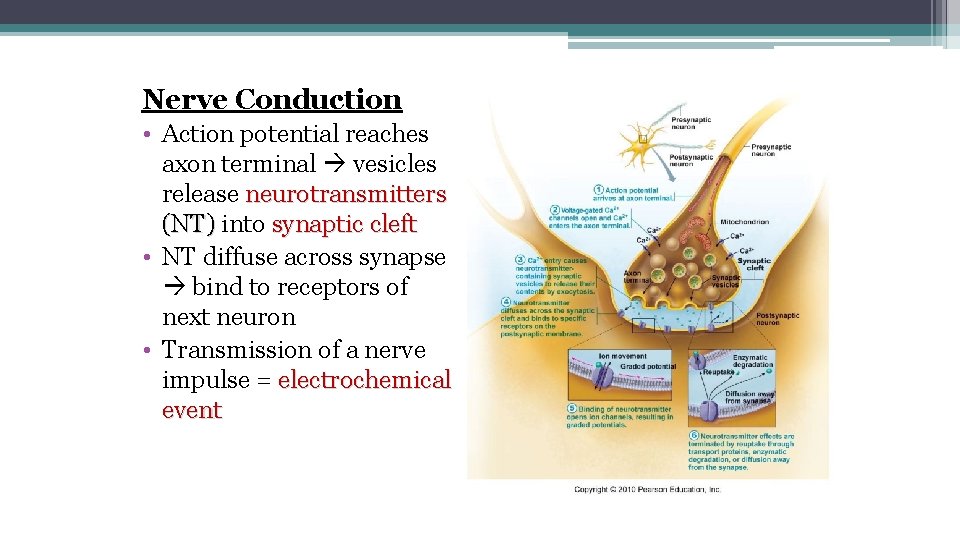
Nerve Conduction • Action potential reaches axon terminal vesicles release neurotransmitters (NT) into synaptic cleft • NT diffuse across synapse bind to receptors of next neuron • Transmission of a nerve impulse = electrochemical event
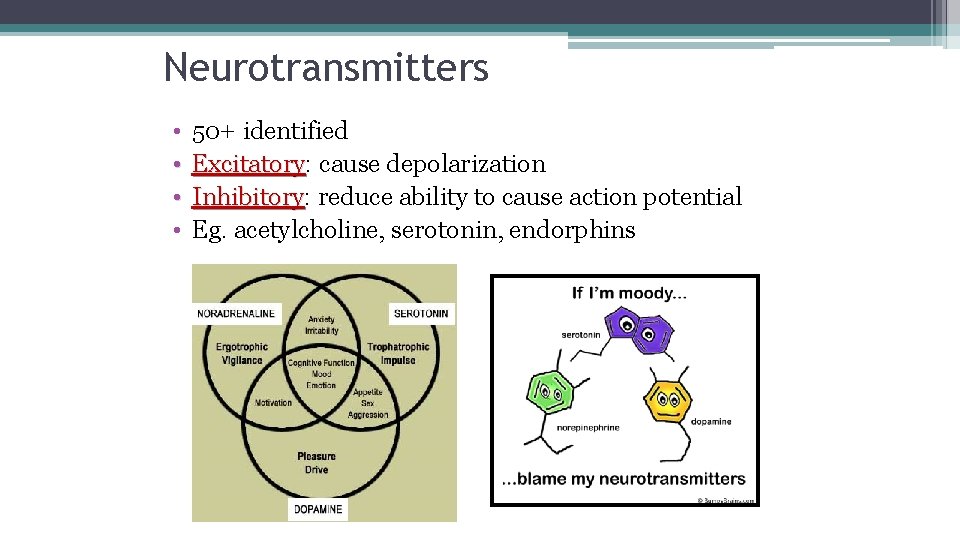
Neurotransmitters • • 50+ identified Excitatory: Excitatory cause depolarization Inhibitory: Inhibitory reduce ability to cause action potential Eg. acetylcholine, serotonin, endorphins
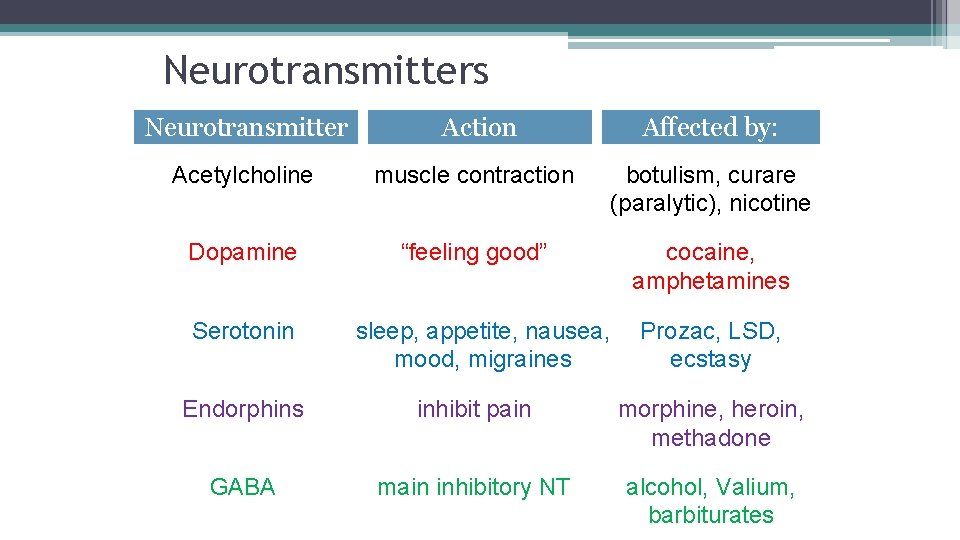
Neurotransmitters Neurotransmitter Action Affected by: Acetylcholine muscle contraction botulism, curare (paralytic), nicotine Dopamine “feeling good” cocaine, amphetamines Serotonin sleep, appetite, nausea, mood, migraines Prozac, LSD, ecstasy Endorphins inhibit pain morphine, heroin, methadone GABA main inhibitory NT alcohol, Valium, barbiturates
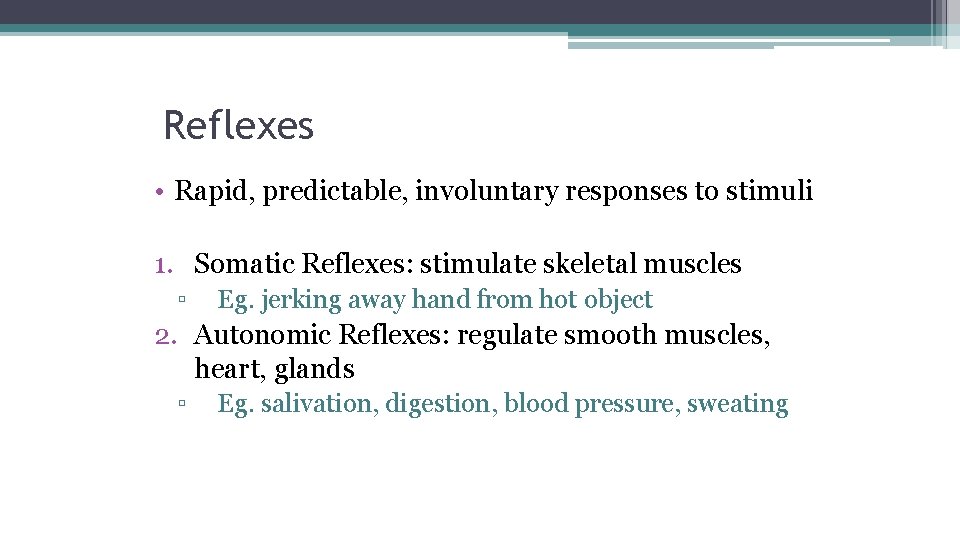
Reflexes • Rapid, predictable, involuntary responses to stimuli 1. Somatic Reflexes: stimulate skeletal muscles ▫ Eg. jerking away hand from hot object 2. Autonomic Reflexes: regulate smooth muscles, heart, glands ▫ Eg. salivation, digestion, blood pressure, sweating
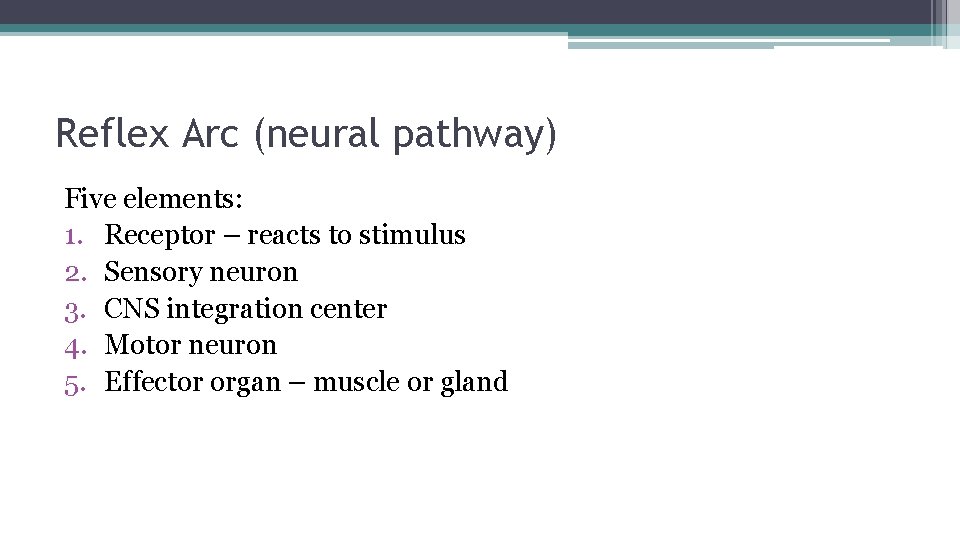
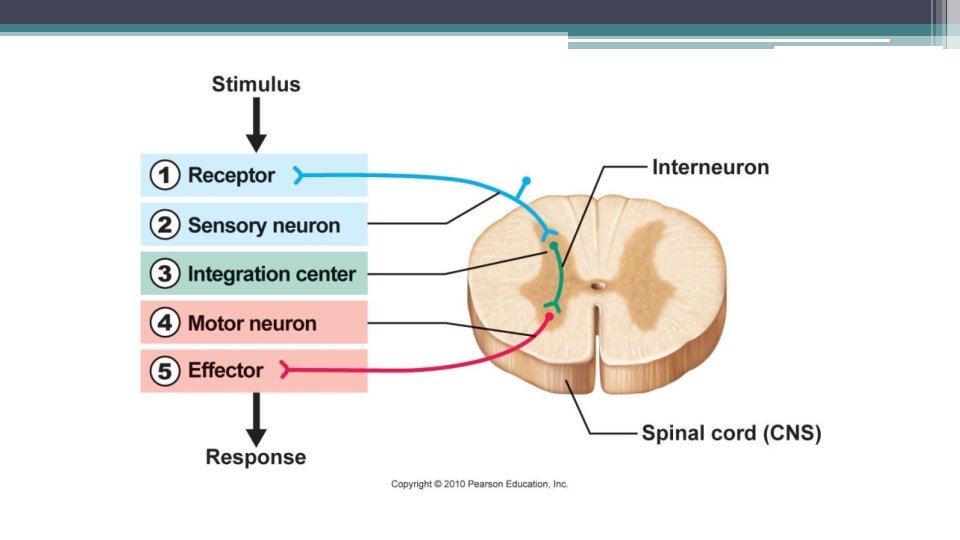
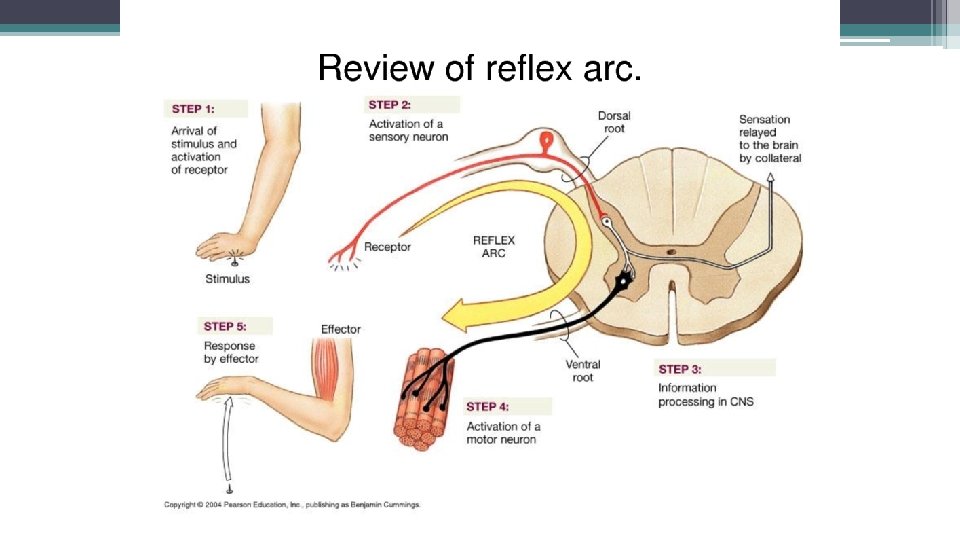
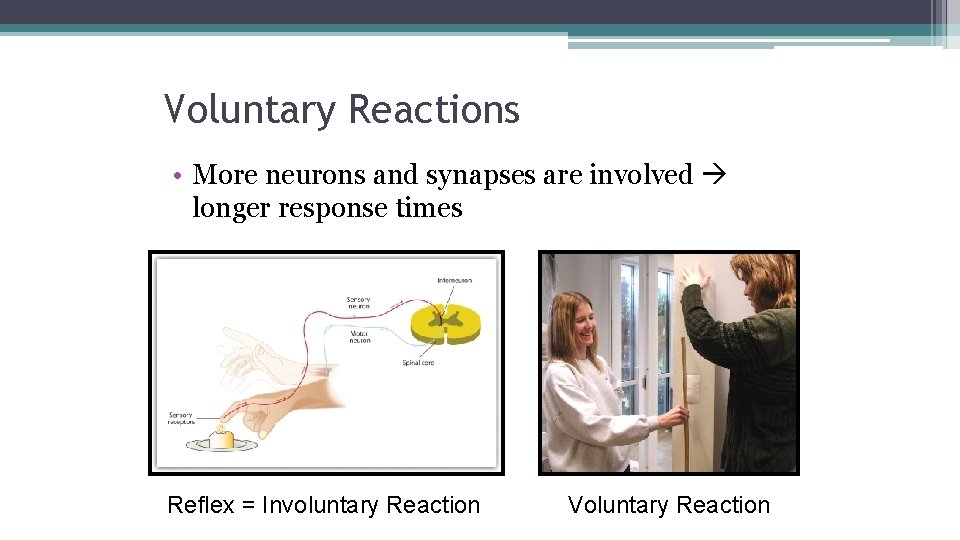
Reflex Arc (neural pathway) Five elements: 1. Receptor – reacts to stimulus 2. Sensory neuron 3. CNS integration center 4. Motor neuron 5. Effector organ – muscle or gland
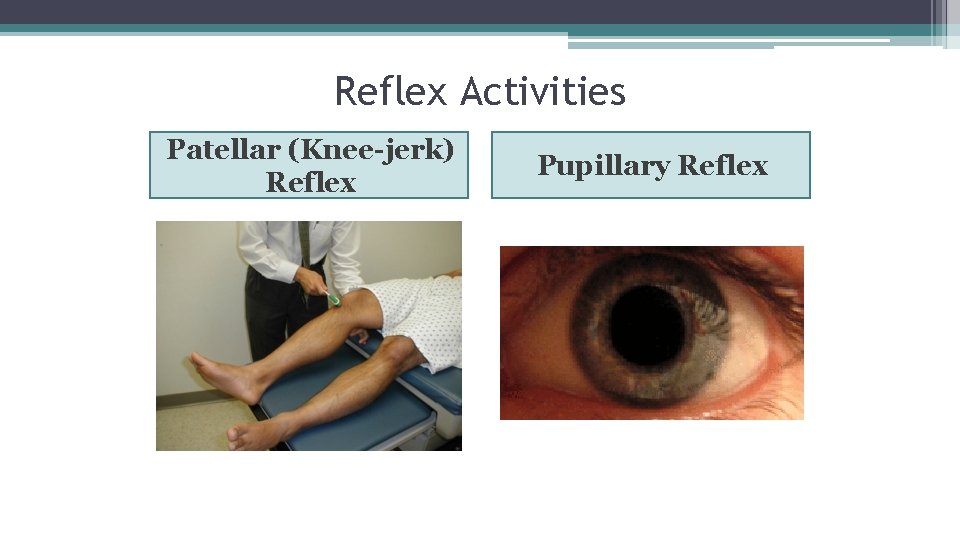
Reflex Activities Patellar (Knee-jerk) Reflex Pupillary Reflex
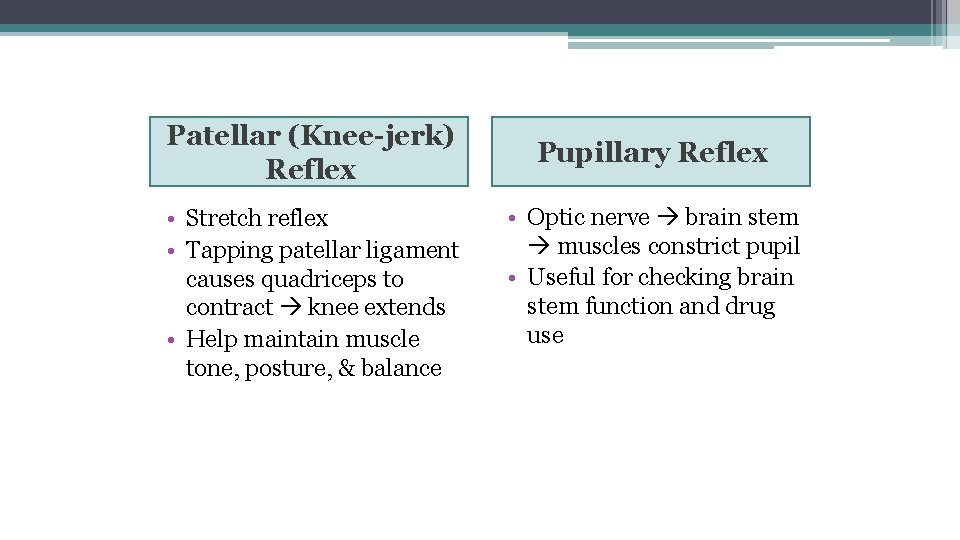
Patellar (Knee-jerk) Reflex • Stretch reflex • Tapping patellar ligament causes quadriceps to contract knee extends • Help maintain muscle tone, posture, & balance Pupillary Reflex • Optic nerve brain stem muscles constrict pupil • Useful for checking brain stem function and drug use
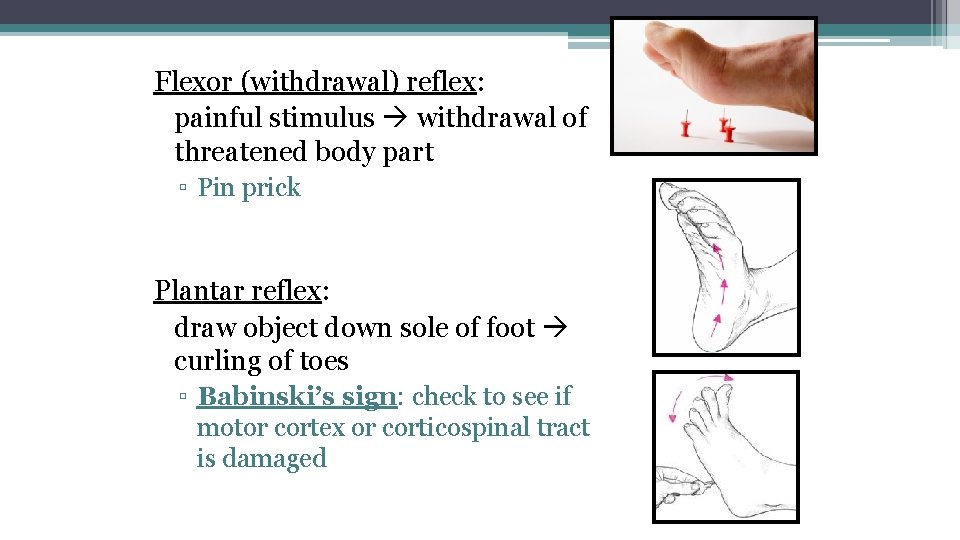
Flexor (withdrawal) reflex: painful stimulus withdrawal of threatened body part ▫ Pin prick Plantar reflex: draw object down sole of foot curling of toes ▫ Babinski’s sign: check to see if motor cortex or corticospinal tract is damaged
Voluntary Reactions • More neurons and synapses are involved longer response times Reflex = Involuntary Reaction Voluntary Reaction