
NERVOUS SYSTEM Major functions of the nervous systemthe
- Slides: 34
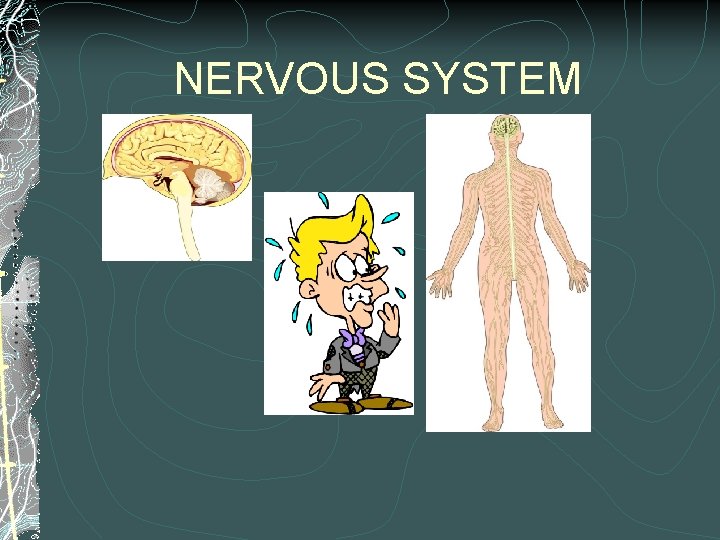
NERVOUS SYSTEM
Major functions of the nervous system-the 3 C’s Control Communicate Coordinate Receive stimuli Process information and decide output Direct response
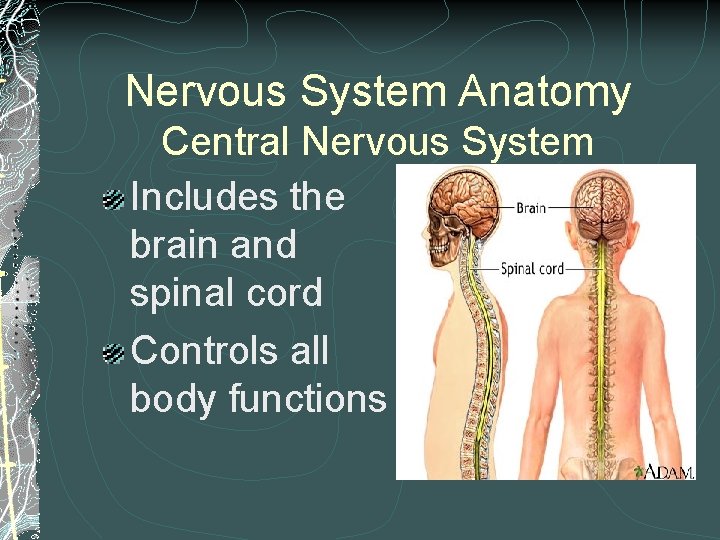
Nervous System Anatomy Central Nervous System Includes the brain and spinal cord Controls all body functions
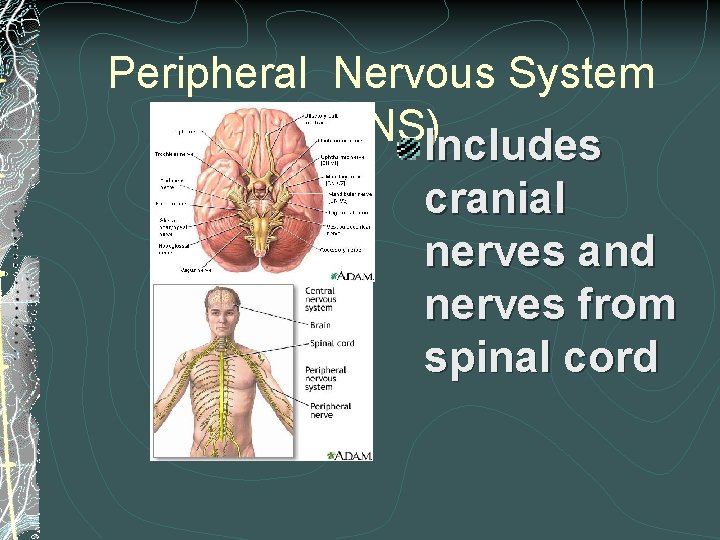
Peripheral Nervous System (PNS)Includes cranial nerves and nerves from spinal cord
Nervous system Sensory/Afferent Sensory: afferent neurons Receive a stimulus Can come from organs (visceral) Can come from the body (somatic)
Efferent Motor (efferent neurons)response Voluntary: muscles Involuntary: Parasympathetic—maintain homeostasis Sympathetic--fight or flight-stress response Reflexes
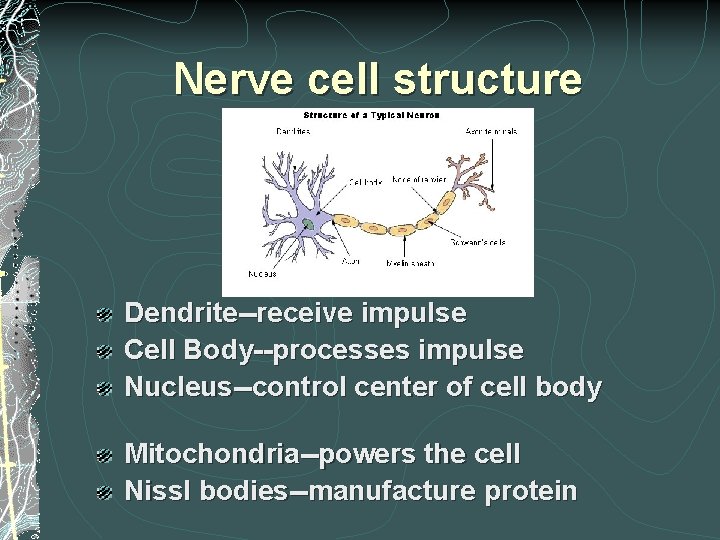
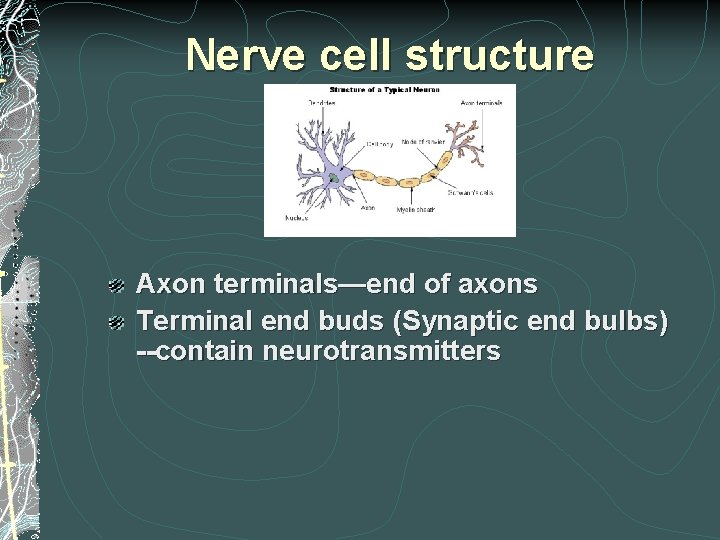
Nerve cell structure (Neuron) Dendrite--receive impulse Cell Body--processes impulse Nucleus--control center of cell body Mitochondria--powers the cell Nissl bodies--manufacture protein
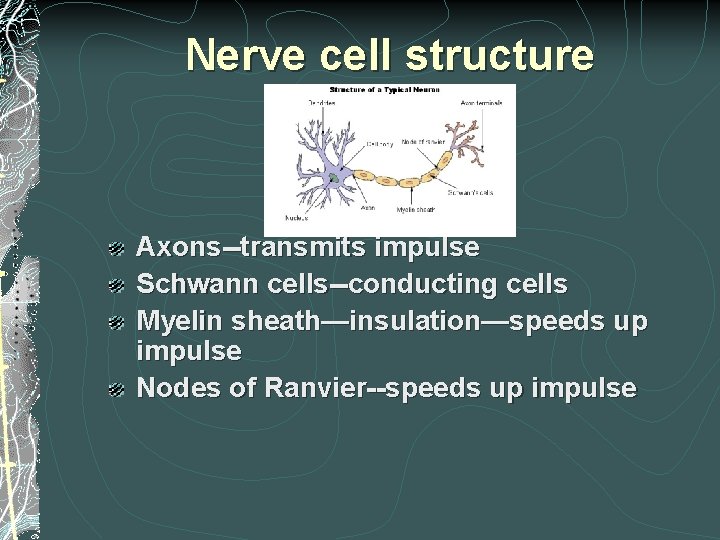
Nerve cell structure (Neuron) Axons--transmits impulse Schwann cells--conducting cells Myelin sheath—insulation—speeds up impulse Nodes of Ranvier--speeds up impulse
Nerve cell structure (Neuron) Axon terminals—end of axons Terminal end buds (Synaptic end bulbs) --contain neurotransmitters
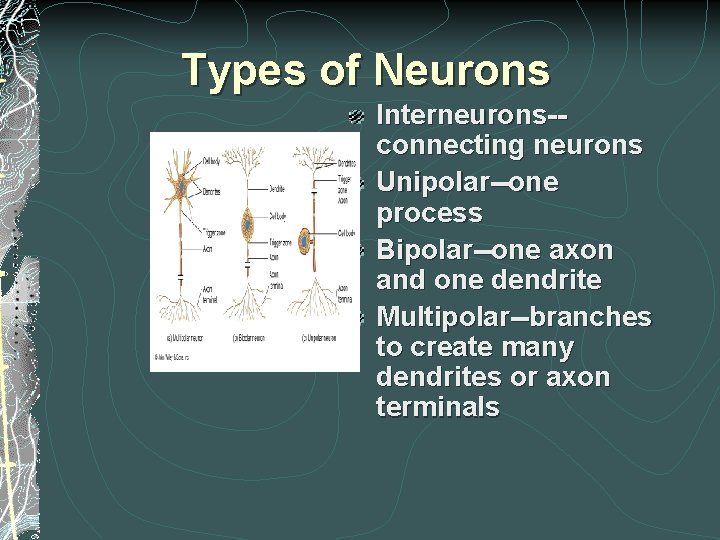
Types of Neurons Interneurons-connecting neurons Unipolar--one process Bipolar--one axon and one dendrite Multipolar--branches to create many dendrites or axon terminals
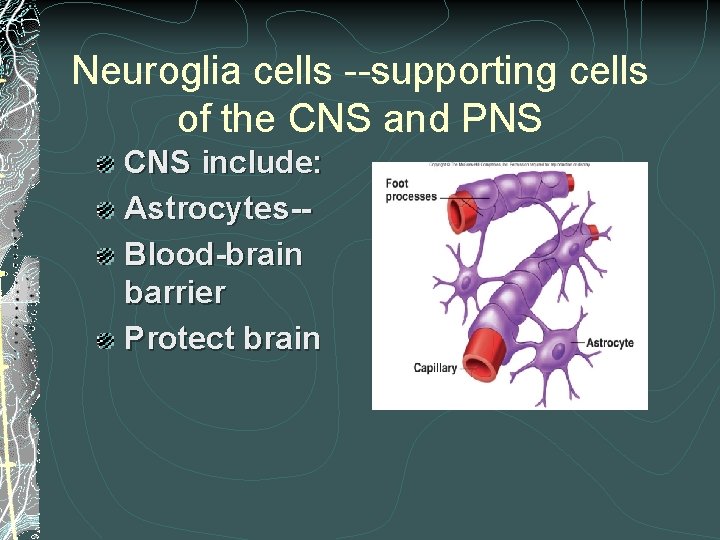
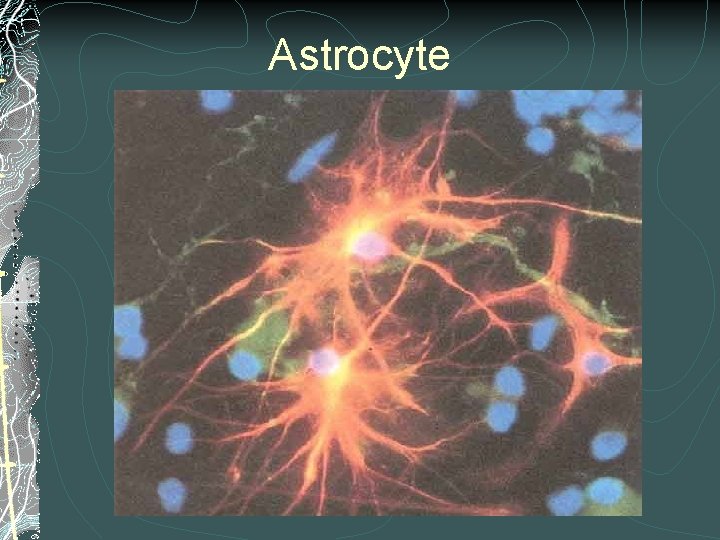
Neuroglia cells --supporting cells of the CNS and PNS CNS include: Astrocytes-Blood-brain barrier Protect brain
Astrocyte
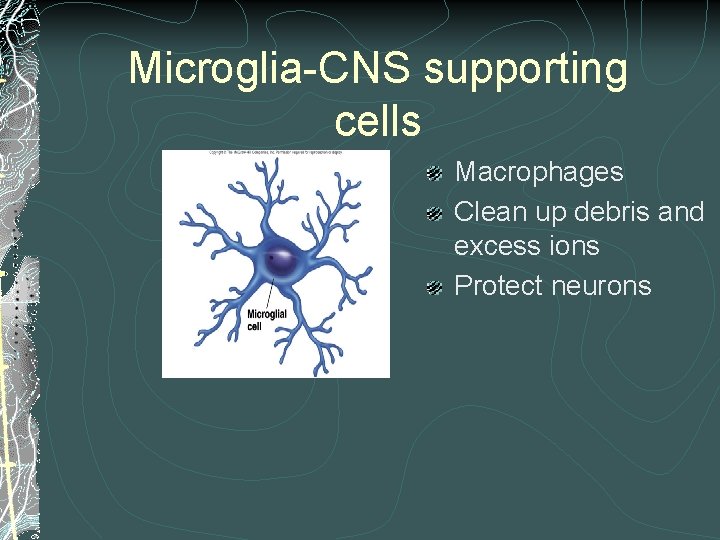
Microglia-CNS supporting cells Macrophages Clean up debris and excess ions Protect neurons
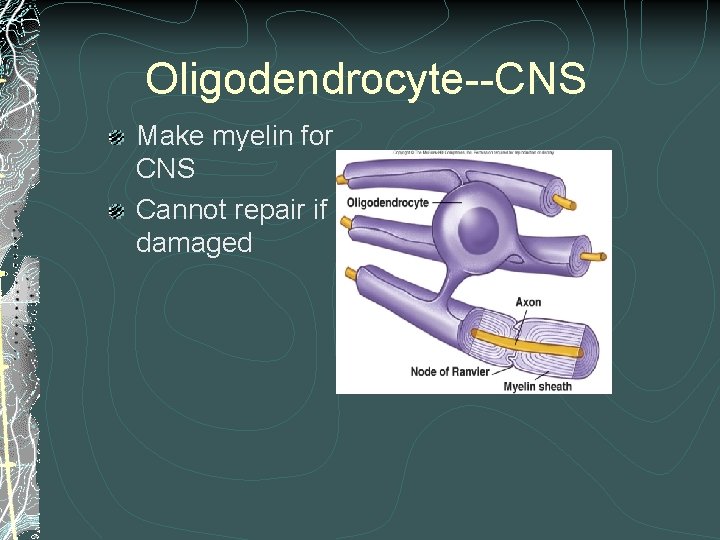
Oligodendrocyte--CNS Make myelin for CNS Cannot repair if damaged
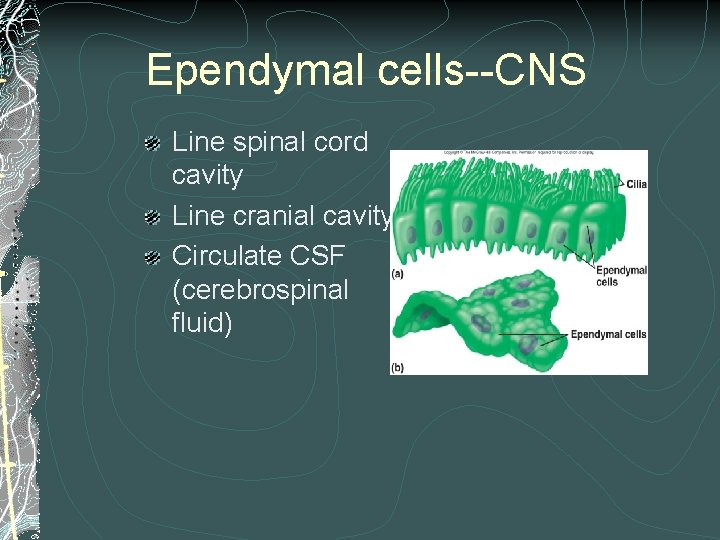
Ependymal cells--CNS Line spinal cord cavity Line cranial cavity Circulate CSF (cerebrospinal fluid)
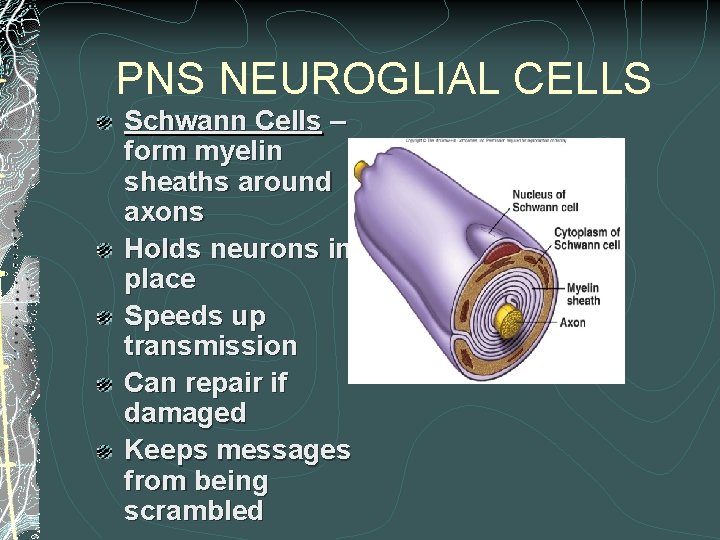
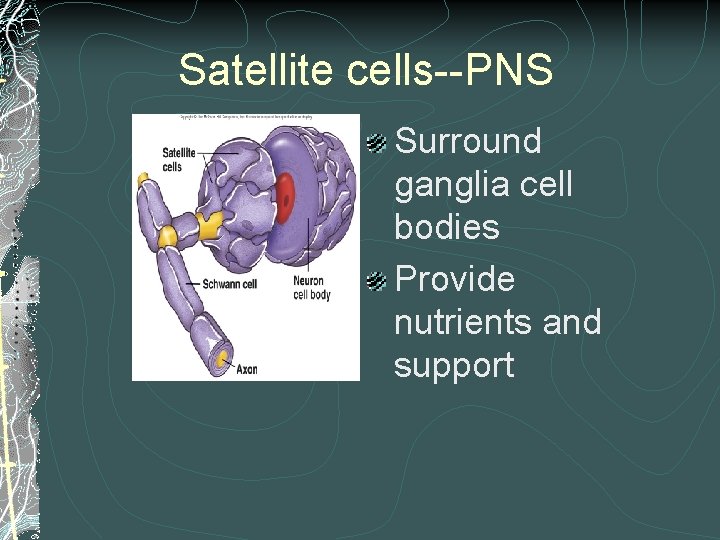
PNS NEUROGLIAL CELLS Schwann Cells – form myelin sheaths around axons Holds neurons in place Speeds up transmission Can repair if damaged Keeps messages from being scrambled
Satellite cells--PNS Surround ganglia cell bodies Provide nutrients and support
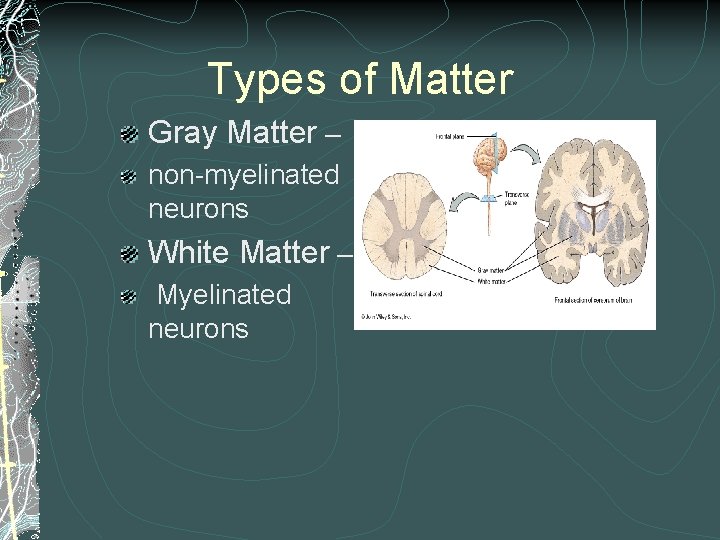
Types of Matter Gray Matter – non-myelinated neurons White Matter – Myelinated neurons
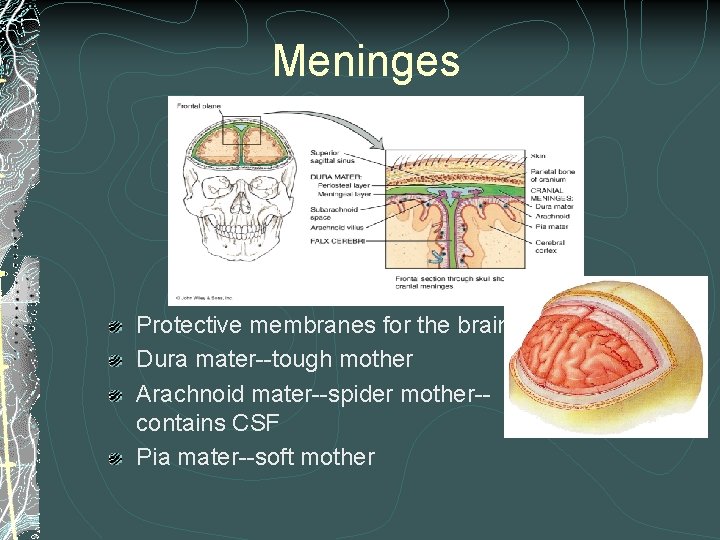
Meninges Protective membranes for the brain Dura mater--tough mother Arachnoid mater--spider mother-contains CSF Pia mater--soft mother
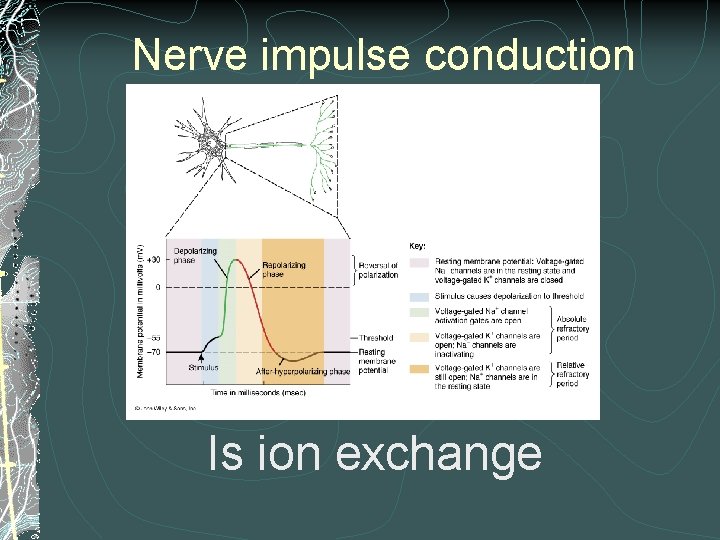
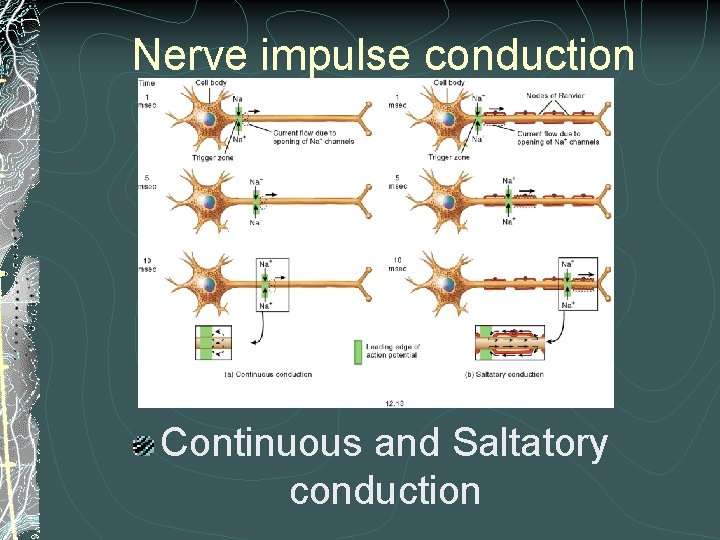
Nerve impulse conduction Is ion exchange
Nerve impulse conduction Continuous and Saltatory conduction
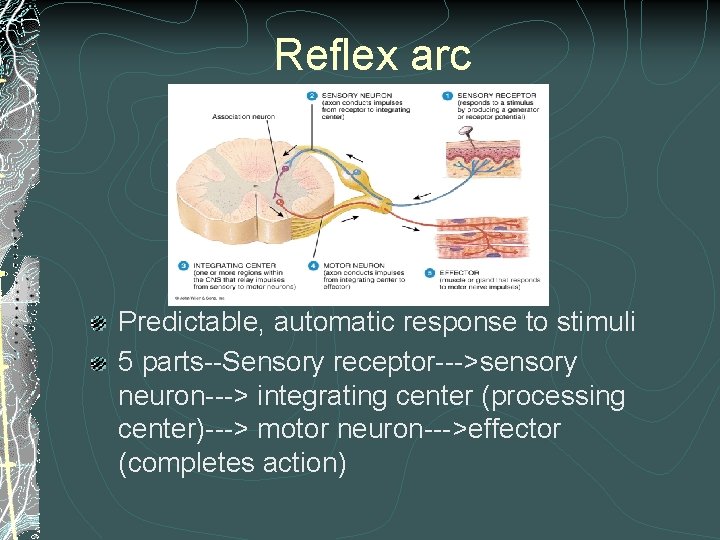
Reflex arc Predictable, automatic response to stimuli 5 parts--Sensory receptor--->sensory neuron---> integrating center (processing center)---> motor neuron--->effector (completes action)
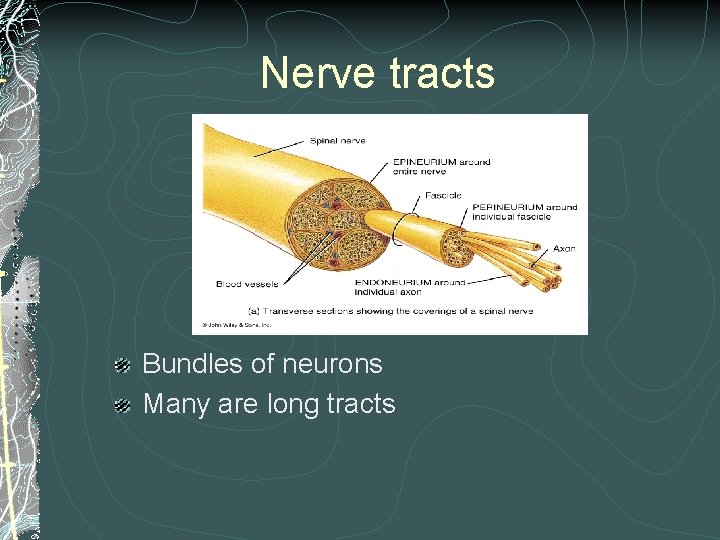
Nerve tracts Bundles of neurons Many are long tracts
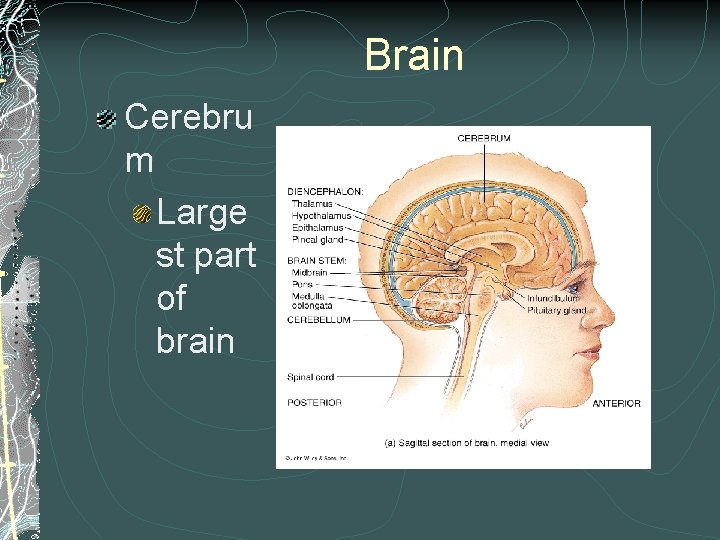
Brain Cerebru m Large st part of brain
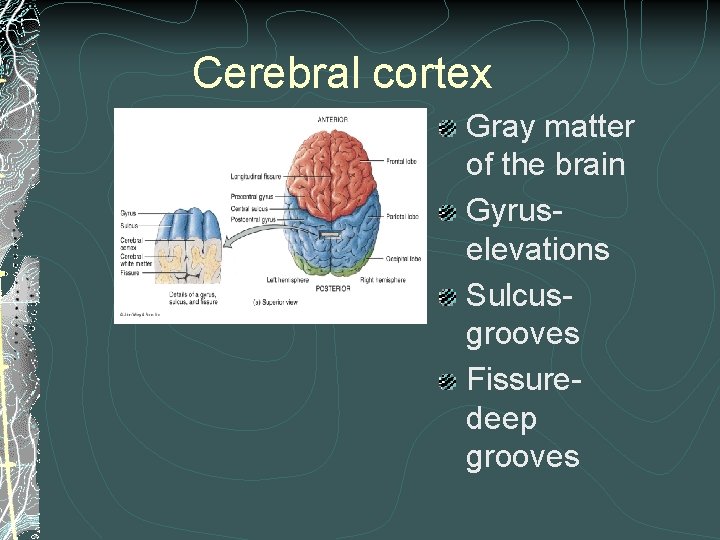
Cerebral cortex Gray matter of the brain Gyruselevations Sulcusgrooves Fissuredeep grooves
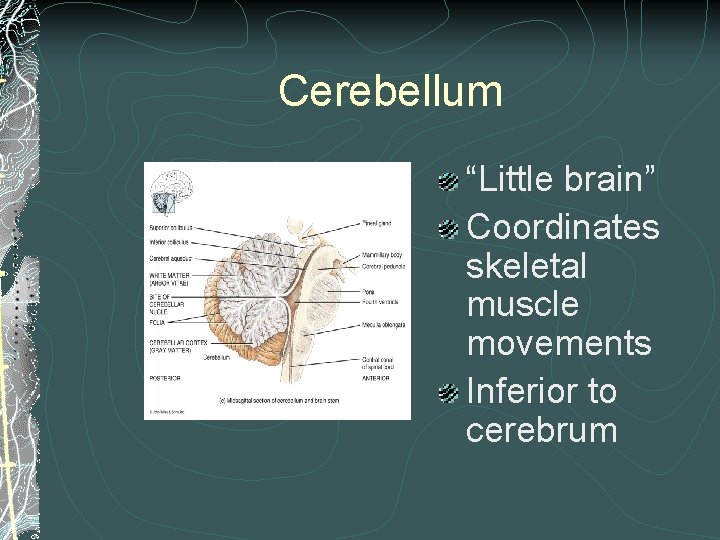
Cerebellum “Little brain” Coordinates skeletal muscle movements Inferior to cerebrum
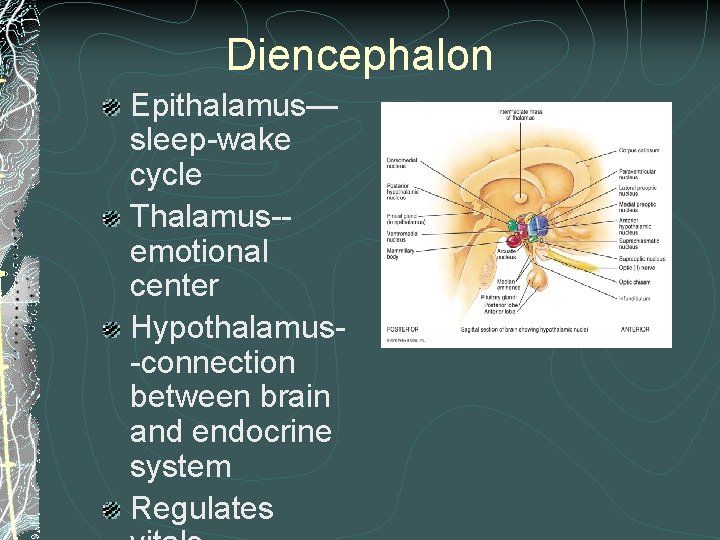
Diencephalon Epithalamus— sleep-wake cycle Thalamus-emotional center Hypothalamus-connection between brain and endocrine system Regulates
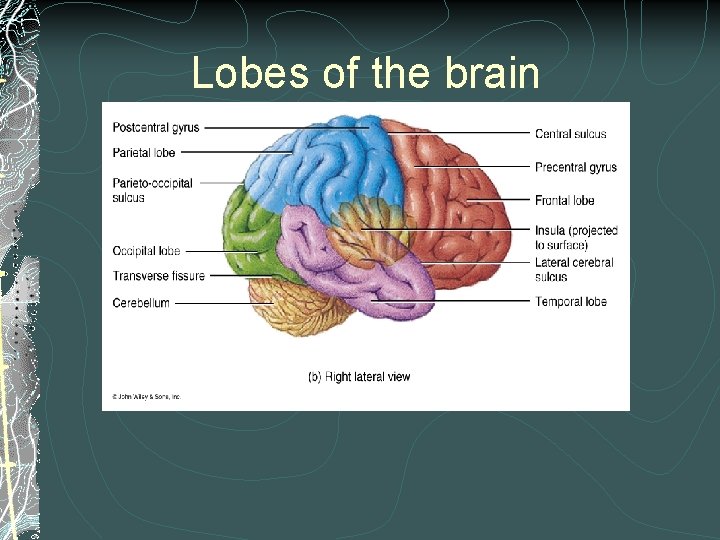
Lobes of the brain
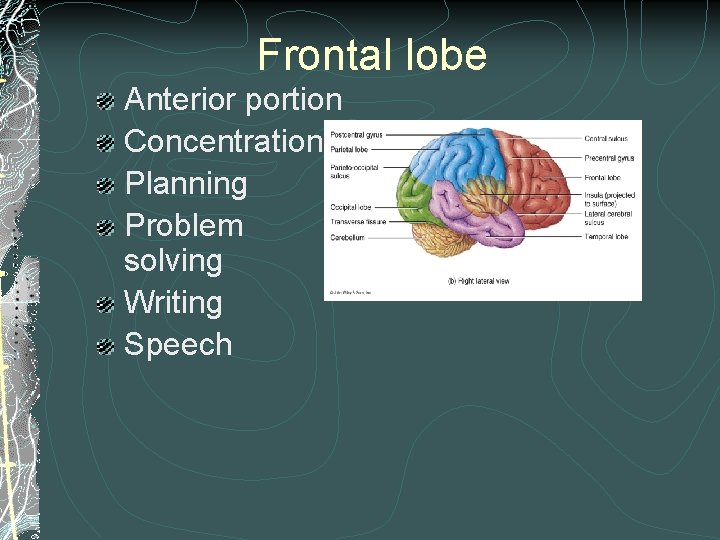
Frontal lobe Anterior portion Concentration Planning Problem solving Writing Speech
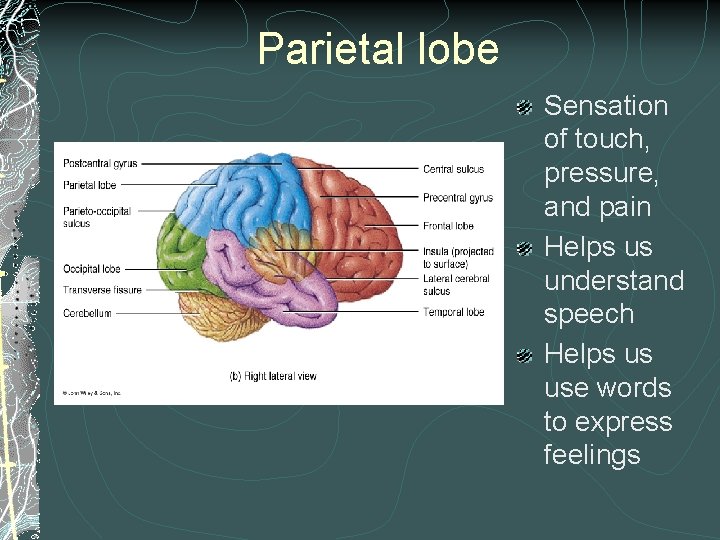
Parietal lobe Sensation of touch, pressure, and pain Helps us understand speech Helps us use words to express feelings
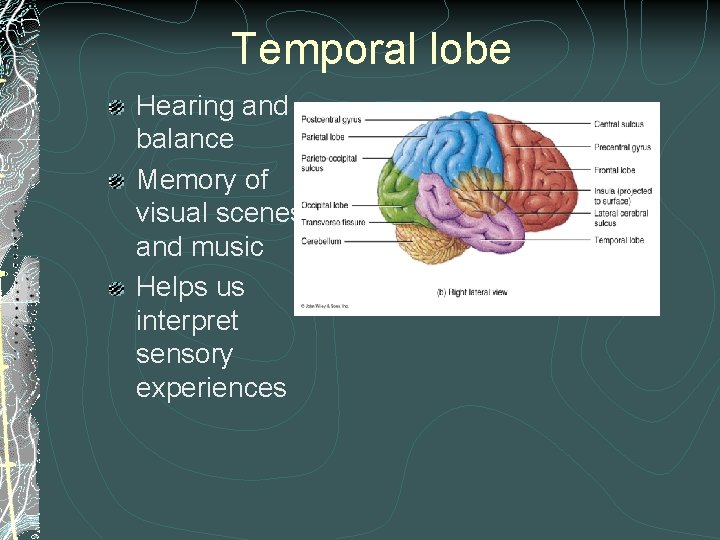
Temporal lobe Hearing and balance Memory of visual scenes and music Helps us interpret sensory experiences
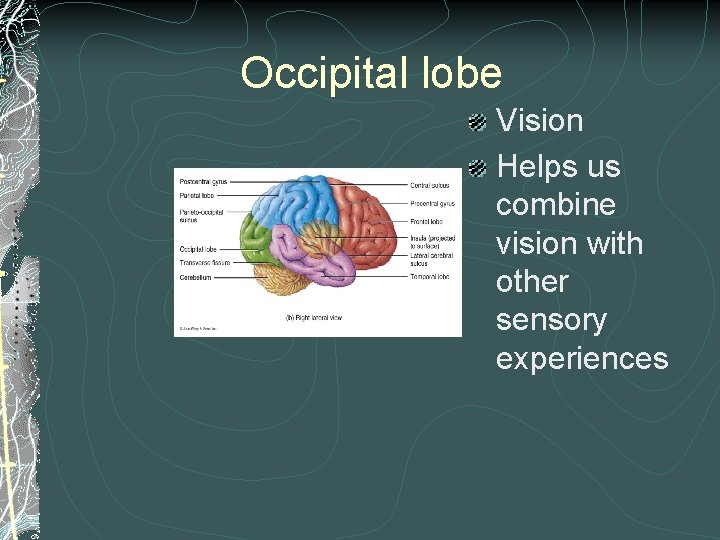
Occipital lobe Vision Helps us combine vision with other sensory experiences
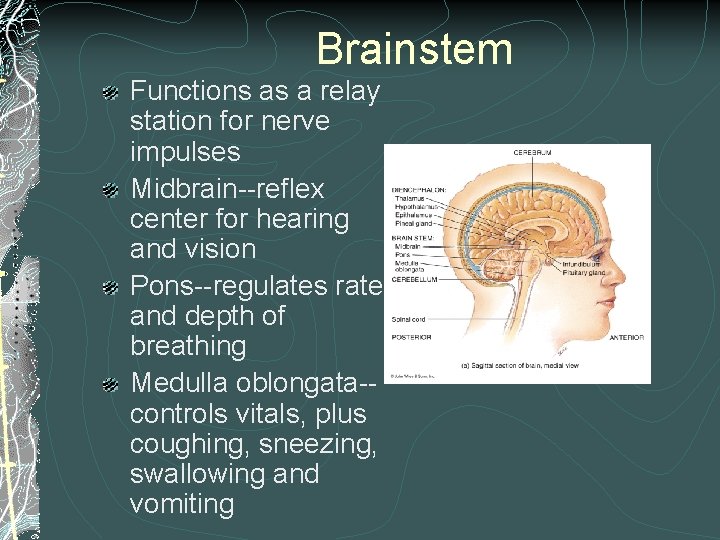
Brainstem Functions as a relay station for nerve impulses Midbrain--reflex center for hearing and vision Pons--regulates rate and depth of breathing Medulla oblongata-controls vitals, plus coughing, sneezing, swallowing and vomiting
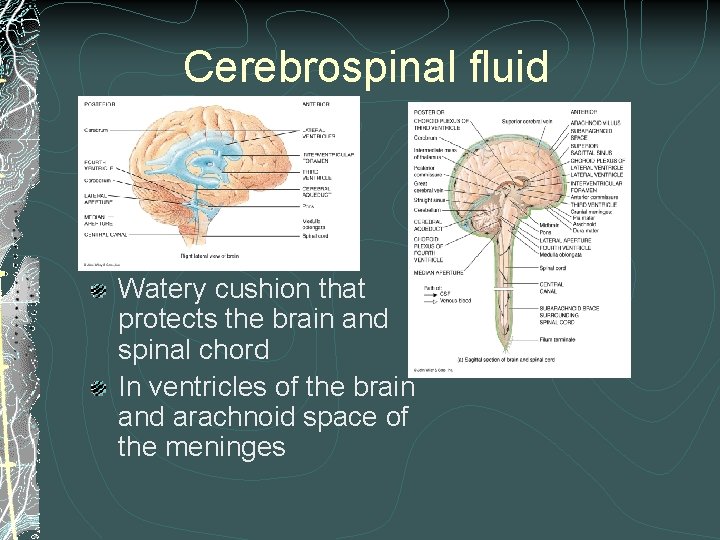
Cerebrospinal fluid Watery cushion that protects the brain and spinal chord In ventricles of the brain and arachnoid space of the meninges