
Nervous System Kevin Wu Function The nervous system
- Slides: 34
Nervous System Kevin Wu
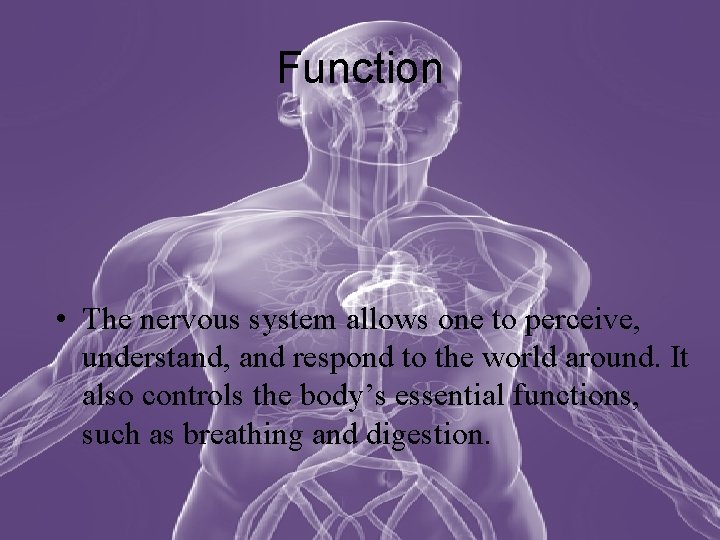
Function • The nervous system allows one to perceive, understand, and respond to the world around. It also controls the body’s essential functions, such as breathing and digestion.
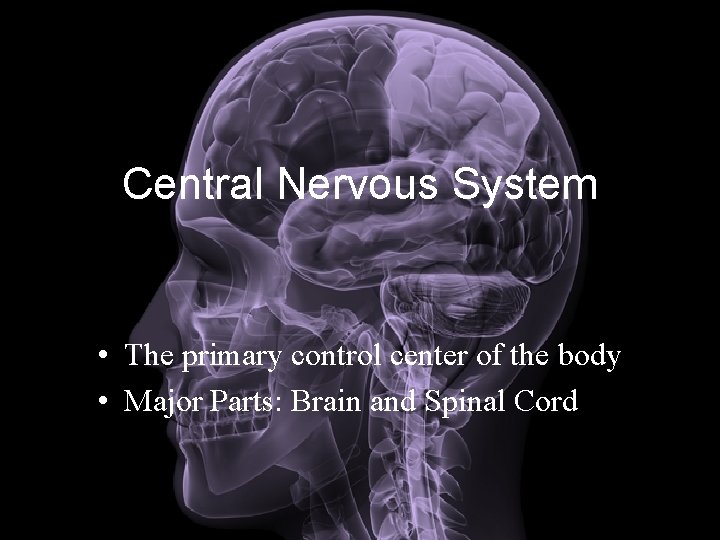
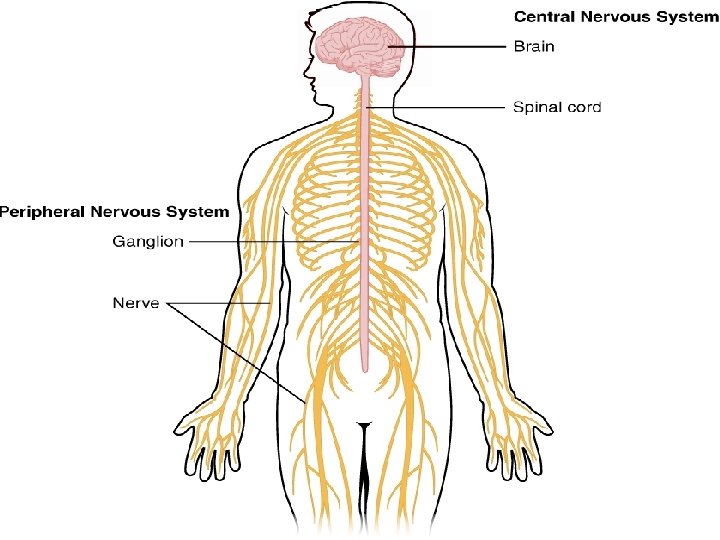
Central Nervous System • The primary control center of the body • Major Parts: Brain and Spinal Cord
Peripheral Nervous System • The peripheral nervous system connects the central nervous system to organs, muscles, blood vessels, and glands. • Major Parts: the twelve cranial nerves, the spinal nerves and roots, and the autonomic nerves (nerves that control regulation of the heart muscle, the muscles in blood vessel walls, and glands).
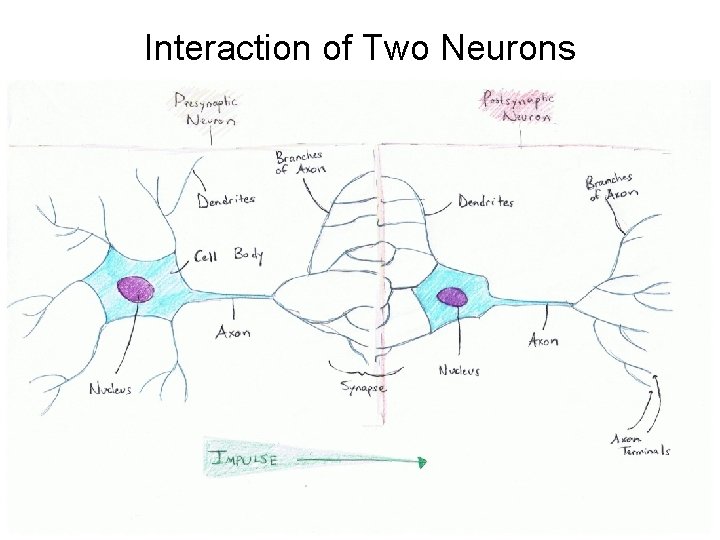
Interaction of Two Neurons
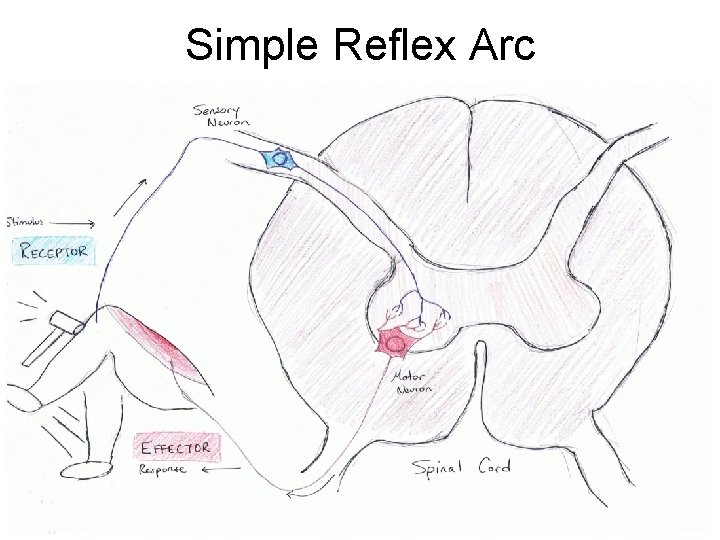
Simple Reflex Arc
Simple Reflex Arc • 1. A stimulus triggers a receptor • 2. Message received by receptor is transported by a sensory neuron into the central nervous system. • 3. The sensory neuron directly connects with the motor neuron. • 4. the motor neuron sends the according signal to the effector, which carries out the action signaled by the message.
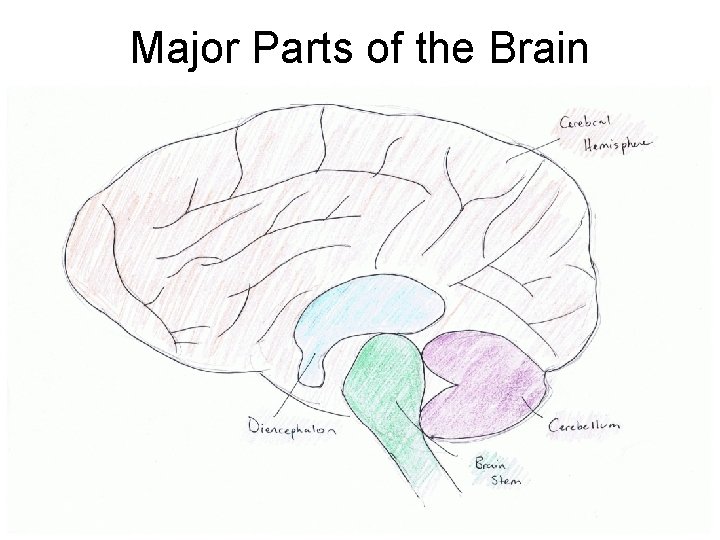
Major Parts of the Brain
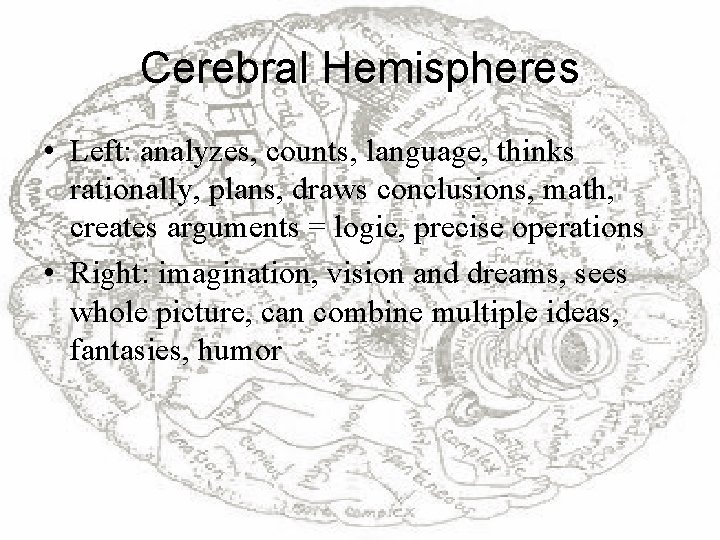
Cerebral Hemispheres • Left: analyzes, counts, language, thinks rationally, plans, draws conclusions, math, creates arguments = logic, precise operations • Right: imagination, vision and dreams, sees whole picture, can combine multiple ideas, fantasies, humor
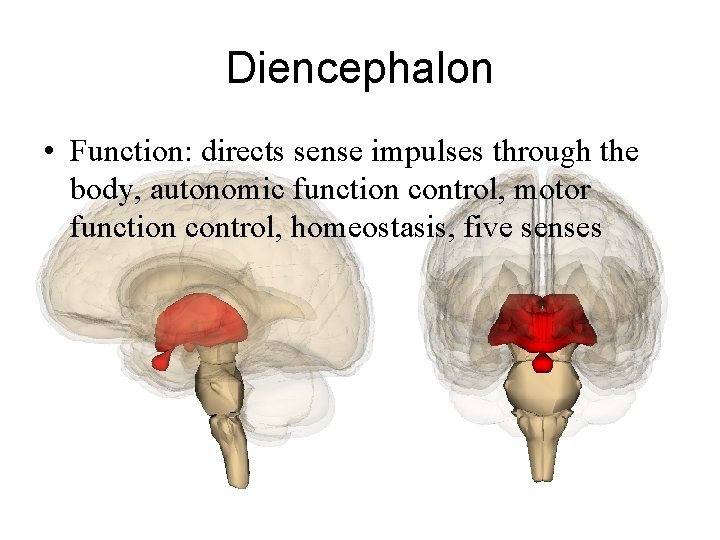
Diencephalon • Function: directs sense impulses through the body, autonomic function control, motor function control, homeostasis, five senses
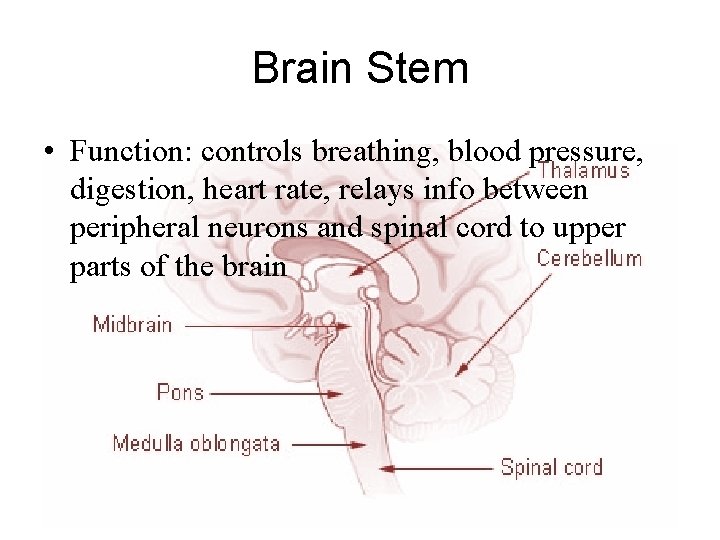
Brain Stem • Function: controls breathing, blood pressure, digestion, heart rate, relays info between peripheral neurons and spinal cord to upper parts of the brain
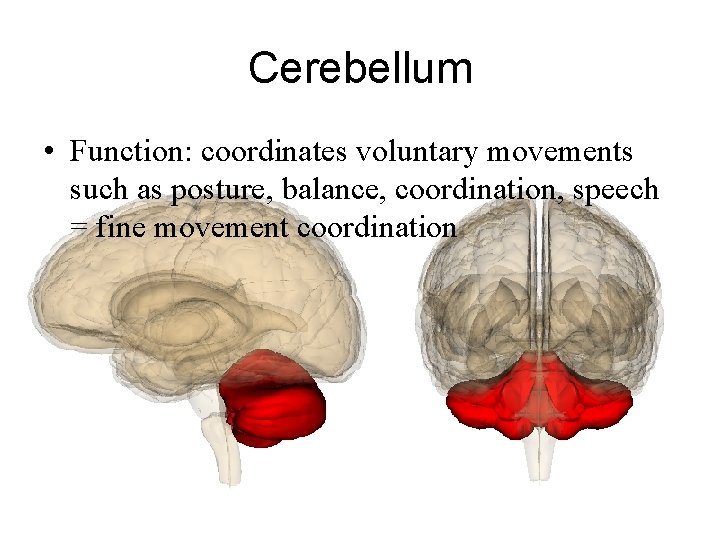
Cerebellum • Function: coordinates voluntary movements such as posture, balance, coordination, speech = fine movement coordination
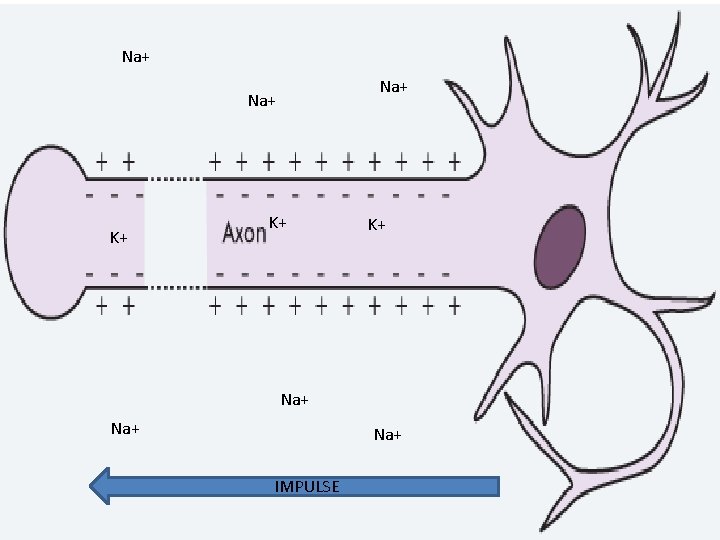
Transmission of Nerve Impulses 1. Polarization of the neuron’s membrane • When a neuron is not stimulated, its membrane is polarized. The outside of the cell contains excess sodium ions and the inside of the cell contains excess potassium ions. The outside has a positive charge and the inside has a negative charge.
Transmission of Nerve Impulses 2. Resting Potential • When a neuron is inactive and polarized, it is said to be at resting potential. It remains in resting potential until a stimulus comes along • Membrane Potential: the electrical potential difference between inside and outside of cell. This changes with the upcoming movement of ions.
Na+ Na+ K+ K+ K+ Na+ Na+ IMPULSE
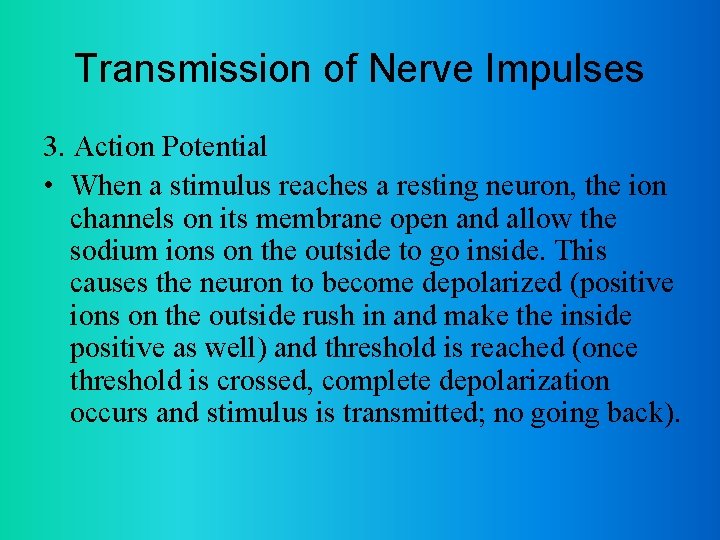
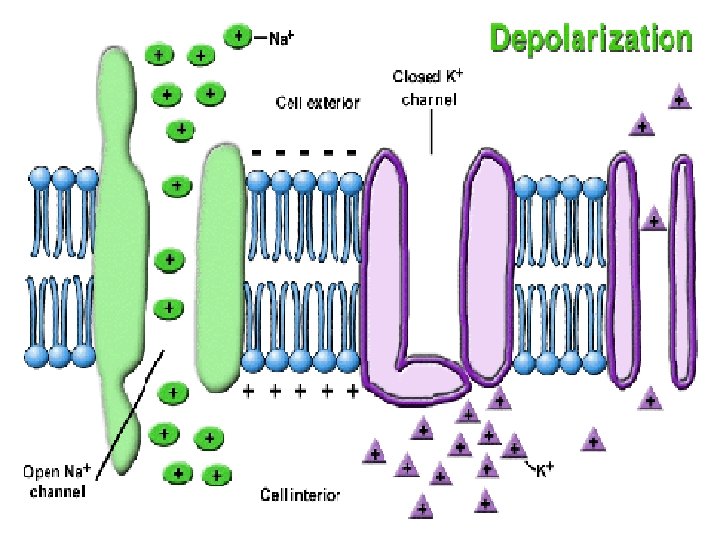
Transmission of Nerve Impulses 3. Action Potential • When a stimulus reaches a resting neuron, the ion channels on its membrane open and allow the sodium ions on the outside to go inside. This causes the neuron to become depolarized (positive ions on the outside rush in and make the inside positive as well) and threshold is reached (once threshold is crossed, complete depolarization occurs and stimulus is transmitted; no going back).
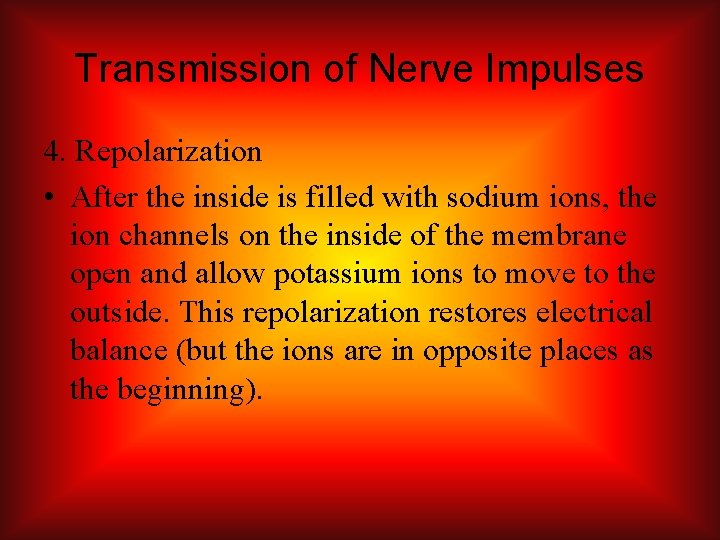
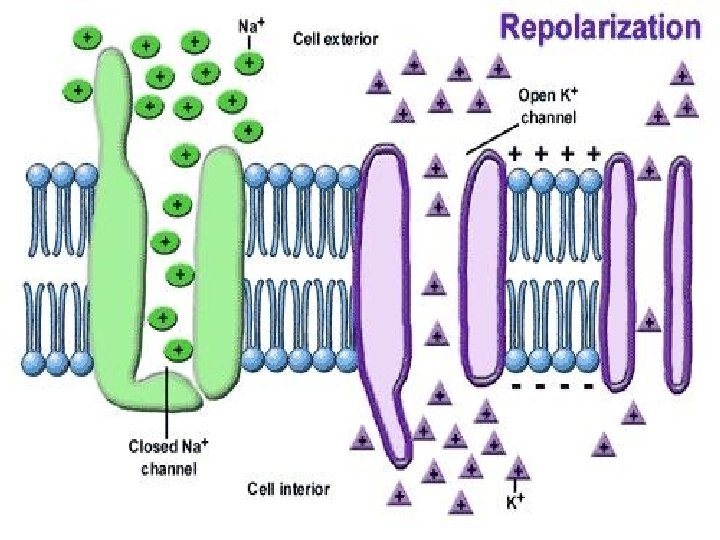
Transmission of Nerve Impulses 4. Repolarization • After the inside is filled with sodium ions, the ion channels on the inside of the membrane open and allow potassium ions to move to the outside. This repolarization restores electrical balance (but the ions are in opposite places as the beginning).
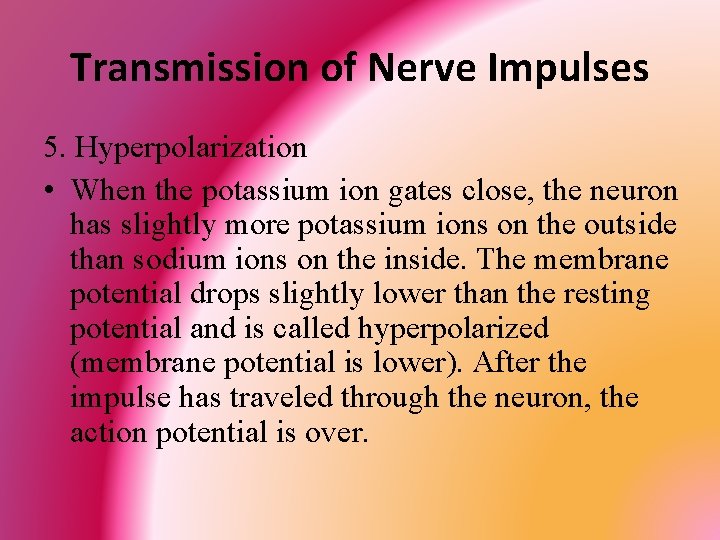
Transmission of Nerve Impulses 5. Hyperpolarization • When the potassium ion gates close, the neuron has slightly more potassium ions on the outside than sodium ions on the inside. The membrane potential drops slightly lower than the resting potential and is called hyperpolarized (membrane potential is lower). After the impulse has traveled through the neuron, the action potential is over.
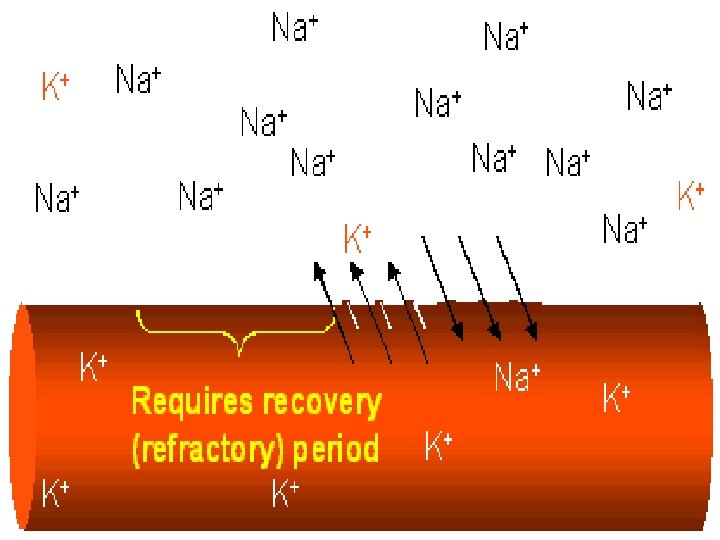
Transmission of Nerve Impulses 6. Refractory Period • This occurs when the sodium and potassium ions are returned to their original sides. While the neuron is pumping the ions to their respective sides, it does not respond to incoming stimuli. After this is complete, the neuron is back to its polarized state and stays in resting potential until another impulse occurs.
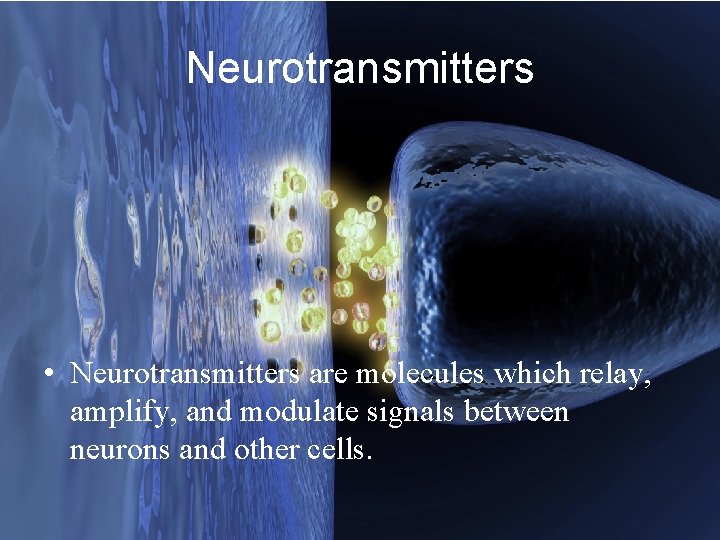
Neurotransmitters • Neurotransmitters are molecules which relay, amplify, and modulate signals between neurons and other cells.
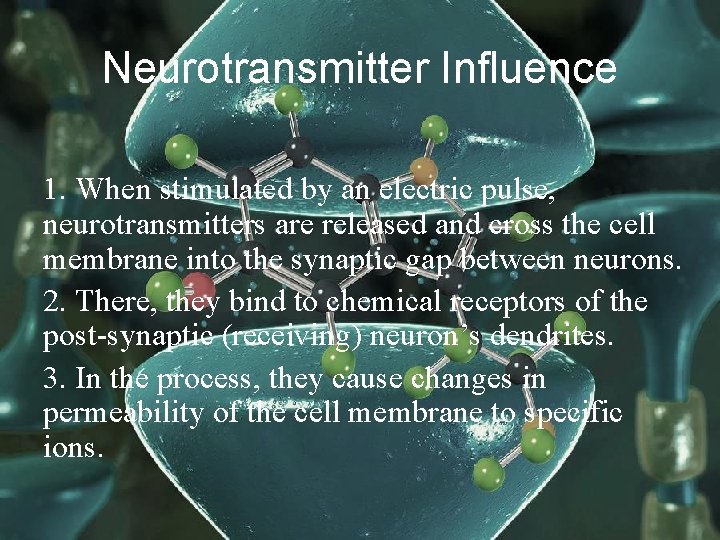
Neurotransmitter Influence 1. When stimulated by an electric pulse, neurotransmitters are released and cross the cell membrane into the synaptic gap between neurons. 2. There, they bind to chemical receptors of the post-synaptic (receiving) neuron’s dendrites. 3. In the process, they cause changes in permeability of the cell membrane to specific ions.
Neurotransmitter Influence 4. Special gates or channels open and let through a flood of charged particles (ions of Ca, Na, K, Cl). 5. The potential charge of the receiving neuron is changed and starts a new electrical signal, which represents the message received. 6. This takes less than one five-hundredths of a second; the message from the brain is converted from an electrical signal to a chemical signal and then back again.
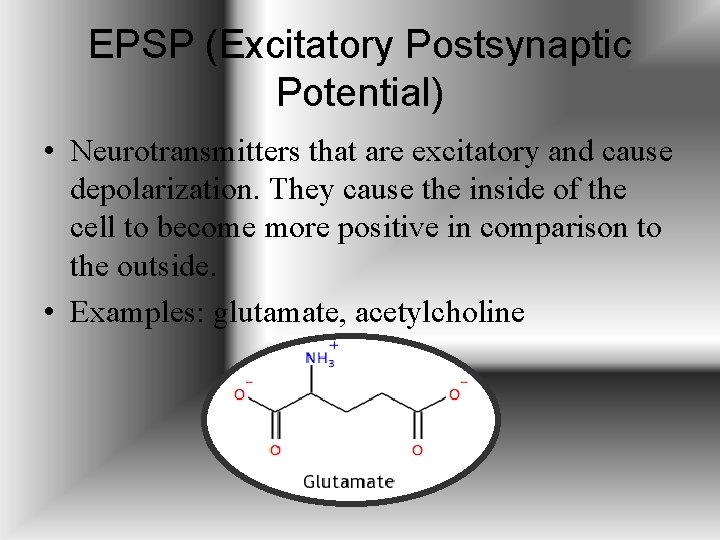
EPSP (Excitatory Postsynaptic Potential) • Neurotransmitters that are excitatory and cause depolarization. They cause the inside of the cell to become more positive in comparison to the outside. • Examples: glutamate, acetylcholine
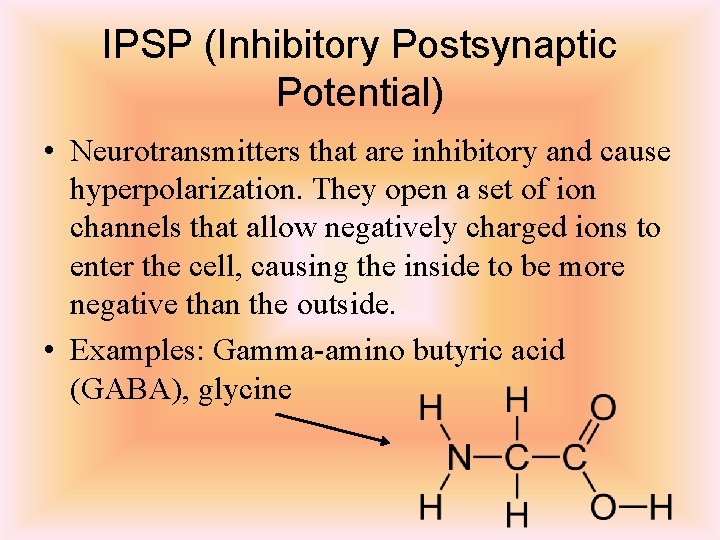
IPSP (Inhibitory Postsynaptic Potential) • Neurotransmitters that are inhibitory and cause hyperpolarization. They open a set of ion channels that allow negatively charged ions to enter the cell, causing the inside to be more negative than the outside. • Examples: Gamma-amino butyric acid (GABA), glycine
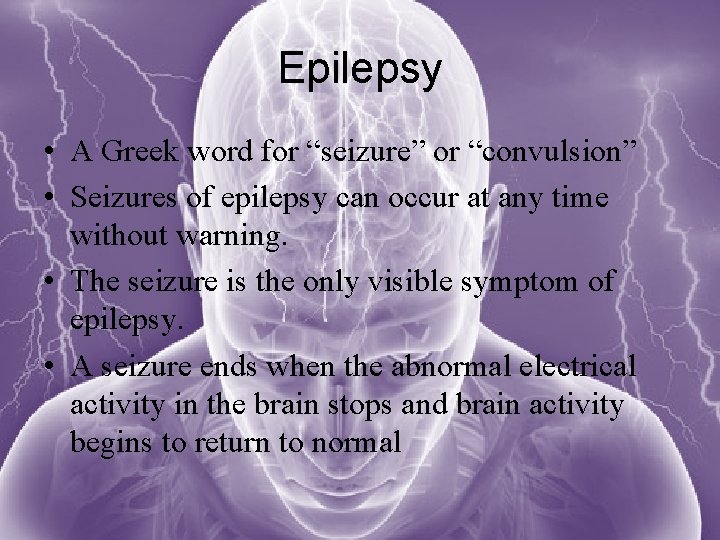
Epilepsy • A Greek word for “seizure” or “convulsion” • Seizures of epilepsy can occur at any time without warning. • The seizure is the only visible symptom of epilepsy. • A seizure ends when the abnormal electrical activity in the brain stops and brain activity begins to return to normal
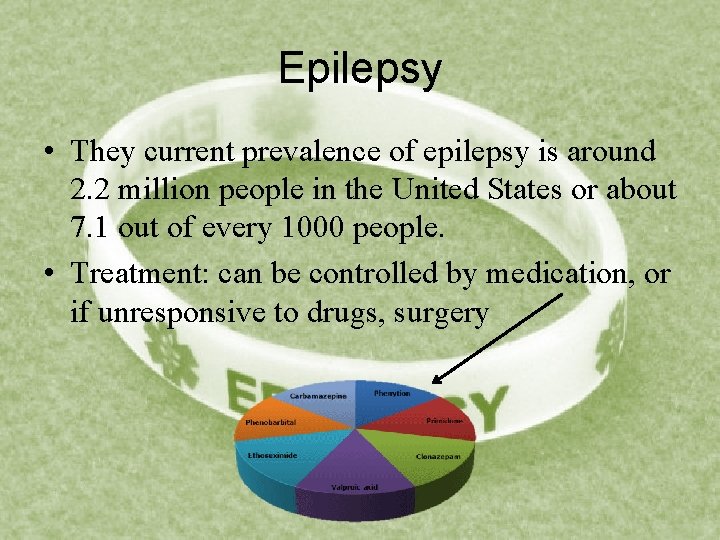
Epilepsy • They current prevalence of epilepsy is around 2. 2 million people in the United States or about 7. 1 out of every 1000 people. • Treatment: can be controlled by medication, or if unresponsive to drugs, surgery
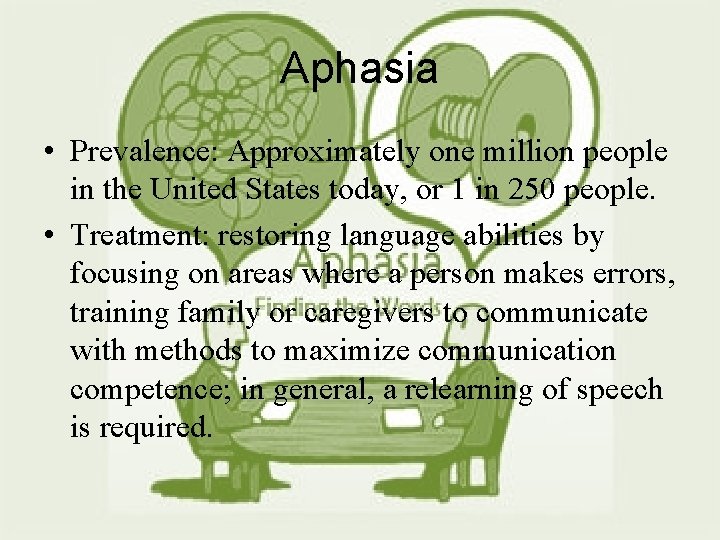
Aphasia • Defined as the loss of speech. There are two speech centers in the brain. Damage to the motor speech area cause the following symptoms. • Symptoms: difficulty in finding the right word, speaking slowly or with difficulty, or a complete loss of speech
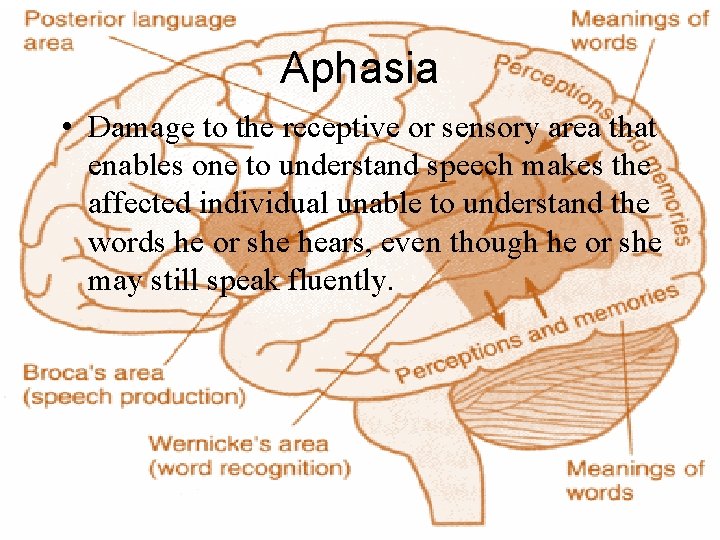
Aphasia • Damage to the receptive or sensory area that enables one to understand speech makes the affected individual unable to understand the words he or she hears, even though he or she may still speak fluently.
Aphasia • Prevalence: Approximately one million people in the United States today, or 1 in 250 people. • Treatment: restoring language abilities by focusing on areas where a person makes errors, training family or caregivers to communicate with methods to maximize communication competence; in general, a relearning of speech is required.
Works Cited • http: //www. healthline. com/human-body-maps/nervoussystem#seo. Block • http: //www. medicinenet. com/script/main/art. asp? articlekey=2667 • http: //www. ibguides. com/biology/notes/nerves-and-hormones • http: //people. eku. edu/ritchisong/301 notes 2. htm • http: //www. human-memory. net/brain_neurons. html • http: //courses. washington. edu/psych 333/handouts/coursepack/ch 05 -Signalling_in_neurons. pdf • https: //www. dmu. edu/medterms/nervous-system -diseases/ • http: //www. epilepsy. com/learn/epilepsy-statistics • http: //www. asha. org/PRPSpecific. Topic. aspx? folderid=8589934663 §ion=Incidence_and_Prevalence • http: //www. webmd. com/epilepsy/tc/epilepsy-symptoms