
Nervous System II Development Plasticity Arvin Gouw Endocrinology





- Slides: 24
Nervous System II: Development & Plasticity Arvin Gouw Endocrinology Graduate Program
Nervous System Development • Endoderm: – Gastrointestinal System – Endocrine System – Respiratory Tract • Mesoderm: – Immune System – Muscular System • Ectoderm: – Integument – Nervous System
Nervous System Components I Astrocytes: star-shaped glial cells with the following functions: – involved in the physical structuring of the brain. – provide neurons with nutrients – form part of the bloodbrain barrier. – Reuptake & recycle neurotransmitters
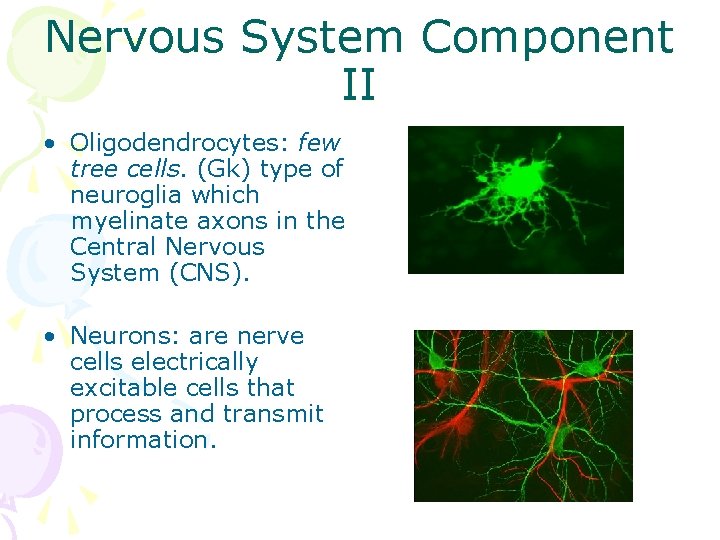
Nervous System Component II • Oligodendrocytes: few tree cells. (Gk) type of neuroglia which myelinate axons in the Central Nervous System (CNS). • Neurons: are nerve cells electrically excitable cells that process and transmit information.
Neuron Dogma • Santiago Ramon y Cajal Neurologist, 1852 -1934) wrote: (Spanish – neurons were discrete cells that communicated with each other via specialized junctions, or spaces, between cells – No new neurons are produced in the adult brain. Thus neurogenesis was thought to happen only during development and to stop in adulthood.
Neurogenesis in Adult Brain • However Fred Gage of Salk Institute discovered adult neurogenesis in mammalian nervous system. • In fact, neurogenesis in intact adult brain occurs in: – Hippocampus (related to memory and behavior) – cells lining the ventricles and the spinal canal, then migrating to olfactory bulb (OB) • Ischemia (interruption of blood flow to a brain region and loss of cells) leads to increased neurogenesis • Enriched environment and exercise may also induce increased neurogenesis
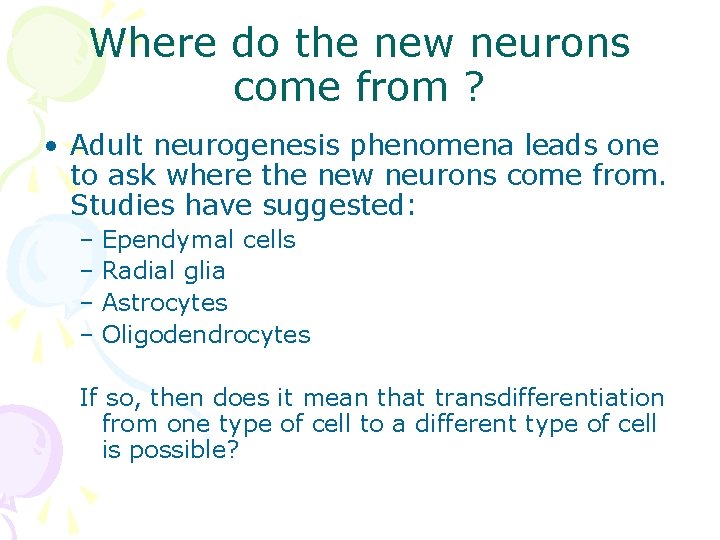
Where do the new neurons come from ? • Adult neurogenesis phenomena leads one to ask where the new neurons come from. Studies have suggested: – Ependymal cells – Radial glia – Astrocytes – Oligodendrocytes If so, then does it mean that transdifferentiation from one type of cell to a different type of cell is possible?
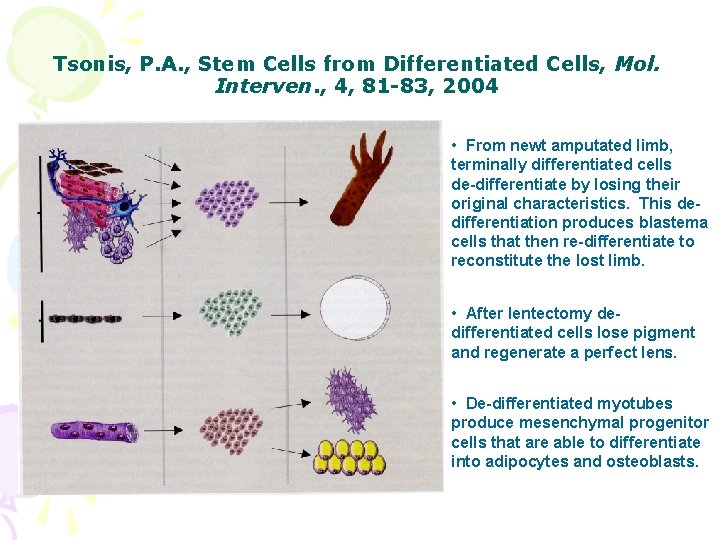
Tsonis, P. A. , Stem Cells from Differentiated Cells, Mol. Interven. , 4, 81 -83, 2004 • From newt amputated limb, terminally differentiated cells de-differentiate by losing their original characteristics. This dedifferentiation produces blastema cells that then re-differentiate to reconstitute the lost limb. • After lentectomy dedifferentiated cells lose pigment and regenerate a perfect lens. • De-differentiated myotubes produce mesenchymal progenitor cells that are able to differentiate into adipocytes and osteoblasts.
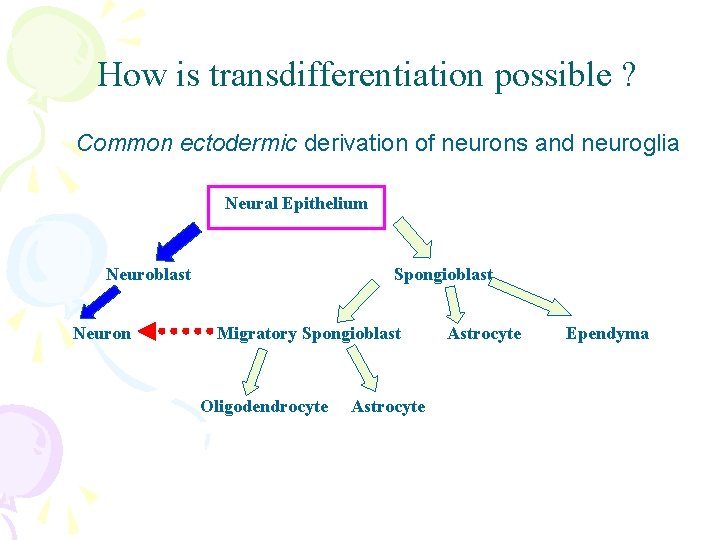
How is transdifferentiation possible ? Common ectodermic derivation of neurons and neuroglia Neural Epithelium Neuroblast Neuron Spongioblast Migratory Spongioblast Oligodendrocyte Astrocyte Ependyma
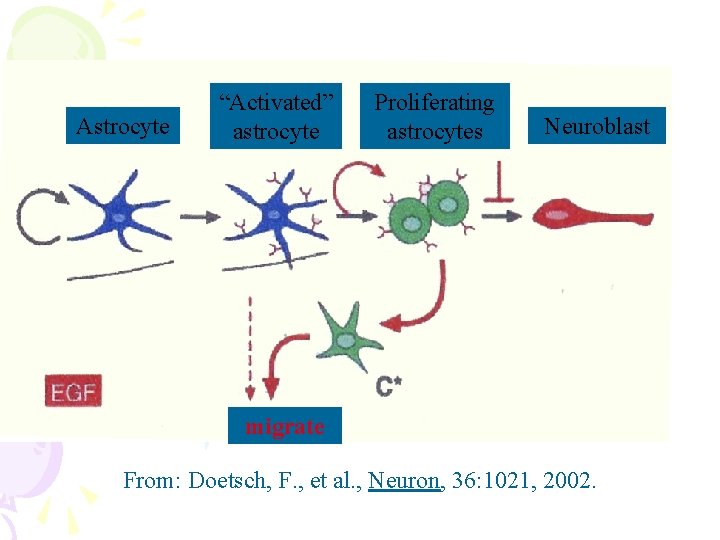
Astrocyte “Activated” astrocyte Proliferating astrocytes Neuroblast migrate From: Doetsch, F. , et al. , Neuron, 36: 1021, 2002.
Why is transdifferentiation important? • If we can induce transdifferentiation in the nervous system from neuroglia into neurons, then we can possibly relieve neurodegenerative diseases such as: – Alzheimer’s Disease – Parkinson’s Disease – Huntington’s Disease – Any other neurodegenerative diseases
How should one induce transdifferentiation? • Since brain injuries have been known to cause adult neurogenesis and transdifferentiation of astrocytes into neurons, we can study what happens in vivo. • In vivo, many chemicals are released following trauma, including: – Epidermal Growth Factor (EGF) – Fibroblast Growth Factor (FGF) – etc
EGF & FGF • Epidermal Growth Factor (EGF) – Mitogenic protein is involved in mechanisms such as normal cell growth, oncogenesis, and wound healing. Binds to EGFR on cell surface eventually stimulates DNA synthesis and cell proliferation • Fibroblast Growth Factor (FGF) – Responsible for growth and differentiation of numerous cell types and stimulation of neuronal proliferation.
Growth Curve
Enzyme Activities in Astrocytes & Oligodendrocytes Glutamine Synthetase 2’ 3’-Cyclic Nucleotide 3’-Phosphohydrolase
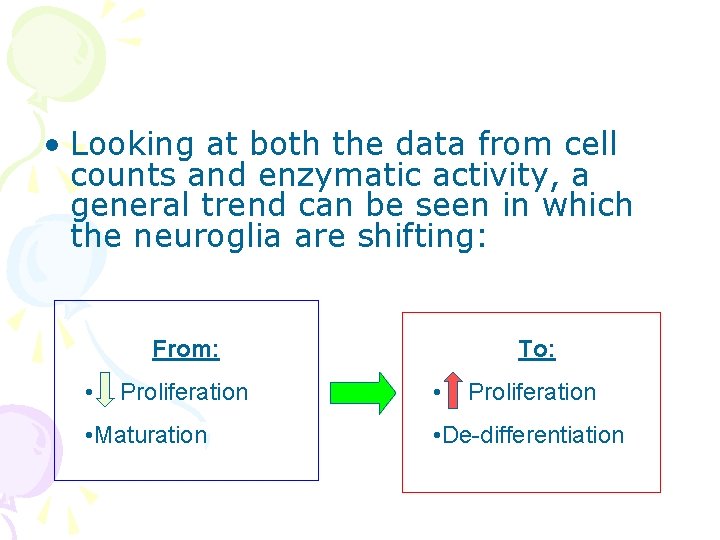
• Looking at both the data from cell counts and enzymatic activity, a general trend can be seen in which the neuroglia are shifting: From: • Proliferation • Maturation To: • Proliferation • De-differentiation
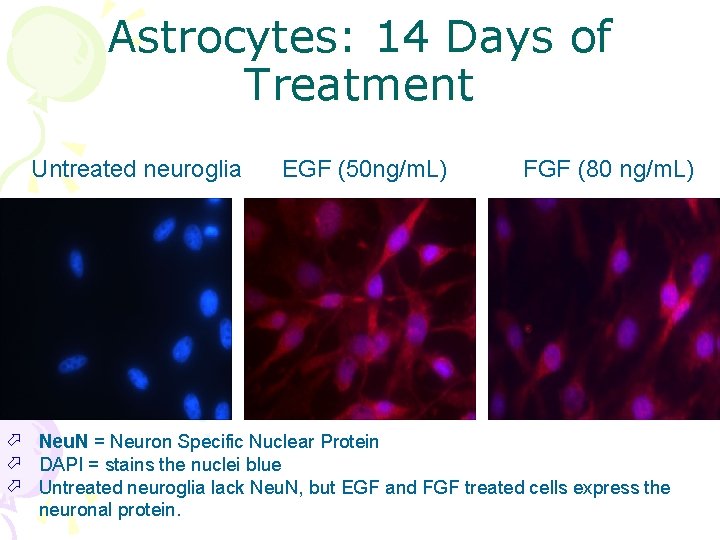
Astrocytes: 14 Days of Treatment Untreated neuroglia EGF (50 ng/m. L) FGF (80 ng/m. L) ö Neu. N = Neuron Specific Nuclear Protein ö DAPI = stains the nuclei blue ö Untreated neuroglia lack Neu. N, but EGF and FGF treated cells express the neuronal protein.
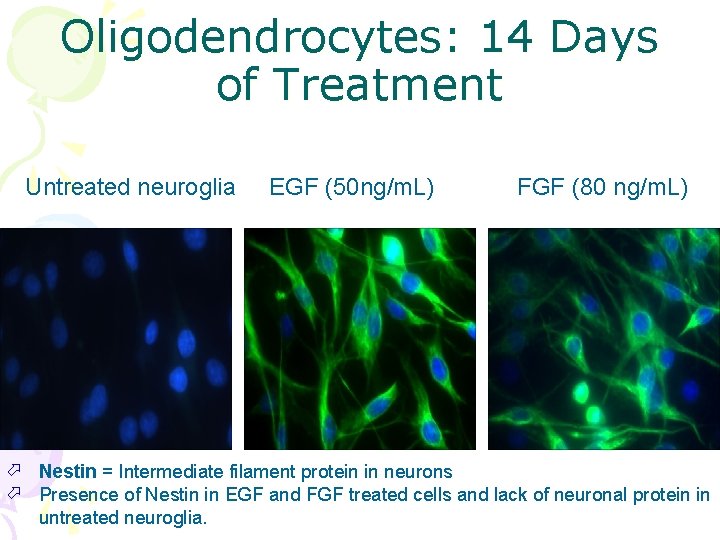
Oligodendrocytes: 14 Days of Treatment Untreated neuroglia EGF (50 ng/m. L) FGF (80 ng/m. L) ö Nestin = Intermediate filament protein in neurons ö Presence of Nestin in EGF and FGF treated cells and lack of neuronal protein in untreated neuroglia.
Learning at all Ages Induces Successful Aging
Observation in Sisters of Notre Dame • The nuns were highly involved in teaching and studying well till old age, and they have been shown to live longer (75 -104 yrs old), avoiding the Alzheimer’s Disease. • “Aging With Grace: What the Nun Study Teaches Us About Leading Longer, Healthier, and More Meaningful Lives” (paperback). By David Snowdon. Bantam 2002.
Death Rates in 1986 among Persons 25 - 64 Years Old in Selected Education and Income Groups According to Race and Sex. ____________________________ Group White Men Black Women Men Women deaths per 1000 Education- yr Completed School 0 -11 12 College 1 -3 4 7. 6 4. 3 3. 4 2. 5 4. 3 2. 8 2. 1 1. 8 5. 0 6. 0 3. 2 2. 2 Income-$ <9, 000 -14, 999 15, 000 -18, 999 19, 000 -24, 999 >25, 000 16. 0 10. 2 5. 7 4. 6 2. 4 6. 5 3. 4 3. 3 3. 0 1. 6 19. 5 10. 8 9. 8 4. 7 3. 6 7. 6 4. 5 3. 7 2. 8 2. 3 13. 4 8. 0 6. 2 3. 9 ___________________________________________ Pappas, G. , Queen, S. , Hadden, W. , and Fisher, G. The increasing disparity in mortality between socioeconomic groups in the United States, 1960 and 1986. N. Engl. J Med. 329, 103 -109, 1993.
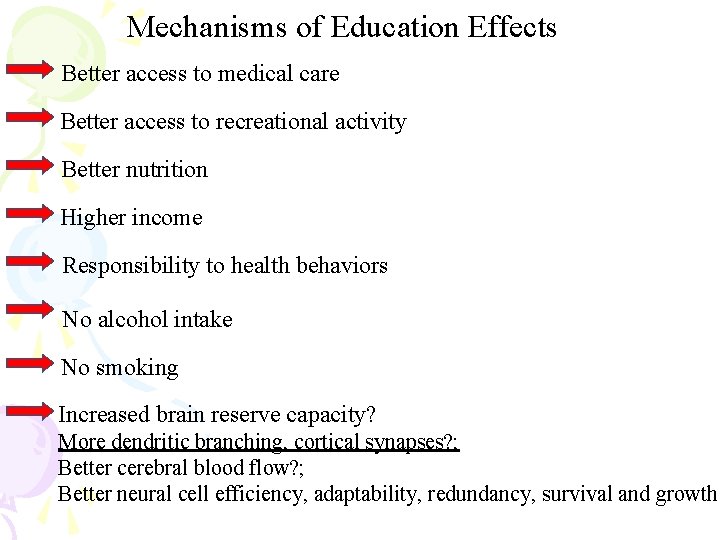
Mechanisms of Education Effects Better access to medical care Better access to recreational activity Better nutrition Higher income Responsibility to health behaviors No alcohol intake No smoking Increased brain reserve capacity? More dendritic branching, cortical synapses? ; Better cerebral blood flow? ; Better neural cell efficiency, adaptability, redundancy, survival and growth
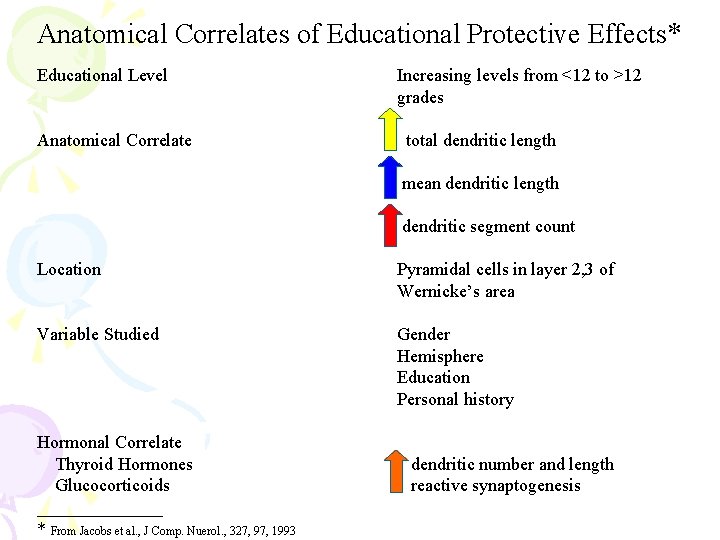
Anatomical Correlates of Educational Protective Effects* Educational Level Anatomical Correlate Increasing levels from <12 to >12 grades total dendritic length mean dendritic length dendritic segment count Location Pyramidal cells in layer 2, 3 of Wernicke’s area Variable Studied Gender Hemisphere Education Personal history Hormonal Correlate Thyroid Hormones Glucocorticoids _______ * From Jacobs et al. , J Comp. Nuerol. , 327, 97, 1993 dendritic number and length reactive synaptogenesis
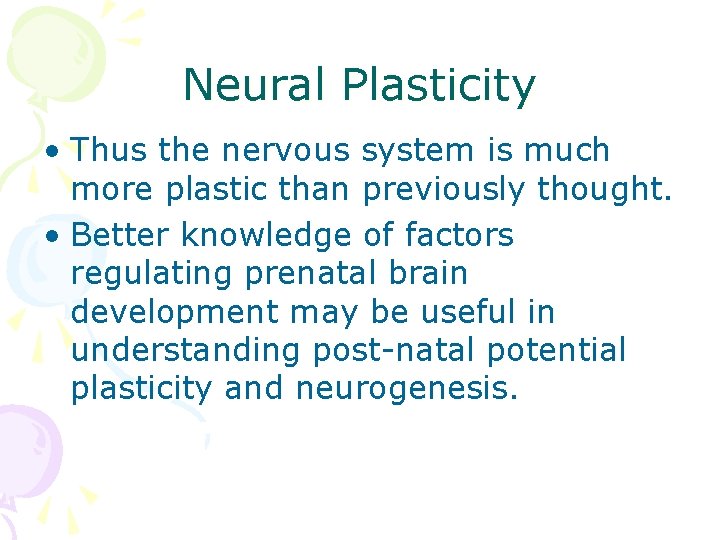
Neural Plasticity • Thus the nervous system is much more plastic than previously thought. • Better knowledge of factors regulating prenatal brain development may be useful in understanding post-natal potential plasticity and neurogenesis.