
Nervous System Function n Neurons n n Base
Nervous System Function n Neurons n n Base unit that has very simple function – “decide” whether to transmit signal or not Organization n n Billions of Neurons (estimates of 100 billion) Very complex interconnections Create systems/circuits that can function independently (parallel processing) “Simple decisions” passed to “higher” levels for that additional information to create generate more complex decisions (hierarchical processing) Very expensive - less than 2% of weight but uses 20% of energy
Neuron Structure n Cell Body n n Dendrites n n Receive information Axon n Nucleus – genetic information Carry information “long” distances Myelin (Multiple Sclerosis) Axon Terminals n Transmit information
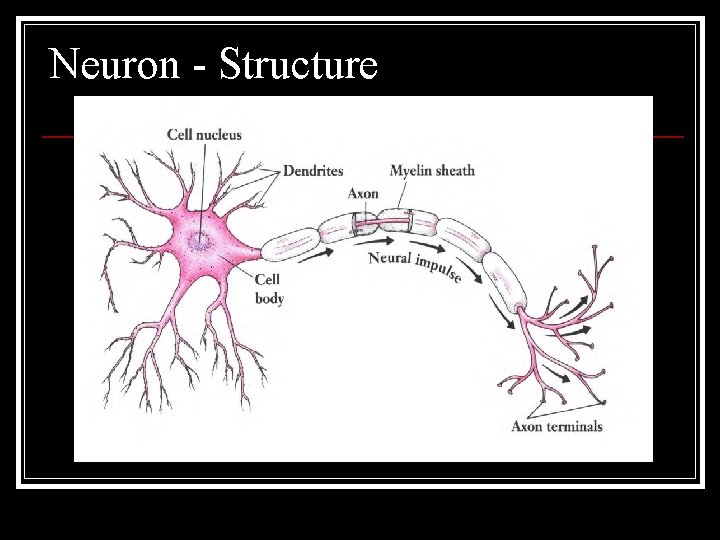
Neuron - Structure
Neuron Function n Electrical Activity n n Used to transmit signal within neuron Chemical Activity n n Used to transmit signal between neurons Synapse – small gap that physically separates neurons n Neurotransmitters – special “chemicals” that neurons use to transmit message across the synapse
Neuron Function n Electrical Activity n Resting Potential n n Inside negative (-70 m. V) compared to outside Inside has high K+ (negativity comes from proteins & other negative ions) Outside has high Na+ Forces at work § Electrical § Diffusion
Neuron Function n Electrical Activity n Graded Potential n n n Depolarization – Inside less negative (e. g. , Na+ enters) Hyperpolarization – Inside more negative (e. g. , Cl- enters) Action Potential n n n When graded reaches approximately -55 m. V Electrical impulse that travels down cell – axon to axon terminals Axon terminals release neurotransmitter
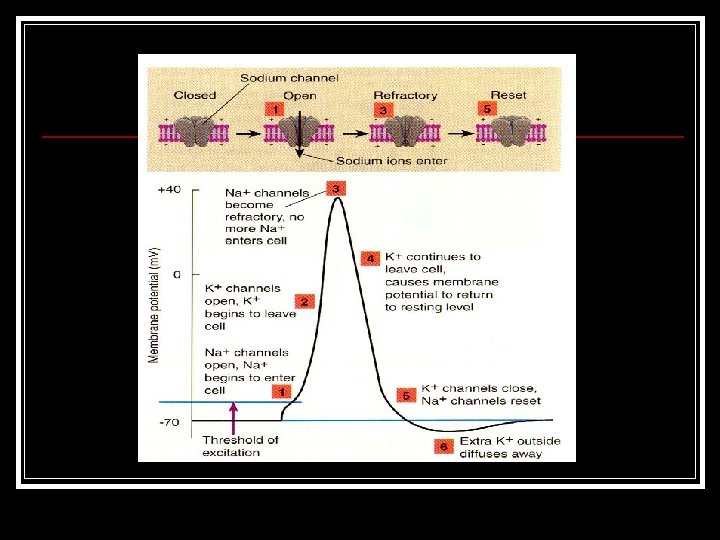
Neuron Function n Electrical Activity n Restoring Resting Potential n n Sodium-Potassium Pump – moves Na+ out of cell and K+ into cell This requires cell to use energy
Neuron Function n Chemical (Neurotransmitter) Activity n Leads to graded potentials in neuron n n Excitatory NTs – causes depolarization in neuron Initiatory NTs – causes hyperpolarization in neuron
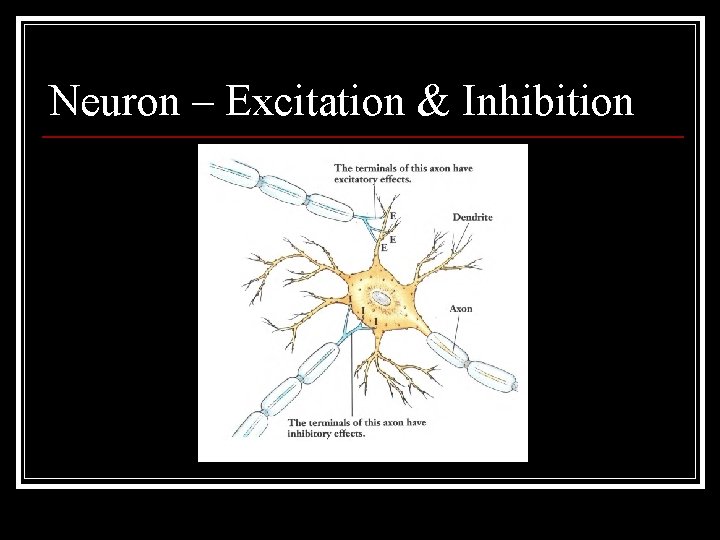
Neuron – Excitation & Inhibition
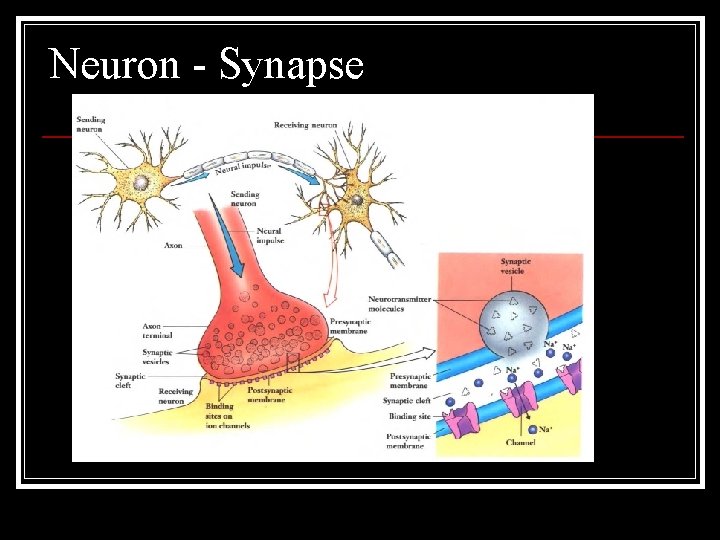
Neuron - Synapse
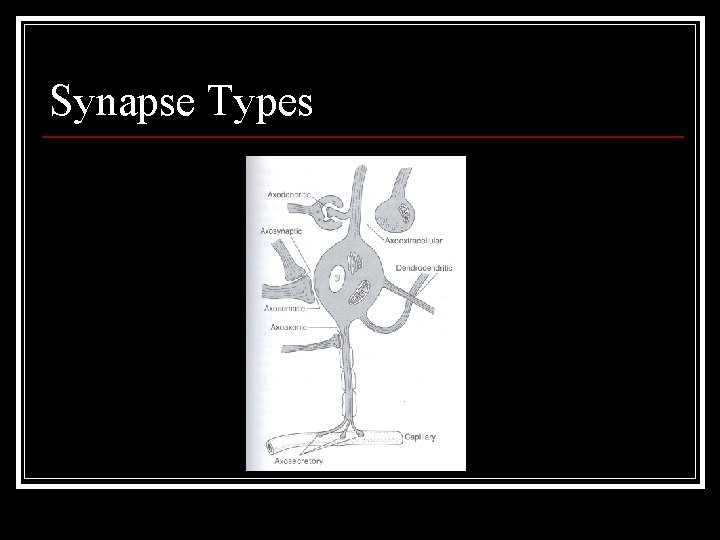
Synapse Types n Multiple ways of connecting n Examples n n n Axon to Dendrite – excite or inhibit neuron Axon to Axon Terminal – moderate NT release Axon to Extracellular Space or blood – potential for diffuse effects
Synapse Types
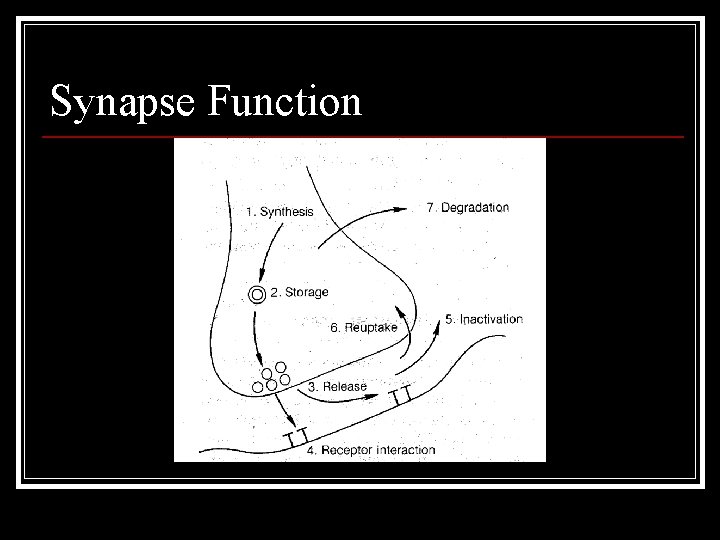
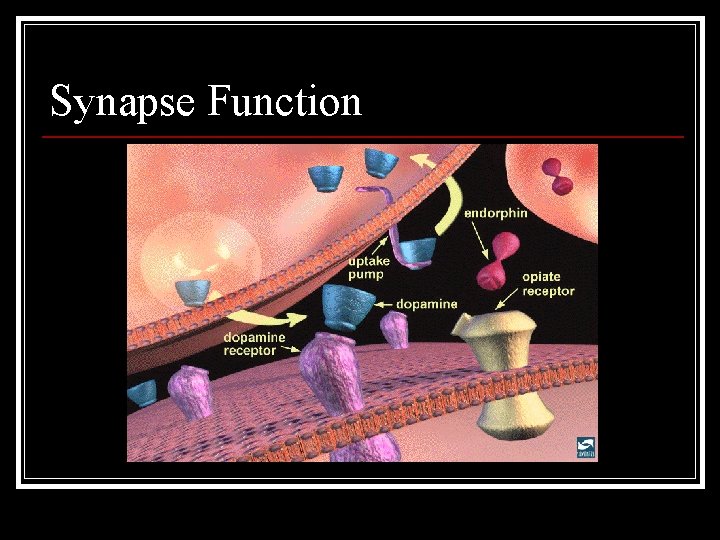
Synapse Function n Neurotransmitter cycle in Axon Terminals n n n n Synthesis Storage Release Inactivation Reuptake Degradation Neural transmission problems if cycle disrupted (e. g. , drugs) at any step
Synapse Function
Synapse Function
Neurotransmitter Types n Small Molecules n n Nine – Acetylcholine (ACh), dopamine (DA), norepinephrine (NE), epinephrine (adrenaline), serotonin (5 -HT), histamine, GABA, glycine, glutamate Simple (or no) alterations to basic food components n n Glutamate & glycine are amino acids DA and NE from tyrosine & 5 -HT made from tryptophan Manufactured in axon terminals Large quantity and have short duration
Neurotransmitter Types n Peptides n 50+ and grouped into families depending on function n 2 or more amino acids and made in cell body (ribosomes) from DNA instruction n Opoids (enkephalins, dynorphin) – pain Gastrins (gastrin, cholocystokinin) – food digestion Slower to manufacture & transport Small concentrations and longer durations Gases n n At least 2 – nitric oxide (NO) & carbon monoxide (CO) Can work on releasing cell
Neurotransmitter Function n No one to one relation between type and function n Same NT can be used in different places with very different effects n Acetylcholine – contracts muscles, used in autonomic nervous system, and brain
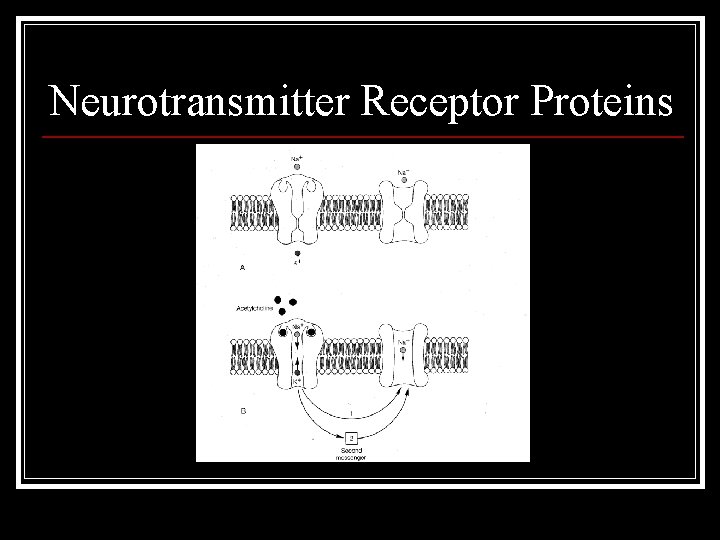
Neurotransmitter Receptor Proteins n Channel Proteins n n n NT binding site and channel trough membrane NT opens a channel to allow chemical flow (Na+) across membrane Second Messengers n n NT binding site – NT activates a “second messenger” (1 st is the NT) inside the cell Change function of cell (e. g. , change protein production to permanently alter cell function for learning)
Neurotransmitter Receptor Proteins
Neurotransmitter Receptor Proteins n Usually multiple receptors for a given NT n Acetylcholine n n Nicotinic receptor – found a junction between neuron and muscle Muscarinic receptor – more prevalent in brain Acetylcholine affects both Drugs can have more specific effects (or not depending on the drug) § Nicotine & curare –affect nicotinic but not muscarinic
Neurotransmitter Receptor Proteins n Usually multiple receptors for a given NT n Serotonin (5 -HT) n n 13 known receptors grouped into 6 families People with schizophrenia have an excess of one type § Demonstrates how genetic differences can influence motivational temperaments n Dopamine n 5 known receptors grouped into 2 families
Psychoactive Drug Overview n Two Broad effects on NT function n Facilitate or increase function of a specific NT Inhibit or Decrease function of a specific NT 2 Broad effects accomplished by altering any of the 7 synapse functions (previous slide) n Acetylcholine
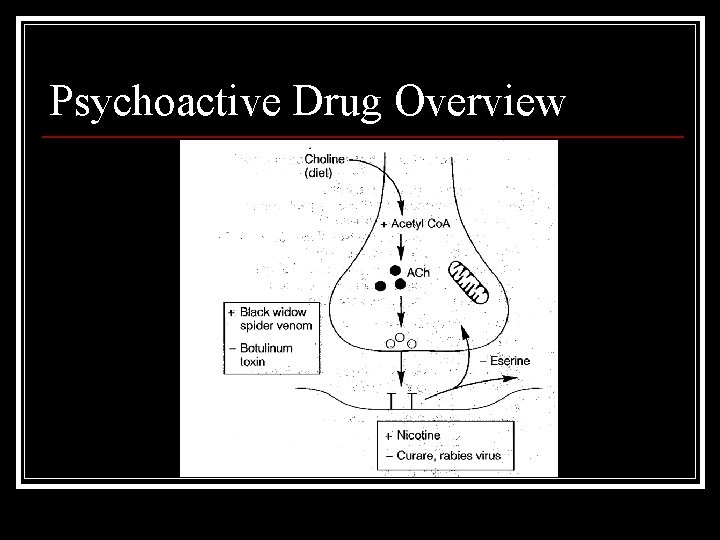
Psychoactive Drug Overview n Acetylcohine Example n Axon Release n n n Synapse Stimulation n Black widow spider venom – released from axon terminals Botulinum toxin (Botox) – blocks release from axon terminals Nicotine – mimics ACh Curare – blocks ACh from getting to terminals Inactivation n Physostigmine – blocks effect of enzyme that destroys ACh
Psychoactive Drug Overview
Psychoactive Drug Overview n Nervous System adapts drug presence n n n Inhibitory drug – may create more protein receptors to detect smaller amounts of NTs that are getting to postsynaptic cell Excitatory drug – may remove protein receptors NS now requires drug for functioning n n Inhibitory drug – “normal” signals are too strong Excitatory drug – “normal” signals not strong enough
Nervous System Organization
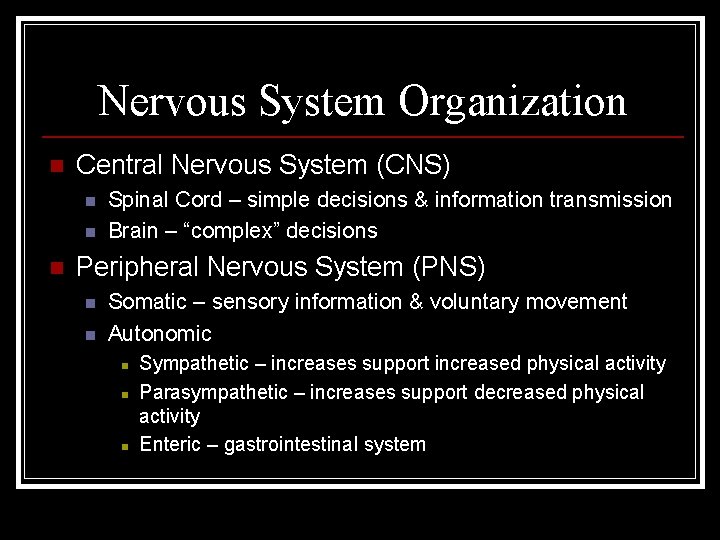
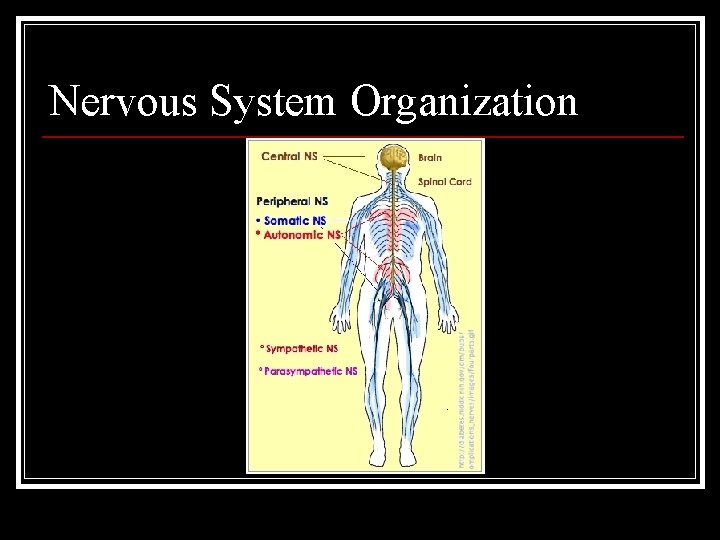
Nervous System Organization n Central Nervous System (CNS) n n n Spinal Cord – simple decisions & information transmission Brain – “complex” decisions Peripheral Nervous System (PNS) n n Somatic – sensory information & voluntary movement Autonomic n n n Sympathetic – increases support increased physical activity Parasympathetic – increases support decreased physical activity Enteric – gastrointestinal system
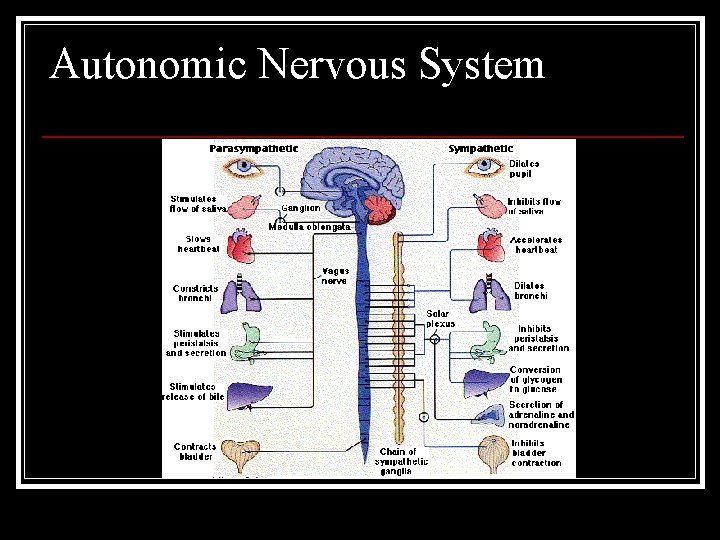
Autonomic Nervous System
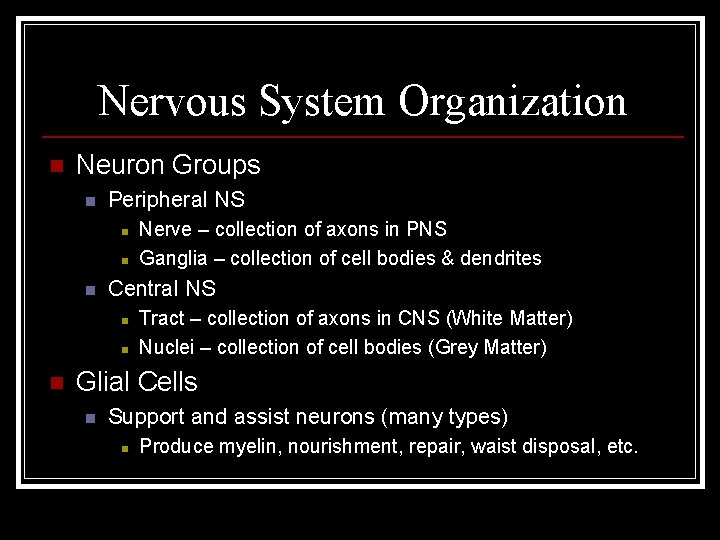
Nervous System Organization n Neuron Groups n Peripheral NS n n n Central NS n n n Nerve – collection of axons in PNS Ganglia – collection of cell bodies & dendrites Tract – collection of axons in CNS (White Matter) Nuclei – collection of cell bodies (Grey Matter) Glial Cells n Support and assist neurons (many types) n Produce myelin, nourishment, repair, waist disposal, etc.
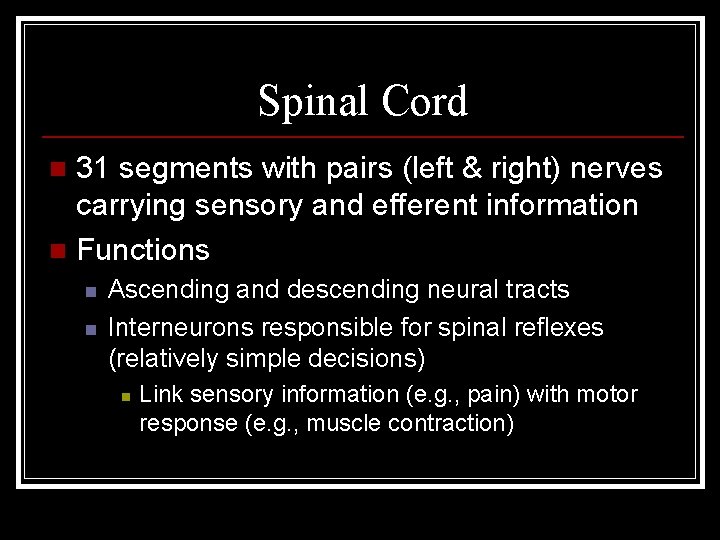
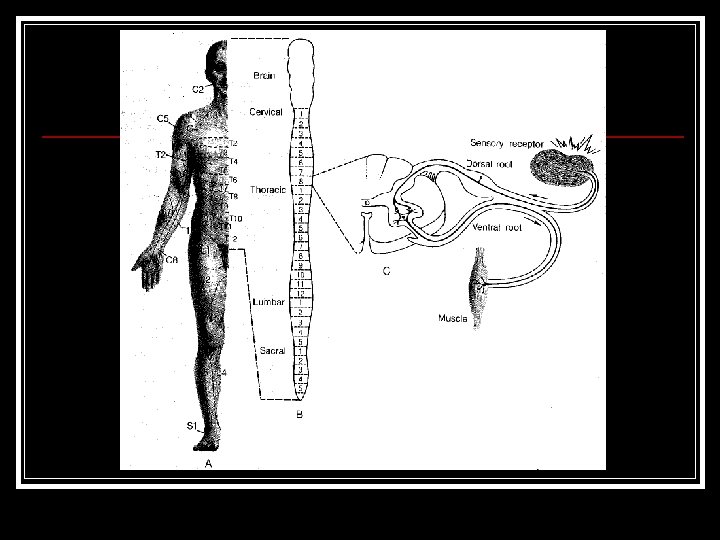
Spinal Cord 31 segments with pairs (left & right) nerves carrying sensory and efferent information n Functions n n n Ascending and descending neural tracts Interneurons responsible for spinal reflexes (relatively simple decisions) n Link sensory information (e. g. , pain) with motor response (e. g. , muscle contraction)
Brain n Structure n Very Complex n n Many different ways of describing brain structures (location, function, etc. ) General Principles Layered n Lateralized n
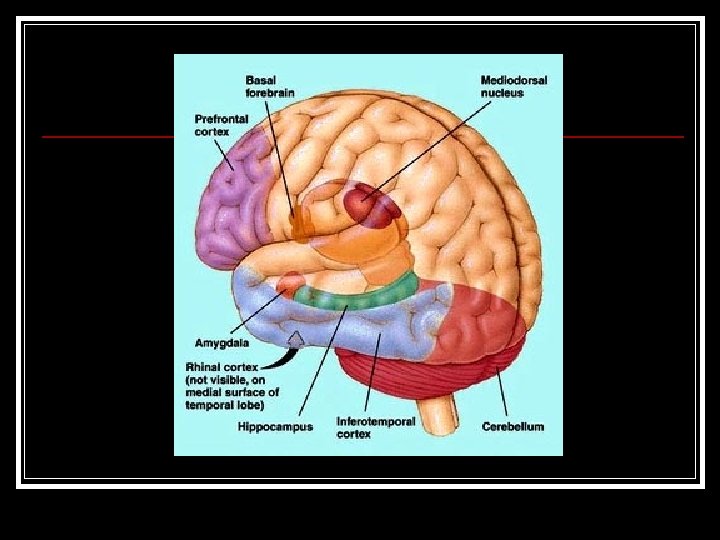
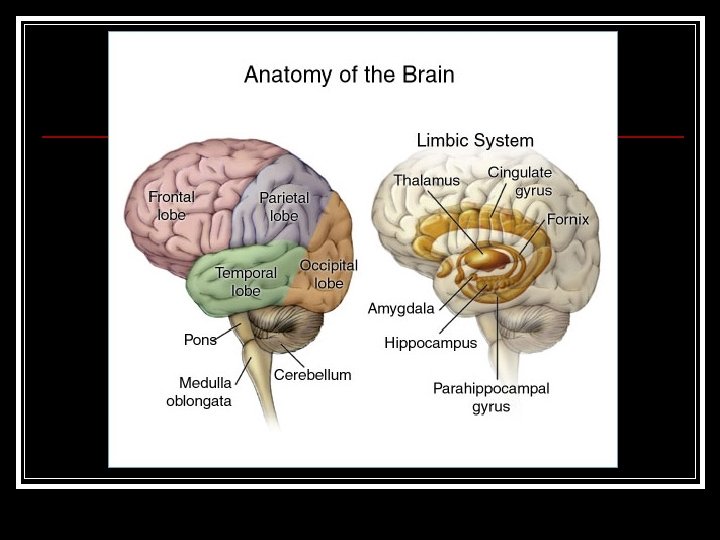
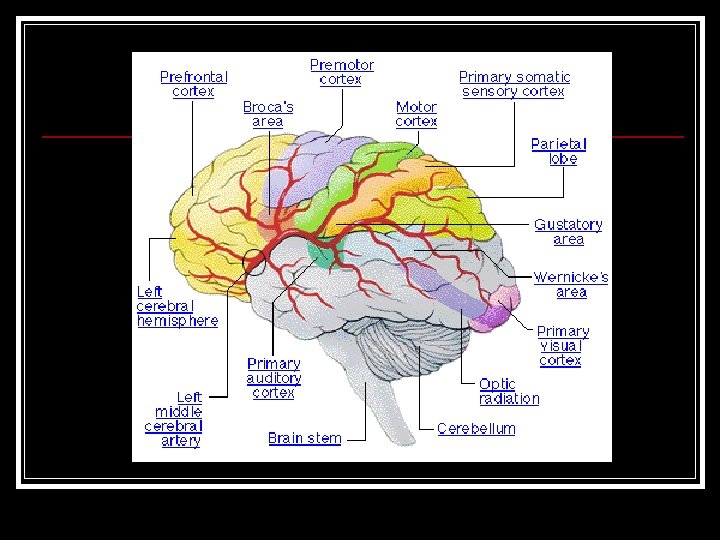
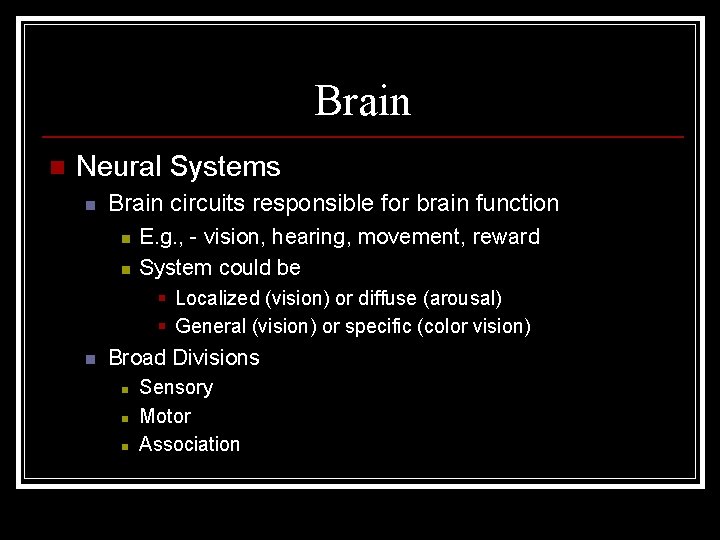
Brain n Neural Systems n Brain circuits responsible for brain function n n E. g. , - vision, hearing, movement, reward System could be § Localized (vision) or diffuse (arousal) § General (vision) or specific (color vision) n Broad Divisions n n n Sensory Motor Association
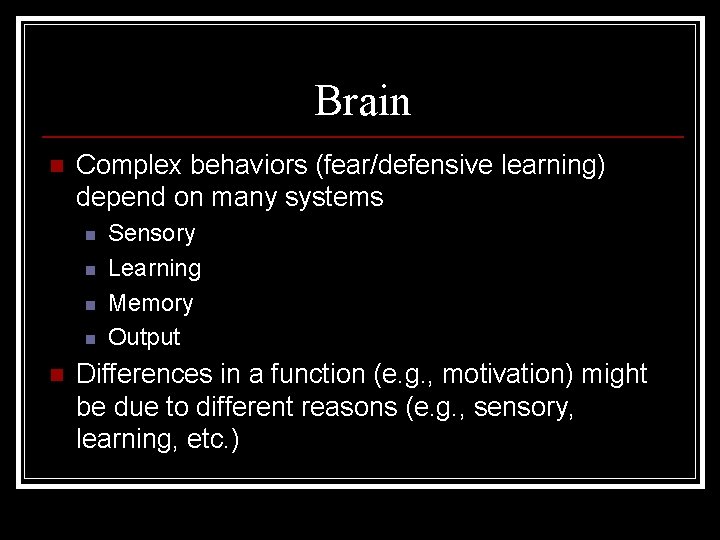
Brain n Complex behaviors (fear/defensive learning) depend on many systems n n n Sensory Learning Memory Output Differences in a function (e. g. , motivation) might be due to different reasons (e. g. , sensory, learning, etc. )
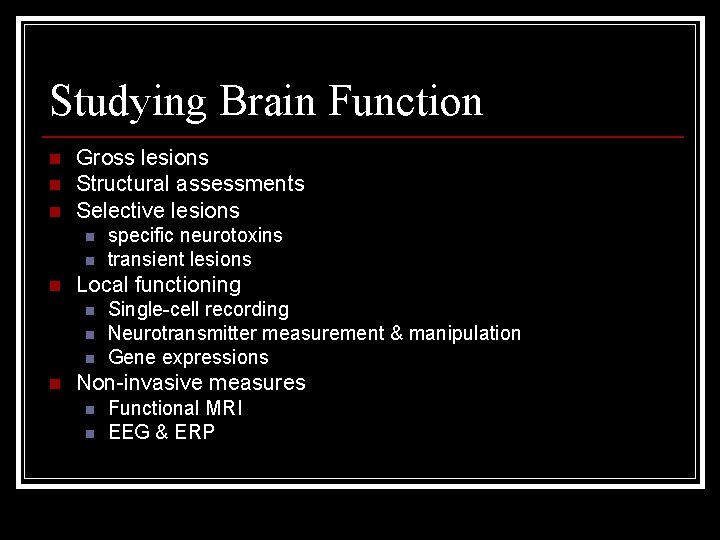
Studying Brain Function n Gross lesions Structural assessments Selective lesions n n n Local functioning n n specific neurotoxins transient lesions Single-cell recording Neurotransmitter measurement & manipulation Gene expressions Non-invasive measures n n Functional MRI EEG & ERP
- Slides: 40