
NERVOUS SYSTEM Class 7 Subject BIOLOGY Part 4
NERVOUS SYSTEM Class – 7 Subject – BIOLOGY Part - 4
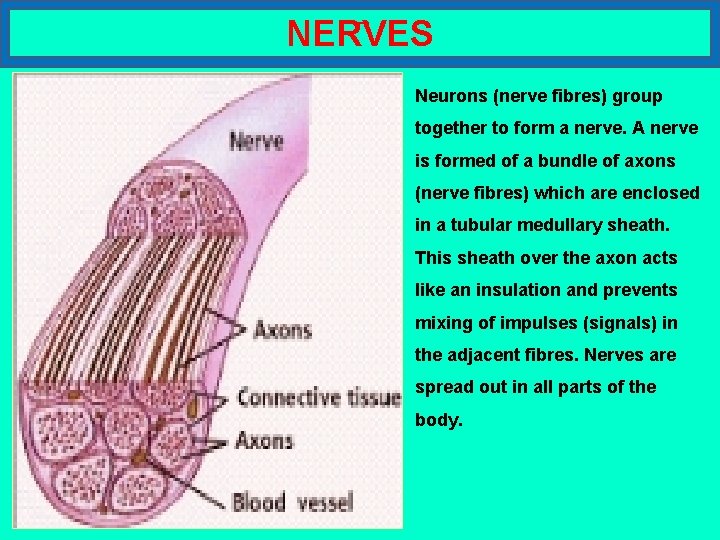
T NERVES Neurons (nerve fibres) group together to form a nerve. A nerve is formed of a bundle of axons (nerve fibres) which are enclosed in a tubular medullary sheath. This sheath over the axon acts like an insulation and prevents mixing of impulses (signals) in the adjacent fibres. Nerves are spread out in all parts of the body.

TYPES OF NERVES Nerves are divided into three types: NERVE

TYPES OF NERVES Nerves are divided into three types: NERVE Sensory Nerves

TYPES OF NERVES Nerves are divided into three types: NERVE Sensory Nerves Motor Nerves

TYPES OF NERVES Nerves are divided into three types: NERVE Sensory Nerves Motor Nerves Mixed nerves
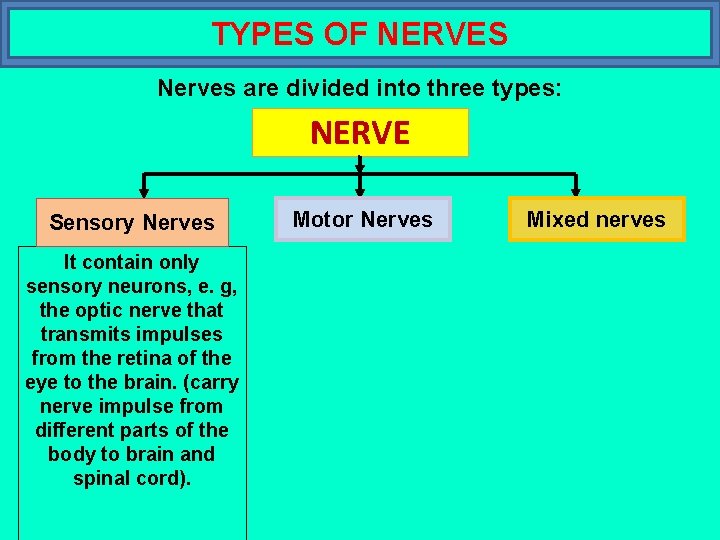
TYPES OF NERVES Nerves are divided into three types: NERVE Sensory Nerves It contain only sensory neurons, e. g, the optic nerve that transmits impulses from the retina of the eye to the brain. (carry nerve impulse from different parts of the body to brain and spinal cord). Motor Nerves Mixed nerves
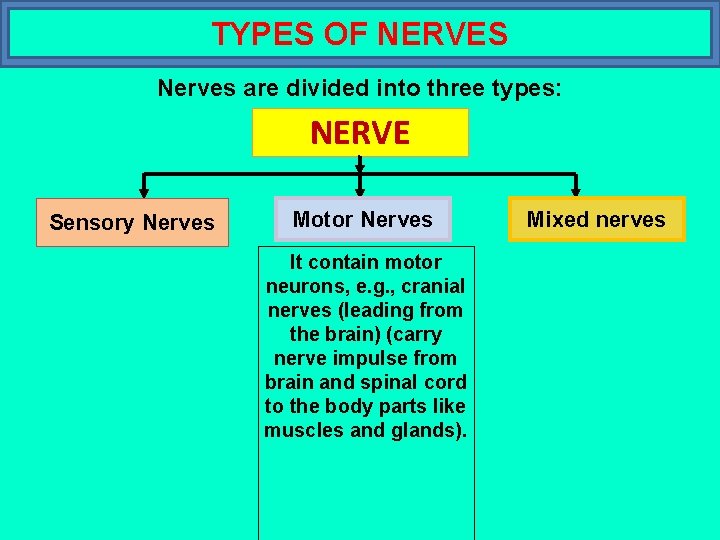
TYPES OF NERVES Nerves are divided into three types: NERVE Sensory Nerves Motor Nerves It contain motor neurons, e. g. , cranial nerves (leading from the brain) (carry nerve impulse from brain and spinal cord to the body parts like muscles and glands). Mixed nerves
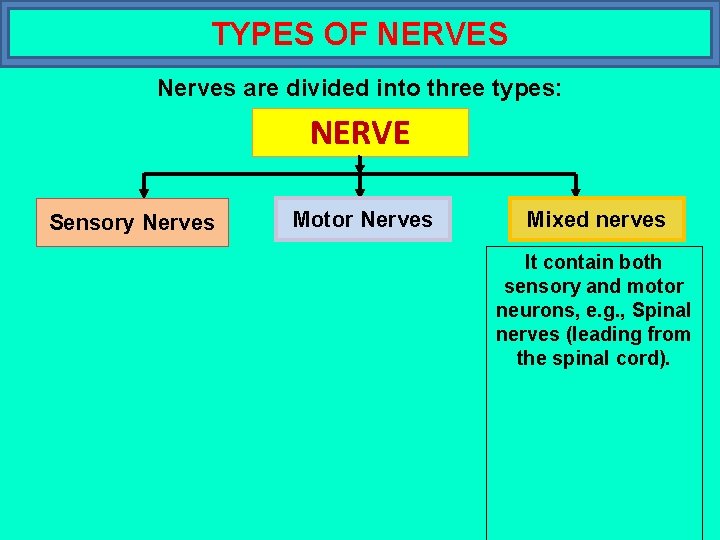
TYPES OF NERVES Nerves are divided into three types: NERVE Sensory Nerves Motor Nerves Mixed nerves It contain both sensory and motor neurons, e. g. , Spinal nerves (leading from the spinal cord).
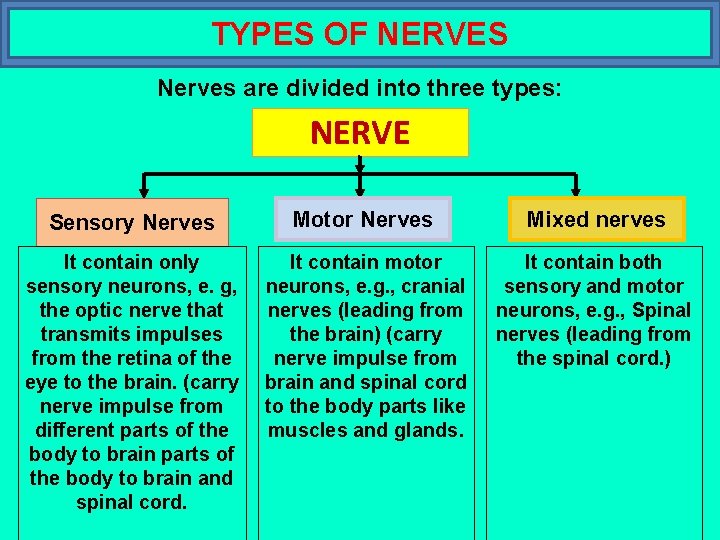
TYPES OF NERVES Nerves are divided into three types: NERVE Sensory Nerves Motor Nerves Mixed nerves It contain only sensory neurons, e. g, the optic nerve that transmits impulses from the retina of the eye to the brain. (carry nerve impulse from different parts of the body to brain and spinal cord. It contain motor neurons, e. g. , cranial nerves (leading from the brain) (carry nerve impulse from brain and spinal cord to the body parts like muscles and glands. It contain both sensory and motor neurons, e. g. , Spinal nerves (leading from the spinal cord. )
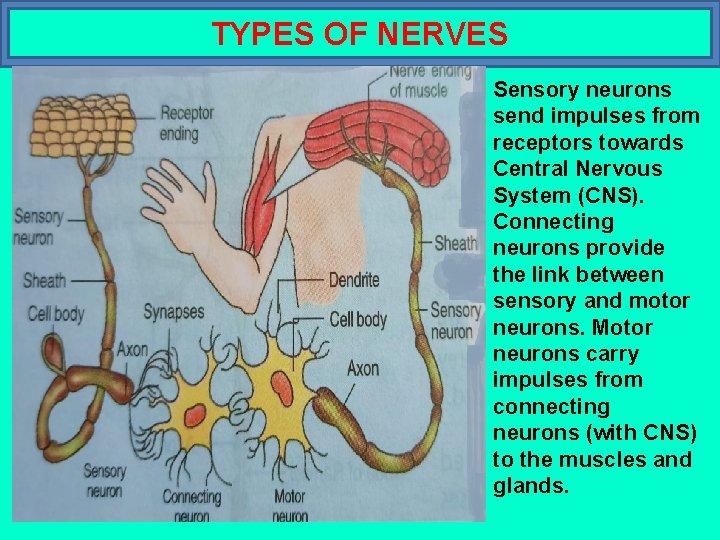
TYPES OF NERVES Sensory neurons send impulses from receptors towards Central Nervous System (CNS). Connecting neurons provide the link between sensory and motor neurons. Motor neurons carry impulses from connecting neurons (with CNS) to the muscles and glands.
Functions of the nerves • Receive stimuli from the environment. In multicellular organisms, this is done by modified nerve cells called receptors. • Convert the stimuli into the form of electrical impulses a process called transduction. • Transmit them , often over considerable distance to other specialised cells called Effectors which are capable of producing an appropriate response. Nerve impulses Unlike the electrical impulses that are sent along the telephone line, nerve impulses are caused by chemical changes in and around the neuron. Nerve impulses travel rapidly in one direction, starting at the dendrites and finishing at the end of the axon.
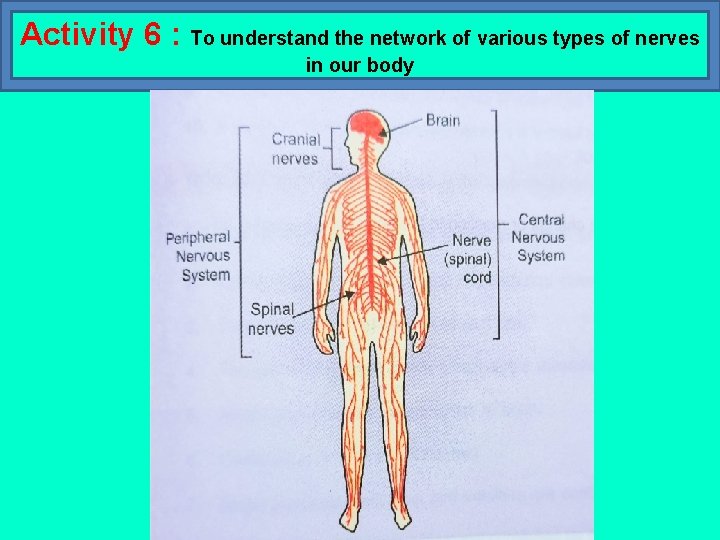
Activity 6 : To understand the network of various types of nerves in our body
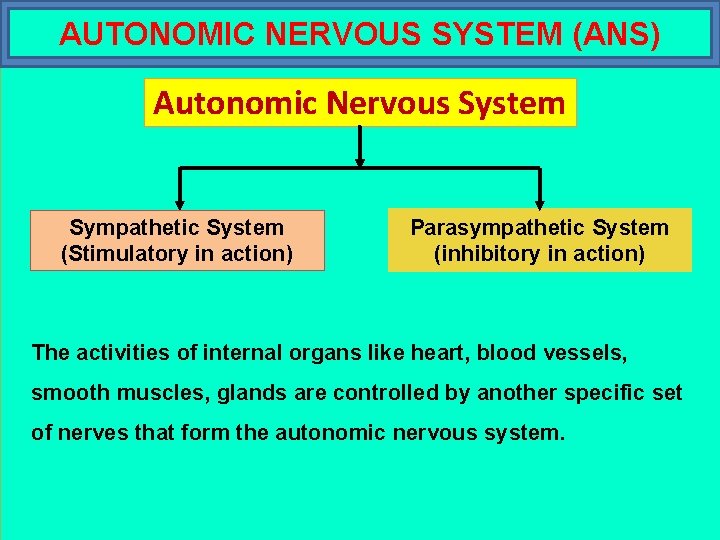
AUTONOMIC NERVOUS SYSTEM (ANS) Autonomic Nervous System Sympathetic System (Stimulatory in action) Parasympathetic System (inhibitory in action) The activities of internal organs like heart, blood vessels, smooth muscles, glands are controlled by another specific set of nerves that form the autonomic nervous system.

End of Part – 4.
- Slides: 15