
Nervous System CHAPTER 10 Combining Forms for the
Nervous System CHAPTER 10
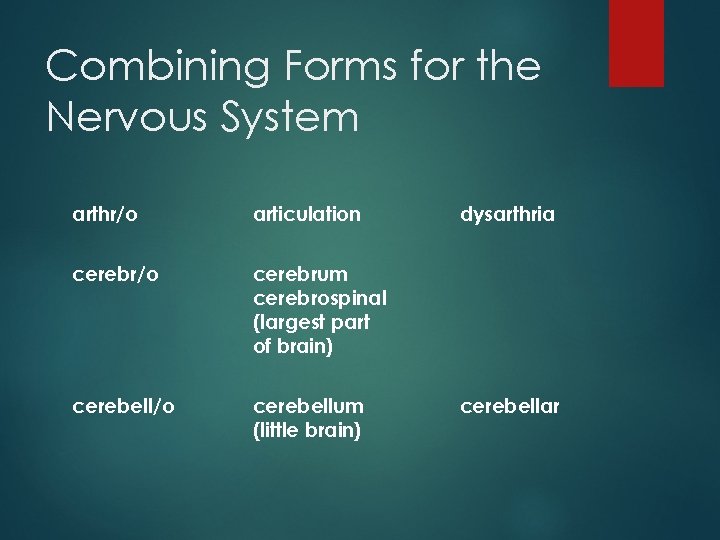
Combining Forms for the Nervous System arthr/o articulation cerebr/o cerebrum cerebrospinal (largest part of brain) cerebell/o cerebellum (little brain) dysarthria cerebellar
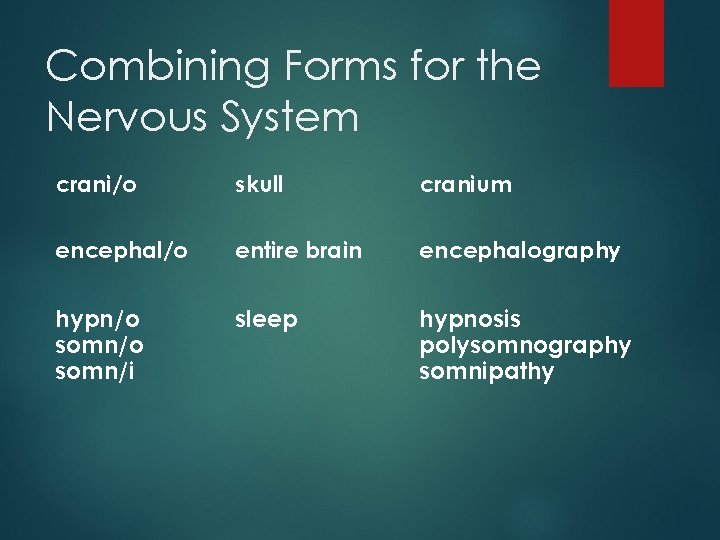
Combining Forms for the Nervous System crani/o skull cranium encephal/o entire brain encephalography hypn/o somn/i sleep hypnosis polysomnography somnipathy
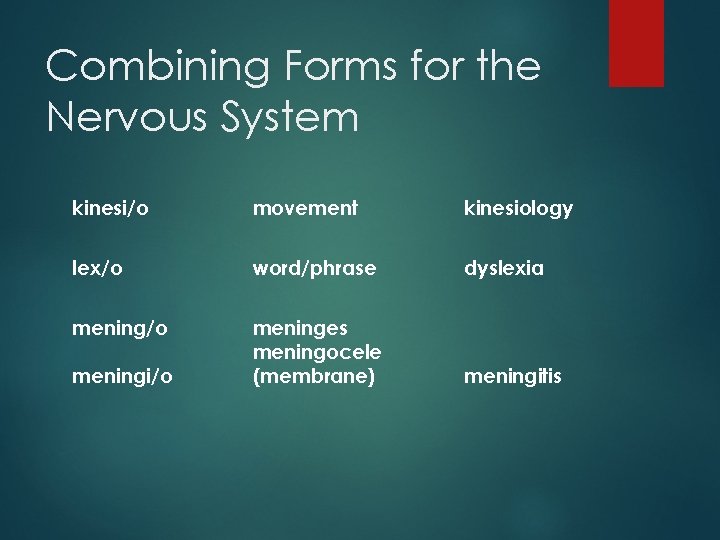
Combining Forms for the Nervous System kinesi/o movement kinesiology lex/o word/phrase dyslexia mening/o meninges meningocele (membrane) meningitis meningi/o
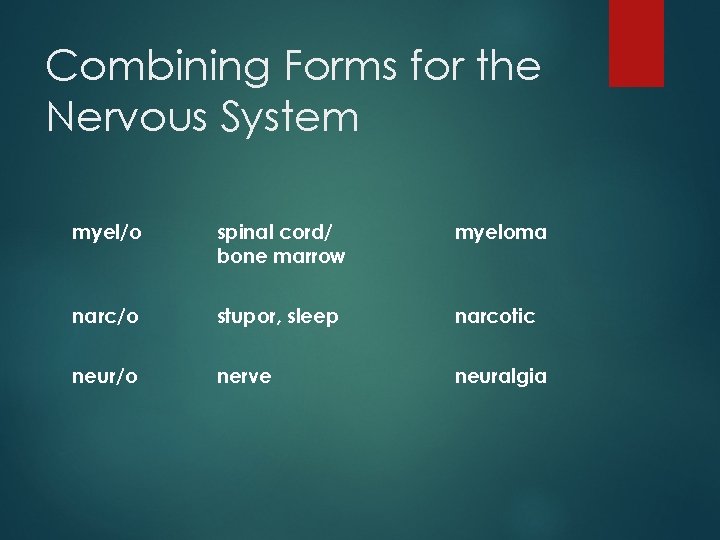
Combining Forms for the Nervous System myel/o spinal cord/ bone marrow myeloma narc/o stupor, sleep narcotic neur/o nerve neuralgia
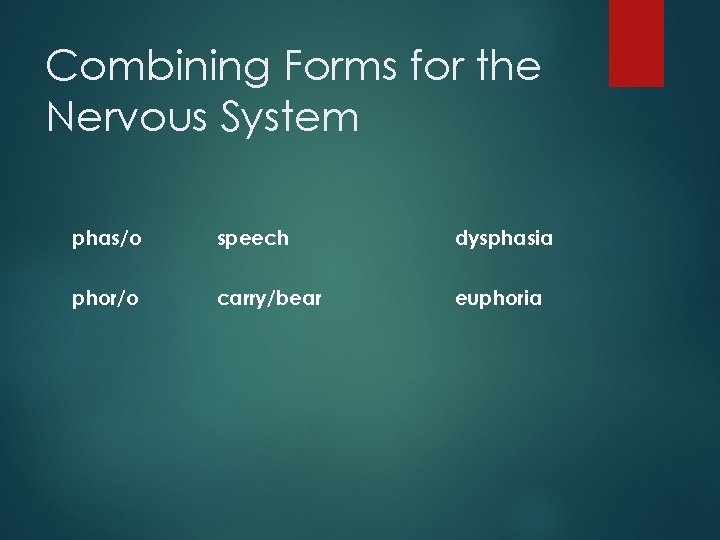
Combining Forms for the Nervous System phas/o speech dysphasia phor/o carry/bear euphoria
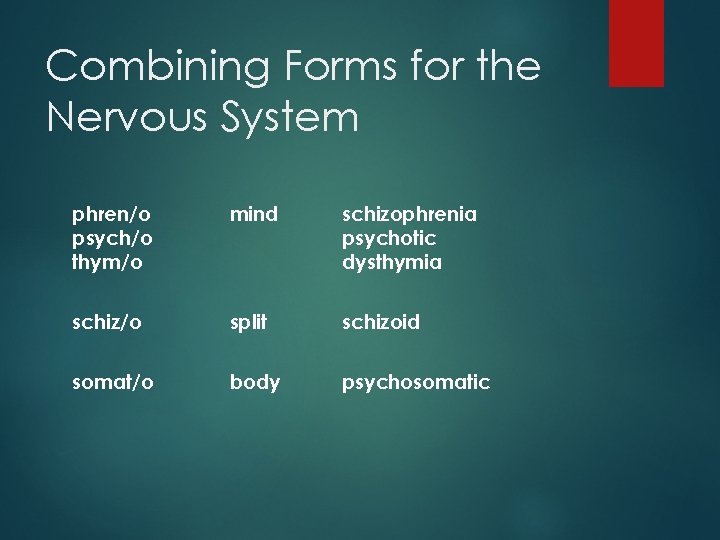
Combining Forms for the Nervous System phren/o psych/o thym/o mind schizophrenia psychotic dysthymia schiz/o split schizoid somat/o body psychosomatic
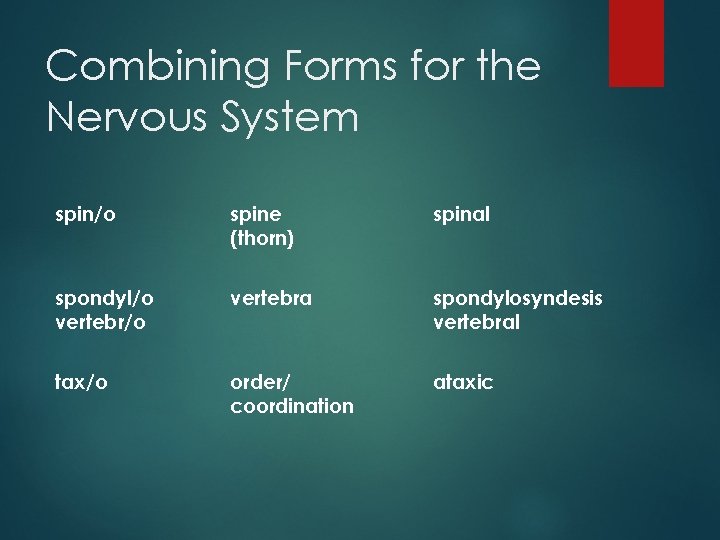
Combining Forms for the Nervous System spin/o spine (thorn) spinal spondyl/o vertebra spondylosyndesis vertebral tax/o order/ coordination ataxic
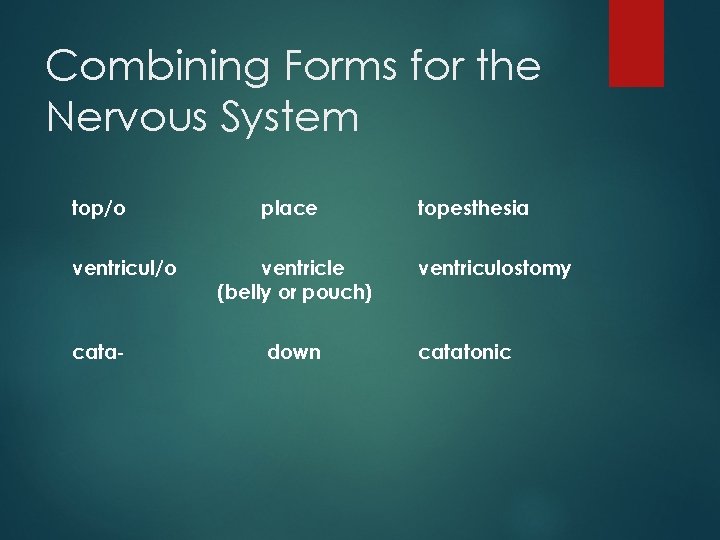
Combining Forms for the Nervous System top/o ventricul/o cata- place ventricle (belly or pouch) down topesthesia ventriculostomy catatonic
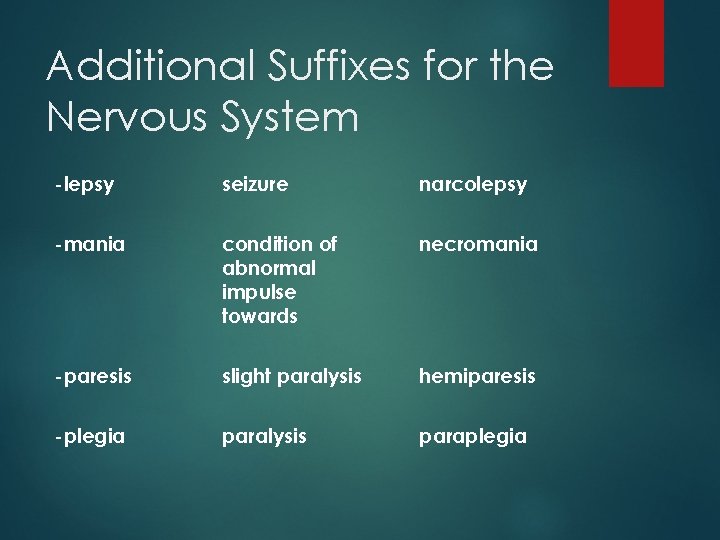
Additional Suffixes for the Nervous System -lepsy seizure narcolepsy -mania condition of abnormal impulse towards necromania -paresis slight paralysis hemiparesis -plegia paralysis paraplegia
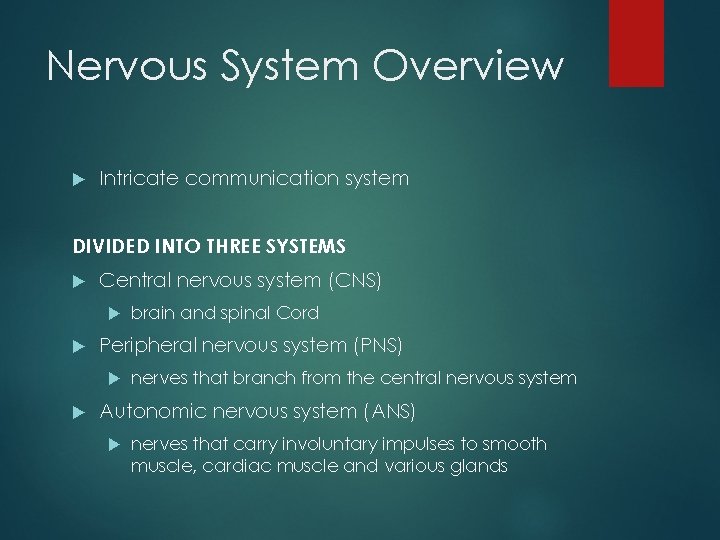
Nervous System Overview Intricate communication system DIVIDED INTO THREE SYSTEMS Central nervous system (CNS) Peripheral nervous system (PNS) brain and spinal Cord nerves that branch from the central nervous system Autonomic nervous system (ANS) nerves that carry involuntary impulses to smooth muscle, cardiac muscle and various glands
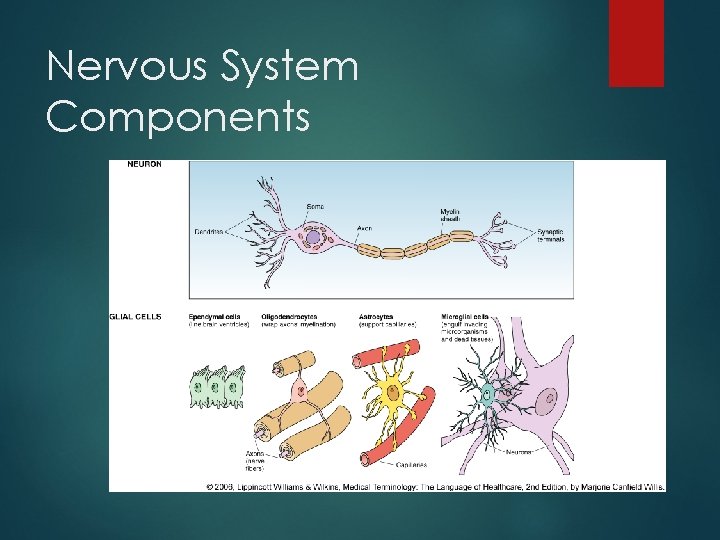
Nervous System Components
Anatomy of the Brain Cerebrum Covered by a cerebral cortex (higher mental fx) Divided into two hemispheres Consists of 4 lobes (know what the 4 lobes do) Cerebellum Controls coordination of skeletal muscles Brainstem Is the brains control center relaying information between the cerebrum, cerebellum, and spinal cord. Is the vitals center (RR, HR, body temp).
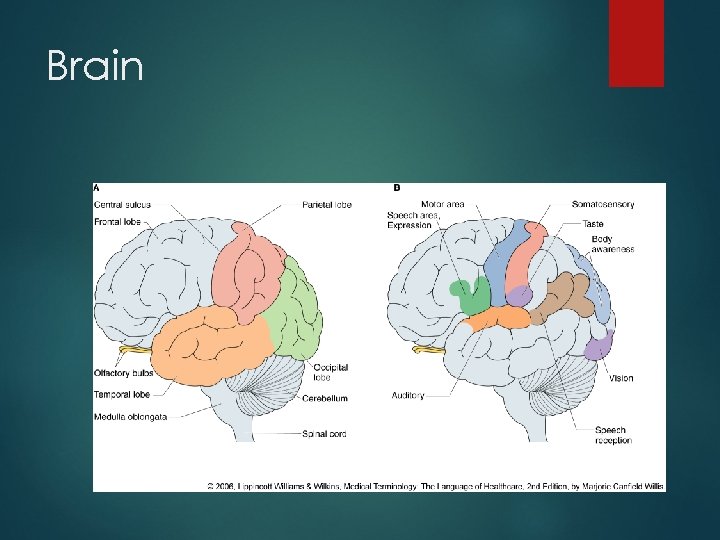
Brain
Central Nervous System (CNS) Three layers protect the brain and spinal cord called the meninges. Dura mater Arachnoid Pia mater Within these protection layers is the cerebrospinal fluid (CSF).
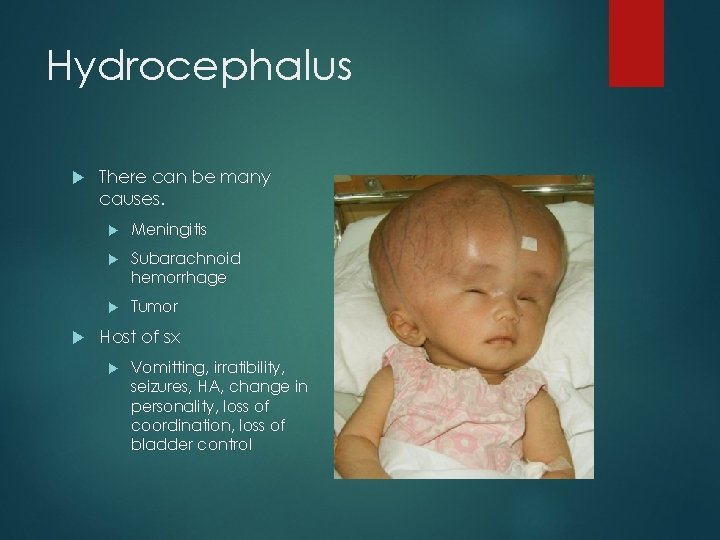
Hydrocephalus There can be many causes. Meningitis Subarachnoid hemorrhage Tumor Host of sx Vomitting, irratibility, seizures, HA, change in personality, loss of coordination, loss of bladder control
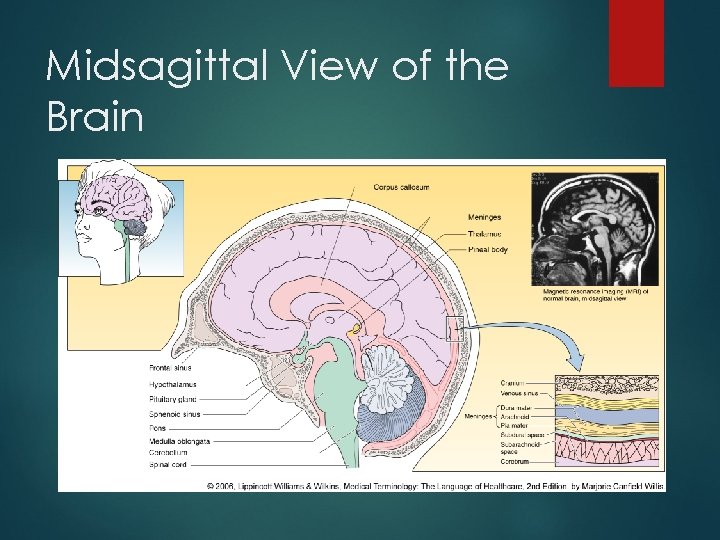
Midsagittal View of the Brain
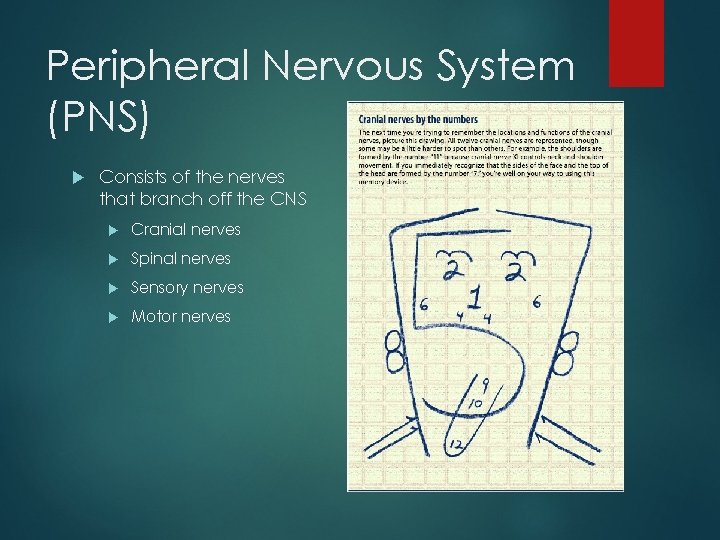
Peripheral Nervous System (PNS) Consists of the nerves that branch off the CNS Cranial nerves Spinal nerves Sensory nerves Motor nerves
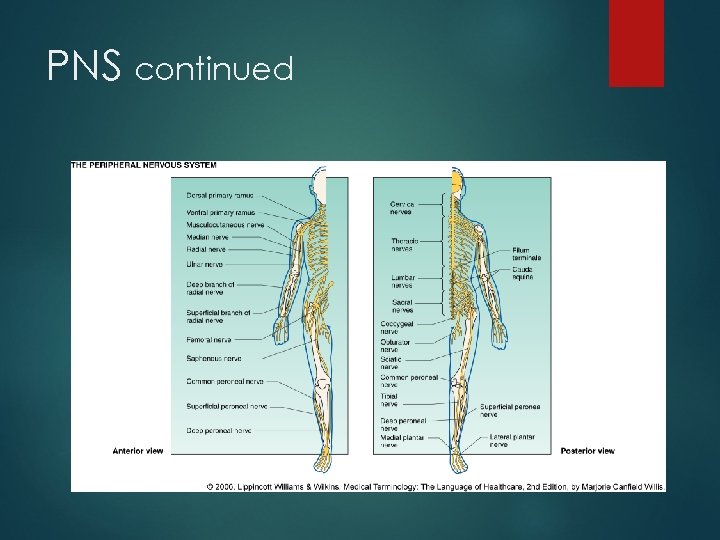
PNS continued
Autonomic Nervous System (ANS) Carry the involuntary impulses to smooth muscle, cardiac muscle, and various glands (i. e. adrenal cortex). Hypothalamus – the control center Divided into two more systems Sympathetic Nervous System – fight or flight Parasympathetic Nervous System – counterbalance after stressful situation.
TIA vs CVA Brief episode with loss of blood to the brain by a partial occlusion resulting in a temporary neurological deficit. Think of what the 12 cranial nerves fx are. Confusion Diff. speaking Loss of coordination, speech, & facial movement Damage to the brain (lack of blood) due to the occlusion of a blood vessel in the brain. Embolus Thrombus hemorrhage
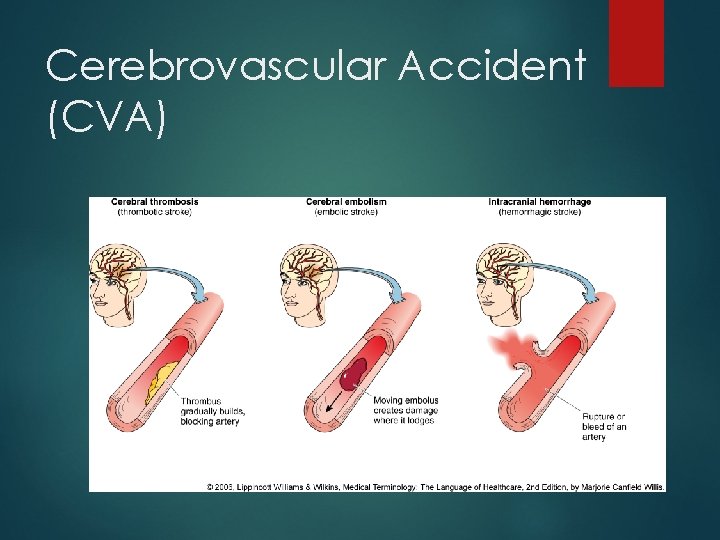
Cerebrovascular Accident (CVA)
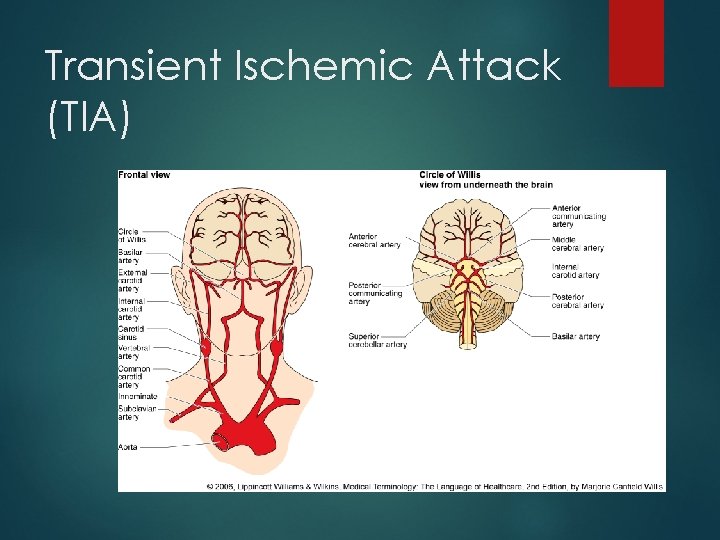
Transient Ischemic Attack (TIA)
The Patient with a CVA or TIA Aphasia – the lack or inability to form or understand language Dysarthria – dysfunction in the muscles that control speech Dysphagia – difficulty speaking Words Salad – “I ate the blue car at Mc. Donalds” Flat affect Paralysis (-plegia) Hemiparesis (partial on R or L of body) , flaccid or spastic paralysis Also known as hemiplegia, rarely paraplegic, sometimes quadriplegic Ataxia Catatonic
Nervous System Symptomatology Aphasia, dysphagia, dysarthria Coma Delirium Encephalitis vs Myelitis Seizure Tonic-clonic (grand mal) Dementia Absence (petit mal) Neuralgia Partial (focal) 3 types of paralysis Hydrocephalus Syncope 3 types of -plegia Herpes zoster (shingles)
Nervous System Diseases Alzheimer disease Amyotrophic lateral sclerosis (ALS) AKA Lou Gehrig’s disease Cerebral palsy (CP) Epilepsy Multiple Sclerosis (MS) Meningitis Parkinson’s disease
Nervous System Diagnostics/Tests Electroencephalogram (EEG) Lumbar Puncture (LP) Positron emission tomography (PET) Myelogram Babinski sign or reflex Indicative of a CNS disorder Operative Procedures Craniotomy Diskectomy Laminectomy Neuroendovascular surgery Spondylosyndesis
Psychiatric Terms Disorders Flat affect Autism Catatonia Depression Delusion PTSD Hallucination OCD Ideation Schizophrenia Mania Psychosis
- Slides: 28