
Nervous System Ch 9 Pre And Suf Quiz
- Slides: 34
Nervous System Ch 9
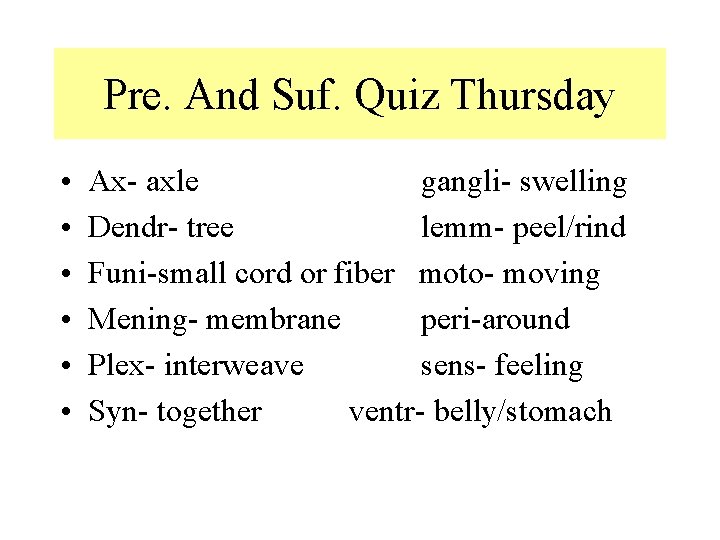
Pre. And Suf. Quiz Thursday • • • Ax- axle gangli- swelling Dendr- tree lemm- peel/rind Funi-small cord or fiber moto- moving Mening- membrane peri-around Plex- interweave sens- feeling Syn- together ventr- belly/stomach
What is the nervous system? • A system of nerves and supporting tissues that create the • • Senses (Sight, Hearing, etc. . ) Thought Muscle Movement Feelings
What is the job of the nervous system? • Sensory function: Detect changes in and out of the body. • Motor function: Effect Muscles & glands. • Integrative function: To connect the Sensory and Motor function. Produces thought.
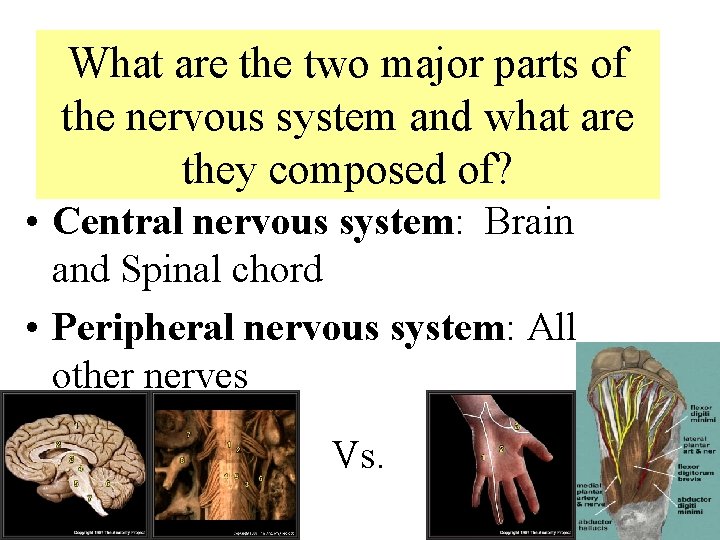
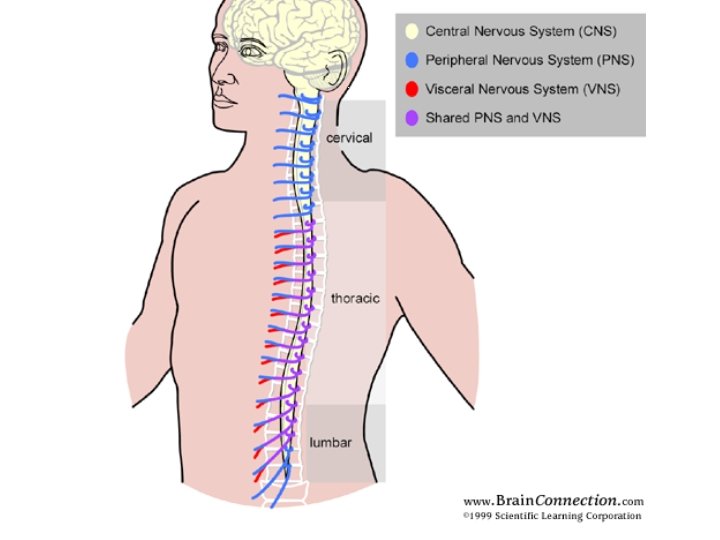
What are the two major parts of the nervous system and what are they composed of? • Central nervous system: Brain and Spinal chord • Peripheral nervous system: All other nerves Vs.
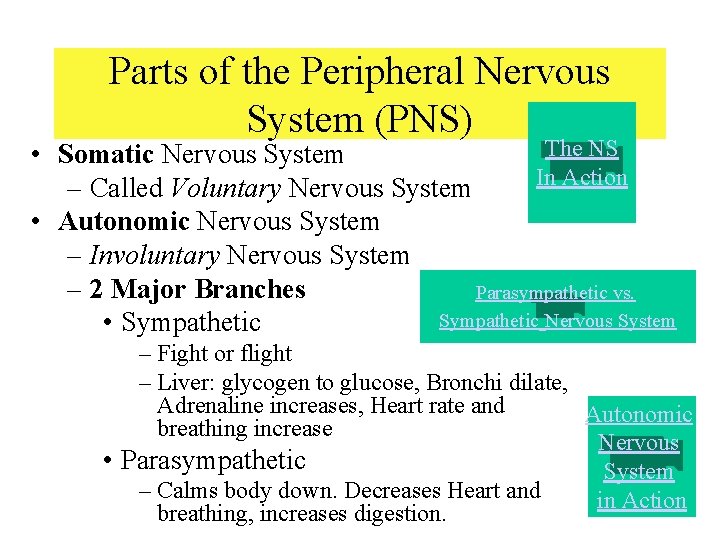
Parts of the Peripheral Nervous System (PNS) The NS • Somatic Nervous System In Action – Called Voluntary Nervous System • Autonomic Nervous System – Involuntary Nervous System – 2 Major Branches Parasympathetic vs. Sympathetic Nervous System • Sympathetic – Fight or flight – Liver: glycogen to glucose, Bronchi dilate, Adrenaline increases, Heart rate and Autonomic breathing increase Nervous • Parasympathetic System – Calms body down. Decreases Heart and in Action breathing, increases digestion.
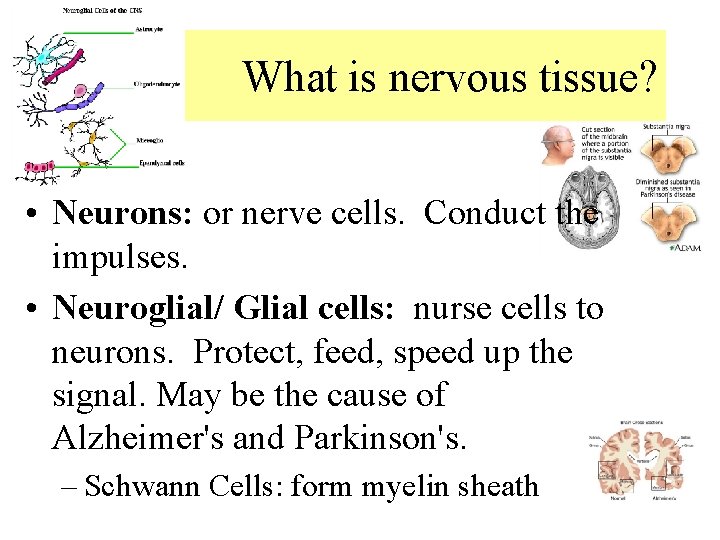
What is nervous tissue? • Neurons: or nerve cells. Conduct the impulses. • Neuroglial/ Glial cells: nurse cells to neurons. Protect, feed, speed up the signal. May be the cause of Alzheimer's and Parkinson's. – Schwann Cells: form myelin sheath
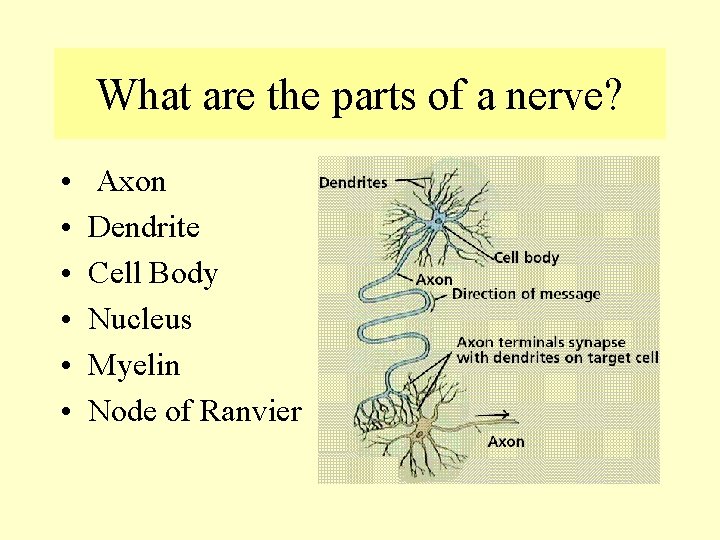
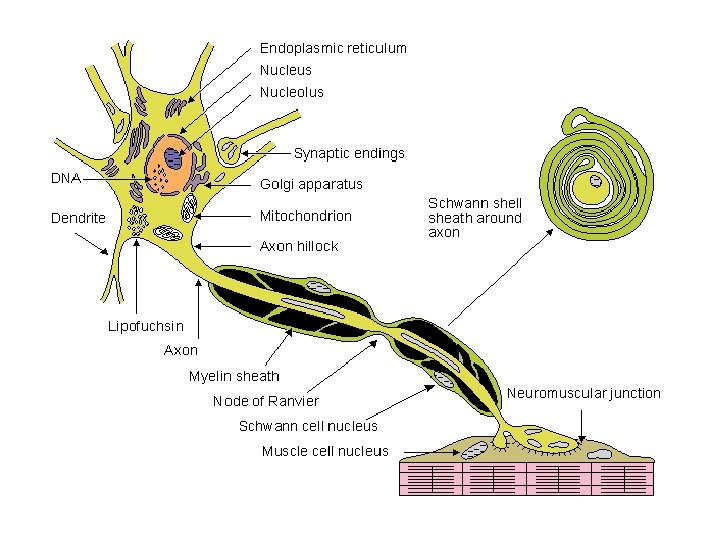
What are the parts of a nerve? • • • Axon Dendrite Cell Body Nucleus Myelin Node of Ranvier
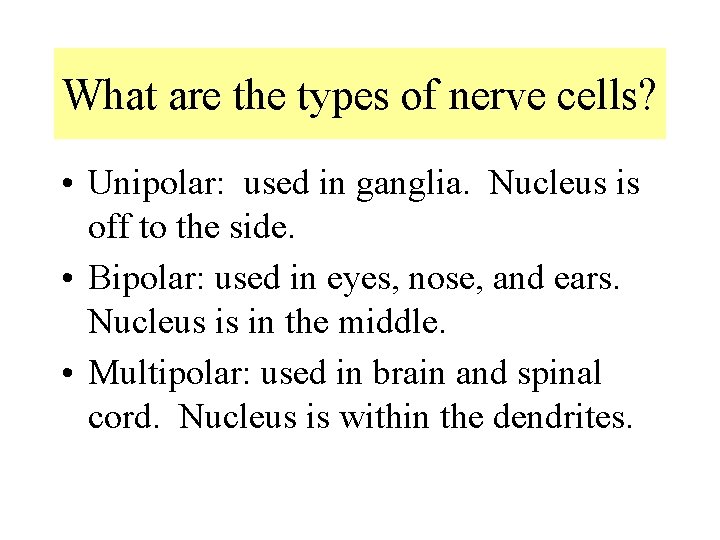
What are the types of nerve cells? • Unipolar: used in ganglia. Nucleus is off to the side. • Bipolar: used in eyes, nose, and ears. Nucleus is in the middle. • Multipolar: used in brain and spinal cord. Nucleus is within the dendrites.
Nerve Cell • Cell body: cytoplasm, organelles: mitochondria, lysosomes, golgi apparatus, and Nucleus. • Dendrites: pick up the nerve signal. • Axon: Long, may be branched carry nerve signals Away. Review of A Neuron
Do nerve cells reproduce once mature? • No. That is the problem. They can grow axon ends, but once the nucleus is damaged that nerve will not grow back.
What are Neuroglial Cells? • Schwann cells: wrap around axon and speeds up nerve signals. Mainly fat called Myelin. Can’t carry nerve signal so the charge jumps over them at the nodes of Ranvier. = Grey Matter • Astrocytes: Structural support & feed • Microglial Cells: Phagocytize invaders & broken cell parts
What difference does it make if a nerve has Schwann cells or not? • Nerves that have a large diameter and are myelinated are super-fast: 120 m/s • Nerves with a small diameter that are unmyelinated are slow: 0. 5 m/s
How do nerves communicate? • Through Neurotransmitters: chemical signals sent from the Axon terminals of the nerve. • Nerves communicate through electrical signals. • These electrical signals are created through action and resting potentials.
How is an action potential Action reached? Potential • Change in nerve membrane Explained permeability. Na+ rushes in the nerve is depolarized (loses its charge). • K+ then rushes out which repolarizes the nerve cell. Action • 1/1000 of a second. Both steps Potential together are the action potential. • Active transport soon reestablishes the resting potential.
So… How does a nerve signal reach resting potential? • Nerve has a slightly negative charge inside and a slightly positive charge outside at rest. = Polarized See fig 7. 9 • K+ ions are inside, Na+ ions outside. Negative charge can’t diffuse through the membrane. • Active transport is used to push Na+ out and K+ in. More + leave than enter= neg. charge inside.
What do muscles and nerves have in common? • All or none response. The nerve impulse is either conducted or not. The intensity of the signal does not change.
How is an action potential sent? • Write one paragraph explaining it without looking in your notes. • Someone or someone's will be chosen to read their explanations to the class.
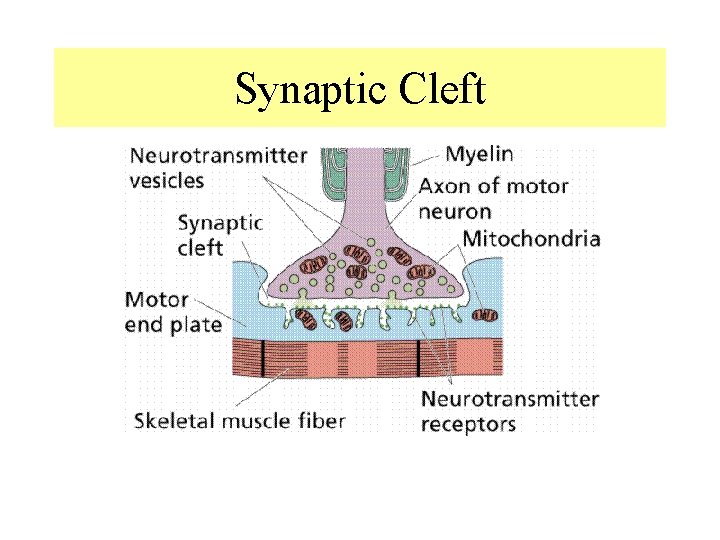
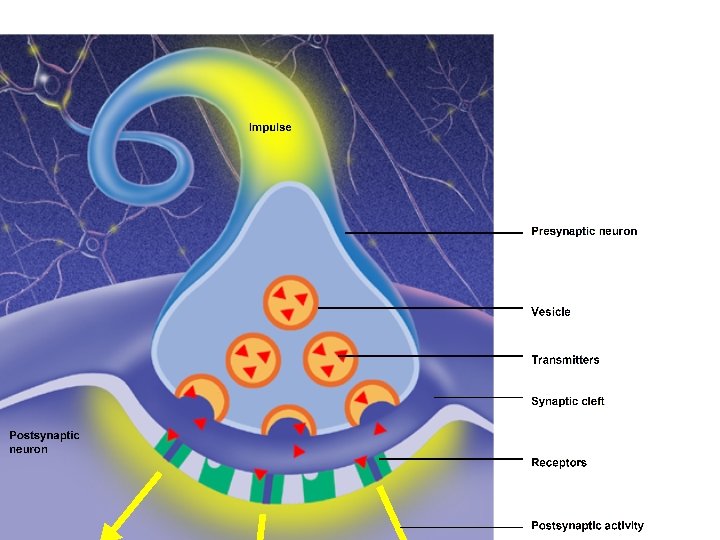
How are Neurotransmitters released? • Action potential causes Ca+ ions to enter the terminal end of the axon. • Synaptic vesicles then fuse with the membrane. • Contents are released into the synaptic cleft. • Neurotransmitters are decomposed and the vesicles retreat to be refilled.
How do Neurotransmitters Communicate? Neurotransmitter Actions NIH Worksheet Group Work: Summarize how you think the neuron works. NIH Neurotransmitters
What is a Synapse? • The junction between two communicating nerves. • Presynaptic neuron to the synaptic cleft to the Postsynaptic neuron
Synaptic Cleft
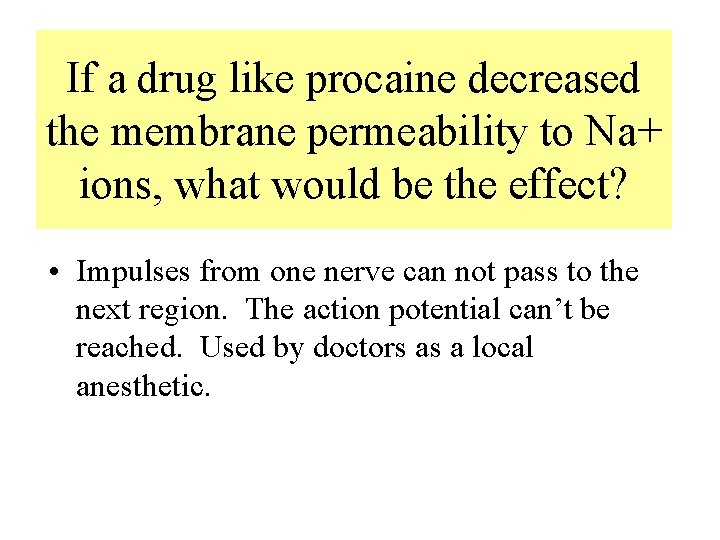
If a drug like procaine decreased the membrane permeability to Na+ ions, what would be the effect? • Impulses from one nerve can not pass to the next region. The action potential can’t be reached. Used by doctors as a local anesthetic.
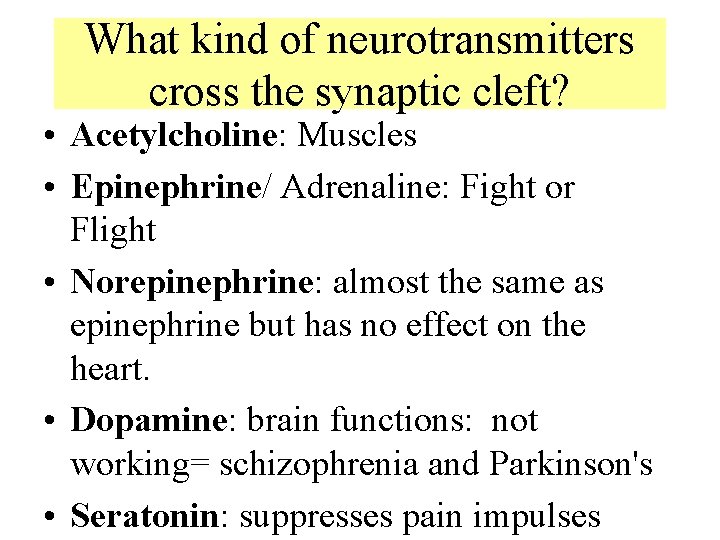
What kind of neurotransmitters cross the synaptic cleft? • Acetylcholine: Muscles • Epinephrine/ Adrenaline: Fight or Flight • Norepinephrine: almost the same as epinephrine but has no effect on the heart. • Dopamine: brain functions: not working= schizophrenia and Parkinson's • Seratonin: suppresses pain impulses
Need a review? Hit the button. Go through each of them EXCEPT the second one.
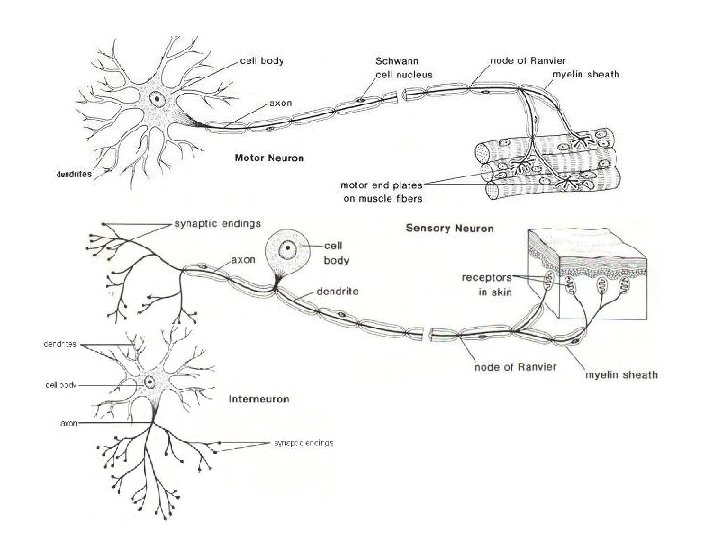
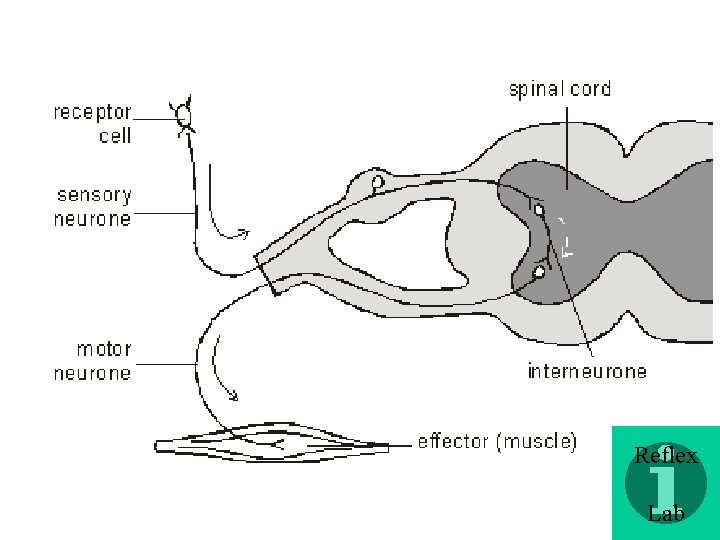
How does a reflex work? • Reflex Arc • Stimulus Receptor end of a Sensory neuron Interneuron (reflex center, often the spinal cord) Motor neuron Effector (Muscle being moved) Response Reflex Arc
Can you control a reflex? • No. Reflexes are automatic & unconscious. • Anesthesiologists will often use this information to test if the medicine is working.
Reflex Lab
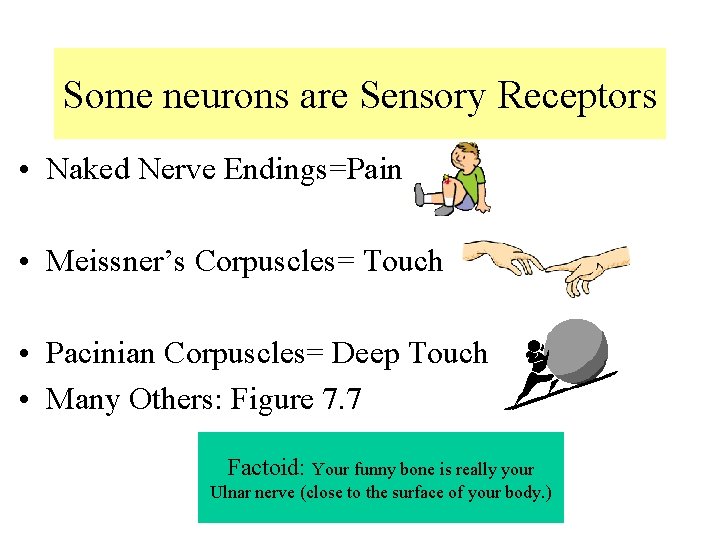
Some neurons are Sensory Receptors • Naked Nerve Endings=Pain • Meissner’s Corpuscles= Touch • Pacinian Corpuscles= Deep Touch • Many Others: Figure 7. 7 Factoid: Your funny bone is really your Ulnar nerve (close to the surface of your body. )
What do other neurons do? • Mirror Neurons in the Brain PBS Special: 2005 14 minutes On Mirror Neurons