
NERVOUS SYSTEM BRAIN CRANIAL NERVES Dr Othman AlShboul
NERVOUS SYSTEM – BRAIN & CRANIAL NERVES Dr. Othman Al-Shboul Department of Physiology 1
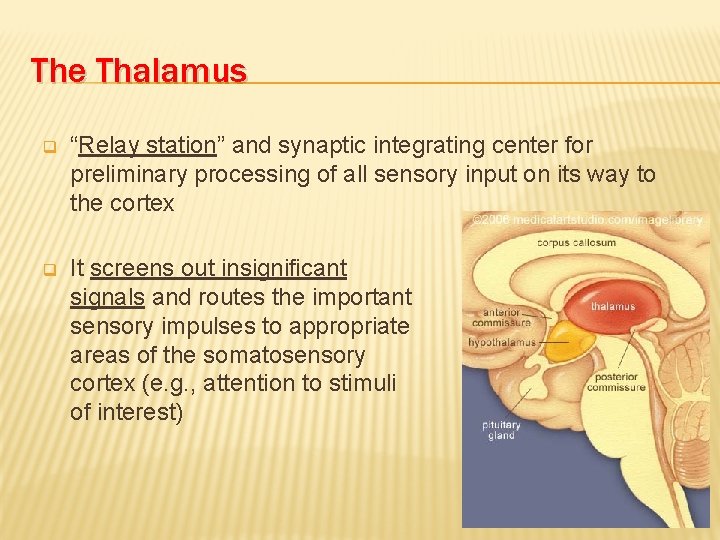
The Thalamus q “Relay station” and synaptic integrating center for preliminary processing of all sensory input on its way to the cortex q It screens out insignificant signals and routes the important sensory impulses to appropriate areas of the somatosensory cortex (e. g. , attention to stimuli of interest) 2
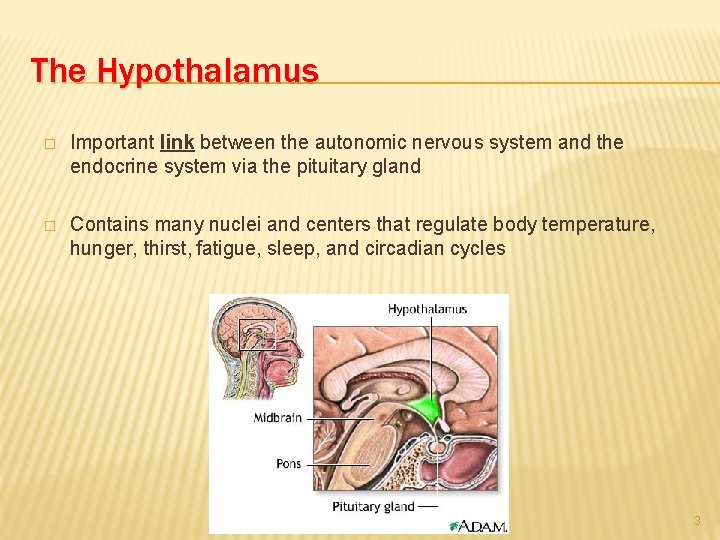
The Hypothalamus � Important link between the autonomic nervous system and the endocrine system via the pituitary gland � Contains many nuclei and centers that regulate body temperature, hunger, thirst, fatigue, sleep, and circadian cycles 3
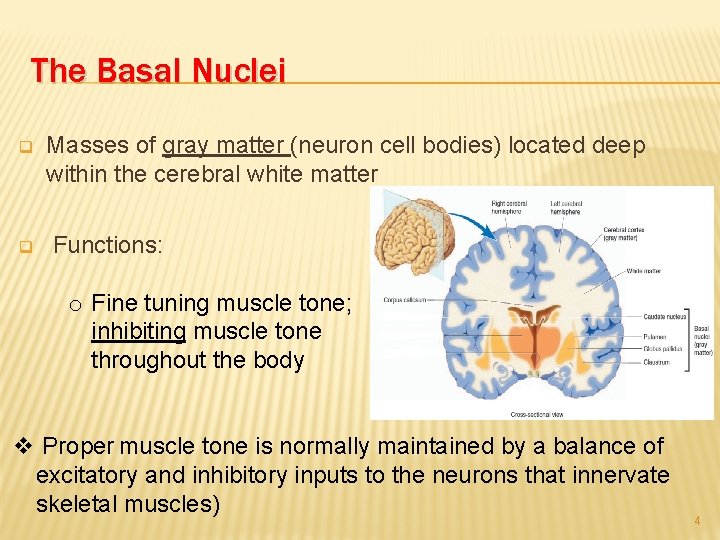
The Basal Nuclei q q Masses of gray matter (neuron cell bodies) located deep within the cerebral white matter Functions: o Fine tuning muscle tone; inhibiting muscle tone throughout the body v Proper muscle tone is normally maintained by a balance of excitatory and inhibitory inputs to the neurons that innervate skeletal muscles) 4
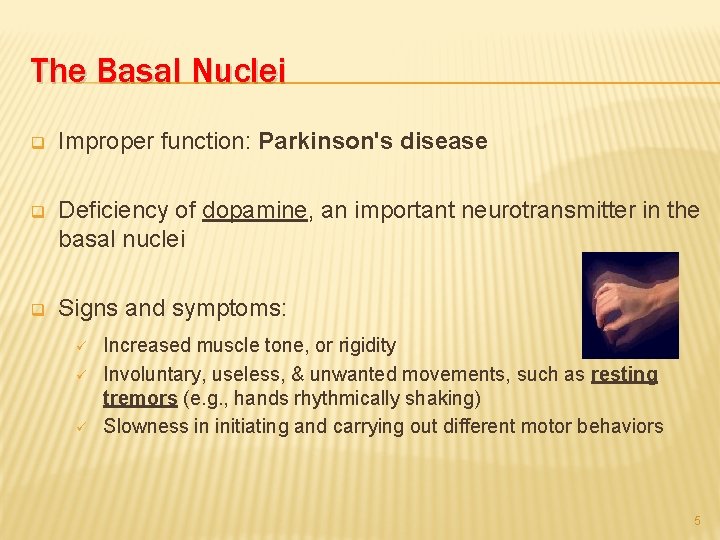
The Basal Nuclei q Improper function: Parkinson's disease q Deficiency of dopamine, an important neurotransmitter in the basal nuclei q Signs and symptoms: ü ü ü Increased muscle tone, or rigidity Involuntary, useless, & unwanted movements, such as resting tremors (e. g. , hands rhythmically shaking) Slowness in initiating and carrying out different motor behaviors 5
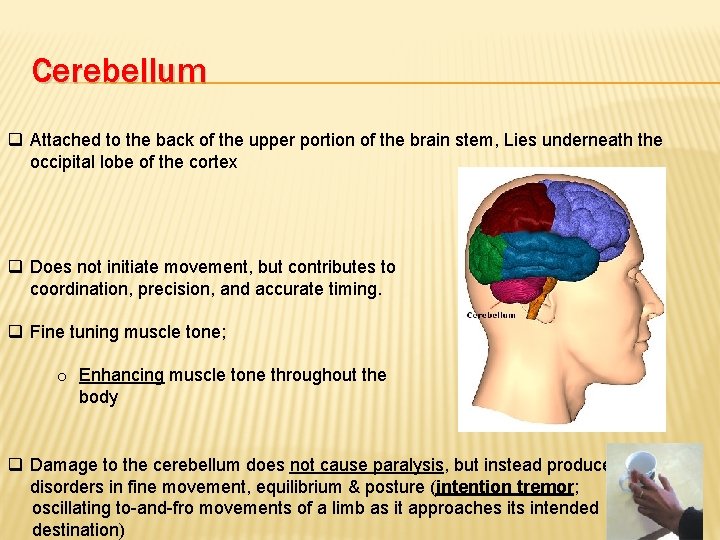
Cerebellum q Attached to the back of the upper portion of the brain stem, Lies underneath the occipital lobe of the cortex q Does not initiate movement, but contributes to coordination, precision, and accurate timing. q Fine tuning muscle tone; o Enhancing muscle tone throughout the body q Damage to the cerebellum does not cause paralysis, but instead produces disorders in fine movement, equilibrium & posture (intention tremor; oscillating to-and-fro movements of a limb as it approaches its intended destination) 6
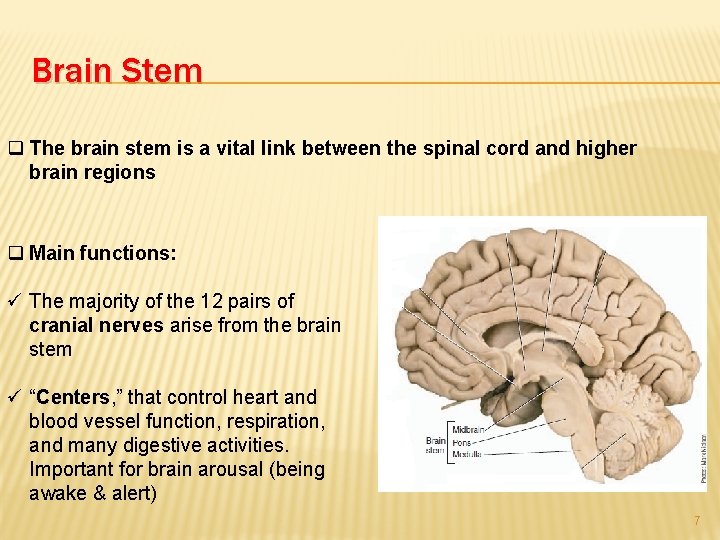
Brain Stem q The brain stem is a vital link between the spinal cord and higher brain regions q Main functions: ü The majority of the 12 pairs of cranial nerves arise from the brain stem ü “Centers, ” that control heart and blood vessel function, respiration, and many digestive activities. Important for brain arousal (being awake & alert) 7
8
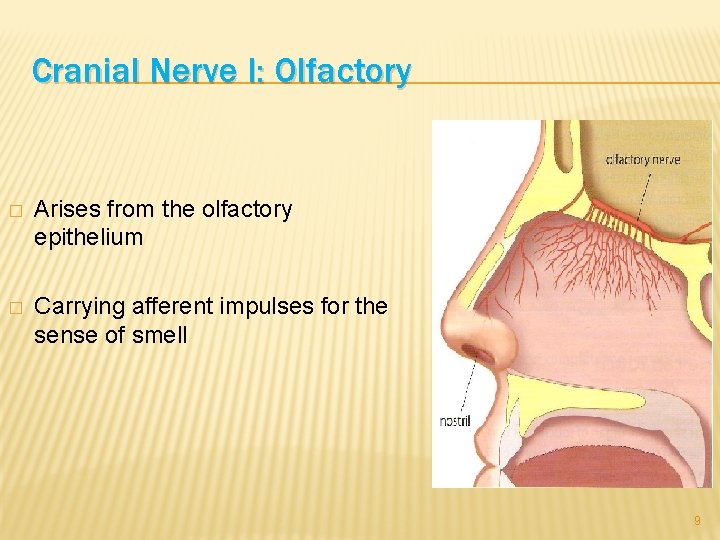
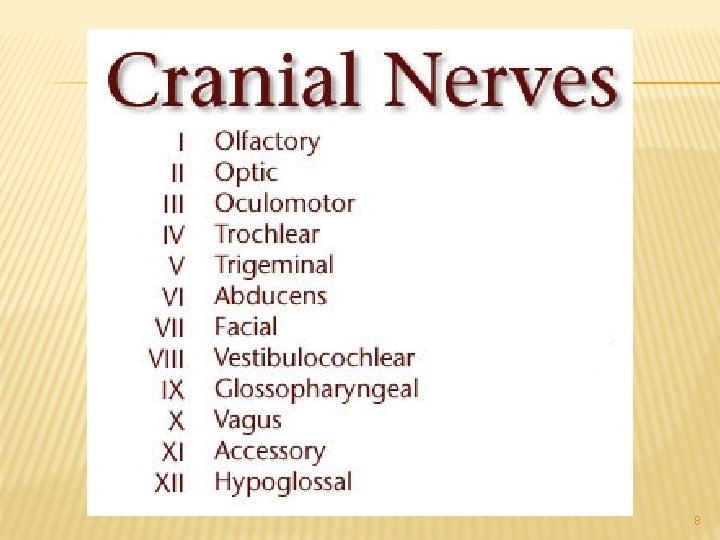
Cranial Nerve I: Olfactory � Arises from the olfactory epithelium � Carrying afferent impulses for the sense of smell 9
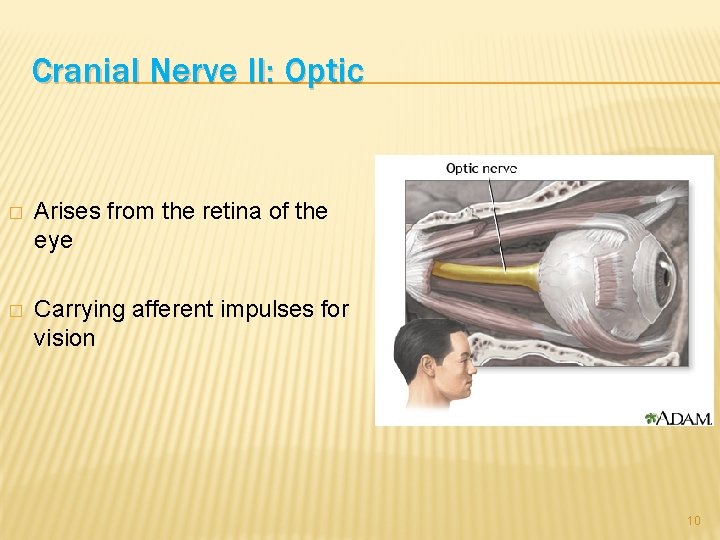
Cranial Nerve II: Optic � Arises from the retina of the eye � Carrying afferent impulses for vision 10
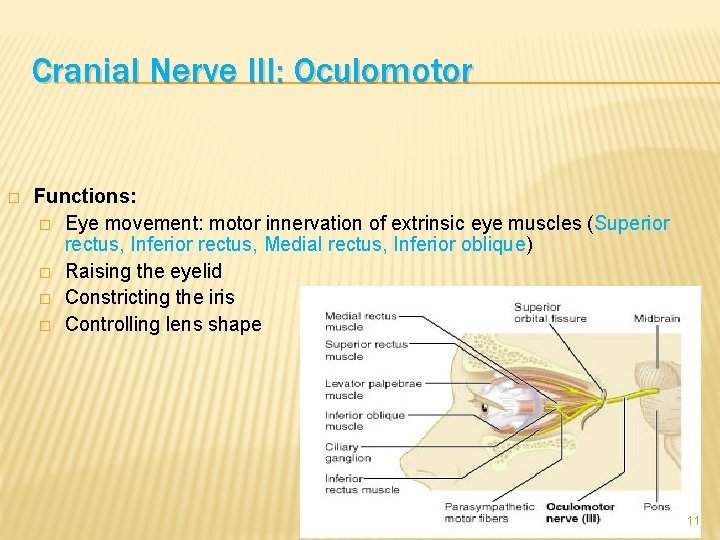
Cranial Nerve III: Oculomotor � Functions: � Eye movement: motor innervation of extrinsic eye muscles (Superior rectus, Inferior rectus, Medial rectus, Inferior oblique) � Raising the eyelid � Constricting the iris � Controlling lens shape 11

Cranial Nerve IV: Trochlear � Function: Eye movement � motor innervation of extrinsic eye muscles (Superior oblique) 12
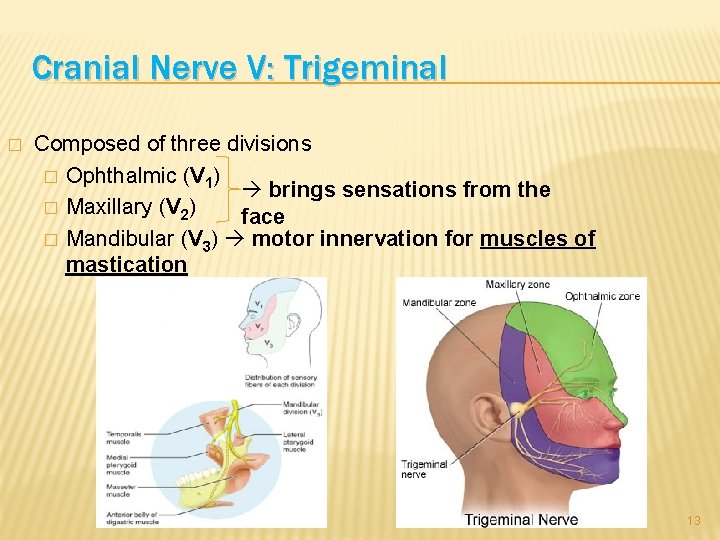
Cranial Nerve V: Trigeminal � Composed of three divisions � Ophthalmic (V 1) brings sensations from the � Maxillary (V 2) face � Mandibular (V 3) motor innervation for muscles of mastication 13
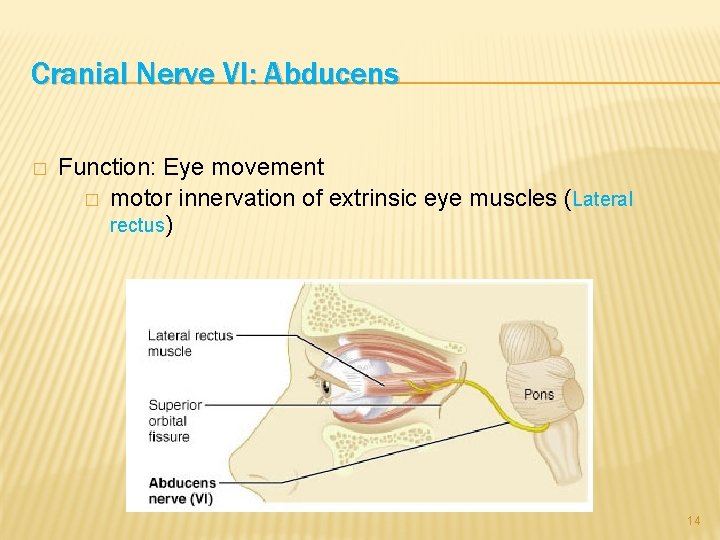
Cranial Nerve VI: Abducens � Function: Eye movement � motor innervation of extrinsic eye muscles (Lateral rectus) 14
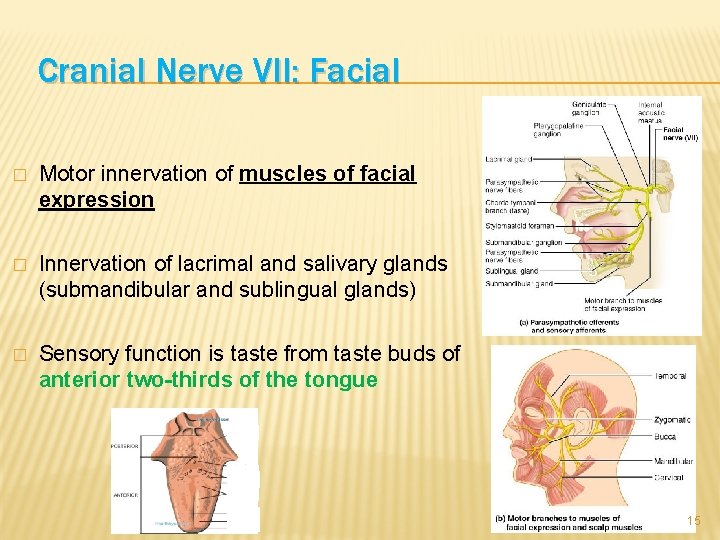
Cranial Nerve VII: Facial � Motor innervation of muscles of facial expression � Innervation of lacrimal and salivary glands (submandibular and sublingual glands) � Sensory function is taste from taste buds of anterior two-thirds of the tongue 15
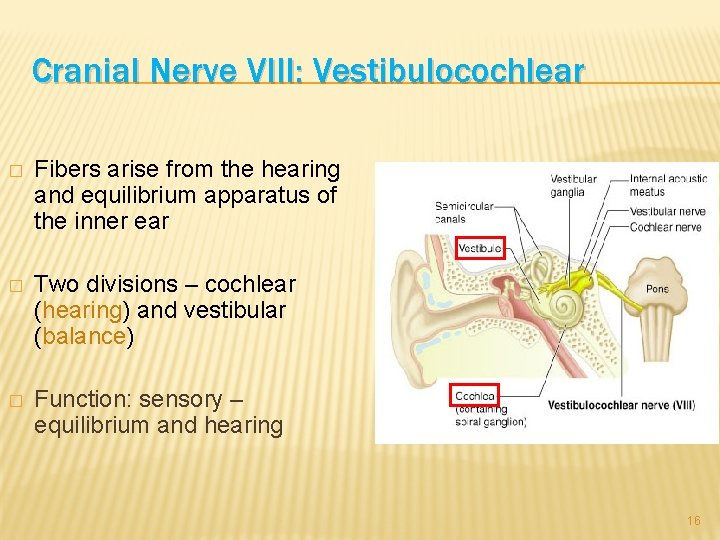
Cranial Nerve VIII: Vestibulocochlear � Fibers arise from the hearing and equilibrium apparatus of the inner ear � Two divisions – cochlear (hearing) and vestibular (balance) � Function: sensory – equilibrium and hearing 16
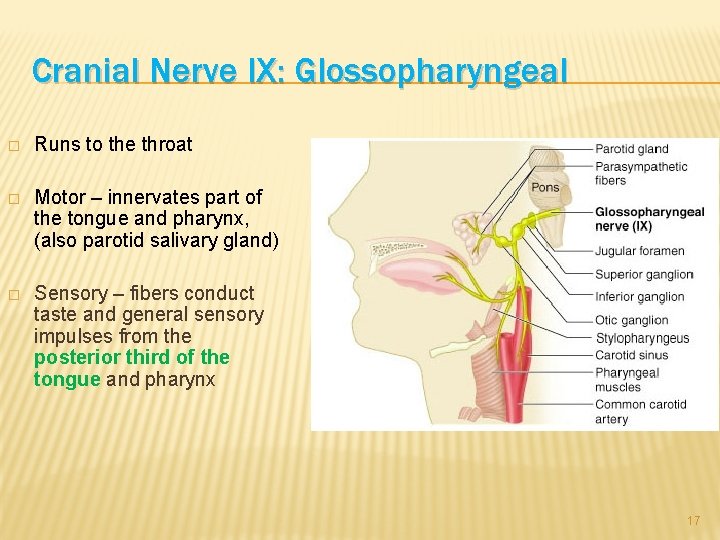
Cranial Nerve IX: Glossopharyngeal � Runs to the throat � Motor – innervates part of the tongue and pharynx, (also parotid salivary gland) � Sensory – fibers conduct taste and general sensory impulses from the posterior third of the tongue and pharynx 17
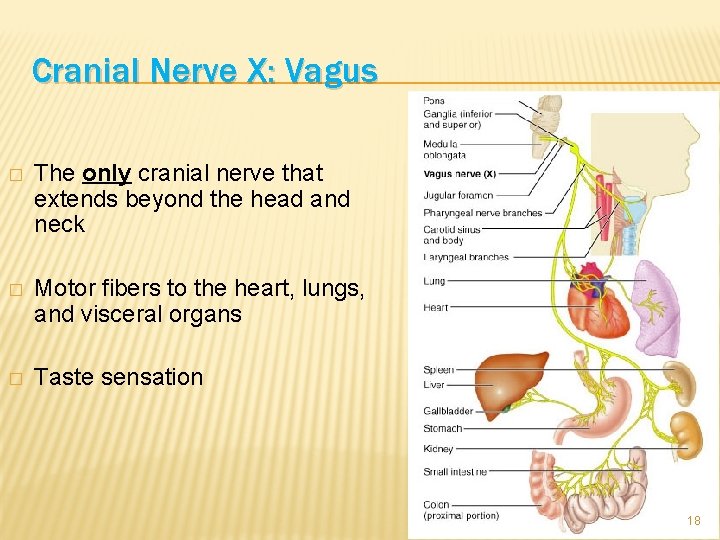
Cranial Nerve X: Vagus � The only cranial nerve that extends beyond the head and neck � Motor fibers to the heart, lungs, and visceral organs � Taste sensation 18
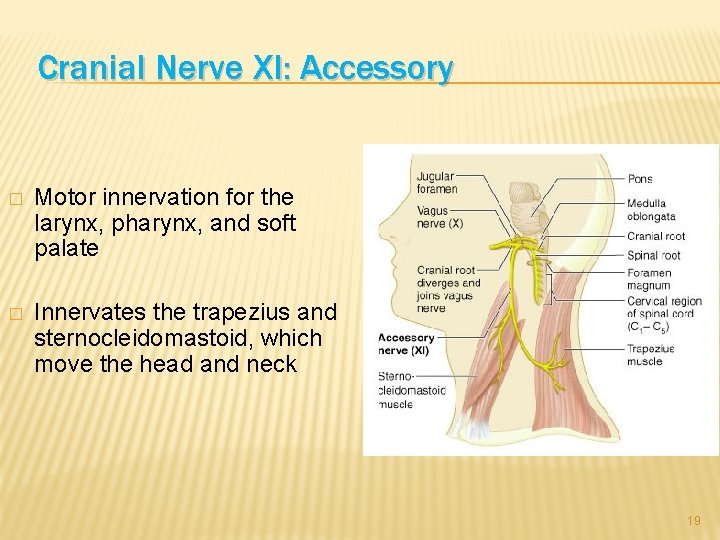
Cranial Nerve XI: Accessory � Motor innervation for the larynx, pharynx, and soft palate � Innervates the trapezius and sternocleidomastoid, which move the head and neck 19
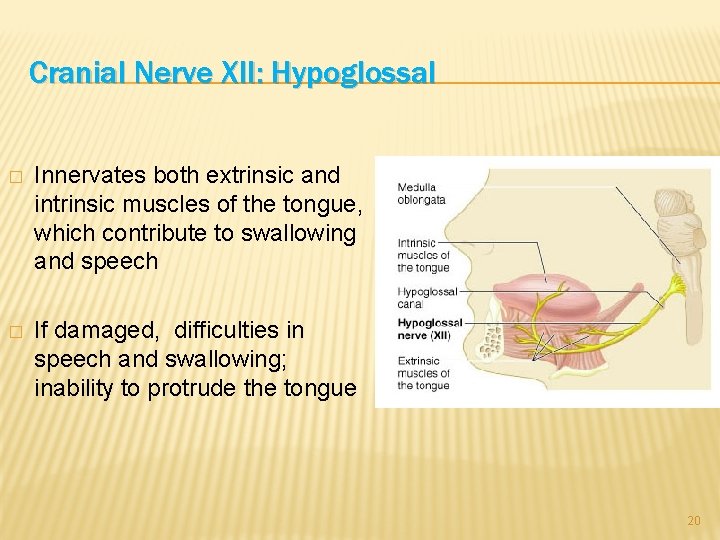
Cranial Nerve XII: Hypoglossal � Innervates both extrinsic and intrinsic muscles of the tongue, which contribute to swallowing and speech � If damaged, difficulties in speech and swallowing; inability to protrude the tongue 20
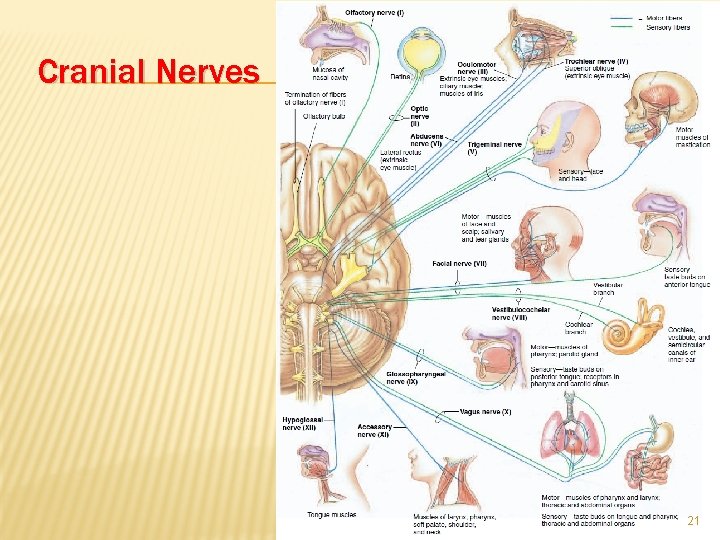
Cranial Nerves 21

The END 22
- Slides: 22