
Nervous System and Senses AP Biology 2007 2008
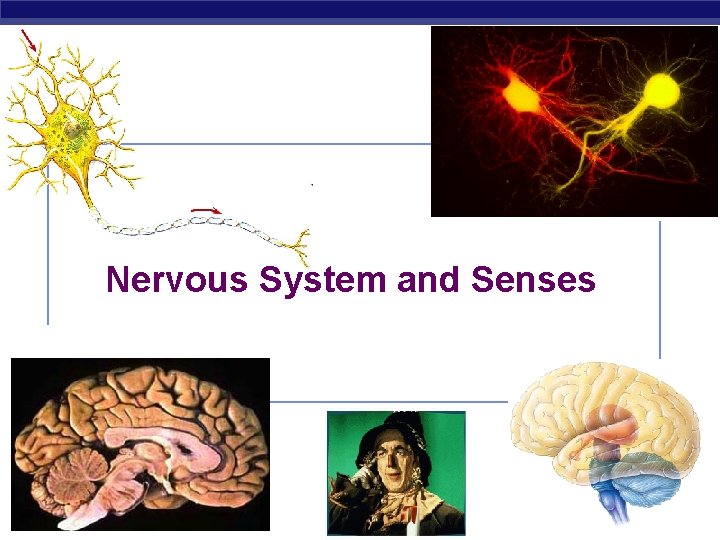
Nervous System and Senses AP Biology 2007 -2008
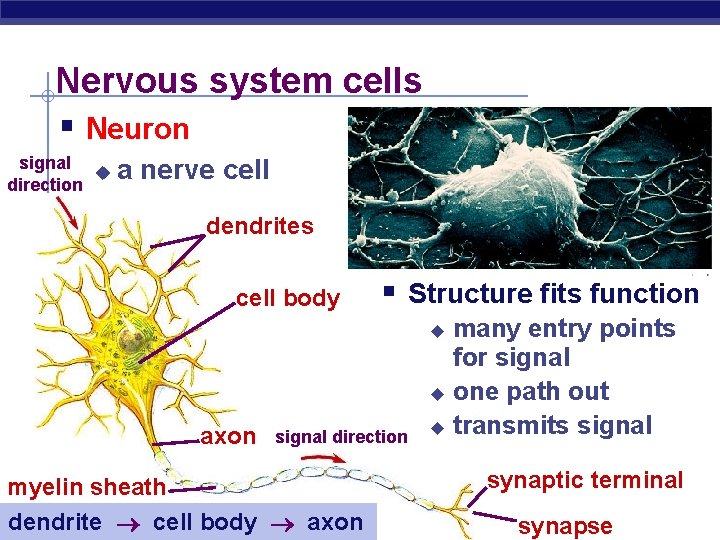
Nervous system cells § Neuron signal u direction a nerve cell dendrites cell body § Structure fits function many entry points for signal u one path out u transmits signal u axon signal direction myelin sheath AP Biology dendrite cell body axon synaptic terminal synapse
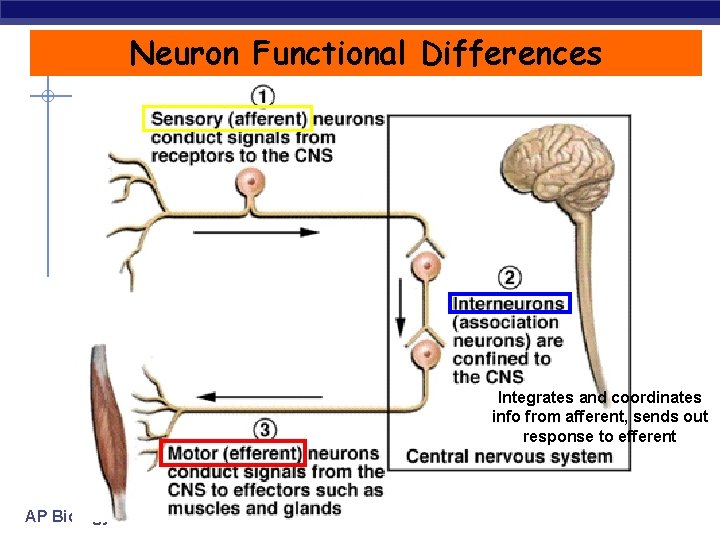
Neuron Functional Differences Integrates and coordinates info from afferent, sends out response to efferent AP Biology
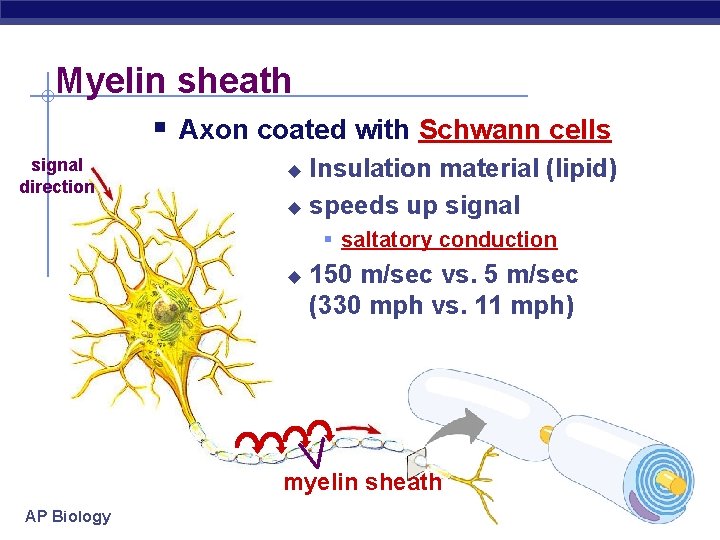
Myelin sheath § Axon coated with Schwann cells signal direction Insulation material (lipid) u speeds up signal u § saltatory conduction u 150 m/sec vs. 5 m/sec (330 mph vs. 11 mph) myelin sheath AP Biology
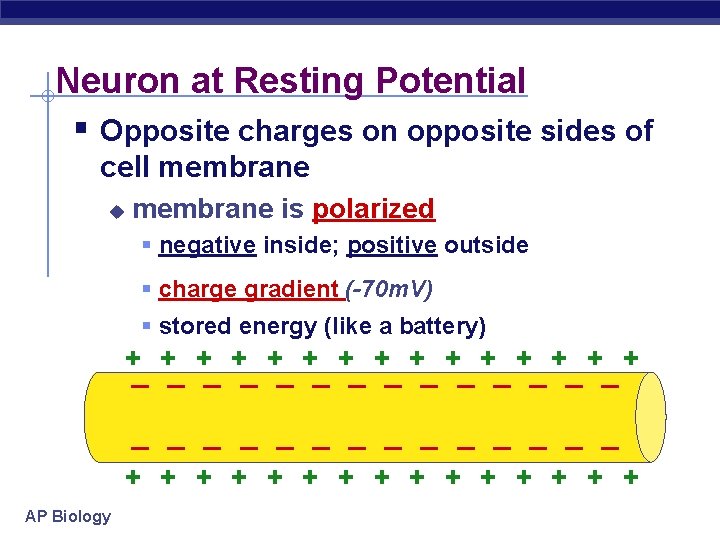
Neuron at Resting Potential § Opposite charges on opposite sides of cell membrane u membrane is polarized § negative inside; positive outside § charge gradient (-70 mv) § stored energy (like a battery) + + + + – – – – – – – + + + + AP Biology
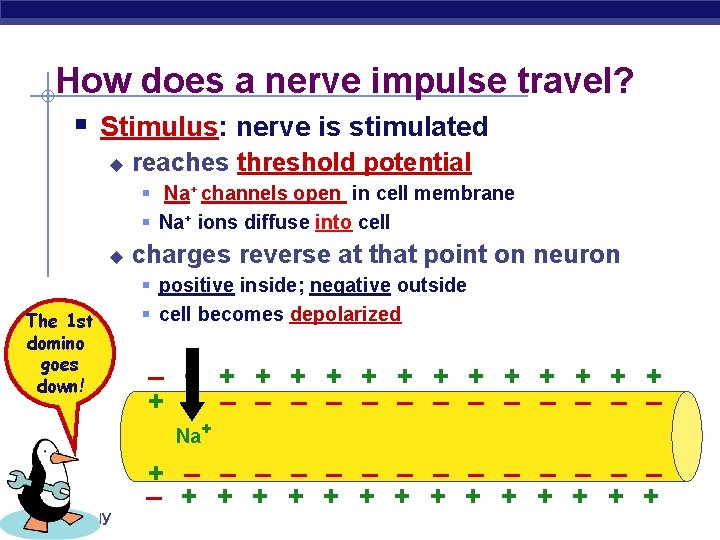
How does a nerve impulse travel? § Stimulus: nerve is stimulated u reaches threshold potential § Na+ channels open in cell membrane § Na+ ions diffuse into cell u The 1 st domino goes down! charges reverse at that point on neuron § positive inside; negative outside § cell becomes depolarized – + + + + – – – – Na+ AP Biology + – – – – + + + +
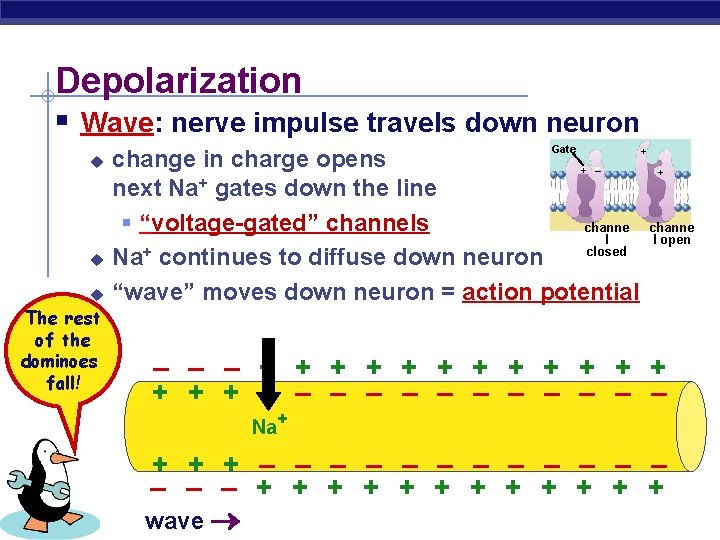
Depolarization § Wave: nerve impulse travels down neuron u u u The rest of the dominoes fall! Gate change in charge opens + – next Na+ gates down the line § “voltage-gated” channels channe l closed + Na continues to diffuse down neuron “wave” moves down neuron = action potential + + channe l open – – – + + + + – – – Na+ + – – – – + + + AP Biology wave
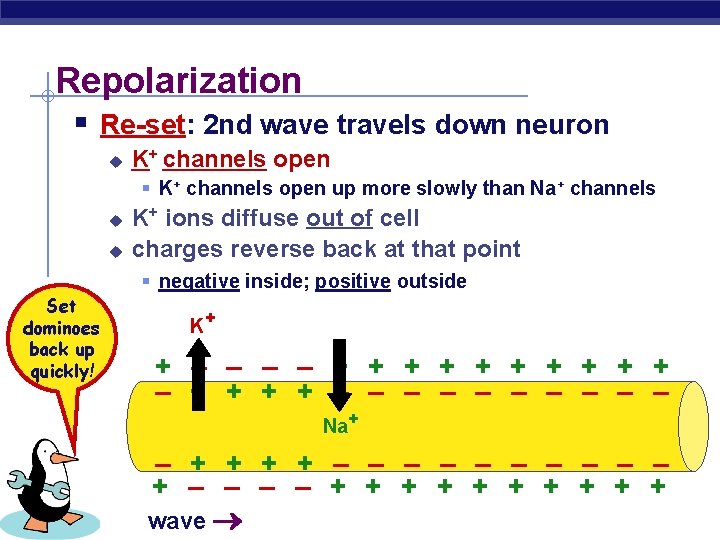
Repolarization § Re-set: 2 nd wave travels down neuron u K+ channels open § K+ channels open up more slowly than Na+ channels u u Set dominoes back up quickly! K+ ions diffuse out of cell charges reverse back at that point § negative inside; positive outside K+ + – – + + + + + – – – – – Na+ – + + – – – – – + + + + + AP Biology wave
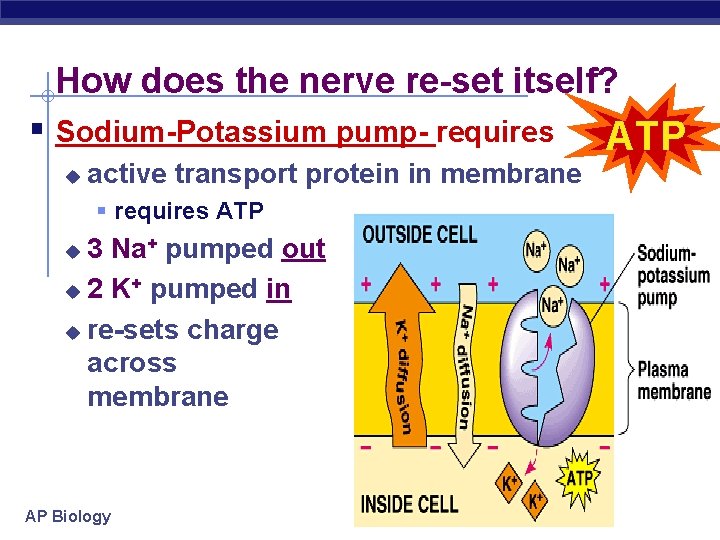
How does the nerve re-set itself? § Sodium-Potassium pump- requires u active transport protein in membrane § requires ATP 3 Na+ pumped out u 2 K+ pumped in u re-sets charge across membrane u AP Biology ATP
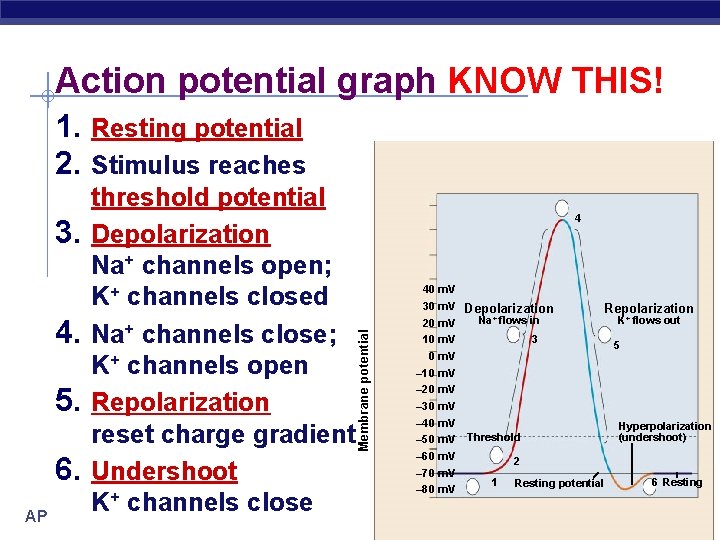
Action potential graph KNOW THIS! 1. Resting potential 2. Stimulus reaches 4 40 m. V 30 m. V Depolarization Na+ flows in 20 m. V Membrane potential threshold potential 3. Depolarization Na+ channels open; K+ channels closed 4. Na+ channels close; K+ channels open 5. Repolarization reset charge gradient 6. Undershoot + channels close K AP Biology 10 m. V Repolarization 3 0 m. V K+ flows out 5 – 10 m. V – 20 m. V – 30 m. V – 40 m. V – 50 m. V Threshold – 60 m. V 2 – 70 m. V – 80 m. V 1 Resting potential Hyperpolarization (undershoot) 6 Resting
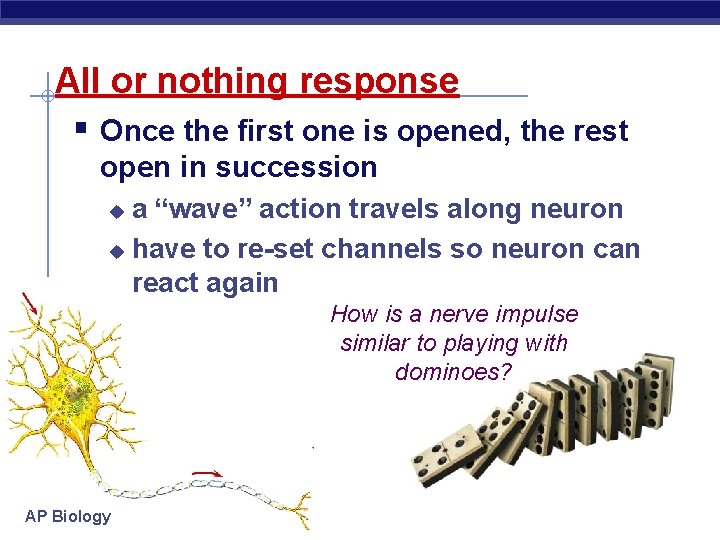
All or nothing response § Once the first one is opened, the rest open in succession a “wave” action travels along neuron u have to re-set channels so neuron can react again u How is a nerve impulse similar to playing with dominoes? AP Biology

What happens at the end of the axon? Impulse has to jump the synapse! u u junction between neurons has to jump quickly from one cell to next How does the wave jump the gap? Synapse AP Biology
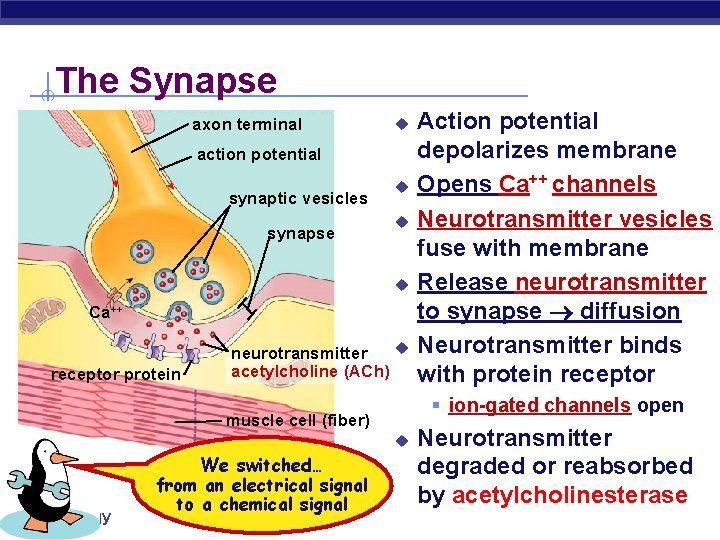
The Synapse axon terminal u action potential synaptic vesicles synapse u u u Ca++ receptor protein u neurotransmitter acetylcholine (ACh) § ion-gated channels open muscle cell (fiber) u AP Biology We switched… from an electrical signal to a chemical signal Action potential depolarizes membrane Opens Ca++ channels Neurotransmitter vesicles fuse with membrane Release neurotransmitter to synapse diffusion Neurotransmitter binds with protein receptor Neurotransmitter degraded or reabsorbed by acetylcholinesterase
Neurotransmitters § Acetylcholine u transmit signal to skeletal muscle § Epinephrine (adrenaline) & norepinephrine u fight-or-flight response § Dopamine u u u affects sleep, mood, attention & learning lack of dopamine in brain associated with Parkinson’s disease excessive dopamine linked to schizophrenia § Serotonin u AP Biology affects sleep, mood, attention & learning

Neurotransmitters can either speed up or slow down transmission of a response § Excitatory- acetylcholine, dopamine, § norepinephrine Inhibitory- serotonin, endorphins (pain killers), GABA ( tranquilizers) AP Biology
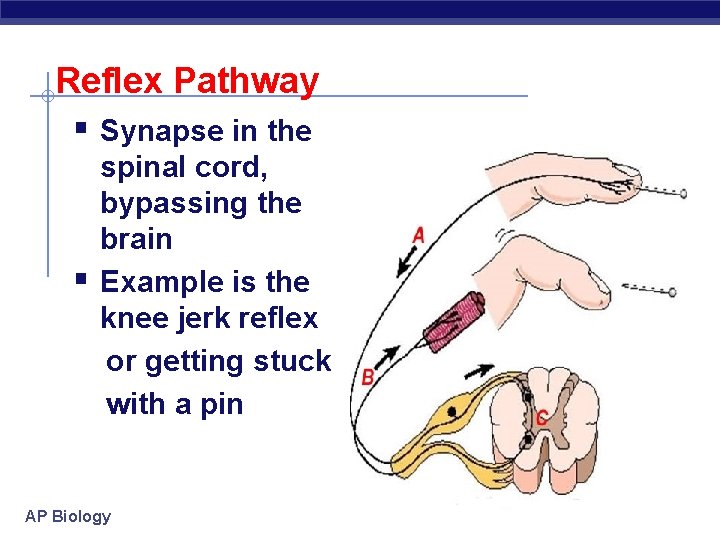
Reflex Pathway § Synapse in the § spinal cord, bypassing the brain Example is the knee jerk reflex or getting stuck with a pin AP Biology

Weak point of nervous system § Any substance that affects neurotransmitters or mimics them affects nerve function § Ex: Gases, drugs, poisons u Acetylcholinesterase inhibitors = neurotoxins! § Ex: snake venom, insecticides Snake toxin blocking acetylcholinesterase active site AP Biology

Evolution of the nervous system § Simple Nerve net § configurations No sense of direction AP Biology
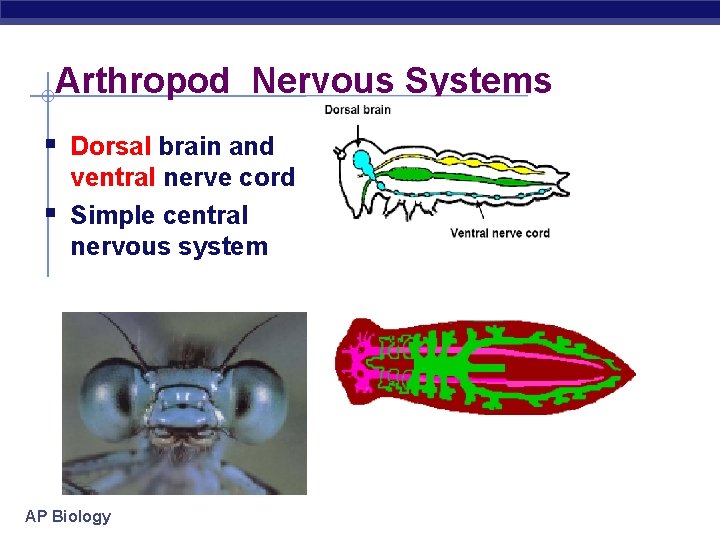
Arthropod Nervous Systems § Dorsal brain and § ventral nerve cord Simple central nervous system AP Biology
Vertebrate Brains § Evolutionary trends towards “Cephalization” u Central region for integrating and coordinating information. § Different regions have different functions: § Cerebrum-complex functions ( emotions, § § thinking, language, behavior, senses ) Cerebellum-movement and coordination Medulla ( brain stem)- autonomic control (breathing heart rate etc) AP Biology
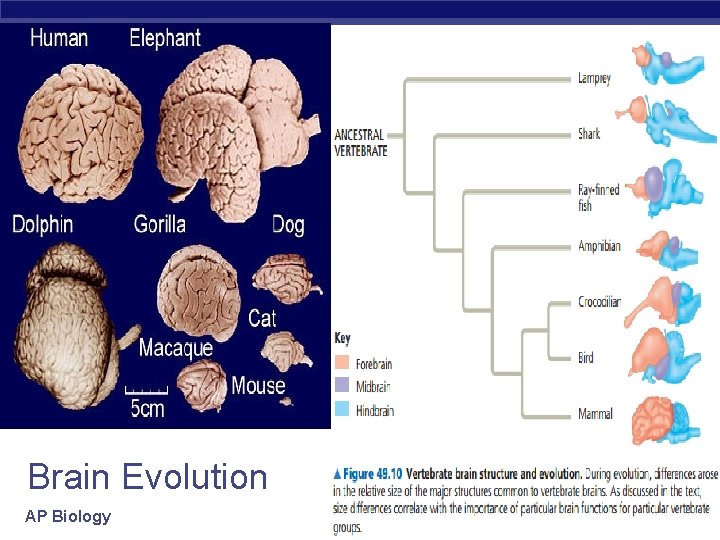
Brain Evolution AP Biology
Hearing and Equilibrium § Mammalian ear- outer, middle and inner § Cochlea filled with fluid that converts § air waves into vibration and sends to auditory nerves Balance- inner ear with hair cells that cause cells to release neurotransmitters AP Biology
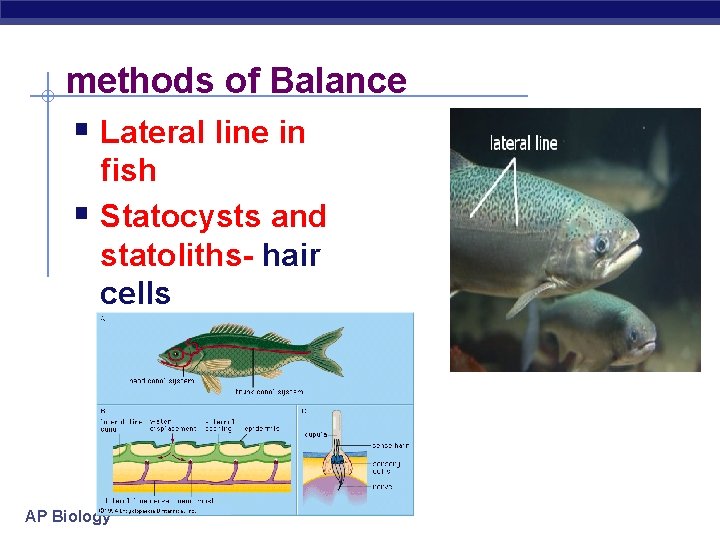
methods of Balance § Lateral line in fish § Statocysts and statoliths- hair cells AP Biology

Taste and Smell § Chemoreceptors all § § § over the mouth and tongue Different signals sent to brain depending on taste Olfactory- smell is needed for taste Insects use antenna or sensors on their feet or legs AP Biology
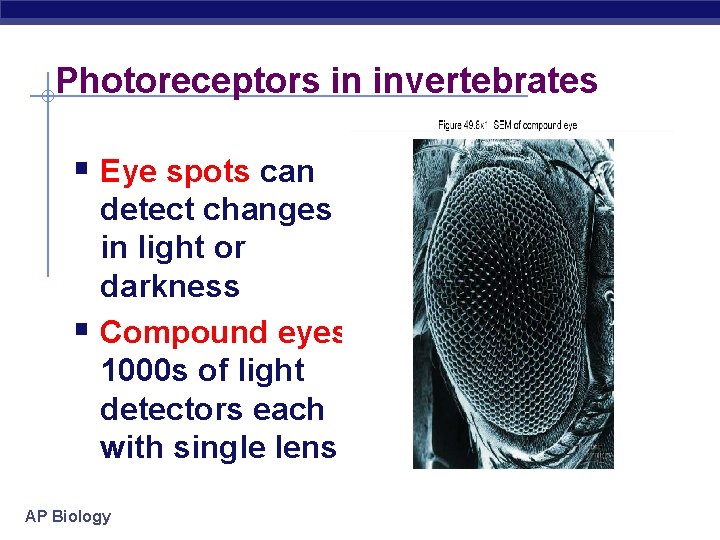
Photoreceptors in invertebrates § Eye spots can detect changes in light or darkness § Compound eyes 1000 s of light detectors each with single lens AP Biology
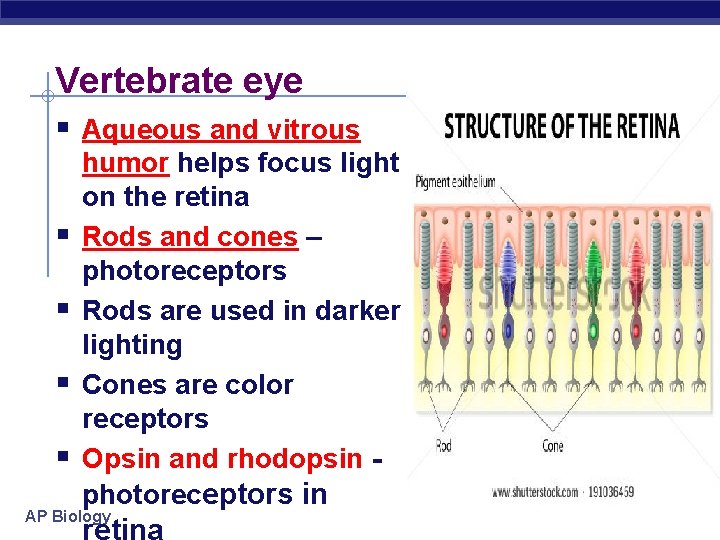
Vertebrate eye § Aqueous and vitrous § § humor helps focus light on the retina Rods and cones – photoreceptors Rods are used in darker lighting Cones are color receptors Opsin and rhodopsin photoreceptors in AP Biology retina
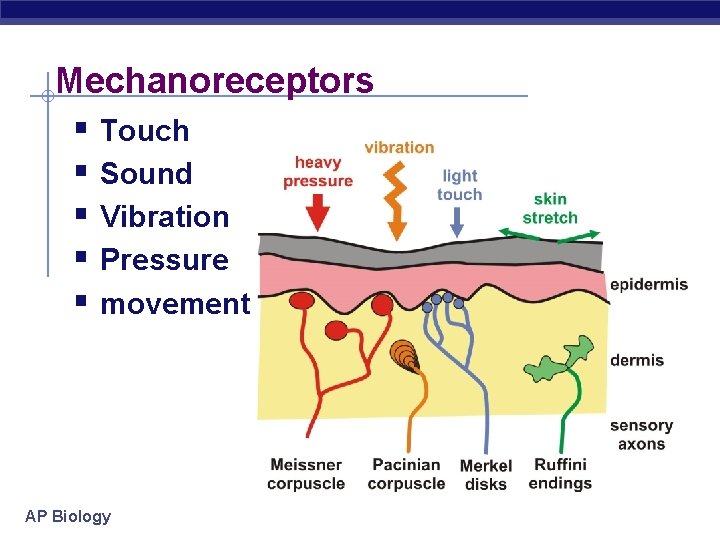
Mechanoreceptors § Touch § Sound § Vibration § Pressure § movement AP Biology
Central Nervous System Diseases § Schizophrenia- disconnect from reality § Bipolar disorder- manic depressive § Major depression- low mood all the time § Alzheimer’s disease- mental § deterioration by death of neurons Parkinson’s disease- difficulty in moving, slowness, tremors and poor balance. Can be genetic or environmental AP Biology
- Slides: 28