
NERVOUS SYSTEM Anatomical and functional interacting structures able
NERVOUS SYSTEM Anatomical and functional interacting structures able to recognize external and internal signals and able to elycite a proper response. Somatic Nervous System (S. N. S. ): it collects sensory signals from the perifery of the body and from the locomotor system and it controls the muscolar system on a conscious or not conscious basis. Furthermore it perform complex functions like memory, creativity, judgement. Visceral Nervous System (V. N. S. ): it collects sensory signals from the internal organs (digestive, circulatory, respiratory, urinary…) but also from periferal signals (sigth, odor, tact…) and it controls visceral organ functions on a not conscious basis. It is able to adapt the organism to changing conditions and it interacts with the S. N. S
ANATOMICAL PARTITION Peripheral nervous system (P. N. S. ) transports afferent signals (sensory), and efferent signals (motor) to and from the… Centra. L Nervous System (C. N. S. ) where a) direct connections between sensory and motor nerves allow reflexes, or b) interpretation of the signals occurs and proper conscious responses are organyzed.
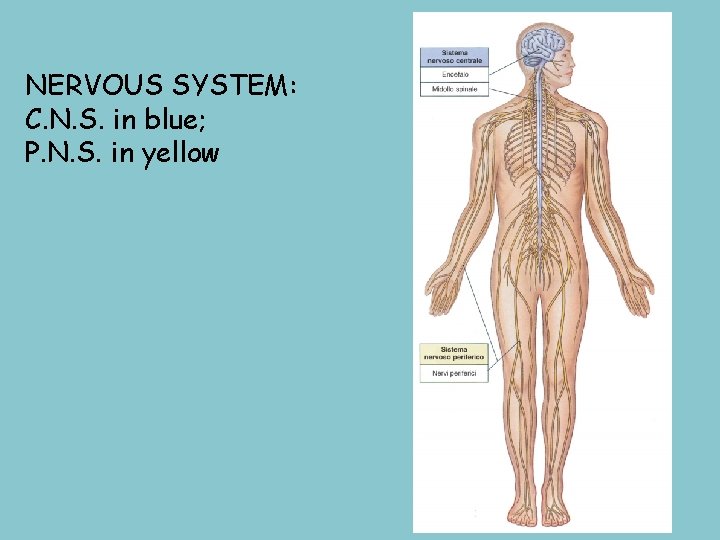
NERVOUS SYSTEM: C. N. S. in blue; P. N. S. in yellow
NERVOUS SYSTEM P. N. S. is represented by NERVES containing: -SENSORY AFFERENT FIBERS connected with RECEPTORS. Their cell body is in SPINAL and ENCEPHALIC GANGLIA; -MOTOR EFFERENT FIBERS ending into TARGET CELLS. Their cell body is in the SPINAL CORD or in the BRAIN STEM. C. N. S. is made up by -SPINAL CORD in the vertebral canal; -BRAIN STEM, ENCEPHALON (Cerebellum and Telencephalon) and DIENCEPHALON inside the skull, Spine and brain stem are continuos one another at the level of the foramen magnum of the occipital bone.
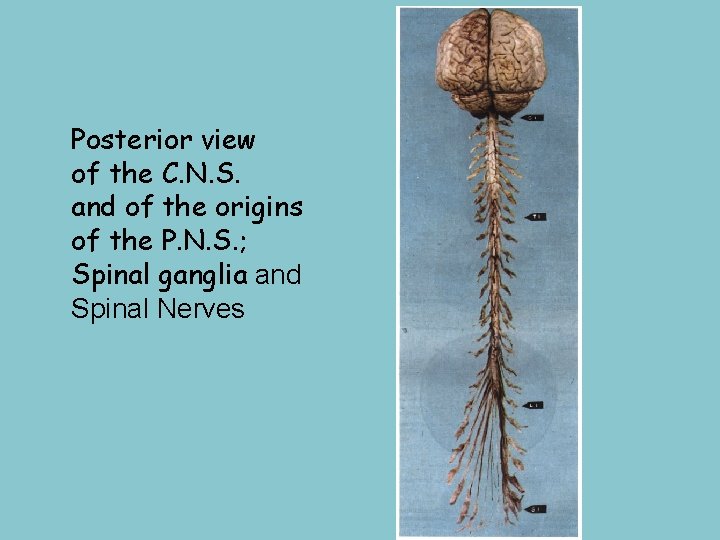
Posterior view of the C. N. S. and of the origins of the P. N. S. ; Spinal ganglia and Spinal Nerves
CLASSIFICATION OF SENSORY RECEPTORS BASED ON THE TYPE OF STIMULUS: Mechanoceptors (pressure, earing, stretch) Chemoceptors (taste, smell, dolor, salt concentration) Photoceptors (sight) Thermoceptors (cold, heat) DISTRIBUTION: Esteroceptors: positioned at the surface of the body, stimulated by external signals. Interoceptors: in the digestive, urinary, circulatory systems Propioceptors: in the locomotor and vestibular systems STRUCTURE: Free terminals (temperature and dolor) Associated to epithelia (Merkel cells, hair follicles) Encapsulated (Meissner, Pacini, Ruffini tendon organs) Neuromuscolar spindles (scheletal muscle) Modified neurons (sight and smell).
SENSORY RECEPTORS THE QUANTITATIVE AND QUALITATIVE DISTRIBUTION OF THE SENSORY RECEPTORS VARIES IN DIFFERENT TISSUES AND ORGANS, THUS CONFERRING REGIONAL SPECIALIZATION.
CENTRAL NERVOUS SYSTEM AXIAL STRUCTURES: SPINAL CORD BRAIN STEM Medulla Oblongata Pons Midbrain SOVRAXIAL STRUCTURES CEREBELLUM DIENCEPHALON TELECEPHALON (CEREBRAL EMISPHERES)
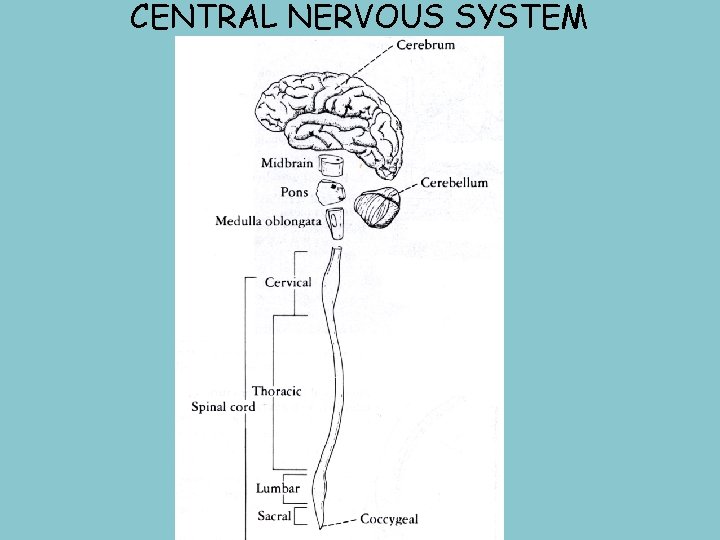
CENTRAL NERVOUS SYSTEM
BASIC TERMS AND STRUCTURE OF THE NERVOUS SYSTEM GREY METTER: concentration of cell bodies. WHITE METTER: concentration of mielinated fibers. NUCLEUS: a group of neurons in the C. N. S performing a coordinated function. GANGLION: a group of neurons OUTSIDE THE C. N. S. 1. Sensory (associated to spinal and cranial nerves) 2. Motor (part of the autonomic nervous system).
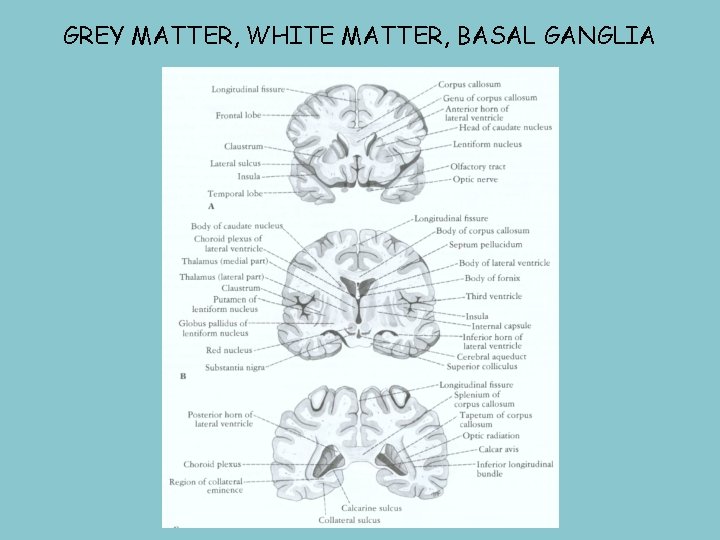
GREY MATTER, WHITE MATTER, BASAL GANGLIA
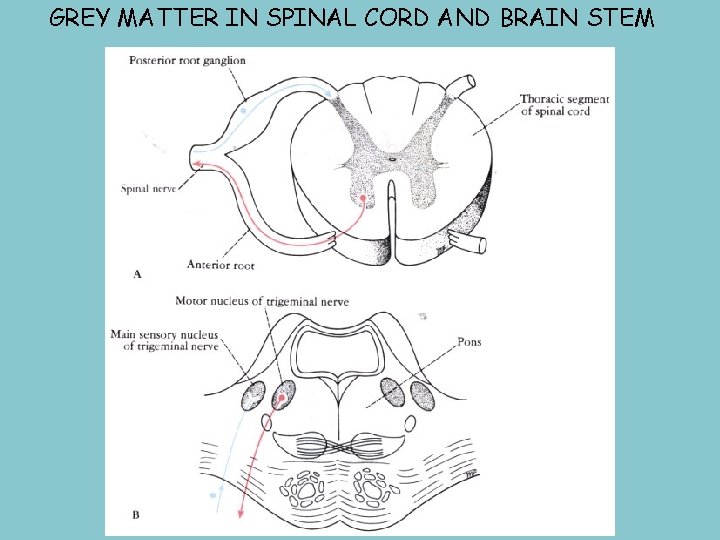
GREY MATTER IN SPINAL CORD AND BRAIN STEM
BASIC TERMS AND STRUCTURE OF THE NERVOUS SYSTEM TRACT, FASCICULUS: a group of parallel fibers, that appears as white matter at macroscopic observation, transporting a given information to a common destination: Motor signals, represented by fasciculi descending from higher centers (cerebrum, cerebellum, brain stem) to motor neurones, and Sensory signals, originating from receptors, represented by fasciculi ascending from the spine or brain stem to higher centers.
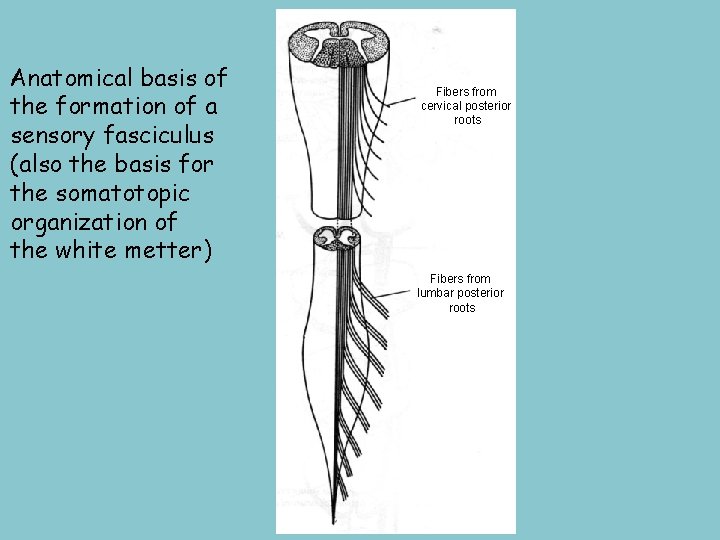
Anatomical basis of the formation of a sensory fasciculus (also the basis for the somatotopic organization of the white metter) Fibers from cervical posterior roots Fibers from lumbar posterior roots
NEURONAL CHAINS -The simplest chain is the REFLEX ARCH composed of a SENSORY NEURON (PROTONEURON) and a MOTOR NEURON. the reflex arch does not involve sovraxial centers. It is RESTRICTED to spinal cord and brain stem. -POLYNEURONIC CHAINS are needed to involve SOVRAXIAL CENTERS (diencephalon, cerebellum, telencephalon) in the complex elaboration for the signal interpretation and response.

BINEURONIC CHAIN
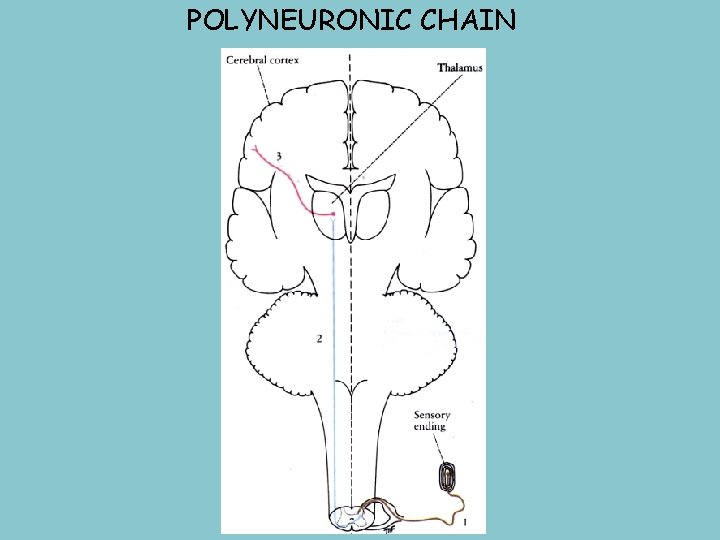
POLYNEURONIC CHAIN
MENINGES DURA MATER: external fibrous layer ARACHNOID: intermediate layer SUBARACHNOIDAL SPACE → LIQUOR PIA MATER: internal layer
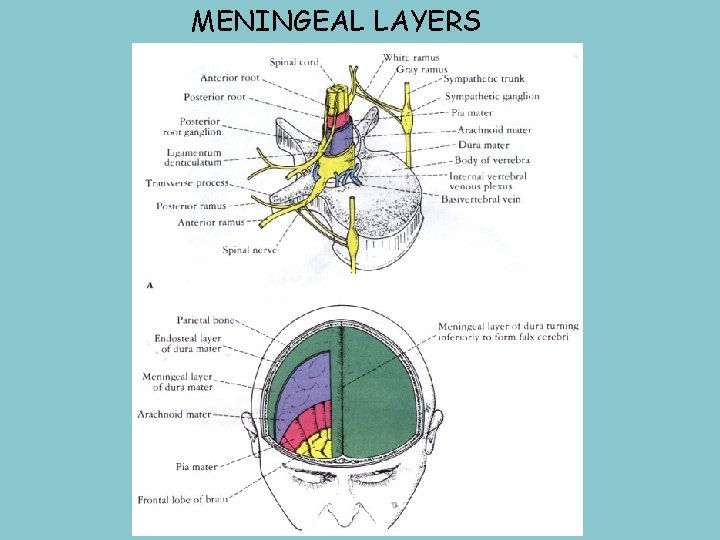
MENINGEAL LAYERS
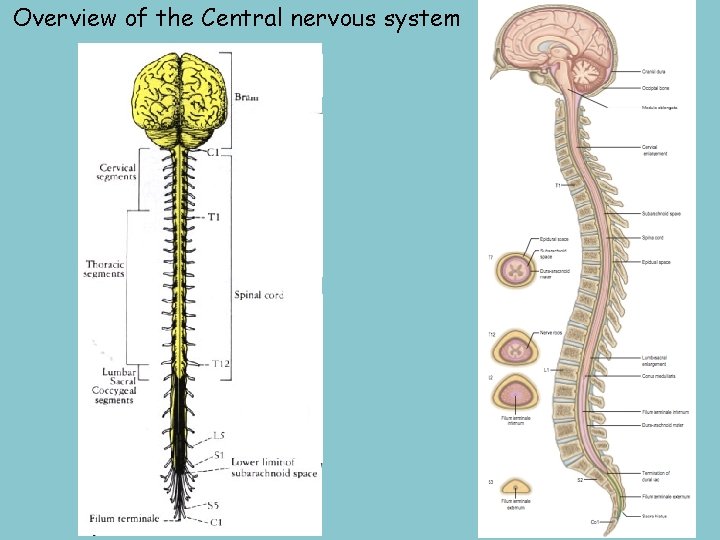
Overview of the Central nervous system

The brain-lateral view
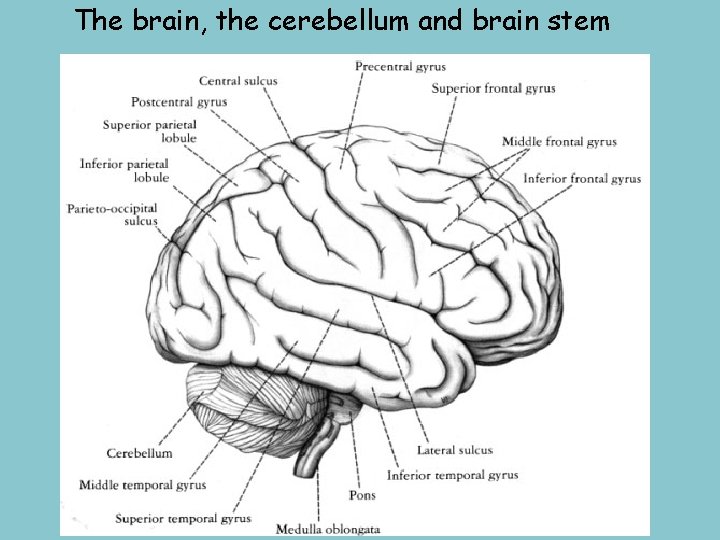
The brain, the cerebellum and brain stem

The brain-basal view
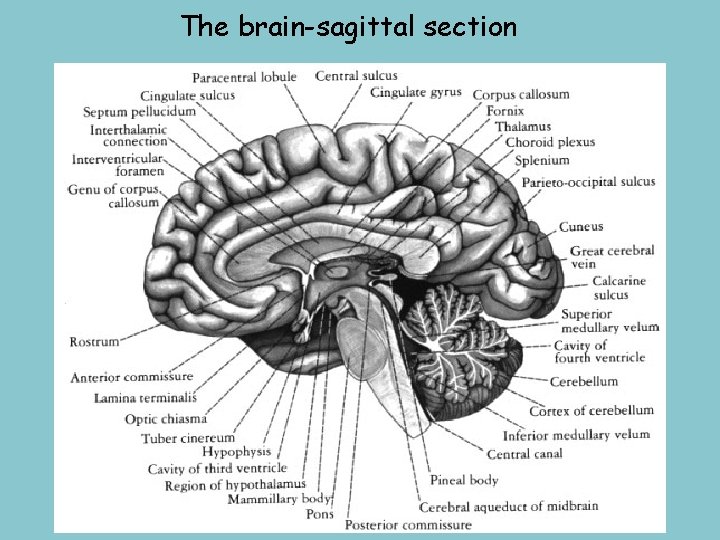
The brain-sagittal section
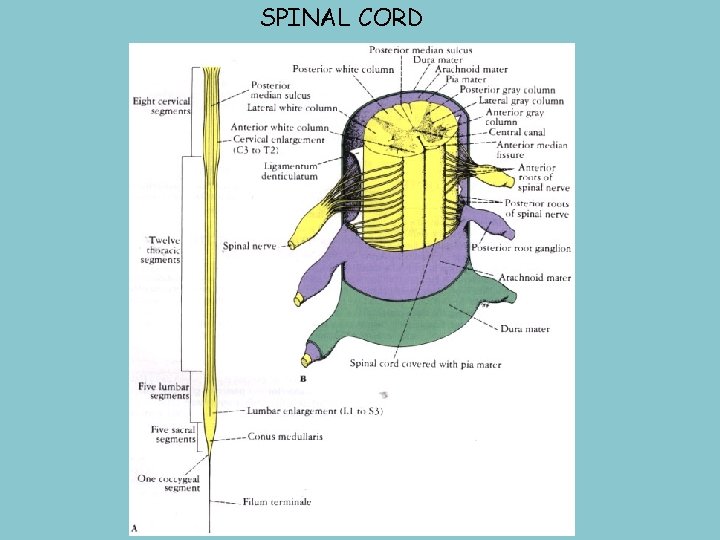
SPINAL CORD
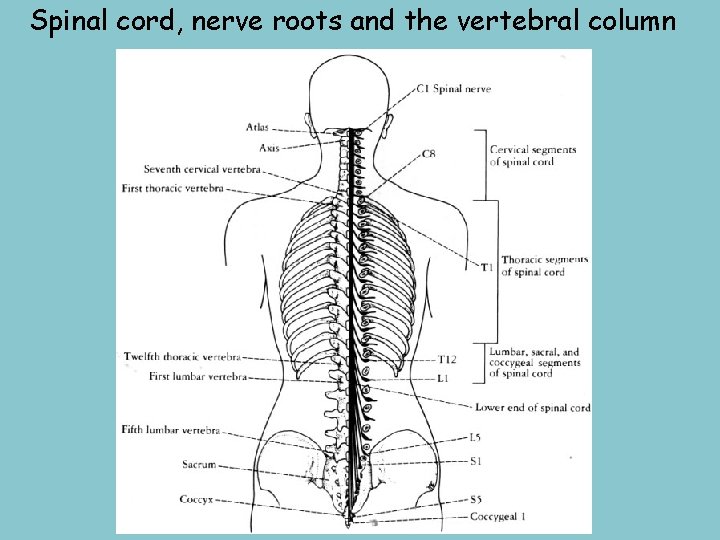
Spinal cord, nerve roots and the vertebral column

CAUDA EQUINA
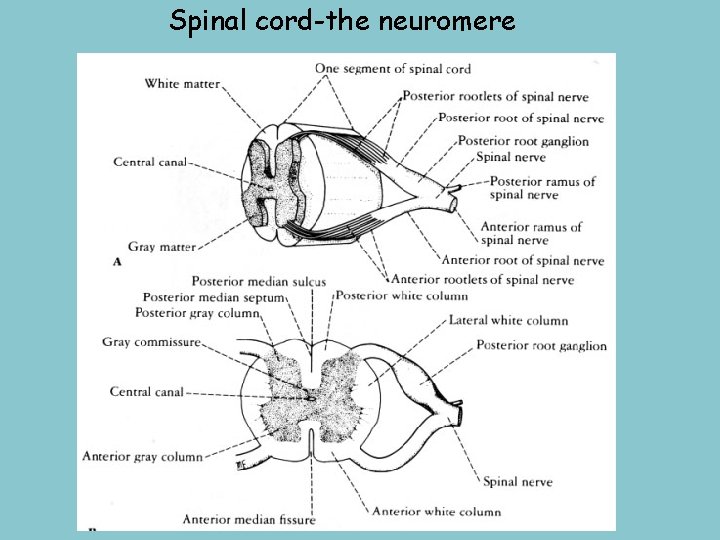
Spinal cord-the neuromere
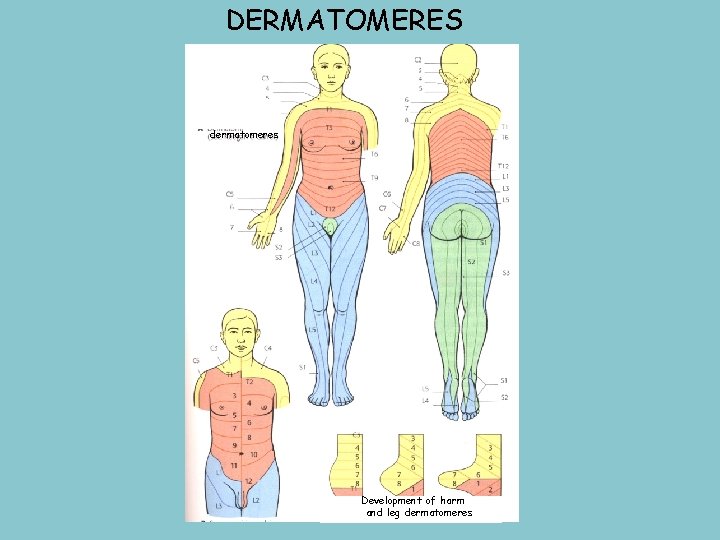
DERMATOMERES dermatomeres Development of harm and leg dermatomeres
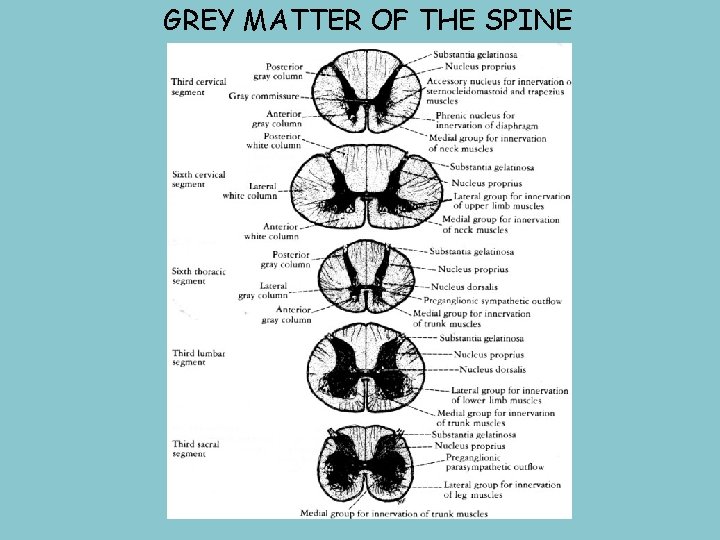
GREY MATTER OF THE SPINE
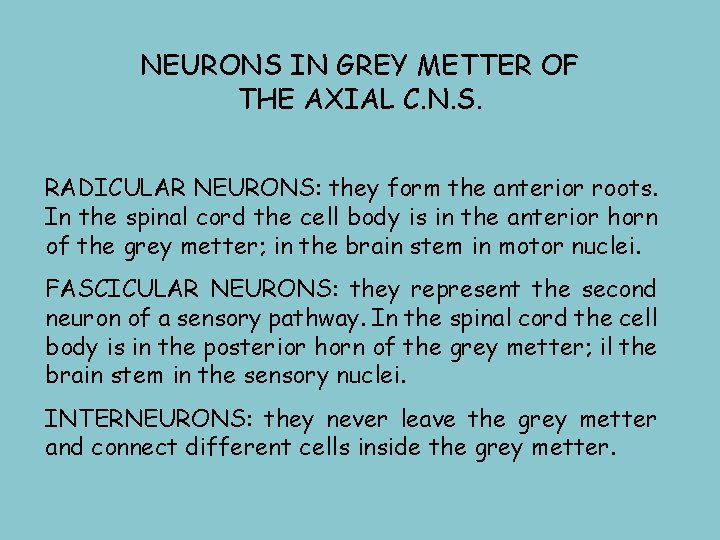
NEURONS IN GREY METTER OF THE AXIAL C. N. S. RADICULAR NEURONS: they form the anterior roots. In the spinal cord the cell body is in the anterior horn of the grey metter; in the brain stem in motor nuclei. FASCICULAR NEURONS: they represent the second neuron of a sensory pathway. In the spinal cord the cell body is in the posterior horn of the grey metter; il the brain stem in the sensory nuclei. INTERNEURONS: they never leave the grey metter and connect different cells inside the grey metter.
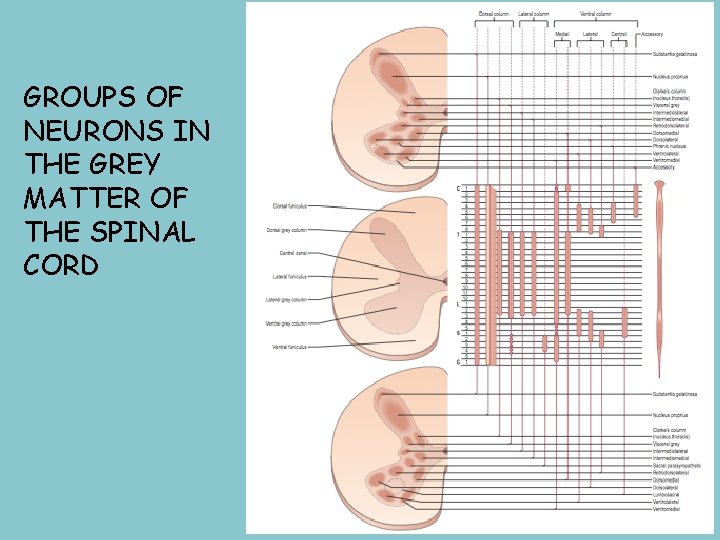
GROUPS OF NEURONS IN THE GREY MATTER OF THE SPINAL CORD
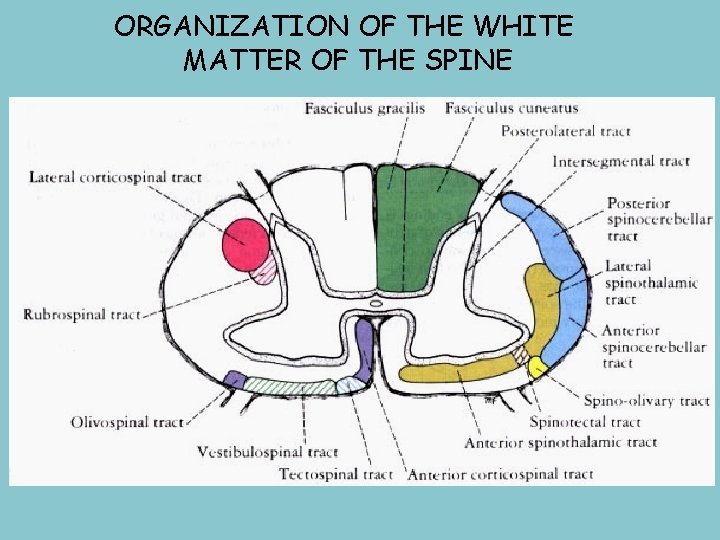
ORGANIZATION OF THE WHITE MATTER OF THE SPINE
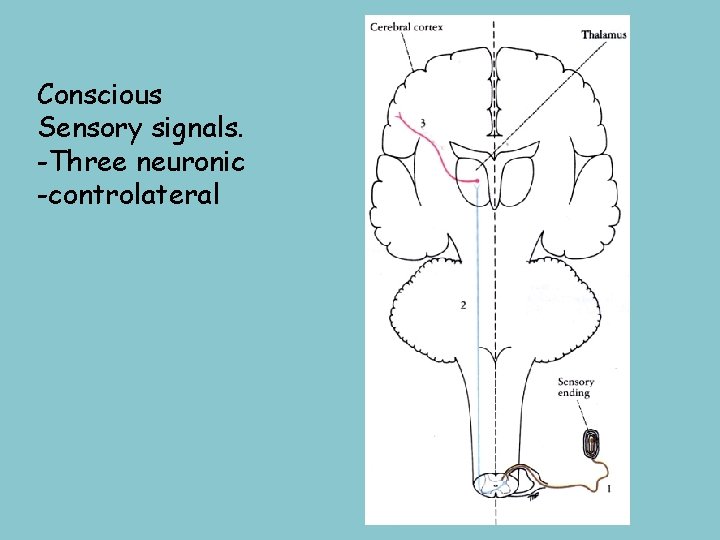
Conscious Sensory signals. -Three neuronic -controlateral
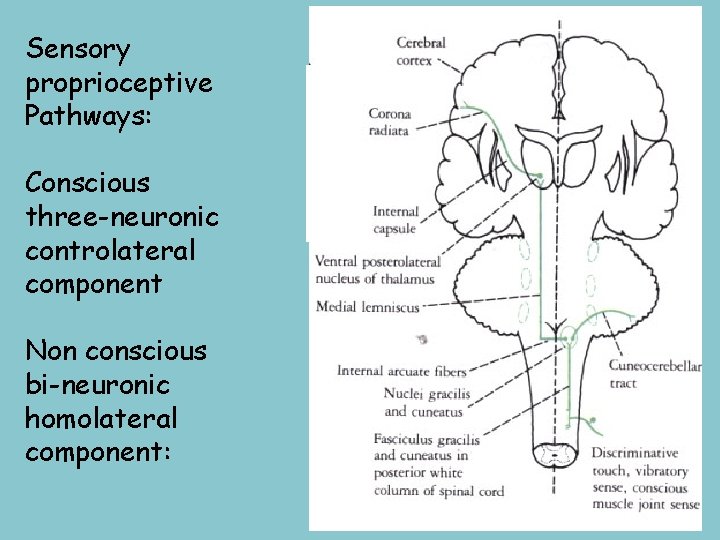
Sensory proprioceptive Pathways: Conscious three-neuronic controlateral component Non conscious bi-neuronic homolateral component:
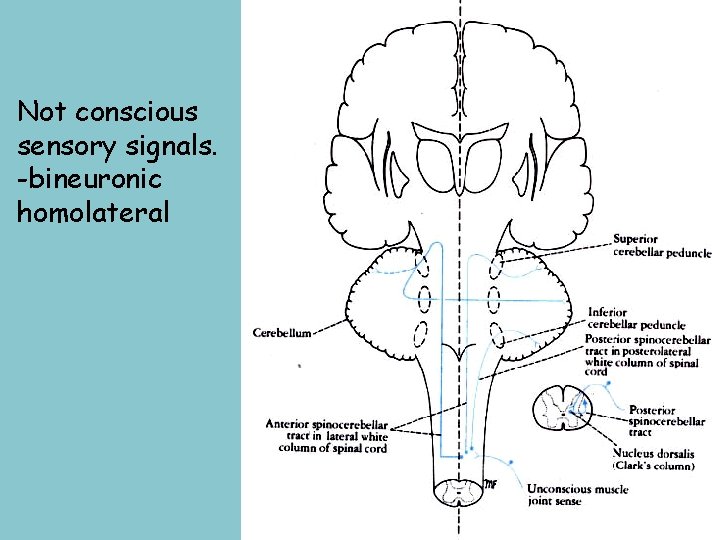
Not conscious sensory signals. -bineuronic homolateral
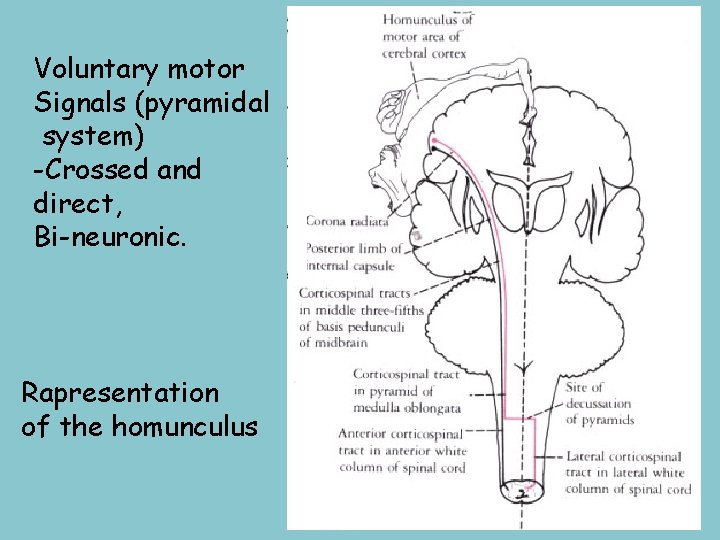
Voluntary motor Signals (pyramidal system) -Crossed and direct, Bi-neuronic. Rapresentation of the homunculus
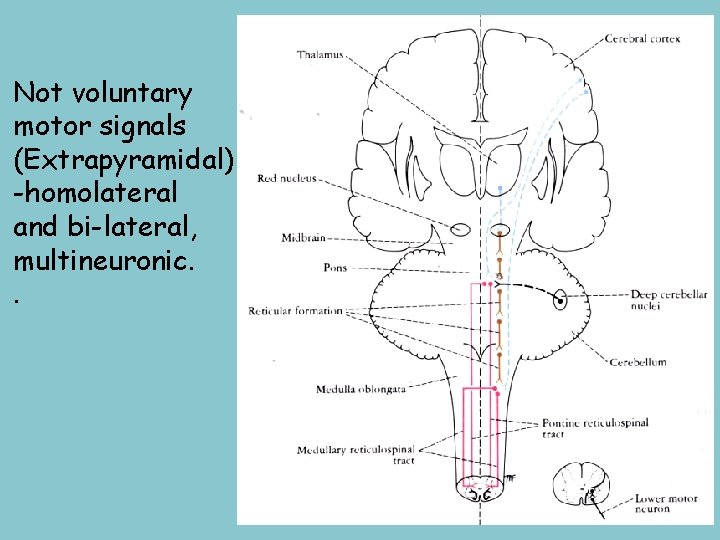
Not voluntary motor signals (Extrapyramidal) -homolateral and bi-lateral, multineuronic. .
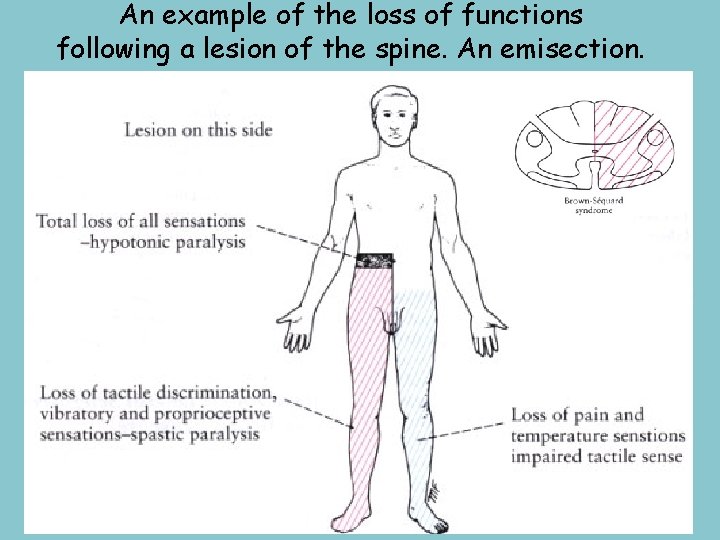
An example of the loss of functions following a lesion of the spine. An emisection.
- Slides: 39