
NERVOUS ENDOCRINE SYSTEM RECEPTOR CELLS Specialized cells in
- Slides: 51
NERVOUS &ENDOCRINE SYSTEM
RECEPTOR CELLS Specialized cells in the sensory systems of the body that can turn other kinds of energy into action potentials that the nervous system can process Receptor cells in the eye turn light into a neural impulse the brain understands.
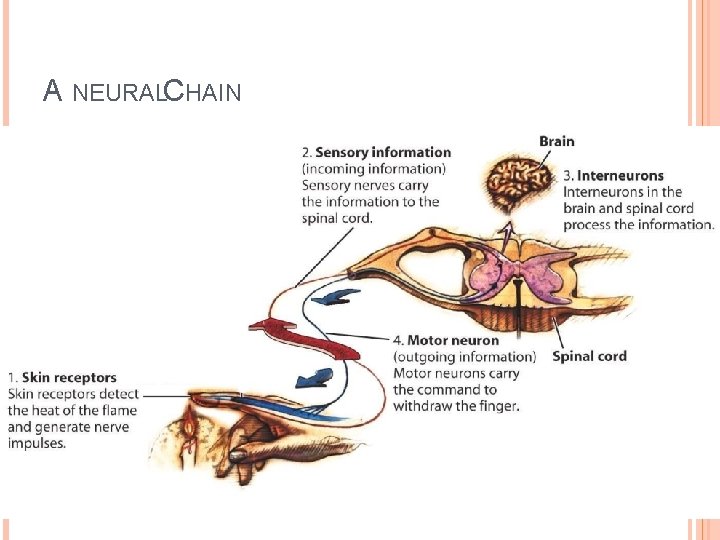
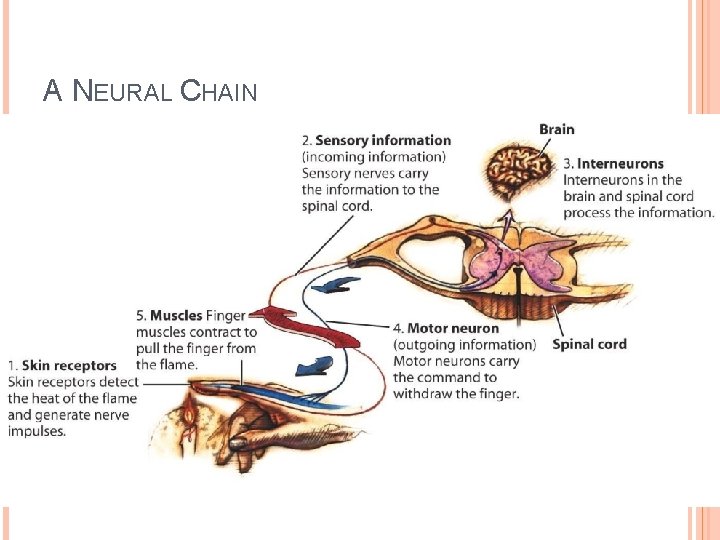
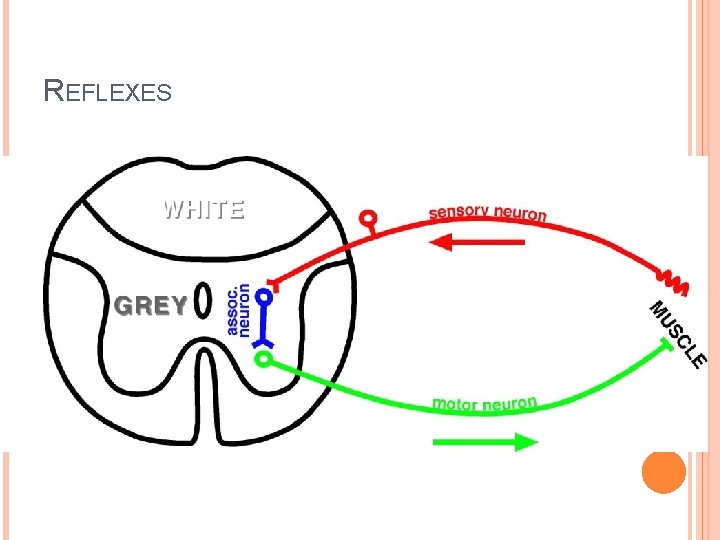
SENSORY NEURONS Nerves that carry information to the central nervous system Connect the sense organs to the brain and spinal cord
MOTOR NEURONS Nerves that carry information from the central nervous system Carries messages from the brain and spinal cord to other parts of your body
INTERNEURONS Nerve cells in the brain and spinal cord responsible for processing information related to sensory input and motor output
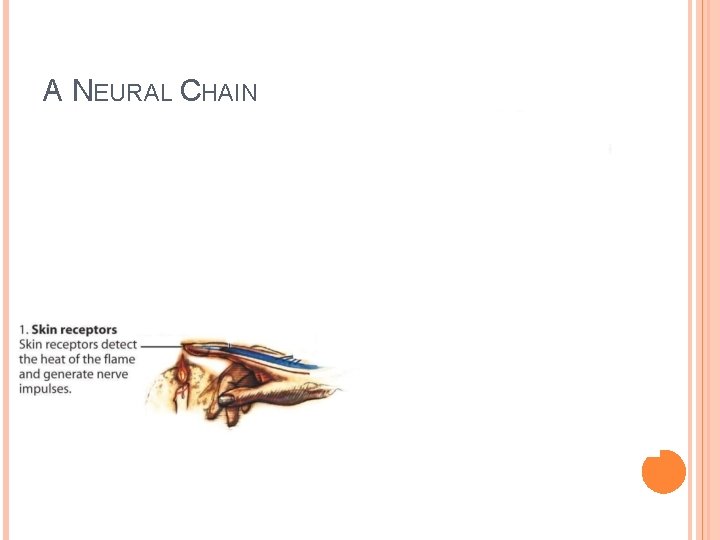
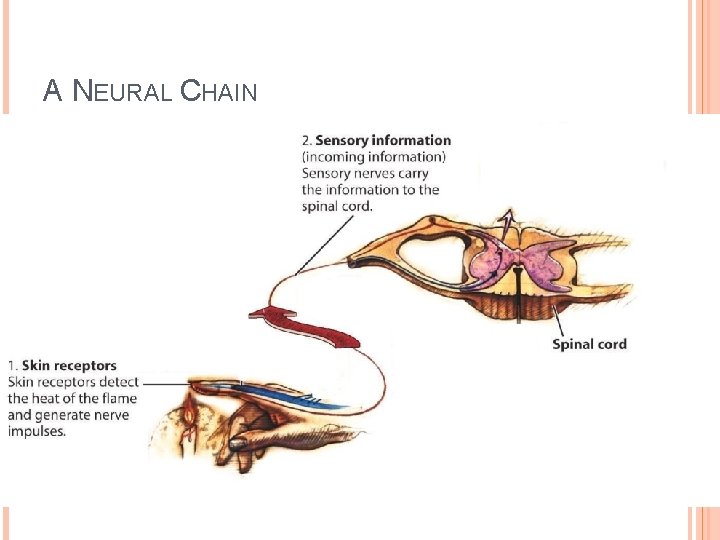
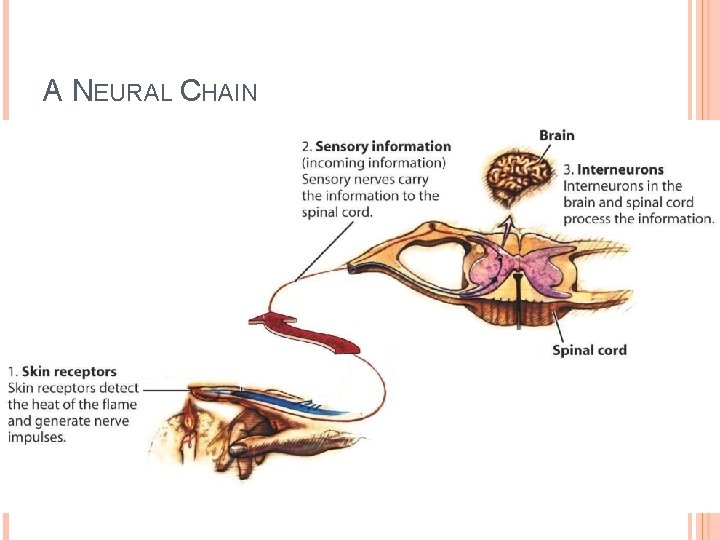
A NEURAL CHAIN
A NEURAL CHAIN
A NEURAL CHAIN
A NEURALCHAIN
A NEURAL CHAIN
Most information travels from the body, up the spinal cord, is processed by the brain, sent back down the spinal cord, and then back to the body with behavior instructions. The exception to this general pathway is reflexes.
Reflexes are controlled by the spinal cord without any conscious effort on behalf of the brain. Reflexes serve as primitive responses that protect our bodies from danger and help us adjust to our surroundings.
REFLEXES
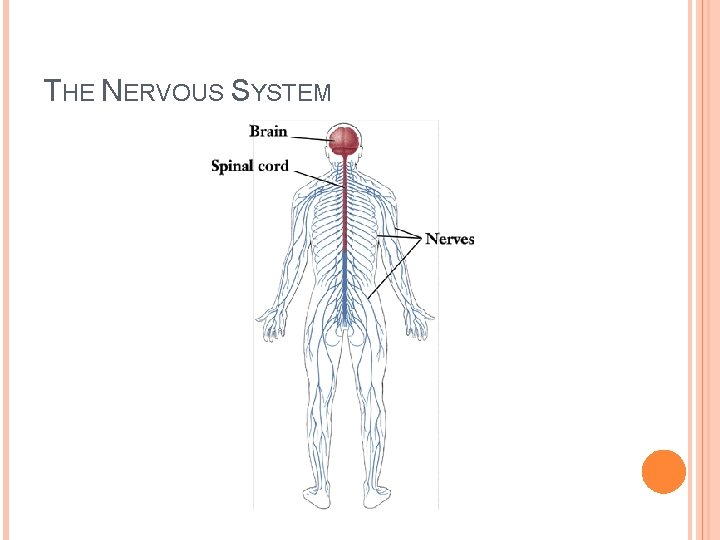
THE NERVOUS SYSTEM
NERVOUS SYSTEM The brain and spinal cord The brain is the location of most information processing. The spinal cord is the main pathway to and from the brain.
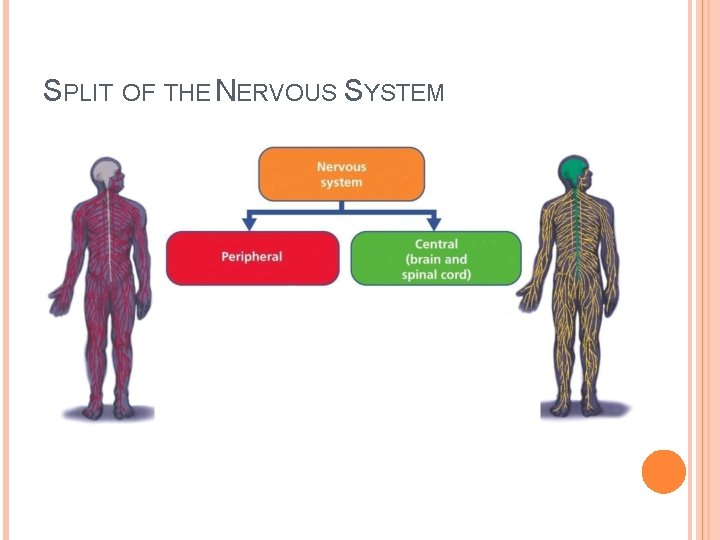
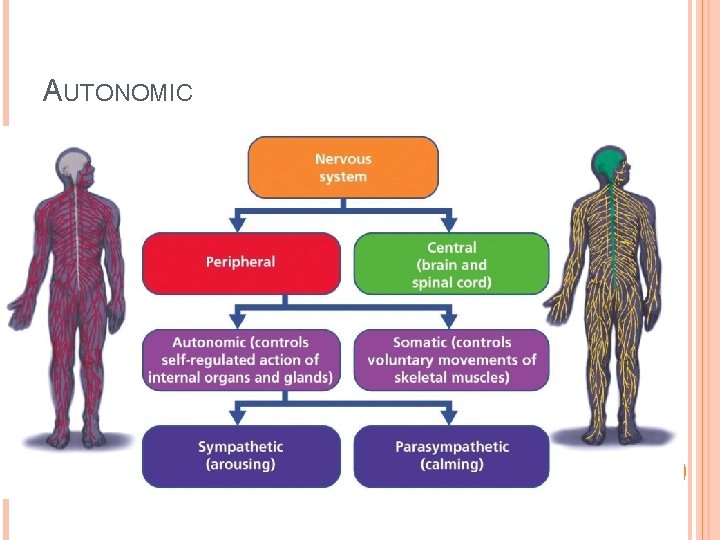
SPLIT OF THE NERVOUS SYSTEM
CENTRAL NERVOUS SYSTEM The Central Nervous System (CNS) consists of the brain and the spinal cord.
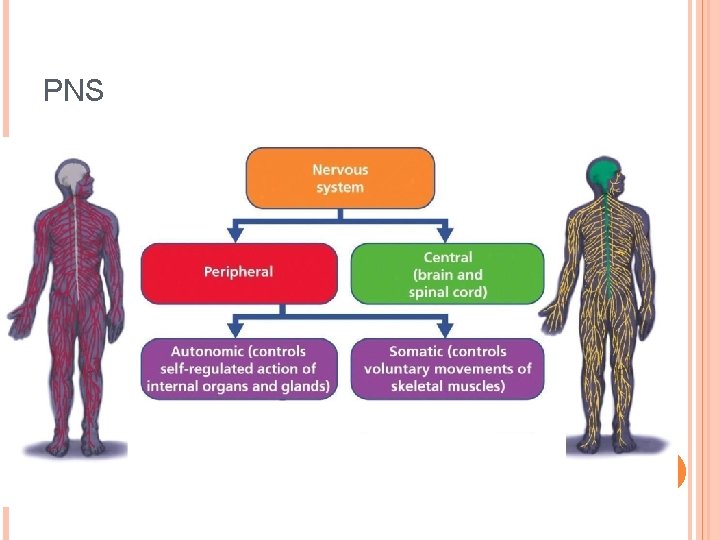
PERIPHERAL NERVOUS SYSTEM Consists of Sensory and Motor Nerves �connect the central nervous system to the rest of the body Peripheral means “outer region” The system is subdivided into the somatic and autonomic nervous systems.
PNS
SOMATIC The division of the peripheral nervous system that controls the body’s skeletal muscles Contains the motor nerves needed for the voluntary muscles
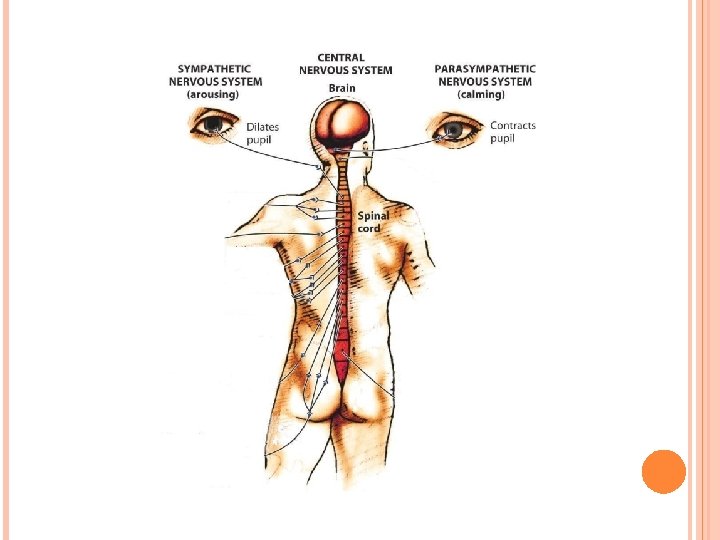
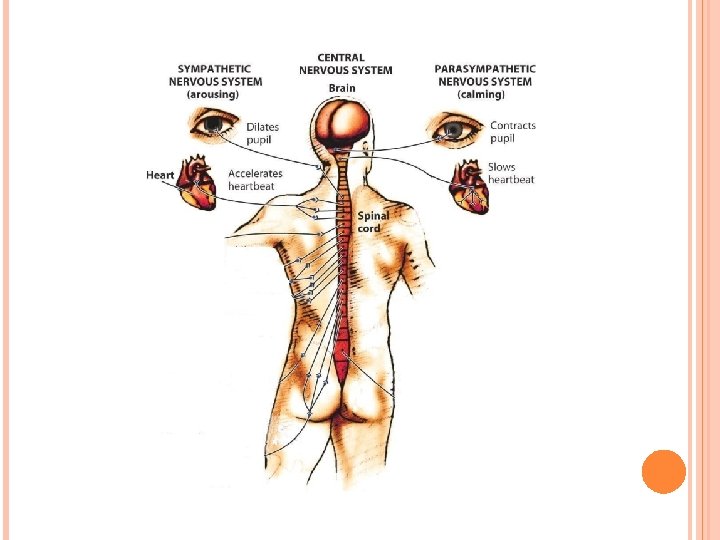
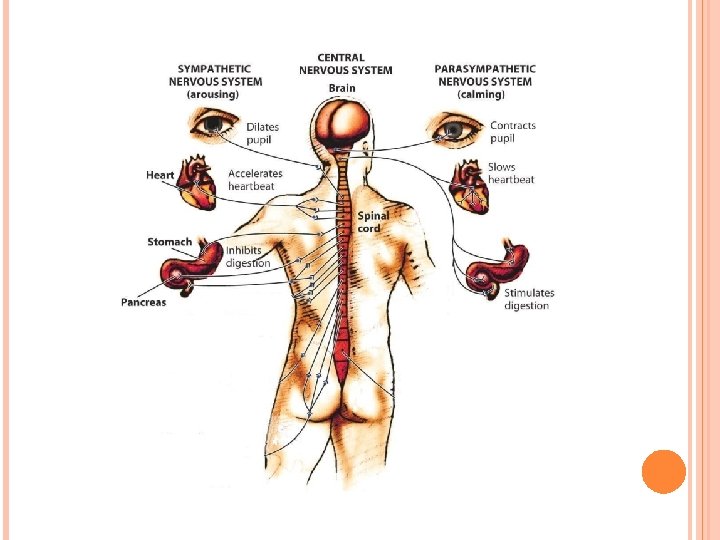
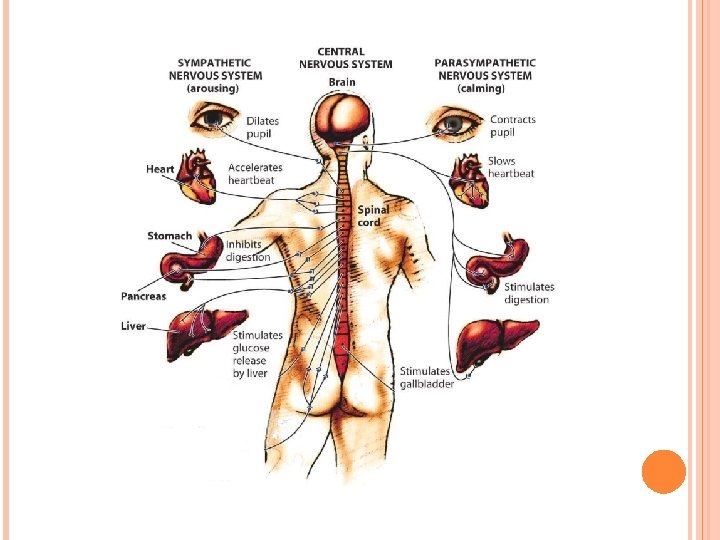
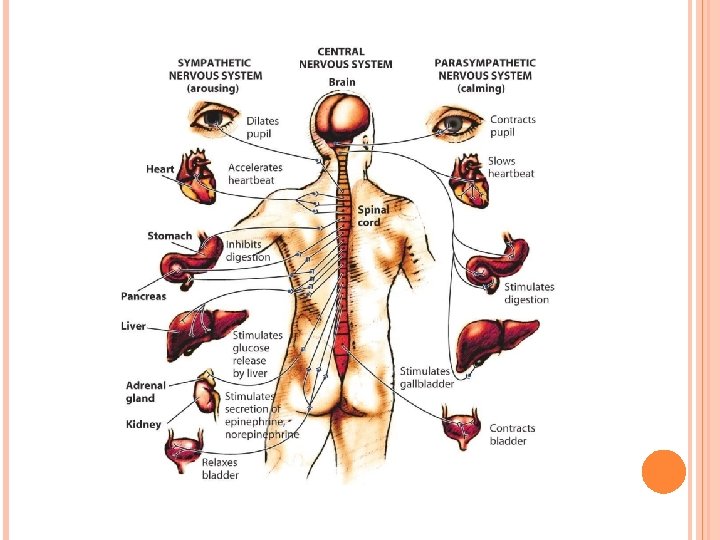
AUTONOMIC Monitors the autonomic functions Controls breathing, blood pressure, and digestive processes Divided into the sympathetic and parasympathetic nervous systems
AUTONOMIC
SYMPATHETIC The part of the autonomic nervous system that arouses the body to deal with perceived threats Fight or flight response
PARASYMPATHETIC The part of the autonomic nervous system that calms the body Brings the body back down to a relaxed state
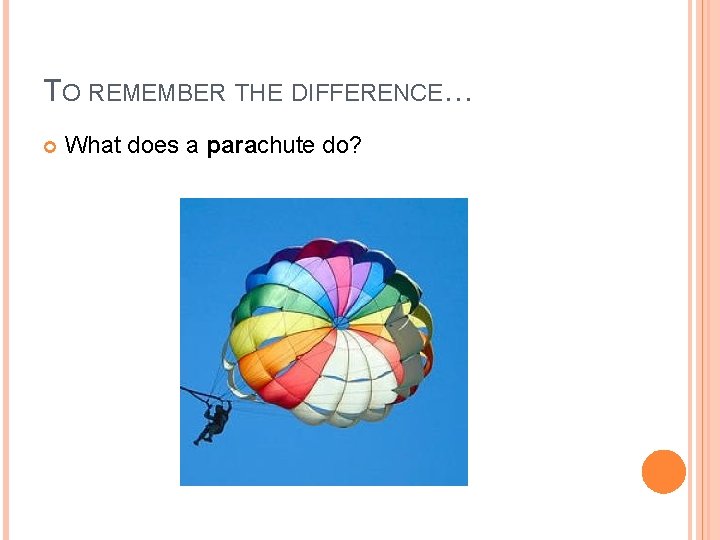
TO REMEMBER THE DIFFERENCE… What does a parachute do?
The Endocrine System
TWO COMMUNICATION SYSTEMS Nervous Endocrine They body. both communicate to the
ENDOCRINE The endocrine system communicates by secreting hormones into the bloodstream
HORMONES What are hormones? �The things adults say teenagers have too much of… �Chemical messengers circulated in the bloodstream.
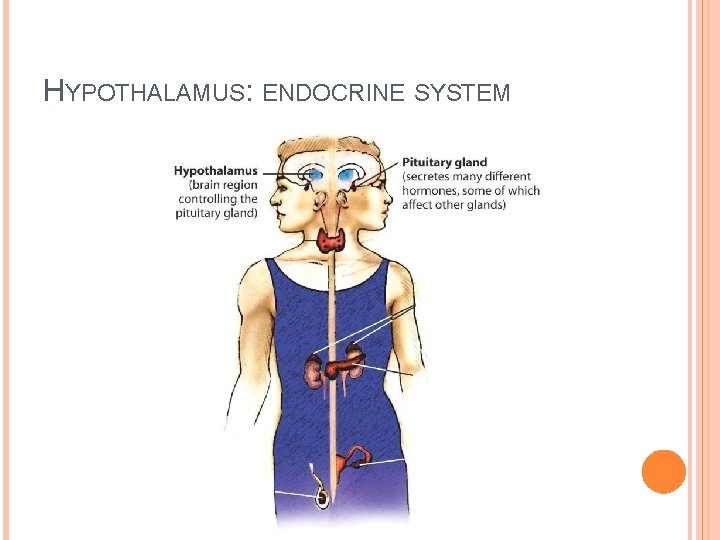
HYPOTHALAMUS: ENDOCRINE SYSTEM
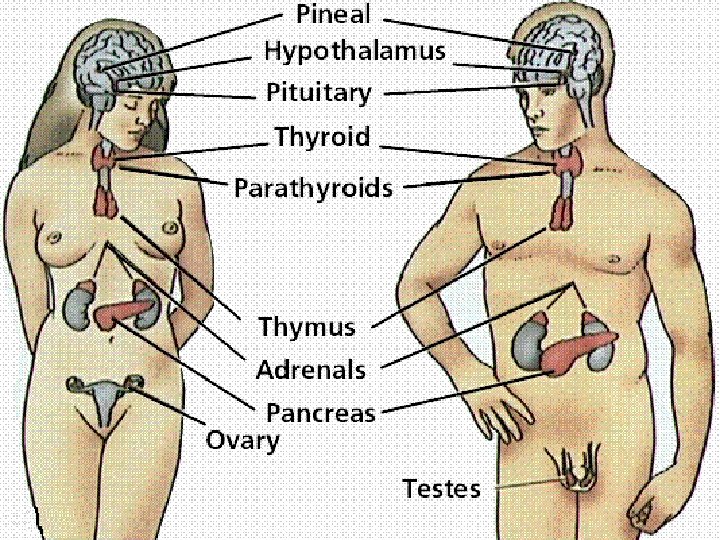
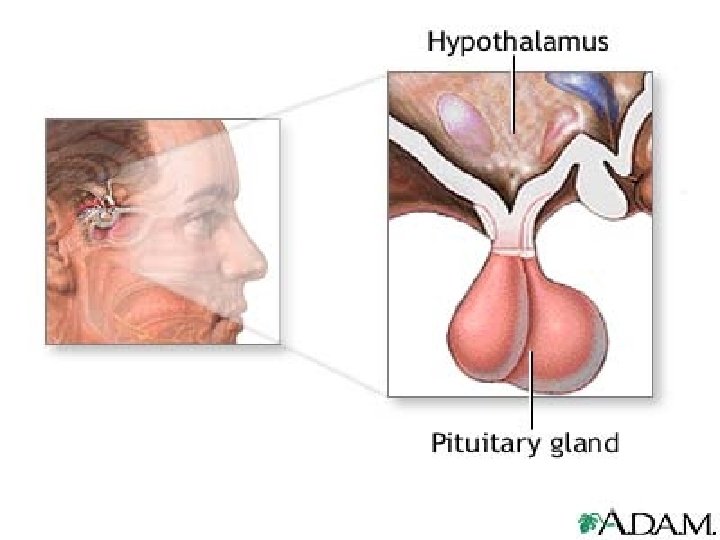
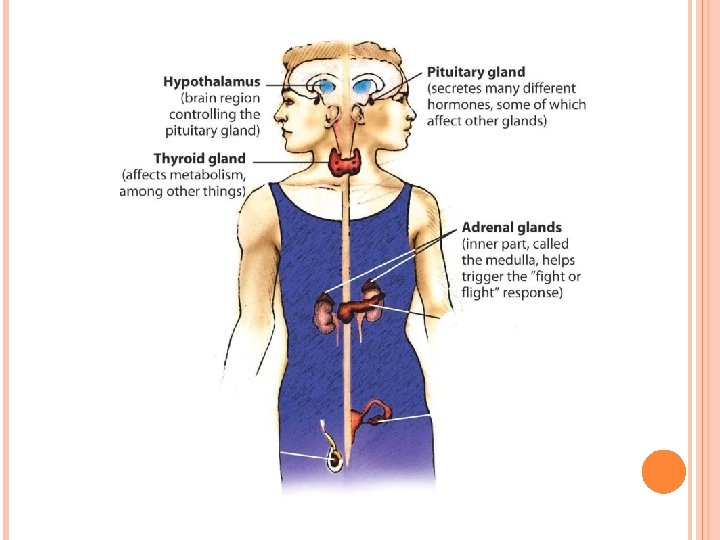
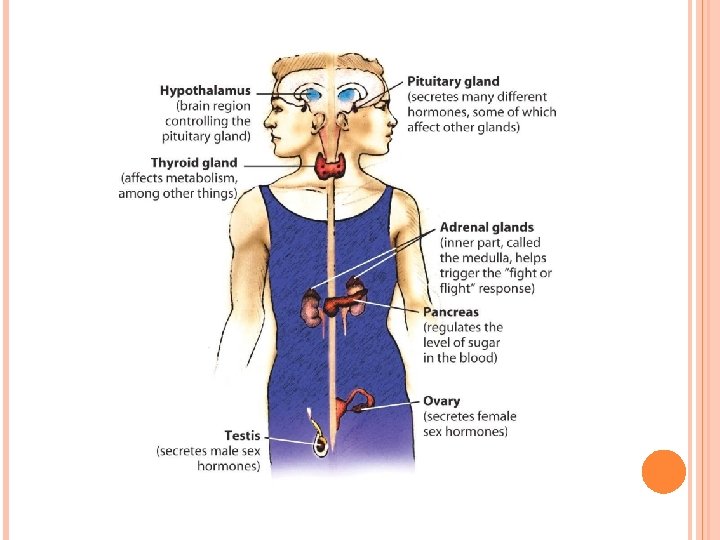
HYPOTHALAMUS The hypothalamus is the brain region that controls the pituitary gland, or the MASTER GLAND of the endocrine system. �It controls homeostasis
PITUITARY GLAND MASTER GLAND (kind of like how Brad Pitt is a master hottie…) Controls all other glands.
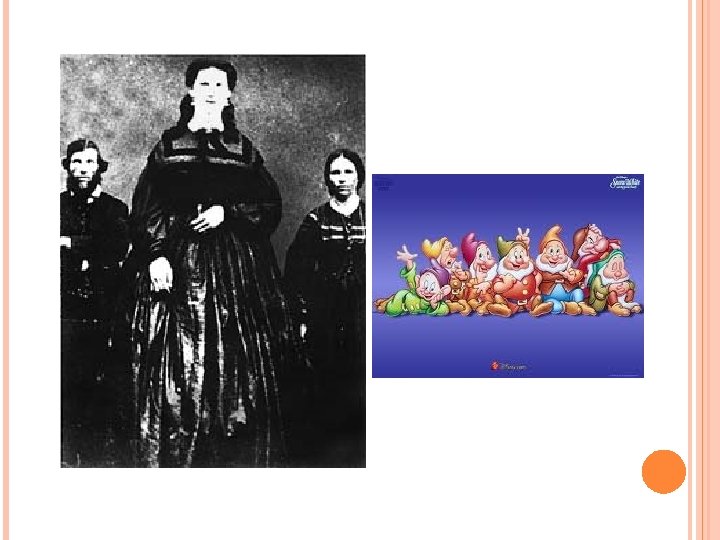
PITUITARY GLAND Thirst, metabolism Blood pressure, temperature Sex organs, mammary glands Growth - dwarfism and gigantism May control grooming habits, companionship, and sexual behavior
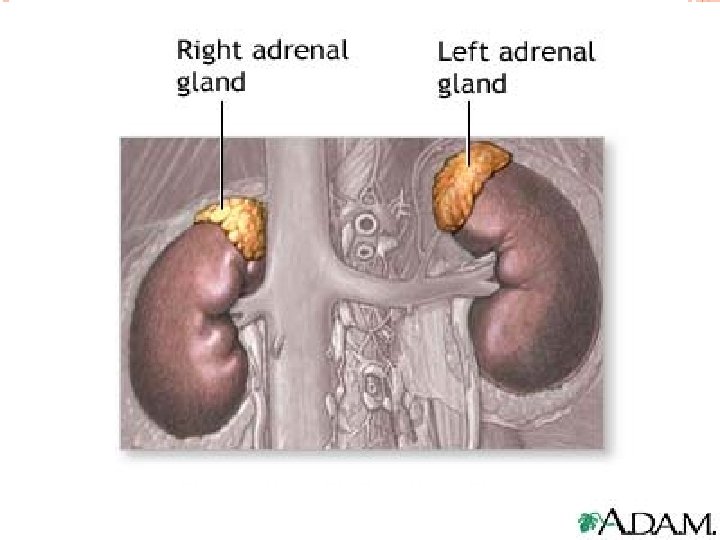
ADRENAL GLAND Located just above the kidneys Arouses the body in times of stress �Increase heart rate, blood pressure, and blood sugar Releases epinephrine (adrenaline) and norepinephrine (noradrenaline)
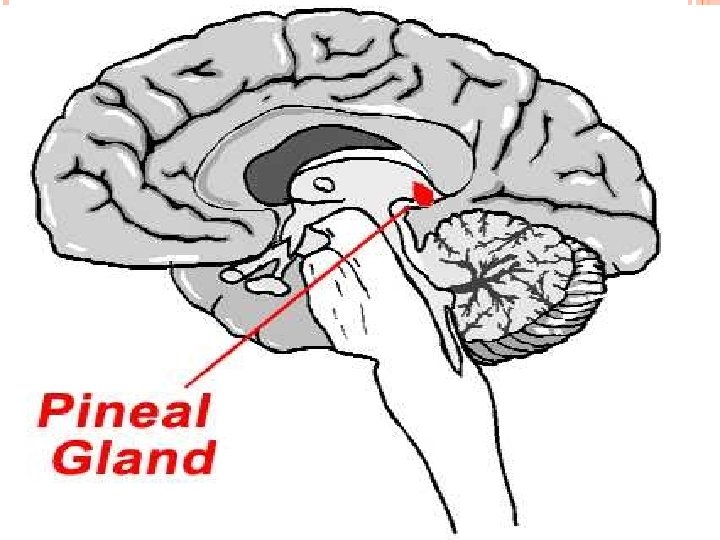
PINEAL GLAND Located in the center of the brain Hormone “Melatonin” �Increased levels: sleep �Decreased: wakefulness
THYROID GLAND Located in the neck Energy level, metabolism Body temp Hypo (underactive): � sleepiness, Hyper reduced muscle tone, overweight (overactive): � excitability, insomnia, ADD, agitation, difficulty focusing
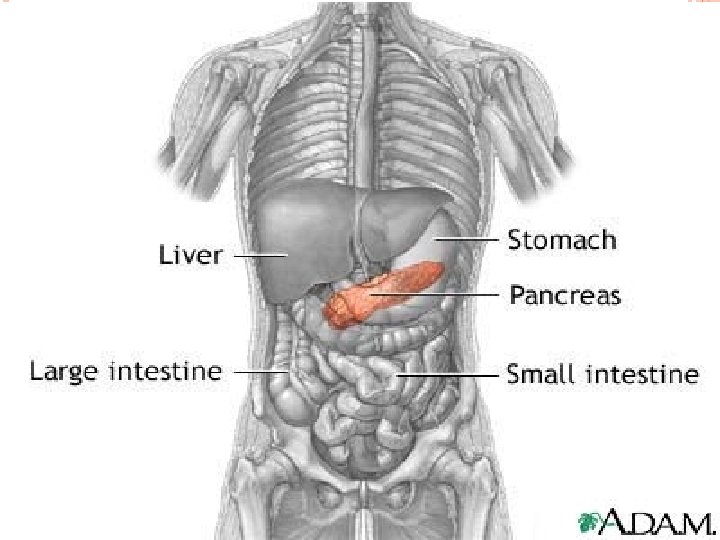
PANCREAS Located behind the stomach Regulates the level of blood sugar (insulin) in the blood �Too much: sluggishness and inattentiveness �Too little: dehydration, overworked kidneys, infections
SEX GLANDS Located in the pelvis (f), in and out of pelvis (m) Ovaries and testes influence emotion, physical development, reproductive characteristics �Androgens – primary male hormone �Estrogen – primary female hormone Males and females have both hormones