
NERVE AGENT EXPOSURE 1999 Lockheed Martin Energy Research

- Slides: 19
NERVE AGENT EXPOSURE © 1999 Lockheed Martin Energy Research Corporation CA 128
OBJECTIVE • Identify the specific signs and symptoms of nerve agent exposure © 1999 Lockheed Martin Energy Research Corporation CA 129
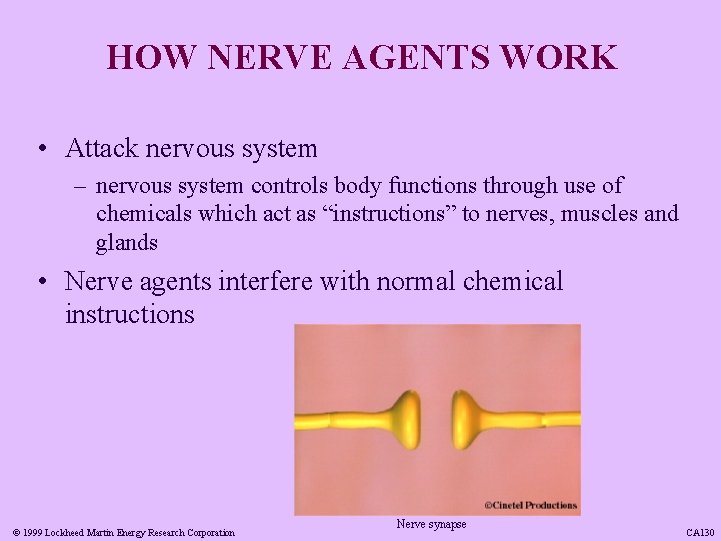
HOW NERVE AGENTS WORK • Attack nervous system – nervous system controls body functions through use of chemicals which act as “instructions” to nerves, muscles and glands • Nerve agents interfere with normal chemical instructions © 1999 Lockheed Martin Energy Research Corporation Nerve synapse CA 130
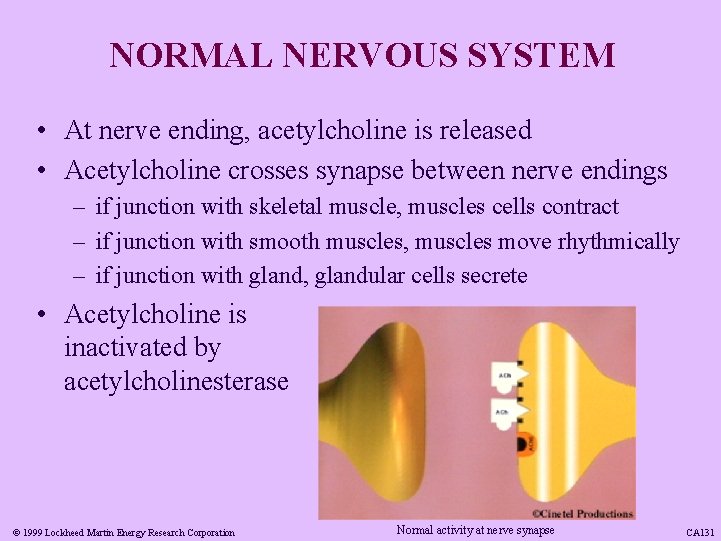
NORMAL NERVOUS SYSTEM • At nerve ending, acetylcholine is released • Acetylcholine crosses synapse between nerve endings – if junction with skeletal muscle, muscles cells contract – if junction with smooth muscles, muscles move rhythmically – if junction with gland, glandular cells secrete • Acetylcholine is inactivated by acetylcholinesterase © 1999 Lockheed Martin Energy Research Corporation Normal activity at nerve synapse CA 131
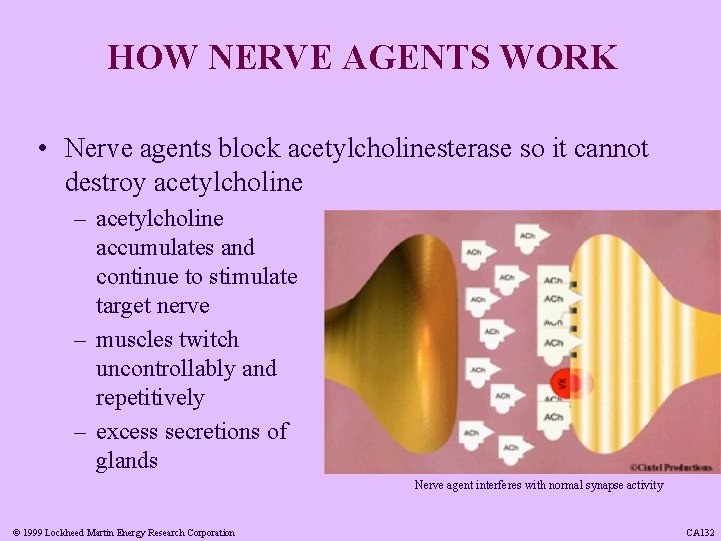
HOW NERVE AGENTS WORK • Nerve agents block acetylcholinesterase so it cannot destroy acetylcholine – acetylcholine accumulates and continue to stimulate target nerve – muscles twitch uncontrollably and repetitively – excess secretions of glands Nerve agent interferes with normal synapse activity © 1999 Lockheed Martin Energy Research Corporation CA 132
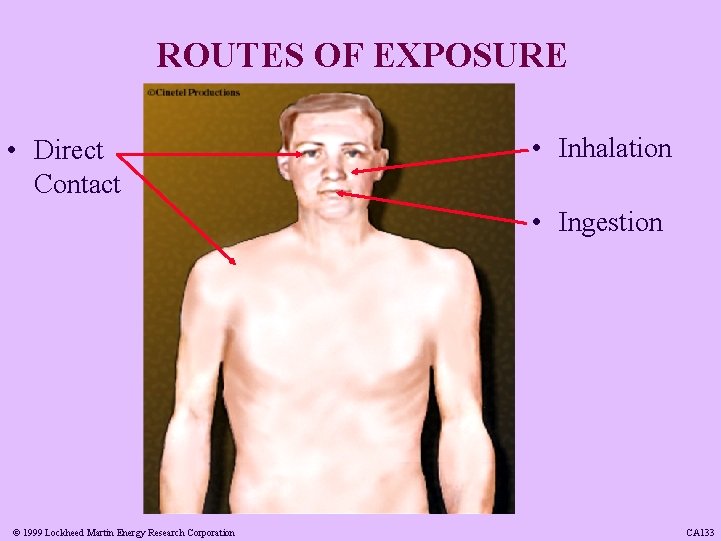
ROUTES OF EXPOSURE • Direct Contact • Inhalation • Ingestion © 1999 Lockheed Martin Energy Research Corporation CA 133
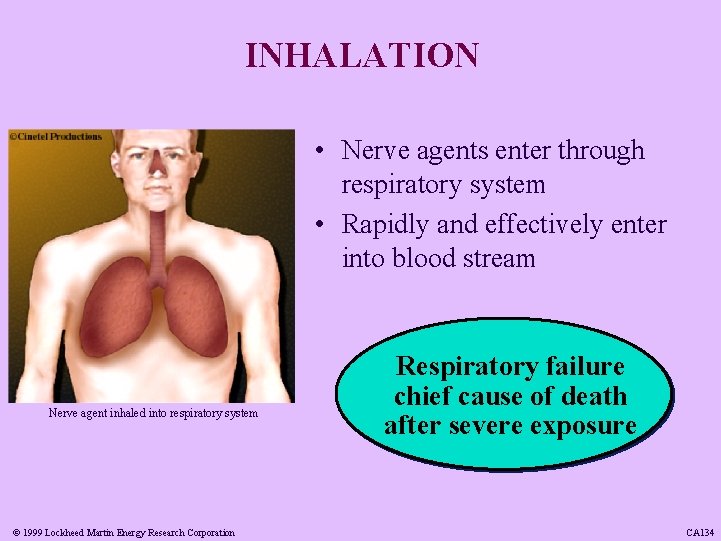
INHALATION • Nerve agents enter through respiratory system • Rapidly and effectively enter into blood stream Nerve agent inhaled into respiratory system © 1999 Lockheed Martin Energy Research Corporation Respiratory failure chief cause of death after severe exposure CA 134
DIRECT CONTACT • Skin or eyes are touched with agent vapor or liquid • Nerve agents absorbed through skin – VX remains on skin and absorbed more completely – GB evaporates quickly, but still a threat • Scrapes, cuts or other skin damage offer direct entry points – freshly shaven skin, sunburn, insect bites, rashes • Eyes most sensitive organ for nerve agent vapor effects © 1999 Lockheed Martin Energy Research Corporation CA 135
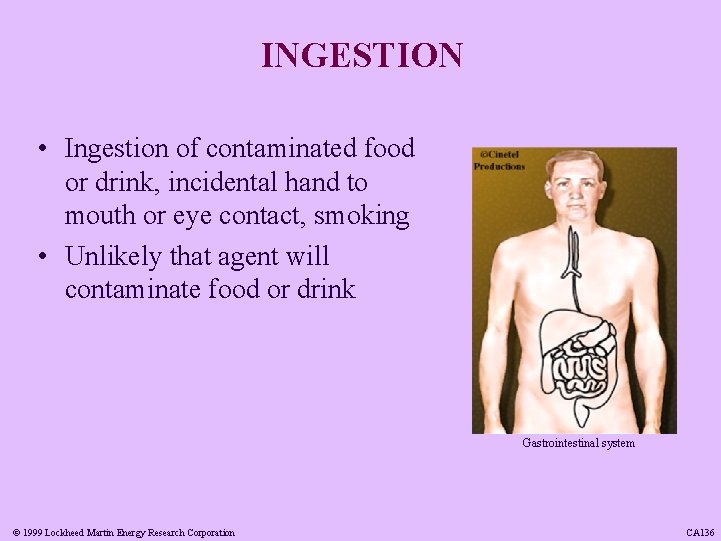
INGESTION • Ingestion of contaminated food or drink, incidental hand to mouth or eye contact, smoking • Unlikely that agent will contaminate food or drink Gastrointestinal system © 1999 Lockheed Martin Energy Research Corporation CA 136
SIGNS AND SYMPTOMS • • Signs are objective evidence of a medical condition Signs are observed (runny nose, drooling) Symptoms are subjective evidence Symptoms are verbally communicated (headache, eye pain) Not all signs and symptoms may appear. . . Dose, duration, and route of exposure make a difference © 1999 Lockheed Martin Energy Research Corporation CA 137
SIGNS AND SYMPTOMS OF NERVE AGENT EXPOSURE • • • Miosis Dim or blurred vision Respiratory trouble Difficulty in breathing Increased oral/nasal secretions • Localized sweating • Nausea and vomiting © 1999 Lockheed Martin Energy Research Corporation • Abdominal cramping • Involuntary urination or bowel movements • Heartbeat irregularities • Generalized weakness • Twitching or muscles spasms • Convulsions and coma CA 138
OTHER SIGNS AND SYMPTOMS OF NERVE AGENT EXPOSURE • May result from early or mild exposure: – – – headache anxiety restlessness giddiness irritability © 1999 Lockheed Martin Energy Research Corporation CA 139
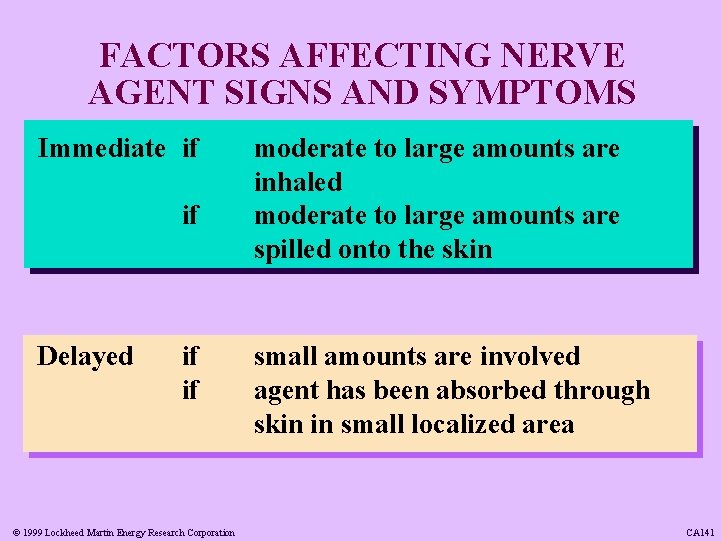
FACTORS AFFECTING NERVE AGENT SIGNS AND SYMPTOMS • Signs and symptoms may appear immediately or be delayed • Reaction time depends on – – – type of agent amount of agent person has been exposed to dose (how much a person has absorbed) duration of exposure route of exposure sensitivity of person’s system © 1999 Lockheed Martin Energy Research Corporation CA 140
FACTORS AFFECTING NERVE AGENT SIGNS AND SYMPTOMS Immediate if if Delayed if if © 1999 Lockheed Martin Energy Research Corporation moderate to large amounts are inhaled moderate to large amounts are spilled onto the skin small amounts are involved agent has been absorbed through skin in small localized area CA 141
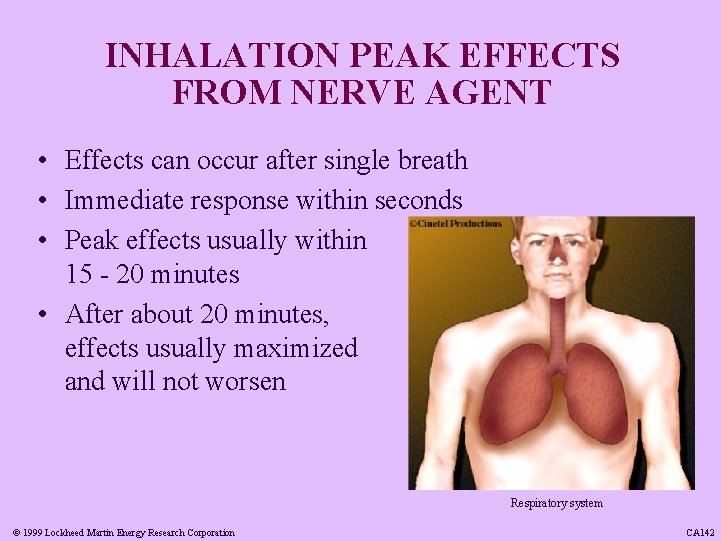
INHALATION PEAK EFFECTS FROM NERVE AGENT • Effects can occur after single breath • Immediate response within seconds • Peak effects usually within 15 - 20 minutes • After about 20 minutes, effects usually maximized and will not worsen Respiratory system © 1999 Lockheed Martin Energy Research Corporation CA 142
DIRECT CONTACT PEAK EFFECTS FROM NERVE AGENT • Absorption may continue for hours even after decontamination • Effects may not occur for 1 to 18 hours – effects usually not lethal © 1999 Lockheed Martin Energy Research Corporation CA 143
OTHER POSSIBLE CAUSES • Signs and symptoms may also be caused by – – – – – epilepsy gastroenteritis exposure to agricultural insecticides emphysema strokes head trauma drug overdose heat illnesses allergies upper respiratory illnesses © 1999 Lockheed Martin Energy Research Corporation CA 144
INITIAL FIRST AID TREATMENT • Immediate removal from source of exposure – severity directly proportional to absorbed dose • Decontamination – preferred decontamination solution is undiluted household bleach • Antidote administration with airway management support as necessary • Must be provided by properly trained and equipped personnel © 1999 Lockheed Martin Energy Research Corporation CA 145
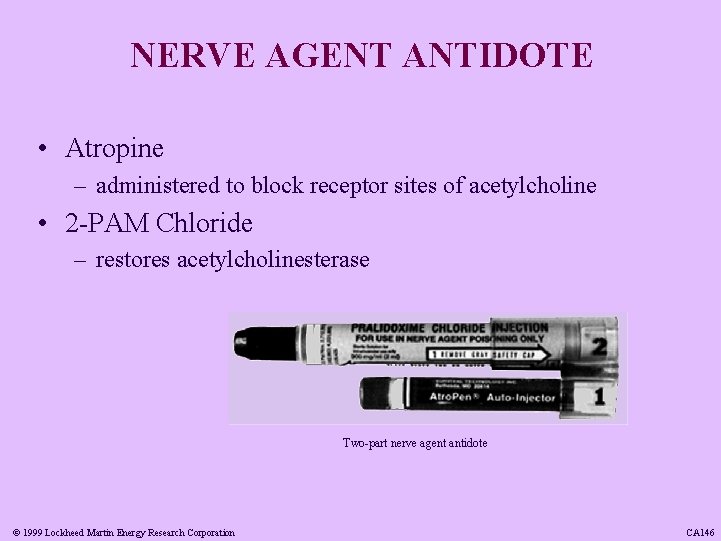
NERVE AGENT ANTIDOTE • Atropine – administered to block receptor sites of acetylcholine • 2 -PAM Chloride – restores acetylcholinesterase Two-part nerve agent antidote © 1999 Lockheed Martin Energy Research Corporation CA 146