
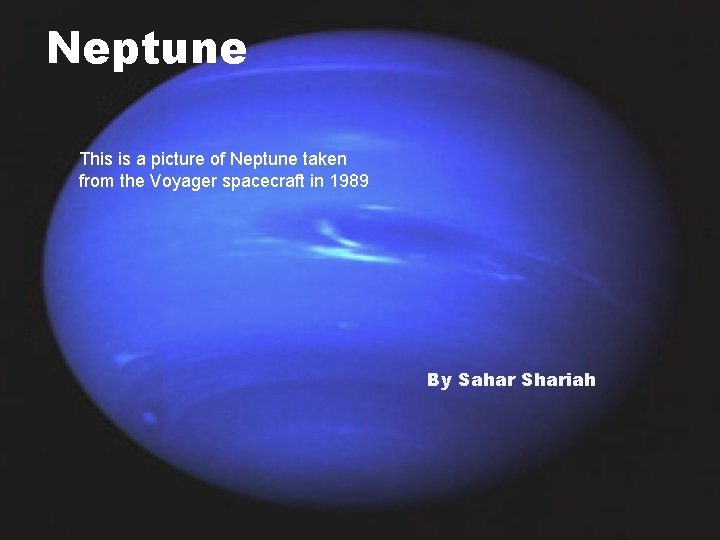
Neptune This is a picture of Neptune taken




- Slides: 11
Neptune This is a picture of Neptune taken from the Voyager spacecraft in 1989 By Sahar Shariah
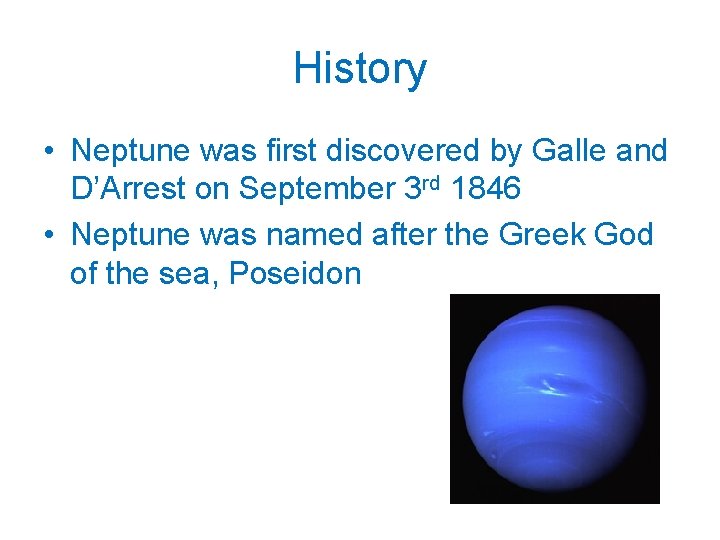
History • Neptune was first discovered by Galle and D’Arrest on September 3 rd 1846 • Neptune was named after the Greek God of the sea, Poseidon
Neptune’s Symbol
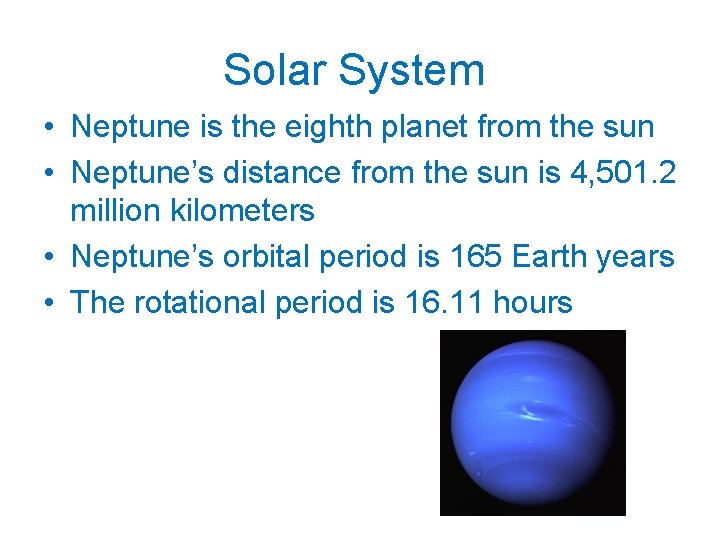
Solar System • Neptune is the eighth planet from the sun • Neptune’s distance from the sun is 4, 501. 2 million kilometers • Neptune’s orbital period is 165 Earth years • The rotational period is 16. 11 hours
Moons • Neptune has 8 known moons • Naiad, Thalassa , Despoina , Galatea, Larissa, Proteus , Triton , and Nereid. This is a picture of Triton, Neptune’s largest satellite
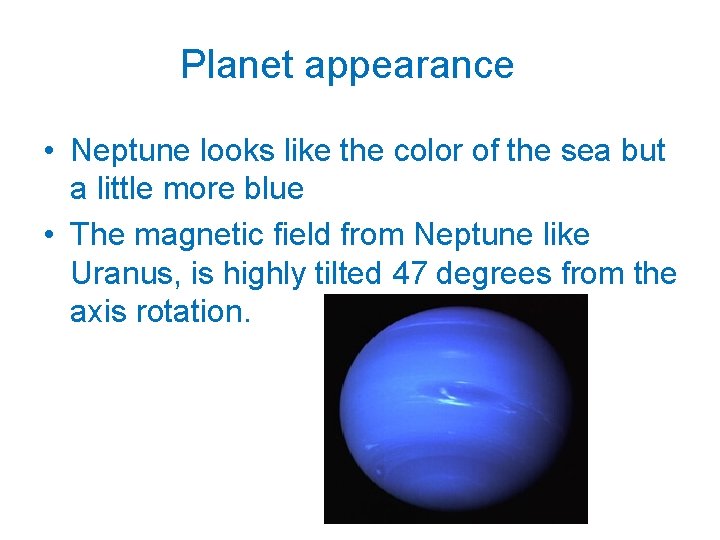
Planet appearance • Neptune looks like the color of the sea but a little more blue • The magnetic field from Neptune like Uranus, is highly tilted 47 degrees from the axis rotation.
Rings • Neptune’s rings are made of faint artifacts like debris, dirt, and crystals This is a picture of Neptune’s rings as Seen by Voyager 2
Exploration • Some of Neptune’s moons were some of the satellites This is Triton, Neptune’s largest satellite on August 29, 1989
Neptune Facts • When Neptune has storms the clouds form on its outer appearance Bands of clouds streak across Neptune in this image
Facts About Neptune • Neptune’s atmosphere is made of hydrogen and helium • Neptune’s rotational period is 16. 11 hours • Neptune only receives 3 percent sunlight as much as Jupiter
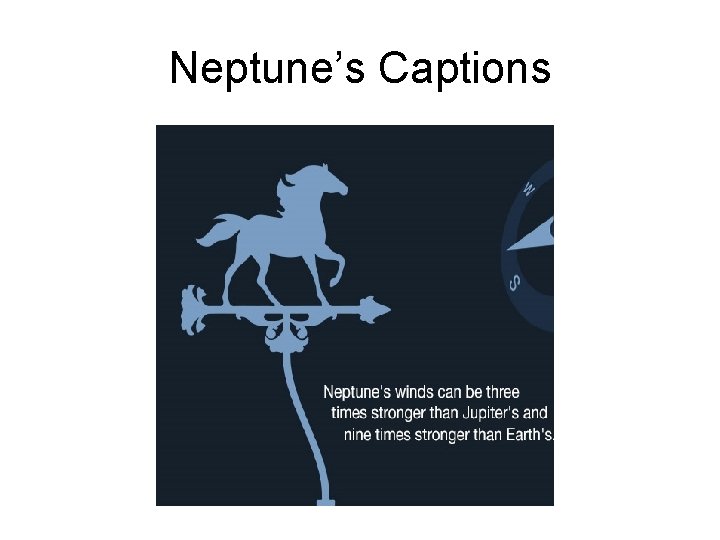
Neptune’s Captions