
Neonatal transport Transporting sick neonates is not an
- Slides: 18
Neonatal transport [ Transporting sick neonates is not an easy task [ In utero transport is far more rewarding than the transport of sick neonates after birth [ Care providers should, therefore, be ready, competent and confident to handle this responsibility Teaching Aids: NNF NT- 1
Constraints in neonatal transport A challenge in developing countries [ Scarce and inaccessible facilities [ Lack of organized transport system [ Road links poor or non-existent [ Communication systems not developed Teaching Aids: NNF NT- 2
Constraints in neonatal transport (contd…) A challenge in developing countries [ Ill equipped health facilities [ Families have poor resources [ No provider accompanies baby [ No care possible en route Teaching Aids: NNF NT- 3
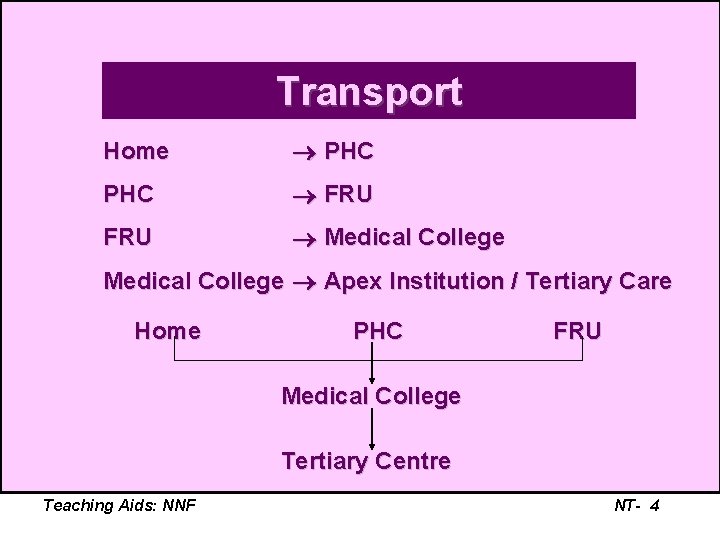
Transport Home PHC FRU Medical College Apex Institution / Tertiary Care Home PHC FRU Medical College Tertiary Centre Teaching Aids: NNF NT- 4
Neonatal transport Prepare well before transport [ Make careful assessment of the need and urgency of referral [ Correct hypothermia before – it is going to worsen during travel Teaching Aids: NNF NT- 5
Before transport 1. Communicate , write a note 2. Encourage mother to accompany 3. Arrange provider to accompany 4. Explain care during travel Teaching Aids: NNF NT- 6
Communicate [ Explain the condition, the prognosis and the reasons for referral of the baby [ Explain where to go and whom to contact [ Inform the referral facility beforehand, if possible Teaching Aids: NNF NT- 7
Assess & stabilize [ Temperature Tactile / Thermometer Warmer/Cover / KMC [ Airway Position/Suction [ Breathing Tactile stimulation / PPV 100% O 2 Teaching Aids: NNF NT- 8
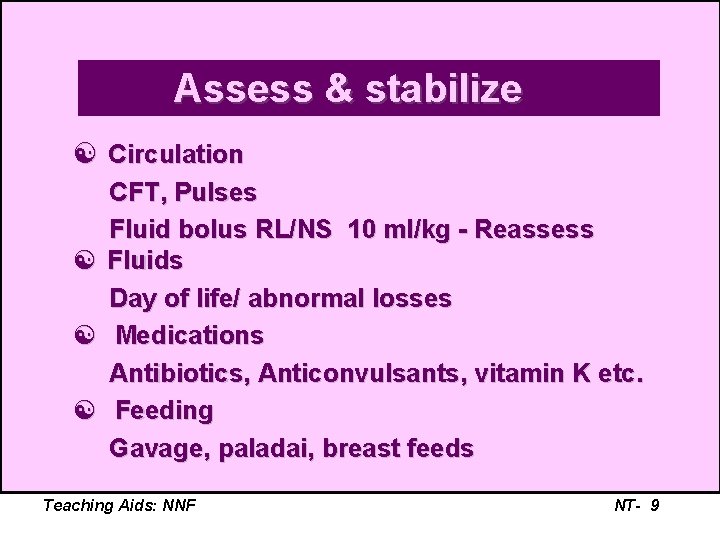
Assess & stabilize [ Circulation [ [ [ CFT, Pulses Fluid bolus RL/NS 10 ml/kg - Reassess Fluids Day of life/ abnormal losses Medications Antibiotics, Anticonvulsants, vitamin K etc. Feeding Gavage, paladai, breast feeds Teaching Aids: NNF NT- 9
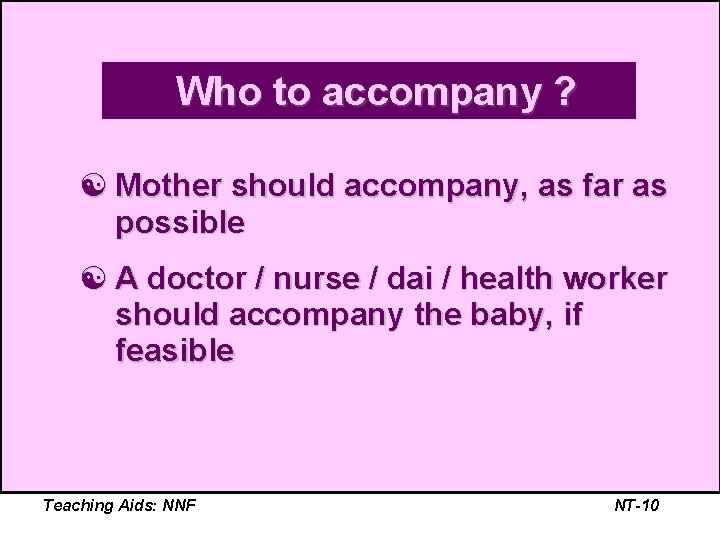
Who to accompany ? [ Mother should accompany, as far as possible [ A doctor / nurse / dai / health worker should accompany the baby, if feasible Teaching Aids: NNF NT- 10
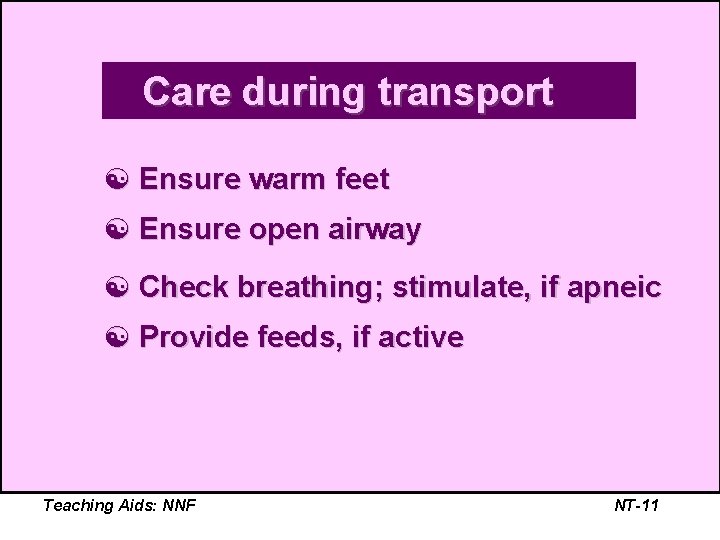
Care during transport [ Ensure warm feet [ Ensure open airway [ Check breathing; stimulate, if apneic [ Provide feeds, if active Teaching Aids: NNF NT- 11
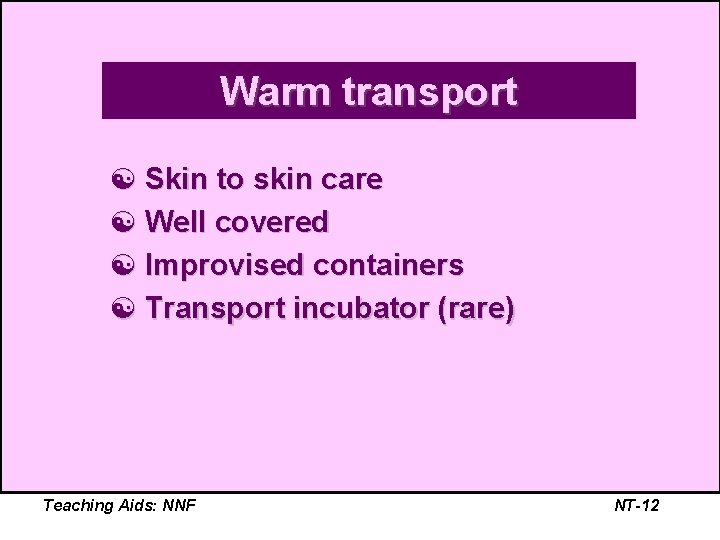
Warm transport [ Skin to skin care [ Well covered [ Improvised containers [ Transport incubator (rare) Teaching Aids: NNF NT- 12
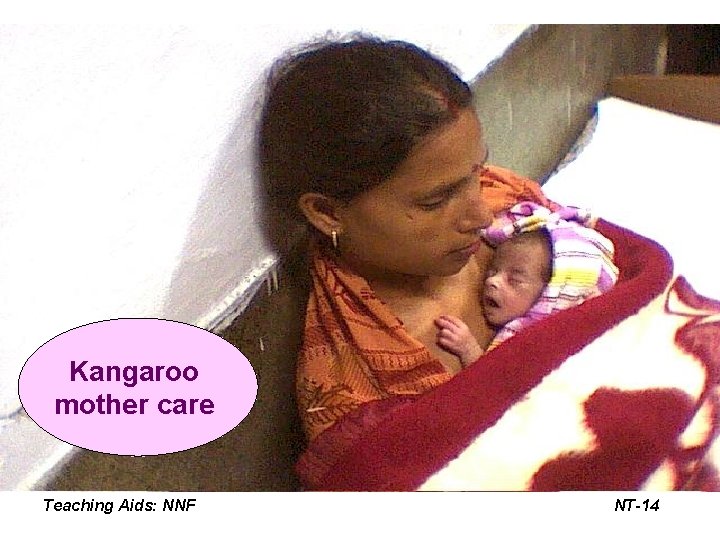
Skin to skin care (Kangaroo Mother Care) Baby is naked except for a cap and napkin [ Baby is placed facing the mother in skin to skin contact between breasts [ Baby’s back is covered by tying the blouse or with a fold of gown / ’chunari’ Another woman or a man (father) can also provide Teaching Aids: NNF NT- 13
Kangaroo mother care Teaching Aids: NNF NT- 14
If provider not accompanying [ Avoid running I. V. fluids [ Avoid oro-and nasogastric feeds [ Avoid hot water filled bags for warmth Teaching Aids: NNF NT- 15
Summary of safe transport for neonates Prepare well before transport [ Communicate , write a note [ Assess & stabilize [ Correct hypothermia During transport [ Caregiver to accompany [ Arrange a provider to accompany [ Ensure warm transport Teaching Aids: NNF NT- 16
Conclusion [ Neonatal transport in developing countries is a formidable challenge [ A simple approach is required [ Family plays a major role [ There is a need to educate providers Teaching Aids: NNF NT- 17
Take the baby to the nearest referral facility, by the shortest route, using the fastest possible mode of transport Teaching Aids: NNF NT- 18