
Neonatal Resuscitation CPR Neonatal Resuscitation Prepared by Sara
Neonatal Resuscitation
CPR (Neonatal Resuscitation)
Prepared by Sara Said Amin Demonstrator in pediatric nursing department

Intended learning outcomes (ILO’s)
At the end of this lecture , the learners will be able to do the following : • Define neonatal resuscitation • Enumerate Risk Factors Associated with the Need for Resuscitation • Identify equipment. • Discuss initial steps in resuscitation
Out lines:
• Definition • Risk Factors Associated with the Need for Resuscitation • Equipment • Initial steps in resuscitation

Introduction
• Approximately 90% of newborns make smooth transition from intrauterine to extra uterine life requiring little or no assistance, 10% of newborns need some assistance, and only 1% requires extensive resuscitation.
Definition of resuscitation
Is the method in which body can maintain cardiopulmonary function. the

Risk Factors Associated with the Need for Resuscitation
• Antepartum (before labor and delivery) • Intrapartum (during labor and delivery)
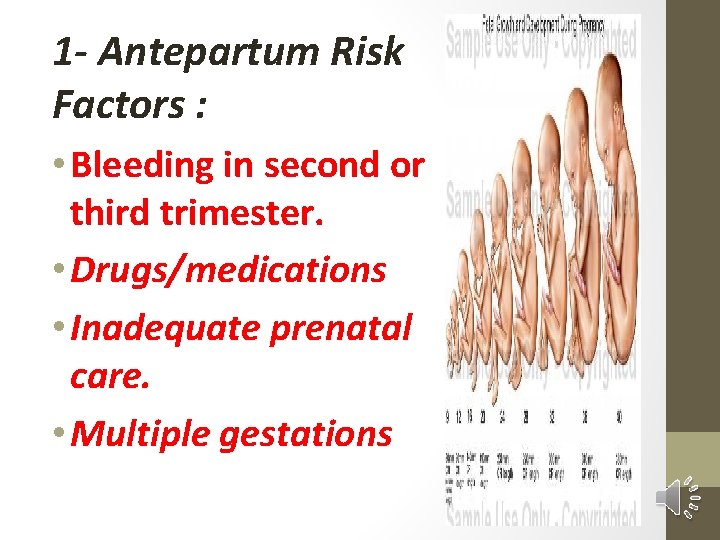
1 - Antepartum Risk Factors : • Bleeding in second or third trimester. • Drugs/medications • Inadequate prenatal care. • Multiple gestations
• Mother‘s age Less than age 16 or more than 35 • Post-term gestation. • Previous Rh sensitization. • Previous still birth • Toxemia, hypertension, diabetes. • Oligo- hydramnions
2 -Intrapartum Risk Factors • Abraptio placenta. • Abnormal presentation. • Bleeding. • Emergency C. S.
• Meconium-stained amniotic fluid. • Prolonged labor or precipitous delivery (prolonged than 24 hrs. ). • Prolonged second stage of labor (greater than 2 hrs. ) • Prolapsed cord.
• Placenta previa. • Premature labor • Rupture of membranes greater than 24 hours before delivery • Use of narcotics within 4 hours of delivery. • Uterine tetany.
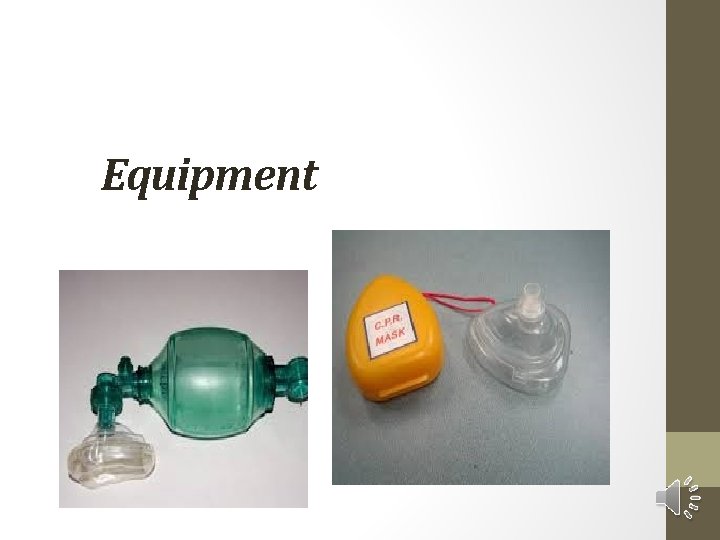
Equipment
1 -Suction equipment: • Bulb syringe. • Mechanical suction. • Suction catheters 5, 6 Fr. • Meconium aspirator
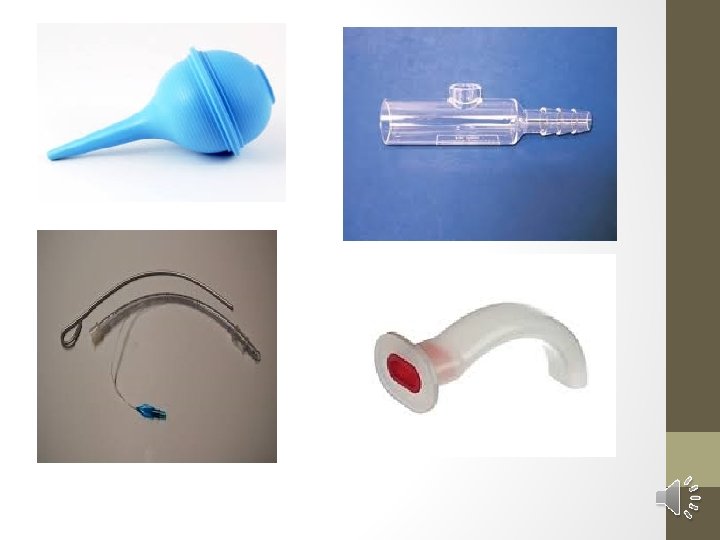
2 -Bag and mask equipment: • Neonate resuscitation bag (AMPO bag) • Face mask • Oxygen with flow meter and tubing. • Oral airway
3 -Intubations equipment: • Laryngoscope with straight blades. No 0 (P. T) and No. 1 (F. T). • Battery for laryngoscope • Endotracheal tubes sizes 2. 5, 3, 3. 5, 4 mm. • Scissors – Gloves – stylet.
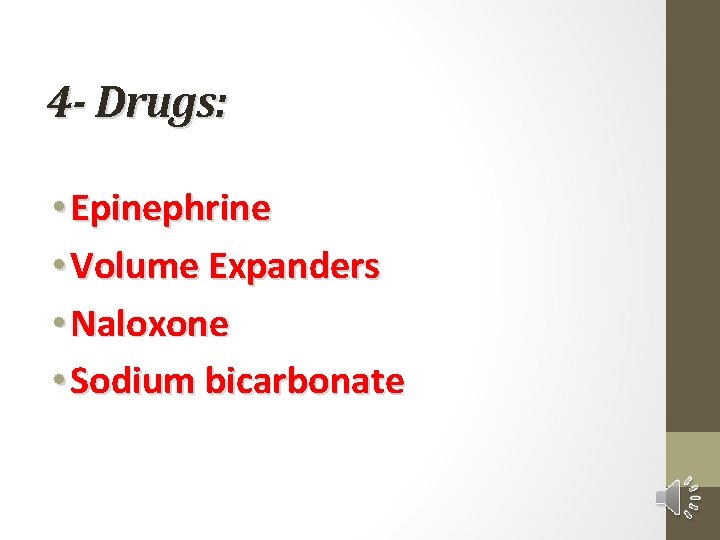
4 - Drugs: • Epinephrine • Volume Expanders • Naloxone • Sodium bicarbonate
5 - Miscellaneous • Radiant warmer-stethoscopetape-Syringe-needle-alcoholumbilical catheter, towel
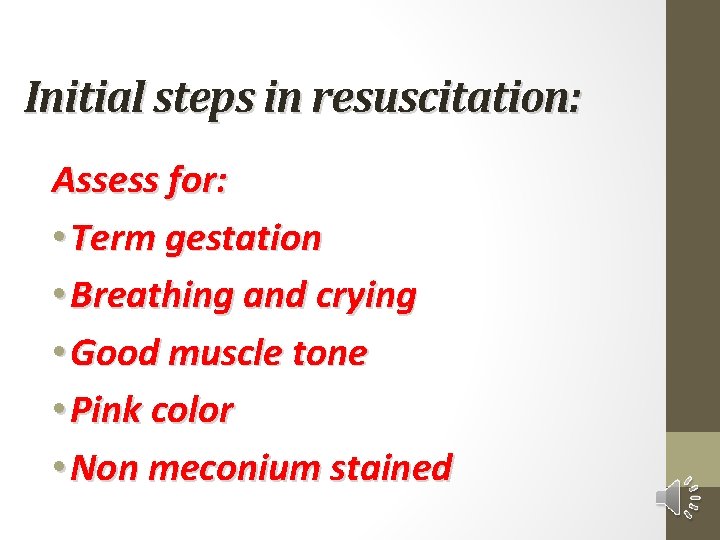
Initial steps in resuscitation: Assess for: • Term gestation • Breathing and crying • Good muscle tone • Pink color • Non meconium stained
1 -Prevention of Heat Loss (warming) Immediately after delivery : • Dry the infant's head and body • Remove any wet coverings from the neonate • Cover with dry wrappings • Cover the newborn's head • Put the baby under radiant warmer
2 -Opening the Airway by positioning
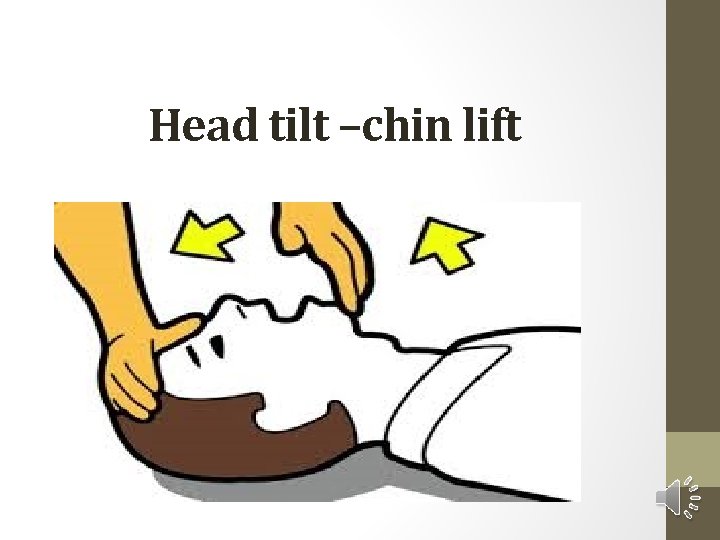
Head tilt –chin lift
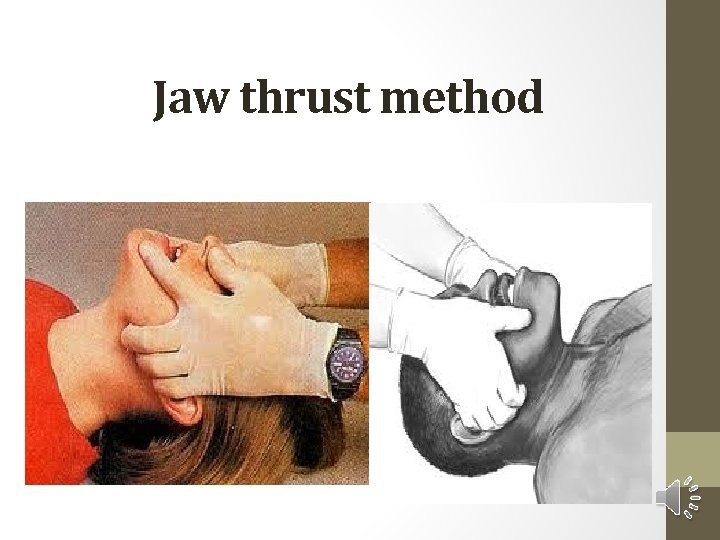
Jaw thrust method

Suction
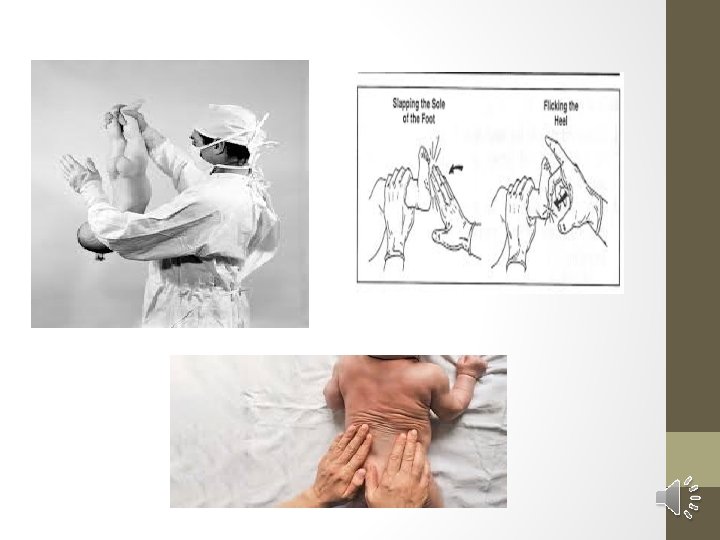
Provision of Tactile Stimulation
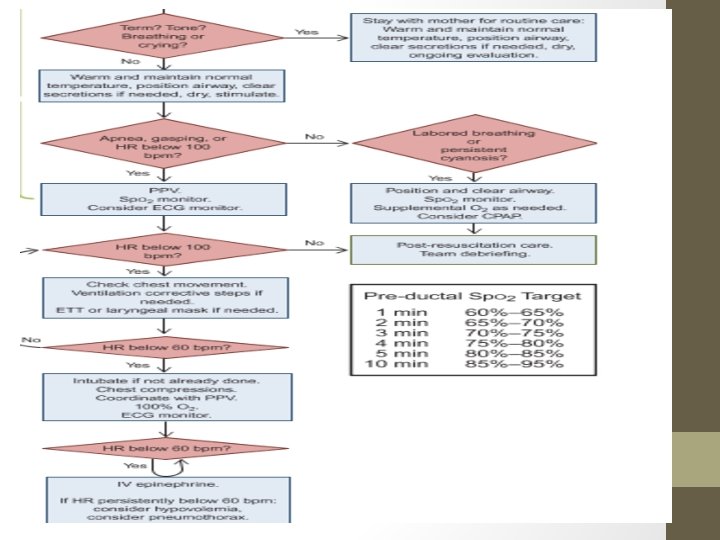
Three Items are assessed every 30 seconds • Heart rate (Pulse) • Respiration (Breathing) • Circulation (colour)
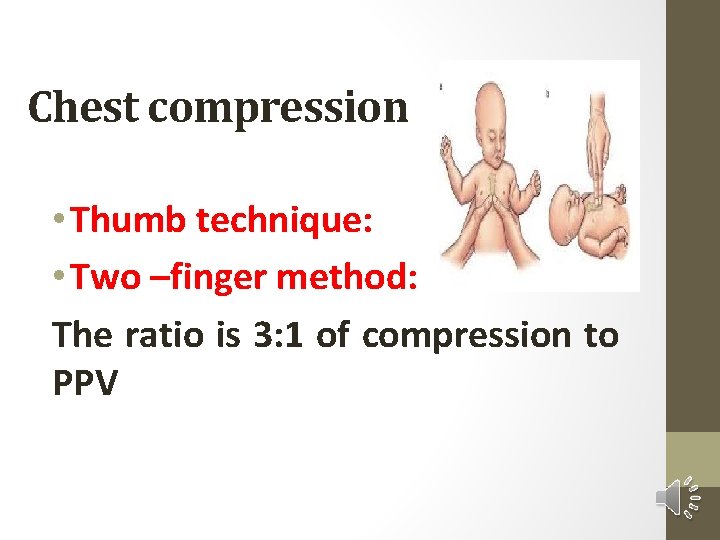
Chest compression • Thumb technique: • Two –finger method: The ratio is 3: 1 of compression to PPV
• Evaluate Heart Rate • HR decreasing HR less than 100 b/m start PPV • HR decreasing HR less than 80 b/m continue PPV and start compression • HR increasing HR more than 80 b/m continue PPV and stop compression • If HR remains less than 60 b/m continue compression and PPV and consider medication and consider intubation
Medications
Epinephrine • Route: IV (through the umbilical vein). Endotracheal administration may be considered while IV access is being established. • Dose: 0. 1 -0. 3 ml/kg (consider higher dose, 0. 3 -1 ml/kg, for endotracheal route only); dose • can be repeated after 3 -5 minutes. • Preparation: 1: 10, 000 solution. • Rate: rapidly, as quickly as possible
Volume expansion • blood loss (e. g. , extensive vaginal bleeding, abruptio placentae, placenta previa, , …etc). • Recommended volume expander is normal saline, Ringer's lactate, or O Rh-negative • blood packed RBCs. • Route: umbilical vein. • Dose: 10 ml/kg (another dose may be needed). • Rate: slowly (over 5 -10 minutes).
Sodium bicarbonate • it may be indicated for correction of documented severe metabolic acidosis. • Do not give sodium bicarbonate unless the lungs are being adequately ventilated. • Route: umbilical vein. • Dose: 2 m. Eq/kg (8. 4% concentration). • Preparation: diluted 1: 1 with appropriate diluent (glucose 5% or sterile water • Rate: slowly, no faster than a rate of 1 m. Eq/kg/minute (to minimize the risk of intraventricular hemorrhage).
Naloxone Hydrochloride • If a mother has recently received narcotics within 4 hrs of delivery and her infant fails to breathe, first assist ventilation with positive pressure, and then consider giving • naloxone to the infant (0. 1 mg/kg, 1 mg/ml solution, I. V. or I. M).

- Slides: 43