
Neonatal Jaundice Hyperbilirubinemia Dr AbdulRahman Alnemri MD Chairman
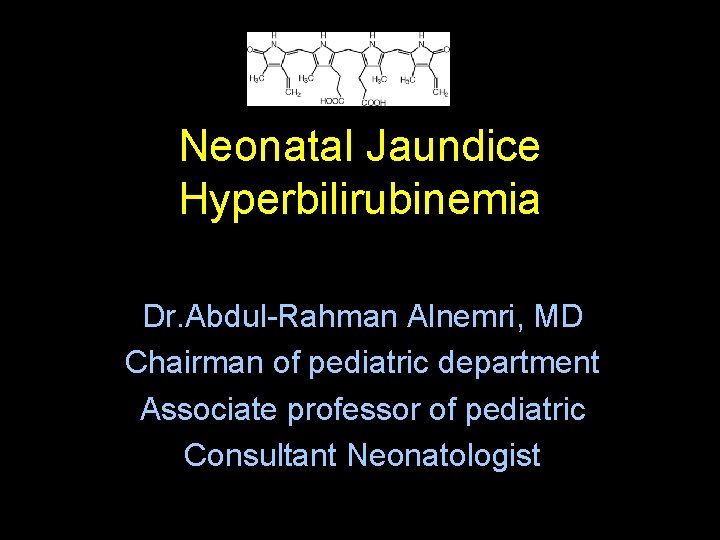
Neonatal Jaundice Hyperbilirubinemia Dr. Abdul-Rahman Alnemri, MD Chairman of pediatric department Associate professor of pediatric Consultant Neonatologist
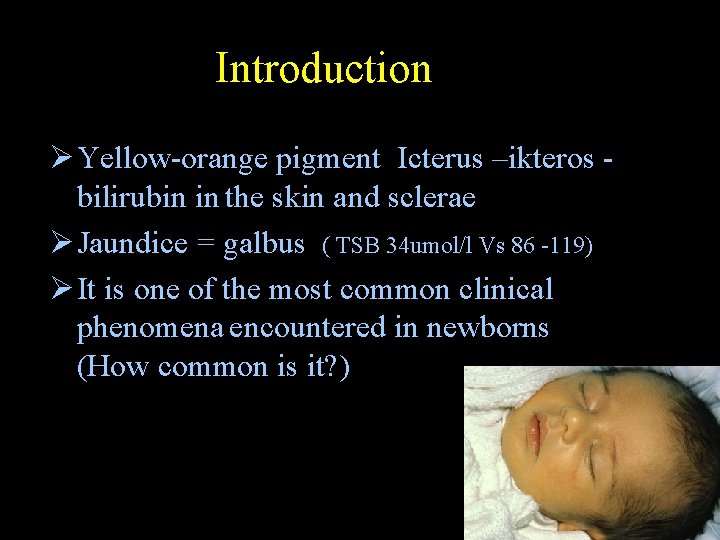
Introduction Ø Yellow-orange pigment Icterus –ikteros bilirubin in the skin and sclerae Ø Jaundice = galbus ( TSB 34 umol/l Vs 86 -119) Ø It is one of the most common clinical phenomena encountered in newborns (How common is it? )
Clinical Physiology
1 - Bilirubin Production Ø What is (are) the source(s) of Bilirubin ? Ø Degrading heme from hemoglobin-containing RBCs ( 80% ) Ø 20% from ineffective erythropoiesis Ø turnover of other hemoproteins (e. g. , myoglobin, catalase, nitric oxide synthase, peroxidases, and cytochromes).
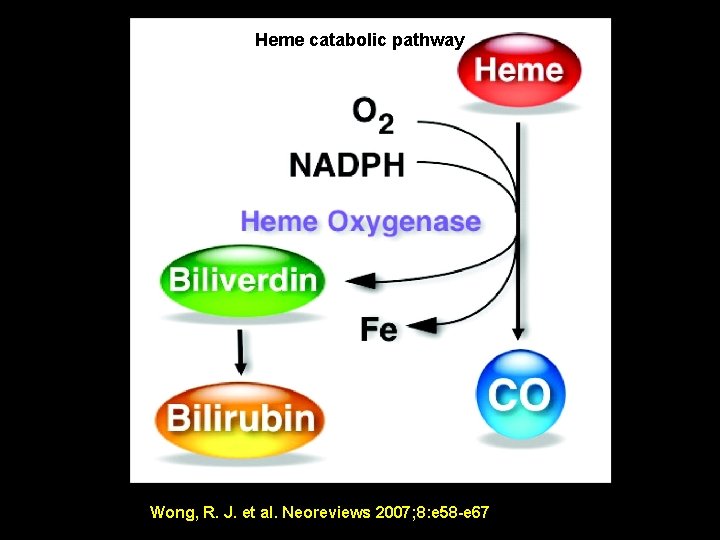
Heme catabolic pathway Wong, R. J. et al. Neoreviews 2007; 8: e 58 -e 67 Copyright © 2007 American Academy of Pediatrics
2 - Bilirubin Transport Ø It binds reversibly to albumin (bilirubin: albumin) (about 0. 8 - 7 mg of bilirubin per gram of albumin) Ø Low Albumin level and affinity binding sites Ø Free" bilirubin is hydrophobic (lipid soluble) Ø The movement of bilirubin from the circulation into tissue cross blood brain brayer
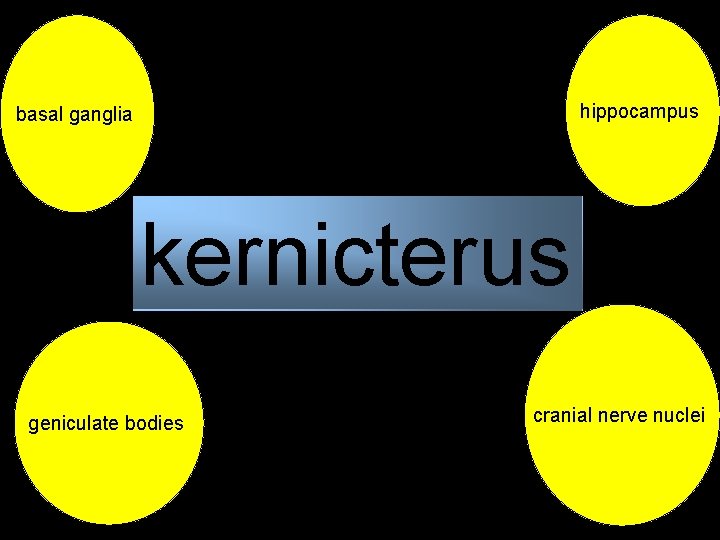
hippocampus basal ganglia kernicterus geniculate bodies cranial nerve nuclei
3 - Conjugation Ø Conjugation of bilirubin with glucuronic acid (water-soluble, non-neurotoxic bilirubin) Ø uridine diphospho- glucuronosyltransferase (UGT) Ø Slower rate of hepatic uptake of free bilirubin from the blood Ø Decreased concentrations of (UGT) +
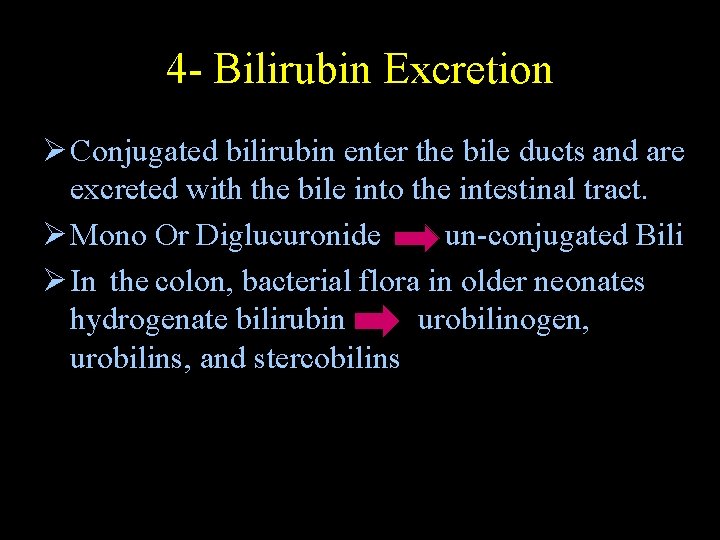
4 - Bilirubin Excretion Ø Conjugated bilirubin enter the bile ducts and are excreted with the bile into the intestinal tract. Ø Mono Or Diglucuronide un-conjugated Bili Ø In the colon, bacterial flora in older neonates hydrogenate bilirubin urobilinogen, urobilins, and stercobilins
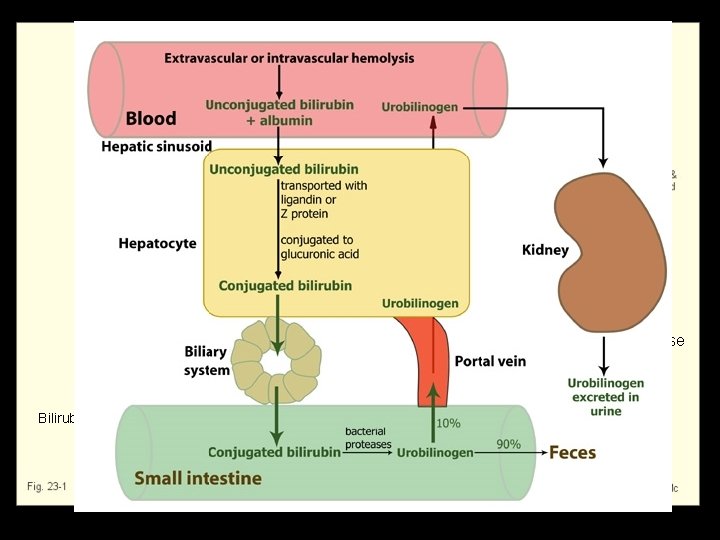
biliverdin reductase beta-glucuronidase Bilirubin oxidase
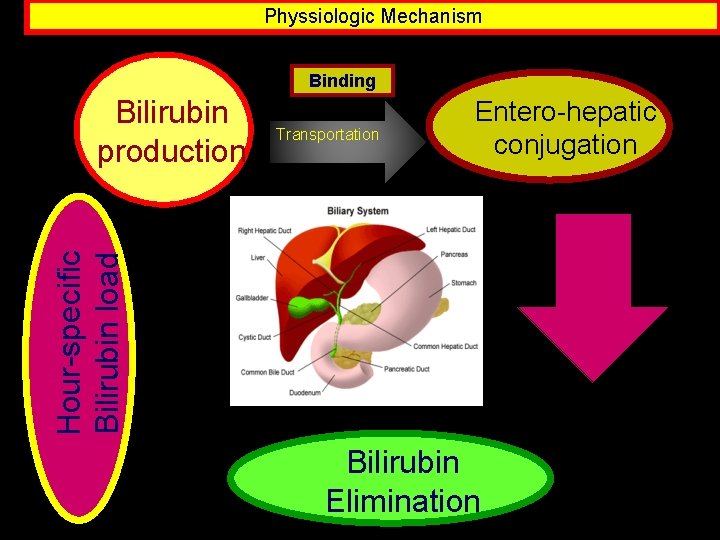
Physsiologic Mechanism Binding Transportation Entero-hepatic conjugation Hour-specific Bilirubin load Bilirubin production Bilirubin Elimination
What are the risk factors? Ø Gestational Age more in premature Ø Race (Genetic @ environmental Ø Maternal illness DM & Blood group (ABO or Rhs) Ø Family history of jaundice requiring phototherapy Ø Hemolysis (G 6 PD, Spherocytosis) Ø Severe bruising Ø Breastfeeding
Etiological Classification q Increased bilirubin load 1. Hemolytic causes Ø Coombs' test positive: Examples ? Ø Coombs' test negative: Examples ? (red blood cell membrane defects (spherocytosis, elliptocytosis), red blood cell enzyme defects (G 6 PD deficiency, pyruvate kinase deficiency) § Why we do not include thalasemia or SCD ?
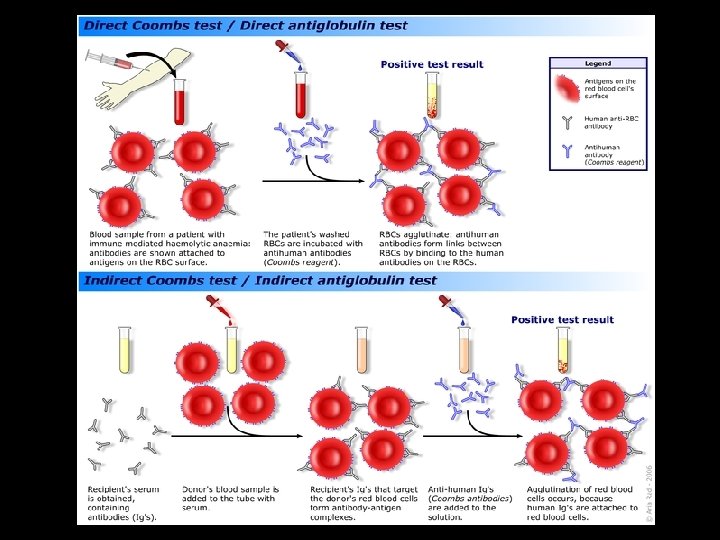
Hemolytic Disease Ø Ø Blood group incompatibility ØRed cell enzyme deficiency Ø Red blood cell membrane defect Ø Extravascular Blood Ø Polycythemia Ø Sepsis
2 - Non-hemolytic causes § Increased un-conjugated bilirubin level, normal percentage of reticulocytes or Co Ø Physiologic jaundice Ø Extra vascular sources Ø Polycythemia Ø Exaggerated entero- hepatic circulation
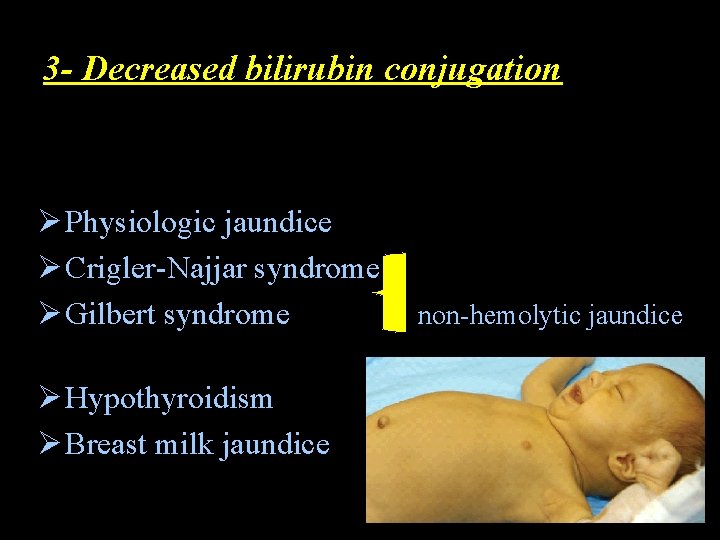
3 - Decreased bilirubin conjugation Ø Physiologic jaundice Ø Crigler-Najjar syndrome Ø Gilbert syndrome familial Ø Hypothyroidism Ø Breast milk jaundice non-hemolytic jaundice
5 - Impaired bilirubin excretion Direct hyperbilirubinemia • Conjugated bilirubin level of >2 mg per d. L (34 μmol per L) or >20% of total serum bilirubin level Ø Biliary obstruction Ø Infection Ø Metabolic disorder Ø Chromosomal abnormality
Case scenario Term male newborn, presented on the second day of life with jaundice Ø What farther questions do you want to obtain? Ø Clinical signs you want to elicit? Ø How do you manage such neonate ?
Infants with multiple risk factors may develop an exaggerated form of physiologic jaundice in which the total serum bilirubin level may rise as high as 17 mg per d. L (291 μ mol per L)
What is the commonest cause of non hemolytic hyperbilirubineamia? What are the other D/D?
Criteria for Physiological Jaundice 1. 2. 3. 4. 5. Onset Rate of TSB increment Level of TSB Type of Bili Duration
JAUNDICE AND BREAST FEEDING Ø Early-Onset Breast feeding associated Jaundice or Breast feeding failure. Ø Breast milk jaundice occurs later in the newborn period usually peaking in the sixth to 14 th days of life. Why?
PATHOLOGIC JAUNDICE All etiologies of jaundice beyond 1) Physiologic 2) breastfeeding or 3) breast milk jaundice are considered pathologic.
ABO Incompatibility Ø ABO Incompatibility is the most common cause of hemolytic jaundice Ø Only 10 -20% of infants with ABO mismatch develop significant jaundice Ø Coombs positive ABO is more likely to cause hemolysis Ø Conversely, Coombs negative ABO mismatch does occasionally cause significant hemolysis, but this is rather rare.
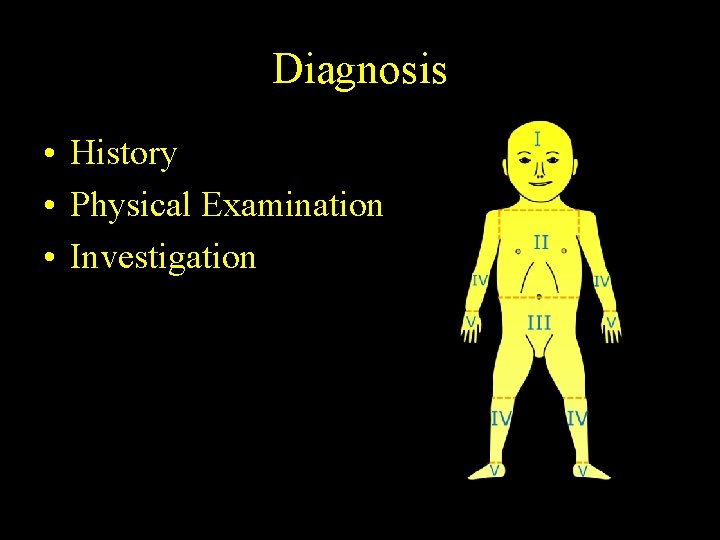
Diagnosis • History • Physical Examination • Investigation
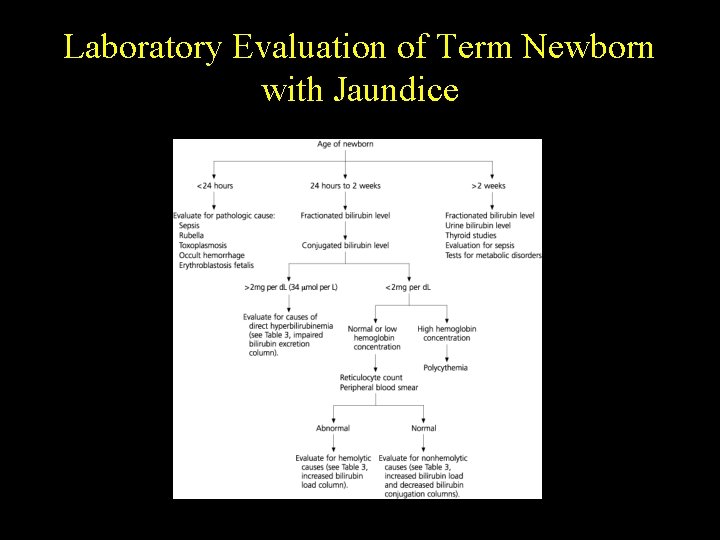
Laboratory Evaluation of Term Newborn with Jaundice
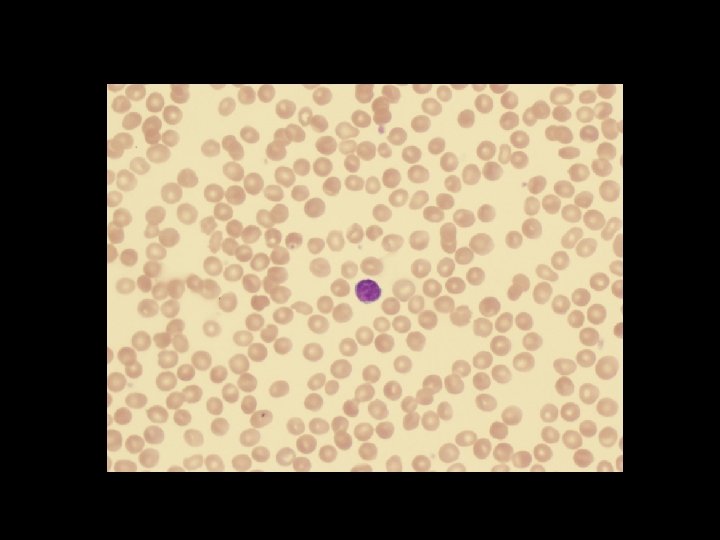
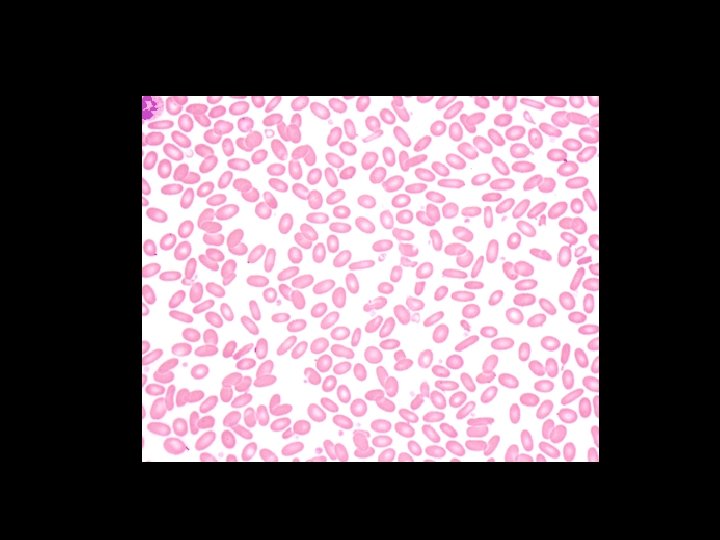
Management • An increased incidence of kernicterus was found to be associated with total serum bilirubin levels above 20 mg per d. L in the presence of hemolysis ü Hydration And Supportive measures ü Management guidelines now focus primarily on phototherapy as initial treatment. ü Aggressive guidelines recommending the use of exchange transfusion in all infants with significant hyperbilirubinemia
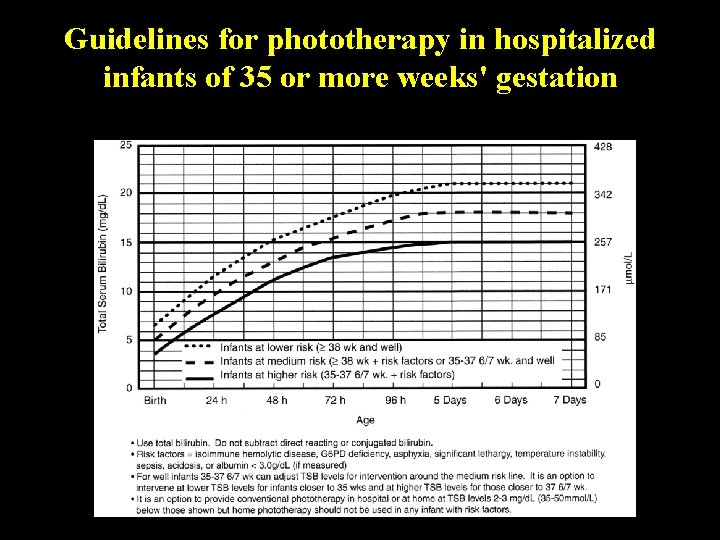
Guidelines for phototherapy in hospitalized infants of 35 or more weeks' gestation
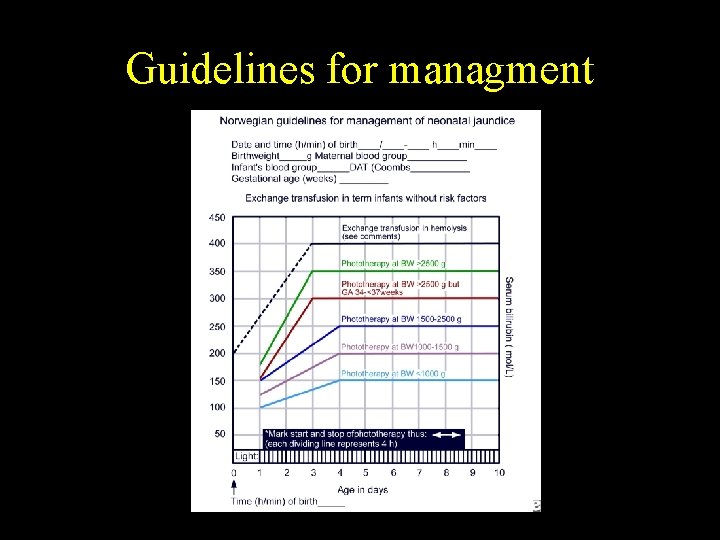
Guidelines for managment
Conjugated hyperbilirubinemia is never physiologic, and it may indicate the presence of a potentially serious underlying disorder HOWEVER ELEVATED CONJUGATED BILIRUBIN LEVELS ARE NOT DIRECTLY TOXIC TO BRAIN CELLS IN THE NEONATE.
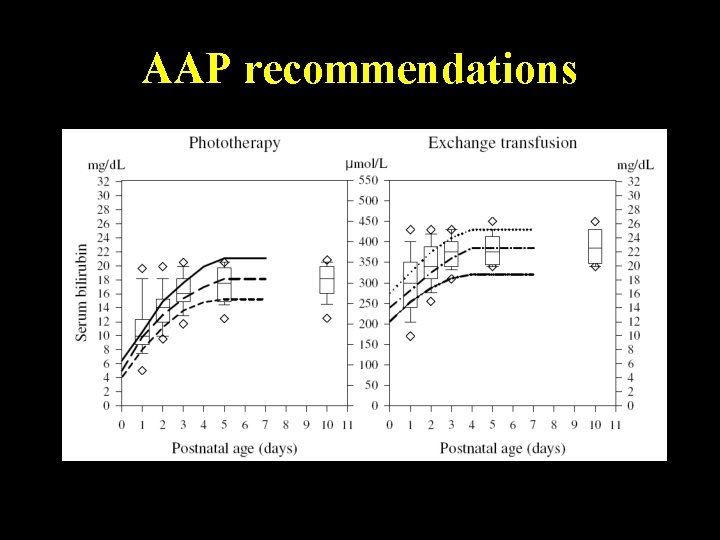
AAP recommendations
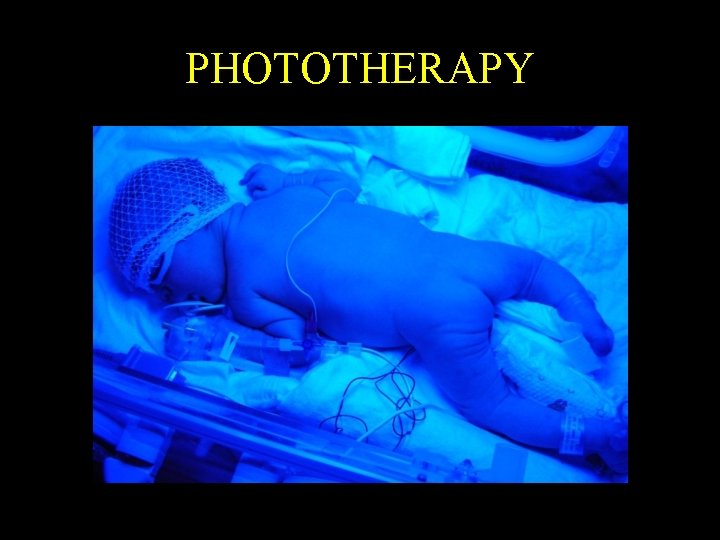
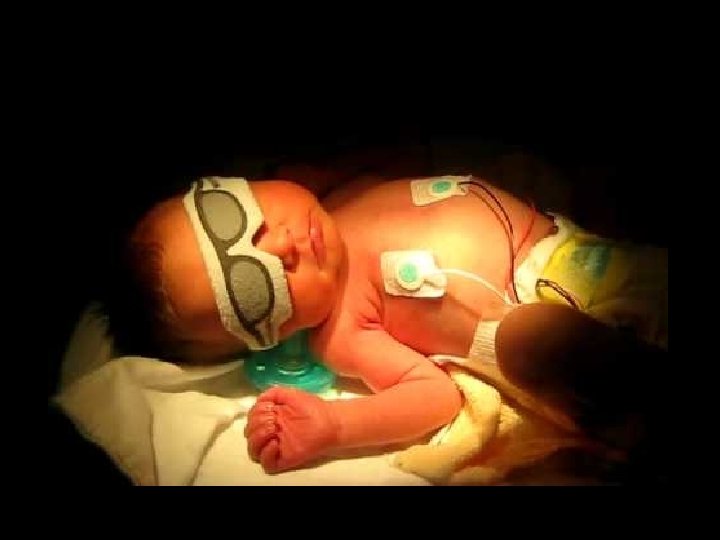
PHOTOTHERAPY
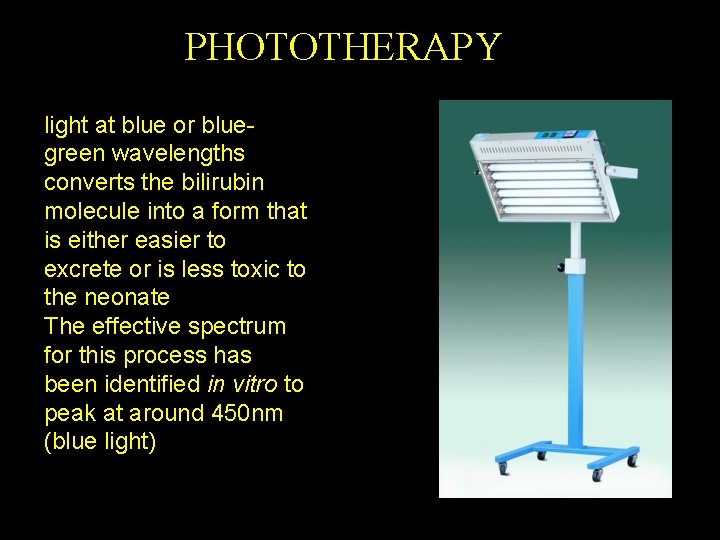
PHOTOTHERAPY light at blue or bluegreen wavelengths converts the bilirubin molecule into a form that is either easier to excrete or is less toxic to the neonate The effective spectrum for this process has been identified in vitro to peak at around 450 nm (blue light)
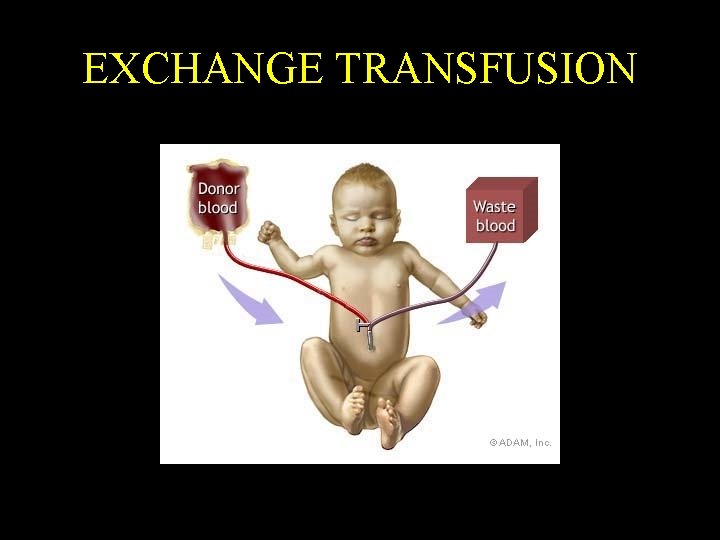
EXCHANGE TRANSFUSION
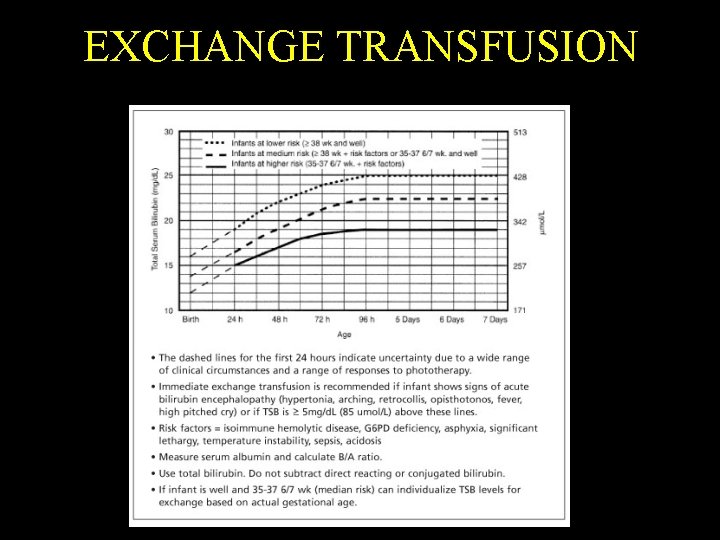
EXCHANGE TRANSFUSION
OTHER • • Immunoglobulin Albumin transfusion Antibiotics Fluid and Electrolytes D 5% water NO Phenobarbital ? Mesoporphyrin Still under investigation
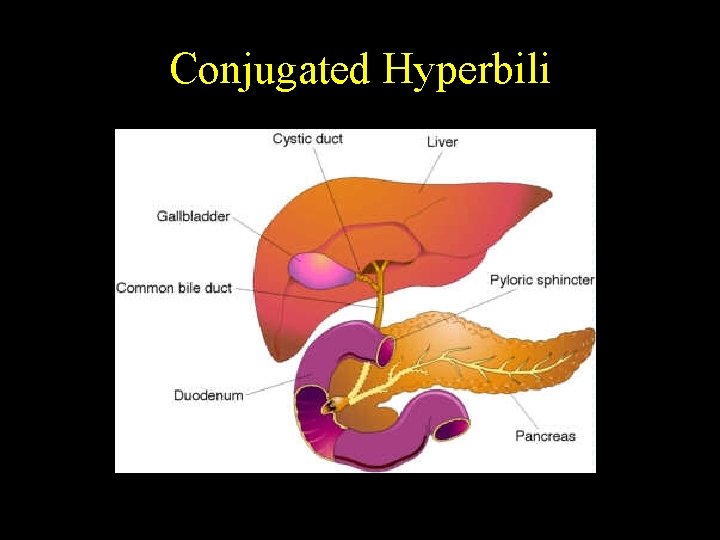
Conjugated Hyperbili
hippocampus basal ganglia kernicterus geniculate bodies cranial nerve nuclei
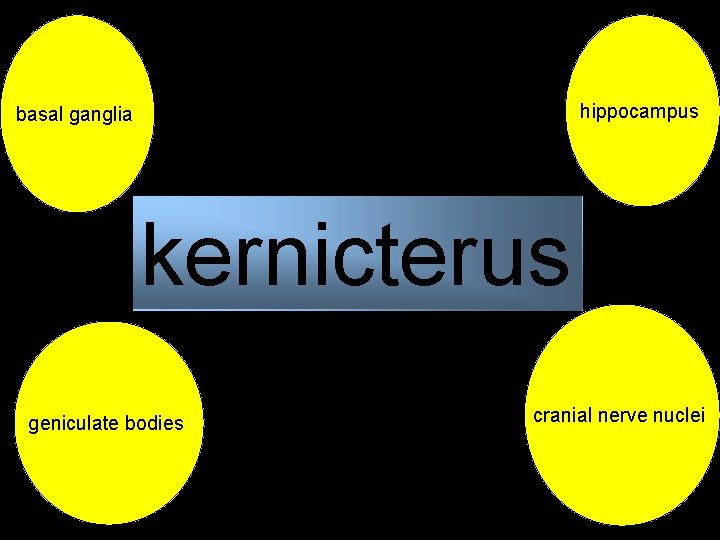
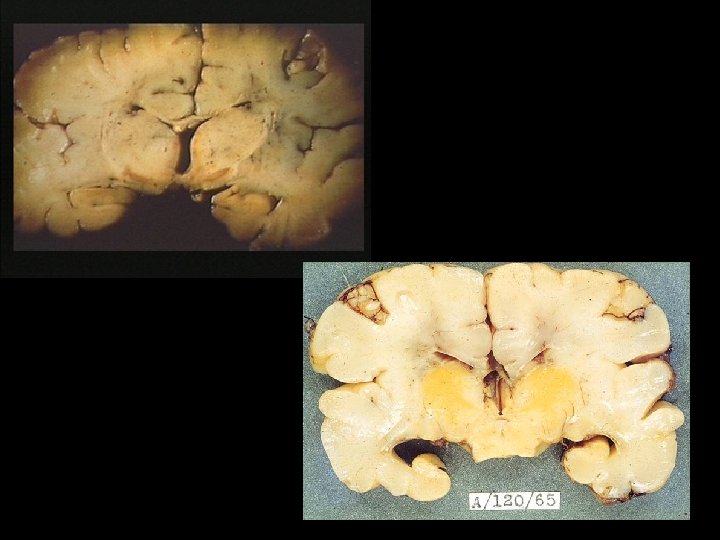
Pathophysiology Ø Bilirubin staining in the regions of the basal ganglia, hippocampus, substantia nigra, and brainstem nuclei Ø Staining can occur in the absence of severe hyperbilirubinemia Ø Characteristic patterns of neuronal necrosis
KERNICTERUS
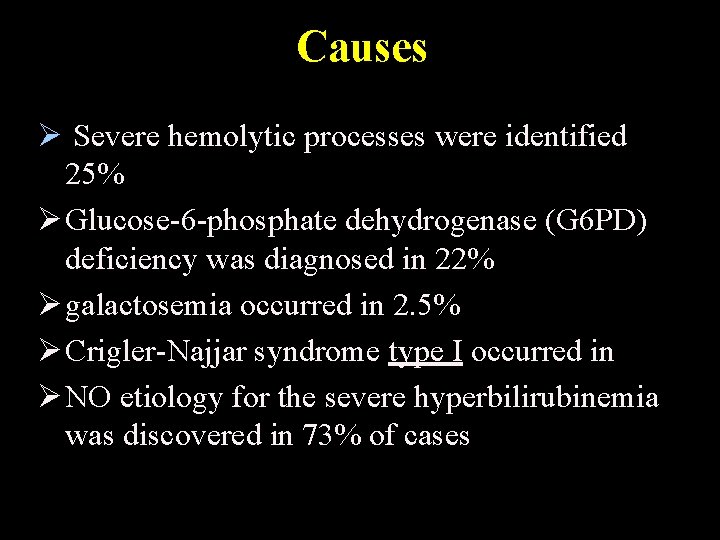
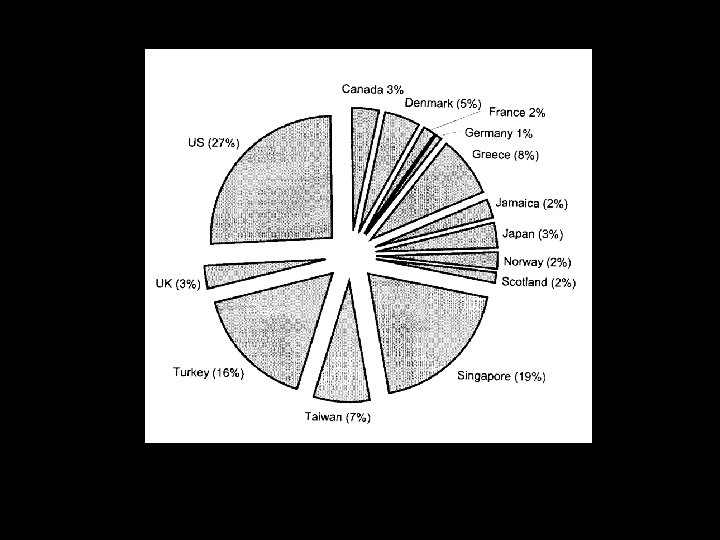
Causes Ø Severe hemolytic processes were identified 25% Ø Glucose-6 -phosphate dehydrogenase (G 6 PD) deficiency was diagnosed in 22% Ø galactosemia occurred in 2. 5% Ø Crigler-Najjar syndrome type I occurred in Ø NO etiology for the severe hyperbilirubinemia was discovered in 73% of cases
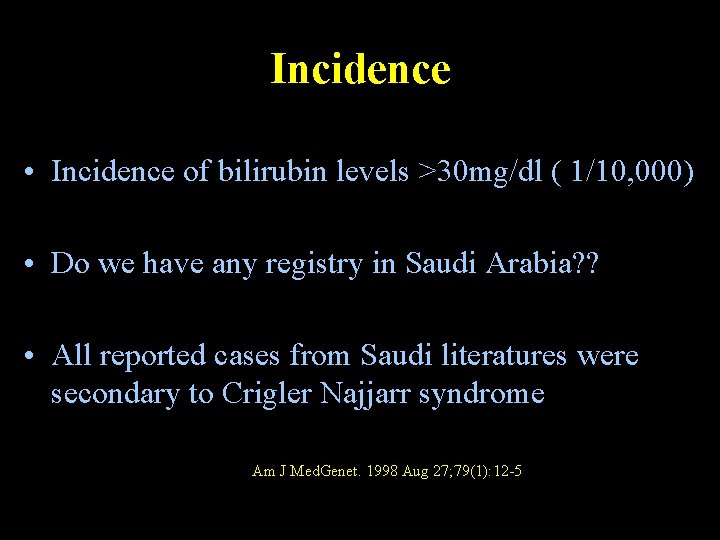
Incidence • Incidence of bilirubin levels >30 mg/dl ( 1/10, 000) • Do we have any registry in Saudi Arabia? ? • All reported cases from Saudi literatures were secondary to Crigler Najjarr syndrome Am J Med. Genet. 1998 Aug 27; 79(1): 12 -5
Term Infant with Jaundice and ØHigh pitched cry ØArching of the baby's body into a bow ØWeakness, limpness, floppiness Ø Difficulty nursing and/or sucking ØWHAT IS THE TREATMENT ?
KERNICTERUS Ø Early symptoms-acute bilirubin encephalopathy ü poor feeding ü abnormal cry ü hypotonia, ØIntermediate phase ü -stupor, irritability, hypertonia Ø Late ü shrill cry, no feeding, opisthotonus, apnea, seizures, coma, death
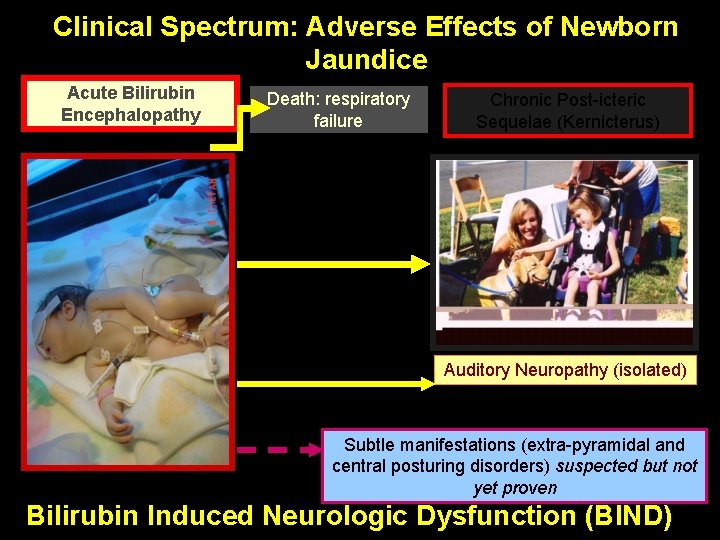
Clinical Spectrum: Adverse Effects of Newborn Jaundice Acute Bilirubin Encephalopathy Death: respiratory failure Chronic Post-icteric Sequelae (Kernicterus) Outcome influenced by timely intervention Auditory Neuropathy (isolated) Subtle manifestations (extra-pyramidal and central posturing disorders) suspected but not yet proven Bilirubin Induced Neurologic Dysfunction (BIND)
KERNICTERUS ØLate sequelae can include ü ü ü ü gaze abnormalities feeding difficulties dystonia incoordination choreoathetosis sensorineural hearing loss painful muscle spasms
What is bilirubin level ? Ø Over 120 cases kernicterus documented since 1990 Ø majority term, breastfed Ø Majority of those had levels in high 30 s to 40 s. Ø Lowest level recorded in case series of 111 from 1991 -2002 was 20. 7 Ø the mean was 38. Ø Many cases had no planned follow up and had been discharged early (<48 hours).
Risk Factors Ø ASPHYXIA Ø ACIDOSIS Ø SEPSIS Ø HYPOALBUMINEMIA Ø YOUNG GESTATIONAL AGE Ø LOW BIRTH WT Ø HYPERTHERMIA Ø RESPIRATORY DISTRESS
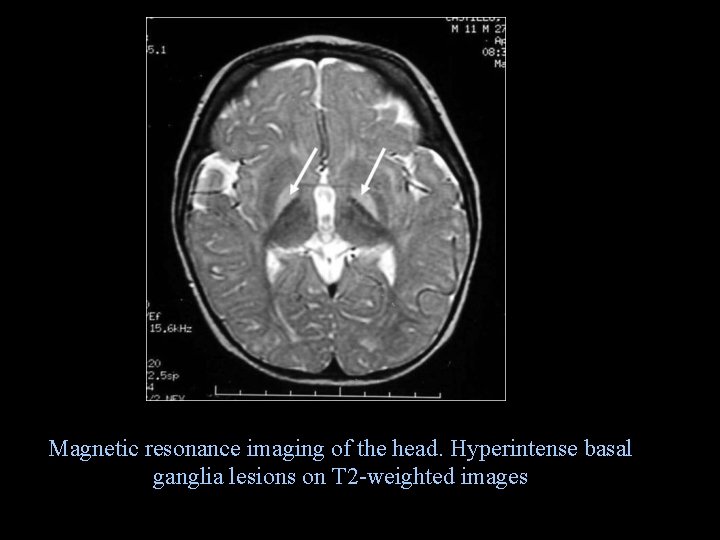
Magnetic resonance imaging of the head. Hyperintense basal ganglia lesions on T 2 -weighted images
Prevention l Recommend: Ø Promote and support successful breastfeeding. Ø Universal systematic pre-discharge assessment. Ø Provide targeted follow-up based on the risk. Ø Track outcome for timely treatment to prevent excessive hyperbilirubinemia and possibly, kernicterus.
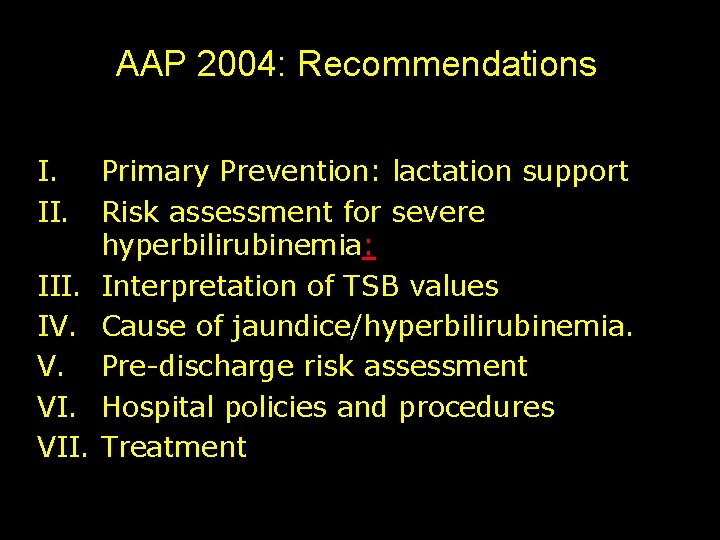
AAP 2004: Recommendations I. III. IV. V. VII. Primary Prevention: lactation support Risk assessment for severe hyperbilirubinemia: Interpretation of TSB values Cause of jaundice/hyperbilirubinemia. Pre-discharge risk assessment Hospital policies and procedures Treatment
Summary Ø Bilirubin physiology Ø Prevent neurotoxicity Ø Identify and treat illness associated with excess production, impaired conjugation or inadequate elimination Ø Combination of therapy
MCQs
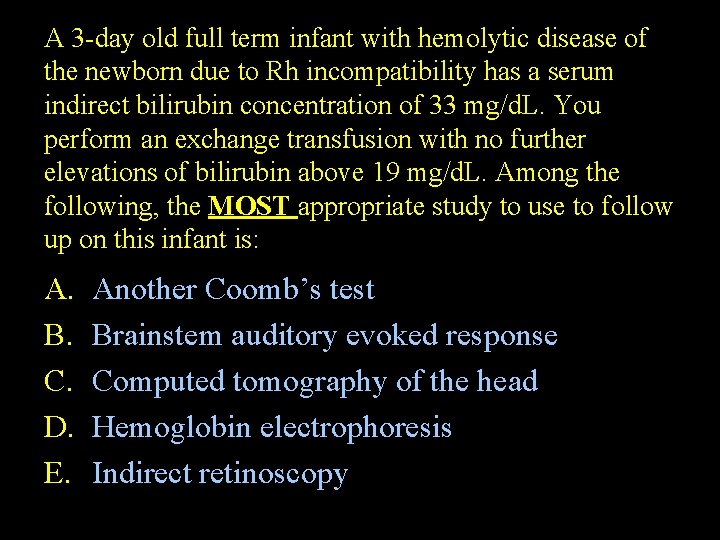
A 3 -day old full term infant with hemolytic disease of the newborn due to Rh incompatibility has a serum indirect bilirubin concentration of 33 mg/d. L. You perform an exchange transfusion with no further elevations of bilirubin above 19 mg/d. L. Among the following, the MOST appropriate study to use to follow up on this infant is: A. B. C. D. E. Another Coomb’s test Brainstem auditory evoked response Computed tomography of the head Hemoglobin electrophoresis Indirect retinoscopy
A 3 -day old full term infant with hemolytic disease of the newborn due to Rh incompatibility has a serum indirect bilirubin concentration of 33 mg/d. L. You perform an exchange transfusion with no further elevations of bilirubin above 19 mg/d. L. Among the following, the MOST appropriate study to use to follow up on this infant is: A. B. C. D. E. Another Coomb’s test Brainstem auditory evoked response Computed tomography of the head Hemoglobin electrophoresis Indirect retinoscopy
7 -day old breastfeed infant born at term has had decreased appetite, irritability and vomiting for 24 hours. On Physical examination, the infant appears listless. Respiratory Rate: 40/min, Heart Rate : 160/min, and blood pressure: 68/38 mm Hg. The skin and sclera are icteric but no other abnormalities noted. Laboratory studies reveal: Hemoglobin: 12 gm/d. L. Urinalysis is negative for reducing substances. Of the following, the MOST likely diagnosis is: A. B. C. D. E. Bacterial sepsis Blood group incompatibility Breast milk jaundice Hypothyroidism Intrauterine infection
7 -day old breastfeed infant born at term has had decreased appetite, irritability and vomiting for 24 hours. On Physical examination, the infant appears listless. Respiratory Rate: 40/min, Heart Rate : 160/min, and blood pressure: 68/38 mm Hg. The skin and sclera are icteric but no other abnormalities noted. Laboratory studies reveal: Hemoglobin: 12 gm/d. L. Urinalysis is negative for reducing substances. Of the following, the MOST likely diagnosis is: A. B. C. D. E. Bacterial sepsis Blood group incompatibility Breast milk jaundice Hypothyroidism Intrauterine infection
A 3 -day old , breast fed infant develops jaundice. The serum bilirubin level is 12 mg/d. L with a direct bilirubin component of 0. 5 mg/d. L. The infant’s mother asks whether the jaundice might be associated with breastfeeding. Which of the following statements regarding hyperbilirubinaemia associated with breast feeding is TRUE: A. Indirect hyperbilirubinaemia associated with breast feeding may occur as early as the first day of life. B. Water supplementation in breast-fed infants will significantly reduce serum concentrations of indirect bilirubin C. Hyperbilirubinemia associated with breast feeding may persist for 8 to 12 weeks D. Decreased clearance of bilirubin may play a role in breast feeding jaundice, breast milk jaundice.
A 3 -day old , breast fed infant develops jaundice. The serum bilirubin level is 12 mg/d. L with a direct bilirubin component of 0. 5 mg/d. L. The infant’s mother asks whether the jaundice might be associated with breastfeeding. Which of the following statements regarding hyperbilirubinaemia associated with breast feeding is TRUE: A. Direct hyperbilirubinaemia associated with breast feeding may occur as early as the first day of life. B. Water supplementation in breast-fed infants will significantly reduce serum concentrations of indirect bilirubin C. Hyperbilirubinemia associated with breast feeding may persist for 8 to 12 weeks D. Decreased clearance of bilirubin may play a role in breast feeding jaundice, breast milk jaundice.
Of the following conditions, which is the MOST consistent with findings of mild cholestasis without evidence of billiary atresia? A. B. C. D. E. Lead intoxication Chronic hemolytic disease Alpha – antitrypsin deficiency Breast milk jaundice Crigler-Najjar Syndrome
Of the following conditions, which is the MOST consistent with findings of mild cholestasis without evidence of billiary atresia? A. B. C. D. E. Lead intoxication Chronic hemolytic disease Alpha – antitrypsin deficiency Breast milk jaundice Crigler-Najjar Syndrome
A 4 -week old, breast-fed boy has had mild jaundice since birth. Weight gain has been poor. The urine is light yellow-brown, and the stools are pale yellow-green in color. At this point, the MOST appropriate next step in management is to: A. Observe the child clinically for 2 to 4 weeks B. Stop breastfeeding and re-examine the child in 7 to 10 days C. Obtain a cholecystogram D. Obtain a total and direct serum bilirubin levels and studies of liver function
A 4 -week old, breast-fed boy has had mild jaundice since birth. Weight gain has been poor. The urine is light yellow-brown, and the stools are pale yellow-green in color. At this point, the MOST appropriate next step in management is to: A. Observe the child clinically for 2 to 4 weeks B. Stop breastfeeding and re-examine the child in 7 to 10 days C. Obtain a cholecystogram D. Obtain a total and direct serum bilirubin levels and studies of liver function
The following statement is correct regarding bilirubine A. Is normally excreted in the urine following its conjugation to glucuronic acid B. May achieve high blood levels due to haemolysis associated with glucose-6 -phosphate dehydrogenase deficiency C. Must be prevented from reaching 340 umol/L in well term babies by use of exchange transfusion if necessary D. Results from the oxidation of haemoglobin by the enzyme glucuronyl transferase E. Is normally about 50% bound to albumin and 50% as the unbound
The following statement is correct regarding bilirubine A. Is normally excreted in the urine following its conjugation to glucuronic acid B. May achieve high blood levels due to haemolysis associated with glucose-6 -phosphate dehydrogenase deficiency C. Must be prevented from reaching 340 umol/L in well term babies by use of exchange transfusion if necessary D. Results from the oxidation of haemoglobin by the enzyme glucuronyl transferase E. Is normally about 50% bound to albumin and 50% as the unbound
A Term Baby Is Found to Have Serum bilirubin of 250 umol/l at 18 Hours of Age. Which of the Following Is True? A. Physiological jaundice is the most likely cause B. An urgent conjugated bilirubin level is indicated C. It is unlikely to be due to haemolysis D. The infants blood group and Coombs test are the most important investigations E. There is no indication to start phototherapy
A Term Baby Is Found to Have Serum bilirubin of 250 umol/l at 18 Hours of Age. Which of the Following Is True? A. Physiological jaundice is the most likely cause B. An urgent conjugated bilirubin level is indicated C. It is unlikely to be due to haemolysis D. The infants blood group and Coombs test are the most important investigations E. There is no indication to start phototherapy
In an infant who appeared healthy at birth, vomiting and diarrhea developed at 1 week of age. She gained weight poorly despite a change from breast milk to infant formula feeding at 2 weeks of age. At 3 weeks of age, she is brought to the emergency department where she is found to be lethargic and to have hepatomegaly. Of the following, the most likely diagnosis is A) Inspissated bile syndrome B) Crigler-Najjar Syndrome C) Galactosemia D) Gilbert Syndrome E) Dubin-Johnson Syndrome
In an infant who appeared healthy at birth, vomiting and diarrhea developed at 1 week of age. She gained weight poorly despite a change from breast milk to infant formula feeding at 2 weeks of age. At 3 weeks of age, she is brought to the emergency department where she is found to be lethargic and to have hepatomegaly. Of the following, the most likely diagnosis is A) Inspissated bile syndrome B) Crigler-Najjar Syndrome C) Galactosemia D) Gilbert Syndrome E) Dubin-Johnson Syndrome
6 week old infant presented with early signs of kernicterus. His blood work showed high indirect non hemolytic hyperbilirubinemia. The MOST likely diagnosis : A. G 6 PD B. Physiological Jaundice C. Crigler Najjer Syndrome D. Alpha 1 – antitrypsin deficiency 80
6 week old infant presented with early signs of kernicterus. His blood work showed high indirect non hemolytic hyperbilirubinemia. The MOST likely diagnosis : A. G 6 PD B. Physiological Jaundice C. Crigler Najjer Syndrome D. Alpha 1 – antitrypsin deficiency 81
An apparently term infant who was born at home was noted to be very yellow on the fifth postnatal day. he has no symptoms or clinical signs of bilirubin encephalopathy. His bilirubin concentration is 36. 5 mg/d. L (624. 2 mcmol/L), with a direct bilirubin measurement of 1. 5 mg/d. L (26. 7 mcmol/L). You draw blood to investigate the cause of the hyperbilirubinemia and place the infant under intense phototherapy. Of the following, the MOST appropriate treatment plan is: A. administration of a bolus of 20 m. L/kg normal saline, B. administration of intravenous fluids with 10% glucose at rate of 150 m. L/kg per day C. administration of salt-poor albumin (1 g/kg) over the next hour, D. initiation of an exchange transfusion as soon as possible 82
An apparently term infant who was born at home was noted to be very yellow on the fifth postnatal day. he has no symptoms or clinical signs of bilirubin encephalopathy. His bilirubin concentration is 36. 5 mg/d. L (624. 2 mcmol/L), with a direct bilirubin measurement of 1. 5 mg/d. L (26. 7 mcmol/L). You draw blood to investigate the cause of the hyperbilirubinemia and place the infant under intense phototherapy. Of the following, the MOST appropriate treatment plan is: A. administration of a bolus of 20 m. L/kg normal saline, B. administration of intravenous fluids with 10% glucose at rate of 150 m. L/kg per day C. administration of salt-poor albumin (1 g/kg) over the next hour, D. initiation of an exchange transfusion as soon as possible 83
- Slides: 79