
Neonatal Cranial Ultrasound Part 1 Technical aspect Normal

- Slides: 28
Neonatal Cranial Ultrasound (Part 1: Technical aspect & Normal Anatomy) By: Dr. Nour-Eldin Mohammed Reference: Gerda van Wezel-Meijler
Advantage of cranial US (CUS) Safe Bedside- compatible Reliable Early imaging Serial imaging: Brain maturation Evolution of lesions Inexpensive Suitable for screening
Aims of Neonatal CUS Exclude/demonstrate cerebral pathology Assess timing of injury Assess neurological prognosis Help make decisions on continuation of neonatal intensive care Optimise treatment and support
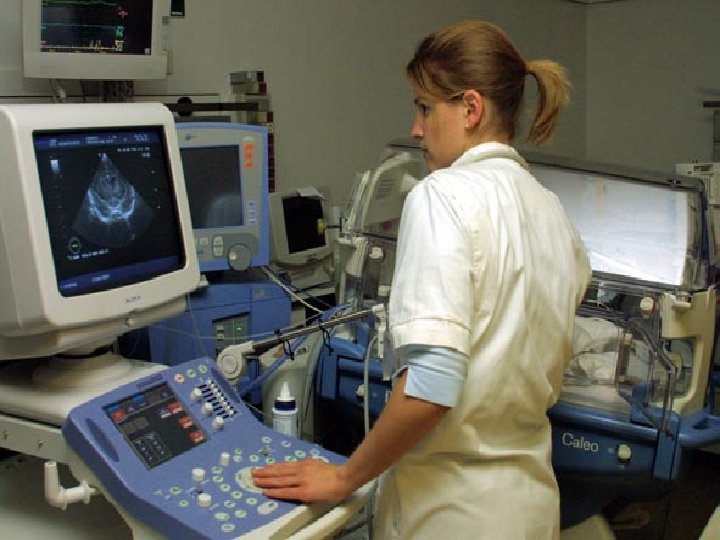
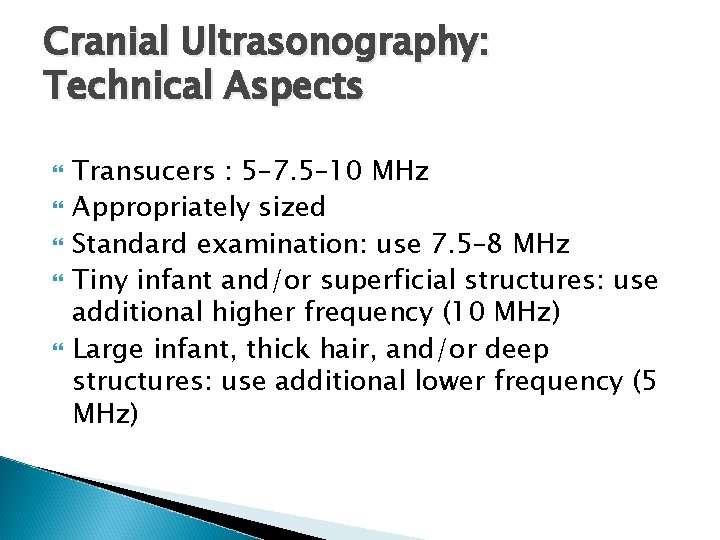
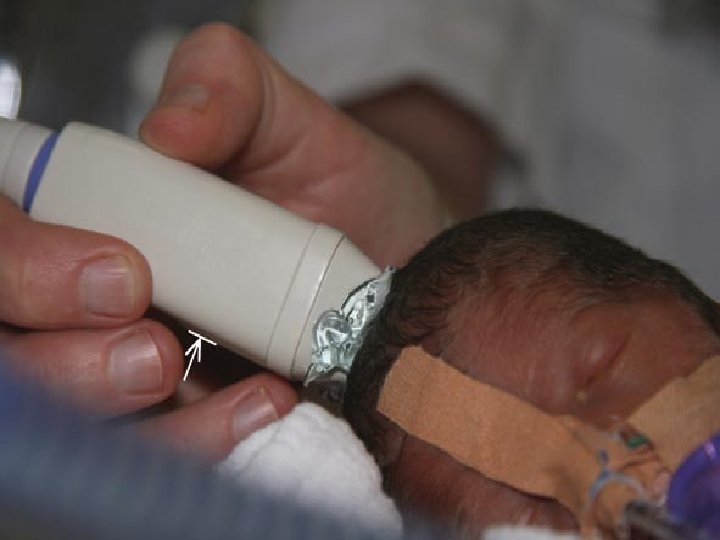
Cranial Ultrasonography: Technical Aspects Transucers : 5– 7. 5– 10 MHz Appropriately sized Standard examination: use 7. 5– 8 MHz Tiny infant and/or superficial structures: use additional higher frequency (10 MHz) Large infant, thick hair, and/or deep structures: use additional lower frequency (5 MHz)
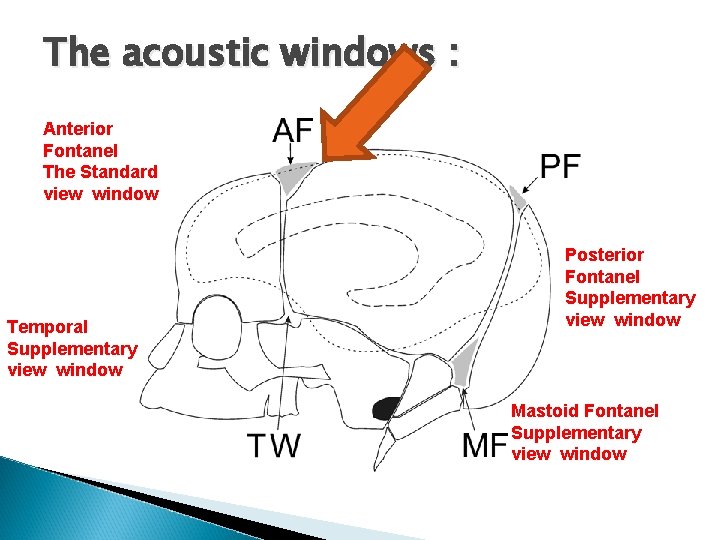
The acoustic windows : Anterior Fontanel The Standard view window Temporal Supplementary view window Posterior Fontanel Supplementary view window Mastoid Fontanel Supplementary view window
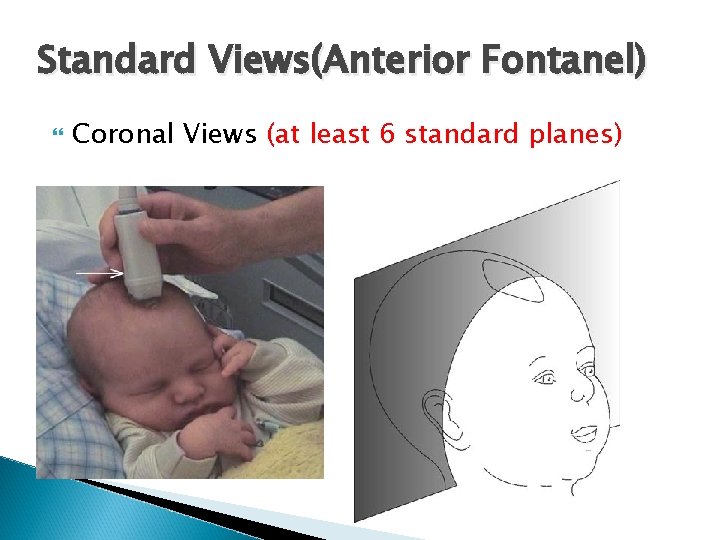
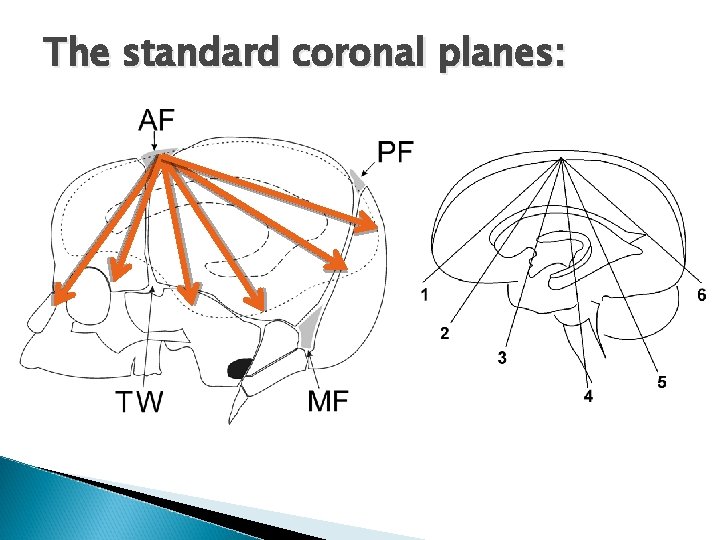
Standard Views(Anterior Fontanel) Coronal Views (at least 6 standard planes)
The standard coronal planes:
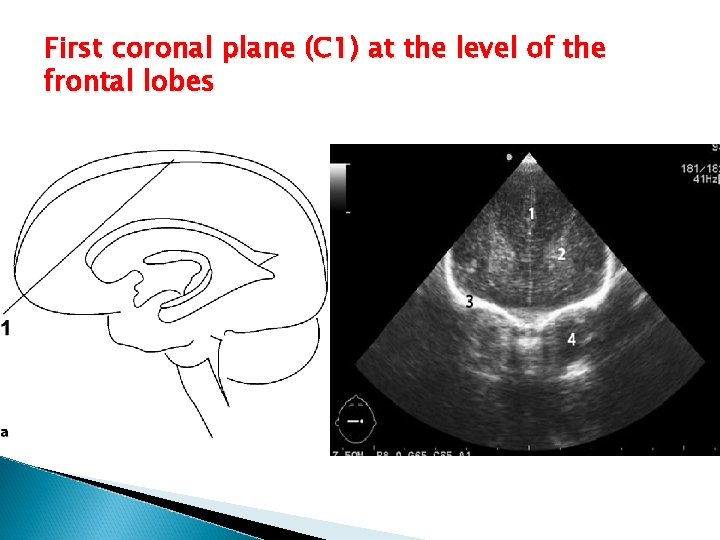
First coronal plane (C 1) at the level of the frontal lobes
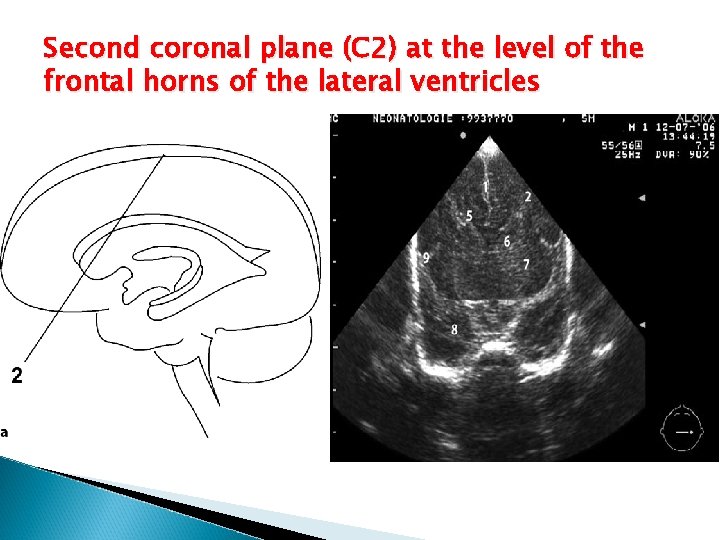
Second coronal plane (C 2) at the level of the frontal horns of the lateral ventricles
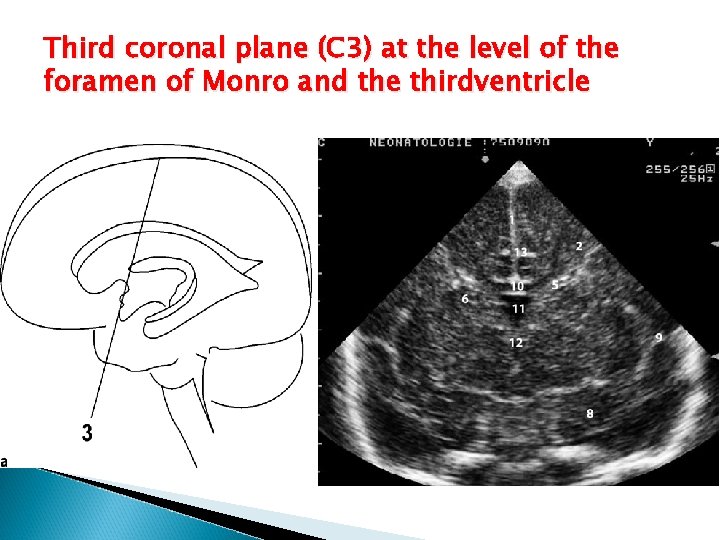
Third coronal plane (C 3) at the level of the foramen of Monro and the thirdventricle
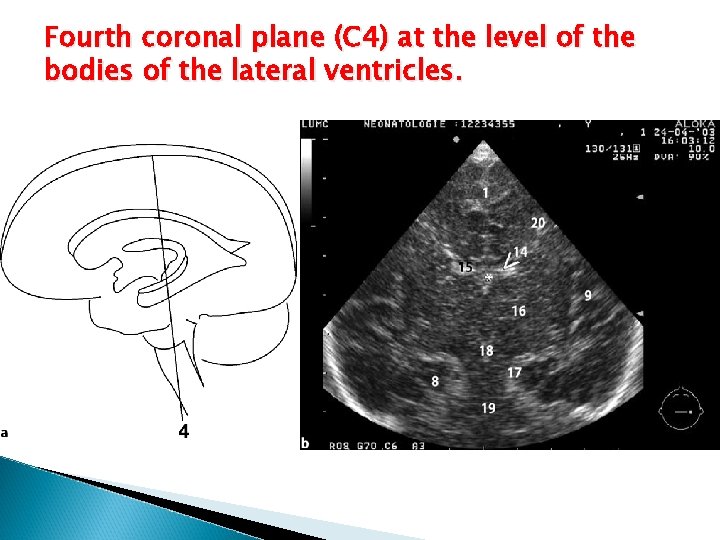
Fourth coronal plane (C 4) at the level of the bodies of the lateral ventricles.
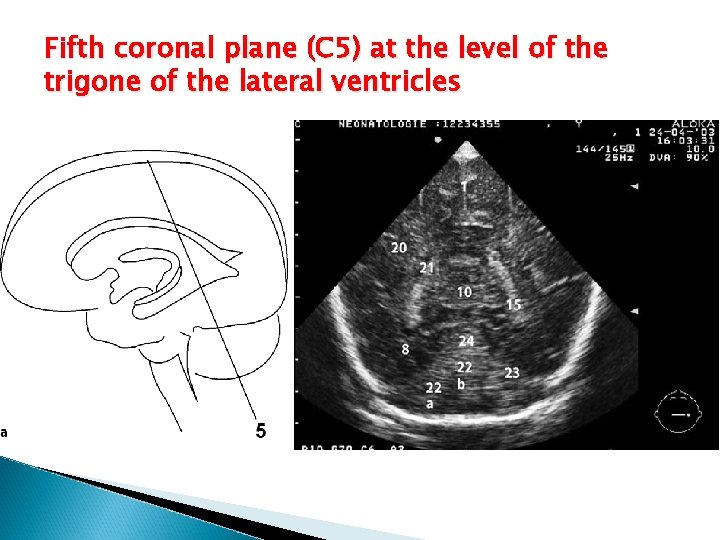
Fifth coronal plane (C 5) at the level of the trigone of the lateral ventricles
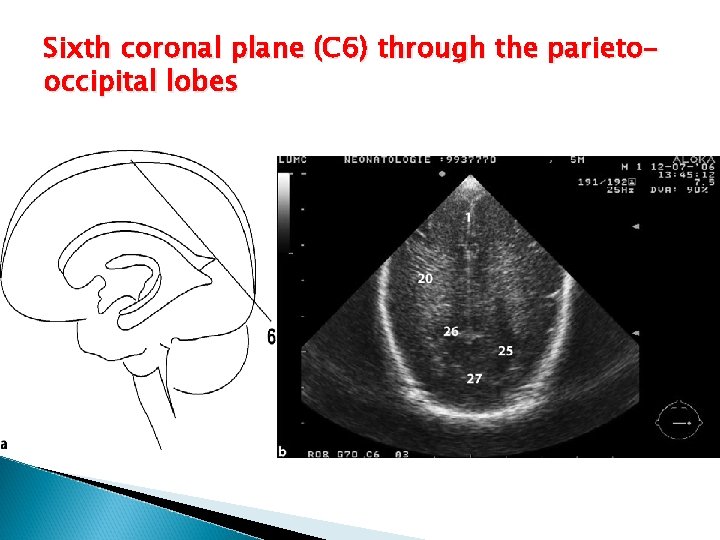
Sixth coronal plane (C 6) through the parietooccipital lobes
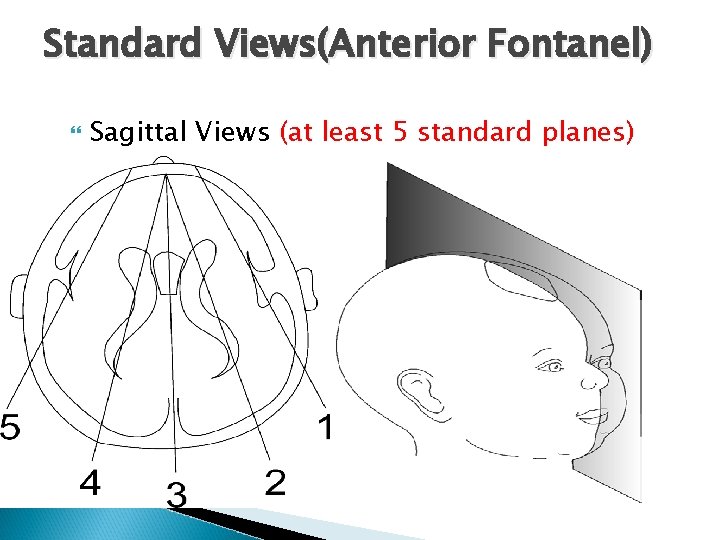
Standard Views(Anterior Fontanel) Sagittal Views (at least 5 standard planes)
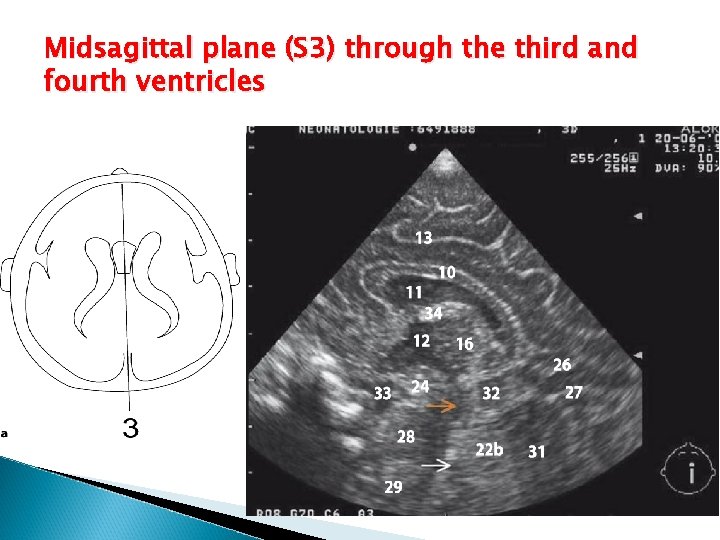
Midsagittal plane (S 3) through the third and fourth ventricles
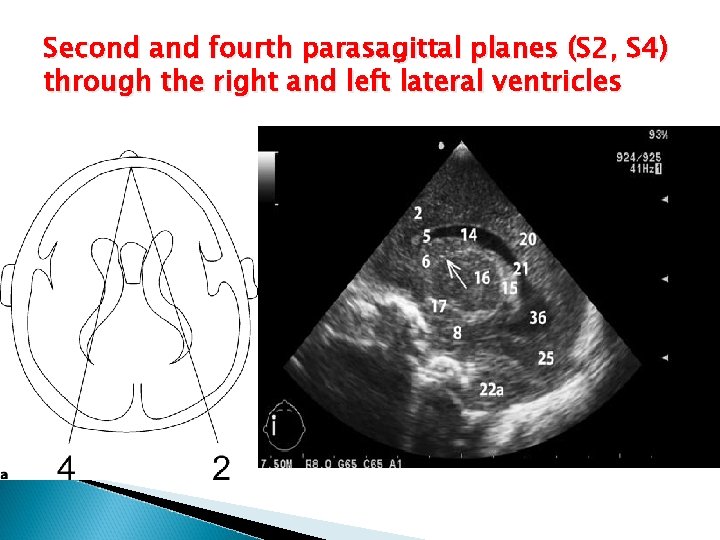
Second and fourth parasagittal planes (S 2, S 4) through the right and left lateral ventricles
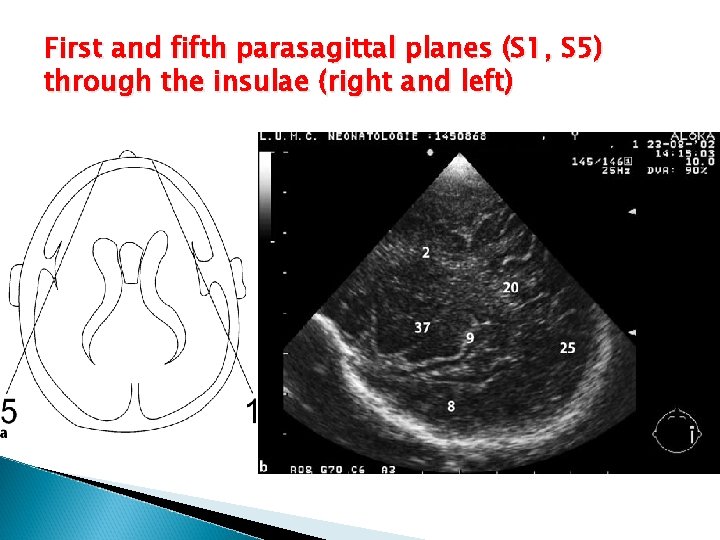
First and fifth parasagittal planes (S 1, S 5) through the insulae (right and left)
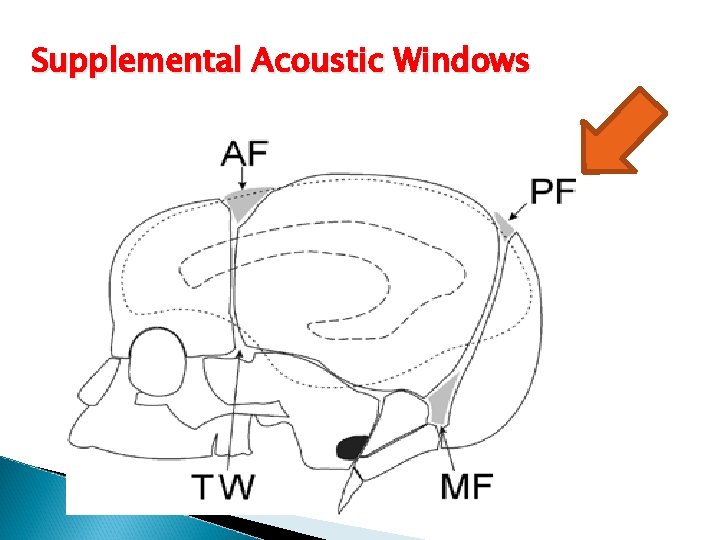
Supplemental Acoustic Windows
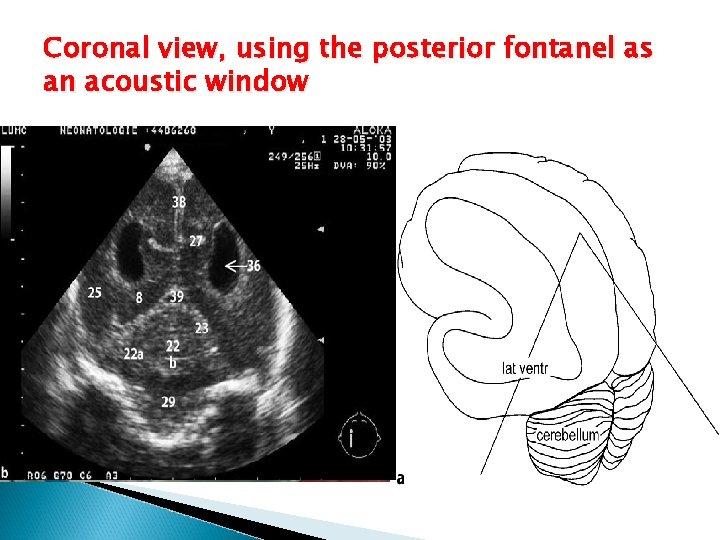
Coronal view, using the posterior fontanel as an acoustic window
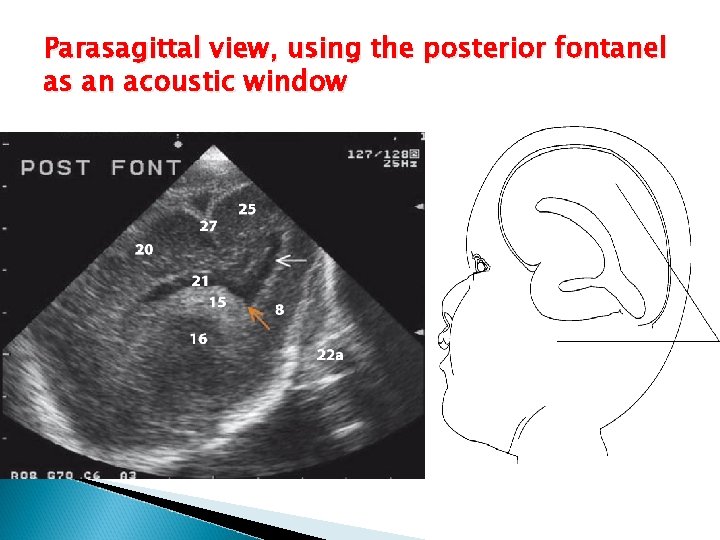
Parasagittal view, using the posterior fontanel as an acoustic window
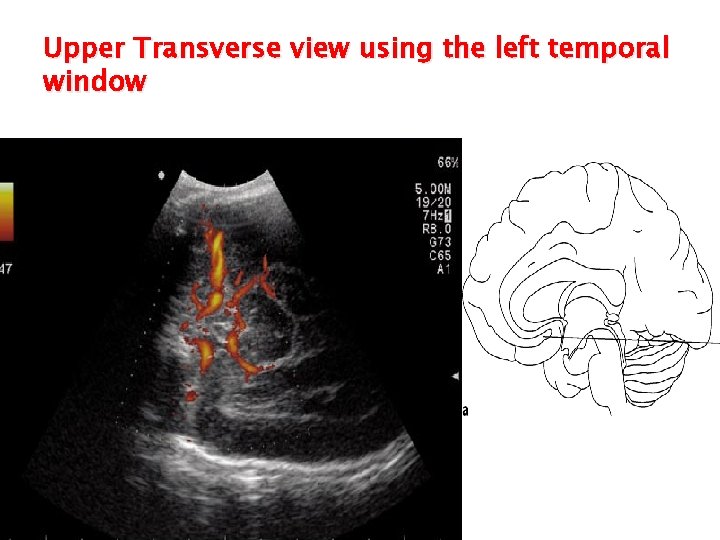
Upper Transverse view using the left temporal window
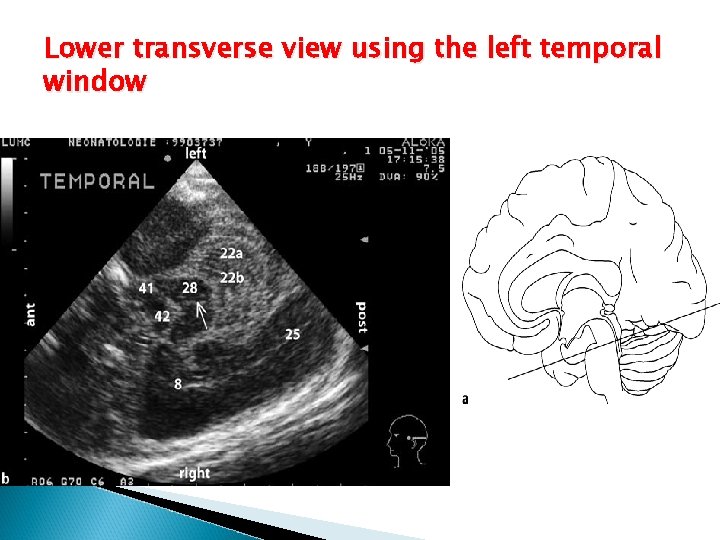
Lower transverse view using the left temporal window
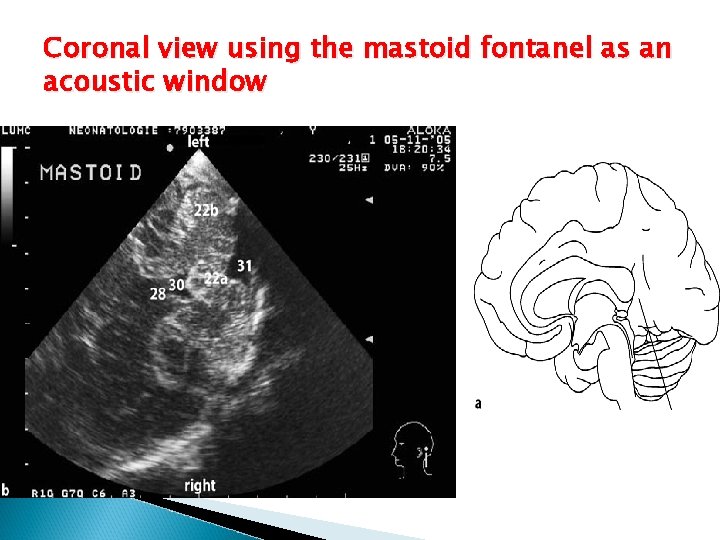
Coronal view using the mastoid fontanel as an acoustic window
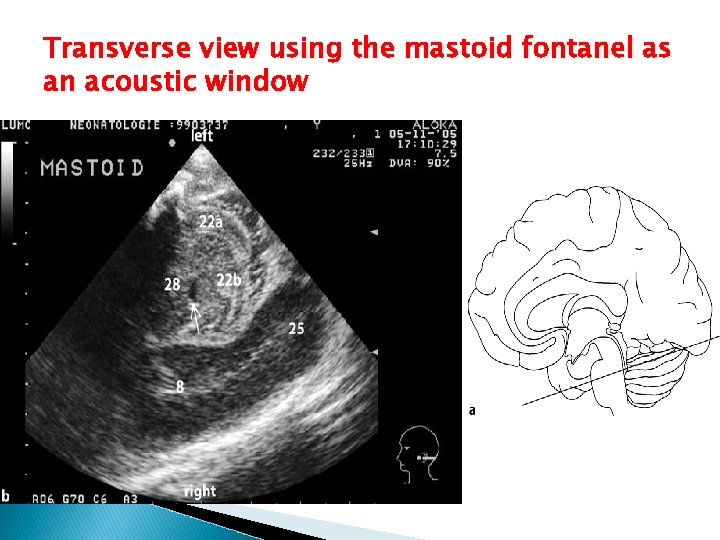
Transverse view using the mastoid fontanel as an acoustic window
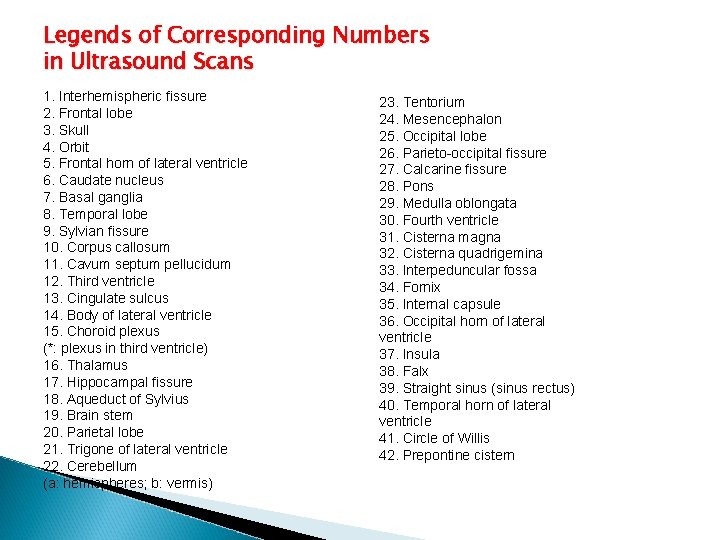
Legends of Corresponding Numbers in Ultrasound Scans 1. Interhemispheric fissure 2. Frontal lobe 3. Skull 4. Orbit 5. Frontal horn of lateral ventricle 6. Caudate nucleus 7. Basal ganglia 8. Temporal lobe 9. Sylvian fissure 10. Corpus callosum 11. Cavum septum pellucidum 12. Third ventricle 13. Cingulate sulcus 14. Body of lateral ventricle 15. Choroid plexus (*: plexus in third ventricle) 16. Thalamus 17. Hippocampal fissure 18. Aqueduct of Sylvius 19. Brain stem 20. Parietal lobe 21. Trigone of lateral ventricle 22. Cerebellum (a: hemispheres; b: vermis) 23. Tentorium 24. Mesencephalon 25. Occipital lobe 26. Parieto-occipital fissure 27. Calcarine fissure 28. Pons 29. Medulla oblongata 30. Fourth ventricle 31. Cisterna magna 32. Cisterna quadrigemina 33. Interpeduncular fossa 34. Fornix 35. Internal capsule 36. Occipital horn of lateral ventricle 37. Insula 38. Falx 39. Straight sinus (sinus rectus) 40. Temporal horn of lateral ventricle 41. Circle of Willis 42. Prepontine cistern
Thank you