
Neonatal Chest Compression Device Courtney Gallagher Jillian Zeber

Neonatal Chest Compression Device Courtney Gallagher Jillian Zeber Advisor: Dr. Walsh, Vanderbilt NICU
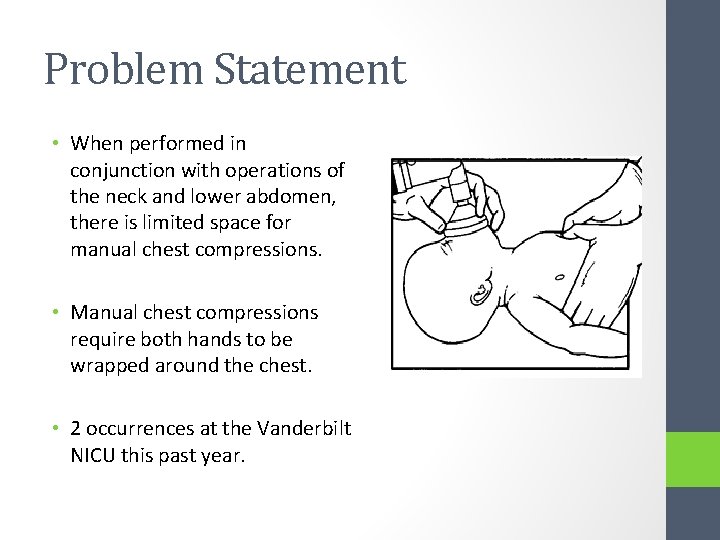
Problem Statement • When performed in conjunction with operations of the neck and lower abdomen, there is limited space for manual chest compressions. • Manual chest compressions require both hands to be wrapped around the chest. • 2 occurrences at the Vanderbilt NICU this past year.
Project Goal • Small, easy to setup device that will perform automatic chest compressions on a 0 -30 day old infant for use in the OR during a simultaneous procedure.
Performance Criteria • Small but adjustable to fit the size of the baby. • Provide enough force for sufficient chest compressions to reduce the width to one third, 2 to 3 cm. • Apply the 11 -12 lbs of force directly below the nipples in the center of the chest. • Verified with bathroom scale and free weights. • Maintain a rate of 80 -100 compressions per minute for blood pumping. • Simple and easy to use by Dr. Walsh in the NICU
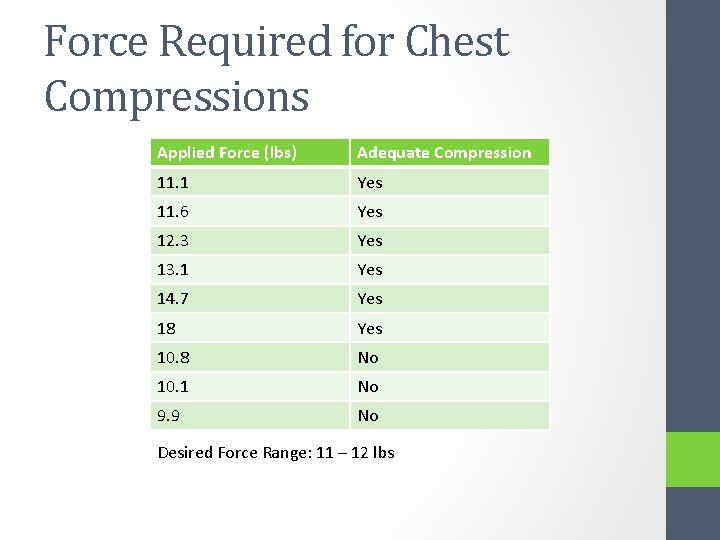
Force Required for Chest Compressions Applied Force (lbs) Adequate Compression 11. 1 Yes 11. 6 Yes 12. 3 Yes 13. 1 Yes 14. 7 Yes 18 Yes 10. 8 No 10. 1 No 9. 9 No Desired Force Range: 11 – 12 lbs
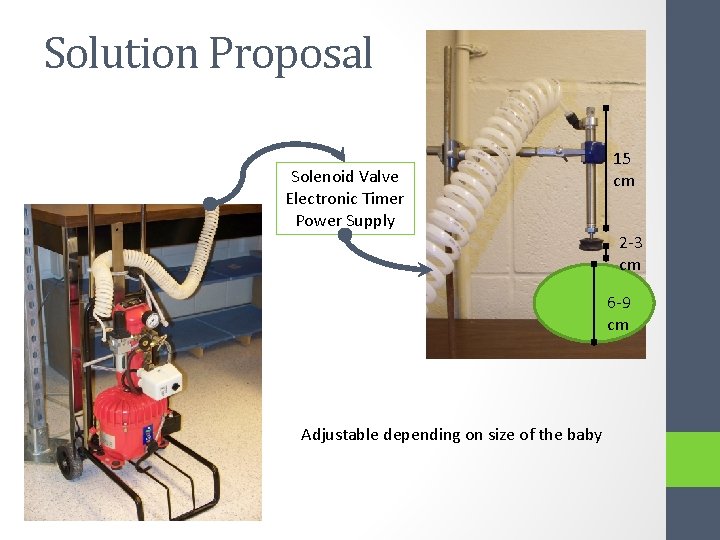
Solution Proposal Solenoid Valve Electronic Timer Power Supply 15 cm 2 -3 cm 6 -9 cm Adjustable depending on size of the baby
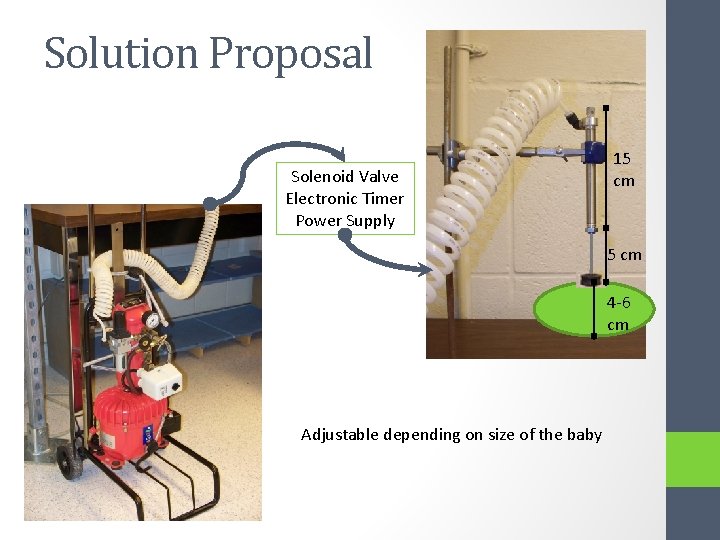
Solution Proposal Solenoid Valve Electronic Timer Power Supply 15 cm 4 -6 cm Adjustable depending on size of the baby
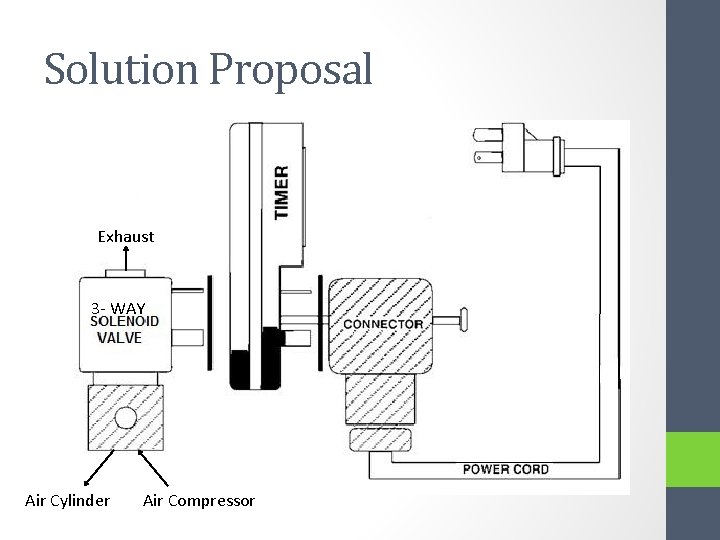
Solution Proposal Exhaust 3 - WAY Air Cylinder Air Compressor
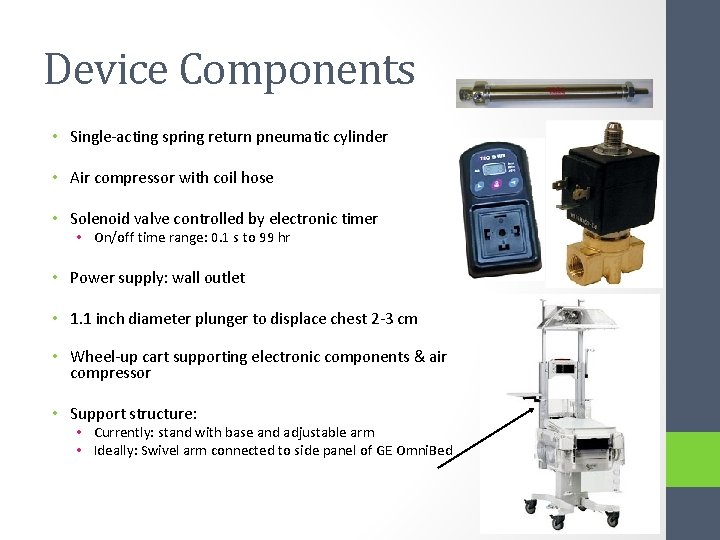
Device Components • Single-acting spring return pneumatic cylinder • Air compressor with coil hose • Solenoid valve controlled by electronic timer • On/off time range: 0. 1 s to 99 hr • Power supply: wall outlet • 1. 1 inch diameter plunger to displace chest 2 -3 cm • Wheel-up cart supporting electronic components & air compressor • Support structure: • Currently: stand with base and adjustable arm • Ideally: Swivel arm connected to side panel of GE Omni. Bed
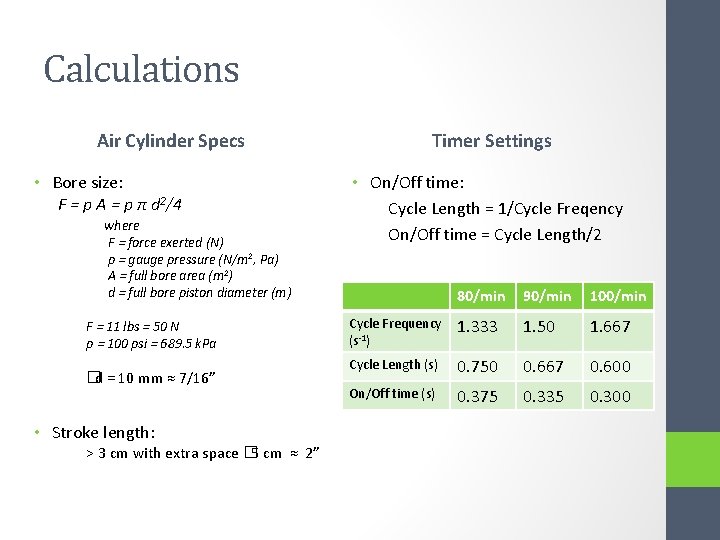
Calculations Air Cylinder Specs • Bore size: F = p A = p π d 2/4 where F = force exerted (N) p = gauge pressure (N/m 2, Pa) A = full bore area (m 2) d = full bore piston diameter (m) F = 11 lbs = 50 N p = 100 psi = 689. 5 k. Pa �d = 10 mm ≈ 7/16” • Stroke length: > 3 cm with extra space � 5 cm ≈ 2” Timer Settings • On/Off time: Cycle Length = 1/Cycle Freqency On/Off time = Cycle Length/2 80/min 90/min 100/min Cycle Frequency (s-1) 1. 333 1. 50 1. 667 Cycle Length (s) 0. 750 0. 667 0. 600 On/Off time (s) 0. 375 0. 335 0. 300
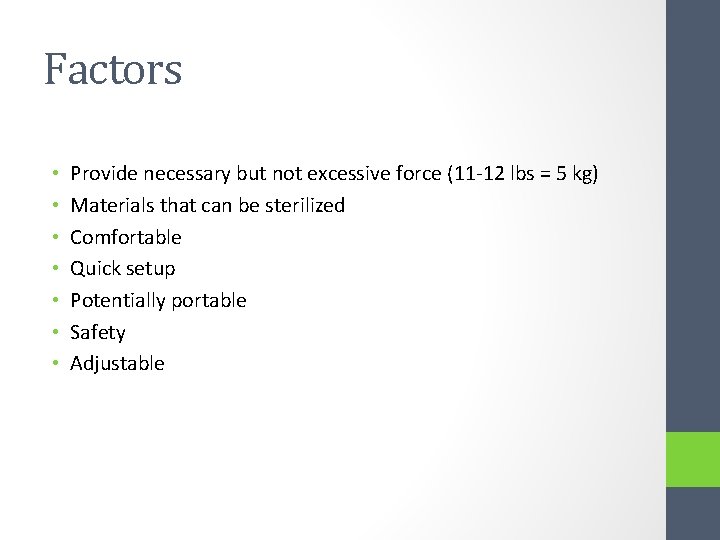
Factors • • Provide necessary but not excessive force (11 -12 lbs = 5 kg) Materials that can be sterilized Comfortable Quick setup Potentially portable Safety Adjustable
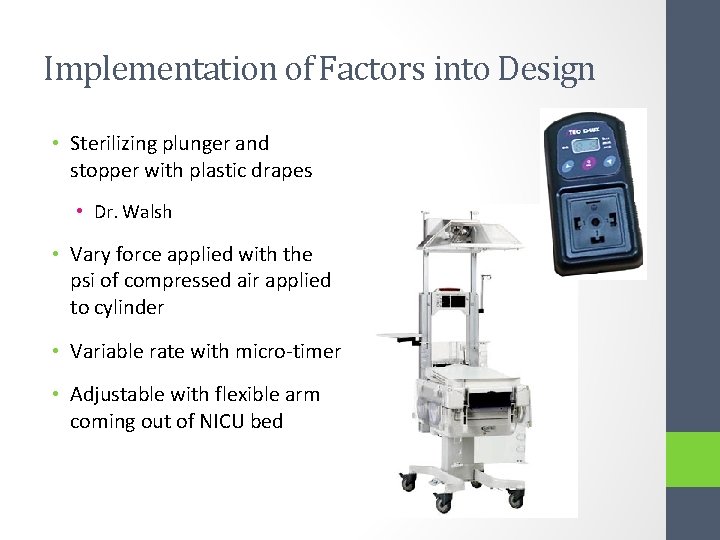
Implementation of Factors into Design • Sterilizing plunger and stopper with plastic drapes • Dr. Walsh • Vary force applied with the psi of compressed air applied to cylinder • Variable rate with micro-timer • Adjustable with flexible arm coming out of NICU bed
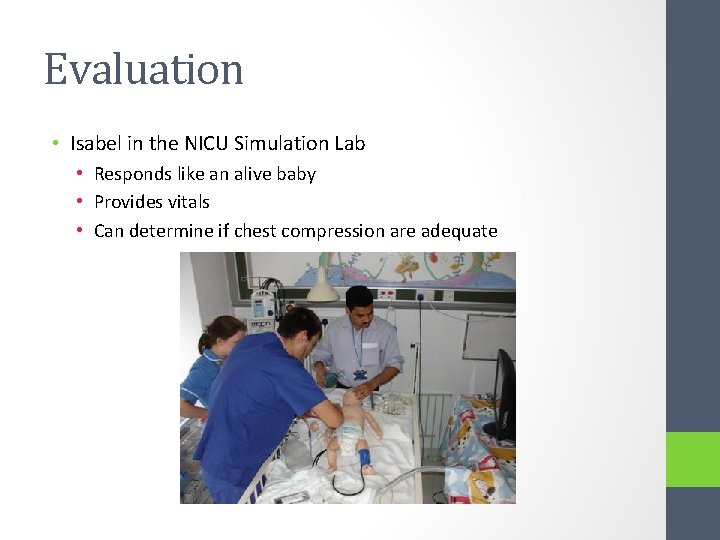
Evaluation • Isabel in the NICU Simulation Lab • Responds like an alive baby • Provides vitals • Can determine if chest compression are adequate
Previous Work • Researched existing adult compression devices • Auto. Pulse, Lucas, Thumper • Established goals and criteria that must be met • Discussed with advisors • Measured force required to provide chest compressions • Decided on a prototype design • Pneumatic cylinder • Researched and purchased materials to build prototype • Pneumatic cylinder and Air compressor • Solenoid valve, timer • All necessary connections • Tested simplified version of prototype • Verified applied force was correct • Ordered more parts
Current Work • Finishing Design. Safe • Getting in touch with GE contact • Kent Meeks • Building complete version of prototype • Testing full prototype
Future Work • After testing, make modifications and re-test • Build flexible arm • Test • Make Demo • Evaluate effectiveness against traditional method
References • http: //www. zoll. com/medical-products/cardiac-supportpump/autopulse/ • http: //content. onlinejacc. org/cgi/content/full/44/11/2214/FIG 2 • http: //www. omega. com/auto/pdf/Simp. Valvesguide. pdf • http: //www. gehealthcare. com/euen/maternal-infantcare/products/microenvironments/giraffe_omnibed/index. html • http: //www. engineeringtoolbox. com/pneumatic-cylinder-forced_1273. html
- Slides: 17