
Neonatal Abstinence Syndrome and Drug Use Among Pregnant
Neonatal Abstinence Syndrome and Drug Use Among Pregnant Women in Ohio 2004 -2011 ARTICLE REVIEW
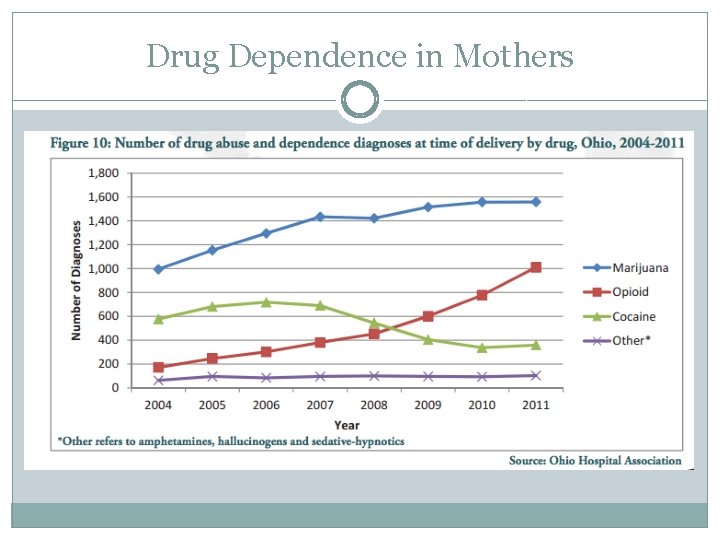
Quick Facts �Between 2004 -2011, there were over 5, 000 hospitalizations for Neonatal Abstinence Syndrome Cost of $70 million in 2011 alone �Rate of NAS grew from 14 to 88 per 10, 000 between these years �Hospitalizations of mothers due to drug use while pregnant doubled from 2004 -2 o 11 Drug trends � Marijuana>Opioids>Cocaine
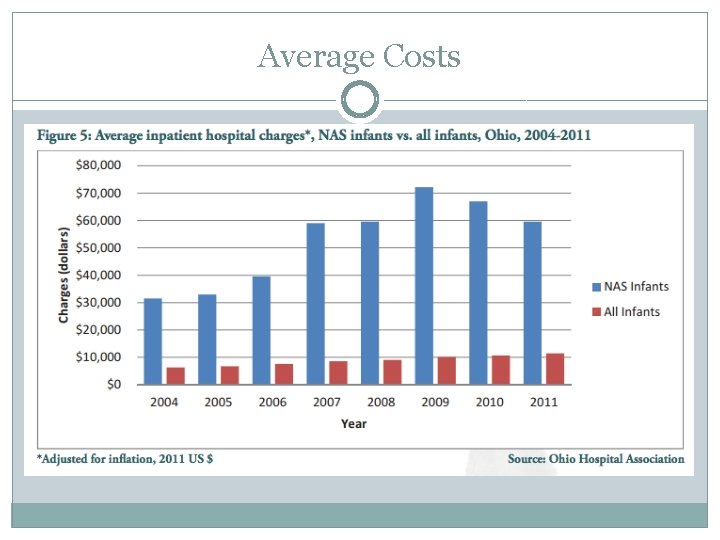
Average Costs
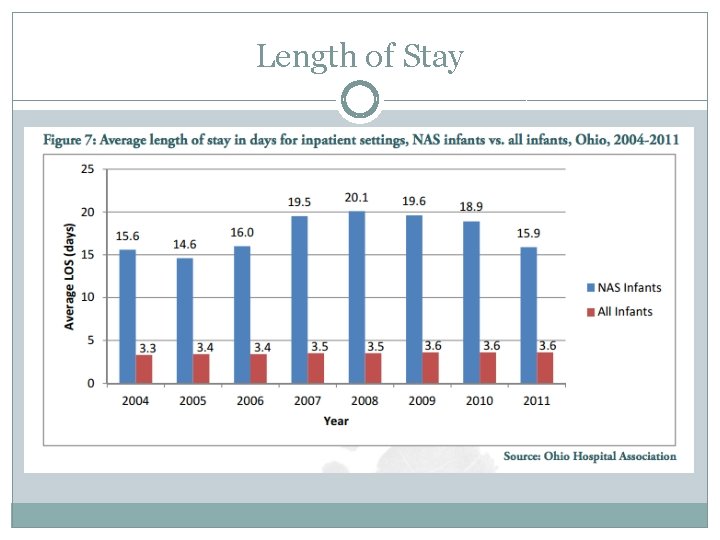
Length of Stay
NAS vs. Noxious Substances �The numbers displayed above only pertained to NAS infants Does not account for infants exposed to noxious substances via breast milk �From 2004 -2011 there was a 540% increase in rates of hospitalizations due to exposure to noxious substances Most common: opiates Runner-up: cocaine
Drug Dependence in Mothers
Drug Use by Trimester
The toll NAS takes on babies
Neonatal Abstinence Syndrome
What Is It? �Neonatal Abstinence Syndrome is a condition that occurs in infants whose mothers used addictive drugs during pregnancy. �The misuse of prescription or illegal drugs can be extremely harmful to a developing child
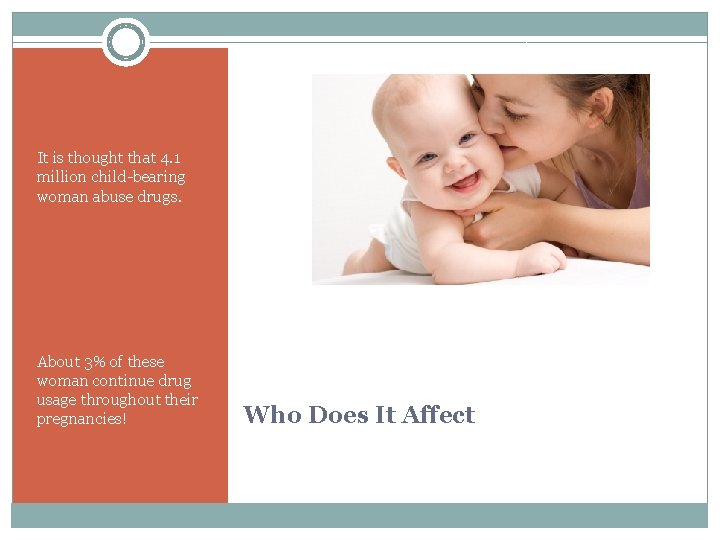
It is thought that 4. 1 million child-bearing woman abuse drugs. About 3% of these woman continue drug usage throughout their pregnancies! Who Does It Affect
What Happens �A child with Neonatal Abstinence Syndrome is born addicted to the drug that the mother was using during pregnancy. �The substance passes through the placenta to the baby during pregnancy. �The placenta connects the baby to the mother’s womb. The baby becomes addicted along with the mother. Because the baby is so addicted, withdrawal symptoms may occur.
What Can Be Used? �Commonly Misused �All types of drug usage Drugs �· Amphetamines �· Barbiturates �· Benzodiazepines �· Cocaine �· Marijuana �· Opiate/Narcotics such as Heroin, methadone, codeine. can lead to Neonatal Abstinence Syndrome. �Myths: “Easy” drugs like Marijuana are okay and won’t hurt the baby at all. �This is false! Marijuana is addictive and can have the same affect on a baby as cocaine!
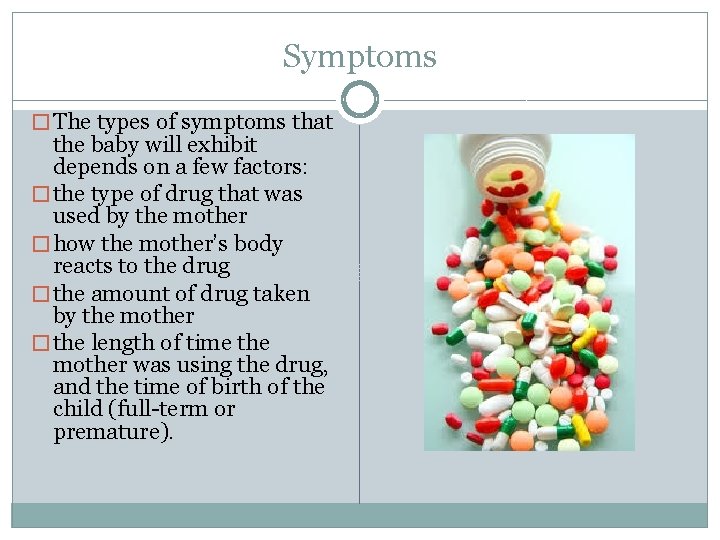
Symptoms � The types of symptoms that the baby will exhibit depends on a few factors: � the type of drug that was used by the mother � how the mother’s body reacts to the drug � the amount of drug taken by the mother � the length of time the mother was using the drug, and the time of birth of the child (full-term or premature).
More Symptoms �Symptoms can be hard to decipher because many babies exhibit similar symptoms due to a wide variety of problems. �· Sleep problems �· Slow weight gain �· Stuffy nose, sneezing �· Sweating �· Trembling (tremors) � Vomiting � · Blotchy skin coloring (mottling) � · Diarrhea � · Excessive or high-pitched crying � · Excessive sucking � · Fever � · Hyperactive reflexes � · Increased muscle tone � · Irritability � · Poor feeding � · Rapid breathing � · Seizures
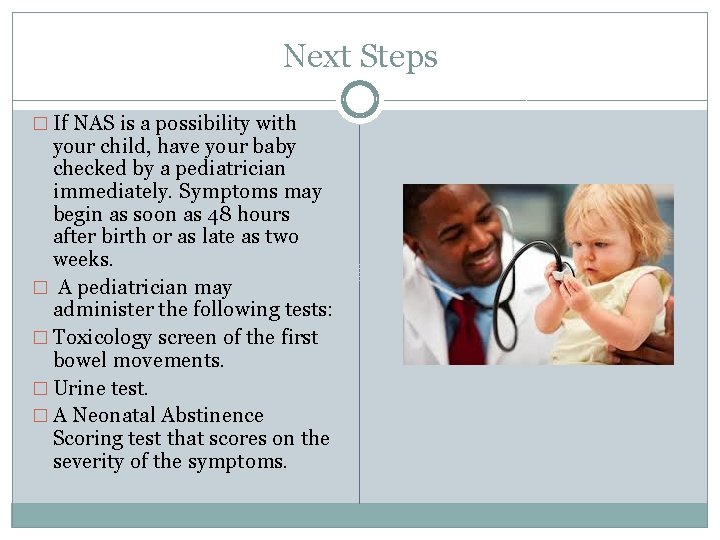
Next Steps � If NAS is a possibility with your child, have your baby checked by a pediatrician immediately. Symptoms may begin as soon as 48 hours after birth or as late as two weeks. � A pediatrician may administer the following tests: � Toxicology screen of the first bowel movements. � Urine test. � A Neonatal Abstinence Scoring test that scores on the severity of the symptoms.
Treatment: At Home �The treatment for Neonatal Abstinence Syndrome depends on the severity of the case and the type of drugs involved. The baby’s overall health will determine the type of treatment provided by the pediatrician. � Gently rocking the child � Reducing noise and lights � Swaddling the baby in a blanket
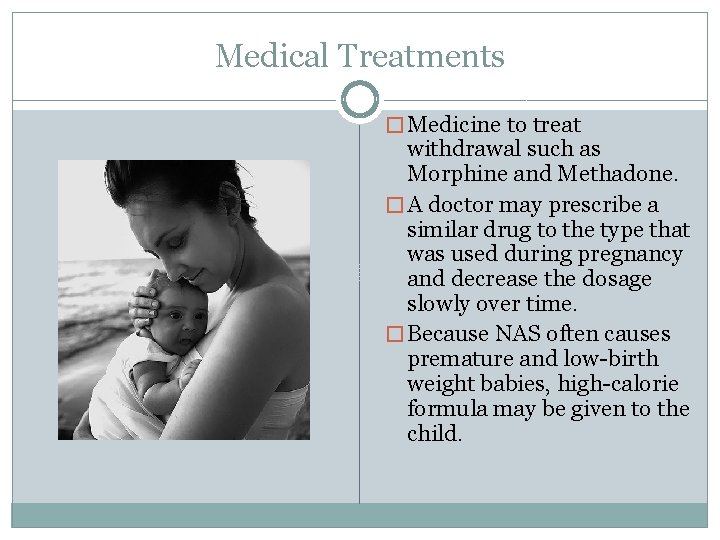
Medical Treatments � Medicine to treat withdrawal such as Morphine and Methadone. � A doctor may prescribe a similar drug to the type that was used during pregnancy and decrease the dosage slowly over time. � Because NAS often causes premature and low-birth weight babies, high-calorie formula may be given to the child.
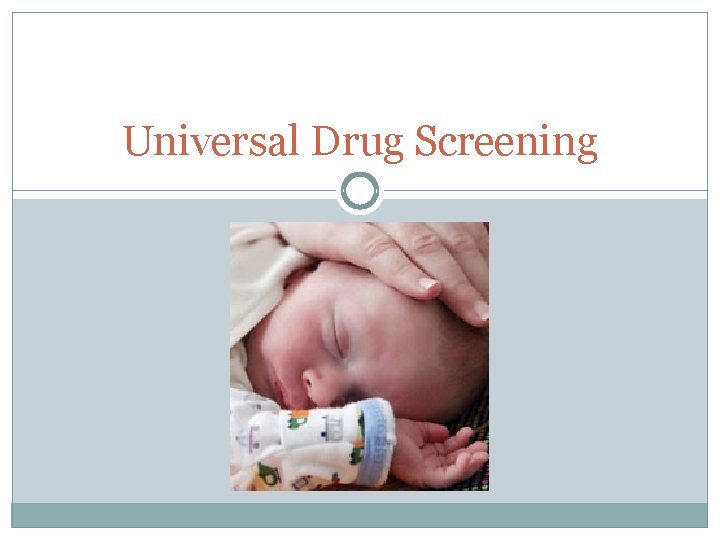
Universal Drug Screening
Where Is This Happening? �Seven hospitals in Greater Cincinnati began universal drug testing on all expectant mothers beginning September 1. �Hospitals participating in the new drug testing policy include: Cincinnati Children’s University of Cincinnati Medical Center Bethesda North Hospital Good Samaritan Hospital Mercy Health Anderson Mercy Health Fairfield St. Elizabeth
Why Is This Happening? �Developed by a group of hospitals working with the Greater Cincinnati Health Council. �Cincinnati Children’s, which provides neonatology services to nearly all maternity units in the region, coordinated research that supports the new policy. �The new approach to drug screening is one part of a coordinated response to a surge of drug-addicted infants born in the region. �The number of exposed babies has quadrupled in about four years 10. 8 infants per 1, 000 births in 2009 46 per 1, 000 births in the first three months of 2013
Benefits To Testing � Testing is designed to help the family, the mother and the infant! � Hospital can monitor the infant after birth and provide the appropriate care if the infant begins to show withdrawal symptoms. Scott Wexelblatt, MD medical director of regional newborn services at Cincinnati Children’s � Surge in drug-exposed infants creates a healthcare burden Average length of stay is 16. 4 days for an infant suffering from opiate withdrawal Only 3. 3 days for infants without NAS Average cost of a hospital stay for NAS is about $53, 400 Only $9, 500 for infants without NAS
The Testing �The drug testing will become standard procedure for the hospitals but is not mandatory for individuals. Any patient can refuse the test. �Expected to detect drug-exposed newborns who otherwise might be sent home before NAS symptoms emerge. �Pilot research: As many as 20 percent of infants exposed to opioids who were detected by universal screening would not have been detected by existing hospital practices and procedures. 33 percent of infants exposed to other drugs would not have been detected without universal testing
Citations � Massatti, R. , Falb, M. , Yors, A. , Potts, L. , Beeghly, C. & Starr, S. (2013, November). Neonatal abstinence syndrome and drug use among pregnant women in Ohio, 2004 -2011. Columbus, OH: Ohio Department of Mental Health and Addiction Services � Neonatal Abstinence Syndrome. The National Institute of Health. January 2012. Web. Nov 2013. � Neonatal Abstinence Syndrome and Drug Use Among Pregnant Women in Ohio 2004 -2011. Ohio Mental Health Addiction Services. Nov 2013. Web. � Universal drug testing for expectant mothers begins Sept. 1. Cincinnati Children’s. Web. Nov 2013. � Local Hospitals Launch Universal Drug Testing to Better Care for Babies Born Addicted to Drugs. Greater Cincinnati Health Council. September 2013. Web. Nov 2013.
- Slides: 24