
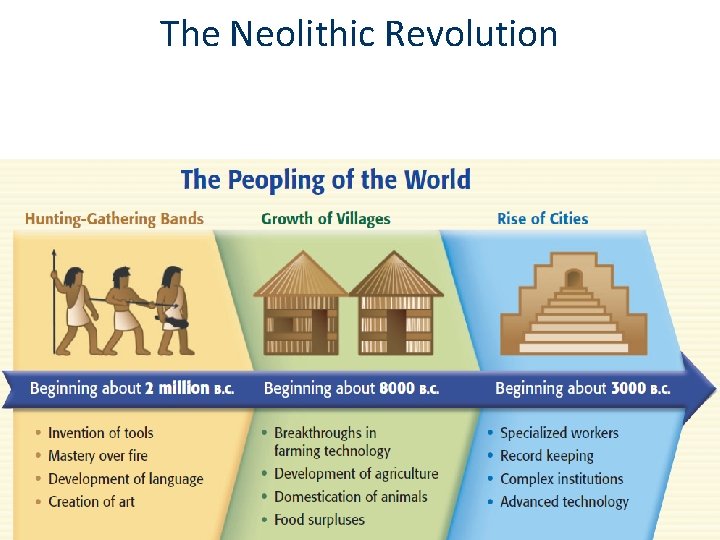
Neolithic Revolution Early humans were nomadic hunters gatherers
- Slides: 18
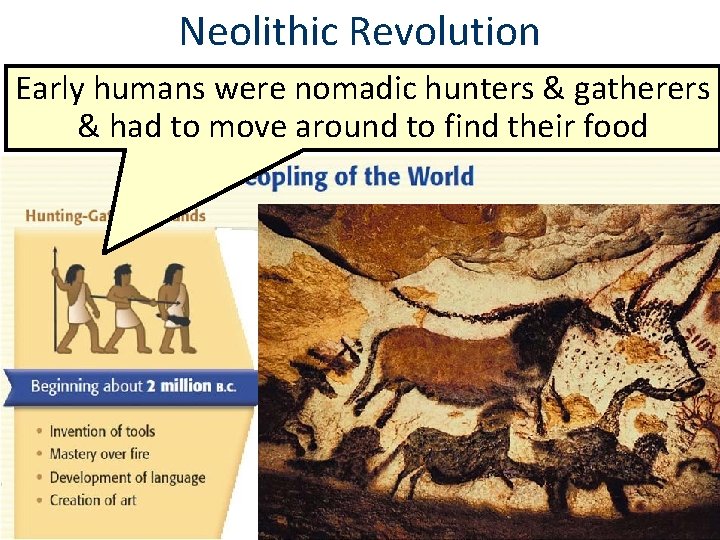
Neolithic Revolution Early humans were nomadic hunters & gatherers & had to move around to find their food
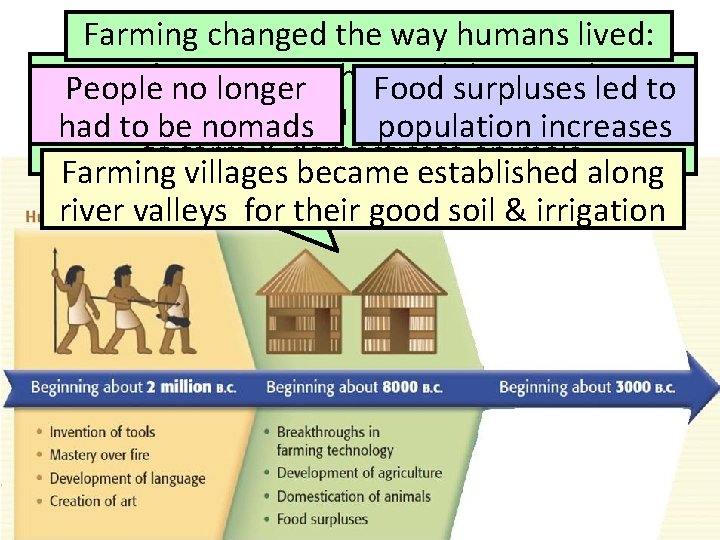
Neolithic Revolution Farming changed the way humans lived: Around B. C. , the. Food Neolithic Revolution People 8, 000 no longer surpluses led to occurred & early humans discovered how had to be nomads population increases to farm & domesticate animals Farming villages became established along river valleys for their good soil & irrigation
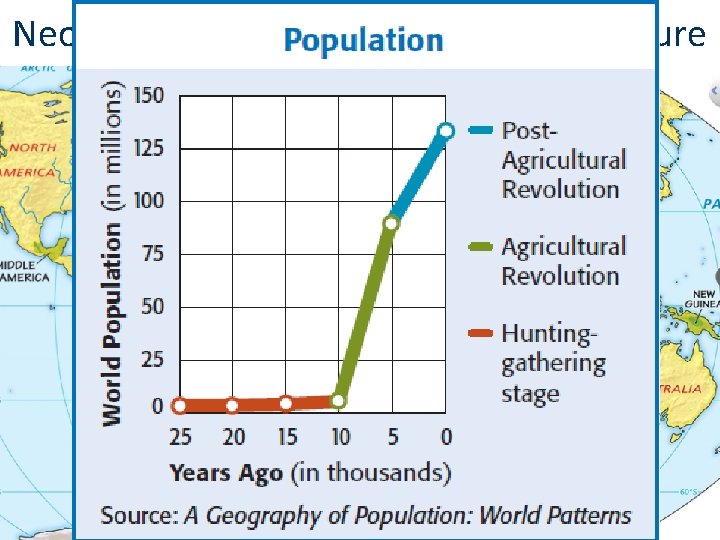
Neolithic Revolution: Spread of Agriculture
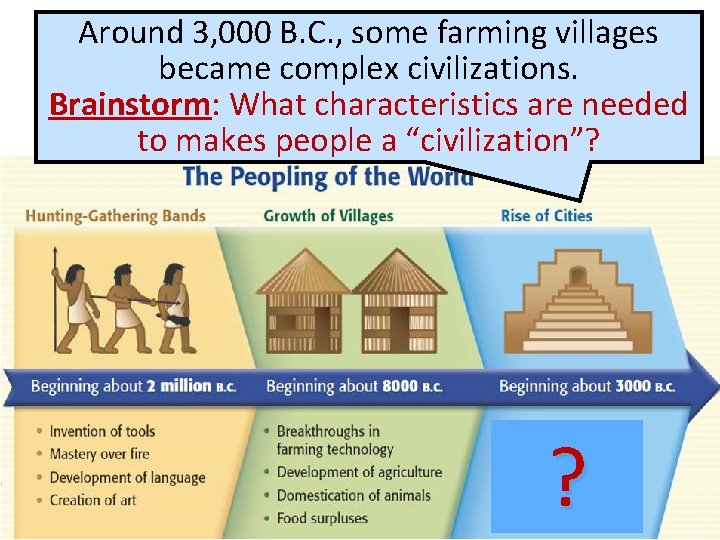
Around. Neolithic 3, 000 B. C. , Revolution some farming villages became complex civilizations. Brainstorm: What characteristics are needed to makes people a “civilization”? ? • Advanced cities
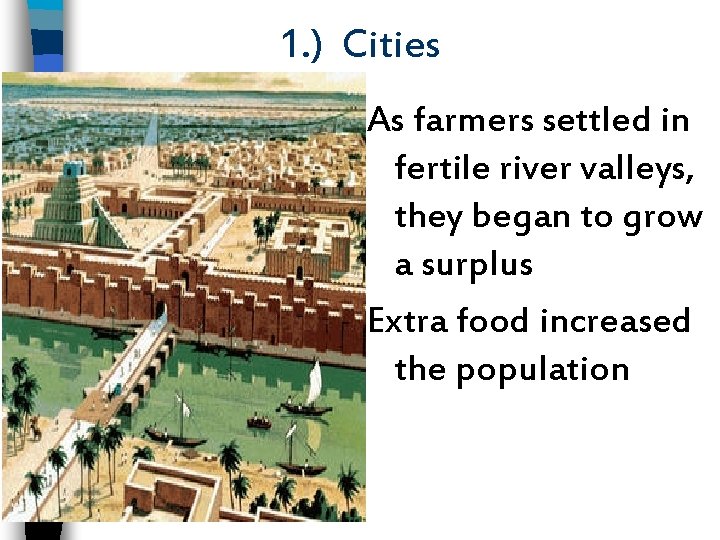
1. ) Cities As farmers settled in fertile river valleys, they began to grow a surplus Extra food increased the population
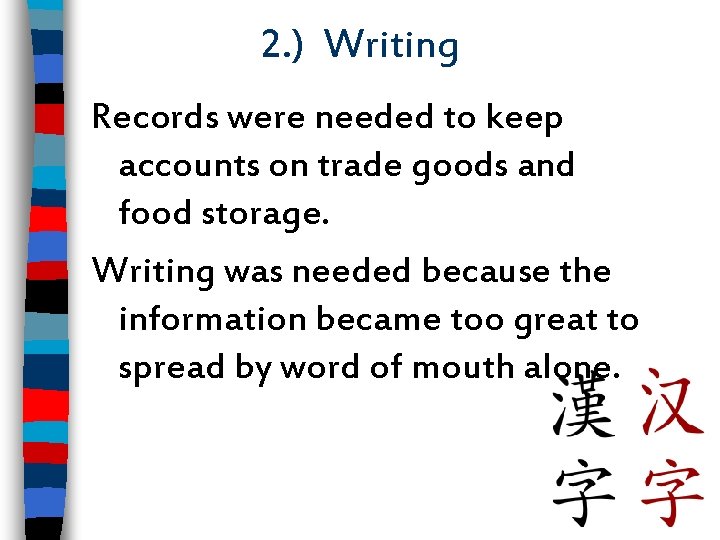
2. ) Writing Records were needed to keep accounts on trade goods and food storage. Writing was needed because the information became too great to spread by word of mouth alone.
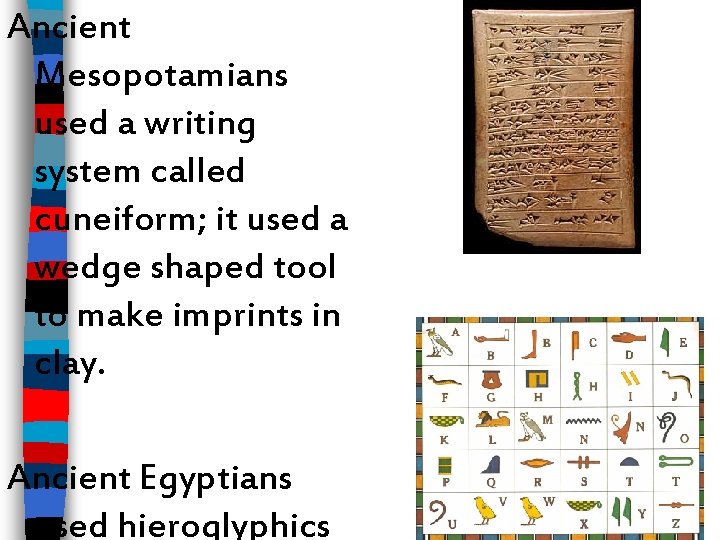
Ancient Mesopotamians used a writing system called cuneiform; it used a wedge shaped tool to make imprints in clay. Ancient Egyptians used hieroglyphics
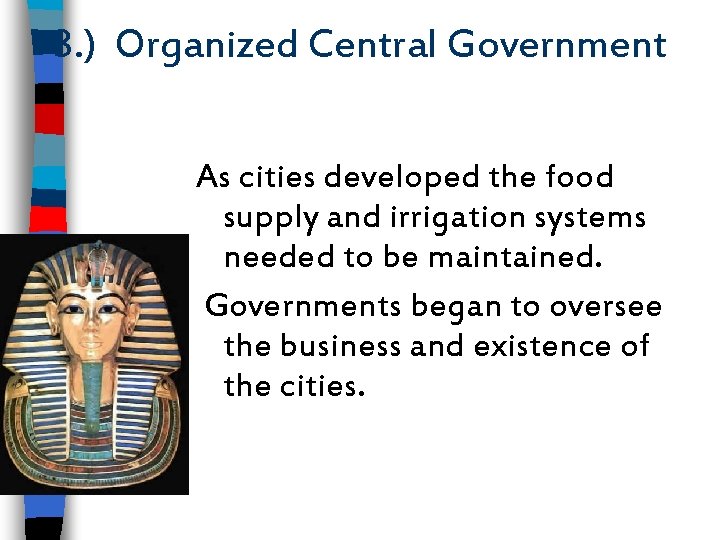
3. ) Organized Central Government As cities developed the food supply and irrigation systems needed to be maintained. Governments began to oversee the business and existence of the cities.
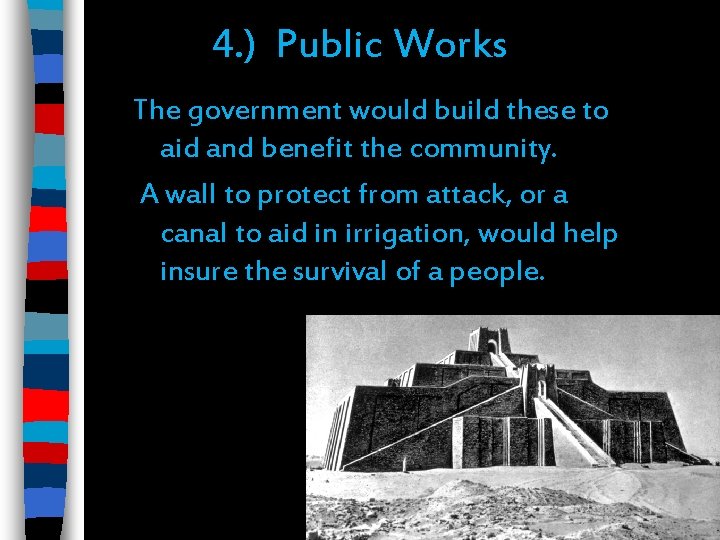
4. ) Public Works The government would build these to aid and benefit the community. A wall to protect from attack, or a canal to aid in irrigation, would help insure the survival of a people.
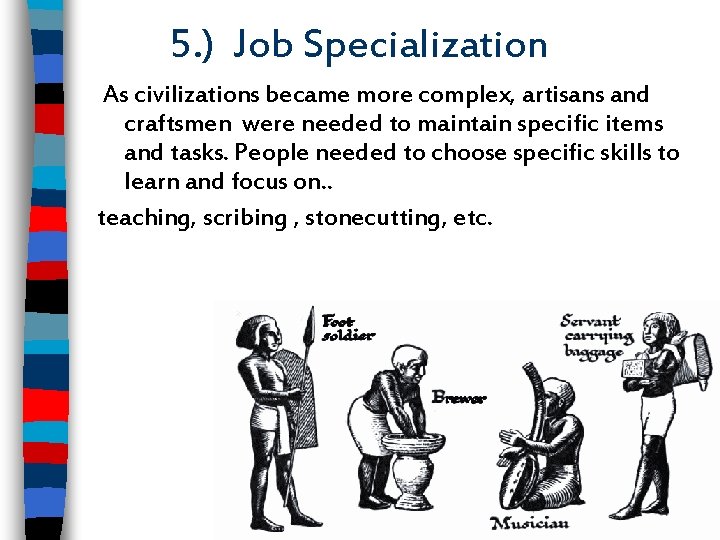
5. ) Job Specialization As civilizations became more complex, artisans and craftsmen were needed to maintain specific items and tasks. People needed to choose specific skills to learn and focus on. . teaching, scribing , stonecutting, etc.
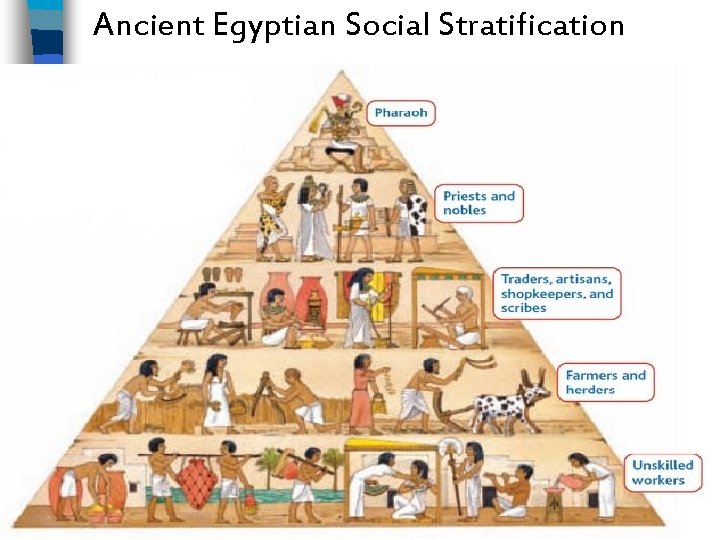
6. ) Social Classes As jobs became specialized so did the status and needs of certain individuals. People who had more unique skills, such as writing or craft more status. The slave was on the lowest rung of the social ladder; Warriors, priests, and kings were on top.
Ancient Egyptian Social Stratification
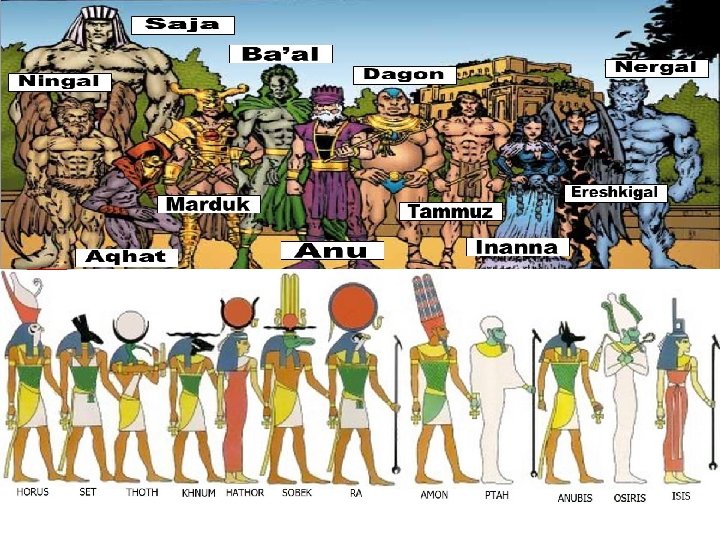
7. ) Complex Religions Most early civilizations were polytheistic (believed in multiple gods). Gods and goddesses usually represented the natural or social elements that were important to the society (sun, river, death, etc. )
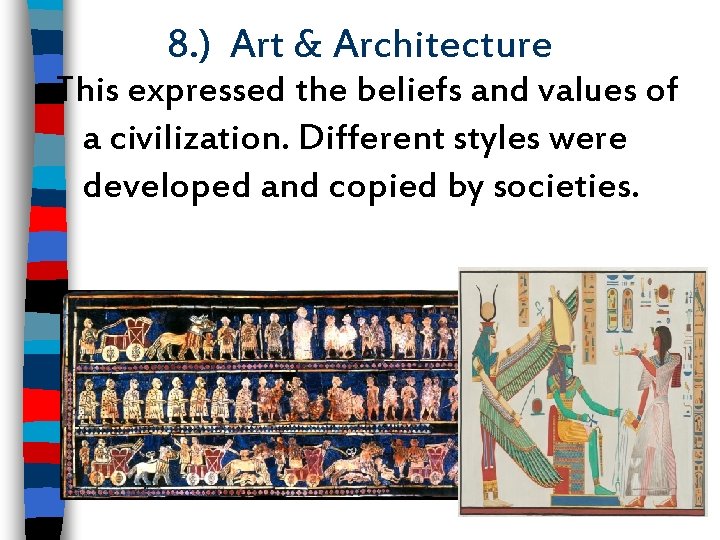
8. ) Art & Architecture This expressed the beliefs and values of a civilization. Different styles were developed and copied by societies.
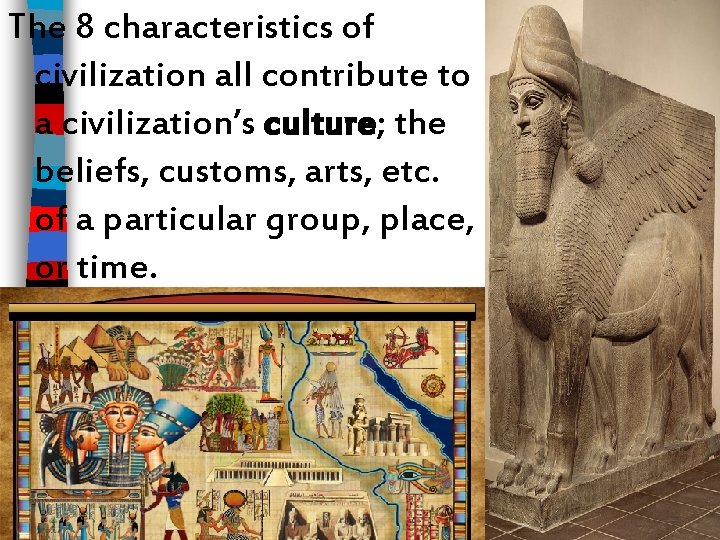
The 8 characteristics of civilization all contribute to a civilization’s culture; the beliefs, customs, arts, etc. of a particular group, place, or time.
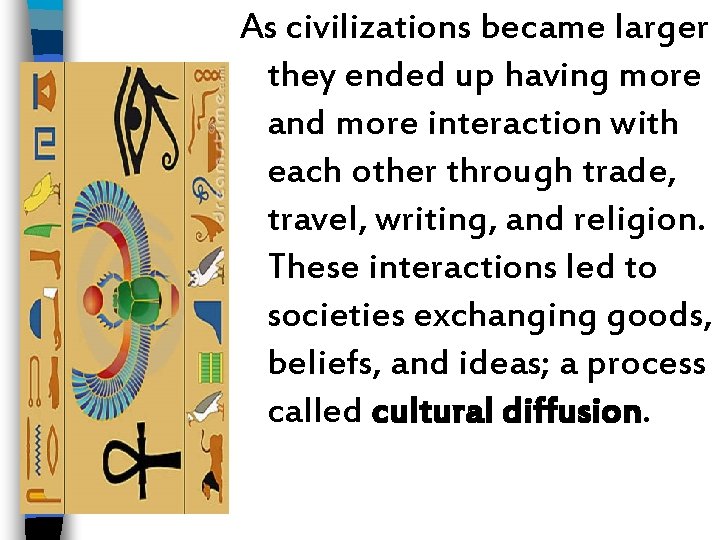
As civilizations became larger they ended up having more and more interaction with each other through trade, travel, writing, and religion. These interactions led to societies exchanging goods, beliefs, and ideas; a process called cultural diffusion.
The Neolithic Revolution