
Neolithic Revolution After 10 000 BCE What Agricultural
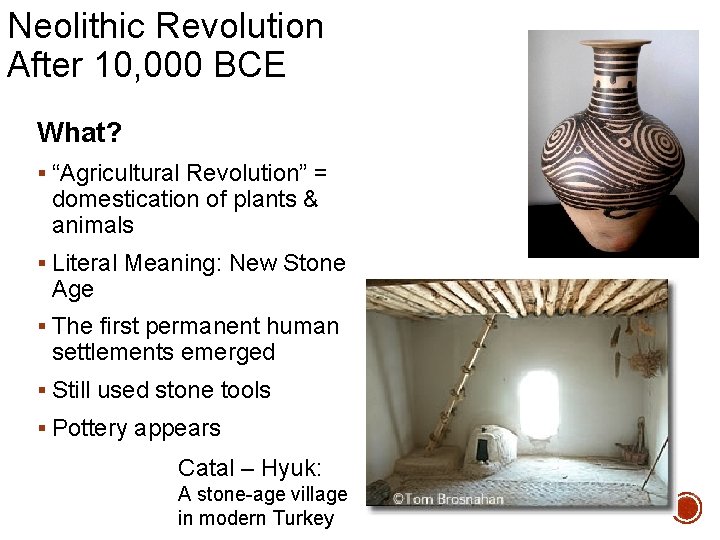
Neolithic Revolution After 10, 000 BCE What? § “Agricultural Revolution” = domestication of plants & animals § Literal Meaning: New Stone Age § The first permanent human settlements emerged § Still used stone tools § Pottery appears Catal – Hyuk: A stone-age village in modern Turkey
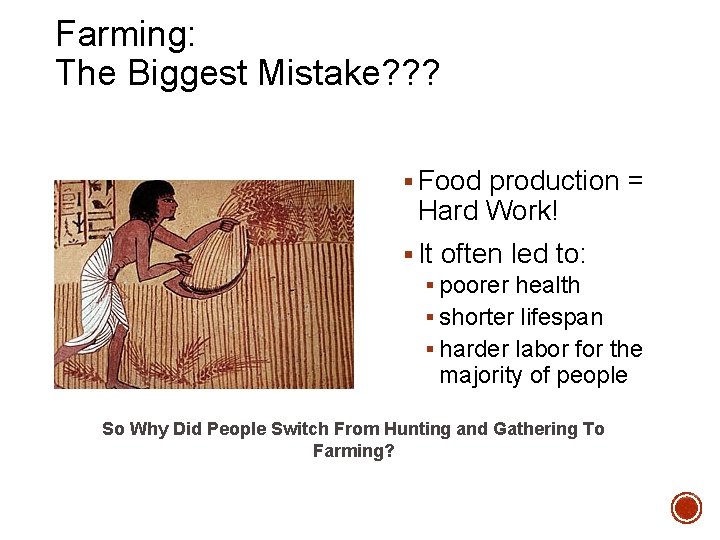
Farming: The Biggest Mistake? ? ? § Food production = Hard Work! § It often led to: § poorer health § shorter lifespan § harder labor for the majority of people So Why Did People Switch From Hunting and Gathering To Farming?
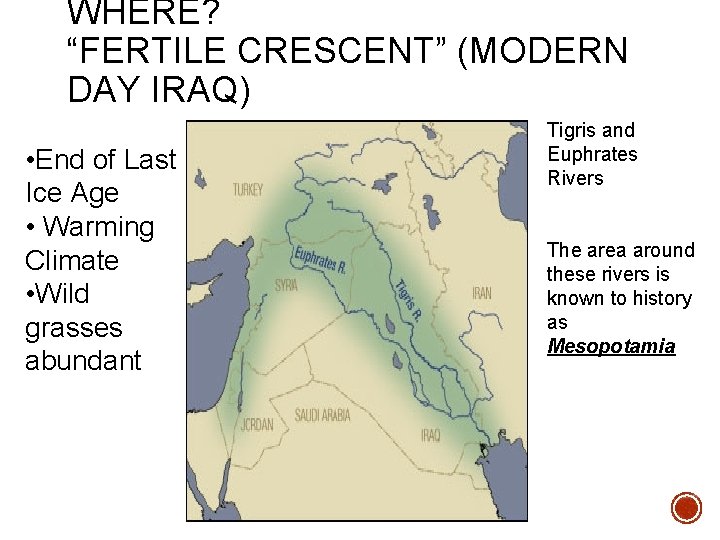
WHERE? “FERTILE CRESCENT” (MODERN DAY IRAQ) • End of Last Ice Age • Warming Climate • Wild grasses abundant Tigris and Euphrates Rivers The area around these rivers is known to history as Mesopotamia
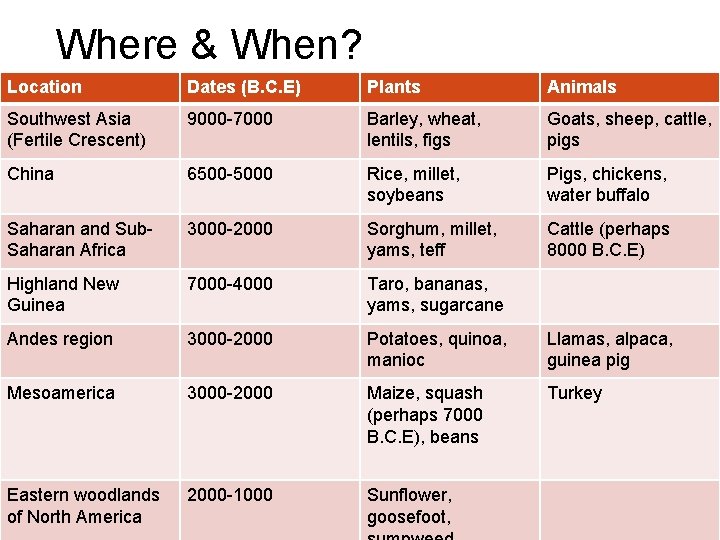
Where & When? Location Dates (B. C. E) Plants Animals Southwest Asia (Fertile Crescent) 9000 -7000 Barley, wheat, lentils, figs Goats, sheep, cattle, pigs China 6500 -5000 Rice, millet, soybeans Pigs, chickens, water buffalo Saharan and Sub. Saharan Africa 3000 -2000 Sorghum, millet, yams, teff Cattle (perhaps 8000 B. C. E) Highland New Guinea 7000 -4000 Taro, bananas, yams, sugarcane Andes region 3000 -2000 Potatoes, quinoa, manioc Llamas, alpaca, guinea pig Mesoamerica 3000 -2000 Maize, squash (perhaps 7000 B. C. E), beans Turkey Eastern woodlands of North America 2000 -1000 Sunflower, goosefoot,
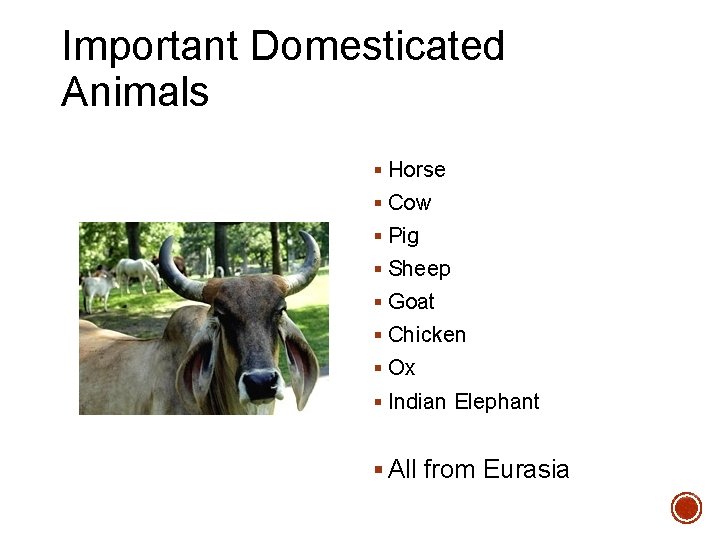
Important Domesticated Animals § Horse § Cow § Pig § Sheep § Goat § Chicken § Ox § Indian Elephant § All from Eurasia
What does the Neolithic Revolution allow? : § A sedentary lifestyle § The need for cooperation and group effort § Job specialization § Social Hierarchies (Social classes) § Patriarchy (Rule by males) § Population Growth
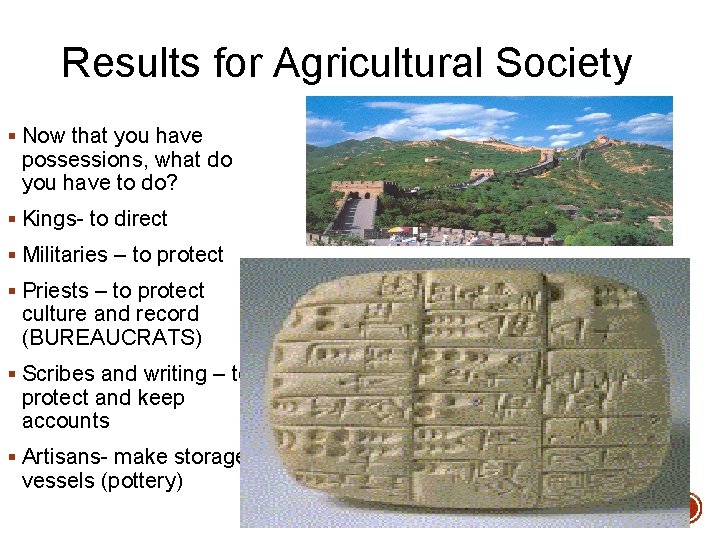
Results for Agricultural Society § Now that you have possessions, what do you have to do? § Kings- to direct § Militaries – to protect § Priests – to protect culture and record (BUREAUCRATS) § Scribes and writing – to protect and keep accounts § Artisans- make storage vessels (pottery)
§ How do we tell what happened Prehistory? § Archeologists- look for clues (digs) § Anthropologists- study the culture § Paleontologists- Study fossils § Earliest known human remains come from Africa
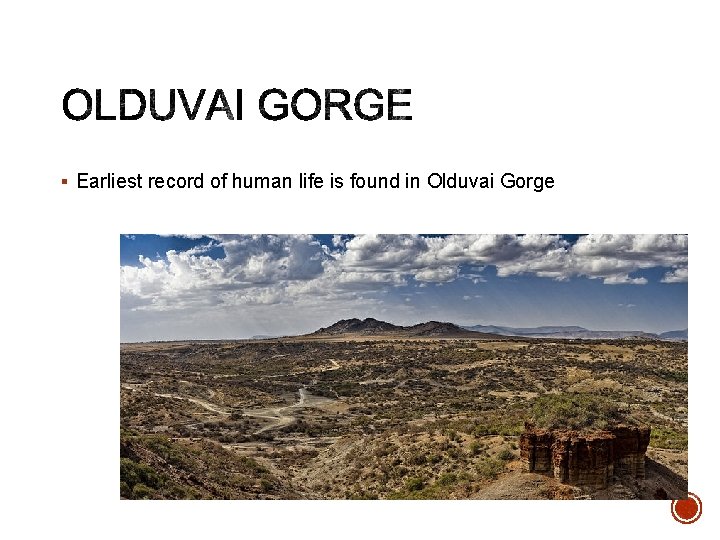
§ Earliest record of human life is found in Olduvai Gorge
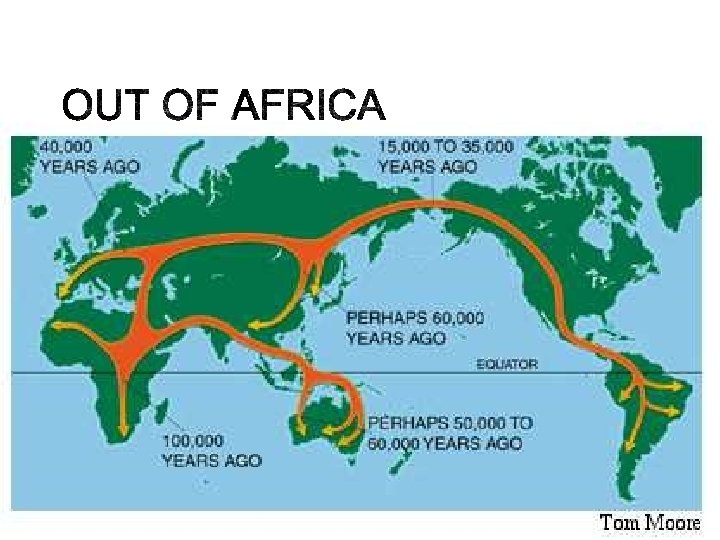
§ Homo sapiens is the scientific name for modern man § Invention of tools, mastery of fire and the development of language improved human life § Early humans were nomads – people who wander from place to place with no permanent settlements They were hunters and gatherers for their food Made tools to help increase their food supply Made cultural advances with necklaces, cave paintings, rock paintings and carving
Polytheistic (many gods) Monotheistic (one god) Built temples, sacrificed animals, crops, and at times other humans People worked as priests
Expressed the beliefs and values of the society Showed strength and power of the government Sometimes meant to intimidate other groups or countries
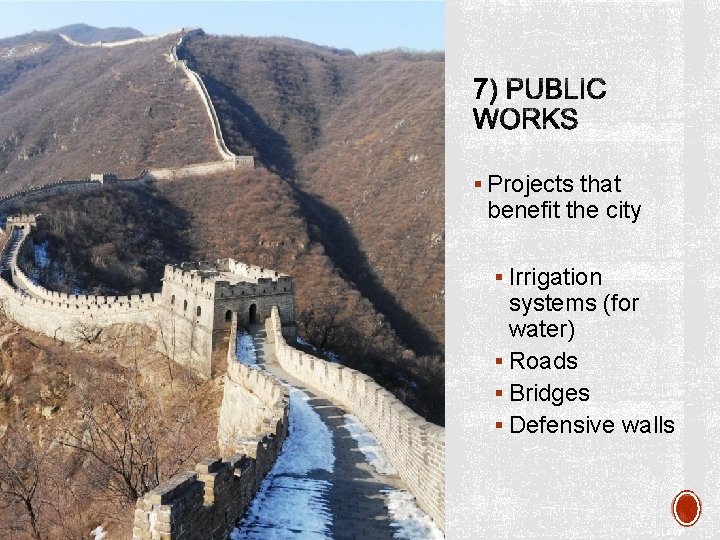
§ Projects that benefit the city § Irrigation systems (for water) § Roads § Bridges § Defensive walls
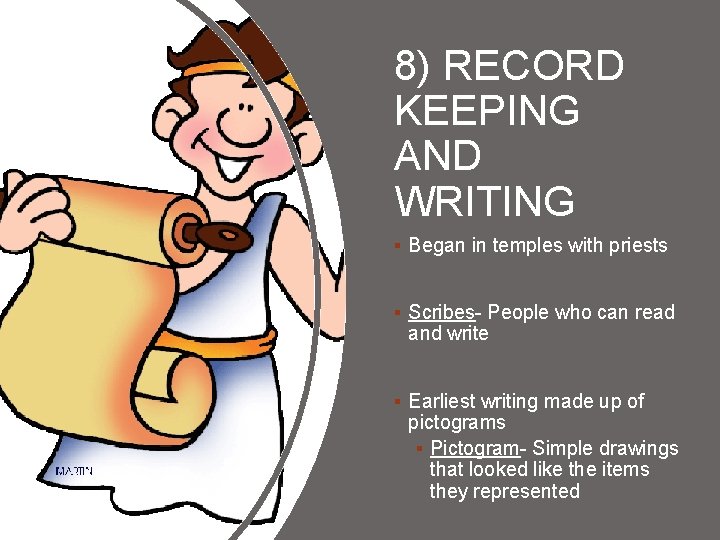
8) RECORD KEEPING AND WRITING § Began in temples with priests § Scribes- People who can read and write § Earliest writing made up of pictograms § Pictogram- Simple drawings that looked like the items they represented
- Slides: 15