
Neolithic Era 8000 BC 4000 BC Neolithic Era

Neolithic Era 8000 BC - 4000 BC

Neolithic Era Early humans were nomads, moving from place. During the Great Migration, humans looked for new, warmer regions with fertile soil to grow their own food and settle down. In some places the climate drier, causing long periods with little or no rain. These droughts caused food shortages in those areas. Some people found a variety of new ways to survive: some became better at storing food, and others developed new weapons for hunting smaller prey. People tried planting seeds and grew rye, barley, and wheat. They were the world’s first farmers
Agricultural Revolution The Neolithic Revolution was a fundamental change in how many humans lived. Humans could now keep animals and grow food on a regular basis, with recurring and more reliable harvests. About 10, 000 year ago, some people in southwestern Asia became the first to domesticate plants and animals. Before this time, people had tamed wild dogs to help them in hunting. Now, the people of southwestern Asia began to capture wild sheep and goats and keep them in pens. They could now be sure of their meat supply during times of drought. Overtime, these penned animals became tame, and people could herd them in pasture. People starting planting staple crops—crops that people would rely on most for food.
Staple Crops In China, people planted rice and other crops In Central America, people planted corn, beans, and squash. In Africa, people planted tubers, such as yams. The first farmers discovered that grinding grains makes flour, which can be used to make bread. People figured out where soil was fertile-where plants would grow better. Lakes and rivers were good places to settle too, because they had water and provided an extra source of nutrition through fish and other seafood. When planting crops, farmers chose seeds from the biggest, best looking, best tasting plants. Then they would repeat the next time. Slowly but surely, each harvest would bring a better, stronger, tastier round of crops This process is called domestication of plants.
Agriculture & Domestication Before agriculture, the knowledge of raising plants and animals, most people lived their lives as nomads. Those who learned about agriculture and began to farm built longer-lasting shelters in permanent settlements. Agriculture allowed people to produce larger food supplies in one place, so more and more people began to live together in permanent settlements. Soon people in permanent settlements began to work together, to organize, and to develop rules for their community. Animal domestication began when humans tamed wild animals like sheep, goats, and pigs for meat, milk, and wool. In India, wild elephants were tamed.
Farming Techniques Farming techniques like the irrigation system were also crucial for settling early communities. Irrigation systems were a series of canals built to bring water to the lands. When they could, farmers grew enough crops to give them a surplus—or extra supply of seeds. They could use the surplus to plant during the next season. They could also use surplus grain as food in seasons when plants were not plentiful. Often, people would lend surplus food to other settlements, sometimes developing friendships among communities. Some people presented surplus food as gifts to their dead ancestors to show respect to them. In time, people began to exchange their surplus food for goods not found in their local area. They exchanged surplus food for other foods, home-building materials, clothing, or tools. In this way, surplus food helped people develop trade. Overtime, the growth of trade would lead to more advanced societies.
Forming Societies The earliest farming settlements were small, consisting of only a few families. Most people in these communities lived from one harvest to the nest, and hunger was a constant threat. Bad weather, such as drought, storms, or extreme cold or heat, affected them seriously. It killed crops and livestock, making life difficult. They learned to use some plants as new sources of materials for making clothing and for building shelters. They also kept many kinds of animals, from oxen and camels to dogs and guinea pigs. These settlements grew into villages with up to several hundred people. By 7, 000 BC, farming villages had spread across south western Asia: Abu Hureyra and Jericho grew into farming villages. The village of Jarmo had more than 25 houses. Dozens of farming villages grew up in what is now Turkey: Catal Huyuk was an advanced community with people decorating their homes with painting and carvings of people, bulls, and other images.
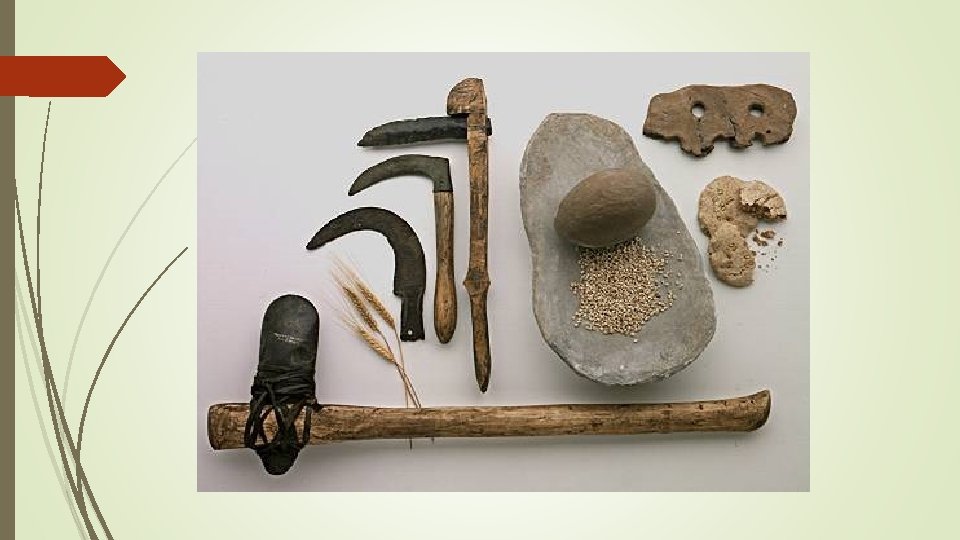
Changes in Technology Early tools were simple—sticks to dig up roots and to make holes to plant seeds. Later they developed the hoe, and farmers used the hoe’s wooden or stone blade to break up and turn over soil for planting. They used it to dig out rocks and tree roots. People in southwestern Asia developed the plow around 6, 000 BC. This could cut, lift, and turn over soil. Farmers sharpened one end of a large forked brand used the sharpened end to dig rows in the soil. Farmers eventually replaced the stick plow with one that had a wooden or stone blade. This plow could cut through the ground faster than the stick plow. Later farmers used strong animals, such as cattle, to pull plows. Plows allowed people o plant larger crops.
Economic and Social Change Successful farming villages produced a surplus of food. Some villages also had a surplus of valuable resources, such as stones, art, or pottery. Before the development of money, people would barter for things they wanted. By trading with each other, they could gain these items. People at Catal Huyuk developed a trading center for obsidian, a volcanic glass, found nearby. In Jarmo, archeologists have discovered obsidian seashells, and other valuable materials brought there by traders. As trade between villages grew, so did a need for leadership. Members of the most important family group within a village often became community leaders. These leaders controlled trade. They also aided in resolving conflicts. Sometimes, strong leaders united several settlements with a common culture. As the number of people under a leader grew, so did the leader’s power.
- Slides: 10