
Nematodes That Affect Equines Nematodes That Affect Equines


- Slides: 24
Nematodes That Affect Equines
Nematodes That Affect Equines. Gastrointestinal Parasites • Parasite: Habronema microstoma, Habronema muscae, and Draschia megastoma • Host: Equines • Location: Stomach mucosa • Intermediate host: Muscidae fly (face fly, house fly, etc) • Distribution: Worldwide • Transmission: Ingestion of infective fly • Common Name: Stomach worm of horses
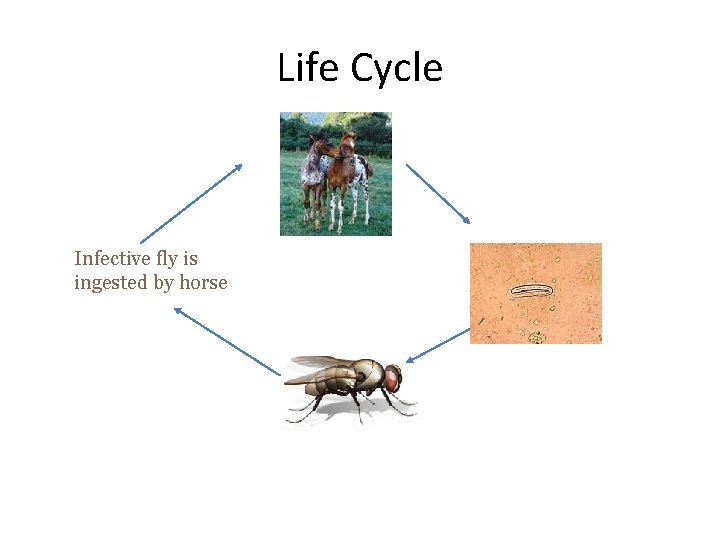
Life Cycle Infective fly is ingested by horse
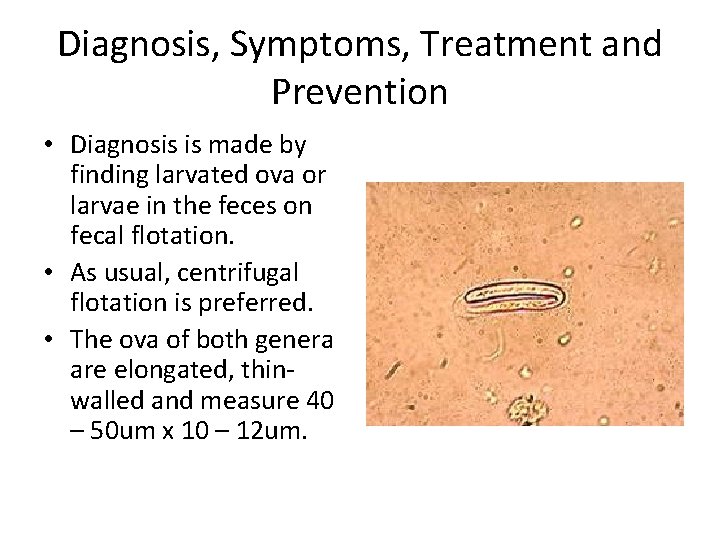
Diagnosis, Symptoms, Treatment and Prevention • Diagnosis is made by finding larvated ova or larvae in the feces on fecal flotation. • As usual, centrifugal flotation is preferred. • The ova of both genera are elongated, thinwalled and measure 40 – 50 um x 10 – 12 um.
Trichostrongylus axei • Parasite: Trichostrongylus axei • Host: Equines but can also infect cattle, sheep and swine. • Location: Stomach • Distribution: Worldwide • Transmission: ingestion of infective larva • Common Name: Stomach worms of horses and pigs.
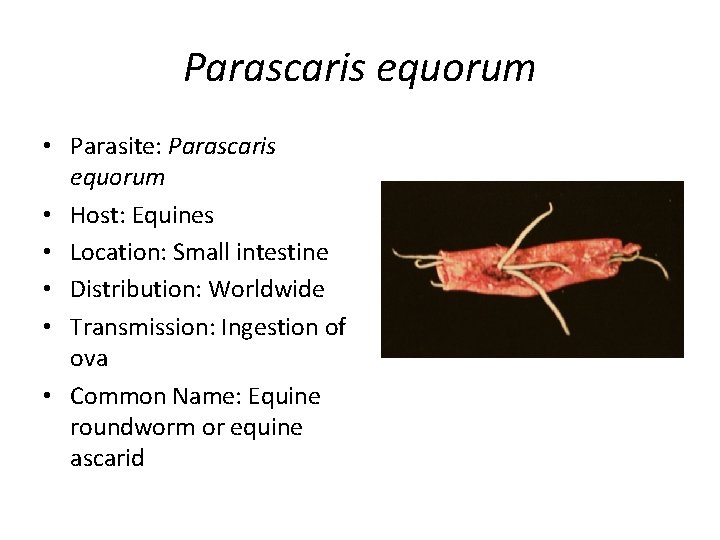
Parascaris equorum • Parasite: Parascaris equorum • Host: Equines • Location: Small intestine • Distribution: Worldwide • Transmission: Ingestion of ova • Common Name: Equine roundworm or equine ascarid
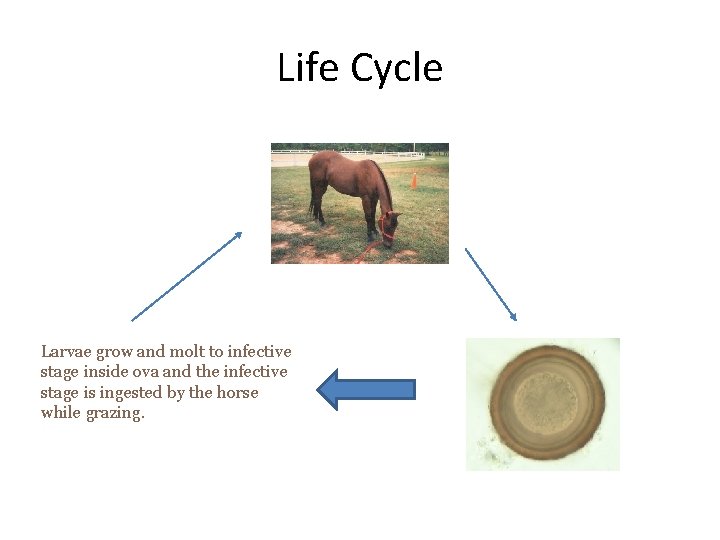
Life Cycle Larvae grow and molt to infective stage inside ova and the infective stage is ingested by the horse while grazing.
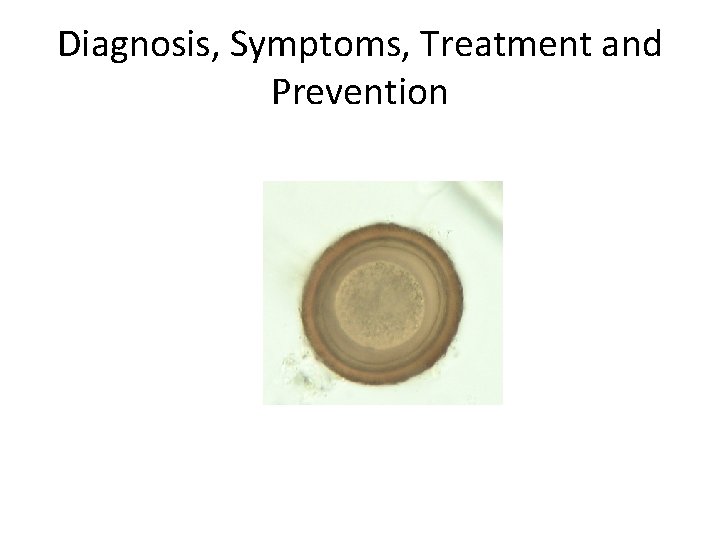
Diagnosis, Symptoms, Treatment and Prevention
Strongyles • Parasites: Strongylus vulgaris, Strongylus edentaus, and Strongylus equinus • Host: Horses • Location: Large intestines • Distribution: Worldwide • Transmission: Ingestion of infective larva • Common Name: Strongyles of horses
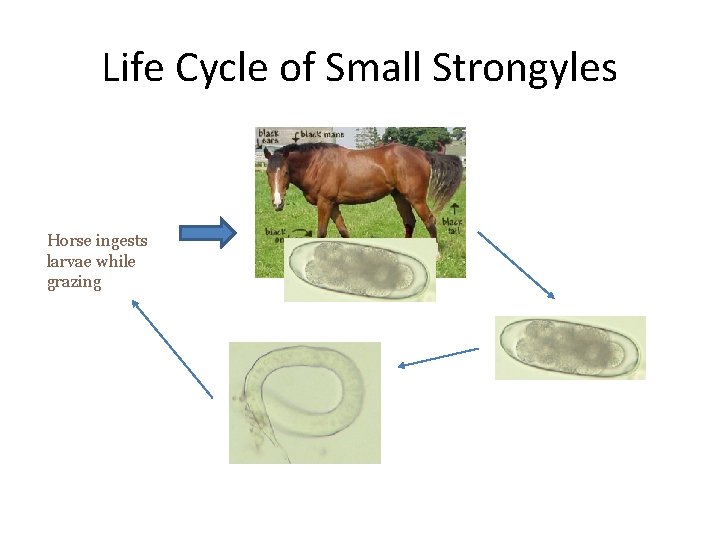
Life Cycle of Small Strongyles Horse ingests larvae while grazing
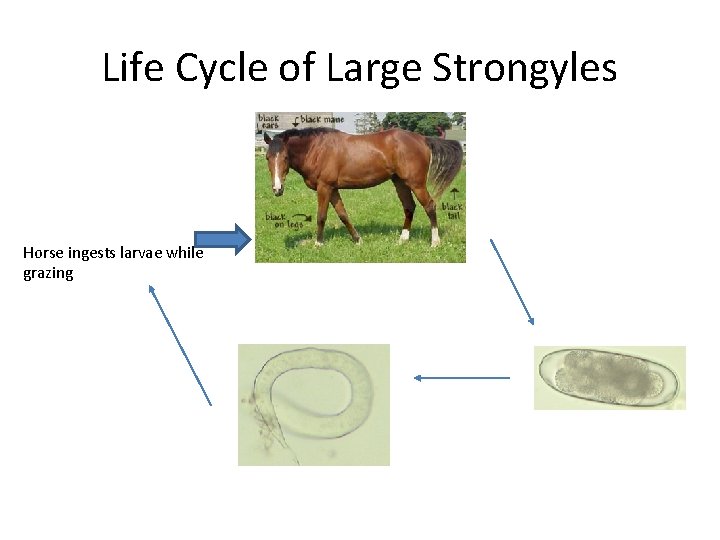
Life Cycle of Large Strongyles Horse ingests larvae while grazing
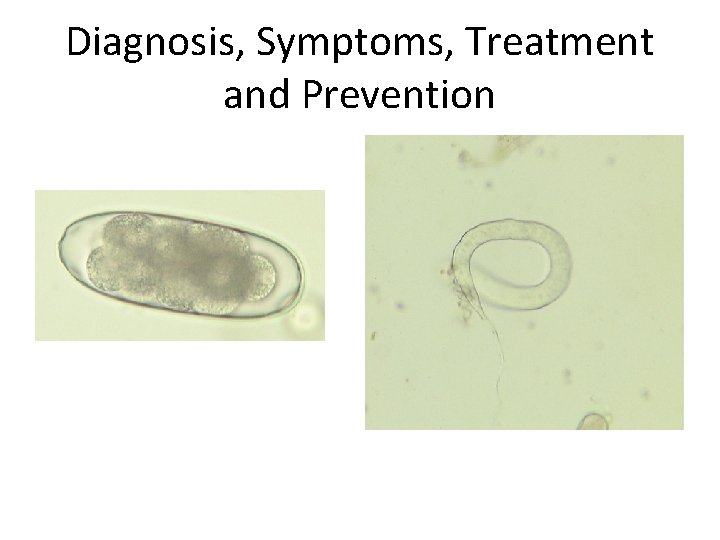
Diagnosis, Symptoms, Treatment and Prevention
Strongyloides westeri Parasite: Strongyloides westeri Host: Horses Location: Small intestines Distribution: worldwide Transmission: Transmammary through colostrum, percutaneous • Common Name: Intestinal Threadworm of horses • • •
Diagnosis, Symptoms, Treatment and Prevention • Diagnosis: fecal flotation (centrifugation preferred). The ova are larvated and measure 40 – 52 um x 32 – 40 um. • Symptoms: diarrhea, weight loss, anemia and poor appetite. • Treatment: oxibendazole, thiabendazole or ivermectin
Oxyuris equi • • • Parasite: Oxyuris equi Host: Equine Location: Cecum, colon and rectum Distribution: Worldwide Tranmission: Ingestion of infective ova Common Name: Pinworms of horses
Life Cycle
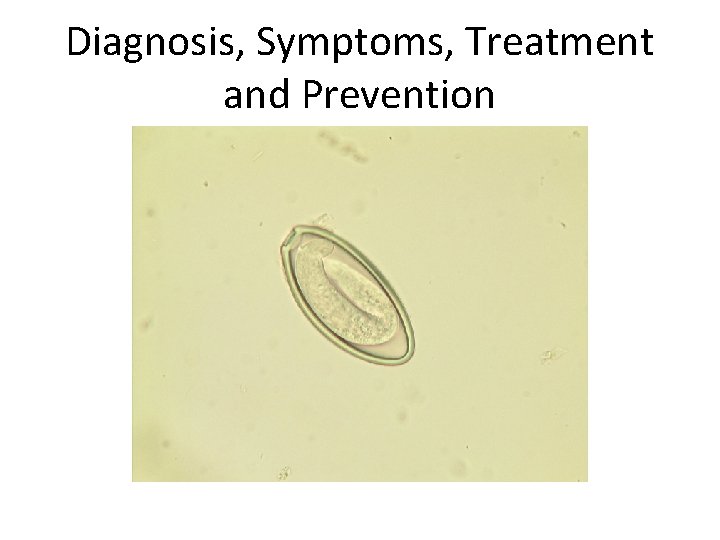
Diagnosis, Symptoms, Treatment and Prevention
Respiratory Nematodes • • • Parasite: Dictyocaulus arnfieldi Host: Equines, Mules and Donkeys Location: Bronchi and bronchioles Distribution: Worldwide Transmission: Ingestion of larva Common Name: Equine lungworm
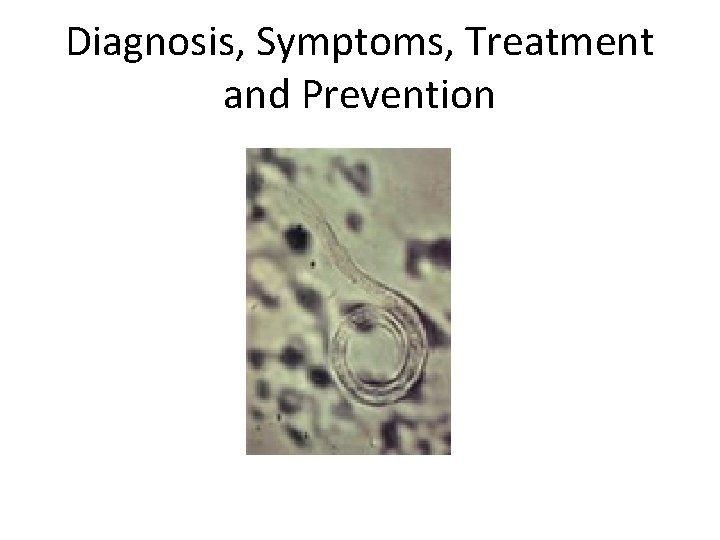
Diagnosis, Symptoms, Treatment and Prevention
Skin Nematodes • Parasite: Habronema microstoma, Habronema muscae and Draschia megastoma • Host: Equine • Location: Stomach mucosa • Distribution: Worldwide • Transmission: Deposit of infective larvae into skin wound by Muscid fly • Common Name: Cutaneous habronemiasis, Cutaneous draschiasis or “Summer Sores”
Onchocerca cervicalis • Parasite: Onchocerca cervicalis • Host: Equine • Location: Ligamentum nuchae a supraspinal ligament in the neck, microfilariae are found in the dermis. • Distribution: Worldwide • Transmission: Bite by the intermediate host, Culicoides species (no-see-ums) • Common Name: Equine filarial worm
Eye and Adnexa Nematodes Parasite: Thelazia lacrymalis Host: Equine Location: Conjunctival sacs and lacrimal ducts Distribution: Worldwide Transmission: Infective larvae deposited by Musca autumnalis • Common Name: Eyeworm of the horse • • •
Abdominal Cavity Nematode • • • Parasite: Setaria equina Host: Equine Location: Free in the abdominal cavity Distribution: Europe and North America Transmission: bite by an infected mosquito Common Name: Abdominal worm of horses
• Any Questions?