
Nematode Sampling and Faunal Analysis Howard Ferris Department


- Slides: 28
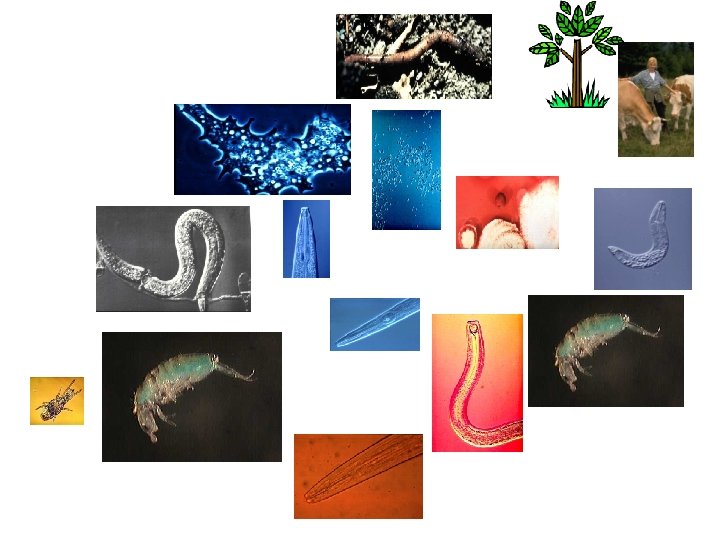
Nematode Sampling and Faunal Analysis Howard Ferris Department of Nematology University of California, Davis hferris@ucdavis. edu March, 2005
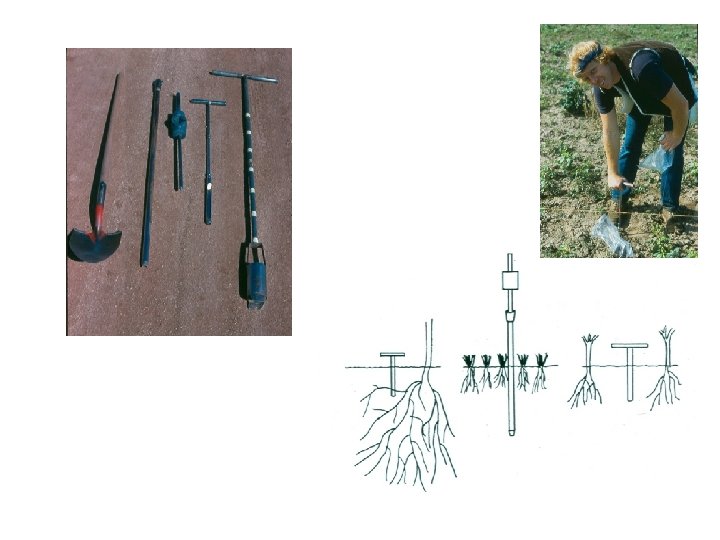
Objectives of monitoring/sampling for nematodes A. Assess risk of loss i) Determine presence or absence a. assessment of long-term risk - perennials b. virus-vectors c. root crops - direct damage. d. exotic pests ii) Determine population abundance - relative/absolute a. predict potential yield/damage b. assess rate of population change (+ or -) iii) Determine spatial patterns. a. pattern of potential loss b. partial treatment/management B. Faunistic studies i) Community structure and ecosystem analysis a. foodweb structure and function ii) Environmental impacts/quality /markers a. effects of disturbance and contaminants b. recovery from perturbation iii) Collections / surveys a. faunal inventories b. biodiversity studies
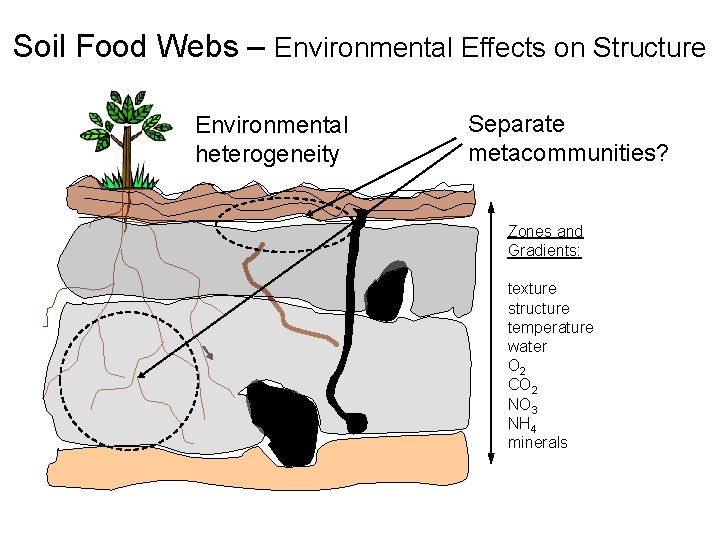
Soil Food Webs – Environmental Effects on Structure Environmental heterogeneity Separate metacommunities? Zones and Gradients: texture structure temperature water O 2 CO 2 NO 3 NH 4 minerals
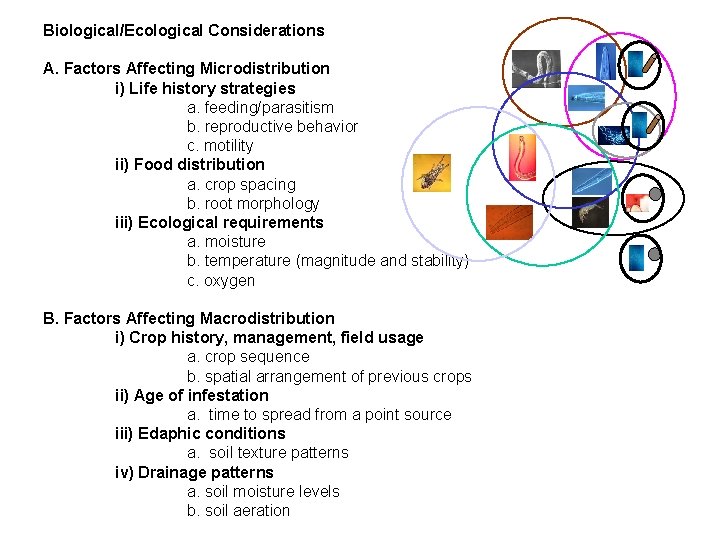
Biological/Ecological Considerations A. Factors Affecting Microdistribution i) Life history strategies a. feeding/parasitism b. reproductive behavior c. motility ii) Food distribution a. crop spacing b. root morphology iii) Ecological requirements a. moisture b. temperature (magnitude and stability) c. oxygen B. Factors Affecting Macrodistribution i) Crop history, management, field usage a. crop sequence b. spatial arrangement of previous crops ii) Age of infestation a. time to spread from a point source iii) Edaphic conditions a. soil texture patterns iv) Drainage patterns a. soil moisture levels b. soil aeration
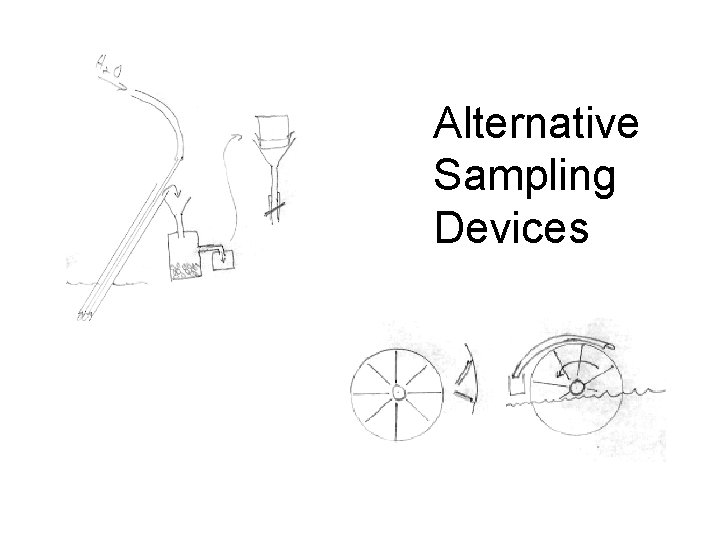
Alternative Sampling Devices
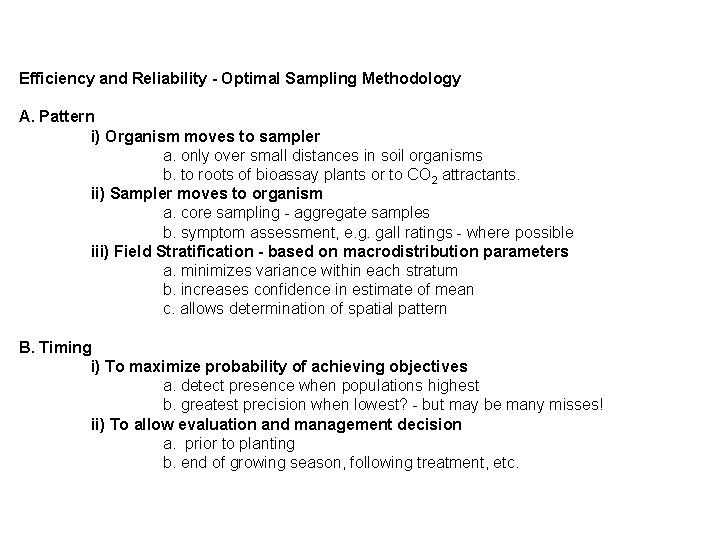
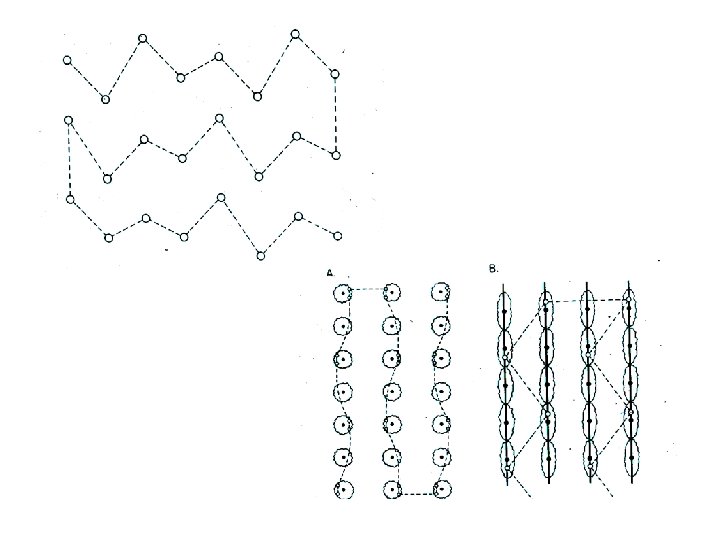
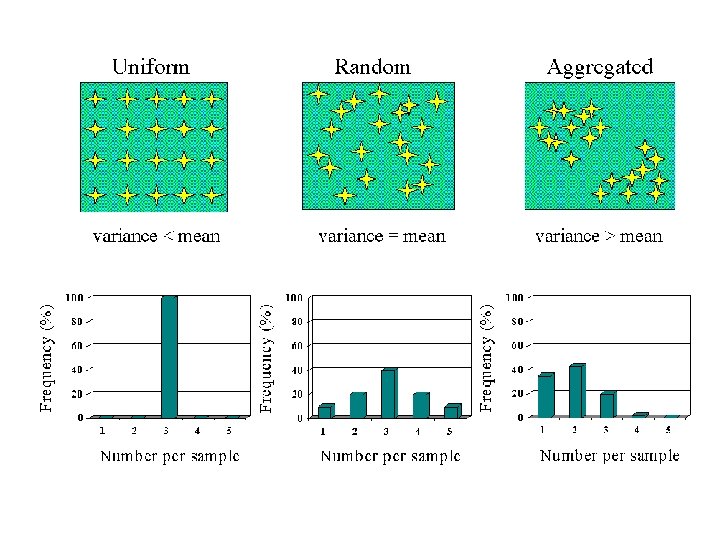
Efficiency and Reliability - Optimal Sampling Methodology A. Pattern i) Organism moves to sampler a. only over small distances in soil organisms b. to roots of bioassay plants or to CO 2 attractants. ii) Sampler moves to organism a. core sampling - aggregate samples b. symptom assessment, e. g. gall ratings - where possible iii) Field Stratification - based on macrodistribution parameters a. minimizes variance within each stratum b. increases confidence in estimate of mean c. allows determination of spatial pattern B. Timing i) To maximize probability of achieving objectives a. detect presence when populations highest b. greatest precision when lowest? - but may be many misses! ii) To allow evaluation and management decision a. prior to planting b. end of growing season, following treatment, etc.
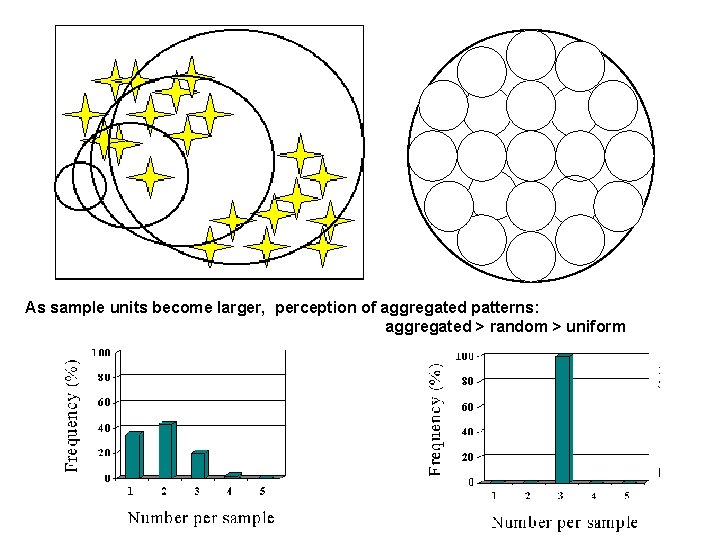
As sample units become larger, perception of aggregated patterns: aggregated > random > uniform
Nematode Thresholds and Damage Levels Some of those involved…. • • Dan Ball Larry Duncan Pete Goodell Joe Noling Diane Alston Sally Schneider Lance Beem
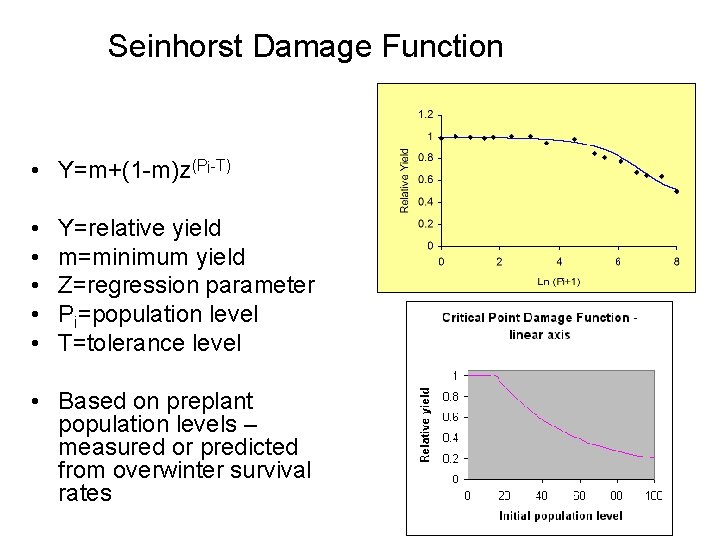
Seinhorst Damage Function • Y=m+(1 -m)z(Pi-T) • • • Y=relative yield m=minimum yield Z=regression parameter Pi=population level T=tolerance level • Based on preplant population levels – measured or predicted from overwinter survival rates
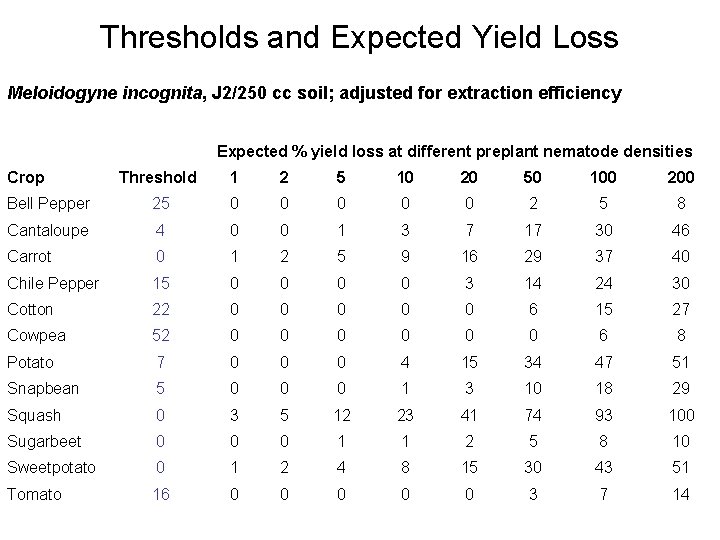
Thresholds and Expected Yield Loss Meloidogyne incognita, J 2/250 cc soil; adjusted for extraction efficiency Expected % yield loss at different preplant nematode densities Crop Threshold 1 2 5 10 20 50 100 200 Bell Pepper 25 0 0 0 2 5 8 Cantaloupe 4 0 0 1 3 7 17 30 46 Carrot 0 1 2 5 9 16 29 37 40 Chile Pepper 15 0 0 3 14 24 30 Cotton 22 0 0 0 6 15 27 Cowpea 52 0 0 0 6 8 Potato 7 0 0 0 4 15 34 47 51 Snapbean 5 0 0 0 1 3 10 18 29 Squash 0 3 5 12 23 41 74 93 100 Sugarbeet 0 0 0 1 1 2 5 8 10 Sweetpotato 0 1 2 4 8 15 30 43 51 Tomato 16 0 0 0 3 7 14
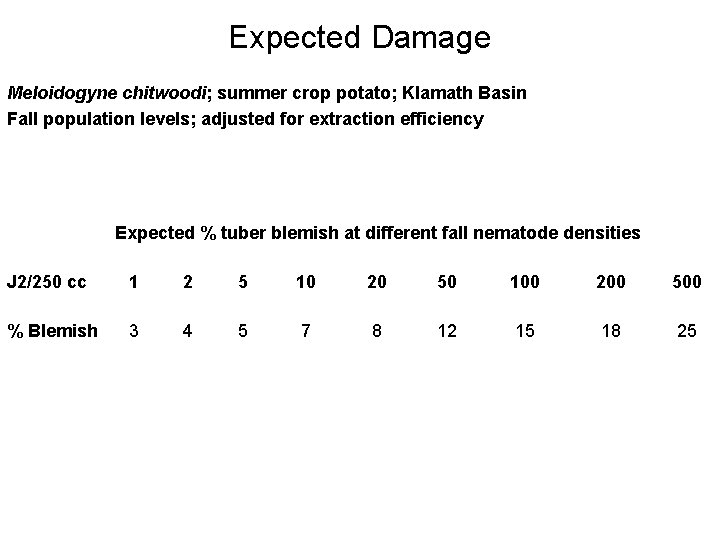
Expected Damage Meloidogyne chitwoodi; summer crop potato; Klamath Basin Fall population levels; adjusted for extraction efficiency Expected % tuber blemish at different fall nematode densities J 2/250 cc 1 2 5 10 20 50 100 200 500 % Blemish 3 4 5 7 8 12 15 18 25
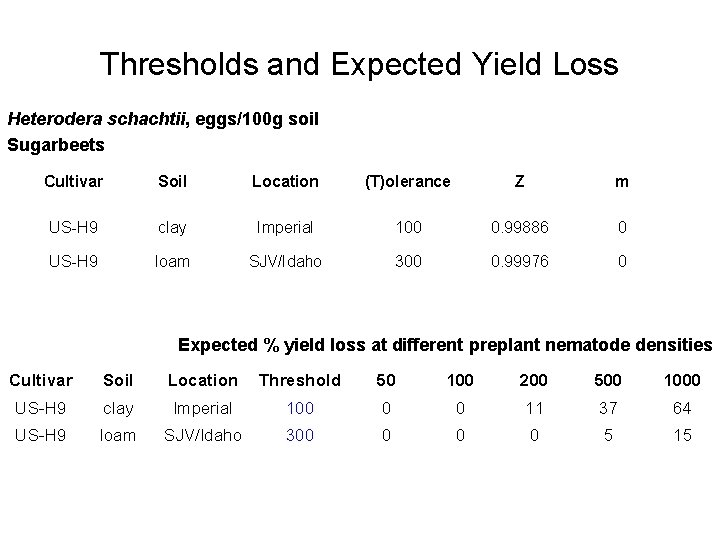
Thresholds and Expected Yield Loss Heterodera schachtii, eggs/100 g soil Sugarbeets Cultivar Soil Location (T)olerance Z m US-H 9 clay Imperial 100 0. 99886 0 US-H 9 loam SJV/Idaho 300 0. 99976 0 Expected % yield loss at different preplant nematode densities Cultivar Soil Location Threshold 50 100 200 500 1000 US-H 9 clay Imperial 100 0 0 11 37 64 US-H 9 loam SJV/Idaho 300 0 5 15
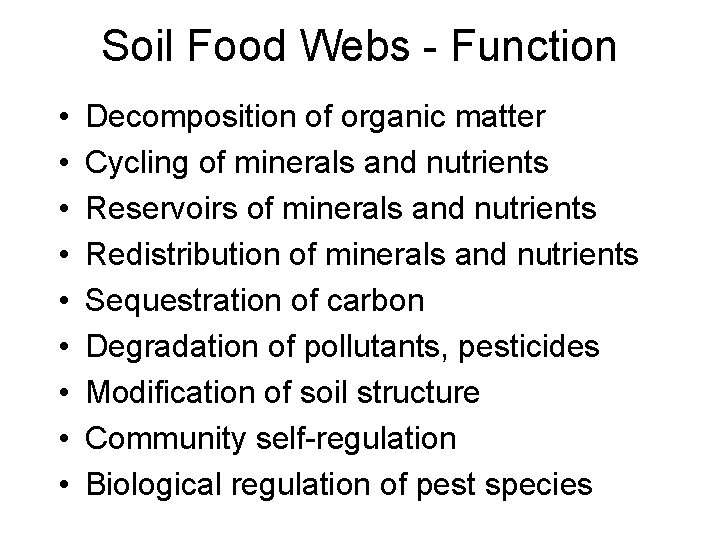
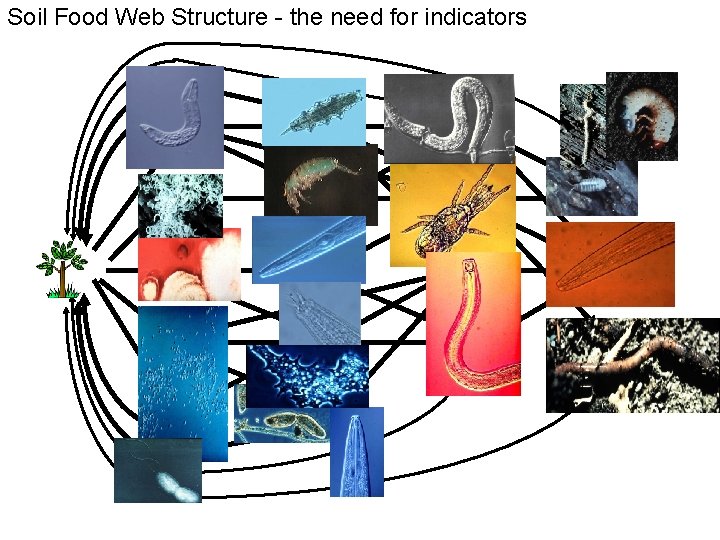
Soil Food Webs - Function • • • Decomposition of organic matter Cycling of minerals and nutrients Reservoirs of minerals and nutrients Redistribution of minerals and nutrients Sequestration of carbon Degradation of pollutants, pesticides Modification of soil structure Community self-regulation Biological regulation of pest species
Soil Food Web Structure - the need for indicators
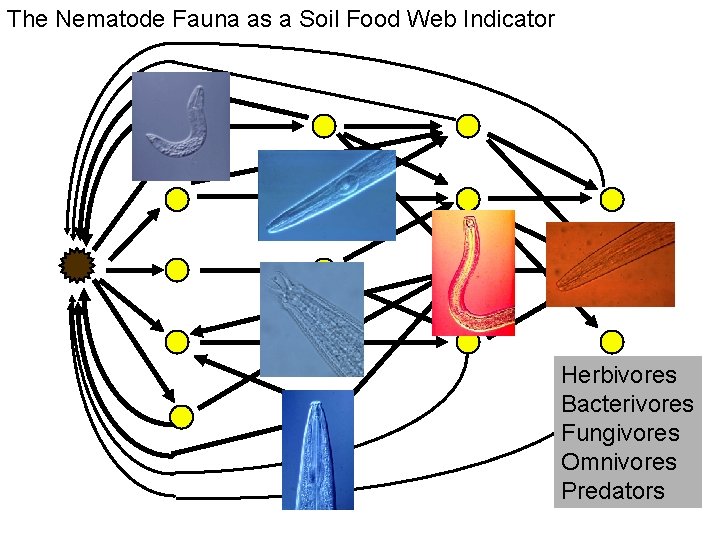
The Nematode Fauna as a Soil Food Web Indicator Herbivores Bacterivores Fungivores Omnivores Predators
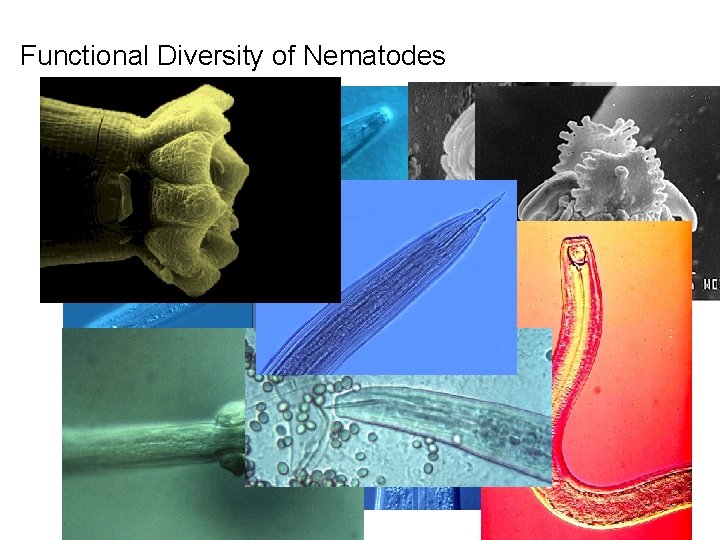
Functional Diversity of Nematodes
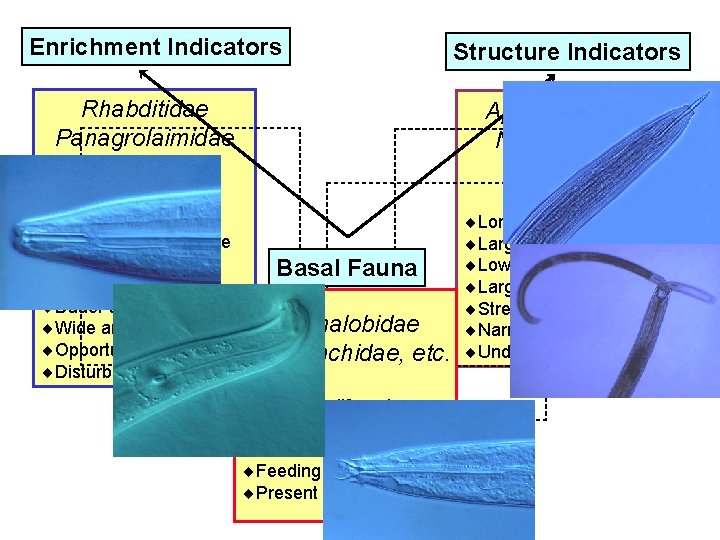
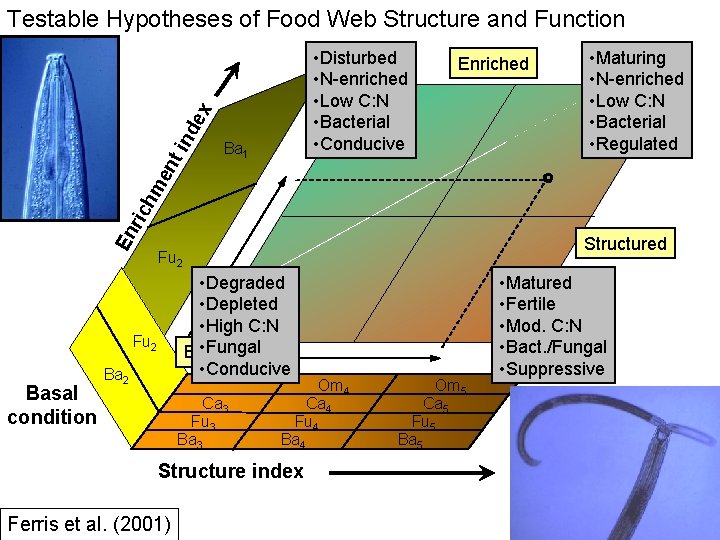
Enrichment Indicators Rhabditidae Panagrolaimidae etc. ¨Short lifecycle ¨Small/ Mod. body size ¨High fecundity ¨Small eggs ¨Dauer stages ¨Wide amplitude ¨Opportunists ¨Disturbed conditions Structure Indicators Aporcelaimidae Nygolaimidae etc. Basal Fauna Cephalobidae Aphelenchidae, etc. ¨Moderate lifecycle ¨Small body size ¨Stress tolerant ¨Feeding adaptations ¨Present in all soils ¨Long lifecycle ¨Large body size ¨Low fecundity ¨Large eggs ¨Stress intolerant ¨Narrow amplitude ¨Undisturbed conditions
• Disturbed • N-enriched • Low C: N • Bacterial • Conducive Ba 1 Enriched • Maturing • N-enriched • Low C: N • Bacterial • Regulated En ric hm en t in de x Testable Hypotheses of Food Web Structure and Function • Degraded • Depleted • High C: N • Fungal Basal • Conducive Fu 2 Basal condition Structured Fu 2 Ba 2 Ca 3 Fu 3 Ba 3 Om 4 Ca 4 Fu 4 Ba 4 Structure index Ferris et al. (2001) Om 5 Ca 5 Fu 5 Ba 5 • Matured • Fertile • Mod. C: N • Bact. /Fungal • Suppressive
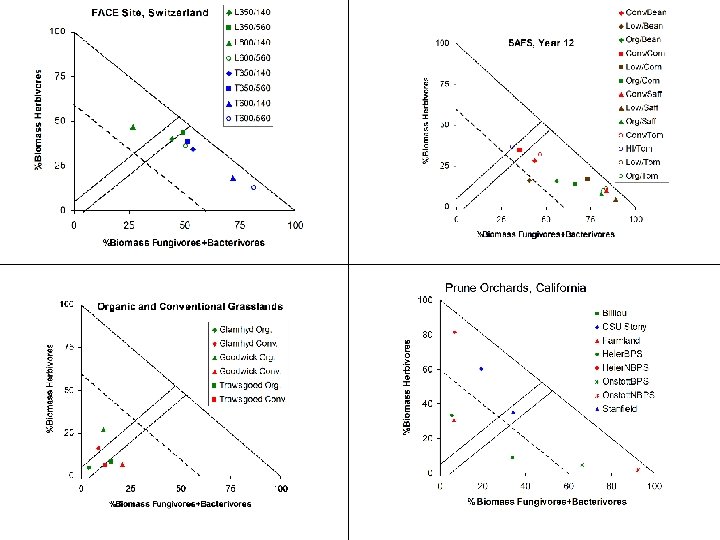
Trajectory Analysis of Some California Soil Systems Enrichment Index Tomato Systems Yolo Co. Mojave Desert 100 Prune Orchards Yuba Co. 50 0 0 50 Structure Index Redwood Forest and Grass Mendocino Co. 100
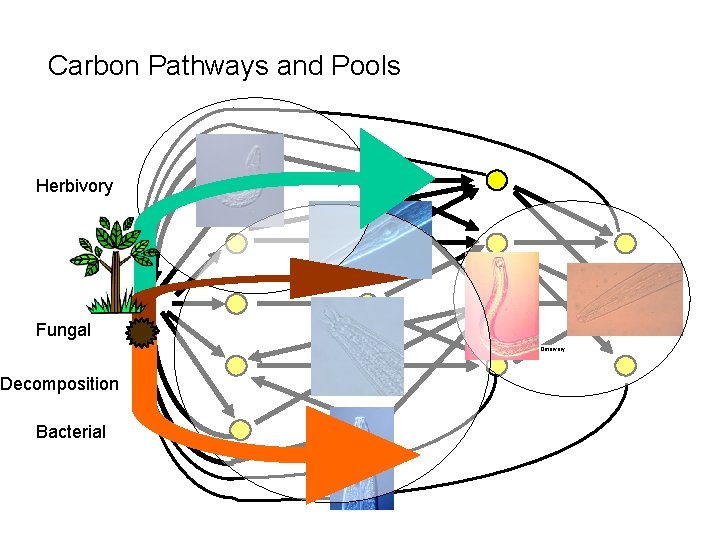
Carbon Pathways and Pools Herbivory Fungal Omnivory Decomposition Bacterial
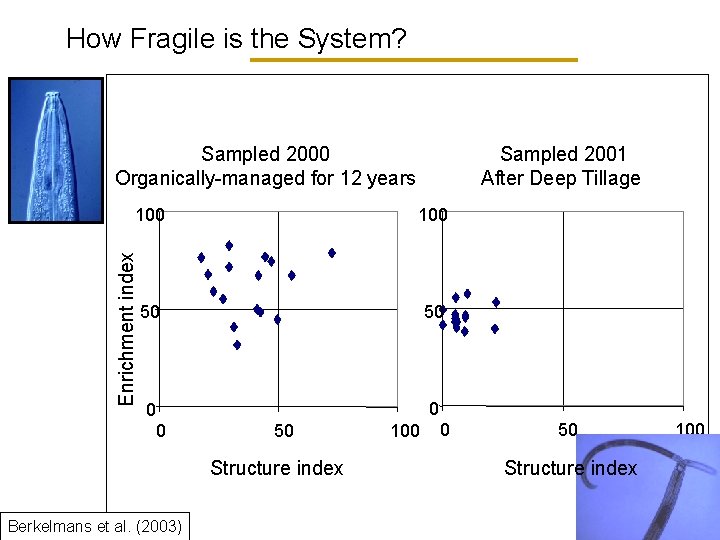
How Fragile is the System? Sampled 2000 Organically-managed for 12 years Enrichment index 100 Sampled 2001 After Deep Tillage 100 50 50 Structure index Berkelmans et al. (2003) 100 0 50 Structure index 100
Some References • Bongers, T. , H. Ferris. 1999. Nematode community structure as a bioindicator in environmental monitoring. Trends Ecol. Evol. 14, 224 -228. • Duncan, L. W. and H. Ferris. 1983. Effects of Meloidogyne incognita on cotton and cowpeas in rotation. Proceedings of the Beltwide Cotton Production Research Conference: 22 -26. • Ferris, H. 1984. Probability range in damage predictions as related to sampling decisions. Journal of Nematology 16: 246 -251. • Ferris, H. , D. A. Ball, L. W. Beem and L. A. Gudmundson. 1986. Using nematode count data in crop management decisions. California Agriculture 40: 12 -14. • Ferris, H. , T. Bongers, R. G. M. de Goede. 2001. A framework for soil food web diagnostics: extension of the nematode faunal analysis concept. Appl. Soil Ecol. 18, 13 -29. • Ferris, H. , P. B. Goodell, M. V. Mc. Kenry. 1981. Sampling for nematodes. California Agriculture 35: 13 -15. • Ferris, H. , M. M. Matute. 2003. Structural and functional succession in the nematode fauna of a soil food web. Appl. Soil Ecol. 23: 93 -110. • Tenuta, M. , H. Ferris. 2004. Relationship between nematode life-history classification and sensitivity to stressors: ionic and osmotic effects of nitrogenous solutions. J. Nematol. 36: 85 -94. More information: http: //plpnemweb. ucdavis. edu/nemaplex. htm