
Neighborhood Stability and Neighborhood Change A Study of
Neighborhood Stability and Neighborhood Change: A Study of Housing Unit Turnover in Low-Income Neighborhoods Brett Theodos, Claudia Coulton, and Rob Pitingolo April 11, 2013 THE URBAN INSTITUTE 1
A look at Neighborhood Stability • Residential instability a concern in poor neighborhoods – Churning moves can lead to worse outcomes for families and, in particular, kids – Negative effect on collective efficacy – Resident engagement and leadership difficult to sustain • Knowing what types of households, housing units, and neighborhoods are prone to instability can guide stabilization efforts THE URBAN INSTITUTE 2
Housing Unit Panel Ideal for Investigating Residential Instability in Neighborhoods • Track same units (nested within neighborhoods) over multiple waves • Turnover defined when a household moves out and another moves in or the unit becomes vacant • Allows examination of predictors at multiple levels: – Household – Housing unit – Neighborhood THE URBAN INSTITUTE 3
Making Connections Survey Data • Representative sample of housing units – Wave I (2002 -03) – Wave II (2005 -06) – Wave III (2008 -09) • 9, 179 housing units observed in 70 neighborhoods in 10 cities, averaging 131 housing units per neighborhood THE URBAN INSTITUTE 4
Methods • Multi-level (random coefficient) logistic model – DV: housing unit turnover (individual level) – IVs: • Household: age, income, employment, financial distress, race, nativity, homeownership, subsidized rent, collective efficacy • Housing unit: single/multi-family, physical condition, proximity to commercial businesses, factories, or parks • Neighborhood: homeownership, collective efficacy, poverty THE URBAN INSTITUTE 5
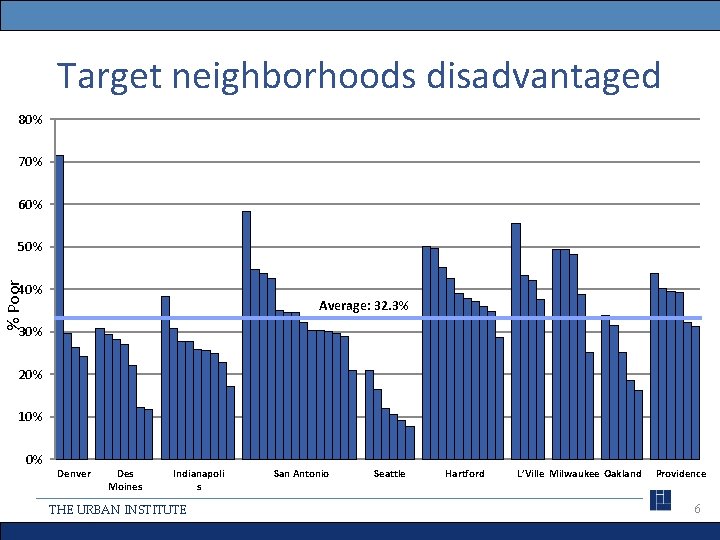
Target neighborhoods disadvantaged 80% 70% 60% % Poor 50% 40% Average: 32. 3% 30% 20% 10% 0% Denver Des Moines Indianapoli s THE URBAN INSTITUTE San Antonio Seattle Hartford L’Ville Milwaukee Oakland Providence 6
Research Question 1 • How frequently did housing units turn over? THE URBAN INSTITUTE 7
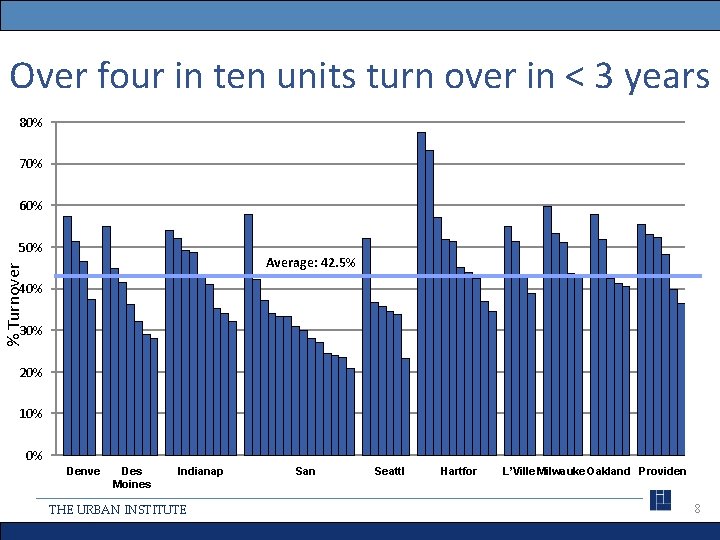
Over four in ten units turn over in < 3 years 80% 70% 60% 50% % Turnover Average: 42. 5% 40% 30% 20% 10% 0% Denve Des Moines Indianap THE URBAN INSTITUTE San Seattl Hartfor L’Ville Milwauke Oakland Providen 8
Research Question 2 • How does housing unit turnover play out at the neighborhood level? THE URBAN INSTITUTE 9
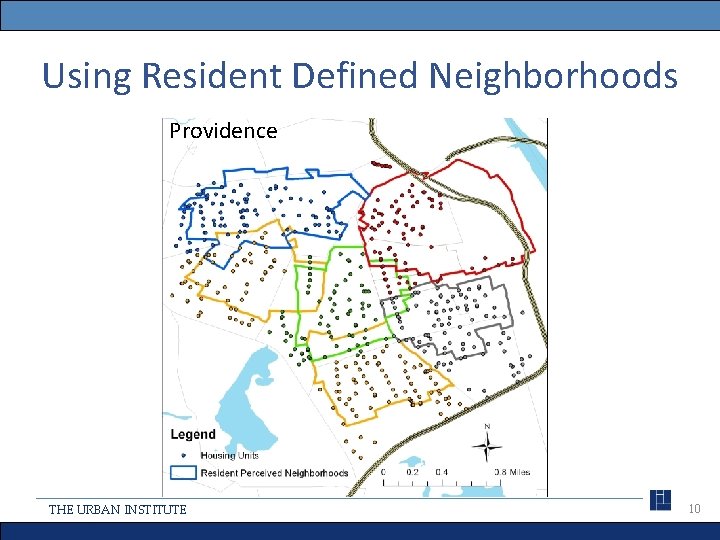
Using Resident Defined Neighborhoods Providence THE URBAN INSTITUTE 10
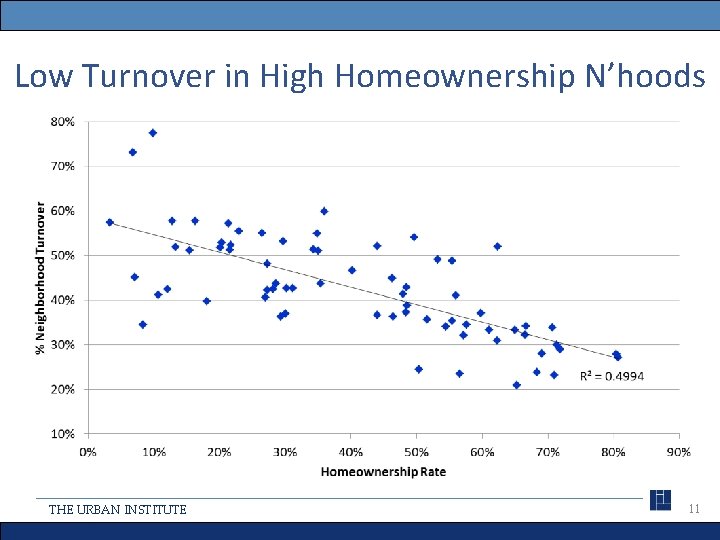
Low Turnover in High Homeownership N’hoods THE URBAN INSTITUTE 11
Research Question 3 • What characteristics of households, housing units, and neighborhoods are associated with the higher rates of turnover? THE URBAN INSTITUTE 12
Household factors THE URBAN INSTITUTE 13
Percent Increase/Decrease Likelihood Odds of Turnover Age a big driver in turnover THE URBAN INSTITUTE 14
Percent Increase/Decrease Likelihood Odds of Turnover Low-income households turn over more THE URBAN INSTITUTE 15
Percent Increase/Decrease Likelihood Odds of Turnover Employment, Financial Distress, and Collective Efficacy Matter THE URBAN INSTITUTE 16
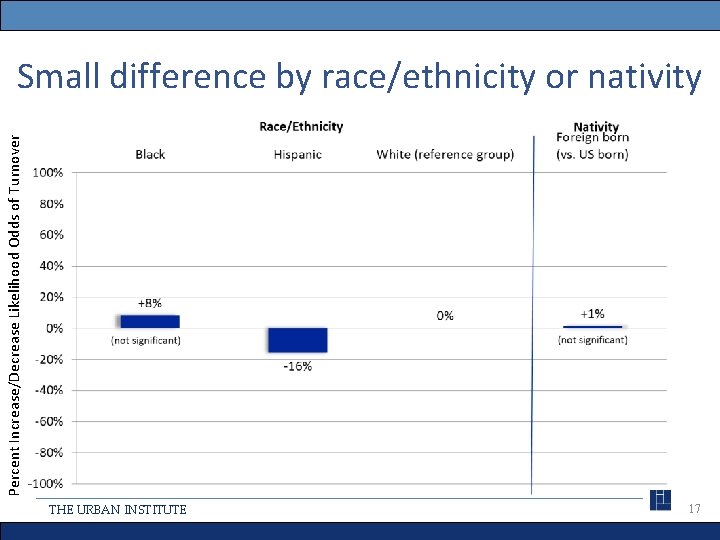
Percent Increase/Decrease Likelihood Odds of Turnover Small difference by race/ethnicity or nativity THE URBAN INSTITUTE 17
Housing unit factors THE URBAN INSTITUTE 18
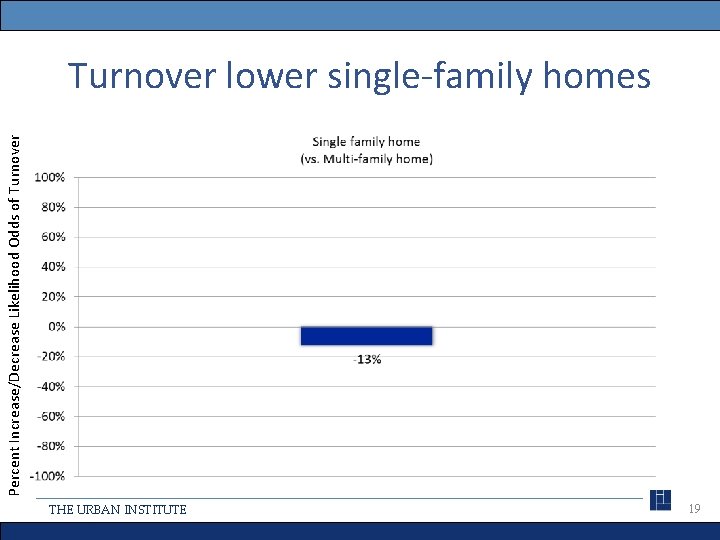
Percent Increase/Decrease Likelihood Odds of Turnover lower single-family homes THE URBAN INSTITUTE 19
Neighborhood factors THE URBAN INSTITUTE 20
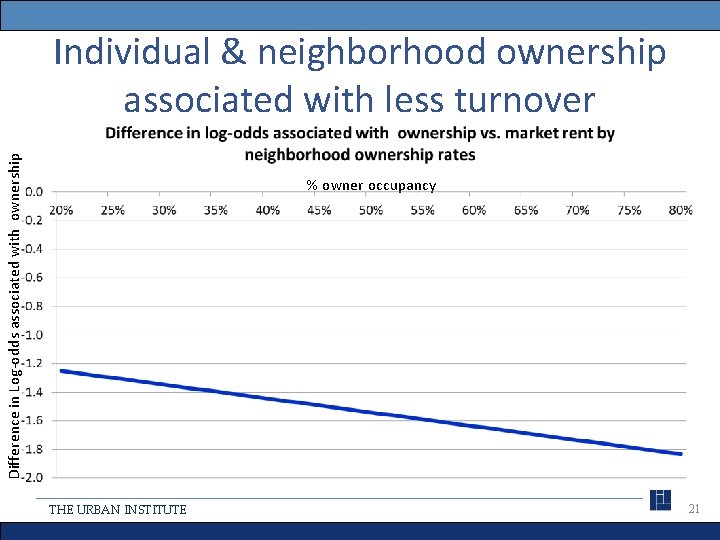
Difference in Log-odds associated with ownership Individual & neighborhood ownership associated with less turnover % owner occupancy THE URBAN INSTITUTE 21
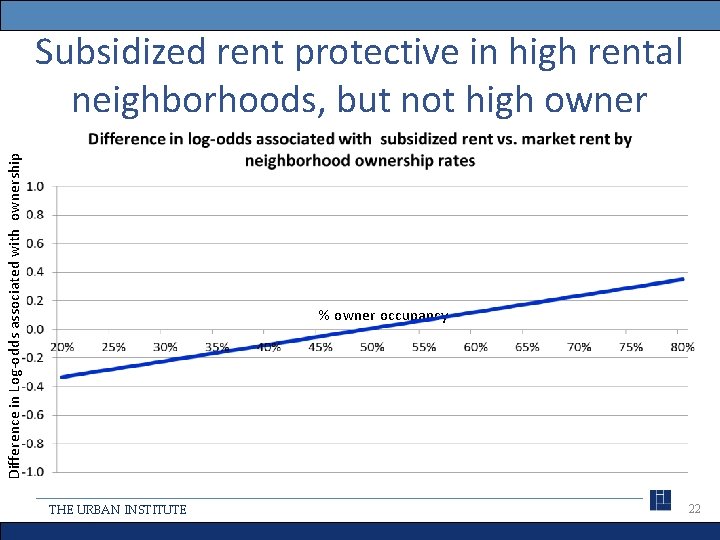
Difference in Log-odds associated with ownership Subsidized rent protective in high rental neighborhoods, but not high owner % owner occupancy THE URBAN INSTITUTE 22
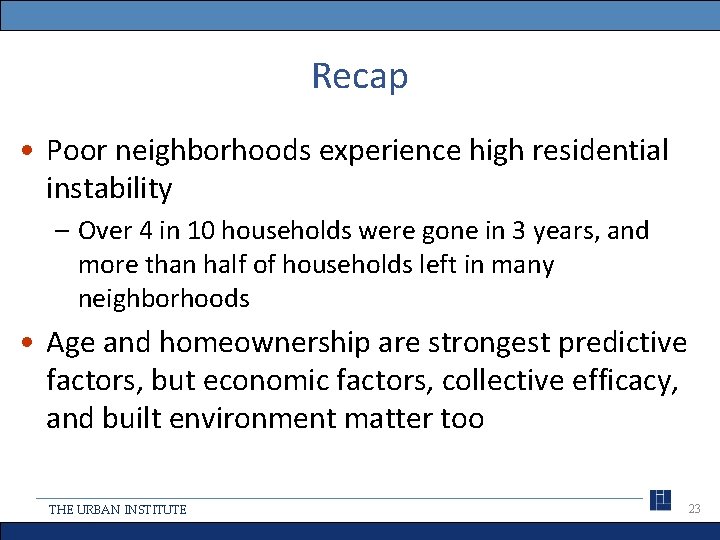
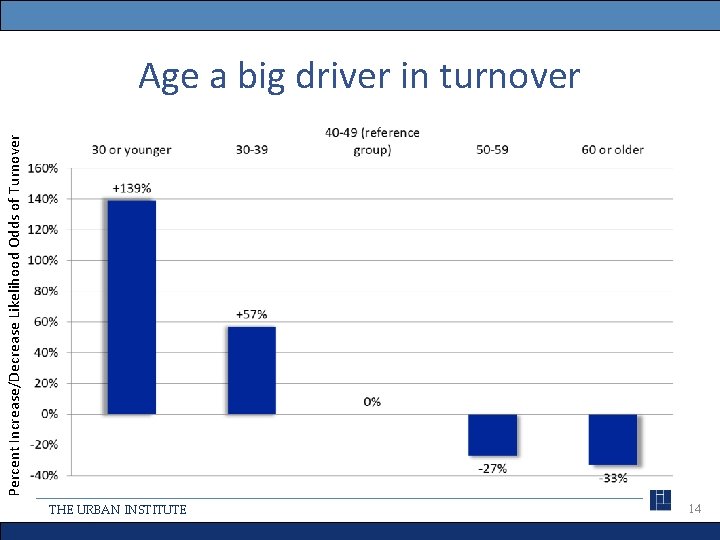
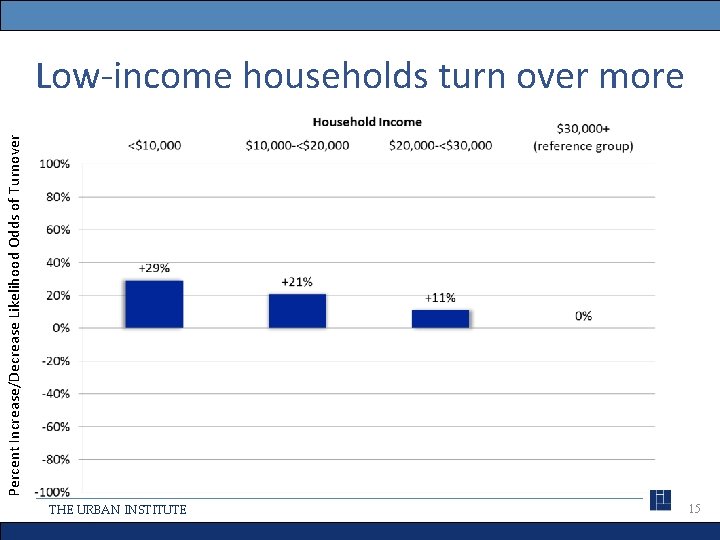
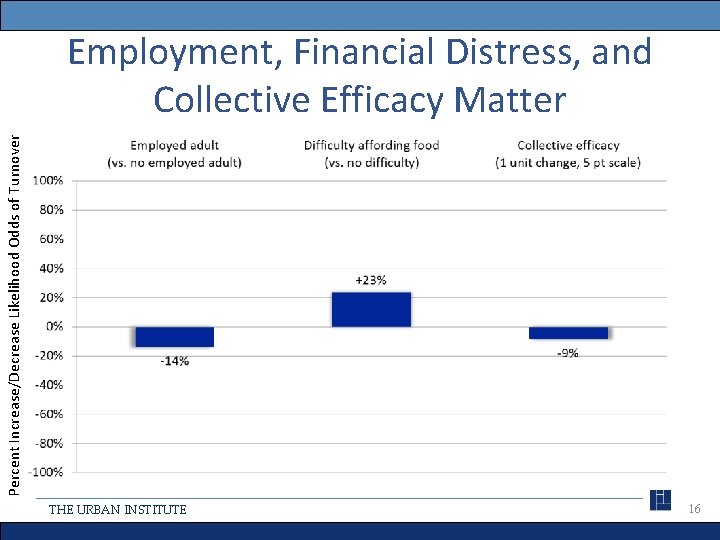
Recap • Poor neighborhoods experience high residential instability – Over 4 in 10 households were gone in 3 years, and more than half of households left in many neighborhoods • Age and homeownership are strongest predictive factors, but economic factors, collective efficacy, and built environment matter too THE URBAN INSTITUTE 23
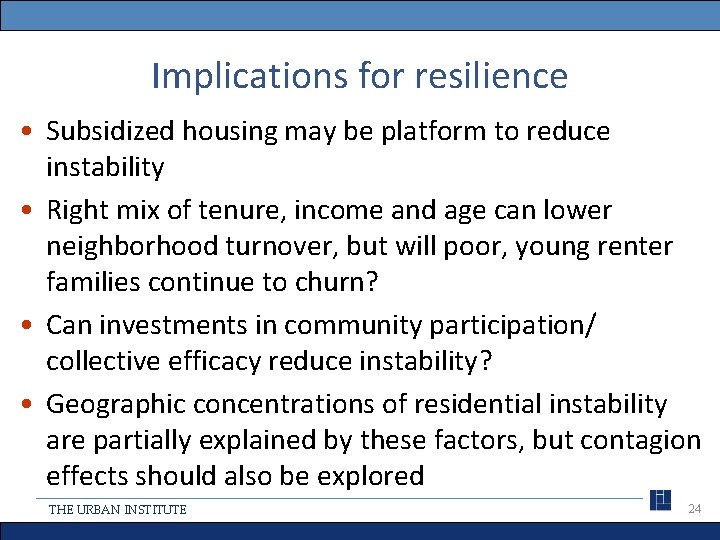
Implications for resilience • Subsidized housing may be platform to reduce instability • Right mix of tenure, income and age can lower neighborhood turnover, but will poor, young renter families continue to churn? • Can investments in community participation/ collective efficacy reduce instability? • Geographic concentrations of residential instability are partially explained by these factors, but contagion effects should also be explored THE URBAN INSTITUTE 24
- Slides: 24