
Negotiations Trust Emotions and Implementation Alexandra Mislin Assistant


- Slides: 50
Negotiations Trust, Emotions, and Implementation Alexandra Mislin Assistant Professor, SUNY Buffalo Visiting Scholar, George Mason University ICES
Today’s Lecture Negotiation Exercise ¡ General topics in Negotiations Research ¡ Presentation of Research in Progress ¡
Negotiation What is it? The process by which parties with different preferences reach joint agreements Why negotiate? “Sophisticated managers know that the largest part of management is negotiating, not giving orders or unilaterally executing plans. ” --Richard G. Darman, Former Deputy Secretary of the United States Treasury
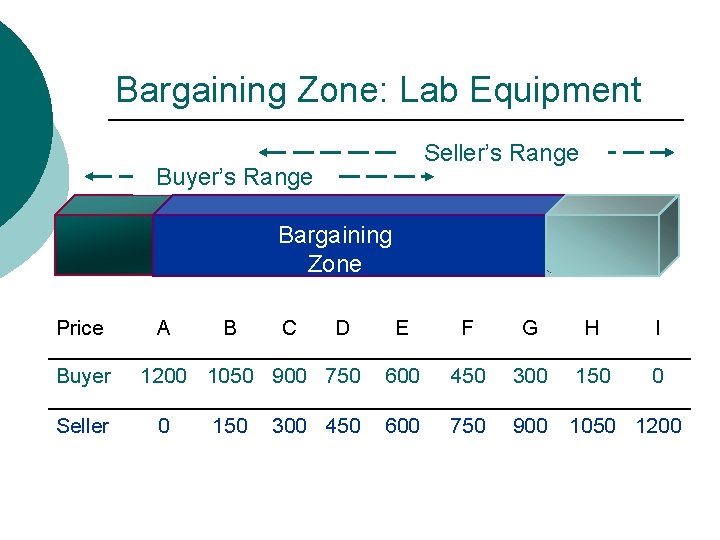
Preparing to negotiate Determine the bargaining range Buyer’s Range Seller’s Range Bargaining Zone Seller’s Reservation Price Buyer’s Target Price Buyer’s Reservation Price Seller’s Target Price
Creating Value through agreements ¡ Negotiation case l Two parties l Multiple issues
Guidelines for negotiation case Stick to your role ¡ Do not exchange information sheets ¡ You are not required to settle ¡ A complex negotiation: multiple issues, not just the “lab equipment” ¡ When finished, post your outcomes on the board ¡
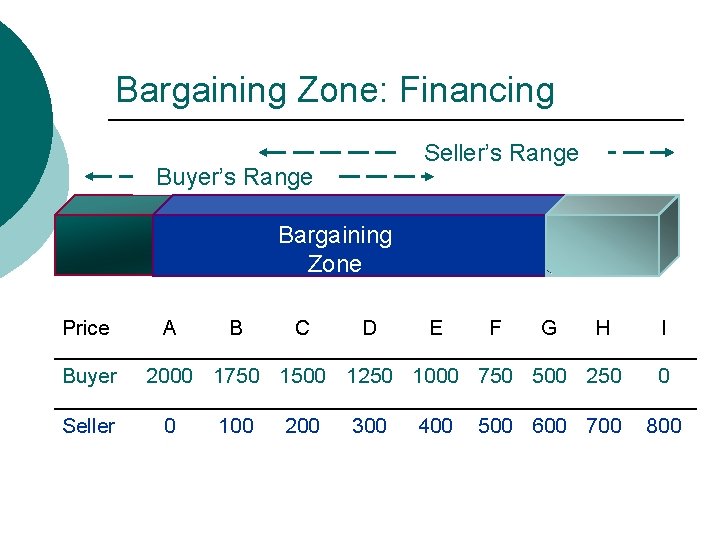
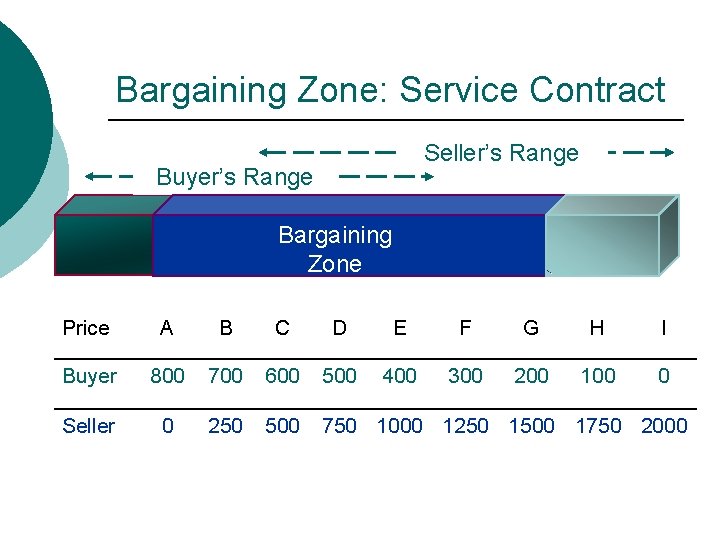
Bargaining Zone Analysis ¡ Equipment “P 300” ¡ Financing ¡ Service Contract
Bargaining Zone: Lab Equipment Seller’s Range Buyer’s Range Bargaining Zone Price Buyer Seller A B C D 1200 1050 900 750 0 150 300 450 E F G H I 600 450 300 150 0 600 750 900 1050 1200
Claiming value ¡ Distributive issues l I win/you lose l Pie slicing…
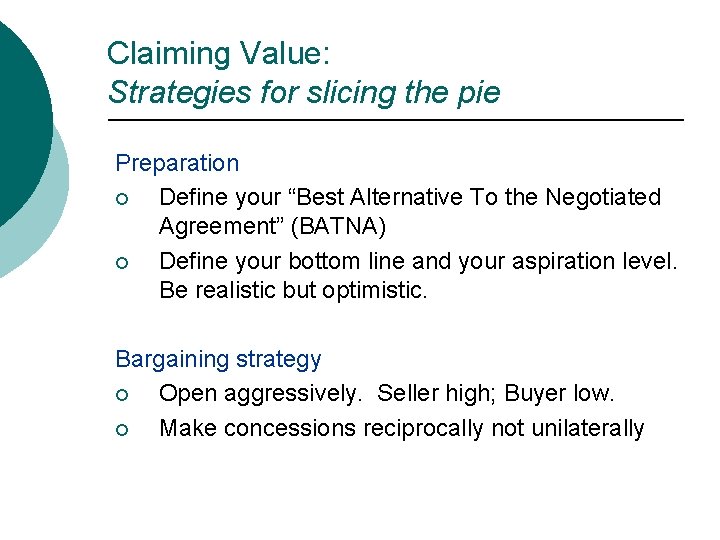
Claiming Value: Strategies for slicing the pie Preparation ¡ Define your “Best Alternative To the Negotiated Agreement” (BATNA) ¡ Define your bottom line and your aspiration level. Be realistic but optimistic. Bargaining strategy ¡ Open aggressively. Seller high; Buyer low. ¡ Make concessions reciprocally not unilaterally
At first blush… ¡ Claiming Value l Distributive issues ¡I win/you lose l Or are they?
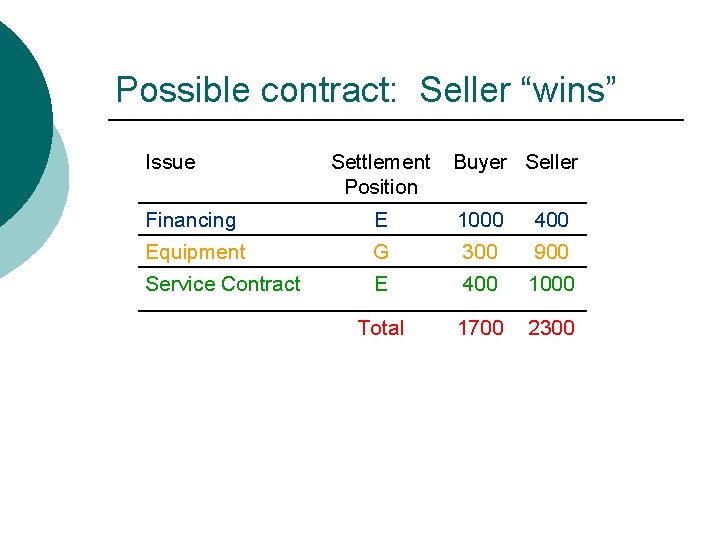
Possible contract: Seller “wins” Issue Settlement Position Buyer Seller Financing E 1000 400 Equipment G 300 900 Service Contract E 400 1000 Total 1700 2300
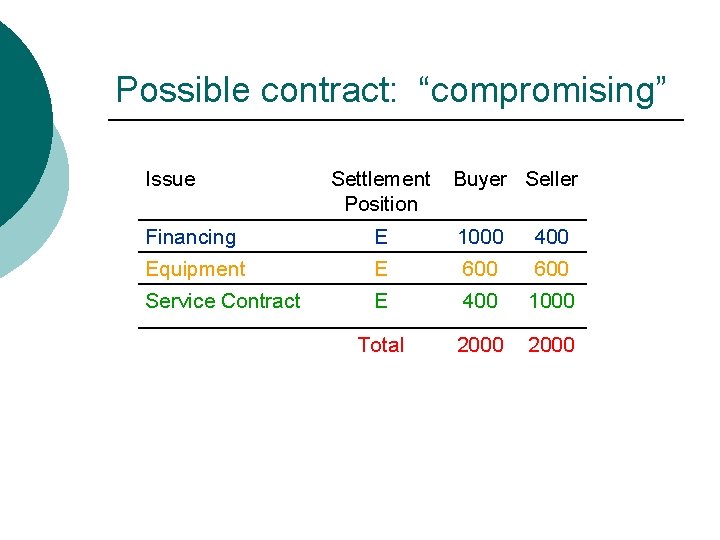
Possible contract: “compromising” Issue Settlement Position Buyer Seller Financing E 1000 400 Equipment E 600 Service Contract E 400 1000 Total 2000
Bargaining Zone: Financing Seller’s Range Buyer’s Range Bargaining Zone Price Buyer Seller A B C D E F G H 2000 1750 1500 1250 1000 750 500 250 0 100 200 300 400 500 600 700 I 0 800
Bargaining Zone: Service Contract Seller’s Range Buyer’s Range Bargaining Zone Price A B C D E F G H I Buyer 800 700 600 500 400 300 200 100 0 Seller 0 250 500 750 1000 1250 1500 1750 2000
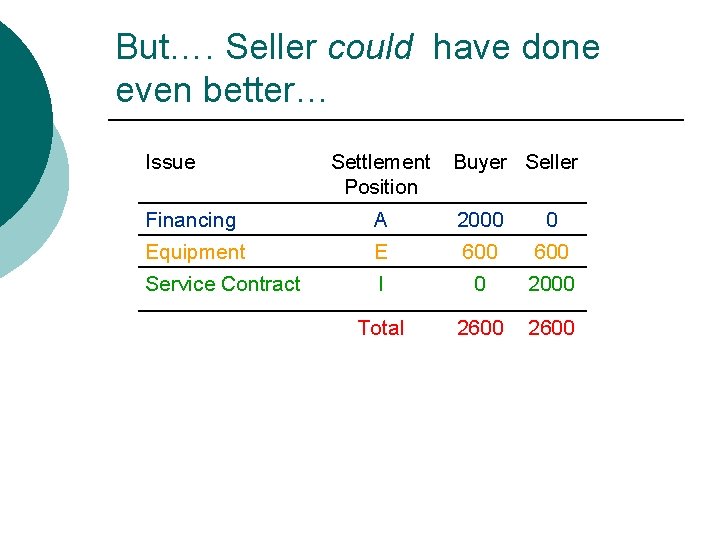
But…. Seller could have done even better… Issue Settlement Position Buyer Seller Financing A 2000 0 Equipment E 600 Service Contract I 0 2000 Total 2600
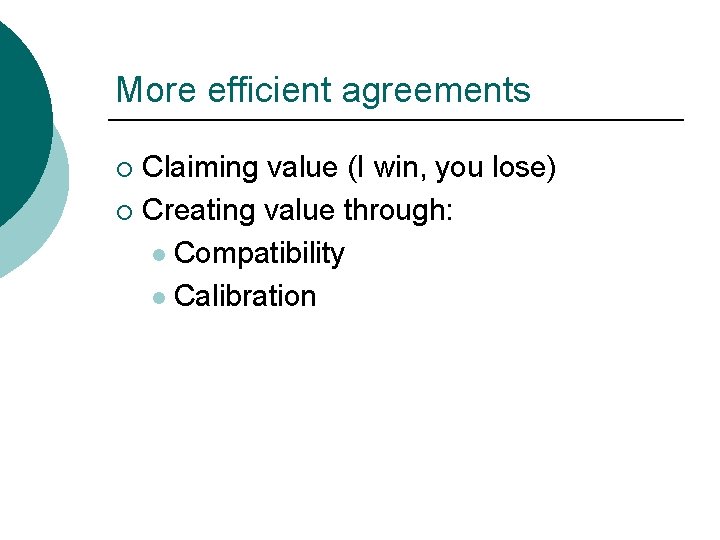
More efficient agreements Claiming value (I win, you lose) ¡ Creating value through: l Compatibility l Calibration ¡
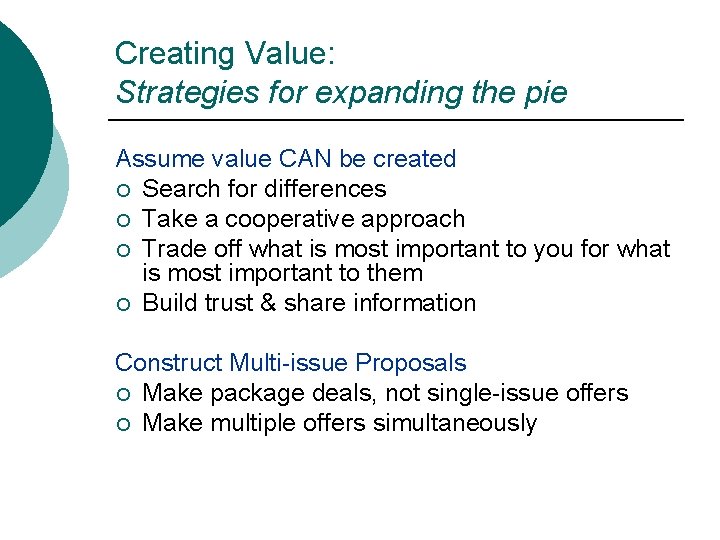
Creating Value: Strategies for expanding the pie Assume value CAN be created ¡ Search for differences ¡ Take a cooperative approach ¡ Trade off what is most important to you for what is most important to them ¡ Build trust & share information Construct Multi-issue Proposals ¡ Make package deals, not single-issue offers ¡ Make multiple offers simultaneously
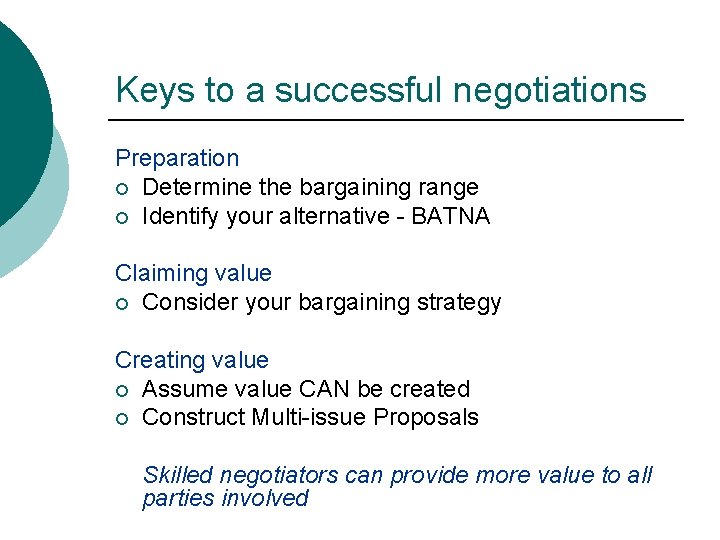
Keys to a successful negotiations Preparation ¡ Determine the bargaining range ¡ Identify your alternative - BATNA Claiming value ¡ Consider your bargaining strategy Creating value ¡ Assume value CAN be created ¡ Construct Multi-issue Proposals Skilled negotiators can provide more value to all parties involved
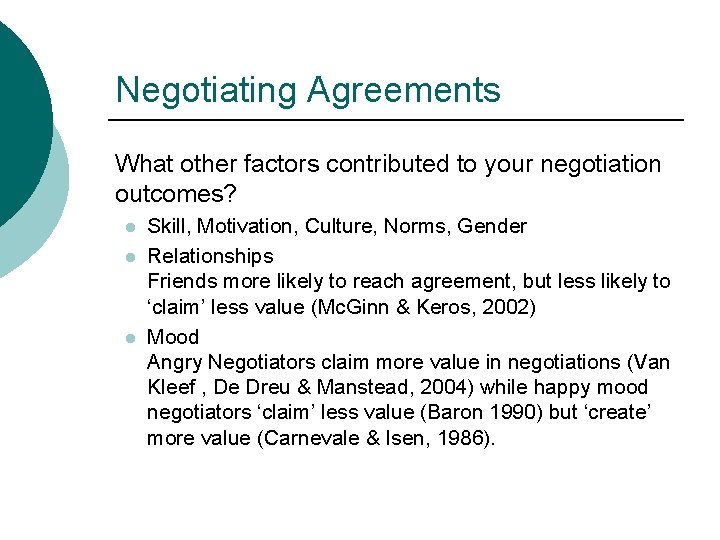
Negotiating Agreements What other factors contributed to your negotiation outcomes? l l l Skill, Motivation, Culture, Norms, Gender Relationships Friends more likely to reach agreement, but less likely to ‘claim’ less value (Mc. Ginn & Keros, 2002) Mood Angry Negotiators claim more value in negotiations (Van Kleef , De Dreu & Manstead, 2004) while happy mood negotiators ‘claim’ less value (Baron 1990) but ‘create’ more value (Carnevale & Isen, 1986).
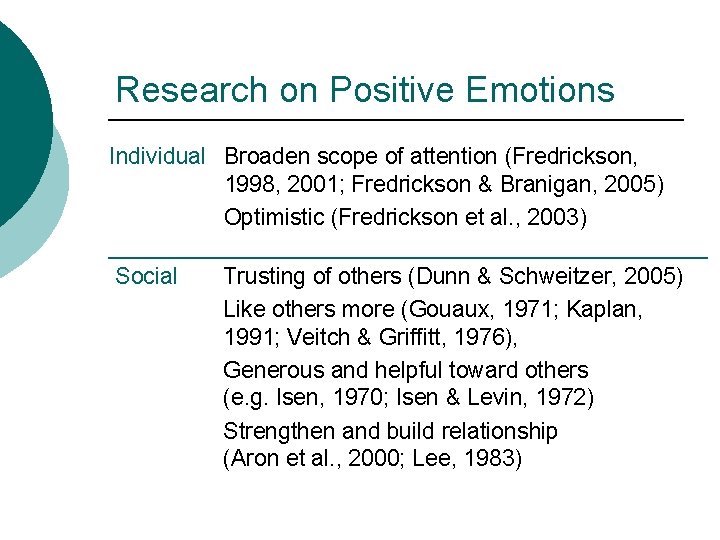
Research on Positive Emotions Individual Broaden scope of attention (Fredrickson, 1998, 2001; Fredrickson & Branigan, 2005) Optimistic (Fredrickson et al. , 2003) Social Trusting of others (Dunn & Schweitzer, 2005) Like others more (Gouaux, 1971; Kaplan, 1991; Veitch & Griffitt, 1976), Generous and helpful toward others (e. g. Isen, 1970; Isen & Levin, 1972) Strengthen and build relationship (Aron et al. , 2000; Lee, 1983)
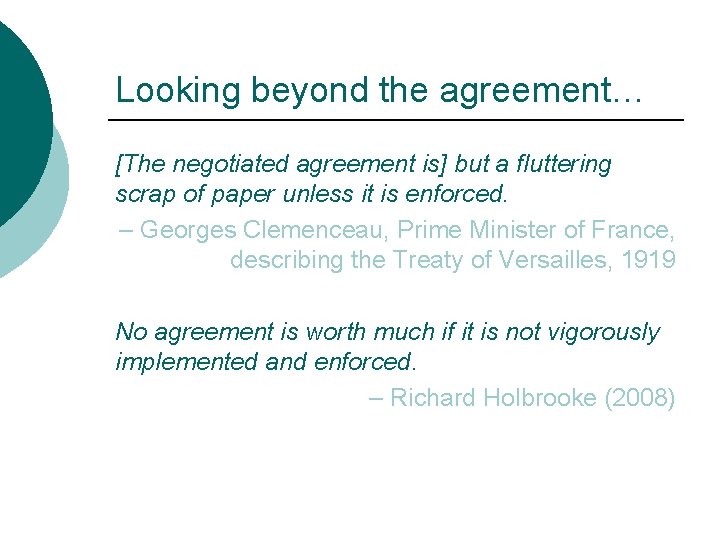
Looking beyond the agreement… [The negotiated agreement is] but a fluttering scrap of paper unless it is enforced. – Georges Clemenceau, Prime Minister of France, describing the Treaty of Versailles, 1919 No agreement is worth much if it is not vigorously implemented and enforced. – Richard Holbrooke (2008)
After the Deal: Affect, Trust Building, and the Implementation of Negotiated Agreements Alexandra Mislin, SUNY Buffalo William Bottom & Rachel Campagna Washington University in St. Louis
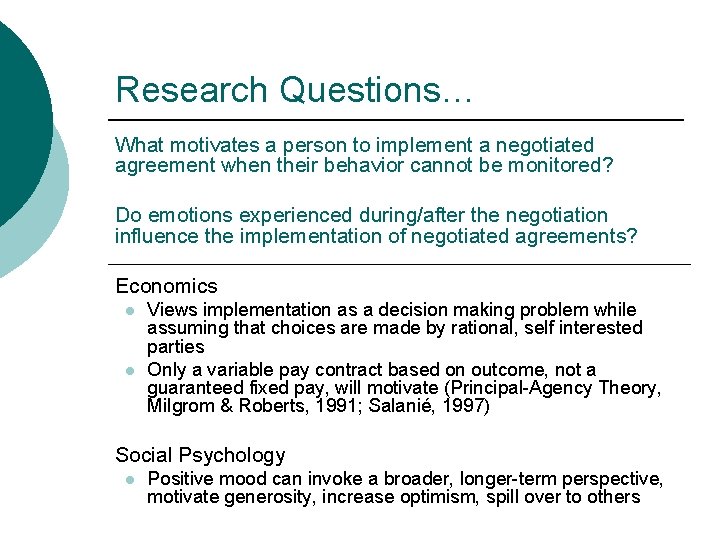
Research Questions… What motivates a person to implement a negotiated agreement when their behavior cannot be monitored? Do emotions experienced during/after the negotiation influence the implementation of negotiated agreements? Economics l l Views implementation as a decision making problem while assuming that choices are made by rational, self interested parties Only a variable pay contract based on outcome, not a guaranteed fixed pay, will motivate (Principal-Agency Theory, Milgrom & Roberts, 1991; Salanié, 1997) Social Psychology l Positive mood can invoke a broader, longer-term perspective, motivate generosity, increase optimism, spill over to others
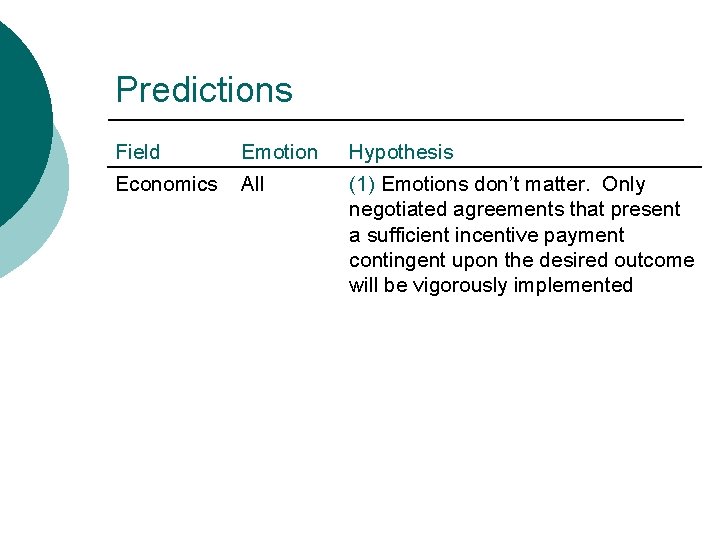
Predictions Field Emotion Hypothesis Economics All (1) Emotions don’t matter. Only negotiated agreements that present a sufficient incentive payment contingent upon the desired outcome will be vigorously implemented Social Pre-Neg. Psychology Positive (2) Parties who enter into negotiations in a more positive mood will negotiate agreements that are more vigorously implemented Post-Neg (3) Positive post-negotiation affect Positive will promote vigorous implementation of the agreement
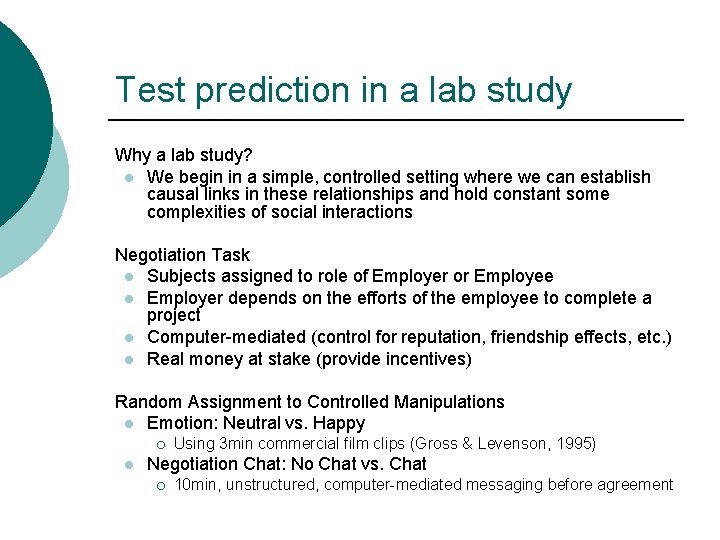
Test prediction in a lab study Why a lab study? l We begin in a simple, controlled setting where we can establish causal links in these relationships and hold constant some complexities of social interactions Negotiation Task l Subjects assigned to role of Employer or Employee l Employer depends on the efforts of the employee to complete a project l Computer-mediated (control for reputation, friendship effects, etc. ) l Real money at stake (provide incentives) Random Assignment to Controlled Manipulations l Emotion: Neutral vs. Happy ¡ l Using 3 min commercial film clips (Gross & Levenson, 1995) Negotiation Chat: No Chat vs. Chat ¡ 10 min, unstructured, computer-mediated messaging before agreement
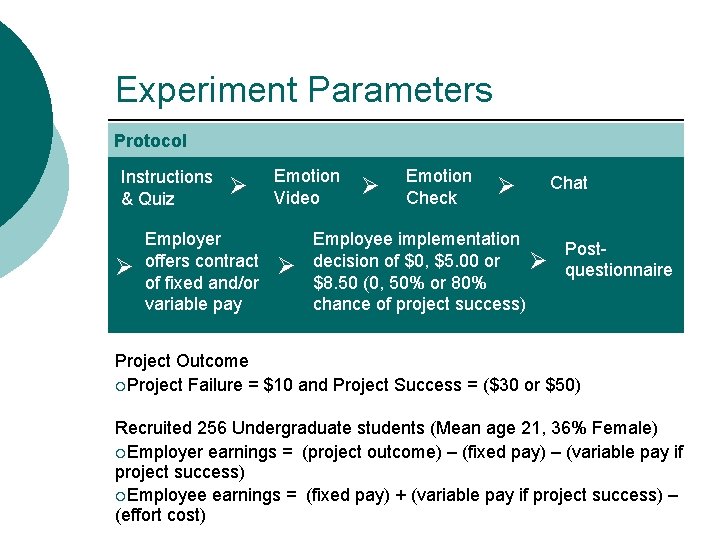
Experiment Parameters Protocol Instructions & Quiz Employer offers contract of fixed and/or variable pay Emotion Video Emotion Check Chat Employee implementation Postdecision of $0, $5. 00 or questionnaire $8. 50 (0, 50% or 80% chance of project success) Project Outcome ¡Project Failure = $10 and Project Success = ($30 or $50) Recruited 256 Undergraduate students (Mean age 21, 36% Female) ¡Employer earnings = (project outcome) – (fixed pay) – (variable pay if project success) ¡Employee earnings = (fixed pay) + (variable pay if project success) – (effort cost)
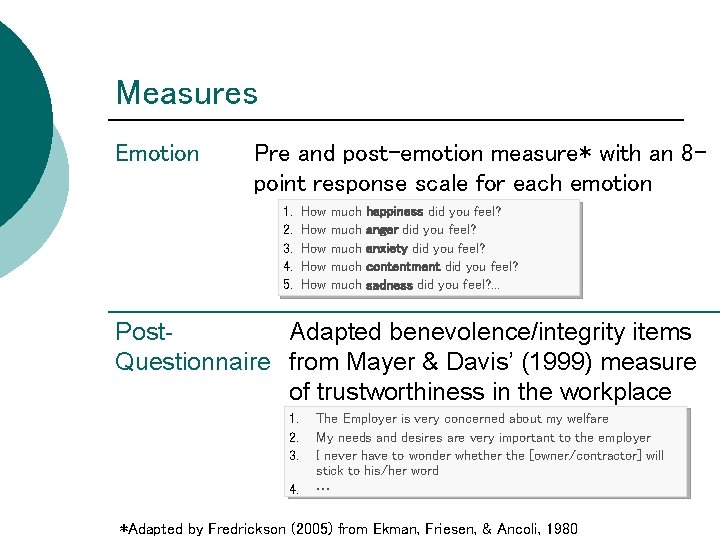
Measures Emotion Pre and post-emotion measure* with an 8 point response scale for each emotion 1. 2. 3. 4. 5. How How How much much happiness did you feel? anger did you feel? anxiety did you feel? contentment did you feel? sadness did you feel? . . . Post. Adapted benevolence/integrity items Questionnaire from Mayer & Davis’ (1999) measure of trustworthiness in the workplace 1. 2. 3. 4. The Employer is very concerned about my welfare My needs and desires are very important to the employer I never have to wonder whether the [owner/contractor] will stick to his/her word … *Adapted by Fredrickson (2005) from Ekman, Friesen, & Ancoli, 1980
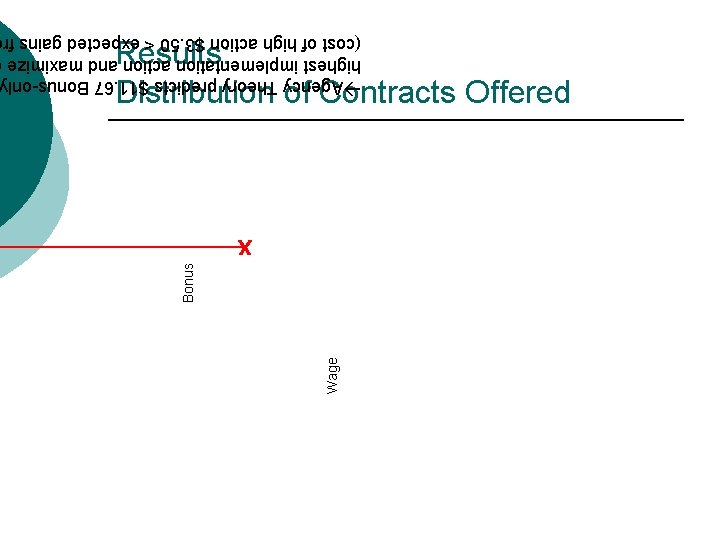
Wage Bonus x Results: Distribution of Contracts Offered Agency Theory predicts $11. 67 Bonus-onl highest implementation action and maximize (cost of high action $3. 50 < expected gains fr
Distribution of Contracts Offered What else is motivating these contract offers?
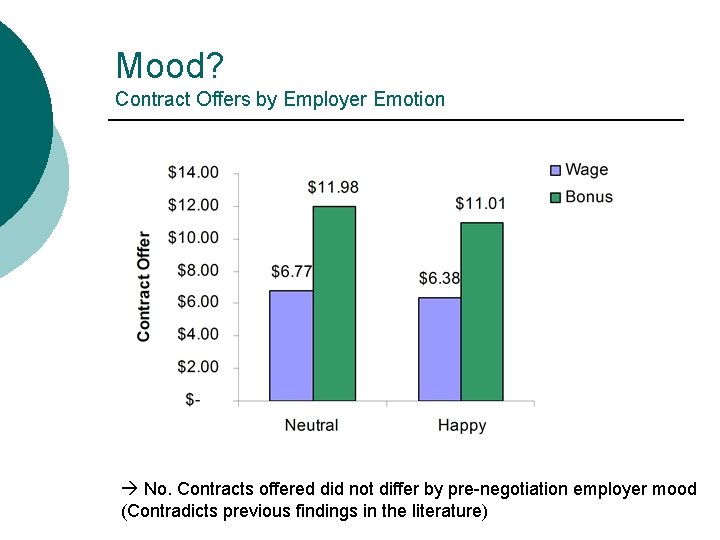
Mood? Contract Offers by Employer Emotion No. Contracts offered did not differ by pre-negotiation employer mood (Contradicts previous findings in the literature)
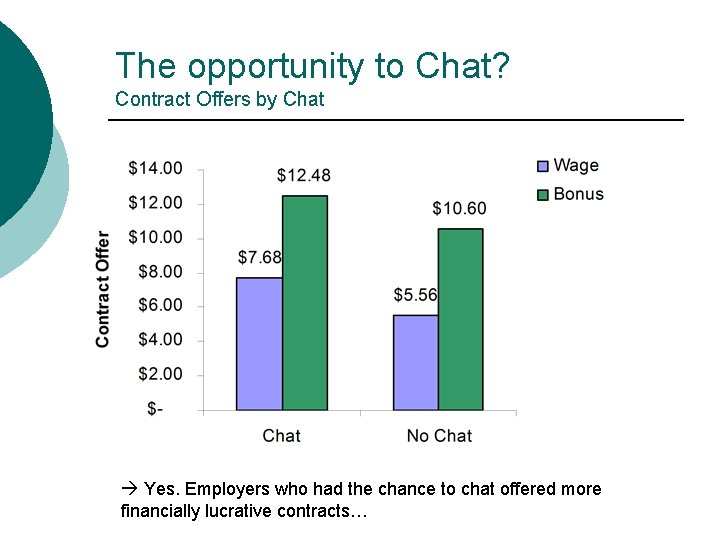
The opportunity to Chat? Contract Offers by Chat Yes. Employers who had the chance to chat offered more financially lucrative contracts…
What about implementation behavior?
Distribution of Implementation Actions Wage Bonus Implementation Action
Distribution of Implementation Actions What is motivating implementation behavior?
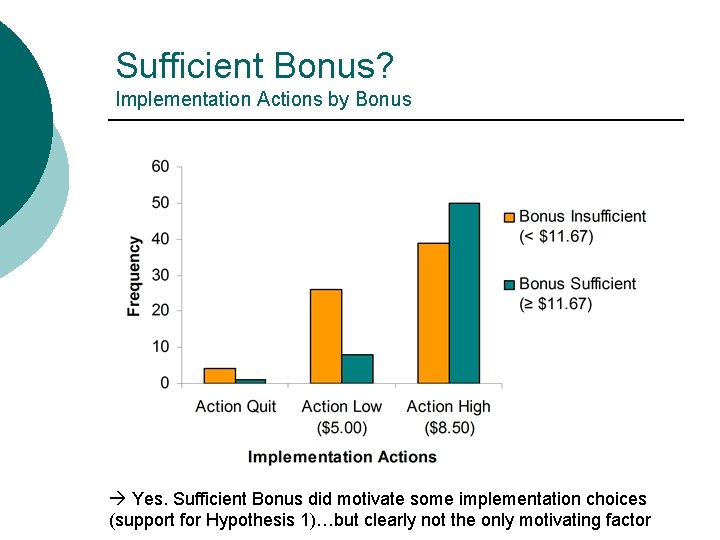
Sufficient Bonus? Implementation Actions by Bonus Yes. Sufficient Bonus did motivate some implementation choices (support for Hypothesis 1)…but clearly not the only motivating factor
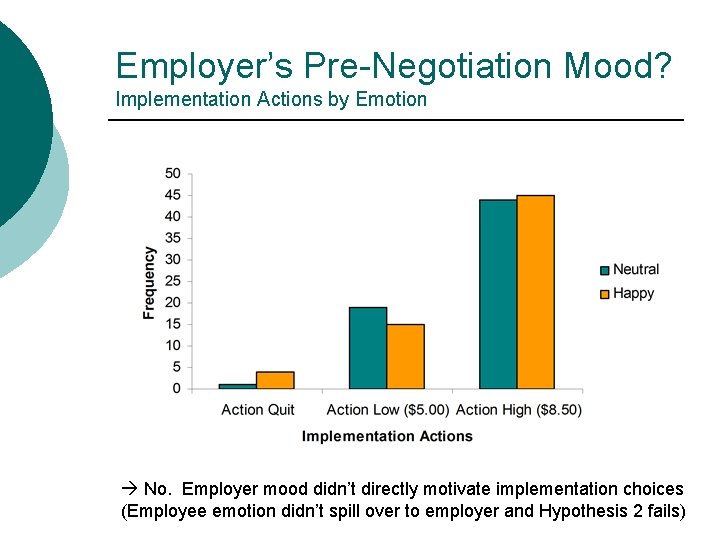
Employer’s Pre-Negotiation Mood? Implementation Actions by Emotion No. Employer mood didn’t directly motivate implementation choices (Employee emotion didn’t spill over to employer and Hypothesis 2 fails)
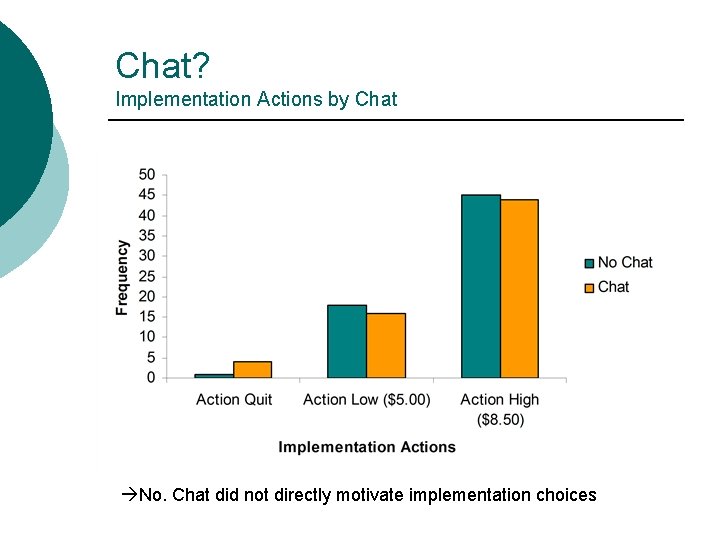
Chat? Implementation Actions by Chat No. Chat did not directly motivate implementation choices
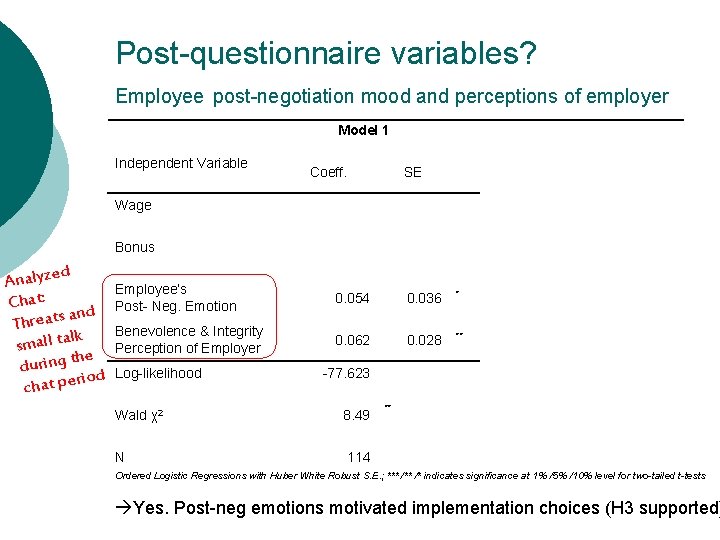
Post-questionnaire variables? Employee post-negotiation mood and perceptions of employer Model 1 Independent Variable Coeff. Model 2 SE Coeff. Wage Bonus d Analyze Chat: and Threats lk small ta he during t d rio chat pe Employee’s Post- Neg. Emotion 0. 054 0. 036 * Benevolence & Integrity Perception of Employer 0. 062 0. 028 ** Log-likelihood -77. 623 Wald χ2 8. 49 N 114 SE 0. 069 0. 056 0. 213 0. 042 *** -78. 742 ** 25. 91 *** 128 Ordered Logistic Regressions with Huber White Robust S. E. ; *** /* indicates significance at 1% /5% /10% level for two-tailed t-tests Yes. Post-neg emotions motivated implementation choices (H 3 supported)
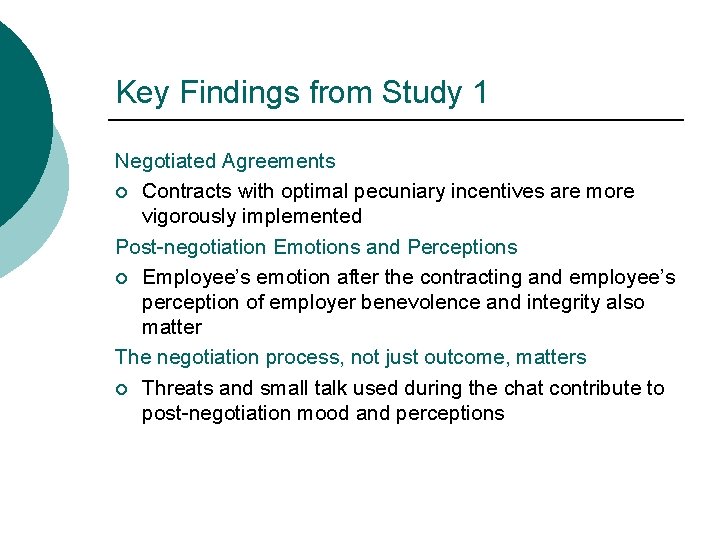
Key Findings from Study 1 Negotiated Agreements ¡ Contracts with optimal pecuniary incentives are more vigorously implemented Post-negotiation Emotions and Perceptions ¡ Employee’s emotion after the contracting and employee’s perception of employer benevolence and integrity also matter The negotiation process, not just outcome, matters ¡ Threats and small talk used during the chat contribute to post-negotiation mood and perceptions
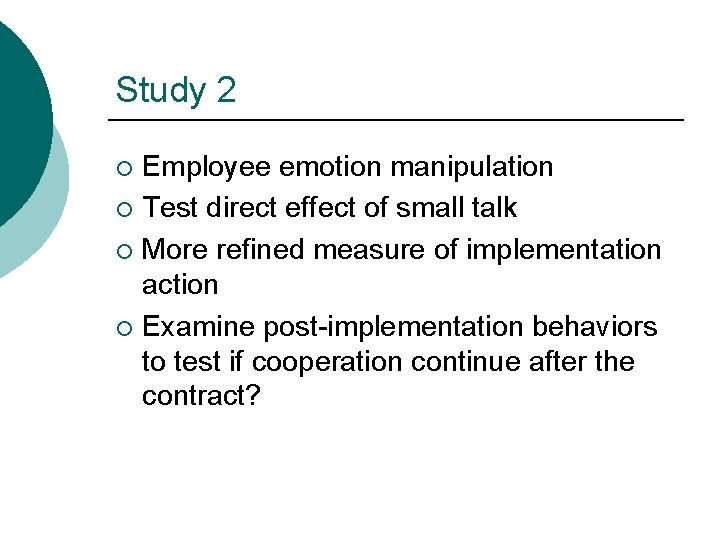
Study 2 Employee emotion manipulation ¡ Test direct effect of small talk ¡ More refined measure of implementation action ¡ Examine post-implementation behaviors to test if cooperation continue after the contract? ¡
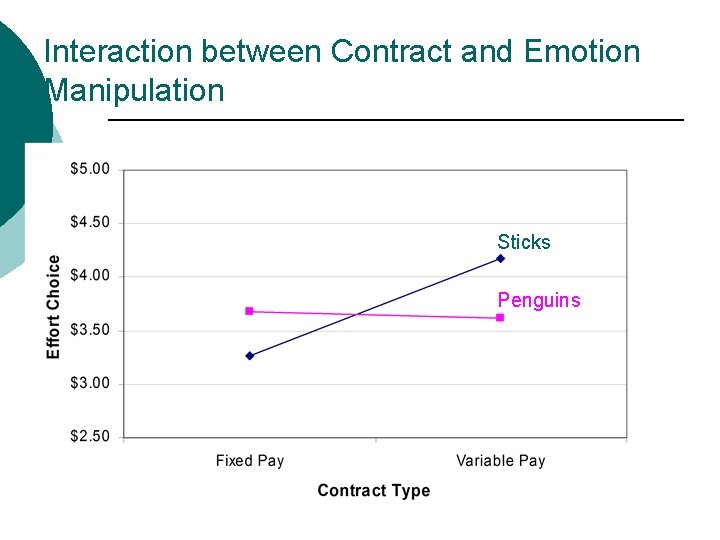
Key Findings from Study 2 Emotions and incentives matter for implementation, but… ¡ Sufficient bonus contracts don’t motivate higher implementation actions when people are happy The negotiation process also matters for subsequent cooperative behavior… ¡ Small talk and perceptions of benevolence/integrity motivate subsequent cooperative exchange behavior
Theoretical and Practical Implications ¡ Factors predicting negotiated agreements are not necessarily the same as those predicting the implementation ¡ Emotions are critical part of understanding how social factors influence negotiations ¡ We must consider the complete social interaction and how different parts contribute to creating not only an efficient negotiated agreement, but one that will be vigorously implemented and promote future cooperative behaviors
Ongoing Research Extensions ¡ Negotiation Experiments l l l ¡ Trust/Social Exchange Experiments l l ¡ Strategic use of emotions in negotiations How do past interactions influence future negotiations Gender differences in relational accounting Can emotions or financial incentives motivate trust behavior? Does introducing the option to cheat reduce trust? Field Study of Negotiations l l Longitudinal study of the evolution of relational accounts and negotiations between college roommates Cross-section study of 14 automobile dealerships examining the role of emotions on negotiated car prices
Additional Questions? Thank you!
EXTRA SLIDES
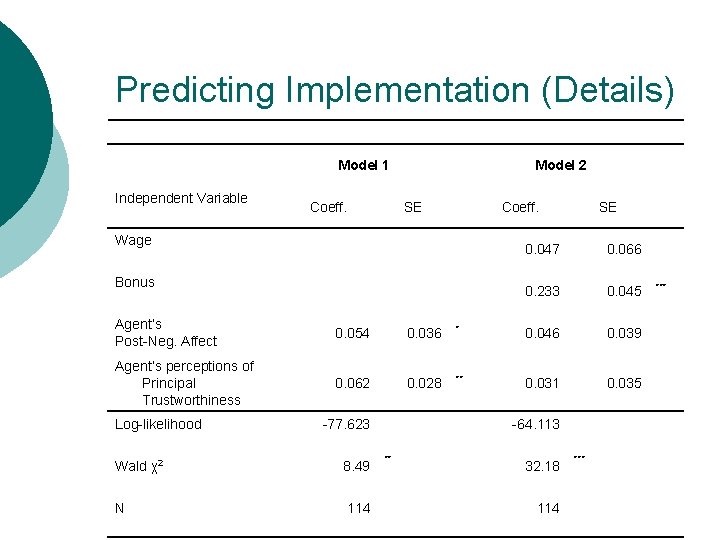
Predicting Implementation (Details) Model 1 Independent Variable Coeff. Model 2 SE Coeff. Wage Bonus SE 0. 047 0. 066 0. 233 0. 045 Agent’s Post-Neg. Affect 0. 054 0. 036 * 0. 046 0. 039 Agent’s perceptions of Principal Trustworthiness 0. 062 0. 028 ** 0. 031 0. 035 Log-likelihood -77. 623 Wald χ2 8. 49 N 114 -64. 113 ** 32. 18 114 ***
Interaction between Contract and Emotion Manipulation Sticks Penguins
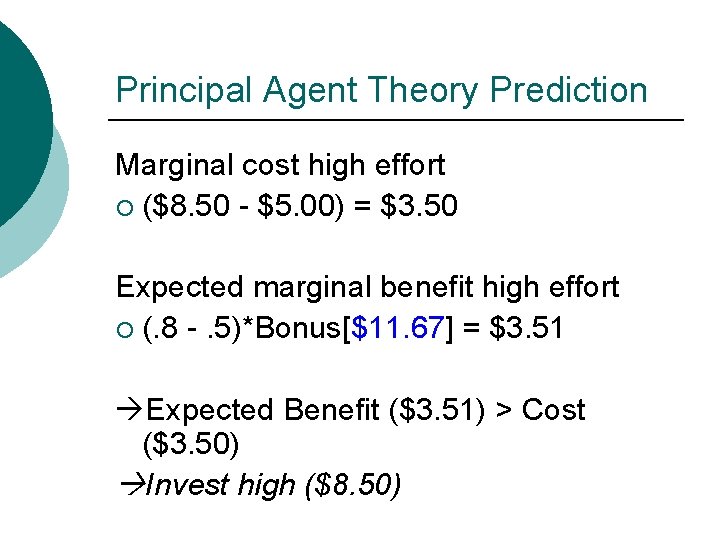
Principal Agent Theory Prediction Marginal cost high effort ¡ ($8. 50 - $5. 00) = $3. 50 Expected marginal benefit high effort ¡ (. 8 -. 5)*Bonus[$11. 67] = $3. 51 Expected Benefit ($3. 51) > Cost ($3. 50) Invest high ($8. 50)