
Negotiations in Real Estate YOUR LOGO YOUR PROGRAM






- Slides: 15
Negotiations in Real Estate YOUR LOGO YOUR PROGRAM NAME ™
Here’s what we’re going to cover • What is a negotiation and why its important to your success • What you need to know about real estate negotiations • Using concessions in negotiations to get offers accepted • Be prepared to Win • Know the variables in negotiations RAISE PRIVATE FUNDS ™
What is a negotiation and why its important to your success RAISE PRIVATE FUNDS ™
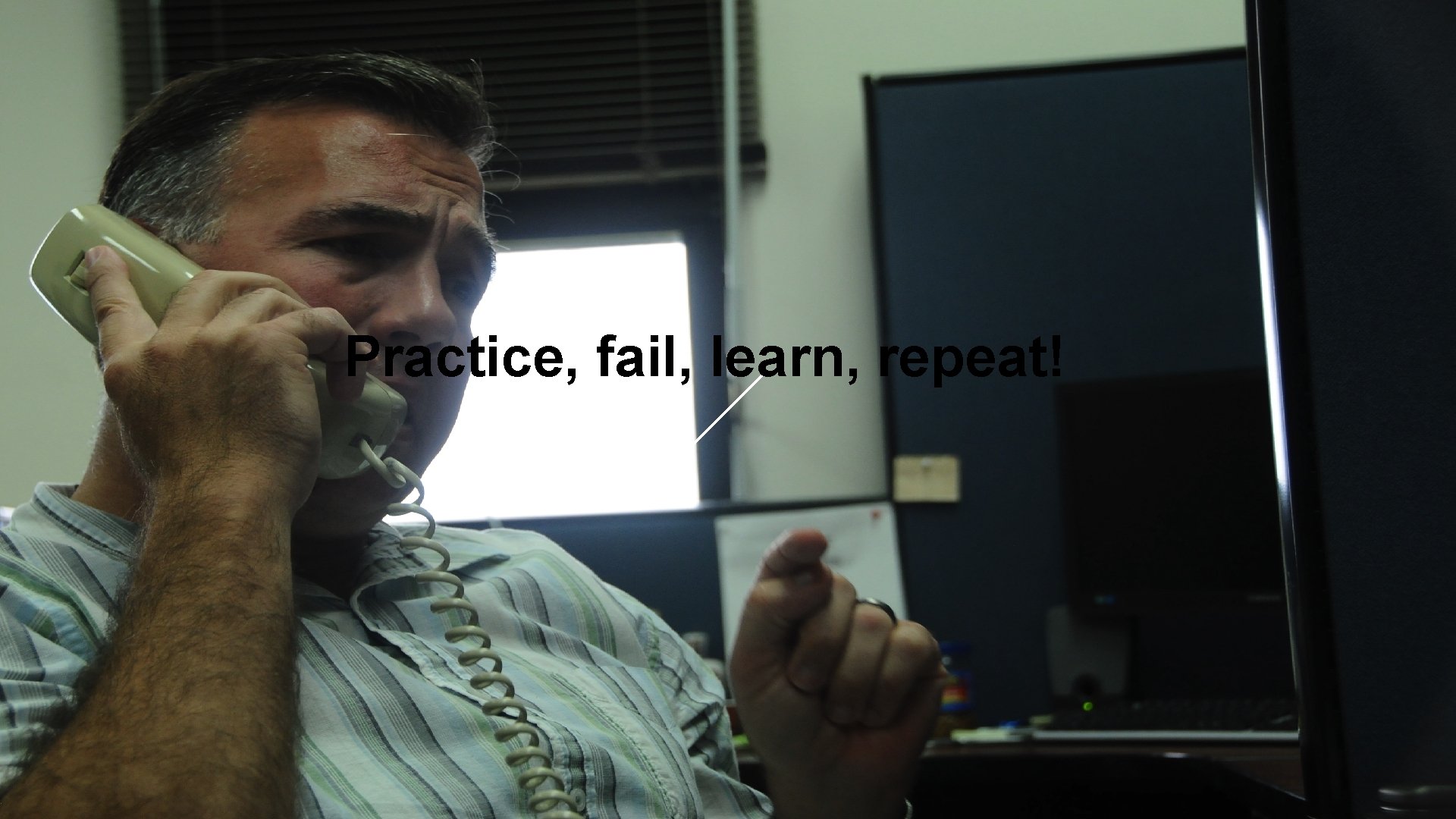
What is a negotiation and why its important to your success • Communication between 2 or more— Learning to convey your personal expectations and desires to the other party. Receiving the other sides expectations and desires. • Great deals are found in the “numbers”— You need to know that in order to find amazing deals, which are everywhere you need to increase the number of home owners you communicate with on a consistent basis. • You don’t to be a “shark” negotiator— People like doing business with people who are similar to them. Who they like and trust. People are smarter and more aware then ever when they meet someone who’s just out for their own interests • Great deals are created— Learning to assess a deal, its numbers, home owners desires and then structure the deal so its profitable takes skill and experience. This is all learnable. • Great negotiators are created— Practice, fail, learn and repeat. The best way to learn is being out in the field consistently RAISE PRIVATE FUNDS ™
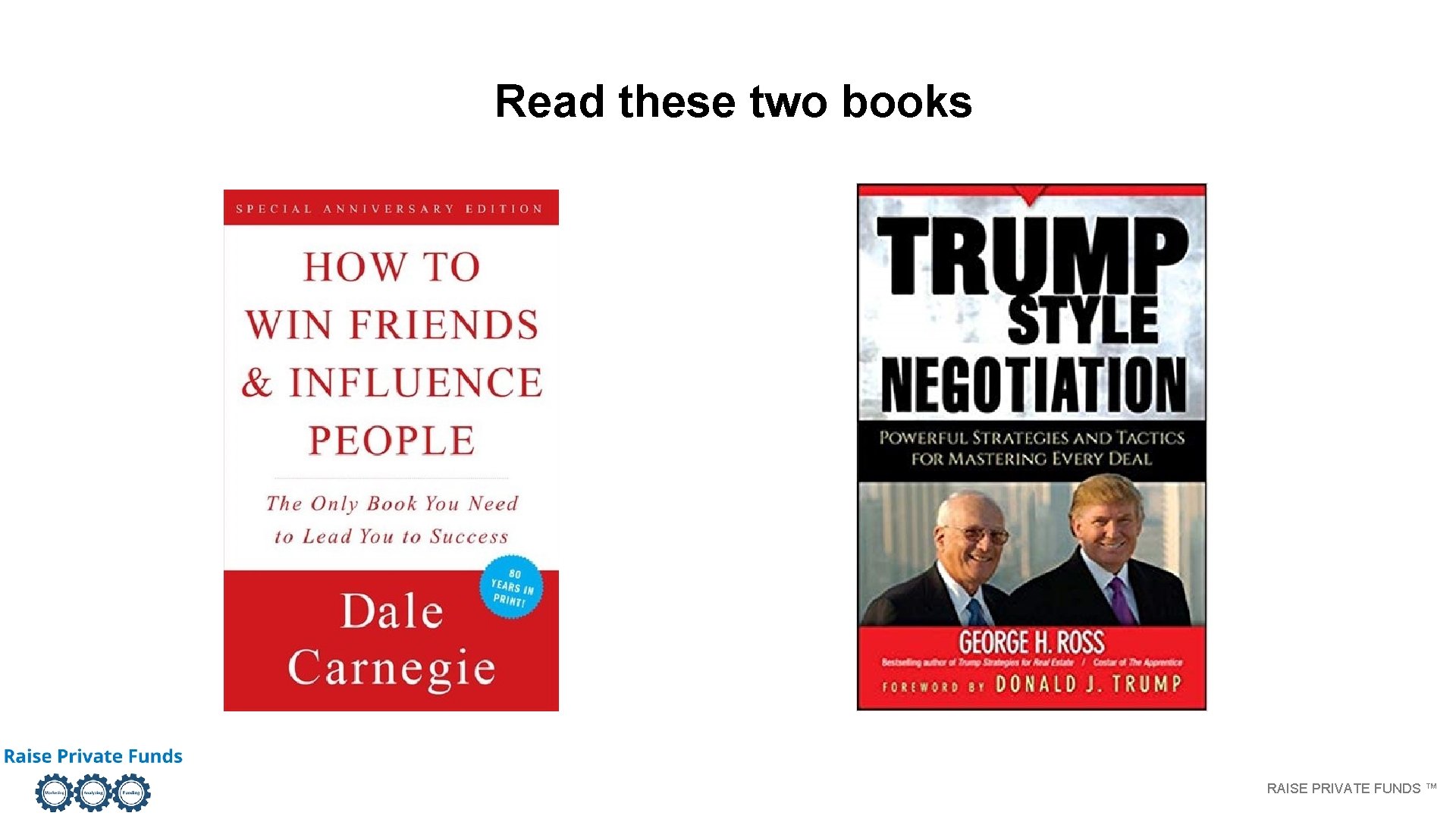
Read these two books RAISE PRIVATE FUNDS ™
What you need to know about real estate negotiations RAISE PRIVATE FUNDS ™
What you need to know about real estate negotiations • Negotiations begin the moment you answer the phone— Always be of the mind set that negotiations start when you answer the phone with a seller. It is possible to have the seller lower their asking price even before going to see a property. • Writing an offer and getting it accepted— It is not unusual to write an offer and have the home owner accept and sign on your first meeting. Owners are on time constraints and your offer and service might be their solution to get out quick • It’s not always about more money— Some owners will want to deal with you because you are solving their “problems” beyond just money. Are you giving them enough time to move out, paying for their moving costs, clean up, etc. • Don’t leave negotiations “open”— Whether the owner needs time to discuss with family or run the offer by their lawyer don’t leave it open for more then 2 days. This deadline which is written in the offer will put pressure to get it accepted • Have all decision makers present— A owners decision to sell is sometimes influenced by others, who might not even be on title. Make sure all decisions makers are at the appointment RAISE PRIVATE FUNDS ™
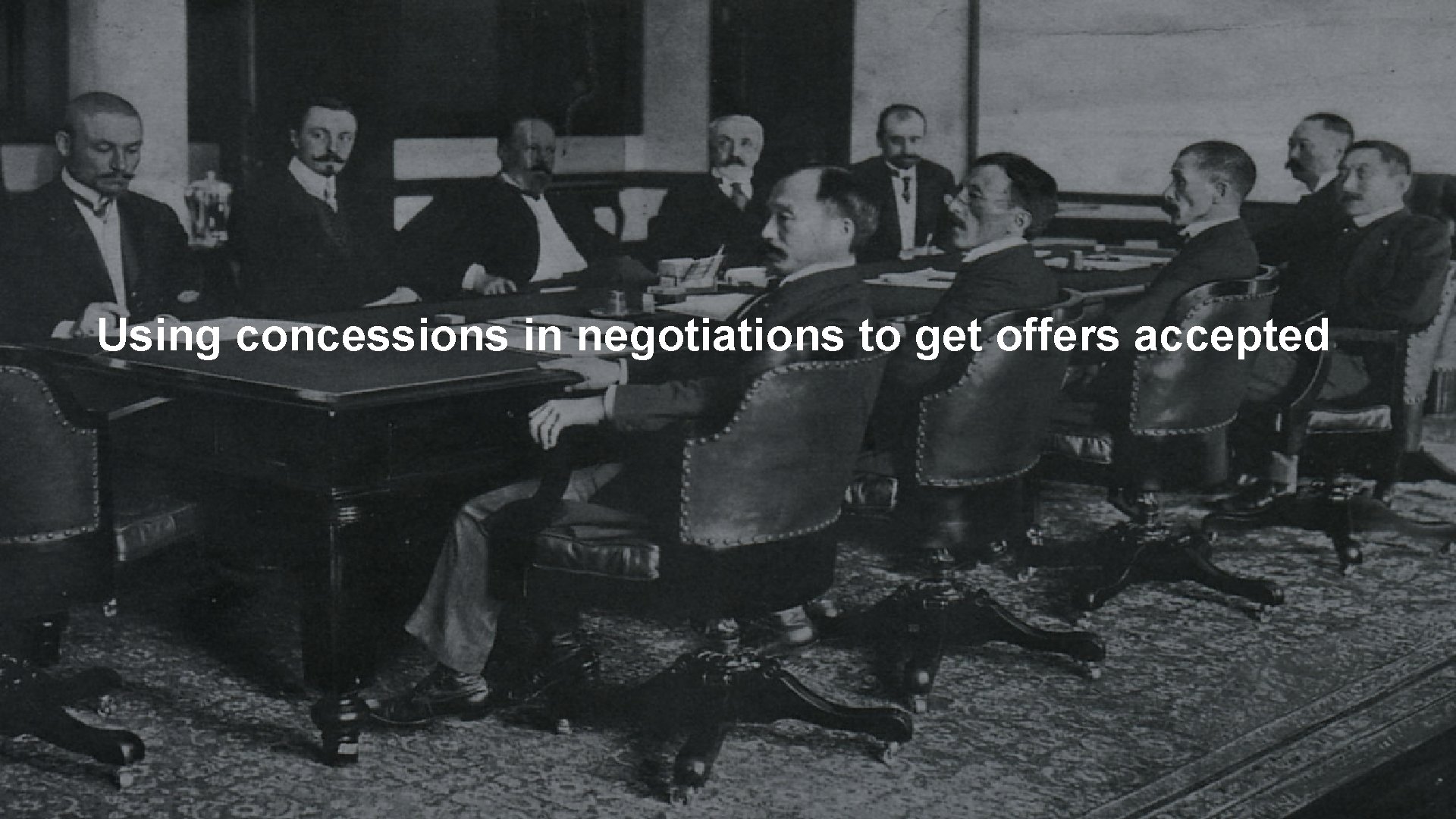
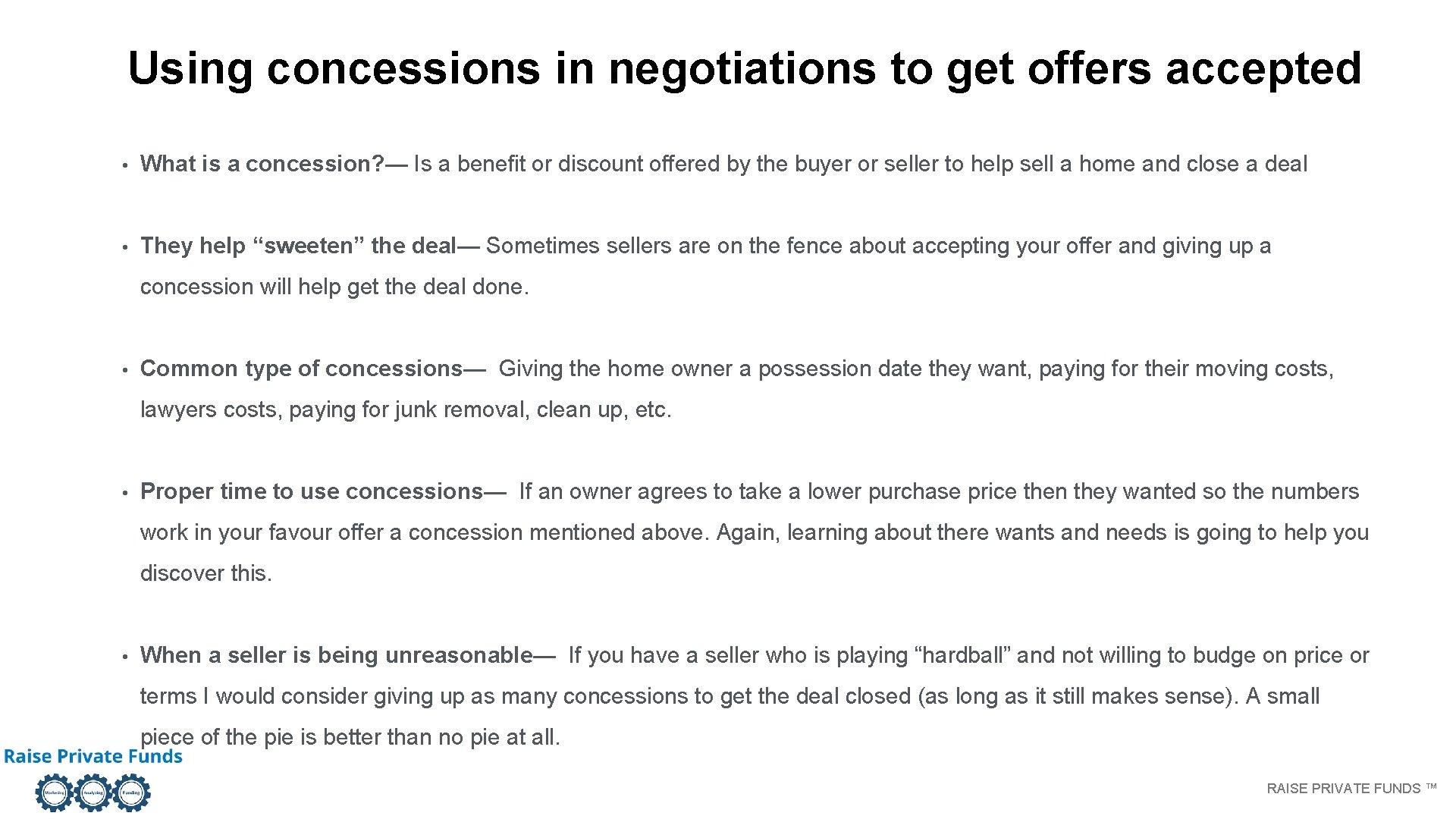
Using concessions in negotiations to get offers accepted RAISE PRIVATE FUNDS ™
Using concessions in negotiations to get offers accepted • What is a concession? — Is a benefit or discount offered by the buyer or seller to help sell a home and close a deal • They help “sweeten” the deal— Sometimes sellers are on the fence about accepting your offer and giving up a concession will help get the deal done. • Common type of concessions— Giving the home owner a possession date they want, paying for their moving costs, lawyers costs, paying for junk removal, clean up, etc. • Proper time to use concessions— If an owner agrees to take a lower purchase price then they wanted so the numbers work in your favour offer a concession mentioned above. Again, learning about there wants and needs is going to help you discover this. • When a seller is being unreasonable— If you have a seller who is playing “hardball” and not willing to budge on price or terms I would consider giving up as many concessions to get the deal closed (as long as it still makes sense). A small piece of the pie is better than no pie at all. RAISE PRIVATE FUNDS ™
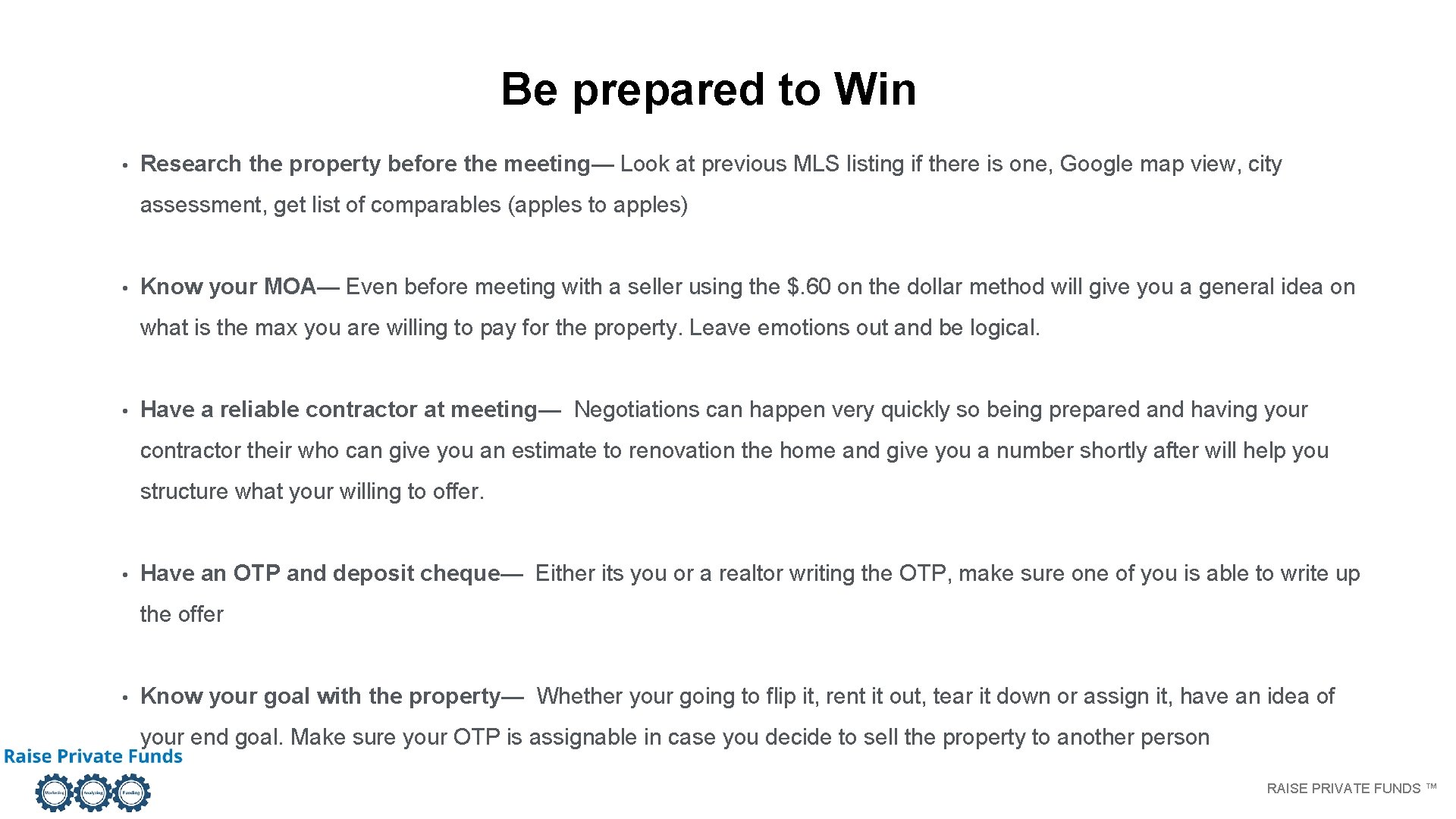
Be prepared to Win RAISE PRIVATE FUNDS ™
Be prepared to Win • Research the property before the meeting— Look at previous MLS listing if there is one, Google map view, city assessment, get list of comparables (apples to apples) • Know your MOA— Even before meeting with a seller using the $. 60 on the dollar method will give you a general idea on what is the max you are willing to pay for the property. Leave emotions out and be logical. • Have a reliable contractor at meeting— Negotiations can happen very quickly so being prepared and having your contractor their who can give you an estimate to renovation the home and give you a number shortly after will help you structure what your willing to offer. • Have an OTP and deposit cheque— Either its you or a realtor writing the OTP, make sure one of you is able to write up the offer • Know your goal with the property— Whether your going to flip it, rent it out, tear it down or assign it, have an idea of your end goal. Make sure your OTP is assignable in case you decide to sell the property to another person RAISE PRIVATE FUNDS ™
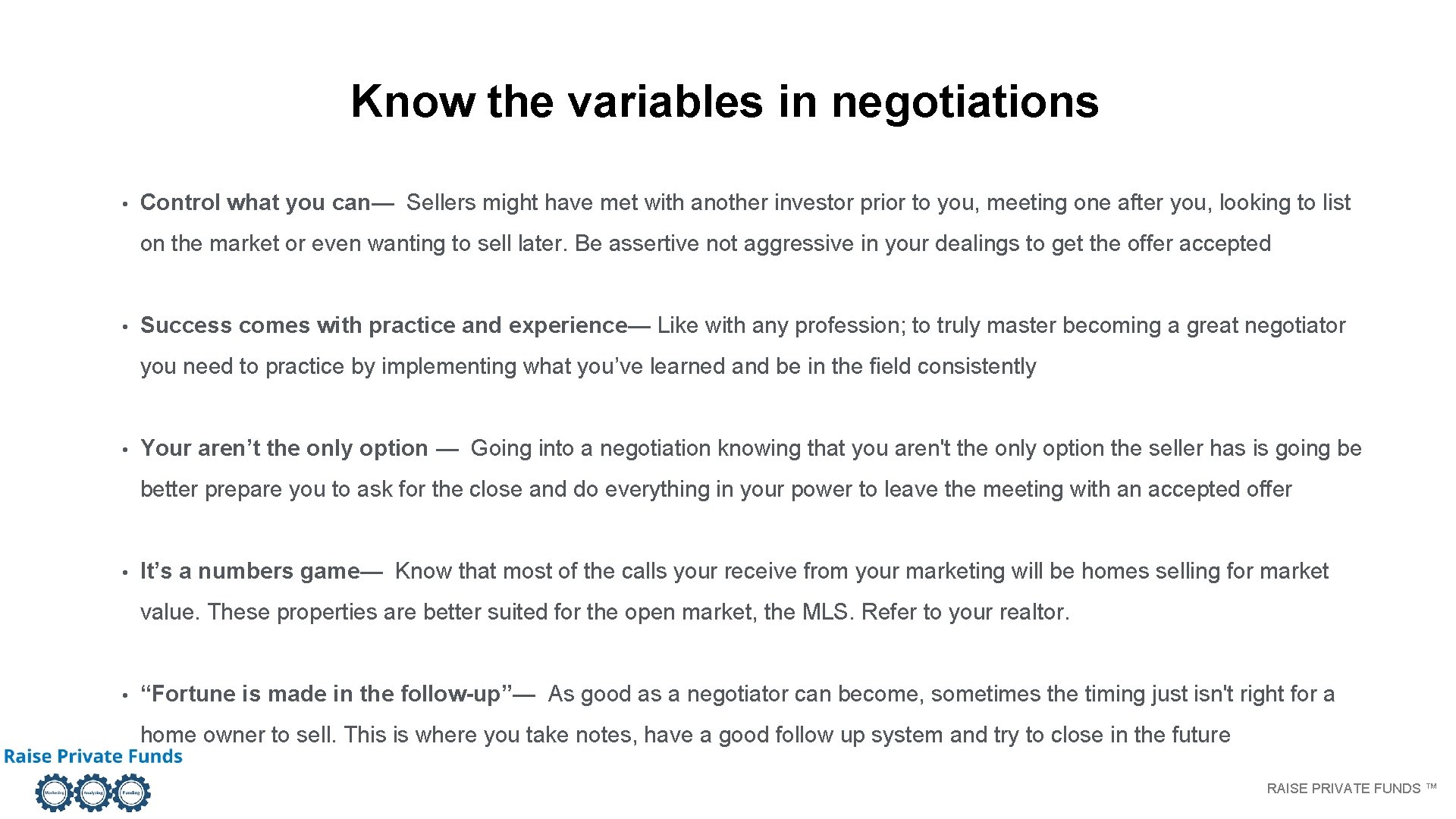
Know the variables in negotiations RAISE PRIVATE FUNDS ™
Know the variables in negotiations • Control what you can— Sellers might have met with another investor prior to you, meeting one after you, looking to list on the market or even wanting to sell later. Be assertive not aggressive in your dealings to get the offer accepted • Success comes with practice and experience— Like with any profession; to truly master becoming a great negotiator you need to practice by implementing what you’ve learned and be in the field consistently • Your aren’t the only option — Going into a negotiation knowing that you aren't the only option the seller has is going be better prepare you to ask for the close and do everything in your power to leave the meeting with an accepted offer • It’s a numbers game— Know that most of the calls your receive from your marketing will be homes selling for market value. These properties are better suited for the open market, the MLS. Refer to your realtor. • “Fortune is made in the follow-up”— As good as a negotiator can become, sometimes the timing just isn't right for a home owner to sell. This is where you take notes, have a good follow up system and try to close in the future RAISE PRIVATE FUNDS ™
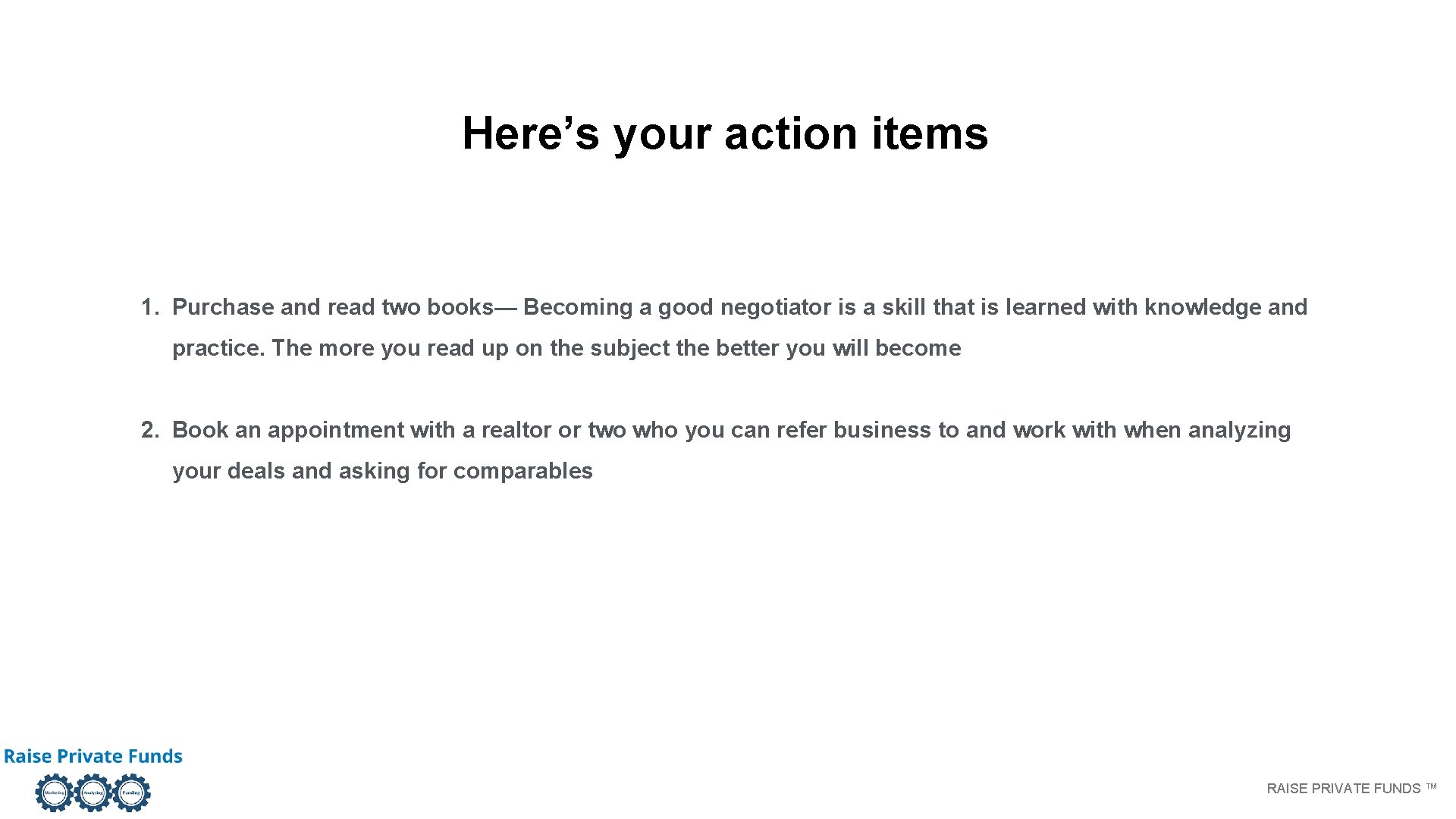
Here’s your action items 1. Purchase and read two books— Becoming a good negotiator is a skill that is learned with knowledge and practice. The more you read up on the subject the better you will become 2. Book an appointment with a realtor or two who you can refer business to and work with when analyzing your deals and asking for comparables RAISE PRIVATE FUNDS ™
Practice, fail, learn, repeat! RAISE PRIVATE FUNDS ™