
Negative Mass from the Vacuum Energy An Application
- Slides: 27
Negative Mass from the Vacuum Energy An Application of the Casimir Effect
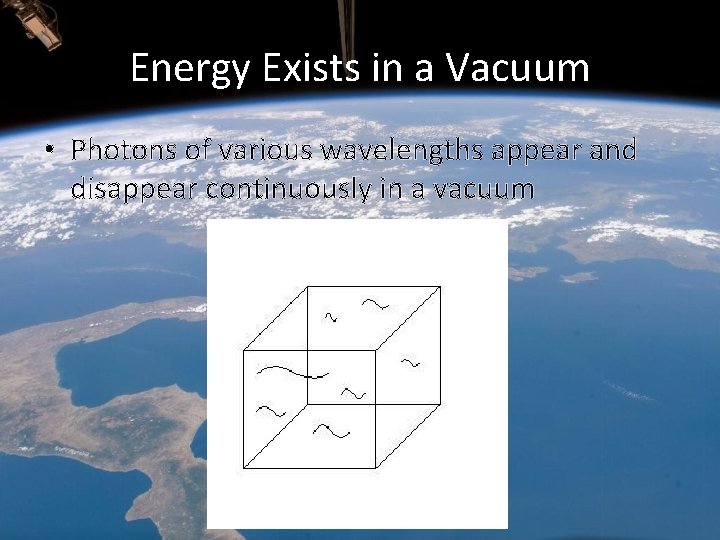
Energy Exists in a Vacuum • Photons of various wavelengths appear and disappear continuously in a vacuum
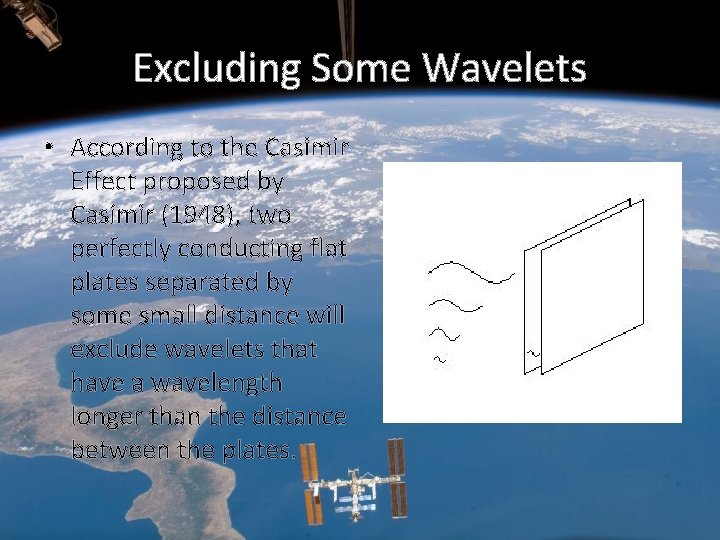
Excluding Some Wavelets • According to the Casimir Effect proposed by Casimir (1948), two perfectly conducting flat plates separated by some small distance will exclude wavelets that have a wavelength longer than the distance between the plates.
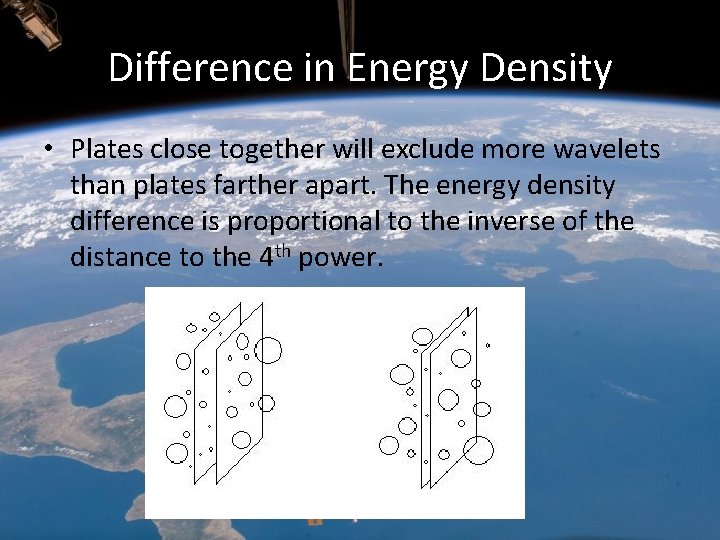
Difference in Energy Density • Plates close together will exclude more wavelets than plates farther apart. The energy density difference is proportional to the inverse of the distance to the 4 th power.
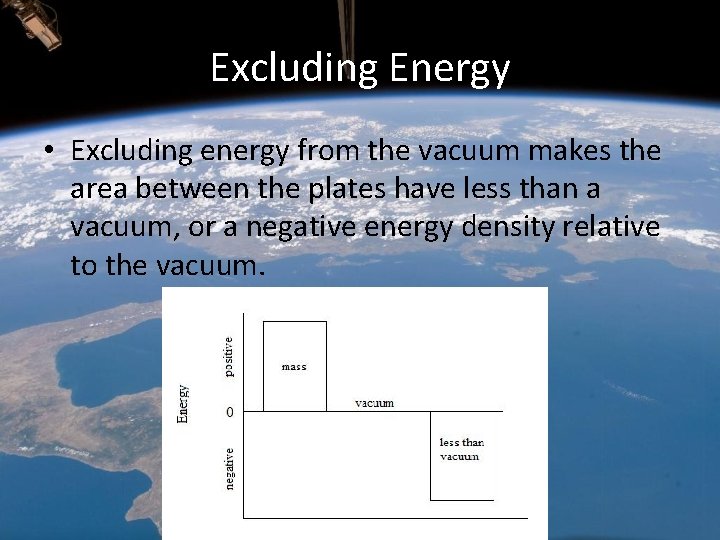
Excluding Energy • Excluding energy from the vacuum makes the area between the plates have less than a vacuum, or a negative energy density relative to the vacuum.
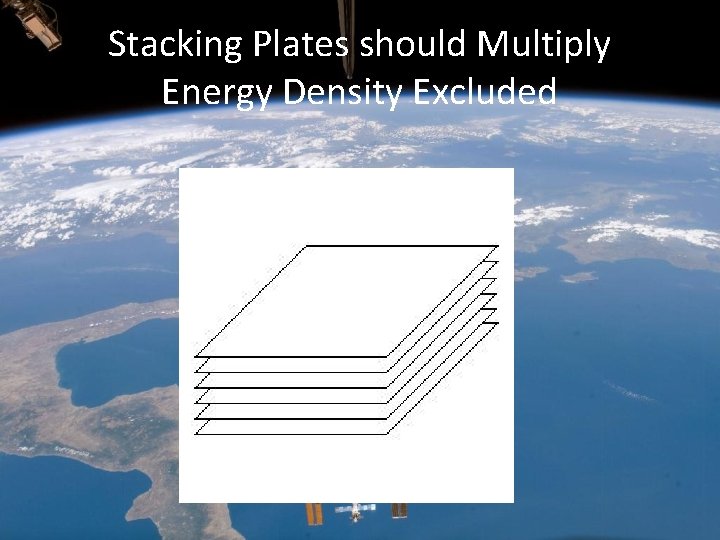
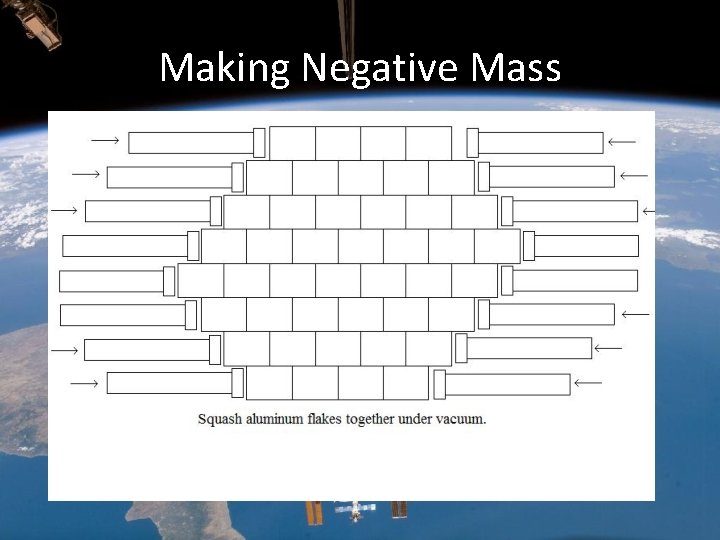
Stacking Plates should Multiply Energy Density Excluded
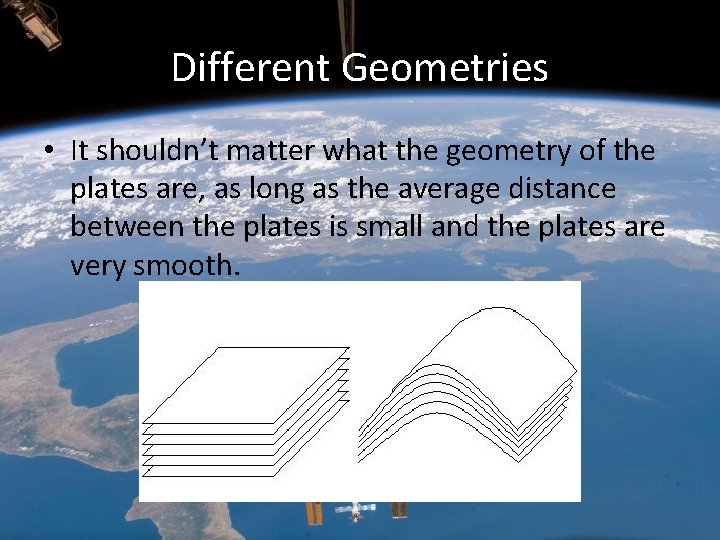
Different Geometries • It shouldn’t matter what the geometry of the plates are, as long as the average distance between the plates is small and the plates are very smooth.
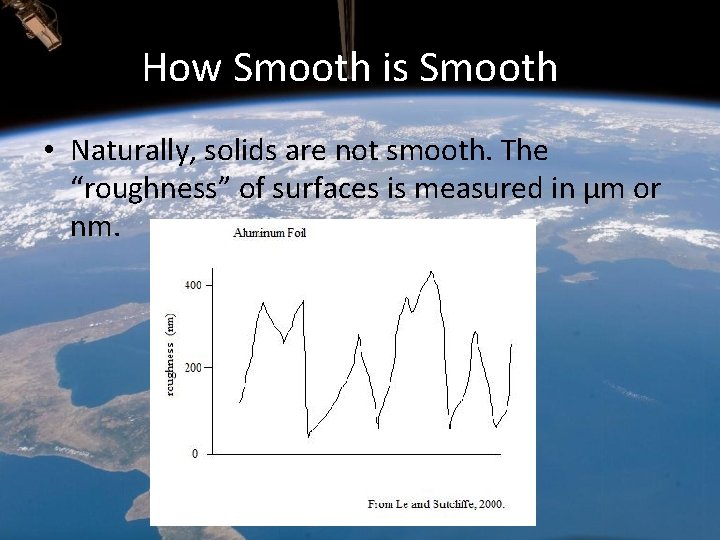
How Smooth is Smooth? • Naturally, solids are not smooth. The “roughness” of surfaces is measured in µm or nm.
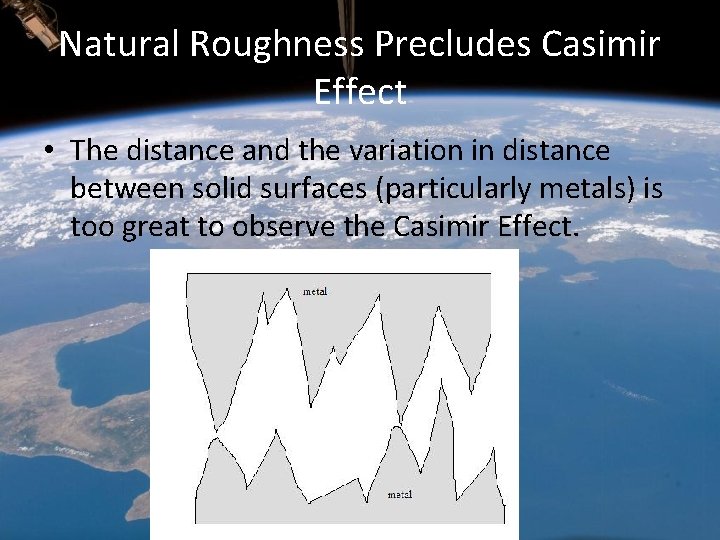
Natural Roughness Precludes Casimir Effect • The distance and the variation in distance between solid surfaces (particularly metals) is too great to observe the Casimir Effect.
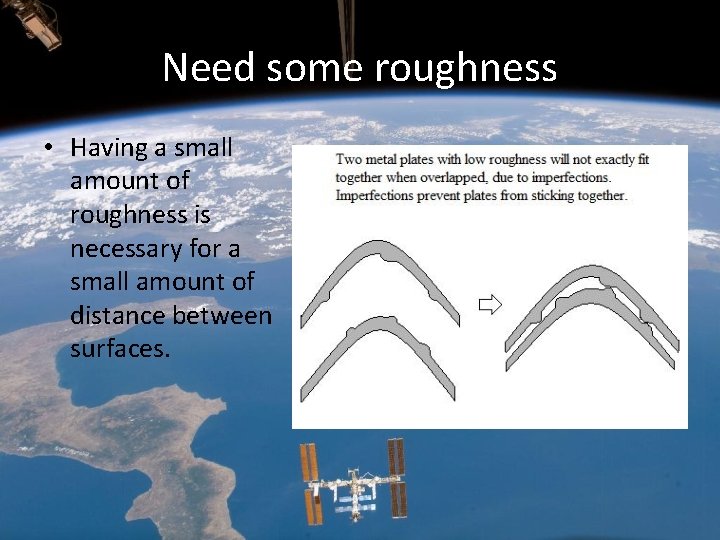
Need some roughness • Having a small amount of roughness is necessary for a small amount of distance between surfaces.
How smooth is smooth? • One of the smoothest metal surfaces that we know of is that of a mercury mirror. • A mercury mirror (rotating) has a roughness of about 5 x 10 -11 m, or 0. 05 nm. • Presumably then, one could attain this low roughness by rotating liquid metal. • But how would this help?
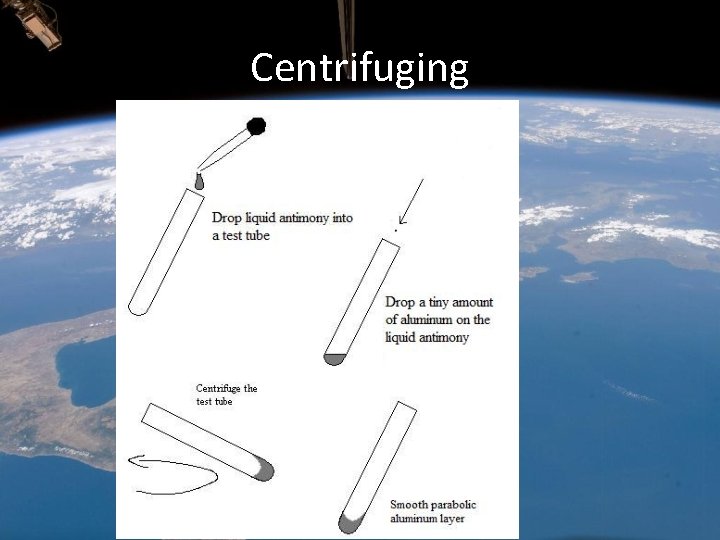
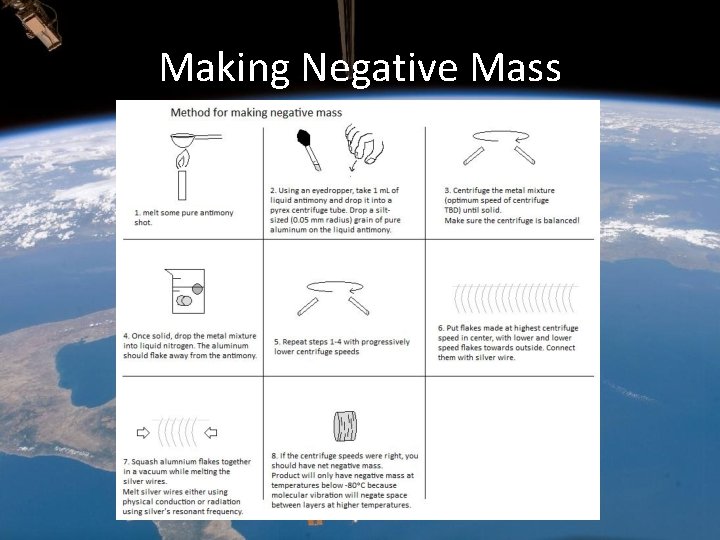
Centrifuge the metal while it’s liquid! • Aluminum has a melting point of about 660 ⁰C and antimony has a melting point of about 630 ⁰C. • Antimony has a higher density than aluminum, so in a mixture it will sink to the bottom. • Placing these two metals together as liquids in a centrifuge and then letting them solidify while spinning should lead to a very smooth aluminum layer. The smoothness should be proportional to the rotation speed.
Centrifuging
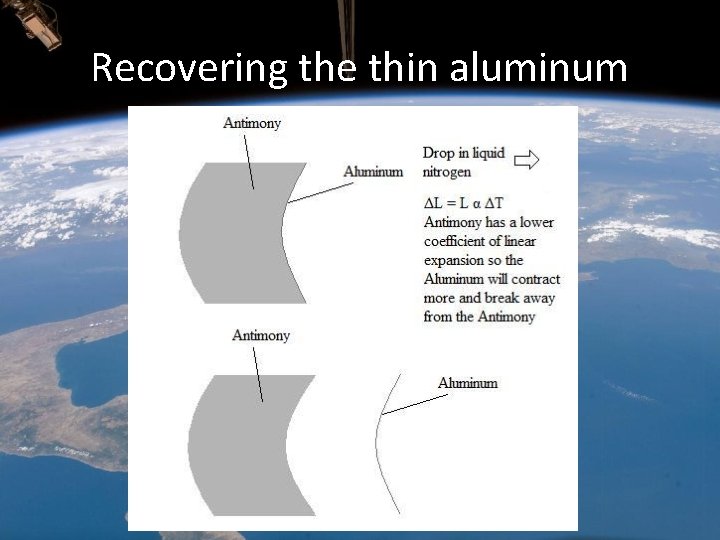
Recovering the thin aluminum
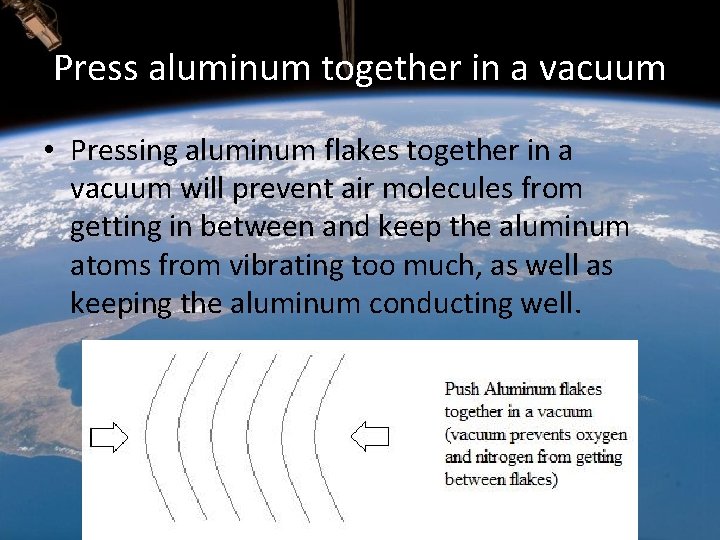
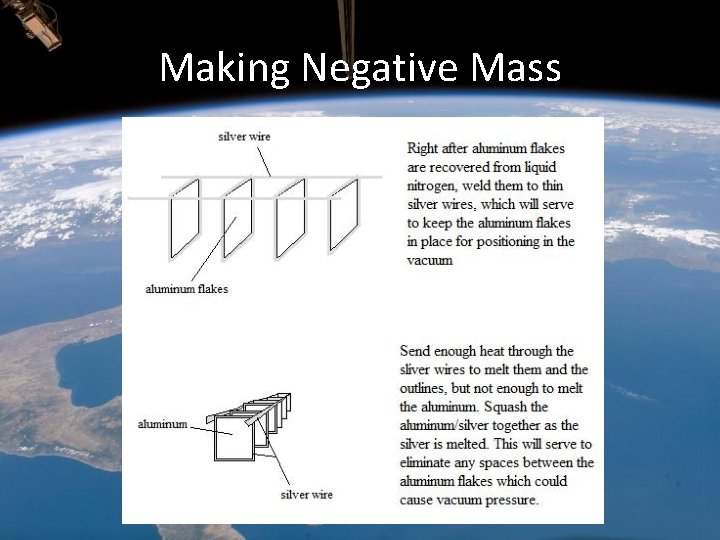
Press aluminum together in a vacuum • Pressing aluminum flakes together in a vacuum will prevent air molecules from getting in between and keep the aluminum atoms from vibrating too much, as well as keeping the aluminum conducting well.
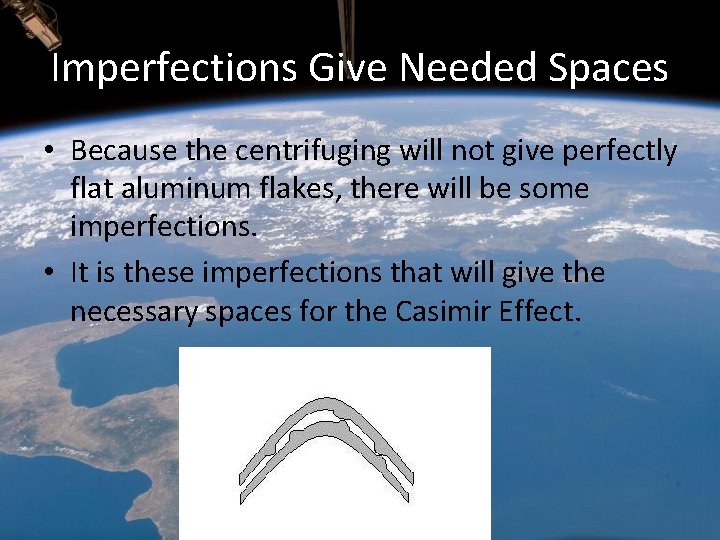
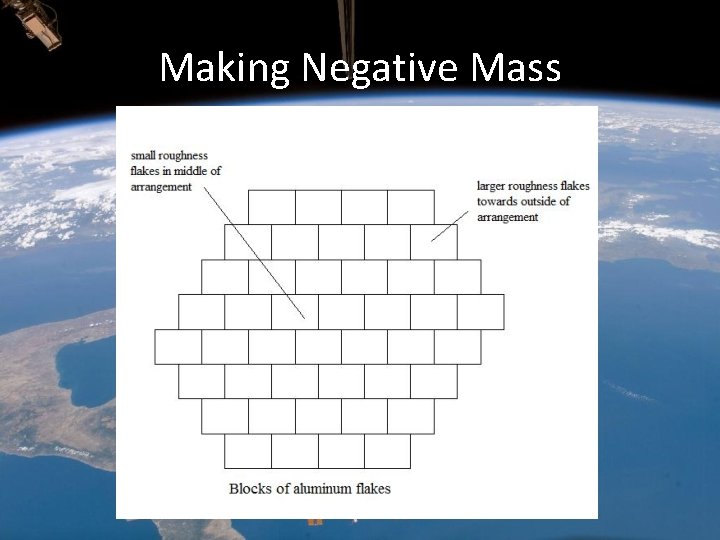
Imperfections Give Needed Spaces • Because the centrifuging will not give perfectly flat aluminum flakes, there will be some imperfections. • It is these imperfections that will give the necessary spaces for the Casimir Effect.
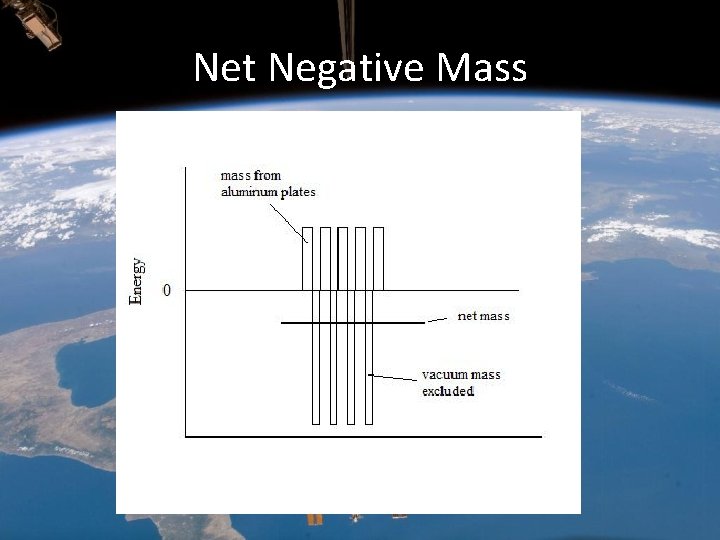
Net Negative Mass • Using this method, if the roughness of the aluminum flakes was on the order of 0. 1 pm and the aluminum flakes were 1 nm thick, the system would have a net negative mass, due to the vacuum energy excluded by the plates. • One could turn this negative mass on or off just by cooling or heating it, because of molecular vibration (Hanson and Green, 2008, p. 54 -57).
Net Negative Mass
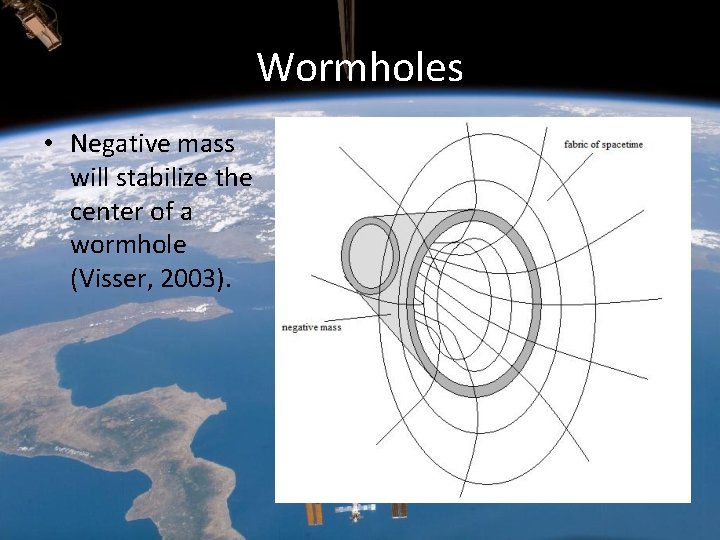
Applications • Easy access to space (negative mass would be repelled by the Earth’s gravity) (Bondi, 1957). • Space travel with no propellant (Forward, 1990). • Stabilize center of a wormhole (Visser, 2003).
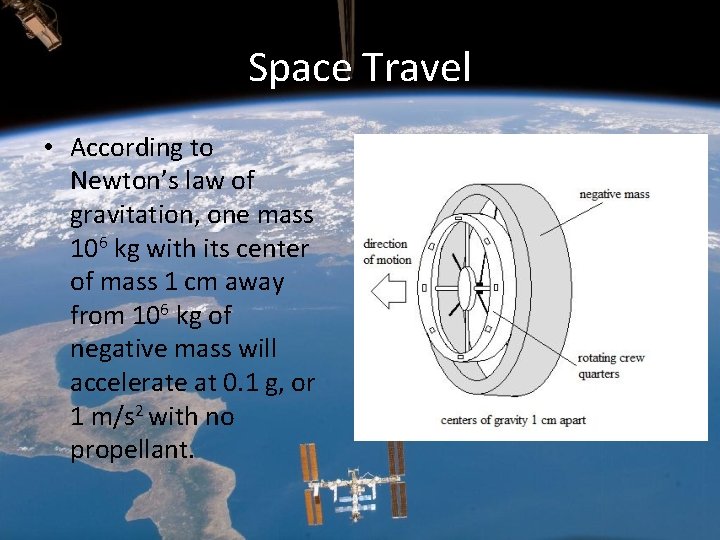
Space Travel • According to Newton’s law of gravitation, one mass 106 kg with its center of mass 1 cm away from 106 kg of negative mass will accelerate at 0. 1 g, or 1 m/s 2 with no propellant.
Wormholes • Negative mass will stabilize the center of a wormhole (Visser, 2003).
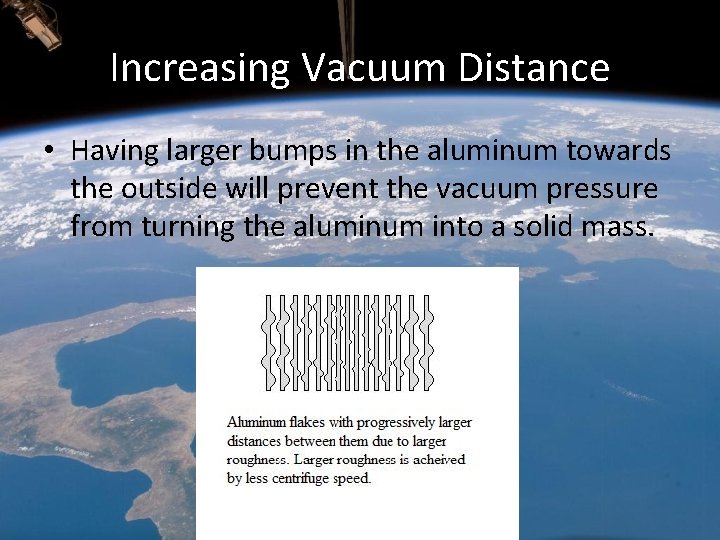
Increasing Vacuum Distance • Having larger bumps in the aluminum towards the outside will prevent the vacuum pressure from turning the aluminum into a solid mass.
Making Negative Mass
Making Negative Mass
Making Negative Mass
Making Negative Mass
References • Bondi, H. (1957) Negative mass in general relativity. Reviews of Modern Physics 29(3): 423 -428 • Casimir, H. (1948) On the attraction between two perfectly conducting plates. Royal Netherlands Academy of Arts and Sciences, Proceedings. 51, 793 -795 • Forward, R. L. (1990) Negative matter propulsion. Journal of Propulsion and Power 6(1): 28 -37 • Hanson, R. M. and Green, S. (2008) Introduction to molecular thermodynamics. University Science Books. • Le, H. R. and M. P. F. Sutcliffe (2000) Analysis of surface roughness of cold-rolled aluminum foil. Wear 244: 71 -78 • Visser, M. , Kar, S. and Dadhich, N. (2003) Traversable wormholes with arbitrarily small energy condition violations. Physical Review Letters 90: 201102.