
NEEP 541 Sputtering Fall 2002 Jake Blanchard Outline
NEEP 541 – Sputtering Fall 2002 Jake Blanchard
Outline n Sputtering n n n Definitions Models Sample Data Angle of Incidence Correlations
Definitions n n Sputtering=ejection of atoms from solid surface under bombardment by energetic ions Measured as recession rate of surface (m/s)
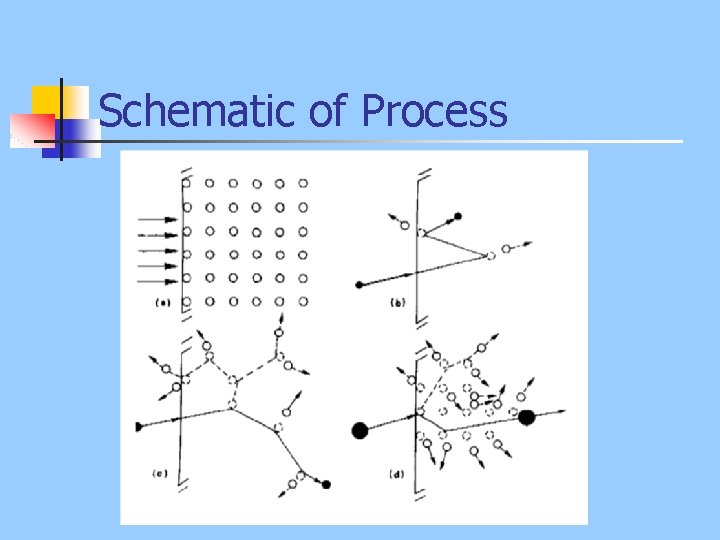
Schematic of Process
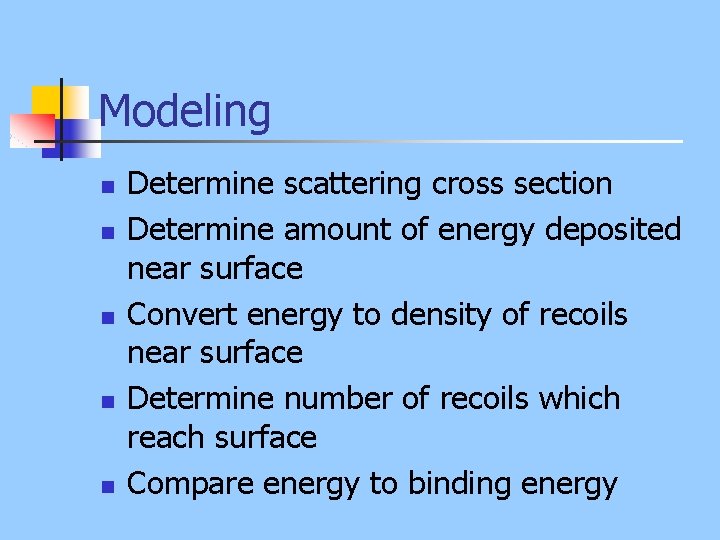
Modeling n n n Determine scattering cross section Determine amount of energy deposited near surface Convert energy to density of recoils near surface Determine number of recoils which reach surface Compare energy to binding energy
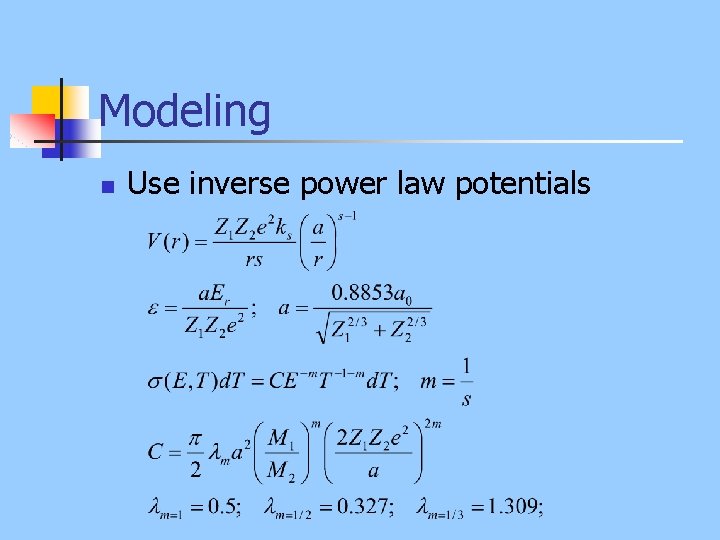
Modeling n Use inverse power law potentials
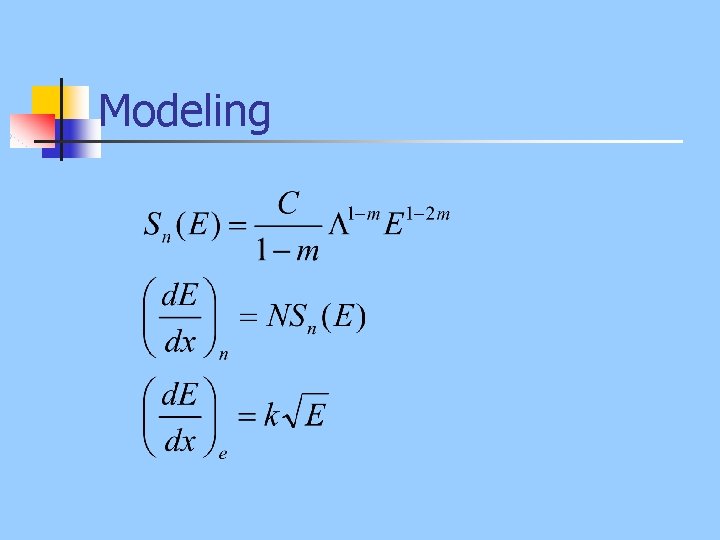
Modeling
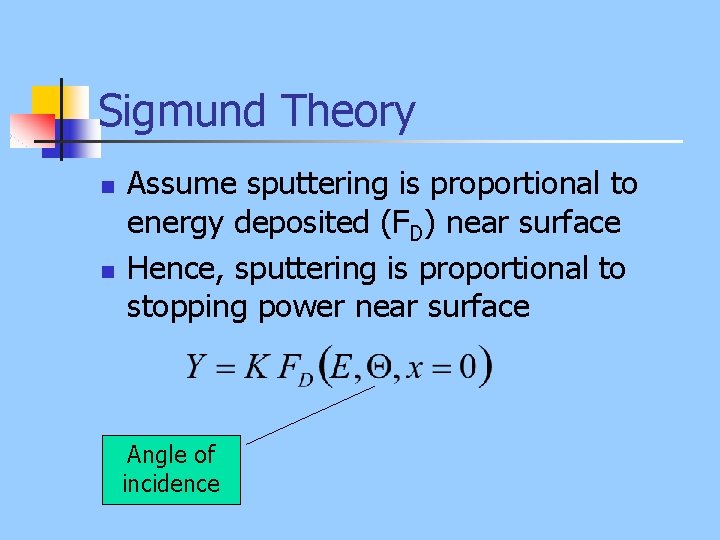
Sigmund Theory n n Assume sputtering is proportional to energy deposited (FD) near surface Hence, sputtering is proportional to stopping power near surface Angle of incidence
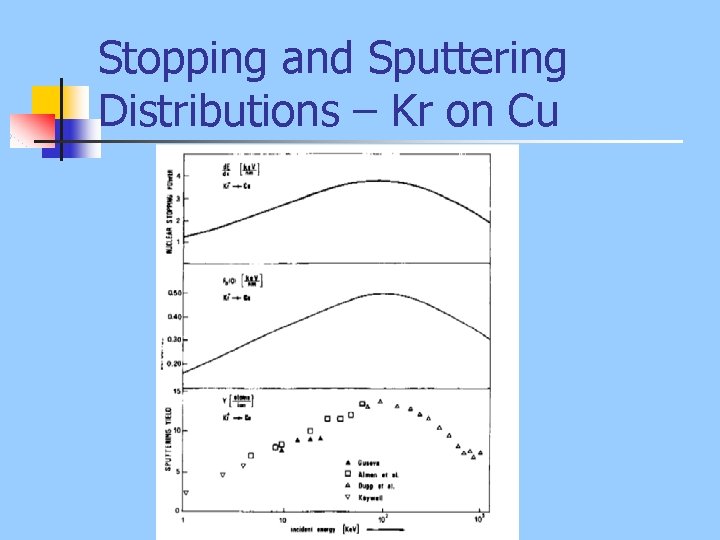
Stopping and Sputtering Distributions – Kr on Cu
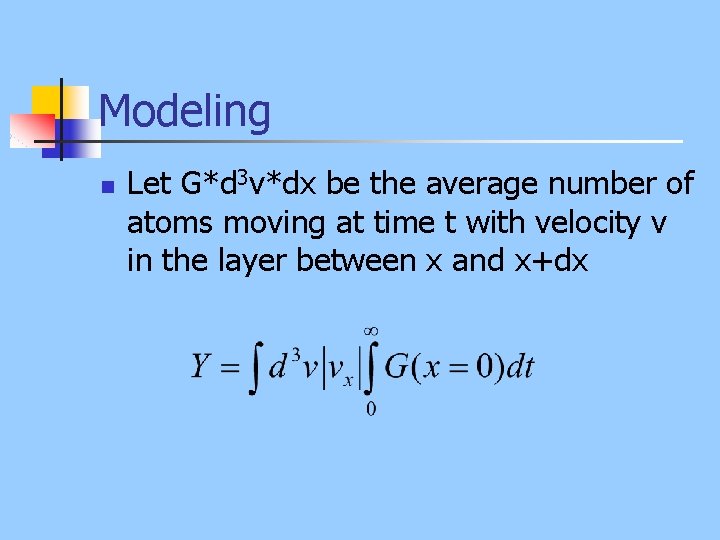
Modeling n Let G*d 3 v*dx be the average number of atoms moving at time t with velocity v in the layer between x and x+dx
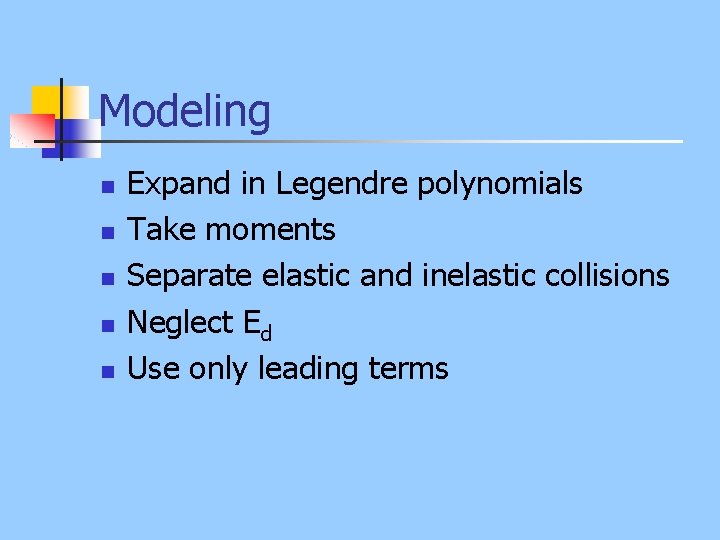
Modeling n n n Expand in Legendre polynomials Take moments Separate elastic and inelastic collisions Neglect Ed Use only leading terms

Result n depends on m, incidence angle, and on mass ratio
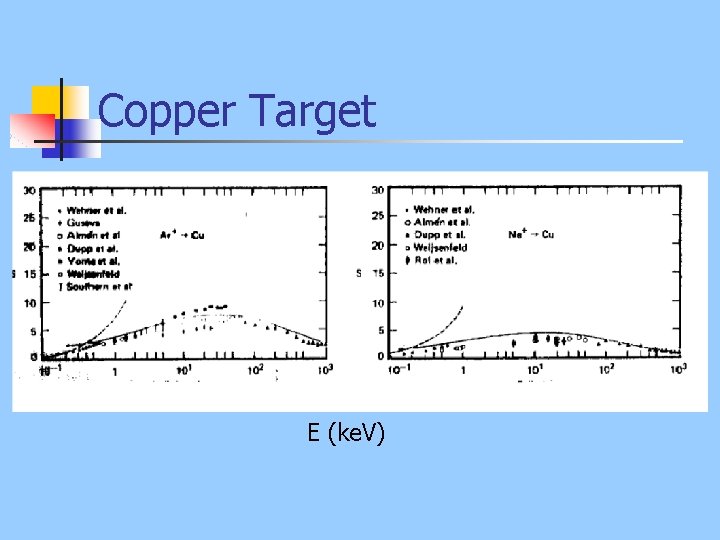
Copper Target E (ke. V)
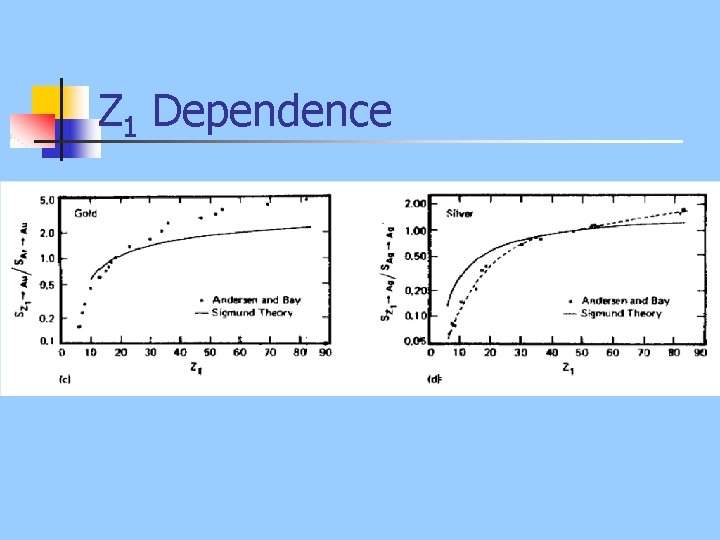
Z 1 Dependence
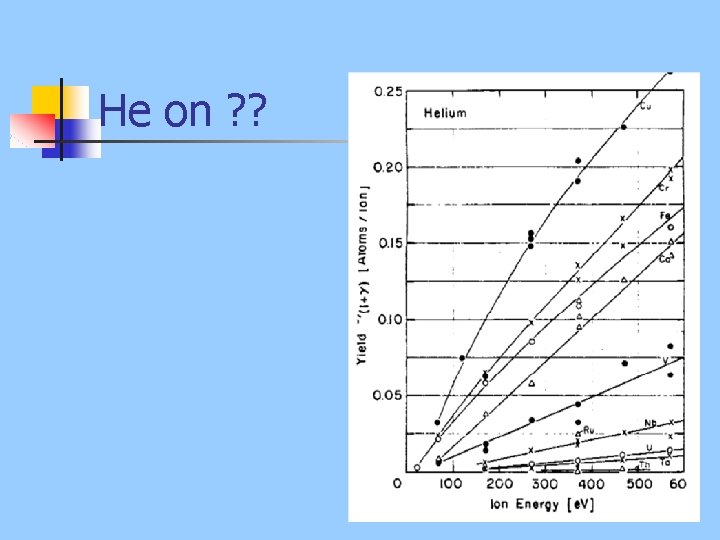
He on ? ?
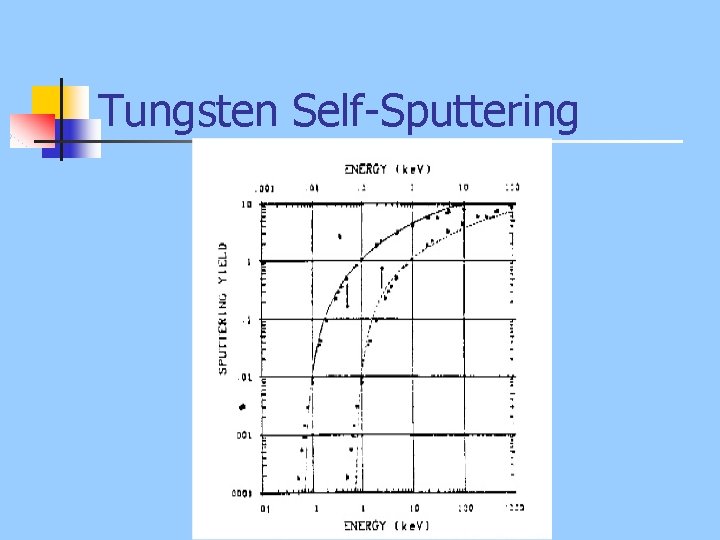
Tungsten Self-Sputtering
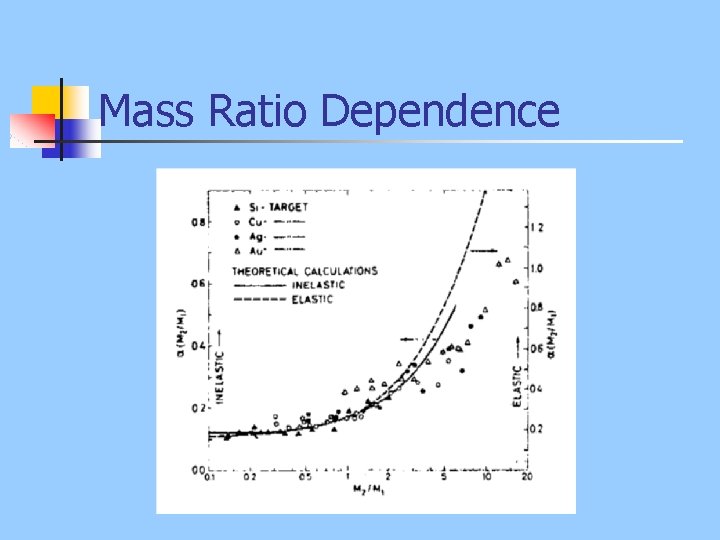
Mass Ratio Dependence
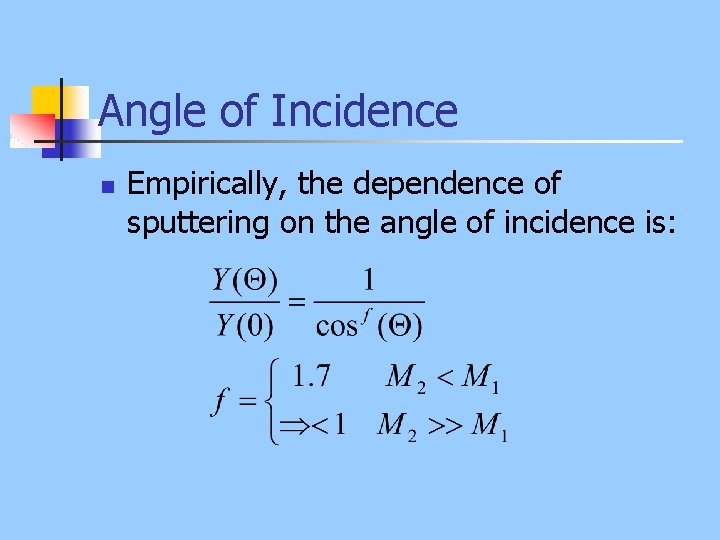
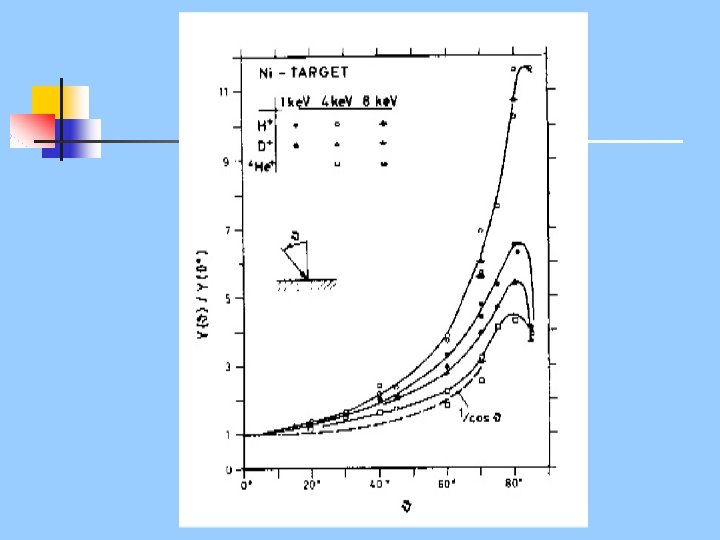
Angle of Incidence n Empirically, the dependence of sputtering on the angle of incidence is:
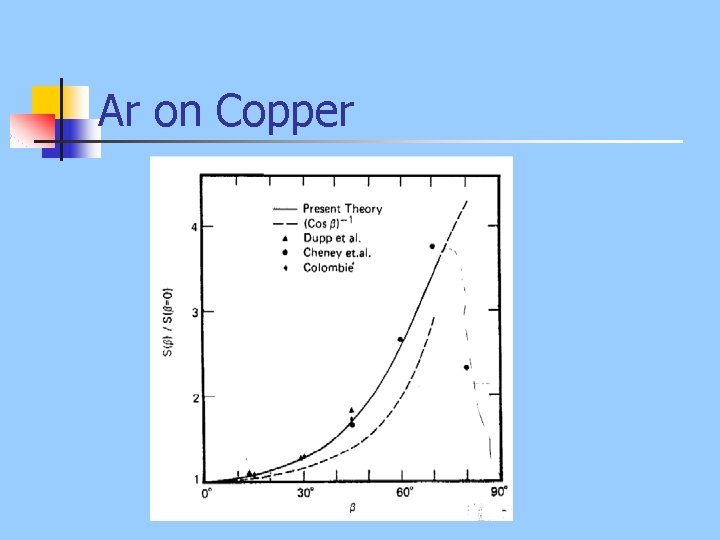
Ar on Copper
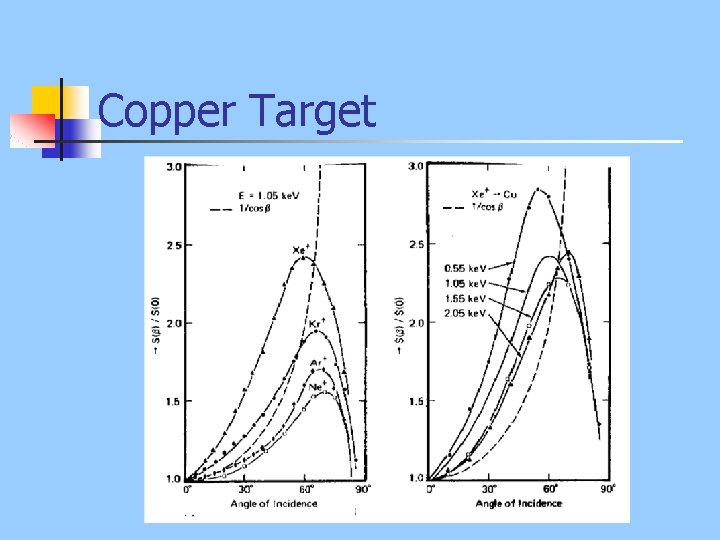
Copper Target
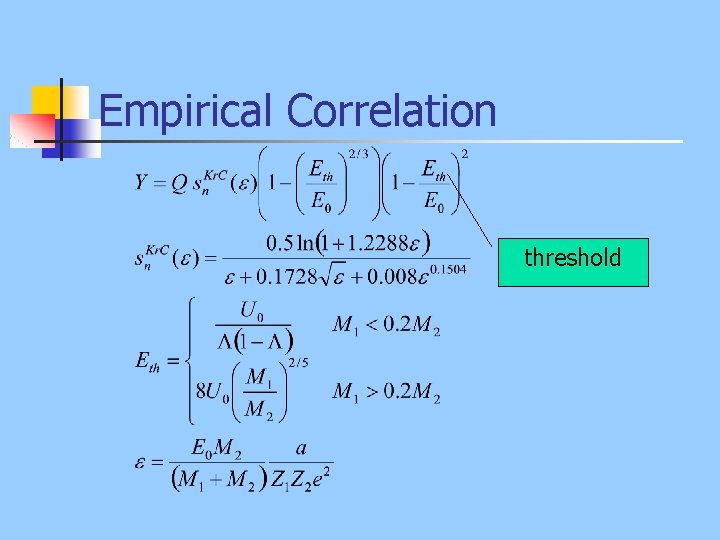
Empirical Correlation threshold
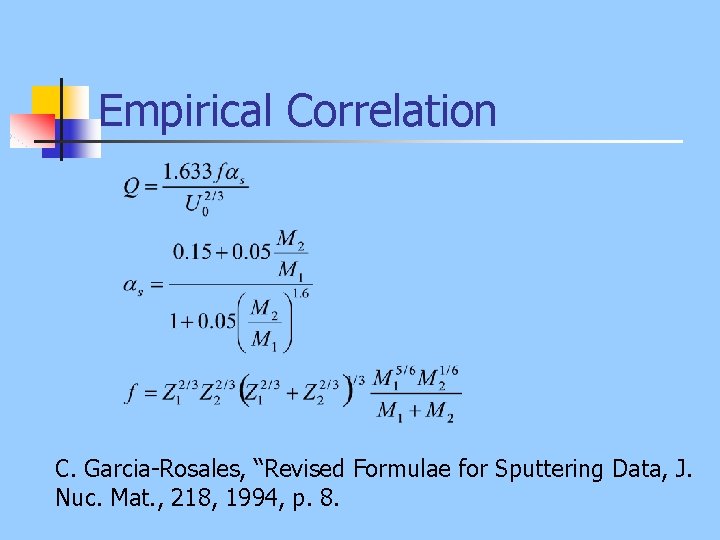
Empirical Correlation C. Garcia-Rosales, “Revised Formulae for Sputtering Data, J. Nuc. Mat. , 218, 1994, p. 8.
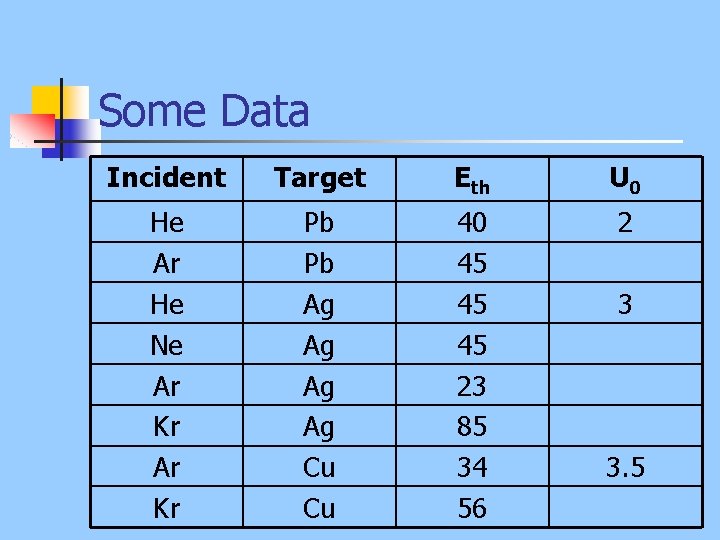
Some Data Incident Target Eth U 0 He Ar He Ne Ar Kr Pb Pb Ag Ag Cu Cu 40 45 45 45 23 85 34 56 2 3 3. 5
- Slides: 24